




Volume 193 - Issue 11
A balloon, the beach, biology and blood pressure
Author: Warwick P Anderson
Med J Aust 2010; 193 (11): 679-684. || doi: 10.5694/j.1326-5377.2010.tb04102.x
Published online: 6 December 2010
Published online: 6 December 2010
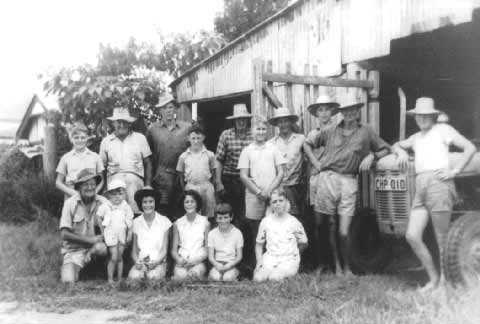
I was the first in my family to be able to go to university, and like so many other students, I didn’t have any idea of what I wanted to be. However, the offer of a teacher’s college scholarship meant that this cane farmer’s son could afford to go to the University of New England (UNE), with its great system of residential colleges. Raised on a farm on Warregah (Box 1), an alluvial island in the Clarence River in northern New South Wales, I had attended Chatsworth Island Primary School, which boasted two or three teachers, depending on student numbers. The headmaster, Mr Woolley, was a fan of English grammar and, as a result, many of my postdoctoral students (and my daughters) have had to endure grammar lectures.
National Health and Medical Research Council, Canberra, ACT. Warwick P Anderson BSc(Hons), PhD, Chief Executive Officer
High school was in Maclean, two river crossings away. Country high schools were then, as ever, under pressure. I remember mathematics in second year needed to be taught in the headmaster’s garage. There were two pivotal moments at high school that led me into science; one involving a balloon and the other, the beach. In first year science, our teacher Mr Whelan asked us whether, in our opinion, air had weight. Of course we all said “no” — who could feel the weight of air on us! So he weighed a balloon deflated and then reweighed it inflated and, of course, the balloon had gained weight. This was such a simple lesson and I can still recapture the thought that I had then — that what seemed obvious was, in fact, wrong; a powerful message that has stayed with me. Then, in my final year of school, Colin Cork, our biology teacher, showed us how to see what all of us NSW coastal kids had seen, but not seen — that the shore between low and high tides was “understandable” on the basis of science, on the basis of the biology or the living flora and fauna and their interactions with this environment. We learned how plant and animal habitats were affected in understandable ways by their relative exposures to water, sun and the environment. In short, he showed that science made a familiar place for enjoyment also a place of understandable complexity and beauty.
The cane gang that cut our crop for many years was from the local Aboriginal settlement on Ulgundahi Island, the next island to ours. They were dignified men. I remember my father saying to me that we were the luckiest cane growers in the district because this gang was the most reliable, hardworking and honest. The settlement was later moved to Maclean, the local town. My mother gave birth to my younger brother in Maclean hospital, sharing a room with an Aboriginal woman with whom she kept in touch. I remember being astonished when my mother told us that this Aboriginal mother was terrified that the authorities would come and take her baby away. I know now of course that this was the time of the Stolen Generation, but at the time it seemed unthinkable and very alarming to us. I am very grateful to my parents for their involvement with these Aboriginal people, and for the values they passed on to their children
My first residential college experience at UNE was of eight “freshers” sharing a long dormitory without heating through an Armidale winter. There were frozen pipes in the mornings and a long, cold bus ride out to the university for breakfast. This was not an exceptionally conducive environment for studying, although I can’t blame the accommodation for the modest four bare passes I managed in my first year, one only after a supplementary exam in January. Fortunately, in second year I stumbled into the UNE subject, physiology, fell in love with learning about homoeostasis and integration of the body systems, and graduated in 1968 with first class honours. I will forever be indebted to Max Webster and the rest of the Physiology Department for such a stimulating learning environment.
Beginning in research
My interest in medical research as a power for good and for alleviating human suffering might be attributed, in part, to growing up in a small community where everyone knew everyone else, and knew all their trials and tribulations. In small communities, it is easy to understand that not everyone is born with the same opportunities, and that family circumstances and ill health or disability profoundly affect people’s start in life. In our small school and community, people with disabilities, ill health, bad luck or accidents were people we knew well and lived near. Undoubtedly, too, my father’s type 1 diabetes, which killed him at 51, had a significant effect on my career choices. How could it be that the failure of such a small and, on the face of it, simple gland could result in so much ill health, even when insulin was replaced by injection?
Research in the past decade has shown us that early environment is crucial. So, it is very probable that my love of learning, a belief in fairness, in taking responsibility for one’s actions and in working hard and in helping others comes from growing up in a hardworking rural farming community, consisting largely of third- and fourth-generation immigrants from Scotland. The Chatsworth district was then almost entirely populated by 19th century Scottish immigrants. This may be pushing an argument too far, but the values of the Scottish enlightenment were strong in that society. I find it disturbing that now, in the 21st century, there is an apparent retreat from reason in many Western societies, and often a retreat from science. Many people seem to regard their own views and beliefs as being of equal value to any other, whether or not they are founded on any factual, scientific or logical base. There are many examples, such as the widespread use of such alleged therapies as homoeopathy, or the belief that crystals have magic healing powers.
My father died when I was in my third year at university, but thanks to support from the War Widows Guild (established by Jessie Vasey), I was able to complete my Bachelor of Science degree with honours. I joined John Ludbrook, Professor of Surgery at the University of New South Wales, as a PhD student, and then transferred to the University of Adelaide with him when he became Professor of Surgery there. South Australia was in the throes of electing Don Dunstan as its state political leader, and the 3 years of my PhD and living in a postgraduate college in the great city of Adelaide at the end of the 1960s were memorable. John Ludbrook talked Francis Moore, Professor of Surgery at Harvard Medical School and the (then) Peter Bent Brigham Hospital, into taking on a science-trained Australian postdoctoral Fellow, and I had a marvellous time for two and a half years working on a wide range of research topics, eventually publishing 11 articles from that time. We invented a novel way of measuring pulmonary oedema,1 we set up a computer-driven postoperative fluid system for open heart surgery2 and we studied how best to maintain cardiac output during open heart surgery.3 I also worked with Cliff Barger, the legendary Professor of Physiology at Harvard Medical School, and this started me on my life-long interest in the pathogenesis of high blood pressure. Cliff and his postdoctoral Fellows, working with dogs that were integral parts of the laboratory group, showed that modest restriction of blood flow to the kidney resulted in a rise in arterial blood pressure within minutes; all the while the dogs were awake, although napping peacefully. The Fellows in Cliff’s group seem to have gone on to remarkable careers: Victor Dzau is now chancellor for health affairs at Duke University and president and Chief Executive Officer (CEO) of Duke University Health System, and Ed Miller is Dean and CEO of Johns Hopkins Medicine.
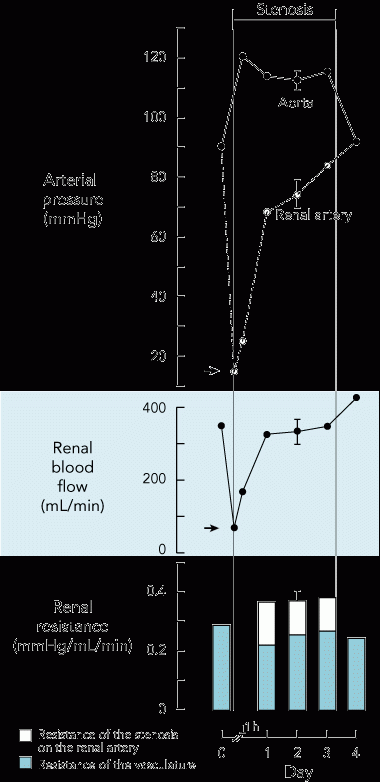
Hypertension is a major health problem in both developed and developing countries. The World Health Organization estimates that it causes over seven million deaths each year.4 It has been estimated that almost a billion people world-wide have high blood pressure, with two-thirds of these living in developing countries.5 High blood pressure is not glamorous, but is a silent disorder and still largely of unknown cause and therefore hard to prevent. It is astonishing to think that for most people with hypertension, we still have no real understanding of what causes their blood pressure to rise. This rise is slow and incremental in most people and we rely on animal research for much of our progress towards understanding the pathogenesis. That the kidney is at the centre of causation seems likely. To maintain plasma filtration, and thus continued body fluid homoeostasis and life, ultrafiltration in the kidney requires blood pressure in the kidney’s glomeruli to be more than 15 mmHg higher than the oncotic pressure exerted by plasma proteins. That is, the blood pressure in the kidney matters, whereas for other organs it’s the flow of blood and its delivery of oxygen that is mainly regulated. To be teleological, it can be argued that there has been powerful evolutionary pressure to establish physiological control mechanisms that set overall arterial pressure in order to maintain just this glomerular blood pressure at the levels required. This reasoning can explain the results of experiments shown in Box 2 — when glomerular pressure was reduced by abruptly narrowing the supplying renal artery, arterial pressure soon rose and restored the renal arterial pressure beyond the narrowing, but at the expense of much higher arterial blood pressure overall.6,7
In 1974, after two and a half years in Boston, I longed to get back to Australia. I can still remember marvelling at the wonderful eucalypt forests during my first few months back, and the quality of the relations between ordinary human beings. I had not been sure where I wanted to come back to, so I wrote to both Paul Korner, Professor of Cardiology at the University of Sydney, and Derek Denton, founder of the Howard Florey Institute in Melbourne. Paul answered promptly saying “come”, I responded immediately saying “yes”, and arrived back only to be told that he had accepted a job in Melbourne as Director of the Baker Medical Research Institute and had invited me to come with him.
The Baker Medical Research Institute
The thought of moving to Melbourne was initially a jolt. For people from northern NSW, it was traditional to think of Melbourne as somehow inferior, if we thought about it at all. However, I liked Melbourne from the first day. It is a great place for health and medical research. This is due to the interplay of a number of factors — a critical mass of researchers, a certain spirit of genuine collaboration and a generally intellectual climate. I once heard Gus Nossal (previously, Director of the Walter and Eliza Hall Institute of Medical Research) offer an additional reason — that science was so strong in Melbourne because of the weather, which meant that inside activities were favoured over outdoor ones — while Michael Wooldridge (previously, Minister for Health) put it to me, that it was a legacy of Melbourne’s Scottish enlightenment founding fathers. Of course, Melbourne is not all about intellectual life. No other city in Australia, and perhaps anywhere, supports sporting events so much. For me, as a supporter of the Melbourne Demons, that has been mainly painful.
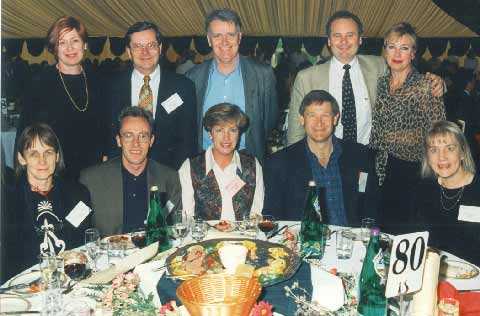
Paul Korner’s time as Director of the Baker Institute, working with Jim Angus, Garry Jennings, Murray Esler and many others (some pictured in Box 3), building the Baker from a small, obscure institution to a major cardiovascular institute with highest quality research, was simply exhilarating. Not everyone warmed to Paul, who could be a fierce critic, but we all learnt so much from him and progressed so far under his guidance.
The Baker years for me were the 7-day-a-week years, with dogs to look after that were chronically implanted with catheters and flowmeters; these were large animals that could very readily be trained to participate in experiments without stress. To understand blood pressure control, we need to study two systems that are both dynamic and that interact dynamically; the circulation of blood and filtration and reabsorption in the kidney. Using animals, particularly dogs and domestic animals in research, is controversial. For me, it was essential that we always thought about the welfare of the dogs, and this required a 24/7 commitment.
Medical research is team research and I have been so fortunate over many years to have had such colleagues as Kate Denton and Roger Evans (pictured in Box 4; now both National Health and Medical Research Council [NHMRC] Research Fellows themselves), Michelle Kett, Robyn Woods and many others, as well as wonderful, dedicated research assistants and animal technicians.
Monash and physiology
I left the Baker Institute in 1996 to become Professor of Physiology at Monash University. The Monash Department of Physiology has had an outstanding record in research and teaching since its inception. I felt that physiology as a discipline was changing, and many were challenging its relevance. The starkest demonstration came when the Harvard Department of Physiology was abolished in the 1980s. I believed then (and I still believe) that an understanding of how things work is physiology’s main game, and that this occurs both at the molecular level and at the integrative, whole human (or animal) level. The molecular bioscience revolution of the last 30 years or more continues to provide astounding insights into the way things work at the cellular and subcellular level. Now, the integrative sciences are resurgent, as we understand that in biology it is rare that “one plus one equals two” and that the answer changes anyhow, with time and environment!
First work for the NHMRC
My first contact with the NHMRC came in the late 1980s, and began one morning before dawn when my home phone rang and the conversation went something like this: “It’s John Chalmers here, you old £&£$^&%$. I am just about to get on a plane in Adelaide for Canberra. It’s an NHMRC Medical Research Committee meeting today. I am going to set up an animal ethics committee, you’re going to be the Chair, and I want you to nominate who should be on the committee by the time of the meeting”. Well, like everyone else in medical research in the 1980s, I did what Chalmers (then Chair of the Council of the NHMRC) asked. I went on to serve for more than 7 years as Chair of the NHMRC’s Animal Experimentation Ethics Committee. I am proud of that work. The Australian code of practice for the care and use of animals for scientific purposes8 that we developed and introduced has stood the test of time, and we had excellent engagement with the animal welfare and rights movements. Although there were, of course, differences in our fundamental positions, I thank Hugh Wirth and Glenys Oogjees and their colleagues because it taught me that in public policy, engaging properly with those with different views is much better than not doing so. It provides better outcomes because it considers more diverse views, and is better in general because it builds human relationships. In Australia, there is now deep engagement between researchers who use animals and animal welfare and rights representatives. This benefits laboratory animals, researchers and society through better policies. I found myself debating Peter Singer, philosopher and bioethicist, on television, and occasionally running into pictures of myself labelled as an ogre at Melbourne street markets!
Opportunity to reform NHMRC’s research approaches
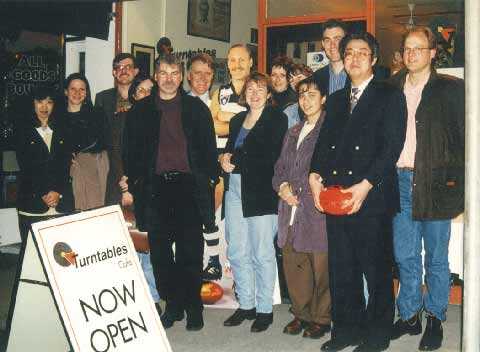
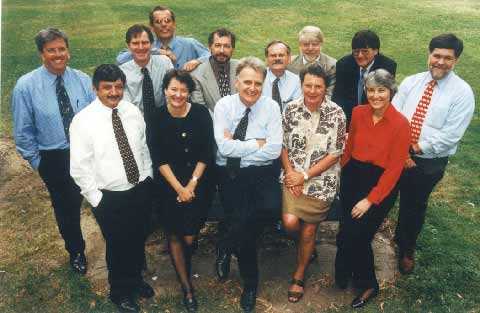
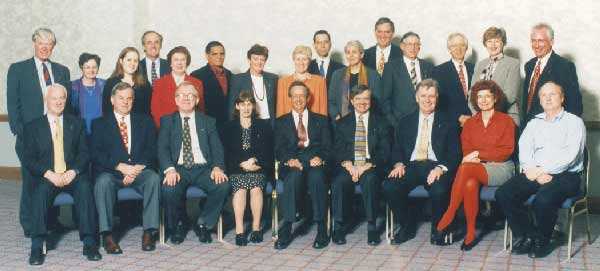
Soon after moving to Monash, Michael Wooldridge, who had recently become Minister for Health, asked me to be Chair of the new NHMRC Research Committee, amalgamated from the two previous NHMRC funding committees (the Public Health Research and Development Committee and the Medical Research Committee). He appointed an outstanding group of people to this new committee (pictured in Box 5). Despite some simmering concerns outside the NHMRC that either “soft science” would somehow take over decision making or that those “gene jocks” would get all the money, the newly merged Research Committee itself worked very well, as did the outstanding membership of the Council (Box 6). I would especially like to thank my two deputies Kerin O’Dea and Sally Redman for their guidance and support.
As Research Committee Chair, I tried to be guided by what was best for all health and medical research, not any particular field or group. Some of the reforms we introduced included:
The abolition of block funding of the big medical research institutes. Block funding of the biggest institutes had been a very successful policy during a building phase of Australian health and medical research, but I thought it had reached the end of its usefulness and was not well suited to where health and medical research was moving. Research was becoming more dynamic, more team-based and multidisciplinary. I felt that this required moving beyond the administrative constraints that block funding brought, and this also would provide a more open, transparent and competitive environment. Despite initial misgivings, the best institutes have since flourished, and it is encouraging to see the multitude of collaborations between these institutes, universities and hospital-based researchers.
A more level playing field in NHMRC Research Fellow appointments; this has seen this scheme become stronger than ever, offering internationally outstanding researchers an opportunity to conduct full-time research in any area and appointments made on merit.
A move away from the regional basis of funding, which had been managed through the Regional Grants Interview Committee (RGIC) system. This also involved the end of our interviewing system for grants, which I had personally enjoyed as an RGIC member. Many researchers were worried about the ending of interviews and the feedback that these could offer. On the other hand, one of the NHMRC’s supported outstanding social scientists remarked to me that the committee had been selecting grants on the basis of “performance art”, rather than science.
Making NHMRC funding policies explicit. Until then, many policies were really case histories. The benefit of developing explicit written policies was that it led to the Research Committee thinking hard about all aspects of the funding schemes.
Introduction of “one-line” grants, consisting of funding for support of both salaries and the direct costs of research, providing researchers and institutions with more flexibility in our system of support for the direct costs of research only.
Introduction of the Program Grant Scheme; under this scheme, grants are awarded mainly as a record of achievement of the applicants, and are provided as large one-line grants.
Introduction of Centres of Clinical Research Excellence, a one-line grant to clinical teams to develop careers and capacity in clinical research.
Introduction of a special fellowship (the “Practitioner Fellowship”) for those who wish to keep on providing clinical care, but also to undertake clinical research. This is another rather unique scheme that continues to support some of our most outstanding clinicians in performing outstanding research.
Introduction of a capacity-building one-line grant for public health and health services researchers. We realised that one of the problems with our health research sector was that these two fields had not had the opportunity to put teams together, unlike the biomedical sector, through the previous block funding system and the Medical Research Committee’s Program Grant system.
Amendment and development of the Statement on Research, which aimed to address integrity in research. This statement would eventually become the Australian code for the responsible conduct of research,9 developed in the mid 2000s by a joint NHMRC, Australian Research Council and Universities Australia group that I chaired, and which was finally adopted in 2007.
Being CEO
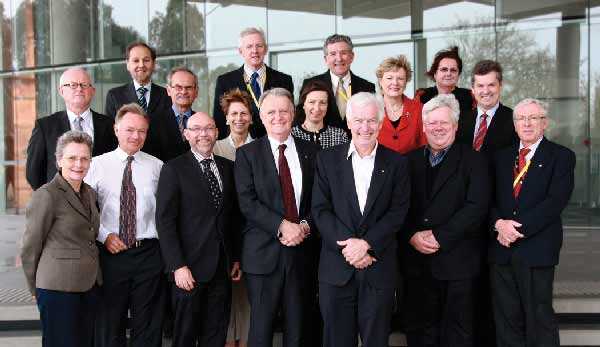
I was appointed CEO of the NHMRC in mid-2006, at a time when the organisation became an independent statutory agency, separate from the Department of Health and Ageing, but still within the portfolio of the Australian Government Minister for Health and Ageing. Major tasks included establishing the organisation with its own support mechanisms (information technology, human resources, finance, etc), finding new premises (where we can conduct peer review, instead of in hotel rooms) and, with the support of the Minister, having a greater involvement in clinical and preventive matters through the establishment of a Health Care Committee and a Prevention and Community Health Committee reporting to the Council of the NHMRC (pictured in Box 7). We have also merged the previous National Institute of Clinical Studies into the NHMRC and are repositioning it as a major entity for the transfer, translation and implementation of clinical research knowledge.
The NHMRC supports about 16 different funding mechanisms. Like our sister medical research funding bodies around the world, the NHMRC is buffeted by competing interests and views on how it should operate and what it should fund. Perhaps the most frequent argument is whether we should fund mainly basic discovery research, or only applied research with a clear benefit. The answer in my mind is “both”. Two Nobel Prizes by Australians are good examples of why. Nothing could have been more basic than Elizabeth Blackburn’s work on telomerase 30 years ago. Not only has this opened our understanding to one of the fundamentals of life, but our understanding of telomeres now seems set to help in cancer and in stress-related illnesses, among other areas of ill health. And then there are the Western Australians, Robin Warren and Barry Marshall, who undertook a brilliant piece of very applied research that provided not only a fundamental change in how we understand gastric disease, but resulted in rapid changes in how we treat it, both reducing patient suffering and cost to the system.
The NHMRC is a body to both create knowledge and promote its uptake to improve health.10 I am very passionate about bridging that gap between the creation of knowledge and what happens in our health system — a system that too often is not based on science, and not based on evidence from research on what is best. I recognise that clinical judgment and experience are crucial parts of great health care. But science (and compassion!) should be the basis of how the system develops in the future. It is surprising how often science is able to be pushed to one side in all our society, if it is inconvenient. Or, indeed, subverted, as shown in the recent book Merchants of doubt: how a handful of scientists obscured the truth on issues from tobacco smoke to global warming.11
The NHMRC and the future
Health and medical research is a great career for anyone who believes in the value of science in improving health, who maintains a life-long curiosity about biology and human biology, and who can handle the life-long uncertainty that comes with a research career — where will the next grant come from, will I be able to maintain creativity, am I using the best technique, where will my research take me intellectually? In Australia, health and medical researchers are well regarded. The public trusts that improvements in health will depend to a major degree on research. It looks up to the strong role models that some of our health research leaders have become through their research and through their activities in the public domain — people like Ian Frazer, Sir Gustav Nossal, Fiona Stanley, Stephen Leeder, Richard Larkins, and the many leaders of the Australian Society for Medical Research.
The NHMRC will be 75 years old next year. I am proud to have been given the opportunity to contribute to its growth and to have helped in any small way for the NHMRC to achieve its dual role in discovery and application. This was spelled out neatly by Minister for Health, Billy Hughes, when, in delineating the NHMRC’s task, he told the inaugural Council meeting in 1936 that: “Research must be actively pursued and developed and as fast as new knowledge is acquired it must be applied”.12 The NHMRC will need to keep changing to serve the people of Australia and to ensure that what we offer patients improves, that how we prevent disease becomes more evidence based, and that we progress in research to push back the frontiers of knowledge to reveal the biology of health, and ill-health. For myself, I will be content if I have contributed new knowledge through my research and have helped ensure that the NHMRC is better able to do its job as a 21st century funding organisation.
1 On the farm
 |
|
Me (Warwick Anderson; back row, left), my father (front row, left) and Anderson uncles and cousins from Warregah. |
2 Renal haemodynamic responses to renal artery stenosis in dogs
 |
|
Error bars on Day 2 show standard error of the mean change in aortic pressure, renal artery pressure and renal blood flow, over the 3 days of stenosis. The arrows indicate the beginning of stenosis. |
3 Colleagues from the Baker Institute
 |
|
Left to right back row: Rosemary and Murray Esler, me (Warwick Anderson), Garry and Jan Jennings. |
4 Medical research is team research; the Monash Physiology and Baker Institute cardiovascular team, 1996
5 The first National Health and Medical Research Council Research Committee, 1997
6 The National Health and Medical Research Council of 1997–1999
7 Current National Health and Medical Research Council members
References
- Anderson WP, Dunegan LJ, Knight DC, et al. Rapid estimation of pulmonary extravascular water with an instream catheter. J Appl Physiol 1975; 39: 843-845. 0_i1095503
- Morgan A, Anderson WP, Bevilacqua RG, et al. Effects of computer-controlled transfusion on recovery from cardiac surgery. Ann Surg 1973; 178: 391-398. 0_i1095505
- Cohn LJ, Fosberg AM, Anderson WP, Collins JJ Jr. The effects of phlebotomy, hemodilution and autologous transfusion on systemic oxygenation and whole blood utilization in open heart surgery. Chest 1975; 68: 283-287. 0_i1095507
- World Health Organization. Global strategy on diet, physical activity and health. Chronic disease risk factors. http://www.who.int/dietphysicalactivity/publications/facts/riskfactors/en/index.html (accessed Nov 2010).
- Kearney PM, Whelton M, Reynolds K, et al. Global burden of hypertension: analysis of worldwide data. Lancet 2005; 365: 217-223. 0_i1095511
- Anderson WP, Korner PI, Johnston CI. Acute angiotensin II-mediated restoration of distal renal artery pressure in renal artery stenosis and its relationship to the development of sustained one-kidney hypertension in conscious dogs. Hypertension 1979; 1: 292-298. 0_i1095513
- Anderson WP, Selig SE, Korner PI. Role of angiotensin II in the hypertension induced by renal artery stenosis. Clin Exp Hypertens A 1984; 6: 299-314. 0_i1095516
- National Health and Medical Research Council. Australian code of practice for the care and use of animals for scientific purposes. Canberra: NHMRC, 1969. 0_i1095518
- National Health and Medical Research Council, Australian Research Council and Universities Australia. Australian code for the responsible conduct of research. Canberra: NHMRC, 2007. 0_i1095520
- National Health and Medical Research Council Act 1992. Act No. 225 of 1992 as amended. Jul 2006. http://www.comlaw.gov.au/ComLaw/Legislation/ActCompilation1.nsf/0/23029FDD3FCC3FD7CA2571 9C008331D3/$file/NatHeaMedResCou1992WD02.pdf (accessed Nov 2010).
- Oreskes N, Conway EM, editors. Merchants of doubt: how a handful of scientists obscured the truth on issues from tobacco smoke to global warming. New York: Bloomsbury Press, 2010. 0_i1095524
- Cumpston JHL. The health of the people: a study in federalism. Canberra: Roebuck Society, 1978: 65-76. 0_i1095526
Capturing the Benefits of Clinical Quality Registries
Taryn Bessen, Stephen McDonald
Medical Colleges Have an Obligation to Ensure Full Participation in Clinical Quality Registries
Thomas J. Hugh
Getting on the Same Page: Why Australia Needs a National Maternity Early Warning System (MEWS) Chart
Briony A. Cutts, Lucy Bowyer, Nisha Khot, Sandra Lowe, Stefan C. Kane
Data for Equity: Can Linked Administrative Data Inform Pathways to More Equitable Child Health?
Sarah Gray, Shuaijun Guo, Meredith O'Connor, Elodie O'Connor, Katrina Williams, Hannah Badland, Susan Woolfenden, Josie Dickerson, Gerry Redmond, Marnie Downes, Sharon R. Goldfeld
Specialty College Selection: Why Change is Critical to Support a Future Rural Workforce
Matthew R. McGrail, Jenny May AM, Katherine Logan
Differentiated and simplified oral HIV pre‐exposure prophylaxis (PrEP) models hold the key to virtually eliminating HIV transmission in Australia by 2030
Tyson Arapali, Sarah Warzywoda, Anthony K J Smith, Curtis Chan, Timothy R Broady, Erin Sullivan, Catherine MacPhail, Mohamed A Hammoud, Alexander Dowell‐Day, Benjamin R Bavinton