




Volume 183 - Issue 1
A pocketful of heart valves
Author: Samuel Menahem
Med J Aust 2005 || doi: 10.5694/j.1326-5377.2005.tb06871.x
Published online: 28 May 2005
Published online: 28 May 2005
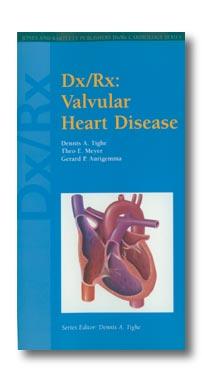
Dx/Rx: valvular heart disease.
Dennis A Tighe, Theo E Meyer, Gerard P Aurigemma. Boston: Jones and Bartlett, 2005 (xi + 175pp). ISBN 0 7637 2385 1
The text is presented in a bullet-point format, aided by tables and figures throughout. Pertinent references are provided at the end of each chapter. Unfortunately, however, there are no illustrations of the various valvular abnormalities, which would have been helpful.
The manual is more relevant to an adult population, although providing a considerable amount of information on congenital abnormalities of the valves. Aortic and mitral valve disease is reviewed in great detail with particular attention given to acquired valvular disease, especially rheumatic fever. Attention is also given to the less common disorders affecting the tricuspid and pulmonary valves.
There is an excellent chapter on prosthetic valves, describing the types used, their specific clinical findings and the details of their assessment and follow-up requirements. Details of anticoagulation for mechanical valves are provided, including a special reference to difficulties associated with pregnancy. Homografts and autografts are briefly described. Infective endocarditis is referred to, where appropriate, throughout the text.
Although aimed at postgraduate students, the manual may be a helpful resource for the busy clinician, whether general physician or family practitioner, as well as the practising cardiologist, for whom there is detailed information available related to less commonly used investigations, such as Doppler echocardiography to determine valve orifice size.
While one could take issue with specific comments or details provided, I do think this well written manual achieves its goal. It may prove invaluable in the consulting room and may also become a welcome guide for interns, residents and registrars working in busy hospital settings. Within its small size, it contains a considerable amount of up-to-date information, clearly and concisely presented.
Samuel MenahemCardiologist Monash Medical Centre and Royal Childrens Hospital, Melbourne, VIC
Fatty Liver Disease in Australia: A Narrative Review on the Epidemiology, Natural History, Prognostication and Management in People With Metabolic Dysfunction
Karl Vaz, Daniel Clayton-Chubb, William W. Kemp, Stuart K. Roberts, Ammar Majeed
Sex Differences in Management and Outcomes of People With ST-Elevation Myocardial Infarction, New South Wales, 2011–2020: A Retrospective Cohort Study
Adam C. Livori, Jedidiah I. Morton, Dianna J. Magliano, Jonathan E. Shaw
Rethinking Rheumatic Fever Diagnosis: Progress, Pitfalls and the Path Towards a Definitive Test
Anna P. Ralph, Rachel Webb, Tom Parks, Nicole J. Moreland, Asha C. Bowen, Benjamin Jones, Emma Ndagire, Andrea Z. Beaton
Sex Differences in Management and Outcomes of People With ST-Elevation Myocardial Infarction, New South Wales, 2011–2020: A Retrospective Cohort Study
Samia Kazi, Simone Marschner, Clara K. Chow
Distribution of Cardiovascular Disease Risk Based on the Updated 2023 Guideline-Recommended Australian Cardiovascular Disease Risk Algorithm and Comparison With the 2012 Algorithm: An Observational Study
Nina Lazarevic, Meghana Bhat, Grace Joshy, Danielle C. Butler, Mark Woodward, Anushka Patel, Rod T. Jackson, Garry Jennings, Rosemary Wyber, Ellie Paige, Emily Banks
They Brought the Hospital to Me
Hugh N. Burrill