




Volume 181 - Issue 10
Positive approach to women in mid-life
Author: Marie V Pirotta
Med J Aust 2004 || doi: 10.5694/j.1326-5377.2004.tb06428.x
Published online: 28 April 2004
Published online: 28 April 2004
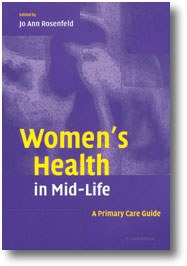
Womens health in mid-life. A primary care guide.
Jo Ann Rosenfeld (editor). Cambridge: Cambridge University Press, 2004 (xi + 374 pp). ISBN 0 521 82340 4.
The book is divided into four parts: Health promotion, Hormonal changes, Disease prevention and Cancer prevention. Each chapter is evidence-based and well referenced, and includes many US institutional websites for up-to-date information. Realistic case vignettes and algorithms could be helpful for general practitioners.
As an example of the useful content, the chapter discussing physical activity and exercise takes us through the considerable evidence base for resistance training, endurance training, yoga and tai chi, including the underlying physiological changes; provides 16 examples of what constitutes moderate exercise; and finally, summarises practical advice for prescribing exercise for both healthy women and those with various medical conditions, such as arthritis, osteoporosis or diabetes.
The chapter on hormone therapy explores in detail the ramifications of the recent large hormone replacement therapy (HRT) trials. Many alternatives to HRT are offered, including a detailed section on complementary therapies, and the author cites many ongoing studies.
The only small negative about this text is that it uses almost exclusively US data, references, acronyms and drug trade names. This means that chapters such as those on Pap testing have recommendations and pathology categories that differ from those used in Australia.
These are minor issues, however, and overall this is an excellent textbook.
Marie V PirottaDepartment of General Practice University of Melbourne, VIC