




Volume 222 - Issue 1
The equitable challenges to quality use of modulators for cystic fibrosis in Australia
Authors: Laura K Fawcett, Shafagh A Waters and Adam Jaffe
Med J Aust 2025 || doi: 10.5694/mja2.52527
Published online: 2 December 2024
Published online: 2 December 2024
New pathways to address current inequities in Australian cystic fibrosis patients’ access to disease-modifying treatments, including in vitro cell models.
Cystic fibrosis, an autosomal recessive disease, causes premature mortality with a current life expectancy of 56 years.1 Variations in a single gene encoding the cystic fibrosis transmembrane conductance regulator (CFTR), an anion channel, cause this multisystemic disease.2 Bronchiectasis remains the most significant contributor to mortality, with other affected systems including the gastrointestinal, pancreatic, hepatobiliary, sweat glands and reproductive systems.3 Clinical manifestations of cystic fibrosis vary widely, leading to diverse phenotypic expressions.
Over 2000 CFTR variants have been described worldwide, with 719 confirmed as disease causing.4 These pathogenic variants are classified based on their functional consequence on the CFTR protein2 (Box 1). Class II includes F508del, the most prevalent CFTR variant globally.2 In Australia, about 90% of people with cystic fibrosis have at least one copy and about 50% are homozygous for the F508del allele.2,5
Therapeutic management of cystic fibrosis has evolved significantly over the past century. Aggressive early intervention with optimised nutrition, airway clearance and antibiotics, along with newborn screening and the introduction of specialist centres, increased the life expectancy from 4 to 40 years, but with a significant burden of care impacting quality of life.3 A landmark development occurred in 2011, 22 years after the CFTR gene was isolated, with the introduction of the first targeted disease modifying therapy, ivacaftor.2
Four CFTR modulators (ivacaftor, lumacaftor, tezacaftor and elexacaftor) have received approval from major regulatory bodies (Box 2). These approvals followed a development strategy with high throughput screening of 228000 compounds, using Fischer rat thyroid (FRT) cell lines and human bronchial epithelial cells.2 Drug candidates underwent animal toxicity studies and human clinical trials to ensure safety and efficacy. Ivacaftor functions as a CFTR channel potentiator.2 Lumacaftor and tezacaftor, first‐generation correctors, stabilise the CFTR protein to prevent premature degradation in the endoplasmic reticulum and are currently approved as dual combination medications with ivacaftor.2 The latest advancement is the triple combination therapy of two correctors, elexacaftor and tezacaftor, with ivacaftor (ETI), which is approved for people with cystic fibrosis with at least one F508del‐CFTR allele.6
The rarity of certain CFTR variants presents a challenge to large scale phase 3 clinical trials. To address this, in vitro data from FRT cell experiments were submitted to the American Food and Drugs Administration (FDA), leading to ivacaftor's extended approval and the establishment of a new precedent for drug approvals.2 Since then, the FDA has expanded the number of approved CFTR variants to 97 for ivacaftor, 127 for tezacaftor–ivacaftor and 177 for ETI, based on in vitro evidence and existing clinical data. In line with these developments, the Australian Therapeutic Goods Administration (TGA) has also expanded approvals.
In Australia, the TGA evaluates new drugs for safety, quality and efficacy, whereas the Pharmaceutical Benefits Advisory Committee recommends treatment subsidisation through the Pharmaceutical Benefits Scheme (PBS) ensuring eligible patients have affordable access. The details of TGA drug approvals and PBS listings can differ, with PBS listings often being more restrictive (Box 2).
The challenges
Inequitable access to CFTR modulators
The introduction of CFTR modulators has created inequity among people with cystic fibrosis, distinguishing between individuals eligible for CFTR modulators and individuals who are not. In Australia, about one‐third of people with cystic fibrosis have the choice of three modulators (Box 2). Australian people with cystic fibrosis who are ineligible for CFTR modulators are either too young, have CFTR variants unresponsive to modulators tested in FRT cells, have extremely rare CFTR variants not studied in vitro or included in clinical trials, or have an FDA but not TGA approved CFTR variant and would be eligible for ETI if they lived overseas.
Longstanding inequitable health outcomes in cystic fibrosis are similar to other chronic conditions; life expectancy is greater for people with cystic fibrosis in high income countries and for those with access to publicly funded health care.7,8 The introduction of CFTR modulators, with an annual public price exceeding $250000 per patient, has accentuated this gap, offering decades of additional life expectancy for people with cystic fibrosis in countries with access to these treatments.9 However, even within these countries, disparities exist due to socio‐economic status, race and ethnicity.10 The introduction of CFTR modulators adds a genetic factor to these disparities, with American cystic fibrosis registry data demonstrating that people with cystic fibrosis from ethnic minority groups have reduced access to CFTR modulators due to a higher rate of extremely rare ineligible CFTR variants.10
Heterogenous clinical response to CFTR modulators
Over 50% of phase 3 clinical trials of CFTR modulators used forced expiratory volume in 1 second (FEV1) as the primary endpoint (Box 3). A decline in FEV1, an indicator of the severity of cystic fibrosis lung disease, predicts the need for lung transplant or mortality within the next two years.11 However, FEV1 is insensitive to localised or early cystic fibrosis disease and may remain normal (>80% predicted) despite evidence of structural lung changes on computed tomography imaging.12 Therefore, other primary outcome measures have been used in clinical trials and include: the lung clearance index (LCI; a sensitive measure of ventilation inhomogeneity in small airways via multiple breath washout)3 and the Cystic Fibrosis Questionnaire‐Revised (CFQ‐R;13 a patient‐reported outcome measure of quality of life). The sweat chloride level, originally a diagnostic test for cystic fibrosis, now serves as a biomarker of CFTR function and is a routine secondary endpoint (Box 3).14
Traditional double blind placebo‐controlled trials typically use frequentist statistics to detect treatment effects at a group level. However, Boyle and colleagues demonstrated heterogenous responses between individuals with the same CFTR genotype, a finding echoed in later clinical trials of lumacaftor–ivacaftor, tezacaftor–ivacaftor and ETI.6,15 This highlights the limitation of grouped analyses, which may not fully capture the potential benefits for individual responders, thus underscoring the need for predictive tools to determine which individuals are most likely to benefit from which treatments.
Several hypotheses have been proposed to explain the observed heterogeneity in drug response. These include genetic variability in CYP450 enzymes involved in the metabolism of CFTR modulators and complex CFTR alleles (eg, F508del; L467F), which have been linked with non‐response to CFTR modulators in people with cystic fibrosis who would otherwise be expected to respond based on their F508del genotype.16
New CFTR modulators targeting patients already taking a CFTR modulator
As CFTR modulators continue to evolve, new investigational therapies must consider novel clinical trial designs to address existing effective therapies. GLPG1837, an alternative to ivacaftor, successfully navigated this challenge by implementing a one‐week washout period at the start of the study with no reported serious adverse events. However, there are reports of ivacaftor withdrawal syndrome, characterised by severe and sudden decline in lung function following three to four days of ivacaftor interruption, including one fatality.17 Although rare, ivacaftor withdrawal syndrome presents a significant ethical concern regarding cessation of modulator therapy for participants assigned to a placebo arm in classically designed randomised controlled trials (RCTs).
Following the establishment of lumacaftor–ivacaftor and tezacaftor–ivacaftor as the standard of care for F508del homozygous people with cystic fibrosis in the United States, ETI clinical trials used tezacaftor–ivacaftor as the comparator in relevant clinical trials, providing a direct comparison (elexacaftor–tezacaftor–ivacaftor versus tezacaftor–ivacaftor). However, lumacaftor–ivacaftor and tezacaftor–ivacaftor were only evaluated in separate placebo controlled RCTs. This translated to a challenge in clinical practice for those already taking lumacaftor–ivacaftor when tezacaftor–ivacaftor was approved, given the known heterogeneity in CFTR modulator response. Both modulators showed similar efficacy, with differences in adverse event and drug–drug interaction profiles. This problem continues to evolve with the development of new modulators; recently published phase 2 trial results of a new triple therapy compound targeting patients already eligible for ETI illustrates the urgent need for a solution to the problem.18
Proposed solutions
Adoption of in vitro cell models as companion diagnostics
In vitro cell models were instrumental in the development of CFTR modulators and the expansion of treatment approvals to rare CFTR variants. Among these models, two primary cell models (rectal organoids and human nasal epithelial cells grown at air liquid interface) have shown promise in predicting an individual's response to CFTR modulator treatments and are endorsed by the Australian cystic fibrosis community.19,20,21 The pan‐European initiative, HIT‐CF (human individualized therapy of cystic fibrosis), has used organoids from over 500 patients with rare CFTR variants to assess responses to CFTR modulators. The results will be used to screen patients for participation in clinical trials, preventing the enrolment of participants with non‐responsive variants.
The importance of using individual primary cell lines rather than immortalised cell lines was highlighted by the conflicting results between FRT and primary cell models for the rare G970R‐CFTR variant and the more common N1303K‐CFTR variant, with the primary cell models more accurately predicting the clinical response.22 Assumptions about the effect of G970R‐CFTR on mRNA splicing, resulted in an FRT model that did not accurately reflect the response in people with cystic fibrosis.23
Currently, the application of this technology remains constrained to research studies, hindered by the absence of standardisation and validation across different laboratories. Addressing this is critical if this technology is to be embedded in future health care for people with cystic fibrosis. Although global efforts to address standardisation are ongoing, individual laboratory standards and reference lines are established and meaningful interpretation of results is already possible. Primary cell organoids could be used to identify non‐responders and prevent people with cystic fibrosis receiving ineffective treatments, thereby avoiding low value health care.
Adaptive trials, n = 1 studies and broader inclusion of paediatric participants
Unlike traditional clinical trials, adaptive trials are designed to evolve based on ongoing data analysis during the trial itself. These trials can modify their parameters, such as sample size, randomisation allocation or add new treatment arms as new therapies are developed, allowing efficient exploration of multiple treatment options. n = 1 studies, which use the patient as their own control, can address the issue of small patient populations such as people with cystic fibrosis with rare CFTR variants. These innovative trial designs often use Bayesian statistics, which despite being challenging for many to comprehend and critique confidently, have been embraced by the FDA for evaluating treatments for rare diseases.24
CFTR modulator trials in children aged under 6 years have focused on safety and tolerability, with no control arms and small sample sizes (Box 3). This limits the ability to measure secondary outcomes of efficacy and the number of children able to access therapy. Greater inclusion of young children would address this, although we acknowledge the challenges in conducting paediatric clinical trials.45
Named patient and compassionate access to CFTR modulators
In Australia, there is currently no pathway for people with cystic fibrosis to access modulator treatment based on individual in vitro effectiveness data. Whereas, in New Zealand, people with cystic fibrosis with rare variants can apply for named patient access if they can demonstrate evidence of their variant's responsiveness to ETI. One way to demonstrate this might be by using their own organoids. However, cystic fibrosis laboratories conducting organoid research in the southern hemisphere are only based in Australia. We are also aware of an individual in England who has used the individual funding request pathway (National Health Service, England) to facilitate access to a CFTR modulator using their organoid data and reports from Israel of insurance cover providing access to patients based on in vitro data.
In 2022, French authorities facilitated compassionate access to ETI for people with cystic fibrosis with advanced lung disease who were not eligible for ETI. An observational study measured the effectiveness of ETI using several endpoints evaluated by consensus decision by a centralised committee.46 This approach identified 45 individuals (54% of participants) with a rapid, clinically significant response to ETI who were previously unable to access ETI due to their genotype. In addition, human nasal epithelial cell cultures from participants in the scheme were predictive of the individual's clinical response.19 Adapting this approach to an Australian setting would be relatively straightforward and could be extended to other precision medicine therapies.
Conclusion
Given the rapidly evolving landscape of precision medicine, the Australian health technology assessment pathway is undergoing its first review in over three decades. We eagerly await the outcomes and hope that new pathways will address current inequities in Australian cystic fibrosis patients’ access to disease‐modifying treatments. Incorporating in vitro cell models into cystic fibrosis care could identify the best therapy (in terms of CFTR rescue) for patients with multiple therapeutic options and help address inequity by providing access for patients with rare variants.
Box 1 – Cystic fibrosis transmembrane conductance regulator (
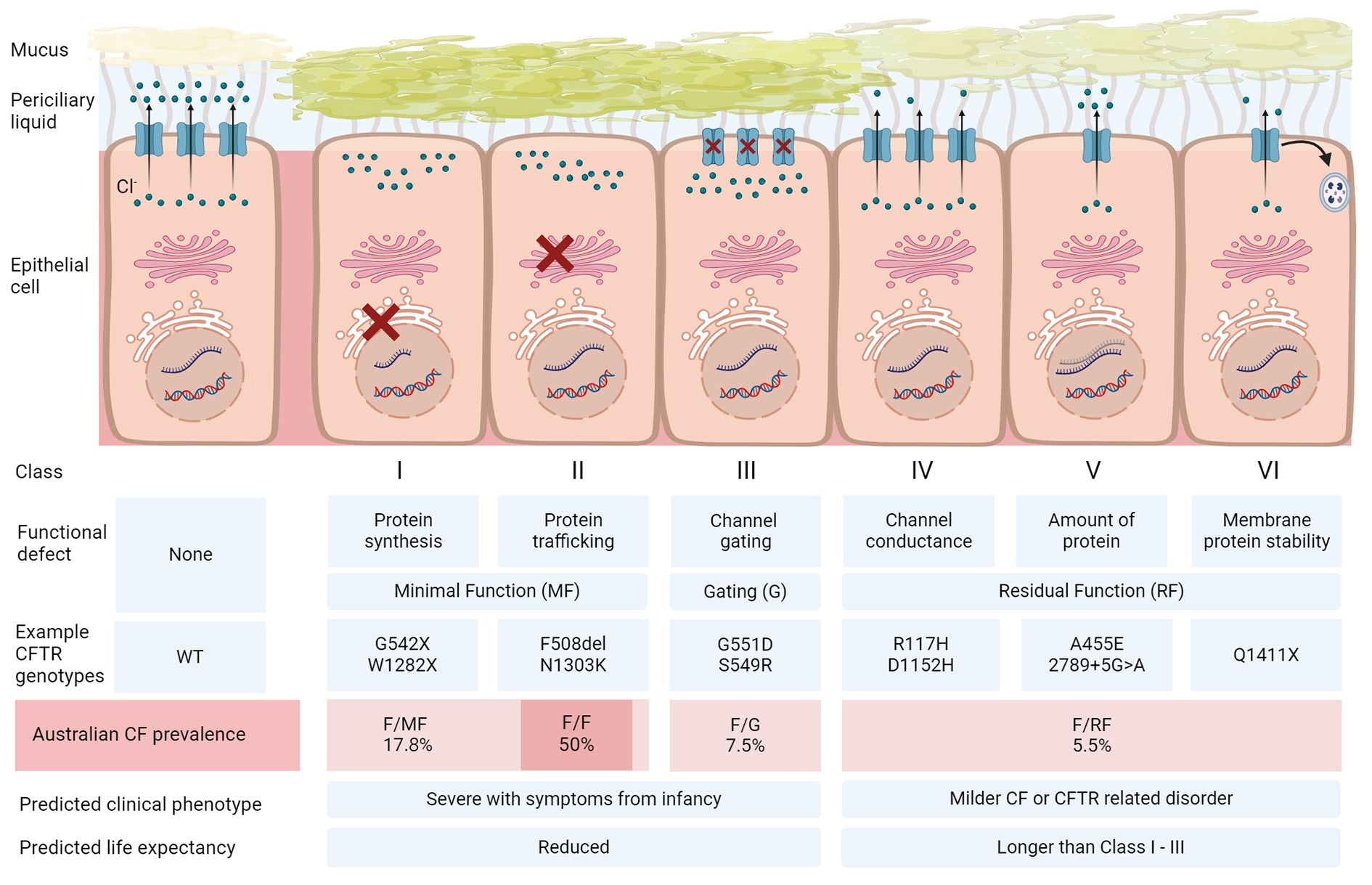
CF = cystic fibrosis; CFTR =cystic fibrosis transmembrane conductance regulator; F = F508del; WT = wildtype. Variants in classes I and II are considered minimal function (MF). Class I variants result in abnormal protein synthesis. Variants such as G542X and W1282X, result in premature termination codons with nonsense mediated decay resulting in no CFTR protein. It is estimated that 17.8% of Australian people with cystic fibrosis have an F508del(F)/MF genotype. Class II variants result in proteins with trafficking abnormalities. Class II includes F508del, the most prevalent CFTR variant in the cystic fibrosis population with 90% of people with cystic fibrosis having at least one copy of F508del and about 50% of people with cystic fibrosis being homozygous (F/F). Class III or Gating (G) variations describe a CFTR protein that reaches the cell surface but does not act as a channel due to dysfunctional gating, with G551D being the most prevalent example. Australian registry data indicates that 7.5% of people with cystic fibrosis have an F/G CFTR genotype. Residual function (RF) variants include classes IV, V and VI with 5.5% of Australian people with cystic fibrosis having a F/RF CFTR genotype. Class IV variants result in protein channels with reduced conductance so while anions can be transported, homeostasis is still disrupted, examples include R117H and D1152H. Class V variants have reduced levels of protein and include A455E and 2789+5G>A and class VI variants such as Q1411X result in less stable proteins. Residual function variants usually present with a milder cystic fibrosis phenotype or CFTR‐related disorder and have a longer life expectancy than people with cystic fibrosis with class I–III CFTR variants only.2,5 Figure made with biorender.
Box 2 – Eligibility criteria for cystic fibrosis transmembrane conductance regulator (CFTR) modulators in Australia
|
Modulator name |
Mechanism of action |
PBS approval criteria |
TGA approval criteria |
Approved age (PBS v TGA) |
Responsive variants* |
||||||||||
|
|
|||||||||||||||
|
Ivacaftor |
Potentiator |
|
|
>4 months (PBS and TGA) |
92 |
||||||||||
|
Lumacaftor–ivacaftor |
Type I corrector/potentiator |
|
|
>1 year (PBS and TGA) |
‐ |
||||||||||
|
Tezacaftor–ivacaftor |
Type I corrector/potentiator |
|
|
>12 years (PBS); >6 years (TGA) |
25 |
||||||||||
|
Elexacaftor–tezacaftor–ivacaftor (ETI) |
Type III corrector/type I corrector/potentiator |
F/any |
F/any |
>6 years (PBS); >2 years (TGA) |
‐ |
||||||||||
|
|
|||||||||||||||
|
PBS = Pharmaceutical Benefits Scheme; TGA = Therapeutic Goods Administration; F = F508del (example CFTR genotype); RF = residual function. * The “Responsive Variants” column lists the number of CFTR gene variants responsive to each modulator as recognised by the TGA, with the current count accurate as of June 2024. The number of responsive variants for ivacaftor and tezacaftor–ivacaftor can vary and should be verified against the latest TGA and PBS listings. |
|||||||||||||||
Box 3 – Summary of phase 3 trials for cystic fibrosis transmembrane conductance regulator (CFTR) modulators
|
Drug |
Publication |
RCT comparator |
Ages |
Variants |
Treatment duration |
n |
Primary outcome(s) |
Secondary/tertiary outcomes |
|||||||
|
|
|||||||||||||||
|
Ivacaftor |
Ramsey et al (2011)25 |
Placebo |
>12 years |
G551D |
24 weeks |
161 |
FEV1 |
CFQ‐R, FEV1, PEx, SwCl, weight, antibiotic use |
|||||||
|
Davies et al (2013)26 |
Placebo |
6–11 years |
G551D |
48 weeks |
52 |
FEV1 |
CFQ‐R, FEV1, SwCl, weight |
||||||||
|
Moss et al (2015)27 |
Placebo |
>6 years |
R117H |
24 weeks |
69 |
FEV1 |
BMI, CFQ‐R, PEx, SwCl |
||||||||
|
De Boeck et al (2014)28 |
Placebo crossover |
>6 years |
G1244E, G1349D, G178R, G551S, G970R, S1251N, S1255P, S549N, or S549R |
8 weeks |
39 |
FEV1 |
BMI, CFQ‐R, SwCl |
||||||||
|
Davies et al (2016)29 |
Open label |
2–5 years |
G551D, S549N |
24 weeks |
34 |
PK, Safety |
BMI, FEV1, faecal elastase, height, IRT, SwCl, weight |
||||||||
|
Rosenfeld et al (2018)30 |
Open label |
12–24 months |
G551D, S549N, G178R G551D, G178R, R117H‐5T |
24 weeks |
19 |
PK, Safety |
Faecal elastase, faecal calprotectin, growth, IRT, microbiology, palatability, PEx, SwCl |
||||||||
|
Davies et al (2021)31 |
Open label |
4–12 months |
G551D, G178R, R117H‐5T |
24 weeks |
17 |
PK, Safety |
Faecal elastase, faecal calprotectin, growth, IRT, LCI, SwCl |
||||||||
|
Lumacaftor–ivacaftor |
Wainright et al (2015)32 |
Placebo |
>12 years |
F/F |
24 weeks |
559 |
FEV1 |
BMI, CFQ‐R, FEV1, hospitalisations, IV Abx treatments, PEx, weight |
|||||||
|
Wainright et al (2015)32 |
Placebo |
>12 years |
F/F |
24 weeks |
563 |
FEV1 |
BMI, CFQ‐R, FEV1, hospitalisations, IV Abx treatments, PEx, weight, |
||||||||
|
Milla et al (2017)33 |
Open label |
6–11 years |
F/F |
24 weeks |
58 |
PK, Safety |
BMI, CFQ‐R, height, SwCl, TSQM, weight |
||||||||
|
Ratjen et al (2017)34 |
Placebo |
6–11 years |
F/F |
24 weeks |
206 |
LCI |
BMI, CFQ‐R, FEV1, height, PEx, SwCl, TSQM, weight |
||||||||
|
McNamara et al (2019)35 |
Open label |
2–5 years |
F/F |
24 weeks |
60 |
PK, Safety |
BMI, faecal elastase, FEV1, height, IRT, LCI, microbiology, PEx, SwCl, weight |
||||||||
|
Rayment et al (2022)36 |
Open label |
1–2 years |
F/F |
24 weeks |
46 |
PK, Safety |
BMI, faecal elastase, faecal calprotectin height, IRT, PEx, SwCl, weight |
||||||||
|
Tezacaftor–ivacaftor |
Taylor‐Cousar et al (2017)37 |
Placebo |
>12 years |
F/F |
24 weeks |
510 |
FEV1 |
BMI, CFQ‐R, FEV1, PEx, SwCl |
|||||||
|
Rowe et al (2017)38 |
Ivacaftor or placebo (crossover + washout) |
>12 years |
F/predicted responsive ivacaftor variant |
8 weeks |
248 |
FEV1 |
BMI. CFQ‐R, faecal elastase, IRT, PEx, SwCl |
||||||||
|
Walker et al (2019)39 |
Open label |
6–11 years |
F/F or F/RF |
24 weeks |
70 |
PK, Safety |
BMI, CFQ‐R, FEV1, height, SwCl, weight |
||||||||
|
Elexacaftor–tezacaftor–ivacaftor |
Middleton et al (2019)6 |
Placebo |
>12 years |
F/MF |
24 weeks |
405 |
FEV1 |
BMI, CFQ‐R, FEV1, PEx, SwCl |
|||||||
|
Hejjerman et al (2019)40 |
Tezacaftor–ivacaftor |
>12 years |
F/F |
4 weeks |
113 |
FEV1 |
CFQ‐R, SwCl |
||||||||
|
Sutharsan et al (2022)41 |
Tezacaftor–ivacaftor |
>12 years |
F/F |
24 weeks |
175 |
CFQ‐R |
BMI, FEV1, height, SwCl, weight |
||||||||
|
Zemanick et al (2021)42 |
Open label |
6–11 years |
F/F or F/MF |
24 weeks |
66 |
PK, Safety |
BMI, CFQ‐R, FEV1, height, LCI, PEx, SwCL, weight |
||||||||
|
Mall et al (2022)43 |
Placebo |
6–11 years |
F/MF |
24 weeks |
121 |
LCI |
CFQ‐R, FEV1, SwCl, Safety and tolerability |
||||||||
|
Goralski et al (2023)44 |
Open label |
2–5 years |
F/any |
24 weeks |
75 |
PK, Safety |
BMI, faecal elastase, faecal calprotectin, height, IRT, LCI, PEx, SwCl, weight |
||||||||
|
|
|||||||||||||||
|
BMI = body mass index; CFQ‐R = Cystic Fibrosis Questionnaire‐Revised; F = F508del (example CFTR genotype); FEV1 = forced expiratory volume in 1 second; IRT = immunoreactive trypsinogen; IV Abx = intravenous antibiotic use; LCI = Lung Clearance Index; MF = minimal function; PK = pharmacokinetics; PEx = pulmonary exacerbation data; RCT = randomised controlled trial; RF = residual function; SwCl = sweat chloride; TSQM = Treatment Satisfaction Questionnaire for Medication. Where an endpoint is listed as both primary and secondary/tertiary endpoint, multiple time points were evaluated during the study. Where studies included two parts, the treatment duration reflects the longest duration for the primary endpoint in the trial. All studies collected safety data. |
|||||||||||||||
Competing interests
AJ is chair of the scientific and medical advisory committee of Rare Voices Australia and has received speaker payments from Vertex Pharmaceuticals. LF has been a sub‐investigator on Vertex clinical trials and received sponsorship of travel costs to attend educational meetings. SW has received competitive funding sponsored by Vertex Pharmaceuticals. Vertex Pharmaceuticals had no involvement in the planning, writing or publication of this article.
Acknowledgements
LF is supported by the Rotary Club of Sydney Cove/Sydney Children's Hospital Foundation and UNSW postgraduate award scholarships. SW is supported by the UNSW Scientia program and the Australian National Health and Medical Research Council. There was no role of the funding sources in the planning, writing or publication of the work. Colman Taylor provided feedback on a draft manuscript regarding health technology assessment pathways.
References
- Ruseckaite R, Salimi F, Earnest A, et al. Survival of people with cystic fibrosis in Australia. Sci Rep 2022; 12: 1‐9.
- Lopes‐Pacheco M. CFTR modulators: the changing face of cystic fibrosis in the era of precision medicine. Front Pharmacol 2020; 10: 500191.
- Elborn JS. Cystic fibrosis. Lancet 2016; 388: 2519‐2531.
- Clinical and Functional Translation of CFTR, CFTR2 Variant List History [website]. US Cystic Fibrosis Foundation, John Hopkins University, The Hospital for Sick Children. https://cftr2.org/mutations_history (viewed Feb 2024).
- Australian Cystic Fibrosis Data Registry [website]. Cystic Fibrosis Australia. https://www.cysticfibrosis.org.au/cf‐data‐registry/ (viewed Feb 2024).
- Middleton PG, Mall MA, Dřevínek P, et al. Elexacaftor–Tezacaftor–Ivacaftor for cystic fibrosis with a single Phe508del allele. N Engl J Med 2019; 381: 1809‐1819.
- da Silva Filho LVRF, Zampoli M, Cohen‐Cymberknoh M, Kabra SK. Cystic fibrosis in low and middle‐income countries (LMIC): a view from four different regions of the world. Paediatr Respir Rev 2021; 38: 37‐44.
- Stephenson AL, Sykes J, Stanojevic S, et al. Survival comparison of patients with cystic fibrosis in Canada and the United States: a population‐based cohort study. Ann Intern Med 2017; 166: 537‐546.
- Lopez A, Daly C, Vega‐Hernandez G, et al. Elexacaftor/tezacaftor/ivacaftor projected survival and long‐term health outcomes in people with cystic fibrosis homozygous for F508del. J Cyst Fibros 2023; 22: 607‐614.
- McGarry ME, Gibb ER, Oates GR, Schechter MS. Left behind: the potential impact of CFTR modulators on racial and ethnic disparities in cystic fibrosis. Paediatr Respir Rev 2022; 42: 35‐42.
- Kerem E, Reisman J, Corey M, et al. Prediction of mortality in patients with cystic fibrosis. N Engl J Med 1992; 326: 1187‐1191.
- Cohen‐Cymberknoh M, Ben Meir E, Gartner S, et al. How abnormal is the normal? Clinical characteristics of CF patients with normal FEV1. Pediatr Pulmonol 2021; 56: 2007‐2013.
- Gee L, Abbott J, Conway SP, et al. Development of a disease specific health related quality of life measure for adults and adolescents with cystic fibrosis. Thorax 2000; 55: 946‐954.
- Sontag MK. Sweat chloride: the critical biomarker for cystic fibrosis trials. Am J Respir Crit Care Med 2016; 194: 1311‐1313.
- Boyle MP, Bell SC, Konstan MW, et al. A CFTR corrector (lumacaftor) and a CFTR potentiator (ivacaftor) for treatment of patients with cystic fibrosis who have a phe508del CFTR mutation: a phase 2 randomised controlled trial. Lancet Respir Med 2014; 2: 527‐538.
- Sondo E, Cresta F, Pastorino C, et al. The L467F‐F508del complex allele hampers pharmacological rescue of mutant CFTR by elexacaftor/tezacaftor/ivacaftor in cystic fibrosis patients: the value of the ex vivo nasal epithelial model to address non‐responders to CFTR‐modulating drugs. Int J Mol Sci 2022; 23: 3175.
- Clegg JM, Malloy KW, Brown RF, et al. Ivacaftor withdrawal syndrome: a potentially life‐threatening consequence from a life‐saving medication. J Cyst Fibros 2022; 21: 549‐550.
- Uluer AZ, Macgregor G, Azevedo P, et al. Safety and efficacy of vanzacaftor ‐ tezacaftor ‐ deutivacaftor in adults with cystic fibrosis: randomised, double‐blind, controlled, phase 2 trials. Lancet Respir Med 2023; 11: 550‐562.
- Dreano E, Burgel PR, Hatton A, et al. Theratyping cystic fibrosis patients to guide elexacaftor/tezacaftor/ivacaftor out‐of‐label prescription. Eur Respir J 2023; 62: 2300110.
- Fawcett LK, Wakefield CE, Sivam S, et al. Avatar acceptability: views from the Australian cystic fibrosis community on the use of personalised organoid technology to guide treatment decisions. ERJ Open Res 2021; 7: 1‐10.
- Berkers G, van Mourik P, Vonk AM, et al. Rectal organoids enable personalized treatment of cystic fibrosis. Cell Rep 2019; 26: 1701‐1708.
- De Boeck K, Munck A, Walker S, et al. Efficacy and safety of ivacaftor in patients with cystic fibrosis and a non‐G551D gating mutation. J Cyst Fibros 2014; 13: 674‐680.
- Fidler MC, Buckley A, Sullivan JC, et al. G970R‐CFTR mutation (c.2908G>C) results predominantly in a splicing defect. Clin Transl Sci 2021; 14: 656‐663.
- Beckman RA, Natanegara F, Singh P, et al. Advancing innovative clinical trials to efficiently deliver medicines to patients. Nat Rev Drug Discov 2022; 21: 543‐544.
- Ramsey BW, Davies J, McElvaney NG, et al. A CFTR potentiator in patients with cystic fibrosis and the G551D mutation. N Engl J Med 2011; 365: 1663‐1672.
- Davies JC, Wainwright CE, Canny GJ, et al. Efficacy and safety of ivacaftor in patients aged 6 to 11 years with cystic fibrosis with a G551D mutation. Am J Respir Crit Care Med 2013; 187: 1219‐1225.
- Moss RB, Flume PA, Elborn JS, et al. Efficacy and safety of ivacaftor in patients with cystic fibrosis who have an Arg117His‐CFTR mutation: a double‐blind, randomised controlled trial. Lancet Respir Med 2015; 3: 524‐533.
- De Boeck K, Munck A, Walker S, et al. Efficacy and safety of ivacaftor in patients with cystic fibrosis and a non‐G551D gating mutation. J Cyst Fibros 2014; 13: 674‐680.
- Davies JC, Cunningham S, Harris WT, et al. Safety, pharmacokinetics, and pharmacodynamics of ivacaftor in patients aged 2–5 years with cystic fibrosis and a CFTR gating mutation (KIWI): an open‐label, single‐arm study. Lancet Respir Med 2016; 4: 107‐115.
- Rosenfeld M, Wainwright CE, Higgins M, et al. Ivacaftor treatment of cystic fibrosis in children aged 12 to <24 months and with a CFTR gating mutation (ARRIVAL): a phase 3 single‐arm study. Lancet Respir Med 2018; 6: 545‐553.
- Davies JC, Wainwright CE, Sawicki GS, et al. Ivacaftor in infants aged 4 to <12 months with cystic fibrosis and a gating mutation results of a two‐part phase 3 clinical trial. Am J Respir Crit Care Med 2021; 203: 585‐593.
- Wainwright CE, Elborn JS, Ramsey BW, et al. Lumacaftor–ivacaftor in patients with cystic fibrosis homozygous for Phe508del CFTR. N Engl J Med 2015; 373: 220‐231.
- Milla CE, Ratjen F, Marigowda G, et al. Lumacaftor/Ivacaftor in patients aged 6‐11 years with cystic fibrosis and homozygous for F508del‐CFTR. Am J Respir Crit Care Med 2017; 195: 912‐920.
- Ratjen F, Hug C, Marigowda G, et al. Efficacy and safety of lumacaftor and ivacaftor in patients aged 6–11 years with cystic fibrosis homozygous for F508del‐CFTR: a randomised, placebo‐controlled phase 3 trial. Lancet Respir Med 2017; 5: 557‐567.
- McNamara JJ, McColley SA, Marigowda G, et al. Safety, pharmacokinetics, and pharmacodynamics of lumacaftor and ivacaftor combination therapy in children aged 2–5 years with cystic fibrosis homozygous for F508del‐CFTR: an open‐label phase 3 study. Lancet Respir Med 2019; 7: 325‐335.
- Rayment JH, Asfour F, Rosenfeld M, et al. A phase 3, open‐label study of lumacaftor/ivacaftor in children 1 to less than 2 years of age with cystic fibrosis homozygous for F508del‐CFTR. Am J Respir Crit Care Med 2022; 206: 1239‐1247.
- Taylor‐Cousar JL, Munck A, McKone EF, et al. Tezacaftor–ivacaftor in patients with cystic fibrosis homozygous for Phe508del. N Engl J Med 2017; 377: 2013‐2023.
- Rowe SM, Daines C, Ringshausen FC, et al. Tezacaftor–ivacaftor in residual‐function heterozygotes with cystic fibrosis. N Engl J Med 2017; 377: 2024‐2035.
- Walker S, Flume P, McNamara J, et al. A phase 3 study of tezacaftor in combination with ivacaftor in children aged 6 through 11years with cystic fibrosis. J Cyst Fibros 2019; 18: 708‐713.
- Heijerman HGM, McKone EF, Downey DG, et al. Efficacy and safety of the elexacaftor/tezacaftor/ivacaftor combination regimen in people with cystic fibrosis homozygous for the F508del mutation: a double‐blind, randomised, phase 3 trial. Lancet 2019; 394: 1940.
- Sutharsan S, McKone EF, Downey DG, et al. Efficacy and safety of elexacaftor plus tezacaftor plus ivacaftor versus tezacaftor plus ivacaftor in people with cystic fibrosis homozygous for F508del‐CFTR: a 24‐week, multicentre, randomised, double‐blind, active‐controlled, phase 3b trial. Lancet Respir Med 2022; 10: 267‐277.
- Zemanick ET, Taylor‐Cousar JL, Davies J, et al. A phase 3 open‐label study of elexacaftor/tezacaftor/ivacaftor in children 6 through 11 years of age with cystic fibrosis and at least one F508del allele. Am J Respir Crit Care Med 2021; 203: 1522‐1532.
- Mall MA, Brugha R, Gartner S, et al. Efficacy and safety of elexacaftor/tezacaftor/ivacaftor in children 6 through 11 years of age with cystic fibrosis heterozygous for F508del and a minimal function mutation A phase 3b, randomized, placebo‐controlled study. Am J Respir Crit Care Med 2022; 206: 1361‐1369.
- Goralski JL, Hoppe JE, Mall MA, et al. Phase 3 open‐label clinical trial of elexacaftor/tezacaftor/ivacaftor in children aged 2–5 years with cystic fibrosis and at least one F508del allele. Am J Respir Crit Care Med 2023; 208: 59‐67.
- Lorentzos MS, Metz D, Moore AS, et al. Providing Australian children and adolescents with equitable access to new and emerging therapies through clinical trials: a call to action. Med J Aust 2024; 220: 121‐125. https://www.mja.com.au/journal/2024/220/3/providing‐australian‐children‐and‐adolescents‐equitable‐access‐new‐and‐emerging
- Burgel PR, Sermet‐Gaudelus I, Durieu I, et al. The French Compassionate Program of elexacaftor‐tezacaftor‐ivacaftor in people with cystic fibrosis with advanced lung disease and no F508del CFTR variant. Eur Respir J 2023; 61: 2202437.
Provenance: Not commissioned; externally peer reviewed.
Barriers and Facilitators to Timely Detection and Optimal Management of Chronic Wet Cough in Aboriginal Children Across Australia From the Perspectives of Carers of Aboriginal Children: A Qualitative Study
Gloria T. Y. Lau, Pam Laird, Robyn Aitken, Melanie Barwick, Liam Bedford, Emily R. Bowden, Jamie Everingham, Angela Fuery, Reece Griffin, Neha Jain, Mina Kinghorn, Renae Knapp, Gabrielle B. McCallum, Peter Morris, Richard Norman, Peter C. Richmond, Aarti Saiganesh, Slade Sibosado, Cameron Taylor, Maree Toombs, Roz Walker, Joan Wilson, Anne B. Chang, André Schultz
Barriers and Facilitators to Timely Detection and Optimal Management of Chronic Wet Cough in Aboriginal Children Across Australia From the Perspective of Health Care Providers: A Qualitative Study
Gloria T. Y. Lau, Pamela Laird, Robyn Aitken, Melanie Barwick, Liam Bedford, Emily R. Bowden, Corey Dalton, Jamie Everingham, Angela Fuery, Reece Griffin, Neha Jain, Mina Kinghorn, Renae Knapp, Gabrielle B. McCallum, Peter Morris, Richard Norman, Peter C. Richmond, Aarti Saiganesh, Slade Sibosado, Maree Toombs, Roz Walker, Joan Wilson, Anne B. Chang, André Schultz
Respiratory Syncytial Virus Disease Burden and Evidence Gaps in Australia Before Immunisation Introduction: A Retrospective Population-Based Study Using 2016–2019 Hospitalisation and 2023 Laboratory Surveillance Data
Chisato Imai-Boulter, Jean Li-Kim-Moy, Clayton Chiu, Sanjay Jayasinghe, Kristine Macartney
Not Gone but Often Forgotten: Action Needed to Address Tuberculosis in Aboriginal and Torres Strait Islander Communities
Nikkita Joshua, Emma L. Smith, Eunice (Cheeky) Love, Christopher P. Lowbridge, Nicole Tukana, Amy Bowden, Megan A. Campbell, Dawn Casey, James Ward
Uneven Ground: Survival Differences Among Victorian Lung Cancer Patients by Location of Residence (2011–2023): A Retrospective Cohort Study
Evangeline Samuel, Eldho Paul, Mike Lloyd, Sanuki Tissera, Craig Underhill, Sagun Parakh, Phillip Parente, Inger Olesen, Javier Torres, Katharine See, Gavin M. Wright, David Langton, Thomas John, Matthew Conron, James Bartlett, Nicola Atkin, Nikolajs Zeps, Susan V. Harden, Wasek Faisal, John R. Zalcberg, Rob G. Stirling
Treatment and Survival Outcomes for Indigenous and Non-Indigenous Australians Within the Victorian Lung Cancer Registry: A Retrospective Cross-Sectional Cohort Study
Melanie Wong, Mike Lloyd, Jessie Zeng, Sanuki Tissera, Kalinda E. Griffiths, Justine Clark, Jonathan Gillies, Lisa Briggs, Jacqueline Lesage, Tom Wood, Craig Underhill, Sagun Parakh, Louis B. Irving, Wasek Faisal, Rob Blum, Gary E. Richardson, Phillip Parente, Michelle Caldecott, Inger Olesen, Javier Torres, Evangeline Samuel, Christopher Lyne, Katharine See, David Langton, Thomas John, Gavin Wright, Matthew Conron, James Bartlett, Golsa Adabi, Maggie Moore, Susan Harden, Zoe K. McQuilten, John R. Zalcberg, Rob Stirling