




Volume 216 - Issue 9
Australian consensus recommendations for the management of hepatitis B
Authors: John S Lubel, Simone I Strasser, Alexander J Thompson, Benjamin C Cowie, Jennifer MacLachlan, Nicole L Allard, Jacinta Holmes, William W Kemp, Avik Majumdar, David Iser, Jess Howell and Gail V Matthews
Med J Aust 2022; 216 (9): 478-486. || doi: 10.5694/mja2.51430
Published online: 7 March 2022
Published online: 7 March 2022
This statement provides guidance to managing hepatitis B, recognising groups at increased risk of HBV infection and appropriate, timely screening strategies
Abstract
Introduction: The prevalence of hepatitis B virus (HBV) infection in Australia is nearly 1%. In certain well defined groups the prevalence is far greater, yet an estimated 27% of people living with HBV infection remain undiagnosed. Appropriate screening improves detection, increases opportunity for treatment, and ultimately reduces the significant morbidity and mortality associated with the development of liver fibrosis and hepatocellular carcinoma (HCC).
Main recommendations: This statement highlights important aspects of HBV infection management in Australia. There have been recent changes in nomenclature and understanding of natural history, as well as a newly defined upper limit of normal for liver tests that determine phase classification and threshold for antiviral treatment. As the main burden of hepatitis B in Australia is within migrant and Indigenous communities, early identification and management of people living with hepatitis B is essential to prevent adverse outcomes including liver cancer and cirrhosis.
Change in management as a result of this guideline: These recommendations aim to raise awareness of the current management of hepatitis B in Australia. Critically, the timely identification of individuals living with hepatitis B, and where appropriate, commencement of antiviral therapy, can prevent the development of cirrhosis, HCC and mother‐to‐child transmission as well as hepatitis B reactivation in immunocompromised individuals. Recognising patient and viral factors that predispose to the development of cirrhosis and HCC will enable clinicians to risk‐stratify and appropriately implement surveillance strategies to prevent these complications of hepatitis B.
This consensus statement was developed by the Gastroenterological Society of Australia (GESA), the peak body in gastrointestinal and liver health and diseases, to provide a list of contemporary recommendations for health professionals involved in the care of patients living with hepatitis B infection. The endorsing institutions are listed in the online Supporting Information. This statement is applicable to all clinicians involved in the management of people with hepatitis B, including specialist and general physicians, general practitioners, nurses, health coordinators, hospital administrators and policymakers. It covers six main topics that include epidemiology, natural history, diagnosis and monitoring, treatment and complications, and specific subgroups, such as people with viral coinfection, immunosuppressed individuals, those with renal impairment and pregnant women, especially with regard to preventing vertical transmission.
One of the primary objectives is to provide a consensus statement to inform clinical decisions and to set a standard of care, with particular reference to the Australian health care setting, thus providing a local context for management recommendations. The expected benefits of this consensus statement include a standardised approach to the management of hepatitis B across varied health care settings in Australia. At a community level, the benefits of producing locally relevant guidance are ultimately to improve the health care, experience and outcomes of people living with hepatitis B.
These recommendations summarise the complete consensus statement found at https://www.gesa.org.au/education/clinical‐information/hbv‐consensus‐statement.
Methods
This consensus statement was developed applying the principles outlined by the Appraisal of Guidelines for Research and Evaluation (AGREE) II instrument.1 Consensus was determined using the modified Delphi approach, comprising three online questionnaires and a hybrid (combined face‐to‐face and online) meeting on 14 May 2021.2 Sixty‐eight experts in hepatitis B virus (HBV) infection management as well as consumer representatives, including those with lived experience, were invited to participate in the modified Delphi process, with online completion rates of 97% (66/68), 100% (66/66) and 98.5% (65/66) in rounds 1, 2 and 3 respectively.
Each recommendation has been graded according to the Grading of Recommendations Assessment, Development and Evaluation (GRADE) system. For each recommendation, the quality of the evidence has been classified as one of four levels — high (A), moderate (B), low (C) or very low (D) — and the strength of recommendation as either strong (1) or weak (2) (Box 1).
Recommendations
Prevalence, transmission and priority populations (R1–R2)
In 2020 an estimated 222 559 people in Australia were living with chronic hepatitis B, representing 0.9% of the population.3 Since the introduction of immunisation in the 1980s and universal vaccination in 2000, the incidence and prevalence of HBV infection in younger Australians has fallen.
Hepatitis B is transmitted through blood and body fluids. In Australia, 46.3% of people with chronic hepatitis B were born in the Asia–Pacific region, most frequently in China, Vietnam and the Philippines.4 Aboriginal and Torres Strait Islander peoples also have higher prevalence, representing 7% of people with chronic hepatitis B.3 As most people living with chronic hepatitis B come from culturally and linguistically diverse communities, it is essential that pre‐testing and post‐diagnosis discussions are held with an accredited interpreter when necessary.
Australia has committed to the National Hepatitis B Strategy goals, aiming to improve diagnosis, treatment and care and therefore reduce attributable mortality. We remain well short of reaching targets, with an estimated 27% of chronic hepatitis B cases remaining undiagnosed, 22.6% receiving care (target 50%) and just 10.7% of people being treated (target 20%).5,6 With more than 1700 preventable deaths anticipated as a consequence, at the current rate of progress, Australia is projected to reach the National Strategy 2022 targets in 2045 for the proportion in care (target 50%) and in 2046 for the proportion receiving treatment (target 20%).7
Identification of people living with HBV infection is a pivotal step in the management of chronic hepatitis B, and all health care workers should be aware of high risk groups and the importance of implementing appropriate testing (Box 2). Although the threshold of ≥ 2% prevalence is the commonly accepted cut‐off for HBV screening, there are cost‐effectiveness data from similar settings to Australia (United States and Netherlands) supporting the application of a threshold below Australia’s average prevalence of 0.9%.8,9 Consequently, many experts suggest universal screening could be extended to Australian adults (aged 20–79 years) in whom hepatitis B status has not been documented.10
Natural history (R3–R4)
Chronic hepatitis B is recognised as comprising four phases that reflect the dynamic interplay between virus and host immune response. Traditionally, these phases were described as i) immune tolerant, ii) immune clearance, iii) immune control, and iv) immune escape. Recent nomenclature changes that more aptly reflect the level of HBV replication and degree of host immune response have been proposed, and these phases are now described according to hepatitis B e antigen (HBeAg) status (positive or negative) and the absence or presence of hepatic inflammation (infection or hepatitis) (Box 7). Hence, evaluation requires knowledge of HBeAg status, degree of necroinflammation (alanine aminotransferase [ALT]), and level of viraemia (HBV DNA level), all of which are important predictors of long term outcomes. Defining normal ALT is important not only for defining the phase of chronic hepatitis B but also for determining thresholds for antiviral therapy. There is compelling epidemiological evidence to support a revised ALT upper limit of normal of 19 IU/L in women and 30 IU/L in men.11,12 As the phases of chronic hepatitis B are determined by the complex interplay between virus and host, it is essential that repeated assessments be performed to accurately determine the phase of chronic hepatitis B and the need for antiviral therapy.
Other factors contributing to elevated ALT should be considered in patients with low HBV DNA, including coinfection with other blood‐borne viruses and commonly occurring liver diseases such as metabolic‐associated fatty liver disease (MAFLD) and alcohol‐related liver disease. These may only become apparent after initiation of antiviral therapy and failure of ALT to normalise.
Diagnosis and monitoring (R5–R6)
Appropriate testing for people at risk of chronic hepatitis B should include three qualitative serological tests (hepatitis B surface antigen [HBsAg], hepatitis B core antibody [anti‐HBc], and hepatitis B surface antibody [anti‐HBs]) to determine infection, exposure and immunity respectively, with addition of anti‐HBc IgM if an acute or recent infection or flare is suspected (Box 8). Although the strict definition of chronic hepatitis B requires persistence of HBsAg for 6 months or more,13,14 in the absence of history or serology indicating recent acute infection, people presenting for the first time with positive HBsAg can be diagnosed with chronic hepatitis B infection without waiting to repeat the serology after 6 months and delaying initial management.13
In newly diagnosed people with chronic hepatitis B, we recommend assessing the presence of coinfection with other blood‐borne viruses (hepatitis delta virus [HDV], hepatitis C virus [HCV] and human immunodeficiency virus [HIV]) and additional comorbidities (eg, alcohol, smoking, obesity, diabetes, MAFLD or other causes of chronic liver disease) as well as testing for hepatitis A virus serology to advise immunisation. The phase of chronic hepatitis B and the non‐invasive evaluation of hepatic fibrosis determine the need for treatment and ongoing hepatocellular carcinoma (HCC) surveillance. Liver biopsy is infrequently performed and should only be considered when the results are likely to affect management; for example, in the setting of potential comorbidities.
Chronic hepatitis B is a dynamic infection with changes over time, so all people living with chronic hepatitis B need ongoing monitoring with yearly assessment of HBV DNA, liver function tests every 6–12 months, full blood examination, HBeAg status (if initially positive), and HCC surveillance every 6 months if indicated. Periodic, non‐invasive assessment of fibrosis is advised in order to determine if there is progression.
Patients with prior exposure to HBV may have persistent viral HBV DNA in the liver in the form of covalently closed circular DNA (cccDNA). The cccDNA is a template for HBV transcription, and HBV reactivation can occur in the setting of profound immunosuppression. Rarely, people have detectable HBV DNA (in serum or liver) without detectable HBsAg, which is defined as occult hepatitis B.
Antiviral therapy (R7–R14)
Treatment of HBV infection is achieved through sustained viral suppression with the goals of reducing i) liver disease progression, ii) HCC development, and iii) HBV infectivity. Two oral nucleos(t)ide analogues, both with high barrier to resistance, are commonly used in Australia: entecavir and tenofovir disoproxil, together accounting for 92% of prescribed antiviral therapy for HBV infection. Pegylated interferon is reserved for selected patients and only accounts for 0.4% of prescribed antiviral therapy.15
Antiviral therapy is recommended in all HBsAg positive patients with cirrhosis. Otherwise, antiviral therapy is generally reserved for HBeAg positive or negative hepatitis (formerly immune clearance and immune escape phases). There are certain circumstances in people with HBeAg positive infection (immune tolerant) where antiviral therapy may also be considered (Box 3).
In clinical trials comparing entecavir and tenofovir disoproxil, there was no significant difference in HBV DNA suppression (> 90%), HBeAg seroconversion (12–34%), or HBsAg loss (< 1%).16 By 48 weeks, more than two‐thirds of patients treated with either drug will achieve a biochemical response (ie, normalisation of transaminases). Long term viral suppression can result in histological improvement (including regression of cirrhosis) and a reduction in the incidence of cirrhosis, decompensated liver disease, HCC and the need for liver transplantation. A sustained response off treatment is uncommon, and long term therapy should be anticipated, particularly among HBeAg negative individuals. The choice of nucleos(t)ide analogue should consider patient factors (Box 9), including liver disease stage, pregnancy or family planning, prior nucleos(t)ide analogue exposure, and comorbidities. It is clear that treatment with nucleos(t)ide analogues reduces the risk of HCC among people with HBV infection, and despite recent debate, a systematic review and meta‐analysis suggests that HCC risk reduction is likely to be equivalent for both tenofovir disoproxil and entecavir.17
Complications (R15–R20)
Chronic hepatitis B conveys a lifetime risk of HCC ten‐ to 25‐fold higher than uninfected individuals.18 It is estimated that over 50% of global HCC cases are attributable to HBV.19 The development of HCC is dependent on a combination of viral, host and environmental factors. Men have up to a fourfold higher risk than women. A first degree family history of HCC confers a twofold increase in risk, which is synergistic at each stage of HBV infection.20 Other patient factors that increase HCC‐risk include age, cigarette smoking, alcohol consumption, obesity and diabetes mellitus.21 Viral factors that increase risk for HCC include high HBV DNA levels, positive HBeAg status, high HBsAg levels, genotype C, HBV mutations, and viral coinfection (HDV, HCV or HIV). Although the risk of HCC is attenuated by effective viral suppression with antiviral therapy, it is not eliminated.22 Unlike most other liver diseases, in chronic hepatitis B, cirrhosis is not a prerequisite for the development of HCC, and risk evaluation and implementation of appropriate HCC surveillance in people at risk is paramount (Box 4).
Decompensated cirrhosis is characterised by ascites, hepatic encephalopathy, variceal bleeding or jaundice. In untreated HBV cirrhosis, the risk of decompensation is 20% over 5 years,18 with 68–71% survival at one‐year, reducing to 14–35% at 5 years.23 After antiviral therapy, one‐year transplant‐free survival increases to over 90%.24 Therefore, patients with an episode of decompensation should be treated with antiviral therapy and be considered for liver transplantation referral. Uncommonly, HBV can cause acute liver failure (rapid onset syndrome of jaundice, encephalopathy and liver synthetic dysfunction) or acutely decompensated cirrhosis. Both complications are medical emergencies and are associated with high mortality in the absence of urgent liver transplantation.
Special groups (R21–R32)
Pregnancy and mother‐to‐child transmission. In regions of the world where infant HBV vaccination is not standard, mother‐to‐child transmission occurs frequently, and leads to chronic infection in the infant — an incurable lifelong problem with serious clinical sequelae.25 In Australia, universal HBV infant vaccination delivers an effective means of preventing mother‐to‐child transmission except in the setting of high maternal viral load (ie, > 200 000 IU/mL), where up to 10% of vaccinated infants still develop chronic hepatitis B.26 Therefore, it is recommended that HBV DNA is assessed early in the second trimester and if > 200 000 IU/mL, antiviral therapy should be commenced from the 28th week of pregnancy to minimise mother‐to‐child transmission. Tenofovir disoproxil is the preferred antiviral therapy as it has a well established safety profile in pregnancy, high potency and no documented resistance. While the optimal time to cease tenofovir disoproxil post partum is not established, usual practice is to stop between birth and 12 weeks post partum.
Immunosuppression. Immunosuppressive drugs allow unimpeded HBV replication. Cessation of immunosuppressive therapy or periodic administration (eg, cycles of cancer chemotherapy) may result in immune reconstitution and a vigorous immune response to HBV. Reactivation of hepatitis B is defined as a greater than tenfold increase in HBV DNA from baseline27 or HBsAg seroreversion (transition from HBsAg negative to positive status) in an individual with past HBV infection (ie, anti‐HBc positive with or without anti‐HBs). All HBsAg‐positive patients receiving immunosuppressive cancer chemotherapy require prophylactic antiviral therapy,27 and even patients with past exposure require evaluation for risk of reactivation (Box 6). In the setting of immunosuppression for non‐malignant conditions, therapeutic regimens need to be classified according to the likely risk of HBV reactivation (Box 5).28 All clinicians prescribing immunosuppressive therapy should be aware of the risk of HBV reactivation and should implement appropriate screening strategies to identify individuals at risk. No matter the underlying condition, all patients receiving highly immunosuppressive therapies should be screened for HBV as the consequences of reactivation can be fatal.
Hepatitis B coinfection.
- ▪ Coinfection with HCV. About 6% of people diagnosed with HBV infection in Australia are coinfected with HCV,29 which leads to accelerated progression of liver disease.30 Direct‐acting antiviral (DAA) therapy for HCV may lead to HBV reactivation,31 and monitoring for this event is recommended.32 Clinically significant HBV reactivation in people who are HBsAg negative, anti‐HBc positive is extremely rare, and these people do not require HBV therapy.33
- ▪ Coinfection with HDV. HDV is reliant on HBV, and specifically, HBsAg for replication. It affects about 5% of people with chronic hepatitis B in Australia,34,35 and people at increased risk include men who have sex with men, people who inject drugs,35 and those from regions endemic for HDV, including Africa (West Africa, Horn of Africa), Asia (Central and Northern Asia), Pacific Islands, the Middle East, Eastern Europe and the Amazonian Basin.34 Testing for HDV should be performed in all people who are positive for HBsAg using HDV antibody initially, and if positive, followed by confirmatory polymerase chain reaction (PCR) for HDV RNA. Pegylated interferon is the only drug available in Australia with proven antiviral efficacy against chronic HDV infection.36 Suppression of HDV RNA during treatment occurs in up to 50% of people during 48 weeks of pegylated interferon therapy.37 However, HDV viraemia can fluctuate during treatment and may not predict post‐treatment response, with relapse occurring in up to 50% after on‐treatment suppression.37,38
- ▪ Coinfection with HIV. About 27 500 Australians are currently living with HIV infection, of whom 5% are coinfected with HBV.39,40 The natural history of HBV is modified by HIV coinfection; HBV DNA levels, rates of HBeAg persistence, development of chronic HBV infection, and liver disease‐related mortality are higher than those in HBV monoinfection.41,42 Without treatment, progression of fibrosis is more rapid and development of cirrhosis more common,43 although the risk of liver disease is significantly reduced in people on long term suppression with tenofovir‐based anti‐retroviral therapy.44,45 Tenofovir alafenamide fumarate is available in Australia for people living with HIV infection, and is associated with reduced rates of renal disease and osteopenia46 and is preferred over tenofovir disoproxil in people with HIV–HBV coinfection.
Renal impairment. Pre‐existing renal disease may affect dosing of antiviral therapy and some of the agents, and in particular tenofovir disoproxil, are known to be nephrotoxic, with risk of reduced glomerular filtration rate, hypophosphataemia and rarely Fanconi syndrome.47,48,49 All people with chronic hepatitis B should undergo baseline assessment of renal function, and this should be monitored during antiviral therapy.
Although tenofovir disoproxil primarily undergoes renal excretion and is associated with an increased risk of renal tubular damage in patients with HIV–HBV coinfection, the risk remains low in the setting of HBV monoinfection and is similar to the risk seen with long term entecavir. Tenofovir alafenamide fumarate is associated with less renal toxicity than tenofovir disoproxil in HIV–HBV coinfection.50 It is currently only available in Australia for patients with HIV–HBV coinfection, but could be considered in patients with tenofovir‐related renal disease.
Conclusion
These recommendations aim to improve awareness of chronic hepatitis B among clinicians and to increase detection of cases that currently remain undiagnosed. In Australia, all clinicians need to recognise groups at increased risk of HBV infection and implement appropriate screening strategies. Once identified, monitoring and timely commencement of treatment significantly reduces complications of chronic hepatitis B. In addition, it is imperative that clinicians understand that in chronic hepatitis B, cirrhosis is not a prerequisite for development of HCC, and non‐cirrhotic people with chronic hepatitis B require risk evaluation and, where appropriate, should be enrolled into a HCC surveillance program.
Box 1 – Recommendations of the hepatitis B consensus statement
|
R No. |
Consensus recommendation |
GRADE quality of evidence* |
Level of agreement† |
||||||||||||
|
|
|||||||||||||||
|
1 |
At a minimum, all population groups with elevated (≥ 2%) chronic hepatitis B prevalence, a high risk of transmission, and/or an increased risk of adverse outcomes from HBV infection should be offered testing to determine their HBV infection status (Box 2) |
C1 |
66 (98.5%) |
||||||||||||
|
2 |
All individuals with chronic hepatitis B should have a culturally and language appropriate discussion regarding the management of chronic hepatitis B (using an accredited interpreter when necessary) |
C1 |
66 (98.5%) |
||||||||||||
|
3 |
The upper limit of normal for serum ALT should be considered 19 IU/L in females and 30 IU/L in males* |
C1 |
63 (95.2%) |
||||||||||||
|
4 |
Evaluation of people with chronic hepatitis B infection should include repeated assessments (eg, HBV serology, ALT, HBV DNA level) to determine phase of disease and requirement for treatment* |
A1 |
65 (100.0%) |
||||||||||||
|
5 |
Non‐invasive assessment of liver fibrosis should be performed in all people with chronic hepatitis B as part of initial assessment |
A1 |
63 (98.4%) |
||||||||||||
|
6 |
Liver biopsy should only be considered when it influences management (eg, uncertainty regarding the staging of fibrosis or coexistent pathologies) |
A1 |
60 (96.7%) |
||||||||||||
|
7 |
The treatment of people with HBeAg positive chronic infection characterised by persistently normal ALT is not routinely recommended. Antiviral therapy may be considered in certain circumstances (Box 3) |
B1 |
65 (94.9%) |
||||||||||||
|
8 |
In people with HBeAg positive chronic hepatitis, antiviral therapy is indicated when HBV DNA is > 20 000 IU/mL and ALT is persistently elevated or there is evidence of fibrosis |
A1 |
62 (98.4%) |
||||||||||||
|
9 |
In people with HBeAg negative chronic hepatitis, antiviral therapy is indicated when HBV DNA > 2000 IU/mL and ALT is persistently elevated or there is evidence of fibrosis |
A1 |
63 (98.4%) |
||||||||||||
|
10 |
All people with cirrhosis and any detectable HBV DNA, regardless of ALT levels, should be treated with antiviral therapy |
A1 |
62 (100.0%) |
||||||||||||
|
11 |
Where oral antiviral therapy is indicated, a potent nucleos(t)ide analogue with a high barrier to resistance (entecavir, tenofovir) should be used |
A1 |
62 (100.0%) |
||||||||||||
|
12 |
Interferon‐based treatment regimens are contraindicated in decompensated cirrhosis |
B1 |
59 (98.3%) |
||||||||||||
|
13 |
All people being treated with antiviral therapy should undergo periodic review including ALT, serum HBV DNA, and for tenofovir, renal function (eGFR) and serum phosphate. |
A1 |
64 (100.0%) |
||||||||||||
|
14 |
Cessation of oral antiviral therapy may be considered in people without cirrhosis following HBeAg seroconversion or sustained HBsAg loss after a period of treatment consolidation. However, regular monitoring must be undertaken after treatment cessation preferably in consultation with a clinician experienced in treating hepatitis B |
B2 |
60 (90.0%) |
||||||||||||
|
15 |
HCC surveillance should be offered to all people with cirrhosis, as well as non‐cirrhotic individuals at increased risk of HCC (Box 4) |
C1 |
64 (98.4%) |
||||||||||||
|
16 |
Liver ultrasound should be performed every 6 months in people with chronic hepatitis B who require HCC surveillance |
B1 |
62 (98.4%) |
||||||||||||
|
17 |
HCC surveillance should continue in the event of observed HBsAg loss in individuals assessed as having a high baseline risk for HCC (Box 4) |
C1 |
63 (88.9%) |
||||||||||||
|
18 |
People with acute or acute on chronic liver failure from hepatitis B should be managed in consultation with a liver transplant unit |
C1 |
60 (96.7%) |
||||||||||||
|
19 |
People with extrahepatic manifestations of chronic hepatitis B should receive antiviral treatment |
C1 |
58 (96.6%) |
||||||||||||
|
20 |
Metabolic comorbidities including obesity, diabetes mellitus, hypertension and dyslipidaemia should be screened for and optimally managed in people with chronic hepatitis B |
C1 |
62 (95.2%) |
||||||||||||
|
21 |
All pregnant women should be tested for HBsAg during antenatal screening. HBsAg positive women should undergo evaluation of phase of HBV infection (ALT, HBeAg, HBV DNA) and for presence of clinical liver disease |
A1 |
65 (100.0%) |
||||||||||||
|
22 |
Pregnant women with high viral load (> 200 000 or 5.3 log10 IU/mL) should be offered tenofovir from the 28th week of pregnancy to reduce the risk of perinatal transmission of hepatitis B |
A1 |
61 (100.0%) |
||||||||||||
|
23 |
Infants born to HBsAg positive mothers should receive HBIg and hepatitis B vaccination as soon as possible after birth (optimally within 4 hours). Infants should receive routine HBV vaccination at 2, 4 and 6 months of age |
A1 |
63 (98.4%) |
||||||||||||
|
24 |
Children born to HBsAg positive women should be tested for HBsAg and anti‐HBs 3 months after the last vaccine dose to determine vaccine response and exclude mother‐to‐child transmission |
A1 |
62 (91.9%) |
||||||||||||
|
25 |
HBsAg positive people receiving cancer chemotherapy or moderate or high risk immunosuppression for non‐malignant conditions (Box 5) should be treated with entecavir or tenofovir |
B1 |
63 (96.8%) |
||||||||||||
|
26 |
HBsAg negative/anti‐HBc positive people who are being treated with agents associated with high risk of HBV reactivation (Box 6) should be treated with entecavir or tenofovir |
B1 |
61 (98.4%) |
||||||||||||
|
27 |
HBsAg positive people receiving low risk immunosuppression for non‐malignant conditions (Box 5) should be monitored for hepatitis B reactivation with 3‐monthly ALT and 6‐monthly* HBV DNA testing |
B1 |
62 (87.1%) |
||||||||||||
|
28 |
Testing for HCV, HIV and HDV should be performed in all HBsAg positive people at initial assessment and periodically if there is ongoing risk of infection |
B1 |
63 (88.9%) |
||||||||||||
|
29 |
HBsAg positive people receiving DAA therapy for hepatitis C are at high risk of hepatitis B reactivation. People with cirrhosis or who otherwise meet the criteria for treatment for hepatitis B should be treated with entecavir or tenofovir |
C1 |
60 (93.3%) |
||||||||||||
|
30 |
HBsAg negative, anti‐HBc positive people receiving DAA therapy are at very low risk of HBV reactivation and do not need monitoring for hepatitis B reactivation in this setting |
B1 |
60 (93.3%) |
||||||||||||
|
31 |
Treatment of HBV–HIV coinfection should be with HBV active antiretroviral therapy including tenofovir regardless of HBV disease phase |
B1 |
47 (100.0%) |
||||||||||||
|
32 |
Entecavir (with dose adjustment) or tenofovir alafenamide fumarate are the preferred antiviral therapy in HBsAg positive people with established renal impairment |
B1 |
60 (98.3%) |
||||||||||||
|
|
|||||||||||||||
|
ALT = alanine aminotransferase; anti‐HBc = hepatitis B core antibody; anti‐HBs = hepatitis B surface antibody; ART = antiretroviral therapy; DAA = direct‐acting antiviral; eGFR = estimated glomerular filtration rate; GRADE = Grading of Recommendations Assessment, Development and Evaluation; HBeAg = hepatitis B e antigen; HBIg = hepatitis B immunoglobulin; HBsAg = hepatitis B surface antigen; HBV = hepatitis B virus; HCC = hepatocellular carcinoma; HCV = hepatitis C virus; HDV = hepatitis delta virus; HIV = human immunodeficiency virus; R No. = recommendation number. * GRADE quality of evidence classification: A = high; B = moderate; C = low; D = very low; strength of recommendation: 1 = strong; 2 = weak. † Number of experts who participated in the final modified Delphi process vote for this recommendation and proportion of expert advisors that either strongly agreed or agreed (based on five‐point Likert scale comprising strongly disagree, disagree, neutral, agree and strongly agree) in the final modified Delphi round for that recommendation. |
|||||||||||||||
Box 2 – Groups that should be screened for hepatitis B in Australia
|
Populations with higher prevalence of chronic hepatitis B |
Estimated prevalence of chronic hepatitis B |
Strength of screening recommendation |
|||||||||||||
|
|
|||||||||||||||
|
People who inject drugs |
3.8% |
Strong |
|||||||||||||
|
Men who have sex with men |
2.8% |
Strong |
|||||||||||||
|
Aboriginal and/or Torres Strait Islander people* |
2–8% |
Strong |
|||||||||||||
|
People living with chronic hepatitis C |
5–7% |
Strong |
|||||||||||||
|
People who have ever been incarcerated |
2–3% |
Strong |
|||||||||||||
|
People born overseas in regions with > 2% prevalence |
|
|
|||||||||||||
|
People born in North‐East Asia |
6.2% |
Strong |
|||||||||||||
|
People born in South‐East Asia |
4.8% |
Strong |
|||||||||||||
|
People born in the Pacific Islands* |
2.9% |
Strong |
|||||||||||||
|
People born in North Africa |
2.7% |
Strong |
|||||||||||||
|
People born in Central Asia |
2.2% |
Strong |
|||||||||||||
|
People born in Southern Europe |
2.3% |
Strong |
|||||||||||||
|
People born in Eastern Europe |
2.0% |
Strong |
|||||||||||||
|
People born in sub‐Saharan Africa |
2.4% |
Strong |
|||||||||||||
|
Populations with higher risk of onward transmission and/or adverse outcomes |
Justification |
Strength of screening recommendation |
|||||||||||||
|
Pregnant women |
Additional prevention measures for women with chronic hepatitis B further reduces transmission risk |
Strong |
|||||||||||||
|
People receiving immunosuppressive therapy |
Risk of chronic hepatitis B exacerbation and death without prophylaxis |
Strong |
|||||||||||||
|
Health care workers† |
High risk of transmission (if performing exposure prone procedures), treatment may be required to reduce viral load |
Strong |
|||||||||||||
|
People with other chronic liver diseases (eg, MAFLD) |
Risk of liver disease flare in comorbid disease |
Strong |
|||||||||||||
|
People undergoing renal dialysis‡ |
Higher transmission risk and more severe disease progression |
Strong |
|||||||||||||
|
People living with HIV infection‡ |
Higher susceptibility to chronic hepatitis B and more severe disease progression |
Strong |
|||||||||||||
|
Household and sexual contacts of people with chronic hepatitis B |
Significant risk of transmission through household and sexual contact |
Strong |
|||||||||||||
|
Children born to mothers with chronic hepatitis B |
Significant risk of transmission in infants born to mothers with high viral load, even with vaccination |
Strong |
|||||||||||||
|
People with multiple sexual partners |
Risk of sexual transmission |
Strong |
|||||||||||||
|
|
|||||||||||||||
|
HIV = human immunodeficiency virus; MAFLD = metabolic‐associated fatty liver disease. * Māori and other Indigenous peoples are also at higher risk of chronic hepatitis B and should be offered screening. † All health care workers should be offered hepatitis B testing, while respecting their rights of privacy and legal protection in the workplace. ‡ Also likely to have higher prevalence of chronic hepatitis B. |
|||||||||||||||
Box 3 – Circumstances in which antiviral therapy may be considered* in people with hepatitis B e antigen (HBeAg) positive chronic infection
Increased risk of HCC development (eg, first degree family history of HCC)
- ▪ Age > 35 years
- ▪ Coinfection (eg, HBV with HDV or HCV)
- ▪ Prevention of HBV transmission to others (eg, health care worker transmission)
- ▪ Extrahepatic manifestations of HBV (R19)
- ▪ Concurrent liver disease (eg, MAFLD, alcohol‐related liver disease etc)
HBV = hepatitis B virus; HCC = hepatocellular carcinoma; HCV = hepatitis C virus; HDV = hepatitis delta virus; MAFLD = metabolic‐associated fatty liver disease; R = recommendation. Related recommendations are shown in brackets. * Not all the circumstances listed are currently reimbursed under the Pharmaceutical Benefit Scheme. Note: This recommendation does not include cirrhosis (covered in R10) and other settings where antiviral therapy is strongly recommended.
Box 4 – Surveillance for hepatocellular carcinoma (HCC) in people with chronic hepatitis B
|
Chronic hepatitis B population |
|||||||||||||||
|
|
|||||||||||||||
|
All people with cirrhosis |
|||||||||||||||
|
People with chronic hepatitis B infection without cirrhosis, and:
|
|||||||||||||||
|
Other high risk groups where surveillance can be considered:
|
|||||||||||||||
|
|
|||||||||||||||
|
HBsAg = hepatitis B surface antigen; HBV = hepatitis B virus; PAGE‐B = HCC predictive score based on age, gender and platelet count, applicable to white patients with chronic hepatitis B receiving antiviral therapy. * Reliable data not available but incidence likely to be increased. † Based on Northern Territory linkage data. |
|||||||||||||||
Box 5 – Risk of reactivation with immunosuppression for non‐malignant conditions in chronic hepatitis B
|
|
|||||||||||||||
|
High risk immunosuppression (> 10%)
|
|||||||||||||||
|
Moderate risk immunosuppression (1–10%)
|
|||||||||||||||
|
Low risk immunosuppression (< 1%)
|
|||||||||||||||
|
|
|||||||||||||||
|
* Including rituximab, ocrelizumab, ofatumumab. † Etanercept, adalimumab, certolizumab, infliximab. ‡ Abatacept, ustekinumab, natalizumab, vedolizumab. Note: This is not an exhaustive list as new agents are being introduced frequently. |
|||||||||||||||
Box 6 – Risk of reactivation with cancer chemotherapy in hepatitis B surface antigen (HbsAg) negative/hepatitis B core antibody (anti‐HBc) positive (past exposure) patients
|
|
|||||||||||||||
|
High risk cancer chemotherapy (> 10%)
|
|||||||||||||||
|
Lower risk cancer chemotherapy (< 1%)
|
|||||||||||||||
|
|
|||||||||||||||
|
* For example, rituximab, obinutuzumab, ocrelizumab, ofatumumab, daratumumab, ibrutinib. † Lower level of evidence for risk of HBV reactivation in acute leukaemia and high grade lymphoma therapy. ‡ Moderate risk of reactivation (1–10%) in HbsAg positive people. |
|||||||||||||||
Box 7 – Natural history of chronic hepatitis B
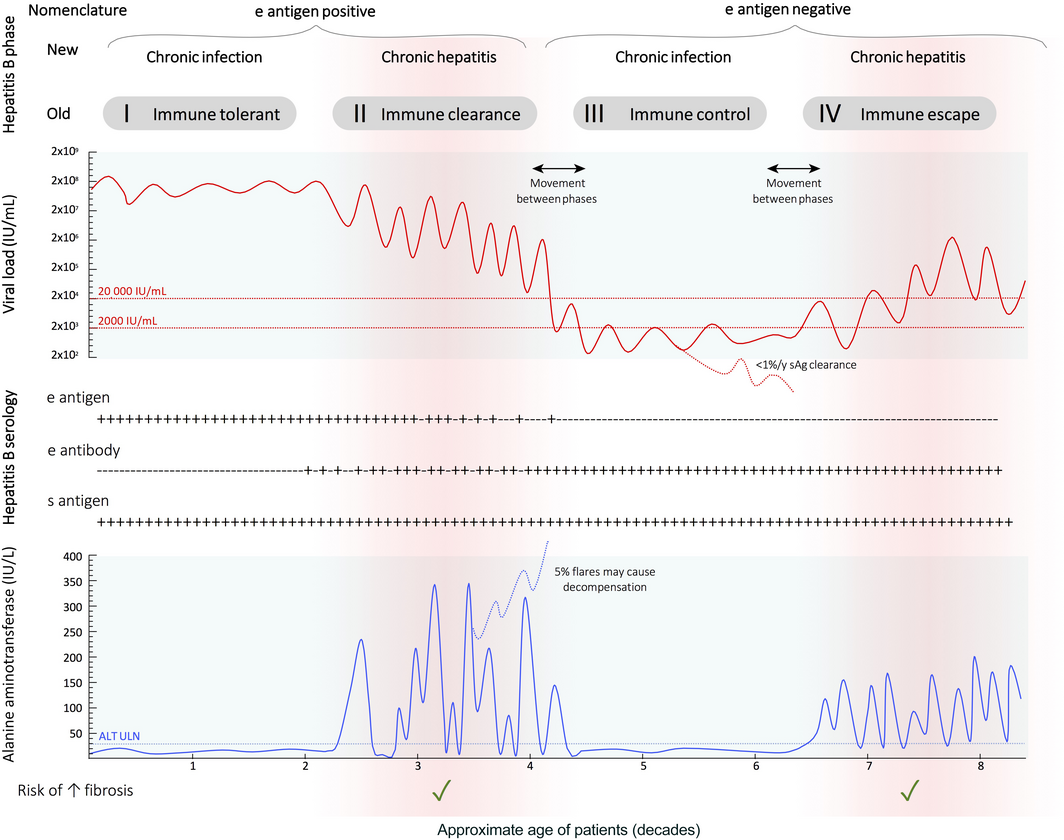
ALT = alanine aminotransferase; ULN = upper limit of normal. The new and old (grey shade) nomenclature for hepatitis phases are shown at the top. To ascertain the phase of chronic hepatitis B, three determinants are required: hepatitis B serology, viral load, and ALT. In general, treatment is indicated for patients in either e antigen positive or negative chronic hepatitis phases (formerly called the immune clearance and immune escape phases) depicted in red shade. Although the phases are conceptualised as sequential steps in the evolution of chronic hepatitis B, there is movement between adjacent phases; therefore, repeated assessment is required to ascertain risk of fibrosis (green ticks) and need for antiviral therapy. The values for viral load (red line) and ALT (blue line) provide an indication of values that may be seen.
Box 8 – Tests, standard nomenclature and interpretation for diagnosis of hepatitis B
|
Test |
Nomenclature |
Interpretation |
|||||||||||||
|
|
|||||||||||||||
|
Hepatitis B surface antigen |
HBsAg |
Current infection |
|||||||||||||
|
Hepatitis B core antibody |
anti‐HBc* |
Past exposure (if sAg negative) |
|||||||||||||
|
Hepatitis B surface antibody |
anti‐HBs |
Immunity to hepatitis B |
|||||||||||||
|
Hepatitis B core antibody IgM |
anti‐HBc IgM |
Acute or recent infection (and flare) |
|||||||||||||
|
|
|||||||||||||||
|
sAg = surface antigen. * In patients with anti‐HBc positive and HBsAg negative serology the presence of hepatitis B virus DNA may persist and is called occult hepatitis B. |
|||||||||||||||
Box 9 – Considerations in the selection of recommended nucleos(t)ide analogue
|
|
Entecavir |
Tenofovir disoproxil* |
|||||||||||||
|
|
|||||||||||||||
|
Prior exposure to nucleoside analogues* |
✗ |
✓ |
|||||||||||||
|
At risk of or confirmed bone disease† |
|
✗ |
|||||||||||||
|
At risk of or confirmed renal disease‡ |
✓§ |
✗ |
|||||||||||||
|
Pregnancy |
✗ |
✓ |
|||||||||||||
|
Decompensated cirrhosis |
✓ |
✓ |
|||||||||||||
|
|
|||||||||||||||
|
* There are three formulations of tenofovir disoproxil: tenofovir disoproxil fumarate (300 mg), tenofovir disoproxil maleate (300 mg) and tenofovir disoproxil phosphate (291 mg). Tenofovir alafenamide fumarate, a preparation used in human immunodeficiency virus antiviral therapy is not currently available on the Pharmaceutical Benefits Scheme for hepatitis B virus monotherapy. † At risk of or confirmed bone disease may include chronic steroid use (or other medications that affect bone density), history of fragility fracture, osteoporosis. ‡ At risk of or confirmed renal disease may include estimated glomerular filtration rate (eGFR) < 60 mL/min/1.73 m2, albuminuria (30 mg/24 h or moderate dipstick proteinuria), low phosphate (< 2.5 mg/dL) or haemodialysis. § The entecavir dose needs to be adjusted if eGFR < 50 mL/min. |
|||||||||||||||
Competing interests
John Lubel has no competing interests. Simone Strasser has received honoraria for advisory board or speaker fees from Bayer, Eisai, AbbVie, Gilead, BMS, MSD, Norgine, Astellas, Novartis, WL Gore, Ipsen, Pfizer, Astra Zeneca, Roche, Chiesi, Dr Falk, Guerbet Australia. Alexander Thompson has received funding from the National Health and Medical Research Council of Australia (MRFF Practitioner Fellowship 1142976), is an advisory board member for Abbvie, Gilead Sciences, Roche Diagnostics, BMS, Merck, Immunocore, Janssen, Assembly Biosciences, Arbutus, Vir Biotechnology, Eisai, Ipsen, Bayer; has received speaker fees from Abbvie, Gilead Sciences, Roche, BMS; and received research and grant support from Gilead Sciences, Merck, BMS, Abbvie, Roche Diagnostics. Jacinta Holmes is in the CSL advisory board and has received speaker fees from Gilead and AbbVie. William Kemp is in the advisory board of Gilead, Bayer and MSD, and has received speaker fees from AbbVie and Bayer. Avik Majumdar is in the advisory board of Gilead and Novartis, has received speaker fees from Gilead and Eisai, and is the recipient of a Gilead Fellowship research grant. David Iser has received speaker fees from AbbVie, Gilead and MSD, and is in the ASHM board of directors. Jessica Howells is the recipient of a Gilead Fellowship research grant. Gail Matthews has received research grants from Gilead and AbbVie
Acknowledgements
Unrestricted grant funding was provided to the Gastroenterological Society of Australia (GESA) for completion of this consensus statement. Details of GESA’s funding sources are available on the website (www.gesa.org.au). Funding was received from unrestricted grants provided by GESA and the Australasian Society for HIV, Viral Hepatitis and Sexual Health Medicine (ASHM), with editorial independence maintained throughout the manuscript development. These organisations provided logistical support only and they had no editorial involvement.
The following collaborators contributed to the design, participation in the mDELPHI process and in the reviewing of this manuscript as well as the online manuscript: Leon Adams, Golo Ahlenstiel, Tanya Applegate, Jennifer Audsley, David Baker, Robert Batey, Sally Bell, Scott Bowden, Wendy Cheng, Paul Clark, Jane Davies, Joshua Davis, Anouk Dev, John Didlick, Gregory Dore, Mark Douglas, Joe Doyle, Samuel Elliott, Jacob George, Michelle Giles, Behzad Hajarizadeh, Margaret Hellard, Thai Hong, Kelly Hosking, Sushena Krishnaswamy, Alice Lee, Christopher Leung, Miriam Levy, Ken Liu, Michaela Lucas, Mei Mak, Marianne Martinello, Geoffrey McCaughan, James O’Beirne, Christopher Pearce, Matthew Penn, Stephen Pianko, Dilip Ratnam, Peter Revill, Jacqui Richmond, Stuart Roberts, Joe Sasadeusz, Nick Shackel, William Sievert, Monica Slavin, Briohny Smith, Sally Spruce, Michael Stormon, Caroline Tallis, Edmund Tse, Thomas Tu, Kumar Visvanathan, Michael Wallace, James Ward, Amany Zekry.
We thank Joanne Mitchell (Project Officer) for her role in coordinating the members of the various working groups as well as providing logistical support for the mDELPHI meetings. [Corrections added on 10 Mar 2022 after first online publication: changes have been made to the Acknowledgements section to thank Joanne Mitchell.]
References
- Brouwers MC, Kho ME, Browman GP, et al. AGREE II: advancing guideline development, reporting and evaluation in health care. J Clin Epidemiol 2010; 63: 1308–1311.
- Trevelyan EG, Robinson PN. Delphi methodology in health research: how to do it? Eur J Integr Med 2015; 7: 423–428.
- MacLachlan JH, Stewart S, Cowie BC. Viral Hepatitis Mapping Project: National Report 2020. Sydney: Australasian Society for HIV, Viral Hepatitis, and Sexual Health Medicine (ASHM); 2020. https://www.ashm.org.au/programs/Viral‐Hepatitis‐Mapping‐Project/ (viewed Jan 2022).
- MacLachlan J, Thomas L, Cowie B. Viral Hepatitis Mapping Project: national report 2017. Sydney: Australasian Society for HIV, Viral Hepatitis and Sexual Health Medicine (ASHM), 2019. https://www.ashm.org.au/products/product/Viral‐Hepatitis‐Mapping‐Project‐2017 (viewed July 2021).
- Department of Health. Third National Hepatitis B Strategy 2018–2022. https://www1.health.gov.au/internet/main/publishing.nsf/Content/ohp‐bbvs‐1/$File/Hep‐B‐Third‐Nat‐Strategy‐2018‐22.pdf (viewed July 2021).
- Romero N, McCulloch K, Allard N, et al. National Surveillance for Hepatitis B Indicators: measuring the progress towards the targets of the National Hepatitis B Strategy — annual report 2019. Melbourne: WHO Collaborating Centre for Viral Hepatitis, Doherty Institute; 2020. https://www.doherty.edu.au/uploads/content_doc/National_Surveillance_for_Hepatitis_B_Indicators_2019_final.pdf (viewed July 2021).
- McCulloch K, Romero N, MacLachlan J, et al. Modeling progress toward elimination of hepatitis B in Australia. Hepatology 2020; 71: 1170–1181.
- Eckman MH, Kaiser TE, Sherman KE. The cost‐effectiveness of screening for chronic hepatitis B infection in the United States. Clin Infect Dis 2011; 52: 1294–1306.
- Suijkerbuijk AWM, van Hoek AJ, Koopsen J, et al. Cost‐effectiveness of screening for chronic hepatitis B and C among migrant populations in a low endemic country. PLoS One 2018; 13: e0207037.
- Allard NL, MacLachlan JH, Tran L, et al. Time for universal hepatitis B screening for Australian adults. Med J Aust 2021; 215: 103–105. https://www.mja.com.au/journal/2021/215/3/time‐universal‐hepatitis‐b‐screening‐australian‐adults
- Kim HC, Nam CM, Jee SH, et al. Normal serum aminotransferase concentration and risk of mortality from liver diseases: prospective cohort study. BMJ 2004; 328: 983.
- Ruhl CE, Everhart JE. Upper limits of normal for alanine aminotransferase activity in the United States population. Hepatology 2012; 55: 447–454.
- Australasian Society for HIV Medicine, Viral Hepatitis and Sexual Health Medicine (ASHM). National Hepatitis B Testing Policy 2020. http://testingportal.ashm.org.au/national‐hbv‐testing‐policy/ (viewed July 2021).
- World Health Organization. Guidelines for the prevention, care and treatment of persons with chronic hepatitis B infection; March 2015. https://www.who.int/publications/i/item/9789241549059 (viewed July 2021).
- MacLachlan J, Allard N, Carville K, et al. Mapping progress in chronic hepatitis B: geographic variation in prevalence, diagnosis, monitoring and treatment, 2013–15. Aust N Z J Public Health 2018; 42: 62–68.
- Sriprayoon T, Mahidol C, Ungtrakul T, et al. Efficacy and safety of entecavir versus tenofovir treatment in chronic hepatitis B patients: A randomized controlled trial. Hepatol Res 2017; 47: E161–E168.
- Tseng CH, Hsu YC, Chen TH, et al. Hepatocellular carcinoma incidence with tenofovir versus entecavir in chronic hepatitis B: a systematic review and meta‐analysis. Lancet Gastroenterol Hepatol 2020; 5: 1039–1052.
- Fattovich G, Bortolotti F, Donato F. Natural history of chronic hepatitis B: special emphasis on disease progression and prognostic factors. J Hepatol 2008; 48: 335–352.
- El‐Serag HB, Rudolph KL. Hepatocellular carcinoma: epidemiology and molecular carcinogenesis. Gastroenterology 2007; 132: 2557–2576.
- Loomba R, Liu J, Yang HI, et al. Synergistic effects of family history of hepatocellular carcinoma and hepatitis B virus infection on risk for incident hepatocellular carcinoma. Clin Gastroenterol Hepatol 2013; 11: 1636–1645.
- Wong VW, Janssen HL. Can we use HCC risk scores to individualize surveillance in chronic hepatitis B infection? J Hepatol 2015; 63: 722–732.
- Papatheodoridis GV, Chan HL, Hansen BE, et al. Risk of hepatocellular carcinoma in chronic hepatitis B: assessment and modification with current antiviral therapy. J Hepatol 2015; 62: 956–967.
- Peng CY, Chien RN, Liaw YF. Hepatitis B virus‐related decompensated liver cirrhosis: benefits of antiviral therapy. J Hepatol 2012; 57: 442–450.
- Lok ASF, McMahon BJ, Brown RS, et al. Antiviral therapy for chronic hepatitis B viral infection in adults: a systematic review and meta‐analysis. Hepatology 2016; 63: 284–306.
- Edmunds WJ, Medley GF, Nokes DJ, et al. The influence of age on the development of the hepatitis B carrier state. Proc Biol Sci 1993; 253: 197–201.
- Wen WH, Chang MH, Zhao LL, et al. Mother‐to‐infant transmission of hepatitis B virus infection: Significance of maternal viral load and strategies for intervention. J Hepatol 2013; 59: 24–30.
- Doyle J, Raggatt M, Slavin M, et al. Hepatitis B management during immunosuppression for haematological and solid organ malignancies: an Australian consensus statement. Med J Aust 2019; 210: 462–468. https://www.mja.com.au/journal/2019/210/10/hepatitis‐b‐management‐during‐immunosuppression‐haematological‐and‐solid‐organ
- Rahier JF, Magro F, Abreu C, et al. Second European evidence‐based consensus on the prevention, diagnosis and management of opportunistic infections in inflammatory bowel disease. J Crohns Colitis 2014; 8: 443–468.
- Amin J, Dore GJ, O’Connell DL, et al. Cancer incidence in people with hepatitis B or C infection: a large community‐based linkage study. J Hepatol 2006; 45: 197–203.
- Bini EJ, Perumalswami PV. Hepatitis B virus infection among American patients with chronic hepatitis C virus infection: prevalence, racial/ethnic differences, and viral interactions. Hepatology 2010; 51: 759–766.
- Bersoff‐Matcha SJ, Cao K, Jason M, et al. Hepatitis B virus reactivation associated with direct‐acting antiviral therapy for chronic hepatitis C virus: a review of cases reported to the US Food and Drug Administration Adverse Event Reporting System. Ann Intern Med 2017; 166: 792–798.
- US Food and Drug Administration. FDA Drug Safety Communication: FDA warns about the risk of hepatitis B reactivating in some patients treated with direct‐acting antivirals for hepatitis C [safety announcement, 2016]. https://www.fda.gov/drugs/drug‐safety‐and‐availability/fda‐drug‐safety‐communication‐fda‐warns‐about‐risk‐hepatitis‐b‐reactivating‐some‐patients‐treated (viewed July 2021).
- Sulkowski MS, Chuang WL, Kao JH, et al. No evidence of reactivation of hepatitis B virus among patients treated with ledipasvir‐sofosbuvir for hepatitis C virus infection. Clin Infect Dis 2016; 63: 1202–1204.
- World Health Organization. Hepatitis D [fact sheet, 2021]. https://www.who.int/news‐room/fact‐sheets/detail/hepatitis‐d (viewed July 2021).
- Chen HY, Shen DT, Ji DZ, et al. Prevalence and burden of hepatitis D virus infection in the global population: a systematic review and meta‐analysis. Gut 2019; 68: 512–521.
- Triantos C, Kalafateli M, Nikolopoulou V, Burroughs A. Meta‐analysis: antiviral treatment for hepatitis D. Aliment Pharmacol Ther 2012; 35: 663–673.
- Heidrich B, Yurdaydin C, Kabaçam G, et al. Late HDV RNA relapse after peginterferon alpha‐based therapy of chronic hepatitis delta. Hepatology 2014; 60: 87–97.
- Wranke A, Calle Serrano B, Heidrich B, et al. Antiviral treatment and liver‐related complications in hepatitis delta. Hepatology 2017; 65: 414–425.
- Kirby Institute. HIV, viral hepatitis and sexually transmissible infections in Australia: annual surveillance report 2018. Sydney: Kirby Institute, UNSW Sydney, 2018. https://kirby.unsw.edu.au/report/hiv‐viral‐hepatitis‐and‐sexually‐transmissible‐infections‐australia‐annual‐surveillance (viewed July 2021).
- Lincoln D, Petoumenos K, Dore GJ; Australian HIV Observational Database. HIV/HBV and HIV/HCV coinfection, and outcomes following highly active antiretroviral therapy. HIV Med 2003; 4: 241–249.
- Colin JF, Cazals‐Hatem D, Loriot MA, et al. Influence of human immunodeficiency virus infection on chronic hepatitis B in homosexual men. Hepatology 1999; 29: 1306–1310.
- Thio C, Seaberg E, Skolasky RJ, et al. HIV‐1, hepatitis B virus, and risk of liver‐related mortality in the Multicentre Cohort Study (MACS). Lancet 2002; 360: 1921–1926.
- Weber R, Sabin CA, Friis‐Møller N, et al. Liver‐related deaths in persons infected with the human immunodeficiency virus: the D:A: D study. Arch Intern Med 2006; 166: 1632–1641.
- Price H, Dunn D, Pillay D, et al. Suppression of HBV by tenofovir in HBV/HIV coinfected patients: a systematic review and meta‐analysis. PLoS One 2013; 8: e68152.
- Tuma P, Medrano J, Resino S, et al. Incidence of liver cirrhosis in HIV‐infected patients with chronic hepatitis B or C in the era of highly active antiretroviral therapy. Antivir Ther 2010; 15: 881–886.
- Mills A, Arribas JR, Andrade‐Villanueva J, et al. Switching from tenofovir disoproxil fumarate to tenofovir alafenamide in antiretroviral regimens for virologically suppressed adults with HIV‐1 infection: a randomised, active‐controlled, multicentre, open‐label, phase 3, non‐inferiority study. Lancet Infect Dis 2016; 16: 43–52.
- Han Y, Zeng A, Liao H, et al. The efficacy and safety comparison between tenofovir and entecavir in treatment of chronic hepatitis B and HBV related cirrhosis: a systematic review and meta‐analysis. Int Immunopharmacol 2017; 42: 168–175.
- Lampertico P, Chan HLY, Janssen HLA, et al. Review article: long‐term safety of nucleoside and nucleotide analogues in HBV‐monoinfected patients. Aliment Pharmacol Ther 2016; 44: 16–34.
- Maggi P, Montinaro V, Leone A, et al. Bone and kidney toxicity induced by nucleotide analogues in patients affected by HBV‐related chronic hepatitis: a longitudinal study. J Antimicrob Chemother 2015; 70: 1150–1154.
- Buti M, Gane E, Seto WK, et al. Tenofovir alafenamide versus tenofovir disoproxil fumarate for the treatment of patients with HbeAg‐negative chronic hepatitis B virus infection: a randomised, double‐blind, phase 3, non‐inferiority trial. Lancet Gastroenterol Hepatol 2016; 1: 196–206.
Provenance: Not commissioned; externally peer reviewed.
Early-Onset Colorectal Cancer With Liver-Only Metastases: A Retrospective Cohort Study Integrating Prospectively Collected Real-World Clinical and Molecular Data From an Australian National Database (2009–2024) to Guide Treatment Planning
Savio G. Barreto, Christos S. Karapetis, Shahid Ullah, Matthew Burge, Susan Caird, Angus Campbell, Azim Jalali, Ross Jennens, Muhammad A. Khattak, Belinda Lee, Stephanie H. Lim, Shehara Mendis, Louise Nott, Timothy J. Price, Jeremy D. Shapiro, Jeanne Tie, Javier Torres, Colin Williams, Rachel Wong, Vanessa Wong, Peter Gibbs
Australian Pathways for Specialist Pain Management and Early Palliative Care for People With Pancreatic Cancer: Developed Using a Community Consensus Approach
Jennifer Philip, Melanie R. Lovell, Kylee Bellingham, Gail Garvey, Gregory B. Crawford, Nicole M. Rankin, Kara Burns, Isabel Young, Vivienne Milch, Dorothy Keefe, Katrina Anderson, James Lawson, Meinir Krishnasamy
Cause‐specific mortality among Queensland people with cirrhosis, by cirrhosis aetiology and decompensation status, 2007–22: a retrospective cohort study
Vikas Bhasker, Jessica R Fong, Paul J Clark, Gunter F Hartel, Richard Skoien, James O’Beirne, Elizabeth E Powell, Patricia C Valery
Clinical practice guidelines for hepatocellular carcinoma surveillance for people at high risk in Australia: summary of recommendations
Jacob George, Nicole L Allard, Stuart K Roberts, Leon A Adams, Jane Davies, Behzad Hajarizadeh, Jennifer H MacLachlan, Suzanne E Mahady, Rosalie Altus, Catherine Brown, David C Fry, Belinda Greenwood‐Smith, Natali Smud, Patricia C Valery, Nafisa Yussf, Kate Broun, Denise Campbell, Karen Canfell, Chelsea Carle Harrison, Victoria Freeman, Paul Grogan, Catherine Holliday, Suzanne Hughes, Anna Kelly, Cathelijne Kemenade, Claire Latumahina, Amanda McAtamney, Megan Varlow, Joachim Worthington, Susan Yuill, Eleonora Feletto
Assessment of metabolic dysfunction‐associated fatty liver disease in primary care: a consensus statement summary
Leon A Adams, William W Kemp, Kate R Muller, Elizabeth E Powell, Stuart K Roberts, Luis Calzadilla Bertot, Stephanie Best, Gary Deed, Jon D Emery, Samantha L Hocking, Graham R Jones, John S Lubel, Sinead Sheils, Stephen M Twigg, Gerald F Watts, Jacob George
Treatment outcomes for people with hepatitis C referred to tertiary care in Victoria, 2021–22: a retrospective observational study
Elly Layton, Nicole Matthews, Brendan Quinn, Nasra Higgins, Gabrielle Lindeman, Mielle Abbott, Jennifer MacLachlan, Elizabeth Birbilis, Margaret E Hellard, Joseph Doyle, Benjamin C Cowie, Mark Stoové