




Volume 208 - Issue 10
Identifying and treating codeine dependence: a systematic review
Authors: Suzanne Nielsen, Tim MacDonald and Jacinta L Johnson
Med J Aust 2018; 208 (10): 451-461. || doi: 10.5694/mja17.00749
Published online: 12 February 2018
Published online: 12 February 2018
Abstract
Objectives: Codeine dependence is a significant public health problem, motivating the recent rescheduling of codeine in Australia (1 February 2018). To provide information for informing clinical responses, we undertook a systematic review of what is known about identifying and treating codeine dependence.
Study design: Articles published in English that described people who were codeine-dependent or a clinical approach to treating people who were codeine-dependent, without restriction on year of publication, were reviewed. Articles not including empirical data were excluded. One researcher screened each abstract; two researchers independently reviewed full text articles. Study quality was assessed, and data were extracted with standardised tools.
Data sources: MEDLINE and EMBASE were searched for relevant publications on 22 November 2016. The reference lists of eligible studies were searched to identify further relevant publications. 2150 articles were initially identified, of which 41 were eligible for inclusion in our analysis.
Data synthesis: Studies consistently reported specific characteristics associated with codeine dependence, including mental health comorbidity and escalation of codeine use attributed to psychiatric problems. Case reports and series described codeine dependence masked by complications associated with overusing simple analgesics and delayed detection. Ten studies described the treatment of codeine dependence. Three reports identified a role for behavioural therapy; the efficacy of CYP inhibitors in a small open label trial was not confirmed in a randomised controlled trial; four case series/chart reviews described opioid agonist therapy and medicated inpatient withdrawal; two qualitative studies identified barriers related to perceptions of codeine-dependent people and treatment providers, and confirmed positive perceptions and treatment outcomes achieved with opioid agonist treatments.
Conclusion: Strategies for identifying problematic codeine use are needed. Identifying codeine dependence in clinical settings is often delayed, contributing to serious morbidity. Commonly described approaches for managing codeine dependence include opioid taper, opioid agonist treatment, and psychological therapies. These approaches are consistent with published evidence for pharmaceutical opioid dependence treatment and with broader frameworks for treating opioid dependence.
PROSPERO registration: CRD42016052129.
Codeine is globally the most frequently used opiate,1 and its consumption is increasing. In Australia, 27 780 234 packs of codeine-containing analgesics were supplied by community pharmacies during 2013, a rate of 1.24 packs per person.2 In New Zealand, most of Canada, South Africa, Ireland, and the United Kingdom, codeine is available over the counter, usually combined with simple analgesics such as paracetamol or ibuprofen;3 until recently, it was also available without prescription in Australia and France. Products containing greater amounts of codeine are generally only available on prescription.3
Codeine has low affinity for and intrinsic activity at µ-opioid receptors, and is considered a prodrug; its analgesic effects depend largely on its being converted to morphine by the polymorphic cytochrome P450 isoenzyme (CYP) 2D6.4,5 Genetic variability in the activity of CYP2D6 underlie interperson differences in the analgesia achieved and the risk of opioid toxicity.6 Tolerance can develop after a relatively short period of regular use.7-9
In view of the limited evidence that adding low dose codeine (< 30 mg) to simple analgesics increases pain relief,10-15 the variability in its metabolism, and the availability of opioids with more predictable effects, the role of codeine in pain management is contentious.16,17
The liability of codeine to be misused has been shown in a randomised, double blind, placebo-controlled drug administration study,18 and has been documented in several case series.19,20 Although the prevalence of codeine dependence is unknown, the harms associated with overuse are well established, including serious morbidity causing great cost to the health care system.21
Some harms associated with codeine overuse are directly related to prolonged intake, but many serious consequences stem from concomitant overconsumption of ibuprofen or paracetamol in combination products.19 Sequelae of supratherapeutic ibuprofen ingestion secondary to codeine dependence that require intensive care have been described, including several codeine-related deaths.22 As a result, access to over-the-counter codeine has been restricted or removed in Manitoba (February 2016), France (July 2017), and Australia (February 2018).23-25
In order to respond appropriately, we need to identify people who are codeine-dependent. There has been greater awareness of dependence with the imminent rescheduling of codeine in Australia. Both in Australia and internationally, presentations to addiction treatment services have increased,26-28 but treatment approaches for codeine dependence are poorly defined. The purpose of our systematic review was to identify the characteristics of people who are codeine-dependent, and to define approaches for identifying codeine dependence.
Methods
Search strategy
We searched MEDLINE and EMBASE on 22 November 2016 for the following terms: “codeine”, “dependence”, “substance-related disorders”, “opioid-related disorders”, “behaviour, addictive”, and “substance withdrawal syndrome” (online Appendix, table 1). We restricted our search to human studies published in English; there was no restriction on year of publication. The reference lists of eligible studies were searched to identify further relevant publications.
One reviewer (SN, JJ or TM) independently examined the titles and abstracts of identified articles. The full text of relevant articles was independently assessed for inclusion by two authors, and reasons for exclusion documented as appropriate. Inter-reviewer disagreement about inclusion was resolved by consensus among all three authors.
Study inclusion criteria
We included studies that described people who were codeine-dependent (identification studies) or any clinical approach for treating people who were codeine-dependent (treatment studies).
Data extracted from identification studies included study characteristics (author, location, design, quality rating) and population characteristics (participant age, sex, employment, mental health, pain and substance use history, adverse effects related to codeine use, and management of adverse effects).
Treatment studies included randomised and non-randomised controlled trials, quasi-experimental, before-and-after studies, prospective and retrospective cohort studies, case–control studies, analytic cross-sectional studies, qualitative studies, and case reports and series. Treatment outcome measures included change in codeine use (days of use or amount used), retention in treatment, adverse events and other outcomes related to codeine use, opioid dependence, and pain.
Exclusion criteria
Reports limited to describing the clinical applications or pharmacology of codeine or other opioids, reports that did not separately report codeine-related data, and articles without empirical data (eg, letters, commentaries, reviews) were excluded (online Appendix, table 2).
Assessment of methodological quality (identification studies)
The quality of descriptive studies was assessed with a modified version of the Joanna Briggs Institute (JBI) Critical Appraisal Checklist for Analytical Cross Sectional Studies.29 To enable application of a single tool to all study methodologies, the JBI tool was reduced from eight to five items, and an item from the Evidence-Based Librarianship (EBL) Critical Appraisal Tool for assessing sample bias was added30 (online Appendix, table 3). The range for total scores was 0–6, higher scores reflecting higher quality.
Grading of evidence (treatment studies)
Studies examining treatment approaches were scored for quality according to GRADE criteria.31
Data collection
Data were extracted with a standardised data extraction tool into an Excel (Microsoft) spreadsheet. The tool was piloted and reviewed before being finalised.
Data synthesis
Findings were qualitatively and quantitatively synthesised when population characteristics were reported in a manner that enabled this approach. Meta-analysis of treatment studies was not possible because of the heterogeneity of study designs. When individual patient data were reported, details were extracted at the patient level to enable synthesis of patient characteristics.
Results
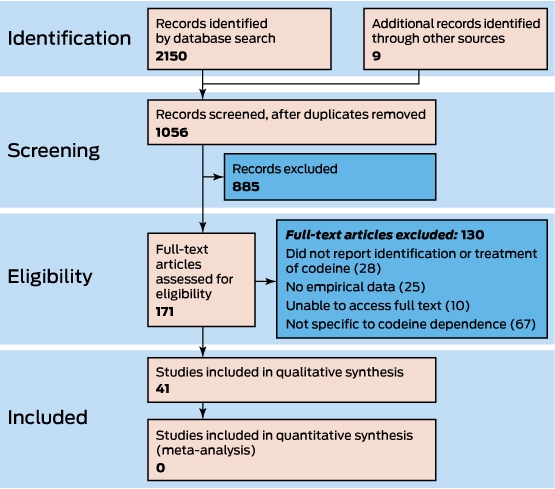
Of the 2150 articles initially identified, 41 were eligible for inclusion in our analysis (Box 1). The mean study quality score of the included articles was 3.0 (standard deviation [SD], 1.1).
Identifying codeine dependence
Fourteen reports described samples of patients who were codeine-dependent (Box 2; online Appendix, table 4A); 22 described presentations by individual patients (Box 3, Box 4; online Appendix, tables 4B and C). No studies reported developing an approach for identifying people with codeine dependence as an aim, but two reported applying the Severity of Dependence Scale (SDS)32 for defining codeine dependence (cut-off score, 5).33,34
Analyses of administrative data
Three studies examined data from administrative sources on the treatment of people for opioid dependence.28,35,36 An Australian study compared codeine-related treatment episodes with those for patients for whom another prescribed opioid or heroin was the chief drug of concern. The proportion of women among those treated for codeine dependence declined from 70% in 2002 to 47% in 2011; people for whom codeine was the drug of concern were on average older and less likely to have a history of intravenous and illicit substance use than those treated for misuse of stronger prescription opioids or heroin.28 A study of codeine prescriptions in Norway found that 0.5% of all codeine recipients in 2005 were likely to be using codeine problematically (annual prescription level exceeding twice the maximum daily dose for 12 months); further, high dose prescribing of benzodiazepines was more prevalent in this group.35 A South African study of national data on treatment for substance misuse (alcohol, pharmaceutical and illicit drugs) found that 2.5% of admissions involved codeine, and that codeine was recorded as the primary substance of concern for 0.8% of patients.36
Quantitative convenience samples
Two studies included convenience samples of people who reported using codeine. In an Australian web-based survey, 137 codeine-dependent participants were compared with 633 non-dependent participants; characteristics associated with dependence (assessed with the SDS) included taking higher than recommended doses, experiencing psychological distress, previous drug treatment, and chronic pain.33 A 1999 Canadian postal survey on prescribed and over-the-counter codeine (participants recruited via newspaper advertisements) found that 37% of respondents met DSM-IV criteria for codeine dependence, most of whom reported chronic pain and family histories of substance use problems.20
Case–control study
A prospective case–control study described patients attending an addiction medicine clinic in China who were dependent on a codeine-containing cough syrup.37 This imaging study found that the patients, who exhibited increased impulsivity, had cortical white matter microstructural abnormalities.37
Qualitative studies
Three qualitative studies have examined the perceptions of pharmacists and codeine-dependent people.34,38,39 A British author38 described the perception that dependence is not identified early, the challenges posed by the stigma attached to dependence, the fact that codeine-dependent people saw themselves as different to users of illicit opioids, and medical reasons for initiating codeine use.38 A recent Irish study similarly described social stigma as a treatment barrier, and reported emotional distress as a driver for codeine use.34
Two typologies of codeine dependence have been proposed:38,39 users who do not exceed therapeutic doses, and codeine-dependent people who consume high doses of the drug. The second group is characterised by severe dependence and harms. Additional typologies include recreational users39 and people who slightly exceed recommended doses.38
Retrospective chart reviews and case series
Five case series or retrospective chart reviews19,40-43 identified common features of people with codeine dependence, including higher proportions of women than among those treated for misuse of other opioids, histories of problematic alcohol use, mental health comorbidity, and serious side effects resulting from using combination medicines containing codeine, including one death.41 Prior heroin dependence was rare.
Reports on individual patients
Twenty-two reports described 49 individuals who were codeine-dependent44-65 (Box 3, Box 4; online Appendix, tables 4B and 4C). Twenty-three were women (mean age, 42 years [SD, 9 years]). Of the 15 people for whom data on employment status were reported, nine were employed. Acute harms and information on treatment approaches were described. Inherent to cases of acute harm were complications attributable to the co-medications paracetamol and ibuprofen, including distal renal tubular acidosis, hypokalaemia, gastritis and other enteropathies, medication overuse headache, hepatic necrosis, hypoalbuminaemia, microcytic anaemia, and weight loss. In a case series of 27 patients,19 most had initiated codeine to treat pain but later escalated their intake for other reasons; this was also reported in many case reports.
Acute management of harms was characterised by inpatient hospital management of serious problems (often requiring intensive care) to restore electrolyte balance,47,58,59 manage gastrointestinal symptoms44,53 (including bowel resection),56 and to assess or treat hepatotoxicity.50,64 Opioid withdrawal was managed with symptomatic medications and buprenorphine; potential hepatotoxicity was managed with acetylcysteine.64
Psychiatric comorbidity in people with codeine dependence was dominated by high prevalence conditions (depression and anxiety disorders).20,27,44,48,53,58,60,61 Some reports described prior or comorbid addictions (benzodiazepines, opioids, alcohol),34,35,40,42,60 and mental health conditions.20,40-42,60 Bipolar disorder,27,42 obsessive–compulsive disorder,62 relationship breakdown,47 suicide behaviour,51,56 and bereavement or loss47 were also described.
Individual patient reports described treatment approaches, including attempted self-management,45,65 use of symptomatic medications,60 prescribed codeine or dihydrocodeine49,52 or buprenorphine and naloxone,52,54,65 and detoxification with methadone.48 Management of mental health symptoms with antidepressants and behavioural therapies was described.48,54,55,65 One notable case combined methadone taper, cognitive behavioural therapy, and relaxation strategies, enabling codeine cessation and self-management of pain.48 Resolution of presenting complaints (obsessive–compulsive disorder, medication overuse headache) after codeine cessation was described.62,63
Treatment studies
Ten studies described treatment approaches in detail (Box 5; online Appendix, table 4D). Common medication-based approaches included taper from codeine with symptomatic medications such as clonidine or benzodiazepines,42,67 buprenorphine maintenance,19,27 CYP inhibitors,66,68 and gradual self-managed taper.38 Positive outcomes for opioid agonist treatment (methadone and buprenorphine with or without naloxone) were described.19,27,34,38,40,43,69 The role of internet support groups38 and psychosocial treatments, including cognitive behavioural therapy, were highlighted in some studies.42,67,69
Two studies tested the hypothesis that preventing the O-demethylation of codeine to morphine with CYP inhibitors would reduce codeine use.66,68 Initial promising results from an open label pilot study of fluoxetine (14 subjects)66 were not replicated in a small randomised controlled trial that compared the effectiveness of fluoxetine or quinidine (two potent CYP2D6 inhibitors) with placebo.68
A retrospective review of inpatient admissions described taper with clonidine and benzodiazepines, combined with an intensive 4-week mental health treatment program.42 Patients had a mean stay of 42 days (SD, 23 days), with withdrawal symptoms requiring treatment for a mean 16 days (SD, 10 days). Taper with buprenorphine was described by an Australian study which noted that codeine dependence was more likely to be treated with taper rather than maintenance.27 Relapse after taper was not uncommon.34,42
A single arm study (11 patients) found that cognitive behavioural therapy could significantly reduce codeine use — six patients ceased using codeine altogether — and neuropsychological functioning was improved by codeine reduction or cessation without deterioration in pain or quality of life.67 A mixed methods study also highlighted the role of psychological therapies.69
Seven studies described treatment with opioid agonists,19,27,34,38,40,43,69 four of which did not report outcomes.19,34,40,69 One small retrospective cohort study described high retention rates for patients treated with buprenorphine over 28 days (median daily dose, 12–16 mg); one patient described initial sedation that necessitated reducing the dose.43
Two qualitative studies described positive experiences and outcomes for treatment with methadone and buprenorphine, despite patient concerns about the treatment experience and the clinic environment.34,38
According to GRADE criteria, the quality of evidence from treatment studies was very low to low; most studies were retrospective and descriptive, and all had small sample sizes.
Discussion
Our review of codeine-dependent people indicates that approximately equal proportions of men and women are involved; their mean age is greater than for patients treated for problematic use of other opioids, the prevalence of mental health comorbidity is high, identification of dependence is often delayed, and patients experience serious complications associated with excessive consumption of combination products that include codeine. Problematic codeine use was associated with mental health problems. The quality and methodology of the studies we assessed varied considerably, but their depictions of the features associated with codeine dependence were consistent, describing a clinically challenging area in which under-reporting is highly likely. The reports highlight the importance of asking about the use of non-prescribed analgesics in a range of health care situations, particularly when gastrointestinal complications are identified. The diversity of those affected and the high level of morbidity suggest that population level interventions are required for screening and prevention wherever codeine is available over the counter. Careful questioning about recent patterns of use, the reasons for taking codeine, and withdrawal symptoms upon cessation may help identify when a patient should be comprehensively assessed for an opioid use disorder.
Treatment approaches include self-management with internet support, psychological treatments, symptomatic medications for opioid withdrawal, and opioid agonist treatments. In particular, buprenorphine treatment undertaken according to current guidelines was commonly described. Studies of opioid taper found that relapse was common (consistent with taper for opioid dependence in general). Taken together, the treatment studies and case reports provide evidence that opioid agonist treatments, combined with psychosocial adjuncts, may be suitable and acceptable to patients. The evidence, albeit low in quality, indicates that positive treatment outcomes could be achieved with these approaches.
In the absence of specific high quality evidence, judgements about approaches for treating people with codeine dependence must be based largely on studies of opioid dependence. The effectiveness of treatment with methadone and buprenorphine has been reported, and maintenance is more effective than withdrawal and detoxification for people who are dependent on pharmaceutical opioids70 or opioids in general.71 Research on selecting patients for treatment with opioid agonists is limited. According to the general principles of treatment, diagnosis of opioid dependence must first be confirmed.72 A stepped care approach with less intensive treatment (eg, taper, counselling) for low severity dependence is recommended by national guidelines.72 Patients who unsuccessfully attempt taper may be considered for maintenance opioid agonist treatment, which achieves better treatment outcomes than detoxification for pharmaceutical opioid dependence.71 Because of wide variations in codeine metabolism, predicting opioid requirements with dose conversion tables is challenging;43 for this reason their use is discouraged.
Psychological adjunct therapies can be beneficial,73 but the role of psychosocial interventions as accompaniments to opioid agonist treatments requires further research.74 The high prevalence of mental health comorbidities and the preference of patients for online support may indicate that online interventions for managing comorbidity may be useful. In general, the role of pharmacological treatments for depression or anxiety at the start of treatment is unclear. It is recommended that comorbidities are assessed after a period of abstinence because of the potential for diagnostic uncertainty caused by the acute effects of opioid toxicity and withdrawal.75
The treatment setting is also important. People consuming larger amounts of opioids together with sedatives (eg, benzodiazepines) are a population at greater risk, and referral to a specialist may be required.72 Characteristics that may indicate that patients are appropriate for managing in primary care include being employed, having social support, and not having another substance use disorder or a history of illicit drug use.
Medication overuse headache
Headache is a common reason for initiating codeine use by patients who develop dependence.19,61 Paradoxically, medication overuse headache — in this context, exacerbation of a pre-existing headache disorder by excessive intake of codeine — is another potential complication of codeine dependence.48,55,63 Data that might guide the management of codeine overuse headache specifically have not been published. Management of opioid-related medication overuse headache usually consists of patient education, opioid withdrawal, and the initiation of prophylactic agents,76-78 often in an inpatient setting.76 Medication overuse headache that results from overusing analgesics, compared with overuse of triptans, is associated with a greater withdrawal headache duration (about 10 days),79 with meaningful improvement only after 12 weeks or more,80 and high relapse rates (eg, 71% at 4 years81).
Limitations of our analysis
Comparing codeine dependence in different groups of patients was made difficult by changing usage patterns over time, subgroup heterogeneity, and probable under-reporting of codeine use. Methodological constraints included low participant numbers, selection biases (admissions, help-seeking or co-medication sequelae as a proxy for neuroadaptation to codeine), and a lack of objective and standardised criteria for determining codeine dependence. Many studies employed internet-based recruitment or data collection,33,38 potentially limiting the generalisability of findings to users without regular internet access, but this might be offset by the ability to reach users who are otherwise difficult to reach. Some studies did not specify whether codeine was prescribed or obtained over the counter, but most reports were concerned with over-the-counter codeine. Many studies that included codeine-dependent people were excluded from our analysis because they did not separately describe codeine dependence; this particularly applied to studies of medication overuse headache. Nevertheless, our review is the most comprehensive synthesis of data on the phenomena of codeine dependence, and we have described a range of potential treatment responses, including medication- and non-medication-based treatments.
Conclusion
Codeine dependence can be identified by screening patients who present with acute complications associated with taking combination analgesics, and by routine questioning about over-the-counter medication use. Common treatment approaches include detoxification and opioid agonist treatment. Clinical leadership in providing guidance about how to identify and treat individuals with codeine dependence is required as a matter of public health.
Box 1 – Preferred Reporting Items for Systematic Reviews and Meta-Analyses (PRISMA) diagram of study selection
Box 2 – Studies describing characteristics of people who were codeine-dependent
|
Study |
Design, location |
Sample size, type |
Sex (women) |
Age (years) |
Quality rating |
||||||||||
|
|
|||||||||||||||
|
Sproule 199920 |
Survey, Canada |
339 people who had used codeine 3 days/week for at least 6 months |
51% |
mean, 43.5 (range, 18–82) |
5 |
||||||||||
|
Fredhein 200935 |
National prescription database, Norway |
385 190 people prescribed codeine during 2005 |
56% |
mean, 52.3 (SD, 18.8) |
5 |
||||||||||
|
Frei 201019 |
Case series of patients who presented or were referred to hospital addiction medicine, Australia |
27 treatment admissions for serious harms from over-the-counter ibuprofen–codeine products |
48% |
= 20 |
3 |
||||||||||
|
Thekiso 201042 |
Retrospective chart review, Ireland* |
20 inpatients admitted with over-the-counter codeine abuse or dependence |
65% |
mean, 49 (SD, 23) |
4 |
||||||||||
|
McAvoy 201140 |
Case series, New Zealand* |
15 patients presenting for over-the-counter codeine detoxification |
46% |
mean, 44 (range, 30–60) |
3 |
||||||||||
|
McDonough 201141 |
Retrospective chart review, Victoria |
32 people referred to hospital drug and alcohol services for excessive over-the-counter codeine use (Sept 2005 – Sept 2010) |
72% |
median, 38 |
2 |
||||||||||
|
Nielsen 201133 |
Online survey, Australia |
137 people who met criteria for codeine dependence (subset of 800 people reporting over-the-counter codeine use) |
66% |
mean, 37 (SD, 13) |
3 |
||||||||||
|
Cooper 201338 |
Qualitative interviews, United Kingdom* |
25 participants recruited from internet support groups |
52% |
20–60s |
3 |
||||||||||
|
Nielsen 201339 |
Survey (qualitative research methodology), Australia |
20 codeine-dependent people |
60% |
mean, 39 (SD, 11) |
2 |
||||||||||
|
Dada 201536 |
National administrative treatment dataset, South Africa |
425 codeine-related admissions to alcohol and other drug treatment centres, 137 with codeine as drug of primary concern |
25% |
11–70 (20–39 years: 59%) |
2 |
||||||||||
|
Nielsen 201528 |
Cross-sectional study of national administrative datasets, Australia |
4424 codeine treatment episodes |
70% (2002) 47% (2011) |
mean, 36 |
2 |
||||||||||
|
Nielsen 201527 |
Retrospective chart review, Australia* |
135 (53 codeine-dependent) |
66% |
mean, 38 (SD, 8) |
4 |
||||||||||
|
Qiu 201537 |
Case–control study mapping brain differences, China |
60 (30 codeine-dependent people, 30 controls) |
7% |
mean, 25 |
2 |
||||||||||
|
Van Hout 201534 |
Qualitative interviews, Ireland* |
21 participants recruited through drug treatment centres (in treatment or in recovery for over-the-counter codeine use) |
57% |
mean, 39 (range, 26–62) |
2 |
||||||||||
|
|
|||||||||||||||
|
SD = standard deviation. * Study also included in (treatment approaches). For further details, see online Appendix, table 4A. |
|||||||||||||||
Box 3 – Individual patient reports: acute description or management of codeine-related harms
|
Study |
Location of patient (age, sex) |
Harms from codeine use |
Details of codeine dependence |
Treatment |
|||||||||||
|
|
|||||||||||||||
|
Faierman 197350 |
USA (male, 30) |
Hepatic injury with extensive fibrosis attributed to terpin hydrate component of cough syrup, as opposed to codeine |
16–20 ounces codeine cough syrup daily |
Not reported |
|||||||||||
|
Wylie 199464 |
Scotland (female, 37) |
Elevated liver enzyme levels |
Up to 30 × 500 mg paracetamol/30 mg codeine phosphate per day |
Treated for potential hepatotoxicity with acetylcysteine; discharged after 2 days |
|||||||||||
|
Dyer 200447 |
United Kingdom (male, 49) |
Perforated duodenal ulcer 3 years previously (inappropriate ibuprofen use), hypokalaemia |
30 × 200 mg ibuprofen/12.8 mg codeine in the 3 days before admission. GP reported their taking 24 tablets at once previously |
Serum potassium corrected with intravenous potassium therapy; advised that Nurofen Plus misuse caused his recurrent hypokalaemic episodes; offered assistance |
|||||||||||
|
Dutch 200846 |
Australia (female, 39) |
Anterior gastric antrum ulcer and 2.6 L of green turbid fluid in the peritoneal cavity |
16–24 × 200 mg ibuprofen/12.8 mg codeine per day for 3 weeks |
Transferred to intensive care in another hospital |
|||||||||||
|
|
Australia (male, 41) |
Gastric antrum ulcer with gross abdominal contamination |
“A packet” of 200 mg ibuprofen/12.8 mg codeine per day for one year |
Postoperatively, patient offered inpatient drug treatment, absconded before transfer arranged |
|||||||||||
|
Karamatic 201153 |
Australia (male, 42) |
Multiple jejunal ulcers with early structuring consistent with NSAID enteropathy |
10 × 200 mg ibuprofen/12.8 mg codeine phosphate per day |
40 mg omeprazole, 15 mg mirtazapine daily; 5 mg oxycodone every 4–6 h as needed |
|||||||||||
|
|
Australia (female, 41) |
Multiple web-like strictures with circumferential ulceration throughout small bowel consistent with NSAID enteropathy |
20 × 200 mg ibuprofen/12.8 mg codeine phosphate per day, 5 years |
Iron supplement |
|||||||||||
|
|
Australia (male, 41) |
Multiple jejunal ulcers |
10–12 × 200 mg ibuprofen/12.8 mg codeine phosphate per day, > 5 years |
Omeprazole and amitriptyline daily; hyoscine butylbromide, paracetamol and codeine and tramadol as needed |
|||||||||||
|
Ng 201158 |
Australia (female, 32) |
Oesophageal erosions, benign gastric ulcer, enlarged, oedematous kidneys without nephrocalcinosis |
20 × 200 mg ibuprofen/12.8 mg codeine phosphate per day |
Electrolyte replacement |
|||||||||||
|
|
Australia (male, 37) |
Progressive muscle weakness, low serum potassium level, biochemical features consistent with distal renal tubular acidosis |
24 × 200 mg ibuprofen/12.8 mg codeine per day |
Electrolyte replacement, buprenorphine maintenance therapy |
|||||||||||
|
|
Australia (female, 45) |
Microcytic anaemia, gastric antral ulceration with a peptic oesophageal stricture |
50 × 200 mg ibuprofen/12.8 mg codeine phosphate per day |
Electrolyte replacement |
|||||||||||
|
|
Australia (male, 40) |
Generalised weakness associated with hypokalaemia, with distal renal tubular acidosis |
1.4–2.0 g ibuprofen in codeine combination product per day for 3 months |
Electrolyte replacement |
|||||||||||
|
Page 201159 |
Australia (females, 35, 39; males, 41, 55) |
Renal tubular acidosis, normal anion gap metabolic acidosis |
Longstanding misuse of ibuprofen (5–18 g/day) and codeine (320–1152 mg/day) in over-the-counter medications |
Biochemical recovery of all patients; two patients required intensive care admission for central venous access and potassium replacement |
|||||||||||
|
Lake 201356 |
Australia (male, 35) |
Small bowel stricture secondary to NSAID, loss of partner and employment |
Up to 90 × 200 mg ibuprofen/ 12.8 mg codeine phosphate per day, clear salience and neuroadaptation |
Exploratory laparotomy and small bowel resection; patient controlled concomitant ketamine use; community drug treatment on discharge |
|||||||||||
|
Roussin 201361 |
France (females, 38, 38, 42, 47; males, 42, 55) |
Included depressive mood, and constipation and vertigo |
120–200 mg codeine phosphate in combination product with paracetamol per day for 1–10 years |
Not reported |
|||||||||||
|
Ammit 201644 |
Australia (female, 39) |
Gastric erosion and renal tubular acidosis |
520 mg/day (over-the-counter ibuprofen combination) for past year; increased with physical and psychological stress |
Symptomatic medication (diazepam, paracetamol, baclofen); balloon enteroscopy/dilation (small bowel obstruction); education about harms of ibuprofen. Following admission: opioid substitution therapy, counselling and 12-step program |
|||||||||||
|
|
|||||||||||||||
|
NSAID = non-steroidal anti-inflammatory drug. For further details, see online Appendix, table 4B. |
|||||||||||||||
Box 4 – Individual patient reports: treatment of codeine dependence, with or without management of acute harms
|
Study |
Location (sex, age) |
Harms from codeine use |
Details of codeine dependence |
Treatment and outcome |
|||||||||||
|
|
|||||||||||||||
|
Gruber 194851 |
USA (male, 57) |
Neuroadaptation and decline in functioning, loss of weight, likely maintenance of chronic pain symptoms, suicide following withdrawal |
Intravenous codeine up to 4.8 g daily in weeks before hospitalisation; 660 mg per day in previous months |
Reducing doses of intravenous codeine over 12 days; 100 mg pethidine iv 4–6 times per day (days 3–11), acetylsalicylic acid injections (days 12–15) |
|||||||||||
|
Vaughan 196763 |
New Zealand (male, 53) |
Renal failure (fatal) |
8–12 aspirin/phenacetin/codeine tablets daily, several years |
Supportive therapy |
|||||||||||
|
New Zealand (female, 39) |
Renal failure (fatal) |
50 aspirin/phenacetin/codeine tablets per week |
Symptomatic treatment for renal failure |
||||||||||||
|
New Zealand (female, 70) |
Analgesic nephropathy |
8 aspirin/phenacetin/codeine tablets per day, 20 years |
|
||||||||||||
|
New Zealand (male, 28) |
Possible medication overuse headache |
6–20 aspirin/phenacetin/codeine tablets per day, 20 years |
Education on link between symptoms and analgesic use; patient ceased analgesics |
||||||||||||
|
Senjo 198962 |
Japan (male, 34) |
Suspected codeine use contributed to obsessive–compulsive disorder in both patients |
10-year history of codeine use |
Inpatient stay (2 months); withdrawal symptoms after 5 days codeine-free |
|||||||||||
|
|
Japan (male, 35) |
10-year history of codeine use |
Patient was violent after 2 days, transferred to another hospital |
||||||||||||
|
Bedi 199145 |
India (male, 42) |
Dependence and opioid withdrawal symptoms |
Two bottles Phensedyl (total content: 450 mg codeine, 366 mg ephedrine, 180 mg promethazine) per day |
Loperamide, diazepam, nitrazepam; supportive psychotherapy and family counselling advocated; drugs reduced over 10 days |
|||||||||||
|
Eng 199648 |
USA (male, 54) |
Medication overuse headache |
6–15 × paracetamol/codeine tablets |
Detoxification (methadone); referral to anxiety disorders program (diagnosed with GAD), CBT, taught relaxation |
|||||||||||
|
Lake 200855 |
USA (female, 39) |
Transformation of episodic to daily headache |
10 butalbital with codeine and acetaminophen tablets per day for pain control for past year |
Withdrawn from butalbital, codeine; coached in relaxation techniques. After multiple admissions: weekly psychotherapy, formal substance abuse program, observed urine drug screens). CBT, pain management.12-step program |
|||||||||||
|
Evans 201049 |
New Zealand (male, 35) |
Acute gastric ulcer, severe gastritis and post-bulbar duodenitis with active bleeding |
More than 100 × 200 mg ibuprofen/12.8 mg codeine phosphate per day for back pain |
Reducing codeine dose prescribed; counselling |
|||||||||||
|
Robinson 201060 |
New Zealand (male, 53) |
Gastric ulcer, gastric bleeding, hepatotoxicity |
60–80 × 200 mg ibuprofen/12.8 mg codeine phosphate per day, 2 years |
Treatment not reported |
|||||||||||
|
|
New Zealand (female, 31) |
Peptic ulcer and anaemia |
48 × 200 mg ibuprofen/12.8 mg codeine phosphate per day, 2 years |
|
|||||||||||
|
|
New Zealand (female, 63) |
Gastric ulcer |
20 × 200 mg ibuprofen/12.8 mg codeine phosphate (and prescription codeine) per day, 3 years |
|
|||||||||||
|
|
New Zealand (female, 47) |
“Inflammatory bowel disease” |
Up to 72 × 200 mg ibuprofen/12.8 mg codeine phosphate per day, one year |
|
|||||||||||
|
|
New Zealand (male, 52) |
Ileal resection |
Up to 80 × 200 mg ibuprofen/12.8 mg codeine phosphate per day, one year |
|
|||||||||||
|
|
New Zealand (female, 31) |
Gastric ulcer and bleeding (previous gastrectomy) |
Up to 120 × 200 mg ibuprofen/12.8 mg codeine phosphate per day, 2 years |
|
|||||||||||
|
|
New Zealand (male, 35) |
|
Up to 48 × 200 mg ibuprofen/12.8 mg codeine phosphate per day, 2 years |
|
|||||||||||
|
Hard 201452 |
United Kingdom (female, mid-20s) |
Neuroadaptation, exclusion of other activities, financial |
10-year history of codeine dependence (initially prescribed) |
GP changed from codeine to dihydrocodeine as a harm minimisation strategy (approximately 2940 mg dihydrocodeine daily). Buprenorphine/naloxone (maintenance: 10 mg buprenorphine/2.5 mg naloxone); engaged with recovery support services and psychosocial counselling; 12-step program |
|||||||||||
|
Marr 201557 |
Scotland (female, 24) |
Dependence |
Initially self-medication for dental pain, escalated to prescribed and over-the-counter opioids |
Stabilised on 16 mg buprenorphine/4 mg naloxone, transferred to mono-product for pregnancy |
|||||||||||
|
Kean 201654 |
United Kingdom (male, mid-30s) |
Neuroadaptation, relationship disharmony, rebound headaches, hypoalbuminaemia, ALT levels elevated |
Codeine prescribed by GP for back pain, later supplemented with illicit codeine, escalating over years to 250 mg/day |
Buprenorphine/naloxone induction (up to 8 mg/2 mg daily), tapered over 4 months. Anxiety/depression at end of taper responded to fluoxetine, counselling |
|||||||||||
|
Van Hout 201665 |
Ireland (female, 57) |
Estranged from family, unable to work, episode of haematemesis |
Use escalated from 12 to 24–48 tablets per day over 3 years after fracture |
Stabilised on 4 mg buprenorphine/1 mg naloxone, counselling every 2 weeks |
|||||||||||
|
|
Ireland (female, 44) |
Identified because of high volume of sick notes (impact on employment) |
Escalated use of over-the-counter codeine (about 36 tablets per day) at time of traumatic event |
Commenced buprenorphine–naloxone, venlafaxine for depression, propranolol for migraine and omeprazole for a peptic ulcer |
|||||||||||
|
|
Ireland (male, 45) |
Perforated ulcer requiring surgical repair, three later ulcers, multiple surgical admissions for epigastric pain and gastrointestinal bleeding |
Long history of over-the-counter codeine misuse causing life-threatening morbidity |
Several failed detoxifications; attempts to stabilise on maintenance dose of codeine failed. Prescribed buprenorphine/naloxone |
|||||||||||
|
|
Ireland (male, 44) |
Not specifically reported |
Escalating amounts of over-the-counter codeine–ibuprofen (up to 72 tablets per day) over several years |
Buprenorphine–naloxone, psychosocial interventions. Initial relapse (attempt to self-detoxify), recommenced on higher dose |
|||||||||||
|
|
|||||||||||||||
|
ALT = alanine transaminase; CBT = cognitive behavioural therapy; iv = intravenous. For further details, see online Appendix, table 4C. |
|||||||||||||||
Box 5 – Treatment approaches for codeine dependence
|
Study |
Design, location |
Sample size (sex), age |
Treatment approach and outcomes |
Evidence quality (GRADE) |
|||||||||||
|
|
|||||||||||||||
|
Romach 200066 |
Open label pilot trial, Canada |
14 (36% women); mean, 41 years (SD, 6.6 years) |
20 mg fluoxetine per day as CYP2D6 inhibitor (began to taper opioids over 8 weeks of active treatment) |
Low |
|||||||||||
|
Fernandes 200268 |
Double blind, randomised controlled trial, Canada |
30 assessed, 17 started treatment (65% female), mean, 40 years (SD, 12 years) |
All patients received brief behavioural therapy. Two weeks of baseline monitoring were followed by 8 weeks of daily treatment with fluoxetine or quinidine (two potent CYP2D6 inhibitors) or placebo |
Low |
|||||||||||
|
Frei 201019 |
Case series, Australia |
27 (48% female); 20 years or more |
Opioid pharmacotherapy (16 patients), buprenorphine taper (3), buprenorphine maintenance (10), methadone (3). Outcomes not reported |
Very low |
|||||||||||
|
Nilsen 201067 |
CBT-based clinical trial with partial or complete codeine reduction, Norway |
11 (82% women); mean, 43 years |
Two specifically trained physicians delivered six CBT sessions (verbal reattribution, behavioural experiments), tapering codeine gradually within 8 weeks |
Very low |
|||||||||||
|
Thekiso 201042 |
Retrospective chart review, Ireland |
20 (65% female): mean, 49.2 years (SD, 23.4 years) |
Treated for substance withdrawal with standard pharmacological protocol-driven regimes, underwent up to 4 weeks’ comprehensive inpatient treatment. Withdrawal regime included tapering benzodiazepines and clonidine. Affective comorbidities also treated (pharmacological, “psycho-education” |
Very low |
|||||||||||
|
Cooper 201338 |
Qualitative interviews, United Kingdom |
25 (52% female); range, 20–60 years |
One-quarter received drug treatment (methadone, buprenorphine) from treatment service or GP. Online support important for attempts to self-treat |
Very low |
|||||||||||
|
Nielsen 201527 |
Retrospective chart review, Australia |
135 (53 codeine-dependent, 66% women; mean, 38.6 years) |
Codeine dependence more likely to be treated with buprenorphine than methadone, withdrawal management more common than longer term pharmacotherapy. Outcomes not reported |
Very low |
|||||||||||
|
Nielsen 201543 |
Retrospective chart review, Australia |
19 (84% female); mean, 41 years (SD, 9 years) |
Buprenorphine maintenance treatment by drug treatment services, five as inpatients,14 as outpatients |
Very low |
|||||||||||
|
Van Hout 201534 |
Qualitative interviews, Ireland |
21 (57% female): mean, 39 years (range 26–62 years) |
Methadone (14 patients), buprenorphine (3). Supportive medical care and a slow tapering of codeine products or substitution. |
Very low |
|||||||||||
|
Norman 201669 |
Mixed methods (systematic review, qualitative interviews), Ireland, United Kingdom, South Africa |
23 interviews with key experts |
Buprenorphine and methadone in substitution therapy. Notes efficacy of CBT for treating opioid dependence |
Very low |
|||||||||||
|
|
|||||||||||||||
|
CBT = cognitive behavioural therapy; CYP = cytochrome P450; SD = standard deviation. For further details, see online Appendix, table 4D. |
|||||||||||||||
Competing interests
Suzanne Nielsen is a named investigator on untied educational grants from Reckitt–Benckiser and Indivior. Tim MacDonald has received honoraria, fees and professional development resources from Servier, the Australian and New Zealand Mental Health Association, and Healthe Care; he works in the private sector and receives income for clinical services.
Acknowledgements
Suzanne Nielsen holds a National Health and Medical Research Council Research Fellowship (1132433).
References
- International Narcotics Control Board. Narcotic drugs estimated world requirements for 2015 — statistics for 2013. New York: International Narcotics Control Board, 2015. https://www.incb.org/documents/Narcotic-Drugs/Technical-Publications/2014/Narcotic_Drugs_Report_2014.pdf (viewed Apr 2017).
- Gisev N, Nielsen S, Cama E, et al. An ecological study of the extent and factors associated with the use of prescription and over-the-counter codeine in Australia. Eur J Clin Pharmacol 2016; 72: 469-494.
- Van Hout MC, Bergin M, Foley M, et al. A scoping review of codeine use, misuse and dependence; final report. Brussels: CODEMISUSED Project European Commission 7th Framework Programme, 2014. http://codemisused.org/uploads/files/Van_Hout_et_al_Scoping_Report_23-03-2015.pdf (viewed Apr 2017).
- Coller JK, Christrup LL, Somogyi AA. Role of active metabolites in the use of opioids. Eur J Clin Pharmacol 2009; 65: 121-439.
- Iedema J. Cautions with codeine. Aust Prescr 2011; 34: 133-135.
- Somogyi AA, Barratt DT, Coller JK. Pharmacogenetics of opioids. Clin Pharmacol Ther 2007; 81: 429-444.
- Mattoo SK, Basu D, Sharma A, et al. Abuse of codeine-containing cough syrups: a report from India. Addiction 1997; 92: 1783-1787.
- Orriols L, Gaillard J, Lapeyre-Mestre M, Roussin A. Evaluation of abuse and dependence on drugs used for self-medication: a pharmacoepidemiological pilot study based on community pharmacies in France. Drug Saf 2009; 32: 859-873.
- Nielsen S, Cameron J, Pahoki S. Over the counter codeine dependence [report]. Melbourne: Turning Point Alcohol and Drug Centre, 2010. http://atdc.org.au/wp-content/uploads/2011/02/OTC_CODEINE_REPORT.pdf (viewed Dec 2017).
- Murnion BP. Combination analgesics in adults. Aust Prescr 2010; 33: 113-115.
- McQuay HJ, Carroll D, Watts PG, et al. Does adding small doses of codeine increase pain relief after third molar surgery? Clin J Pain 1986; 2: 197-202.
- Zhang WY, Po A. Do codeine and caffeine enhance the analgesic effect of aspirin? A systematic overview. J Clin Pharm Ther 1997; 22: 79-97.
- Nielsen S, Tobin CL, Dobbin MDH. OTC codeine: examining the evidence for and against. Aust Pharmacist 2012; (Mar): 236-240.
- Baratta JL, Gandhi K, Viscusi ER. Limited evidence that single-dose oral ibuprofen plus codeine is more effective than either drug alone. Evid Based Nurs 2014; 17: 51-52.
- Derry S, Karlin SM, Moore R. Single dose oral ibuprofen plus codeine for acute postoperative pain in adults. Cochrane Database Syst Rev 2015; (2): CD01017.
- MacDonald N, MacLeod SM. Has the time come to phase out codeine? CMAJ 2010; 182: 1825.
- Anderson BJ. Is it farewell to codeine? Arch Dis Child 2013; 98: 986-988.
- Babalonis S, Lofwall MR, Nuzzo PA, et al. Abuse liability and reinforcing efficacy of oral tramadol in humans. Drug Alcohol Depend 2013; 129: 116-124.
- Frei MY, Nielsen S, Dobbin MD, Tobin CL. Serious morbidity associated with misuse of over-the-counter codeine-ibuprofen analgesics: a series of 27 cases. Med J Aust 2010; 193: 294-296.
- Sproule BA, Busto UE, Somer G, Romach MK. Characteristics of dependent and nondependent regular users of codeine. J Clin Psychopharmacol 1999; 19: 367-372.
- Mill D, Johnson JL, Cock V, et al. Counting the cost of over-the-counter codeine containing analgesic misuse: a retrospective review of hospital admissions over a 5 year period. Drug Alcohol Rev 2017; doi: 10.1111/dar.12595 [Epub ahead of print].
- Pilgrim JL, Dobbin M, Drummer OH. Fatal misuse of codeine–ibuprofen analgesics in Victoria, Australia. Med J Aust 2013; 199: 329-331.
- Australian Government Department of Health, Therapeutic Goods Administration. Scheduling delegate’s final decision: codeine, December 2016. Updated Jan 2017. http://www.tga.gov.au/scheduling-decision-final/scheduling-delegates-final-decision-codeine-december-2016 (viewed Dec 2017).
- Manitoba College of Pharmacists. Practice direction: exempted codeine preparations [effective Feb 2016]. http://mpha.in1touch.org/uploaded/web/Legislation/Practice%20Resources/Exempted%20Codeine%20Products%20Council%20Approved.pdf (viewed May 2017).
- Cracknell C. Codeine now restricted to prescription-only. The Connexion [website] 13 July 2017. https://www.connexionfrance.com/French-news/Codeine-now-restricted-to-prescription-only (viewed July 2017).
- Myers B, Siegfried N, Parry CD. Over-the-counter and prescription medicine misuse in Cape Town: findings from specialist treatment centres. S Afr Med J 2003; 93: 367-370.
- Nielsen S, Murnion B, Dunlop A, et al. Comparing treatment-seeking codeine users and strong opioid users: findings from a novel case series. Drug Alcohol Rev 2015; 34: 304-311.
- Nielsen S, Roxburgh A, Bruno R, et al. Changes in non-opioid substitution treatment episodes for pharmaceutical opioids and heroin from 2002 to 2011. Drug Alcohol Depend 2015; 149: 212-219.
- Joanna Briggs Institute. Critical appraisal checklist for analytical cross sectional studies. Adelaide: Joanna Briggs Institute, 2016. http://joannabriggs-webdev.org/assets/docs/critical-appraisal-tools/JBI_Critical_Appraisal-Checklist_for_Analytical_Cross_Sectional_Studies.pdf (viewed Apr 2017).
- Glynn L. A critical appraisal tool for library and information research. Library Hi Tech 2006; 24: 387-339.
- Guyatt G, Oxman A, Akl E, et al. GRADE guidelines. Introduction: GRADE evidence profiles and summary of findings tables. J Clin Epidemiol 2011; 64: 383-394.
- Gossop M, Darke S, Griffiths P, et al. The Severity of Dependence Scale (SDS): psychometric properties of the SDS in English and Australian samples of heroin, cocaine and amphetamine users. Addiction 1995; 90: 607-614.
- Nielsen S, Cameron J, Lee N. Characteristics of a nontreatment-seeking sample of over-the-counter codeine users: implications for intervention and prevention. J Opioid Manag 2011; 7: 363-370.
- Van Hout MC, Horan A, Santlal K, et al. “Codeine is my companion”: misuse and dependence on codeine containing medicines in Ireland. Ir J Psychol Med 2015; 9: 1-14.
- Fredheim O, Skurtveit S, Moroz A, et al. Prescription pattern of codeine for non-malignant pain: a pharmacoepidemiological study from the Norwegian Prescription Database. Acta Anaesthesiol Scand 2009; 53: 627-633.
- Dada S, Burnhams NH, Van Hout MC, Parry CDH. Codeine misuse and dependence in South Africa: learning from substance abuse treatment admissions. S Afr Med J 2015; 105: 776-779.
- Qiu YW, Su HH, Lv XF, Jiang GH. Abnormal white matter integrity in chronic users of codeine-containing cough syrups: a tract-based spatial statistics study. AJNR Am J Neuroradiol 2015; 36: 50-56.
- Cooper RJ. “I can’ t be an addict. I am.” Over-the-counter medicine abuse: a qualitative study. BMJ Open 2013; 3: e002913.
- Nielsen S, Cameron J, Pahoki S. Opportunities and challenges: over-the-counter codeine supply from the codeine consumer’s perspective. Int J Pharm Pract 2013; 21: 161-168.
- McAvoy BR, Dobbin MD, Tobin CL. Over-the-counter codeine analgesic misuse and harm: characteristics of cases in Australia and New Zealand. N Z Med J 2011; 124: 29-33.
- McDonough MA. Misuse of codeine-containing combination analgesics. Med J Aust 2011; 194: 486.
- Thekiso TB, Farren C. Over the counter (OTC) opiate abuse treatment. Ir J Psychol Med 2010; 27: 189-191.
- Nielsen S, Bruno R, Murnion B, et al. Treating codeine dependence with buprenorphine: dose requirements and induction outcomes from a retrospective case series in New South Wales, Australia. Drug Alcohol Rev 2015; 35: 70-75.
- Ammit M. Over-the-counter codeine dependency: a case analysis of an inpatient nursing intervention. Aust Nurs Midwifery J 2016; 23: 28-31.
- Bedi RS. Dependence on a common cough linctus. Indian J Chest Dis Allied Sci 1991; 33: 227-228.
- Dutch MJ. Nurofen Plus misuse: an emerging cause of perforated gastric ulcer. Med J Aust 2008; 188: 56-57.
- Dyer BT, Martin JL, Mitchell JL, et al. Hypokalaemia in ibuprofen and codeine phosphate abuse. Int J Clin Pract 2004; 58: 1061-1062.
- Eng EL, Lachenmeyer J. Codeine self-medication in a headache patient. Headache 1996; 36: 452-455.
- Evans C, Chalmers-Watson TA, Gearry RB. Combination NSAID-codeine preparations and gastrointestinal toxicity. N Z Med J 2010; 123: 92-93.
- Faierman D, Jacobs S. Liver injury from elixir of terpin hydrate with codeine. Mt Sinai J Med 1973; 40: 56-59.
- Gruber CM, Nelson GM. Codeine addiction. Ann Intern Med 1948; 29: 151-153.
- Hard B. Management of opioid painkiller dependence in primary care: ongoing recovery with buprenorphine/naloxone. BMJ Case Rep 2014; doi: 10.1136/bcr-2014-207308.
- Karamatic R, Croese J, Roche E. Serious morbidity associated with misuse of over-the-counter codeine–ibuprofen analgesics. Med J Aust 2011; 195: 516.
- Kean J. Illicit and over-the-counter codeine dependence after acute back pain-successful treatment and ongoing recovery after buprenorphine/naloxone taper. Heroin Addict Relat Clin Probl 2016; 18: 21-24.
- Lake IAE. Screening and behavioral management: medication overuse headache — the complex case. Headache 2008; 48: 26-31.
- Lake H. Ibuprofen belly: a case of small bowel stricture due to non-steroidal anti-inflammatory drug abuse in the setting of codeine dependence. Aust N Z J Psychiatry 2013; 47: 1210-1211.
- Marr E, Hill D. Optimising service provision for prescribed opioid analgesic dependence. Heroin Addict Relat Clin Probl 2015; 17: 13-18.
- Ng JL, Morgan DJR, Loh NKM, et al. Life-threatening hypokalaemia associated with ibuprofen-induced renal tubular acidosis. Med J Aust 2011; 194: 313-316.
- Page CB, Wilson PA, Foy A, et al. Life-threatening hypokalaemia associated with ibuprofen-induced renal tubular acidosis. Med J Aust 2011; 194: 613-614.
- Robinson GM, Robinson S, McCarthy P, Cameron C. Misuse of over-the-counter codeine-containing analgesics: dependence and other adverse effects. N Z Med J 2010; 123: 59-64.
- Roussin A, Bouyssi A, Pouche L, et al. Misuse and dependence on non-prescription codeine analgesics or sedative H1 antihistamines by adults: a cross-sectional investigation in France. PLoS One 2013; 8: e76499.
- Senjo M. Obsessive–compulsive disorder in people that abuse codeine. Acta Psychiatr Scand 1989; 79: 619-620.
- Vaughan JV, Fleischl P, Nathan M, Taylor RC. Chronic renal disease and analgesic abuse. N Z Med J 1967; 66: 794-797.
- Wylie AS, Fraser AA. Hazards of codeine plus paracetamol compounds. Br J Gen Pract 1994; 44: 376.
- Van Hout MC, Delargy I, Ryan G, et al. Dependence on over the counter (OTC) codeine containing analgesics: treatment and recovery with buprenorphine naloxone. Int J Ment Health Addict 2016; 14: 873-883.
- Romach MK, Otton SV, Somer G, et al. Cytochrome P450 2D6 and treatment of codeine dependence. J Clin Psychopharmacol 2000; 20: 43-45.
- Nilsen HK, Stiles TC, Landro NI, et al. Patients with problematic opioid use can be weaned from codeine without pain escalation. Acta Anaesthesiol Scand 2010; 54: 571-579.
- Fernandes LC, Kilicarslan T, Kaplan HL, et al. Treatment of codeine dependence with inhibitors of cytochrome P450 2D6. J Clin Psychopharmacol 2002; 22: 326-329.
- Norman IJ, Bergin M, Parry CD, Van Hout MC. Best practices and innovations for managing codeine misuse and dependence. J Pharm Pharm Sci 2016; 19: 367-381.
- Nielsen S, Larance B, Degenhardt L, et al. Opioid agonist treatment for pharmaceutical opioid dependent people. Cochrane Database Syst Rev 2016; (5): CD011117.
- Mattick RP, Breen C, Kimber J, Davoli M. Buprenorphine maintenance versus placebo or methadone maintenance for opioid dependence. Cochrane Database Syst Rev 2014; (2): CD002207.
- Gowing L, Ali R, Dunlop A, et al. National guidelines for medication-assisted treatment of opioid dependence. Canberra: National Drug Strategy, 2014. http://www.nationaldrugstrategy.gov.au/internet/drugstrategy/Publishing.nsf/content/AD14DA97D8EE00E8CA257CD1001E0E5D/$File/National_Guidelines_2014.pdf (viewed Dec 2017).
- Amato L, Minozzi S, Davoli M, Vecchi S. Psychosocial and pharmacological treatments versus pharmacological treatments for opioid detoxification. Cochrane Database Syst Rev 2011; (9): CD005031.
- Amato L, Minozzi S, Davoli M, Vecchi S. Psychosocial combined with agonist maintenance treatments versus agonist maintenance treatments alone for treatment of opioid dependence. Cochrane Database Syst Rev 2011; (10): CD004147.
- Quello SB, Brady KT, Sonne SC. Mood disorders and substance use disorder: a complex comorbidity. Sci Pract Perspect 2005; 3: 13-21.
- Evers S, Jensen R. Treatment of medication overuse headache: guideline of the EFNS headache panel. Eur J Neurol 2011; 18: 1115-1121.
- Chiang C, Schwedt T, Wang S, Dodick D. Treatment of medication-overuse headache: a systematic review. Cephalalgia 2016; 36: 371-386.
- Tassorelli C, Jensen R, Allena M, et al. A consensus protocol for the management of medication-overuse headache: evaluation in a multicentric, multinational study. Cephalalgia 2014; 34: 645-655.
- Katsarava Z, Fritsche G, Muessig M, et al. Clinical features of withdrawal headache following overuse of triptans and other headache drugs. Neurology 2001; 57: 1694-1698.
- Dodick DW, Silberstein SD. How clinicians can detect, prevent and treat medication overuse headache. Cephalalgia 2008; 28: 1207-1217.
- Katsarava Z, Muessig M, Dzagnidze A, et al. Medication overuse headache: rates and predictors for relapse in a 4-year prospective study. Cephalalgia 2005; 25: 12-15.
Linked content
-
MJA InSight: Hidden codeine dependency set to reveal itself
-
MJA Podcast: Dr Suzanne Nielsen
Provenance: Not commissioned; externally peer reviewed.
Gabapentinoid Poisoning Presentations to Victorian Emergency Departments: A 15-Year Trend Analysis
Bishaal Tej Gurung, Amy McNeilage, Angus Skeen, Tina Lam, Joanna F. Dipnall, Jane Hayman, Suzanne Nielsen, Ting Xia
Hospital-Admitted Injection-Related Infections Among Incarcerated People Who Inject Drugs in Australia: A Retrospective Cohort Study
Andrew Palmer, Matthew Carter, Jeremy Yeo, Cecilia Shim, Jason Connor, Jeremy Hayllar, Gerald Holtmann, Naomi Moy, Elliott G. Playford, Naomi Runnegar, Paul J. Clark
The Management of Withdrawal From Alcohol and Other Drugs in Australian Custodial Settings: A Consensus Statement
Grace FitzGerald, Jocelyn Chan, Jon Cook, Mark Stoove, Michael Curtis, Suzanne Nielsen, Rebecca J. Winter, Thileepan Naren
Impact of Prescription Drug Monitoring Program Implementation on Rates and Characteristics of People Seeing Multiple Prescribers in Primary Care: A Controlled Interrupted Time-Series Analysis
Louisa Picco, Monica Jung, Grant Russell, Samanta Lalic, Mahbod A. Fini, Dan I. Lubman, Rachelle Buchbinder, Ting Xia, Suzanne Nielsen
Early Cessation of Acetylcysteine Treatment After Paracetamol Overdose (NACSTOP 2): A Non-Inferiority Randomised Controlled Trial
Anselm Wong, Richard McNulty, Sarah E. Hodgson, Naren Gunja, Andis Graudins
The risk of death after hospitalisation following intentional self‐poisoning: a retrospective observational study (PAVLOVA‐2)
Firouzeh Noghrehchi, Nicholas A Buckley, Rose Cairns