




Volume 193 - Issue 11
We “never” train women in Sydney
Author: Caroline M de Costa
Med J Aust 2010; 193 (11): 674-678. || doi: 10.5694/j.1326-5377.2010.tb04101.x
Published online: 6 December 2010
Published online: 6 December 2010
I was honoured to be asked by the Editor of the Journal to contribute to the Power of One series — then a little perturbed when I read through examples of previous contributors. They all had such steady career goals and progress. My own pathway seems to have been much more winding and more tempered by personal life experience.
Antecedents
I grew up in Sydney’s west, at a time when that area consisted mostly of bush and market gardens. My father, John Downes, was a physicist who was not able to attend university because of the Depression; while working in a bank, he undertook an external degree in science from the University of London. This gave him an enormous appreciation of the value of education, which he passed on to me; he would have liked me to follow him into pure science, although medicine was “acceptable”. He also taught himself Russian so that he could read relevant scientific journals, and when I was 11 he took me, my mother and my two brothers on a wonderful 8-month, low-budget trek across Europe, including former Yugoslavia, which was definitely not a tourist destination in those days.
My mother, Dorothy, was unusual among the mothers of my school friends as she had a full-time job, in what would now be called special education. With an arts degree and qualifications in occupational therapy, she developed numerous employment and physical education programs for young adults with intellectual disabilities. Without ever specifically mentioning it, she showed me it was possible to do all this, run a household and still make cakes for school fetes.
Despite, or perhaps because of, this background, my time at high school was far from smooth and eventually I left the public education system by mutual agreement. I was fortunate, somewhat later, to be given a second chance by an inspiring educator, Betty Archdale, and I was accepted into the final year at Abbotsleigh School. There, I took the New South Wales Leaving Certificate, taught by dedicated teachers who provided the grounding for everything I have done since.
I thought I would like to be a doctor without knowing much about what was involved. I enrolled in medicine at the University of Sydney in 1963 at the age of 16, and, although I completed the first year, I dropped out, uncertain about where I was heading. I decided to travel again, and worked in a variety of menial jobs in Sydney to raise my fare to Europe, the centre of the world for my generation. I then discovered the possibility of signing on to a ship of the Swedish merchant navy, who would actually pay me to travel. In this way, over several years, I got to see North and South America and the Mediterranean, leaving the boat in Athens. Now that I have children of my own, I look back at my parents’ agreement for my embarking on this journey and understand the trepidation they must have felt.
On the Crystal Sea I worked as a mess girl, and quickly learnt the value of being organised and getting a job done properly the first time. The captain made a meticulous inspection of my area every Saturday; if a speck of dust was detected, the whole thing had to be redone on Sunday.
The Irish years
From Athens, travel through southern Europe and the Middle East brought me to Jerusalem (then part of Jordan) where, among other jobs, I taught English in a Palestinian refugee camp near Ramallah. My experiences there, added to what I had seen in South America, decided me to return to medical studies, with the idea of working in a developing country, and in 1967 I was accepted into the Royal College of Surgeons in Ireland undergraduate medical school in Dublin.
“Surgeons” was then (and is now) a wonderful institution, multicultural 20 years before the word was invented, and preferring students to have some life experience before studying medicine. From the very beginning, I loved the classes, the prospect of being a doctor, the atmosphere of the College, and Dublin life. I also, in my first year, became pregnant.
I had no ongoing relationship with the father of my child. Abortion was by then legal in England, but I decided to continue the pregnancy and, in 1968, my beautiful son was born. There was an enormous stigma attached to “unmarried motherhood” in Ireland at the time that I was largely able to avoid, as my family did not live in Ireland and I was not Catholic.
I was also greatly helped by many of my fellow students to cope with the demands of a small child, medical studies and earning enough to support my son. Some of the latter I did by writing articles about the lack of support for women in my position and the need for Irish women to have access to effective family planning services; this was the beginning of my writing career. It was at this time too that I realised that control of our own reproductive health is essential for women if we are to have fulfilling lives and bring up our (wanted) children to do the same; I also saw the need for more women doctors to be working in this area.
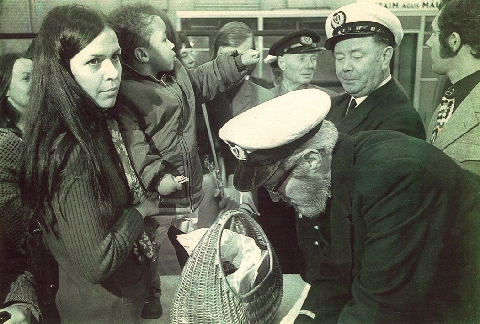
The second wind of feminism was blowing across Europe and North America in the 1970s, although at first it was only a gentle breeze in Ireland. I was involved in a variety of political activities throughout my student years. In May 1971, I, with about 60 others, took part in a well remembered event in the fight for contraception in Ireland: the “contraceptive train” (Box 1). This was a day trip from Dublin to Belfast, where condoms, illegal in the Republic, were bought in the North and then brought back openly to Customs in the Dublin railway station. A blushing and highly embarrassed Customs officer looked at his feet as he asked me, “Miss, have you got any of them fings?” Charges against us were later dropped.
The Irish Family Planning Association (IFPA) was established in the early 1970s and I have huge admiration for the doctors who put themselves forward to provide services that were both illegal and condemned by the very powerful Irish Roman Catholic Church. As a student, I was privileged to attend some of those first IFPA clinics. Meanwhile, every day in Dublin hospitals I saw women crushed by the burden of poverty and too many pregnancies. I had my obstetrics term in the venerable Coombe Women’s Hospital and was hooked when I saw my first breech birth — a difficult but successfully managed vaginal delivery. I wanted to be able to do that. I couldn’t help noticing that all the consultants were men, and although they were competent and caring, their attitudes to women were often patronising and paternalistic.
Surgeons was a traditionally run medical school and in the first 3 years, all 17 women in the class of 120 sat at the front during lectures. By fourth year, we were considered mature enough to be distributed alphabetically among our male peers. As a “D” I was placed next to Alan de Costa from Sri Lanka; we married in 1972, have since had six children and now live in Cairns where Alan is a surgeon. (Sitting behind us in the class in “M” and “S”, others took similar steps.)
Specialist training in Papua New Guinea, Ireland, England and Australia
Alan and I qualified in 1973 and headed to Papua New Guinea (PNG), where we undertook internships at Port Moresby General Hospital with the first graduates of the University of Papua New Guinea medical school. This was a fantastic clinical experience. As well as medicine and surgery, I was able to practise some obstetrics under the direction of the late Dr Geoff Bird, whose enthusiasm for what he did reinforced my determination to specialise.1
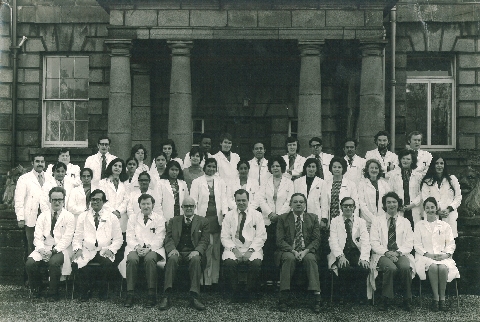
In 1974 in Sydney, I passed Part One of the Membership examination of the Royal College of Obstetricians and Gynaecologists — only to be told that Sydney hospitals “never” took on women trainees in obstetrics. So we went back to Dublin and spent 3 years there; Alan trained in surgery and I in obstetrics and gynaecology (O&G) (Box 2). I was the first woman to be appointed as Assistant Master at “the Coombe” (really a registrar post but quite sought after), and I must say that I had enormous support from my male colleagues in those years. I also worked at the IFPA clinics; they were gradually becoming more widely known, although there were still clashes with the government and the Church. I often travelled back from England with a dozen intrauterine devices discreetly concealed in my bags for IFPA doctors. More and more, I was realising the importance of choice for women in their reproductive health care.
Those Irish years were followed by further training in Birmingham. We then returned to Port Moresby as senior registrars. Again, the work was interesting and demanding, but PNG had gained independence since we had been interns, there were more local graduates and life was becoming difficult for expatriates. After 18 months, we returned to Australia and worked in the Kimberley region of Western Australia before settling in Sydney.
Involvement in the sociopolitical aspects of obstetrics and gynaecology
Both our practices were in western Sydney. Alan and I were involved in setting up our respective departments in the new Mt Druitt Hospital, and I also worked at Auburn Hospital. In both these hospitals there was a large population of recently arrived immigrant women, mostly from Middle Eastern countries, whose cultural and social views and expectations of childbirth were very different from those of Australian-born Anglo-Celtic women. The maternity and gynaecology services, although physically adequate, were not readily accessible to many of these women. I became involved in efforts to provide clinics directed at specific cultural and ethnic groups with female interpreters more readily available; I also carried out research into the views and beliefs around childbirth of ethnic women in western Sydney.2-5
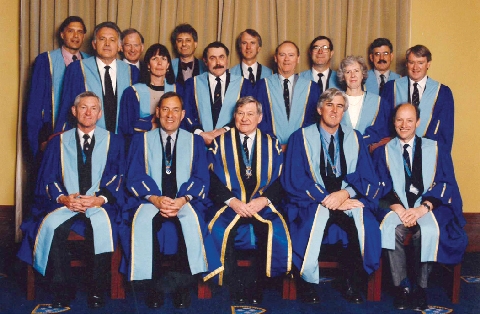
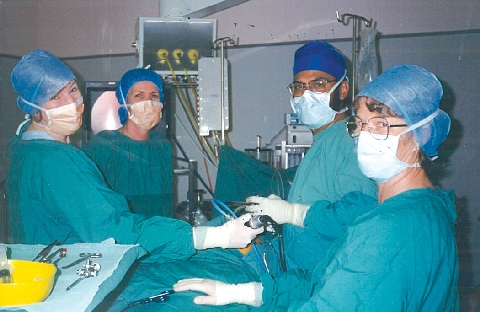
In the early 1980s, there were several hundred male O&G specialists in Sydney and about seven women, most of whom were close to retiring age as they had been “allowed” to train when men went off to the war; after 1945, no more women were admitted to training. I found myself being recruited onto dozens of government committees as the token woman. It was also clear that if we were to have more women training as specialists, it was necessary to be involved with the Royal Australian College of Obstetricians and Gynaecologists (now the Royal Australian and New Zealand College of Obstetricians and Gynaecologists). I first became a member of the NSW state committee in 1984, spent 6 years on the Council (Box 3) and now, over 25 years later, still seem to be on several committees. There was plenty of support from the blokes though, and we now have a large intake of talented and enthusiastic young women (and men) every year into all branches of our discipline.
Midwives — we can’t live without them
One of the most effective and interesting bits of committee work was the “Shearman Committee”, run under the benign dictatorship of the late Professor Rodney Shearman, which revolutionised the way maternity services were viewed and provided in NSW — and set an example for other states to follow. Consumers and midwives were shown by the “Shearman Report” to be important in the provision of high-quality pregnancy and intrapartum care — almost as important as medical practitioners!6,7 The concept of choice in childbirth began to be acknowledged as valid.
I have always had great respect for the midwives I have worked with, have learnt a great deal from them and valued their judgement. It is disappointing to me that there are still turf wars between our two professions, when we should be seamlessly complementing each other in our work: midwives caring for women experiencing normal pregnancy and birth (the majority), and obstetricians dealing with emergencies and more complex cases. I am glad to say that in Cairns, possibly because much of our work is in remote areas and requires more responsibility in decision making, our relationships are generally excellent.
The move to the tropical north
Practice in Sydney, both public and private, was rewarding but Alan and I both hankered for a return to the tropical lifestyle and professional satisfaction we had experienced in PNG. In 1994, I undertook a locum for Professor Michael Humphrey in Cairns (after he told me “women won’t ever work in the country!”). I was tremendously impressed by the service Michael was setting up, including FROGS (Far North Regional Obstetric and Gynaecological Service), which sent specialists out to rural and remote communities and was particularly directed at caring for Indigenous women.8 I had already established a specialist gynaecological service at the Aboriginal Medical Service in Redfern, where I held clinics twice a week, so I was well aware of the multiple health problems facing Indigenous women.9
Locums in Cairns continued over the next 5 years while we maintained our practices in Sydney (Box 4), then in 1999 we made the permanent move north. I was employed by James Cook University (JCU), first as a senior lecturer; in 2004, I became the first female professor of O&G in Australia. That was the year we first had JCU clinical students in Cairns Base Hospital, which has become the second teaching hospital for JCU and has now produced five cohorts of young graduates, many of whom have stayed on to work in Cairns or elsewhere in rural Queensland. I am delighted that already several of my students have gone on to further training in O&G. As well as working at JCU, until 2008, I worked as an O&G specialist at Cairns Base Hospital and was actively involved in the outreach program, which has made a huge contribution to improving the health of women in a region the size of Victoria. I have also worked and taught in several countries in the region, including Nauru and Vietnam, and have returned to PNG as an external examiner.10 Although I still do some clinical work, I am now mostly involved in teaching, research and administration (Box 5).
Empowering women — with accurate information
I have always felt that for women to be able to make informed choices about their reproductive health, they need good information. In 1989, I published my first book of heath care information for women, about sterilisation. Since I moved from private to public practice and my children grew up and left home, I have found more time to write, and the stable has grown to 12 books of information for women and several textbooks, including a manual for doctors performing caesarean sections.11 Through the internet I made contact again with a fellow Surgeons’ graduate, now back in the United States, Dr Michele Moore, and together we have published books in the US on caesarean section, hysterectomy, parenting after the age of 35 and other topics in women’s health, drawing on our professional knowledge but also on our personal experience, a combination that seems to ring true with many women readers.
Abortion — law reform and improved services
In practice in Sydney I had not given much thought to abortion, as excellent clinics such as the Preterm Foundation offered good early abortion services, and late abortion using prostaglandins was becoming available as our methods for diagnosing severe fetal abnormality improved. I was aware that in 1996 the “Harradine Amendment” had made mifepristone unavailable to Australian women, but I hadn’t seen that as a particular problem in my own practice. However, in Cairns I realised that accessing safe abortion was much more difficult for women in rural and remote regions.
In 2005, I attended the annual conference of the American College of Obstetricians and Gynecologists in San Francisco and began to understand the advantages that making mifepristone available in Australia held for all women. Since my own experience of unplanned pregnancy, I have always been pro-choice, even though I had not personally chosen abortion. I read widely about mifepristone use and the politics involved in its banning in Australia and came to the conclusion that action was necessary.
In October 2005, the Journal published my article advocating the introduction of mifepristone into Australia.12 Immediately I found a large number of doctors, politicians and pro-choice advocates (mostly women but also many men) contacting me to agree with my recommendation. Late 2005 saw the rapid formation of a movement with great public support that in February 2006 led to a private members’ bill, sponsored cross-party by four women senators, and the overturning of the Harradine Amendment.
Overturning the Amendment did not immediately bring about the introduction of mifepristone to Australia, as an application has to be made to the Therapeutic Goods Administration (TGA) for this, and the drug was controversial — more so here than anywhere else in the world owing to Harradine’s political manoeuvring. No drug company has yet been willing to make such an application. There exists a pathway for individual doctors to be approved to use in their own practices drugs that are available overseas but not available here — this is the Authorised Prescriber (AP) legislation. My colleague Dr Mike Carrette and I made such an application to use mifepristone in Cairns — it took time and the paper from many trees, but the TGA were extremely professional in their handling of what became a matter of considerable public interest. In April 2006 we received approval, and in July that year began to use the drug (initially with some apprehension in the face of such publicity). We have since demonstrated that it is a very useful addition to abortion practice and now more than 80 Australian doctors have AP approval. I look forward to the day when a drug company applies to market mifepristone nationally. There is still great variation between states in women’s access to abortion services, and this is an area I will continue to work in. Abortion must become part of mainstream Australian medicine; only then can we look at ways to lower what we know is a very high national abortion rate.13,14
Conclusion
When I began my specialist training, there was no laparoscopy, no ultrasound, computed tomography or magnetic resonance imaging, limited fetal monitoring, no synthetic prostaglandins . . . the list could go on. There were also few women in the specialist workforce and there was a very hierarchical structure. I am pleased to have been involved in putting into practice many of the new developments in our specialty (Box 6). However, I am even more pleased to have been part of changes in attitudes among colleagues, midwives, nurses, administrators and women themselves that have brought about better reproductive health and greater input by women into decisions about their own health. Having control of their reproductive health is essential if women are to develop their full human potential.
1 Return of the “contraceptive train” from Belfast —Dublin railway station, May 1971
 |
|
Caroline de Costa (then Downes) and Jerome, aged 3 years, with Customs officials of the Irish Republic. |
References
- Bird GC. The use of the Malmström vacuum extractor in operative obstetrics. Aust N Z J Obstet Gynaecol 1966; 6: 242-247. 0_CHDJBBJG
- de Costa C. Congenital abnormalities and consanguinity. Med J Aust 1986; 144: 721-722. 0_CHDJHAIE
- de Costa C. Pregnancy outcomes in Lebanese-born women in western Sydney. Med J Aust 1988; 149: 457-460. 0_pgfId-1097527
- de Costa C. Obstetric care for Muslim women. Med J Aust 1991; 154: 490. 0_pgfId-1097537
- de Costa CM. Consanguineous marriage and its relevance to obstetric practice. Obstet Gynecol Surv 2002; 57: 530-536. 0_i1095498
- de Costa C, Bullivant V, Pisano K, et al. Midwives’ clinic. Med J Aust 1991; 155: 131-132. 0_i1095500
- Ministerial Task Force on Obstetric Services in NSW. Maternity services in NSW. Sydney: NSW Department of Health, 1989. 0_i1095502
- Humphrey MD, Dudgeon GI, Smith WJ. FROGS (Far North Regional Obstetric and Gynaecological Service) — the development of a specialist outreach service. Aust Health Rev 1993; 16: 268-272. 0_i1095504
- de Costa C, Child A. Pregnancy outcomes in urban Aboriginal women. Med J Aust 1996; 164: 523-526. 0_i1095506
- Sanga K, de Costa C, Mola G. A review of maternal deaths at Goroka General Hospital, Papua New Guinea 2005–2008. Aust N Z J Obstet Gynaecol 2010; 50: 21-24. 0_i1095508
- de Costa C, Howat P. Caesarean section: a manual for doctors. Sydney: MJA Books, 2006. 0_i1095510
- de Costa CM. Medical abortion for Australian women: it’s time. Med J Aust 2005; 183: 378-380. 0_i1095512
- de Costa CM, Russell DB, Carrette M. Views and practices of induced abortion among Australian Fellows and specialist trainees of the Royal Australian and New Zealand College of Obstetricians and Gynaecologists. Med J Aust 2010; 193: 13-16. 0_i1095514
- de Costa CM, Russell DB, Carrette M. Abortion in Australia — still to emerge from the 19th century. Lancet 2010; 375: 804-805. 0_i1095517
Forty Years in the Making: Reporting on the Co-Creation of a National Roadmap for Birthing on Country Services for the Best Start to Life
Res McCalman, Anneka J. Bowman, Roianne West, Kristie Watego, Jyai Allen, Claire Clack, Sue Kildea, Sue Kruske, Melanie Briggs, Cleone Wellington, Rebecca Coddington, Yu Gao, Isabella Garti, Sascha Kowalenko, Sarah Ireland, Catherine Austin, John D. Boffa, Marah Prior, Kelsie Kahl, Bettina Chaseling, Sarah Khaw, Emily Armstrong, Donna Hartz, Yvette Roe
Temporal Trends in Preterm Birth Associated With Hypertensive Disorders of Pregnancy in Victoria, Australia: A Population-Based Interrupted Time-Series Study
Melvin Marzan, Heng Jiang, Daniel Lorber Rolnik, Joanne M. Said, Lisa Hui
Linguistic Manoeuvres: Obstetric Violence Camouflages Harm and Loss of Consent From Birth
Liz Sutton, Harsha Ananthram, Rebecca Matthews
Linguistic Manoeuvres: Obstetric Violence Camouflages Harm and Loss of Consent From Birth
Bashi Kumar-Hazard, Andrew M. Bisits, Sharon L. Settecasse, Jenny Gamble, Hazel Keedle, Hannah G. Dahlen
Linguistic Manoeuvres: Obstetric Violence Camouflages Harm and Loss of Consent From Birth
Wendy Pollock, Alissa Fleming, Ensieh Fooladi, Joy Kloester, Anne Tremayne, Yasmin Zisin, Bethany Carr, Kym Davey, Suzanne Willey, Jenny Gamble
Getting on the Same Page: Why Australia Needs a National Maternity Early Warning System (MEWS) Chart
Briony A. Cutts, Lucy Bowyer, Nisha Khot, Sandra Lowe, Stefan C. Kane