




Volume 182 - Issue 9
Effectiveness and side effects of thiazolidinediones for type 2 diabetes
Authors: Adam P Morton and H David McIntyre
Med J Aust 2005; 182 (9): 492-494. || doi: 10.5694/j.1326-5377.2005.tb06795.x
Published online: 2 May 2005
Published online: 2 May 2005
Adam P Morton,* H David McIntyre†
* Endocrinologist, † Director, Endocrinology and Obstetric Medicine, Mater Hospital, Raymond Terrace, Sth Brisbane, QLD 4101. AmortonATmater.org.au
To the Editor: We read with interest the article by Hussein and colleagues on their experience with thiazolidinediones (TZDs).1 These agents are only approved by the Pharmaceutical Benefits Scheme as part of dual therapy. We wish to present our experience of adding TZDs to metformin and sulfonylureas — hence, triple therapy — in patients with suboptimally controlled type 2 diabetes mellitus.
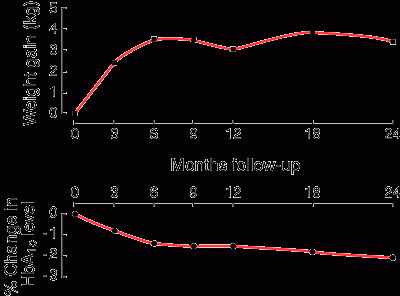
The records of 28 patients (15 men, 13 women) with type 2 diabetes, for whom pioglitazone was added to maximal doses of metformin and sulfonylurea because of suboptimal control, were reviewed. Baseline patient characteristics are shown in . Mean follow-up was 9.6 months (range, 3–24 months); the average pioglitazone dose was 31.3 mg. The mean fall in the level of glycohaemoglobin (HbA1c) was 1.26% — 10 patients achieving an HbA1c level of less than 7% at last review. Four patients did not respond to therapy; none withdrew because of side effects. Eight patients whose HbA1c fell less than 0.5% after 3 months continued taking pioglitazone, achieving an average fall in HbA1c of 1.25% after a mean of 12 months follow-up. Mean weight gain was 3.35 kg (– 3.2 kg to 11.6 kg). Mean changes in HbA1c level and weight compared with baseline over 24 months are shown in . There was no correlation between these outcomes, and no baseline characteristic predicted glycaemic response.
Six studies have reported the efficacy of TZDs in triple therapy (), and show a consistent fall in HbA1c level at the expense of weight gain, with a low rate of withdrawals because of adverse effects. Our findings were similar to those of these previous reports in terms of glycaemic response and low rate of side effects. The much higher rate of side effects reported by Hussein et al1 is likely to be the result of the coprescription of TZDs with insulin in 64% of patients in their study. While fluid retention has been reported in up to 5% of patients taking TZDs as monotherapy or in combination with oral hypoglycaemics, 15% of patients using TZDs with insulin may develop significant oedema. Most reports describing precipitation of cardiac failure with TZDs have been in patients using combination therapy with insulin. It would be interesting to know what proportion of the patients who developed peripheral and pulmonary oedema in the study by Hussein et al1 were also receiving insulin. One prospective randomised trial comparing the addition of pioglitazone and bedtime insulin to maximal metformin and sulfonylurea found similar efficacy in improving glucose control, but less hypoglycaemia and improved high density lipoprotein cholesterol levels with pioglitazone.3 A study of the long-term efficacy of triple therapy found 26 of 35 patients (74%) had good control after a mean follow-up of 37 months, their HbA1c level having fallen from 8.7% to 6.9%.8
In conclusion, the experience of our unit and the published literature is that TZDs are efficacious in improving suboptimal diabetic control in patients on maximal doses of metformin and sulfonylurea. Eight individuals in our group had a significant improvement in control subsequent to minimal response after the initial 3 months of treatment, suggesting a longer trial of TZDs should be employed before classifying patients as non-responders. It is to be hoped that the regulatory authorities will allow the use of TZDs in triple therapy.
1 Characteristics of our 28 patients at baseline
Variable |
Mean (range) |
||||||||||||||
Age (years) |
57.4 (31–74) |
||||||||||||||
Weight (kg) |
96.3 (56–137) |
||||||||||||||
Body mass index (kg/m2) |
34.6 (24–50.3) |
||||||||||||||
Duration of diabetes (years) |
11 years (1–48) |
||||||||||||||
Glycohaemoglobin (HbA1c) level (%) |
9.0 (7.1–10.4) |
||||||||||||||
3 Studies of thiazolidinediones added to maximal dose metformin and sulfonylurea
Variable |
Roy et al2 |
Aljabri et al3 |
Dailey et al4 |
Kiayias et al5 |
Kiayias et al5 |
Byrne et al6 |
Yale et al7 |
||||||||
Thiazolidinedione |
Rosiglitazone |
Pioglitazone |
Rosiglitazone |
Rosiglitazone* |
Rosiglitazone† |
Rosiglitazone |
Troglitazone |
||||||||
Duration (weeks) |
16 |
16 |
24 |
20 |
20 |
nr |
24 |
||||||||
No. of patients |
48 |
30 |
181 |
19 |
19 |
24 |
101 |
||||||||
Baseline body mass index (kg/m2) |
nr |
26 |
32 |
31 |
31 |
nr |
30.1 |
||||||||
Baseline HbA1c level (%) |
9.3 |
9.7 |
8.1 |
8.9 |
9 |
9.6 |
9.6 |
||||||||
Fall in HbA1c level (%) |
1.8 |
1.9 |
0.9 |
1.1 |
1.4 |
1.2 |
1.3 |
||||||||
Weight gain (kg) |
nr |
2.6 |
3 |
4.2 |
4.6 |
0.7 |
0.9 |
||||||||
% Patients withdrawn |
4.2 |
0 |
5.5 |
0 |
0 |
0 |
2 |
||||||||
% Patients with satisfactory control (HbA1c level) |
65 (< 7.5) |
23 (< 7) |
42 (< 7) |
nr |
nr |
nr |
43 (< 8) |
||||||||
HbA1c = glycohaemoglobin. nr = not reported. * 4 mg/day; † 8 mg/day. |
|||||||||||||||
Competing interests
Both authors have received honorariums from Eli Lilly for presentations.
References
- Hussein Z, Wentworth JM, Nankervis AJ, et al. Effectiveness and side effects of thiazolidinediones for type 2 diabetes: real-life experience from a tertiary hospital. Med J Aust 2004; 181: 536-539. <eMJA full text>
- Roy R, Navar M, Palomeno G, Davidson MB. Real world effectiveness of rosiglitazone added to maximal (tolerated) doses of metformin and a sulfonylurea agent: a systematic evaluation of triple oral therapy in a minority population. Diabetes Care 2004; 27: 1741-1742. i1085914
- Aljabri K, Kozak SE, Thompson DM. Addition of pioglitazone or bedtime insulin to maximal doses of sulfonylurea and metformin in type 2 diabetes patients with poor glucose control: a prospective, randomized trial. Am J Med 2004; 116: 230-235. i1085916
- Dailey GE 3rd, Noor MA, Park JS, et al. Glycemic control with glyburide/metformin tablets in combination with rosiglitazone in patients with type 2 diabetes: a randomized, double-blind trial. Am J Med 2004; 116: 223-229. i1085918
- Kiayias JA, Vlachou ED, Theodosopoulou E, Lakka-Papadodima E. Rosiglitazone in combination with glimepiride plus metformin in type 2 diabetic patients. Diabetes Care 2002; 25:1251-1252. i1085920
- Byrne J, Garg S, Vaidya A, et al. Efficacy of triple combination oral hypoglycaemic therapy using rosiglitazone, metformin and sulphonylurea in lowering HbA1c. Pract Diabet Int 2003; 20: 58-60. i1085922
- Yale JF, Valiquett TR, Ghazzi MN, et al. The effect of a thiazolidinedione drug, troglitazone, on glycemia in patients with type 2 diabetes mellitus poorly controlled with sulfonylurea and metformin. A multicenter, randomized, double-blind, placebo-controlled trial. Ann Intern Med 2001; 134: 737-745. i1085924
- Bell DS, Ovalle F. Long-term efficacy of triple oral therapy for type 2 diabetes mellitus. Endocr Pract 2002; 8: 271-275. i1085926
When ‘Liver Enzymes’ Are Not Hepatic: Late-Onset Pompe Disease
Shauna Madigan, Georgina England, Wayne Rankin
Primary Hyperparathyroidism in Adults: Recent Developments in Diagnosis and Management
Elizabeth Wootton, Sunita M. C. De Sousa, Richard L. Prince, Donald S. A. McLeod, David A. Pattison, Mathis Grossmann
Severe Hypoglycaemia Secondary to Chronic Opioid-Induced Hypothalamic–Pituitary–Adrenal Axis Suppression: An Under-Recognised Phenomenon
Michael Do, Annabelle Hayes, Malgorzata Brzozowska
Rethinking diabetes care for Indigenous Australians: the need for Indigenous‐codesigned and led diabetes models of care
Natalie Nanayakkara, Sharon Atkinson‐Briggs, Alicia J Jenkins, Neale D Cohen
The first Australian evidence‐based guidelines on male infertility
Darren J Katz, Liza O’Donnell, Robert I McLachlan, Tim J Moss, Clare V Boothroyd, Veena Jayadev, Sarah R Catford