




Volume 212 - Issue 1
Migraine: a brain state amenable to therapy
Authors: Michael Eller and Peter J Goadsby
Med J Aust 2020; 212 (1): 32-39. || doi: 10.5694/mja2.50435
Published online: 13 January 2020
Published online: 13 January 2020
Migraine affects over a billion people worldwide in any year and is the second most common cause of years lost due to disability
Summary
- Migraine affects over a billion people worldwide in any year and is the second most common cause of years lost due to disability. Not “just a headache”, morbidity washes though society and carries a substantial economic and social cost.
- Understanding of migraine pathophysiology has progressed significantly. Animal models and functional neuroimaging have yielded significant insight into brain structures that mediate migraine symptoms. The role of small peptides as neurotransmitters within this network has been elucidated, allowing the generation of novel therapeutic approaches that have been validated by randomised placebo‐controlled trials.
- Migraine is underdiagnosed and undertreated. Treatment of migraine should be proactive. An acute and, when indicated, preventive strategy should be formulated with the patient. Comorbid medication overuse must be supportively managed.
- Migraine‐specific medications are making their way from bench to bedside. They promise an improved safety profile and ease of use in comparison to older, repurposed medications. Devices promise a non‐drug alternative should patients prefer. The migraine understanding and treatment landscape is changing rapidly.
Primary headaches affect over a billion people around the world and are the second most common cause of years lost to disability worldwide.1 Migraine accounts for most of this morbidity and is three times more likely to occur in women.2 The global prevalence is at least 15% of the population.1 Around one‐third of patients with migraine receive the diagnosis, while a only a quarter of patients with frequent attacks are offered a preventive.3 Many are overusing opioids, which typically leads to more frequent, treatment‐resistant headaches.3,4
The direct costs to the health system are enormous, the indirect costs to society an order of magnitude greater. In Europe, total costs were estimated in 2012 to be €111 billion per year.5 Mean individual costs were estimated to be €1222 per year for migraine; and €3561 in patients with comorbid medication overuse, of which 92% were indirect, such as work absenteeism and reduced productivity.5 Migraine often begins in childhood; prevalence increases steeply around the age of puberty, only plateauing then dipping after the late 30s, especially in women, many of whom improve after menopause.2 It follows that the prevalence is greatest when one would be expected to be most productive — taxpayers in the prime of their lives.
On this background of ubiquity, disability and cost, this review aims to offer a clinical approach to adult patients with migraine, sketch out a modern understanding of migraine pathophysiology, and outline new and emerging treatments as well as underutilised, existing medications. Steps in successfully treating migraine patients are provided in Box 1.
Search strategy
We searched PubMed with the keywords “migraine” and “treatment”, “randomised controlled trial”, “epidemiology” and “imaging”. Only papers published in English were considered. Abstracts located by this search were reviewed and, when appropriate, the full article was obtained. References cited within selected articles were also considered. In addition, articles that had previously come to our attention were also included.
Recent insights into migraine pathophysiology
Migraine is a brain state characterised by dysfunctional sensory processing and headache, accompanied by aura in around a quarter of patients.6 Examples of the former include cranial allodynia and photophobia while the latter is best exemplified by visual aura, a dynamic visual percept that distorts the background and typically lasts for 20–30 minutes. Elements can include fortification spectra (teichopsia), holes in the visual field (scotoma), and scintillations (flashes of colour).
Migraine is best understood as a brain network abnormality, several nodes of which — such as the trigeminocervical complex, hypothalamus and thalamus — are central to migraine pathophysiology. Functional imaging studies across several phases of a migraine feed into this hypothesis; an example of imaging in headache is depicted in Box 2.7 Migraine is not a primary problem of sterile meningeal inflammation or extracranial cerebral vessel dilatation correlated with the headache phase of migraine, as Harold Wolff and colleagues postulated in the 1940s.6,8
Family history
Migraineurs often have a family history of migraine, sometimes with a phenotype which can be conserved across generations. All characteristics of an individual attack, such as tempo, the propensity to visual aura or a heightened aversion to smell (osmophobia), can be described as migraine semiology. Often it is “headachiness” that is recognised. This is the manifestation of migrainous biology, such as hangover or menstrually associated headache. In other words, the pathophysiology of headache in this context is likely similar to patients with migraine as defined by the International Headache Society,9 whereby the clinical manifestations are not as multifaceted or intrusive. Inheritance can be monogenetic — patients with familial hemiplegic migraine or advanced sleep phase and migraine — but these examples are rare.10 Other clues to heritability beyond susceptibility loci have not been elucidated.11
Associated risks
The relative risk for ischaemic stroke in patients with migraine has been estimated to be 1.73 (95% CI, 1.31–2.29), and increases with an age under 45 years, female sex and presence of aura.12 Smoking and the use of the oestrogen‐containing pill can magnify this risk.12 Strong epidemiological evidence indicates that migraineurs are also at increased risk of many cardiovascular diseases including myocardial infarction and haemorrhagic stroke.13 This same large cohort study found migraine to be positively associated with ischaemic stroke with an adjusted hazard ratio of 2.26 (95% CI, 2.11–2.41).13 In comparison with the general population, after 19 years of follow‐up the cumulative incidence of ischaemic stroke in the migraine cohort was 45 compared with 25 per thousand people.13
Good data regarding the influence of the modern lower oestrogen oral contraceptive pill are lacking. While decisions regarding the use of contraception are multifactorial, patients should be aware of the epidemiology described above. The absolute cardiovascular risk in most young women is low, and can be calculated using an online tool: www.cvdcheck.org.au (National Vascular Disease Prevention Alliance).
Cranial autonomic symptoms
Case series demonstrate that migraineurs experience cranial autonomic symptoms that can be ipsilateral to headache or occur bilaterally.14 Parasympathetic symptoms and signs include conjunctival injection, tearing, rhinorrhoea or a sensation of aural or sinus fullness. The physiology has been experimentally proven, is easy to understand, and is important to remember.15 Around 90% of sinus headache is misdiagnosed migraine according to one observational study;16 understanding cranial autonomic symptoms helps avoid overprescribing antibiotics for this indication.
Premonitory and postdrome symptoms
Up to 90% of patients with migraine experience disruptive symptoms in the hours leading up to a migraine headache.17,18 These symptoms, while protean and variably expressed among patients, are a signal element of the migrainous brain state. Some manifestations are suggestive of hypothalamic dysfunction, such as sweet or carbohydrate craving, polyuria or sleep disruption. Others point to dopamine‐mediated dysfunction, such as yawning. Heightened photophobia, perhaps reflective of thalamic and/or cortical dysregulation, often leads patients to attribute their headache to the fluorescent light in the office even if that light had not triggered a migraine on any other day of that month. The postdrome phase is equally ubiquitous.19 Most patients will describe feeling “washed out” after a migraine. Symptoms mirror those of the premonitory phase, and can include subjective cognitive difficulty, fatigue, noise sensitivity, feeling emotional, irritability and neck discomfort.
Diagnostic approach
It is established that 90% of patients seeking primary consultation for headache that has been present for more than 3 months have migraine.20 In order to arrive at a satisfactory headache diagnosis, open questions should be used initially; if migraine is suspected, targeted questions should ensue. In primary care, ID Migraine is a useful screening tool with a positive predictive value of 93% (Box 3).21 Questions should subsequently cover diagnostic criteria following the International Classification of Headache Disorders, 3rd edition (ICHD‐3).9 Patients will often refrain from volunteering symptoms, such as light sensitivity, only to accede that they tend to lie in a dimly lit room during a migraine ictus. In this regard, headache histories should be “taken” rather than “given”. At its simplest, migraine is headache with other features, such as light, sound or movement sensitivity, while tension‐type headache is featureless. It could be argued that if a primary care doctor feels the diagnosis is not migraine, the patient should be referred as they either have a rare form of primary headache, in terms of those who come to see doctors, or a secondary headache. Stated another way, tension‐type headache rarely drives patients to see doctors and has been vastly overestimated as a clinical problem.3
Once a diagnosis of migraine is made, ask about:
- Attack frequency: is the patient one of the 2–3% of the population with chronic migraine — more than 15 headache days a month, eight of which fulfil criteria for migraine?9 Most patients will significantly underestimate migraine frequency, hence a headache diary is key to delineating the extent of the problem and ascertaining if a preventive is indicated.3
- Aura symptoms: visual aura is the most common variety and usually lasts 20–30 minutes and typically precedes headache. Less common subtypes, such as sensory aura, tend to follow a similar tempo, such as a spread of paraesthesia from the one side of the mouth to the ipsilateral hand.
- Medication overuse: opioid (more than 5 days a month) or triptan overuse (more than 10 days a month) tends to potentiate migraine symptoms and render them treatment resistant.4,9,22
- Comorbidities that are more commonly associated with migraine than the general population, such as depression and anxiety.23
- Predictable triggers such as menstruation, let‐down from stress, weather change or poor sleep.
All of the patients described in the vignettes in Box 4 have a diagnosis of migraine. The semiology and morbidity is markedly different in each. Some have additional diagnostic elements aside from migraine as broadly defined by the ICHD‐3.9 Box 5 shows how diagnoses can be further refined by ICHD‐3 subtype.
Headache in the primary care context rarely requires imaging to exclude a secondary cause.24 Patients with a typical migraine history do not need imaging in the first instance or repeat imaging over time. Restraint in irradiating patients or manufacturing pathology in the patient's mind due to a one‐in‐five chance of finding something innocuous on the magnetic resonance imaging brain scan, such as an anatomical variant, is a marker of quality of health care delivery.24 Red flags that should prompt imaging are outlined in Box 6.
Migraine management
You have expertly diagnosed the patient with migraine and evaluated the frequency of exacerbations with a headache diary. What now? How do you help this person?
Triggers
Avoiding known triggers can decrease morbidity, such as switching erratic work hours to regular day‐shift. Treating before predictable triggers is an underused strategy: ibuprofen before exercise may avoid the usual post‐game migraine; twice daily naproxen on day 3 of a period may forestall the usual headache; twice‐daily naratriptan used for 3 days before menses can prevent the premenstrual migraine flare.25
Lifestyle and comorbidities
Lifestyle changes to decrease migraine burden in an individual have a slim evidence base. However, many patients perceive benefit from altering their routine. Common strategies include frequent exercise, avoiding alcohol, optimising ergonomics and regularising sleep. Addressing medical comorbidities such as obstructive sleep apnoea can also decrease headache burden. Managing psychological comorbidities, such as depression and/or anxiety or insomnia, can be crucial in building resilience. In this context, referral to a psychologist for a course of cognitive behaviour therapy, for example, may be of benefit. Particularly in more remote areas, validated online tools such as moodgym (https://moodgym.com.au) or Sleepio (https://www.sleepio.com) can be useful. For some patients, these simple interventions allow them to engage in the workforce and reintegrate into the community.
Medication overuse
Many people in Australia with frequent headache overuse non‐steroidal anti‐inflammatory drugs, triptans, paracetamol, and opioids such as codeine. Leaving aside issues around efficacy, access and addiction, opioids used for as little as 5 days a month and/or triptans used more than 10 days a month can influence migraine biology to paradoxically increase headache morbidity.9,22 Patients with medication overuse tend to have significant disability, are heavy users of the health system, and suffer numerous comorbidities.23
Simple steps patients can take are:
- Avoid opioids — even if the patient finds opioids helpful for an attack, these medications will likely make headaches more frequent and intense and render preventives unhelpful.22 We strongly recommend against prescribing opioids for the indication of migraine.
- If overused, opioids and/or triptans should be weaned, preferably as an outpatient. Symptoms may be exacerbated before things improve; in this context, a short bridge of naproxen 500 mg twice daily for 1 or 2 weeks can increase the likelihood of success.
Refer to a neurologist if medication dependence and a significant headache burden remain. Some patients (eg, Case 3 in Box 5) may require an inpatient strategy to manage withdrawal symptoms such as nausea, jitteriness and headache exacerbation. Dihydroergotamine or lignocaine can be used for 5 or 10 days, respectively, in this context to decrease the headache burden in the short to medium term and minimise the chance of falling back into old habits.26,27
Treatment of acute migraine
Episodic migraine is the most common variant. Often all a patient requires to manage migraine effectively is a reliable abortive (Box 7).28,29,30,31 The earlier in the attack these are used, the more effective they tend to be. Non‐steroidal anti‐inflammatory drugs such aspirin or diclofenac can be effective. Significant side effects can accrue, particularly if these medications are used regularly. An antiemetic such as domperidone, metoclopramide and/or ondansetron can be used concurrently.
Triptans are the mainstay of treatment and can be more effective when used in combination with the above. Efficacy and side effects tend to vary between patients; trialling different triptans is indicated if the first or second fail. Subcutaneous or intranasal sumatriptan or oral rizatriptan are useful if nausea is troublesome early in the attack. Subcutaneous sumatriptan is not on the Pharmaceutical Benefits Scheme. It comes with an autoinjector, much like an adrenaline autoinjector. While expensive, it is a better option for most in comparison to a visit to a clinic or emergency department. Naratriptan and eletriptan are relatively longer lasting.32 Side effects such as drowsiness can lead to patients avoiding this class of drug in a work or social context.
Patients should be counselled on not “chasing every headache”, that is, they should leave milder headaches untreated.
Preventive treatment of migraine
If a patient has severe intermittent or frequent symptoms necessitating regular use of abortive medications, a migraine preventive should be offered.3 Barriers to a busy clinician initiating a preventive may include time pressure, failure to apprehend morbidity, or a notion of poor likelihood of success. Preventives such as topiramate and erenumab may be effective in reducing migraine morbidity for 40–50% of patients when adequately trialled.33,34,35
Realistic expectations should be conveyed — success consists of less frequent and intense attacks, with a better response to acute medications. An attack‐free cure is unlikely to be achieved. Patients consider preventives unattractive in their side effect profile and tend to stop them early.36,37 A collaborative discussion around treatment goals and potential side effects is therefore essential to ensure adequacy of treatment trials.
Common management pitfalls include truncated trials, underdosing, and continuing patients on ineffective treatments. Preventives should be tailored to patients’ preferences and comorbidities (Box 8).38,39,40,41,42,43,44,45,46,47,48
OnabotulinumtoxinA
Botulinum toxin had been used for over two decades in an ad hoc way until placebo‐controlled trials were conducted in chronic migraine. This systematised approach consisted of 31 injections of 5 units placed at set points around the head every 12 weeks, with an option to inject an additional 45 units in a follow‐the‐pain strategy. When assessed at 24 weeks, there was a statistically significant 8.4‐day reduction in headache days per month compared with 6.6 days in the placebo arm.44 A longer open label study found an average decrease of 10.7 headache days at 108 weeks with few adverse events.49
OnabotulinumtoxinA has been approved for migraine under the Pharmaceutical Benefits Scheme since 2014. To qualify, patients need to have chronic migraine, fail three migraine preventives, and demonstrate they are not overusing opioids. Two cycles should be tried before efficacy can be determined.
New developments
Calcitonin gene‐related peptide ligand and receptor monoclonal antibodies
Small peptides mediate some of the trafficking between neurons in the brain network that, when aberrant, manifests as the migraine phenotype. Calcitonin gene‐related peptide (CGRP) has been thought to have a role in migraine pathophysiology for over 30 years, based on work conducted in Australia.50 Higher levels of CGRP in the jugular vein has been found during a migraine ictus compared with when pain free; subcutaneous sumatriptan brings CGRP levels down to the pain free range; an infusion of CGRP provokes migraine attacks in migraineurs.50,51,52
CGRP is a 37‐amino acid neuropeptide with two forms (α and β) that differ by three amino acids and is widely distributed throughout the central and peripheral nervous systems. It is produced in neuronal cells from the calcitonin coding exon — part of the calcitonin gene.39 It is present in sensory neurons, including in the trigeminal ganglion and nerve endings as well as dorsal root ganglia. Activation of the trigeminal system results in antidromic release of CGRP which acts on vascular CGRP receptors causing vasodilatation mediated by smooth muscle adenylyl cyclase.53,54
Three monoclonal antibodies against CGRP, ligand‐directed, and one against the canonical CGRP receptor CLR/RAMP‐1 have been developed.53 Efficacy among these drugs in episodic and chronic migraine is comparable, while advantages over older drugs include favourable side effect profile, lack of drug interactions and contraindications.
The first of this class to be approved for use in Australia is the receptor antagonist erenumab. Side effects are mild and include constipation, local skin reaction and rhinitis. In one study of episodic migraineurs, migraine days were reduced from 8.3 by 3.7 days in the 140 mg group and by 1.8 days for placebo when comparing months 4–6 to the lead‐in month. A ≥ 50% reduction in the mean number of migraine days per month was found in 50% of patients in the 140 mg group compared with 27% in the placebo group.34
In a subanalysis of a study in chronic migraine patients who had failed two or more preventives before receiving 140 mg of erenumab, 22% of patients had a greater than 75% reduction in migraine days (compared with 3.5% in the placebo group), and 41% of patients had a greater than 50% reduction in migraine days (compared with 14% in the placebo group). Quality of life measures were strongly favourable.45 A placebo‐controlled trial of erenumab 140 mg in episodic patients who failed previously between two and four preventives was also positive.46
Drug treatments expected to be available in the next several years
Better understanding of the underlying biology of migraine has led to identification of a number of potential drug targets.55 These include small molecule CGRP receptor antagonists, serotonin 1F receptor agonists, glutamate and orexin receptor antagonists, and molecules that work on acid‐sensing ion channel type 1. Monoclonal antibodies against the pituitary adenylate cyclase‐activating peptide ligand and receptor, a peptide neurotransmitter that can be co‐localised with CGRP (with which it shares some characteristics), is undergoing phase 2 trials. Monoclonal antibodies used in migraine are very large molecules considered to act outside of the blood–brain barrier, such as in the trigeminal ganglion; whether this dictum proves true is for future studies to elucidate.
Device therapy in migraine
Cranial nerves such as the trigeminal, facial and vagus, their pericranial branches and the greater occipital nerve (a branch of the second cervical nerve root) can influence the migraine matrix, likely at a number of different levels of the central nervous system, most importantly at the level of the trigeminocervical complex. Numerous devices have been developed with this in mind. As outlined in Box 8, one of these, a supraorbital transcutaneous stimulator, is available in Australia. The evidence base is modest regarding its use for chronic and episodic migraine but it may be a useful treatment to consider, especially in patients who would prefer to avoid medication.31,47
The extrinsic hand‐held vagal nerve stimulator has established utility in treating cluster headache. Evidence is weak thus far regarding its use in migraine; there is some suggestion that like the supraorbital transcutaneous stimulator, the longer it is used the more effective it is in preventing migraine.48 It is available on script from the United States.
The handheld single‐pulse transcranial stimulator has a modest evidence base as an abortive in patients with migraine with aura as well as a preventive in patients with chronic migraine with and without aura.56,57 The device is not currently available in Australia but marketing has been approved by the regulator. Like other devices, cost is likely to be a significant impediment to widespread uptake. For patients who respond, it is a useful option with a good safety profile.
Conclusion
Migraine is a brain state that has a significant social and economic impact on individuals and society. Not “just a headache”, the first step in managing the condition is timely diagnosis. Many familiar medications can be extremely effective when appropriately prescribed. An increasingly granular understanding of migraine symptoms and their pathophysiological underpinnings has led to the development of medications specifically designed to treat the condition. Patients with migraine can achieve a significant improvement in their quality of life by understanding their condition and how best to manage it. Doctors play a pivotal role in facilitating this outcome.
Box 1 – Six steps to success in treating migraine patients
- Step 1: Get it right from the start — if there is a diagnosis of migraine to be made, make it. Characterise the migraine burden with a headache diary.
- Step 2: Don't investigate unless necessary (Box 5).
- Step 3: Provide the patient with a sensible understanding of their malady. Patients with migraine have deep seated ideas on what is wrong with them, how it happened and how best to address the problem, even if they are seeing you for help because their approach is not working.
- Step 4: Stop the opioids — while these medications are no longer available over the counter in Australia, they are still widely used for migraine.
- Step 5: Address lifestyle factors, avoid identified triggers and embark upon acute and preventive treatment trials.
- Step 6: Don't give up — persist in trying to find the medication that works.
Box 2 – Positron emission tomography of patients in the early premonitory phase of nitroglycerin‐induced migraine7
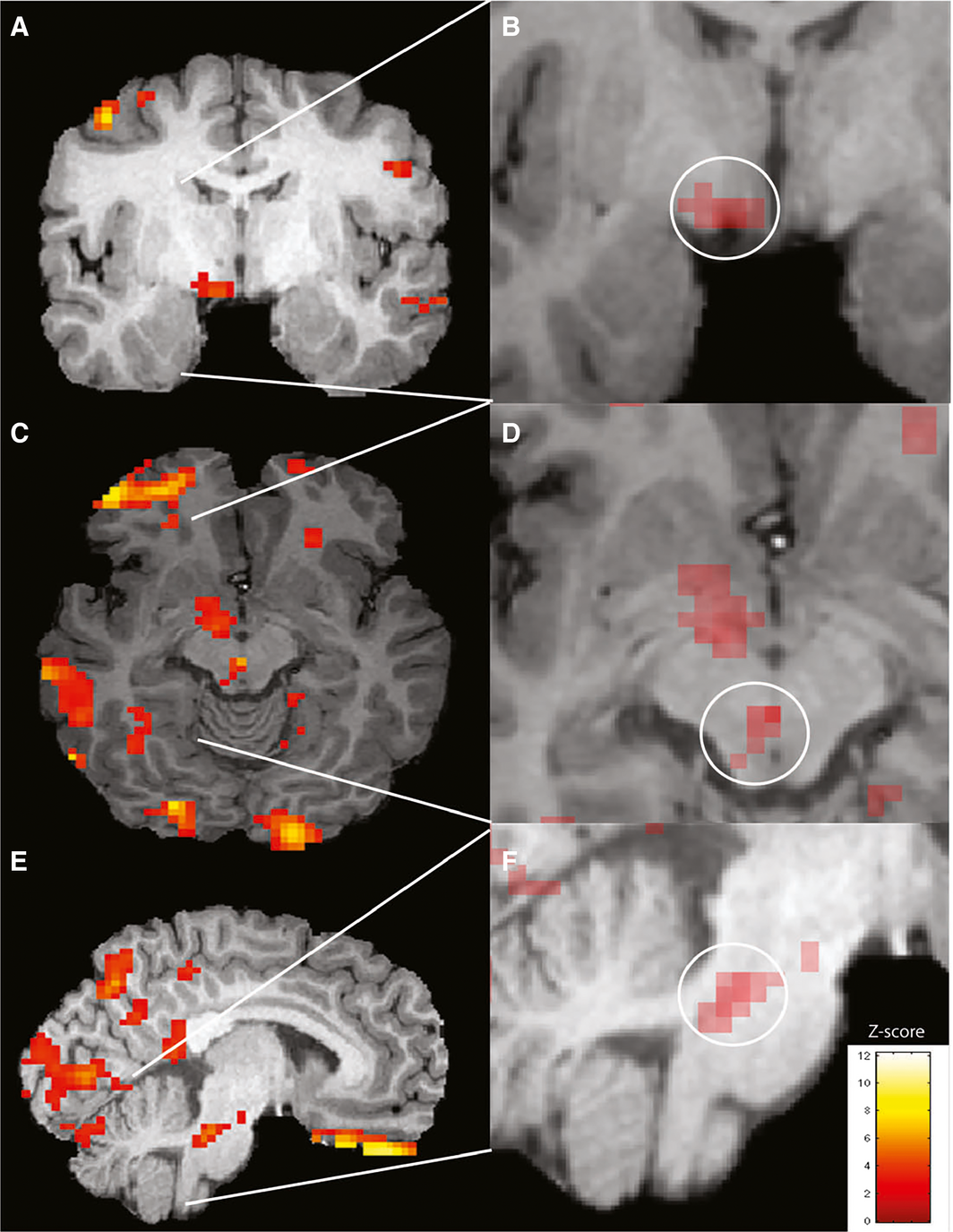
The bright signal depicted is indexed to blood flow — a surrogate marker of brain activity. The posterior hypothalamic region (A and B), the periaqueductal grey region (C and D) and dorsal pons (E and F) are highlighted by circles.
Box 3 – Diagnostic screening and criteria
ID Migraine diagnostic screening tool20
During the past 3 months, at least two of the following with headaches:
-
Nausea or sickness to stomach
-
Sensitivity to light (much greater than when one did not have headaches)
-
Limited ability to work, study, or do what one needed to do for at least 1 day
Disease classification: migraine without aura (ICHD‐3)9
At least five attacks fulfilling the following criteria:
- Headache attacks lasting 4–72 hours (untreated or unsuccessfully treated)
- Headache has at least two of the following four characteristics:
- ▶unilateral location
- ▶pulsating quality
- ▶moderate or severe pain intensity
- ▶aggravation by or causing avoidance of routine physical activity (eg, walking or climbing stairs)
- During headache, at least one of the following:
- ▶nausea and vomiting
- ▶photophobia and phonophobia
- Headache is not better accounted for by another ICHD‐3 diagnosis
Box 4 – Case vignettes
Vignette 1- A recently married 30‐year‐old audiologist has two migraine episodes per month. They are unrelated to her menstrual cycle or any other identifiable trigger. She has recently moved to a regional centre where she owns an audiology centre.
- For a day before the onset of migraine headache she tends to be very irritable with yawning and carbohydrate craving. The headache ictus is preceded around 50% of the time by migraine aura consisting of a scintillating scotoma — typically in the superior right visual field.
- Twice a year there is an accompanying sensory spread over the right hemibody; this usually presages a particularly severe attack.
- Migraine headache lasts for several hours to three days with prominent nausea. Every episode is followed by around day three days of fatigue and difficulty concentrating — she can't work effectively in this period. Her principal concerns are her irritability in the premonitory phase — she hates antagonising her staff — and the 2–5 days of work missed per month.
- A 45‐year‐old engineer has had headaches since childhood. He is one of the founders of a company with around a hundred employees.
- Headaches of mild to moderate severity tend to be bilateral and are occasionally unilateral — discomfort is typically retro‐orbital or occipital. There is photophobia and prominent osmophobia, movement sensitivity and mild nausea. There is an uncomfortable sensation of sinus and aural fullness ipsilateral to the headache. Bruxism is present according to his wife and dentist. An exacerbation of symptoms occurs around twice a week; he tends to darken the room or turn the contrast down on the monitor. He usually recedes into the preferred quiet environment of his office. Work is a more effortful on these days. Ibuprofen can help — he previously used paracetamol–codeine when it was available without a prescription — ultimately a good sleep is required for relief. Jetlag and lack of sleep are reliable triggers.
- He is most bothered by difficulty with thinking clearly on headache exacerbation days as well as the sensation of sinus fullness. He has received the following diagnoses: tension headache, eye strain, temporomandibular joint headache, cervicogenic headache, sinus headache, allergy headache, stress headache and chronic daily headache. He has had his wisdom teeth removed, two sinus surgeries, a mouth guard for use at night. He has seen an osteopath, chiropractor, and has occasional remedial massage or acupuncture. He has found keeping fit and not travelling as much for work ameliorates the likelihood of head discomfort.
- A 40‐year woman has had daily headaches for over 15 years. They became problematic after the birth of her third child. Most days are difficult — headaches can occur anywhere in the head and nausea can be intrusive. She wears sunglasses everywhere and often tells the kids to turn the TV down. They often have to prepare dinner as she needs to lie down on the couch or in bed.
- She has other diagnoses of depression, gastro‐oesophageal reflux, overweight, restless leg syndrome, sleep apnoea and fibromyalgia and hasn't worked for 5 years. She can't tolerate or afford a continuous positive airway pressure mask. She has attended two different pain clinics in the past and has a diagnosis of chronic headache. She has had a magnetic resonance imaging scan of her brain last performed two years ago, and underwent a computed tomography brain earlier this year after presenting to the emergency department with headache.
- Her current medication list includes oxycodone 10 mg/naloxone 5 mg, pregabalin 150 mg twice daily and amitriptyline 75 mg at night. She uses ibuprofen two or three times a day and uses codeine 10 mg/paracetamol 500 mg two tablets (twice or three times daily), 2–3 days a week. She has tried gabapentin and pizotifen in the past without success.
Box 5 – International Classification of Headache Disorders diagnoses and learning points9
Case vignette 1- Diagnoses: 1.1 Migraine without aura, and 1.2.1 Migraine with typical aura
- Learning points:
- ▶the premonitory and prodrome phases can be associated with significant disability
- ▶the economic impact of migraine can be greater than the number of migraine attacks per month suggests
- ▶a preventive should be considered in such patients if adequate abortive trials are unhelpful
- Diagnosis: 1.3 Chronic migraine
- Learning points:
- ▶getting the diagnosis right is the starting point for appropriate treatment
- ▶cranial autonomic and premonitory symptoms are common and have an associated morbidity
- ▶avoid unnecessary interventions
- ▶avoid prescribing opioids for migraine
- Diagnosis: 1.3 Chronic migraine with 8.2.4 opioid overuse headache
- Learning points:
- ▶use the International Classification of Headache Disorders, 3rd edition to make headache diagnoses — it changes the treatment approach
- ▶don't image unnecessarily
- ▶limit the use of opioids in patients with comorbid migraine
- ▶onabotulinumtoxinA (and likely erenumab) can be considered in patients who have failed three preventives in the past
- ▶consider referral to a neurologist and/or inpatient strategies in select patients if you think the likelihood of outpatient success is low
Box 6 – Red flags that suggest brain imaging should be considered24
- Novel persistent headache
- Severe headache of abrupt onset: thunderclap headache
- Progressive symptoms, especially when uncharacteristic for the patient
- New abnormal neurological signs
- Headache that changes with posture or Valsalva manoeuvre, such as coughing or sneezing; these symptoms can suggest an abnormal intracranial pressure
- Symptoms consistent with a non‐migraine primary headache diagnosis; for example, a trigeminal autonomic cephalalgia such as cluster headache
- Systemic signs and/or symptoms concerning a potential secondary cause of headache; for example, novel headache and photosensitivity in a patient with metastatic breast cancer should prompt investigations for central nervous system involvement
Box 7 – Selected acute outpatient therapies for migraine28,29,30,31
|
Class* |
Treatments |
Dosing |
Common side effects and selected rare serious adverse events |
Comments |
|||||||||||
|
|
|||||||||||||||
|
Non‐steroidal anti‐inflammatory drugs |
Aspirin |
600–900 mg three times a day as needed |
Bleeding risk |
Often more useful than ibuprofen |
|||||||||||
|
|
Naproxen |
500 mg twice daily as needed |
Risk of gastric irritation and peptic ulcer |
Useful around the time of menstruation |
|||||||||||
|
|
Diclofenac |
50–100 mg rapid release orally or 100 mg rectally |
PR preparation may cause gastrointestinal side effects and local irritation |
Also available as a suppository, which may be useful in patients with significant nausea |
|||||||||||
|
Triptans |
Sumatriptan |
50–100 mg orally |
Occasional chest tightness, transient potentiation of headache May make patients drowsy Contraindicated in patients with cardiovascular disease such as a history of ischaemic stroke |
Inhaled and subcutaneous preparations are useful if early nausea and vomiting |
|||||||||||
|
|
Rizatriptan |
10 mg wafer |
Useful if nausea and vomiting |
||||||||||||
|
|
Eletriptan |
40–80 mg orally |
Almost as long lasting as naratriptan |
||||||||||||
|
|
Naratriptan |
2.5 mg orally |
Useful as a twice‐daily preventive preparation in patients with predictable migraine |
||||||||||||
|
Antiemetics |
Metoclopramide |
10 mg orally |
Extrapyramidal side effects |
Promotility side effects of the 1st and 3rd agent may be useful for relative gastric stasis |
|||||||||||
|
|
Prochlorperazine |
5 mg orally |
|||||||||||||
|
|
Domperidone |
10 mg |
May worsen diarrhoea |
||||||||||||
|
Supraorbital transcutaneous stimulator |
Cefaly (CEFALY Technology) |
Use setting one |
|
Relatively expensive |
|||||||||||
|
|
|||||||||||||||
|
* Any combination of the classes listed can be used, often with a greater than summative benefit. |
|||||||||||||||
Box 8 – Selected preventive therapies for migraine*
|
Class |
Treatment |
Target dose |
Common side effects and selected rare serious adverse events |
Comments |
|||||||||||
|
|
|||||||||||||||
|
Tricyclic antidepressants38 |
Nortriptyline and amitriptyline |
Up to 1 mg/kg |
Constipation, dry eyes and mouth, drowsiness, weight gain |
Less anticholinergic side effects with nortriptyline |
|||||||||||
|
Propranolol |
Up to 80 mg twice daily |
Postural symptoms, nightmares, erectile dysfunction, exercise intolerance |
Metoprolol may also be used |
||||||||||||
|
Angiotensin receptor blocker39 |
Candesartan |
16–32 mg |
Postural symptoms |
Monitoring of electrolytes before and after initiation of medication is essential |
|||||||||||
|
Serotonin antagonist38 |
Pizotifen |
1–4 mg at night |
Weight gain and drowsiness are likely to occur |
Widely prescribed in Australia; can be effective but side effects make this an unattractive first or second line agent for most patients |
|||||||||||
|
Topiramate |
50–100 mg twice daily |
Cognitive blunting, acral paraesthesia, dysgeusia |
Cognitive side effects can be significant in comparison to similarly dosed patients with an epilepsy indication |
||||||||||||
|
|
Sodium valproate |
500 mg twice daily |
Weight gain, tremor, potential hepatotoxicity, increased potential for fetal abnormalities |
Not a good choice in women with child bearing potential |
|||||||||||
|
Calcium channel antagonist42 |
Flunarizine |
5–15 mg |
Weight gain and drowsiness |
Well tolerated |
|||||||||||
|
Nutraceutical43 |
Riboflavin |
400 mg daily |
Urine tends to be bright yellow; this is not dangerous |
A good option when patients want a medication with a good side effect profile and some efficacy data |
|||||||||||
|
OnabotulinumtoxinA44 |
Botox (Allergan) |
155 units following the PREEMPT protocol every 3 months |
Side effects tend to be local and transient (several weeks); ptosis is the most common problem |
Robust evidence and a good safety profile |
|||||||||||
|
Calcitonin gene‐related peptide monoclonal antibodies (directed against the ligand or receptor)34,45,46 |
Erenumab |
70 mg or 140 mg subcutaneously every 28 days |
Good side effect profile in the short term |
Any long term risks are unknown |
|||||||||||
|
Supraorbital transcutaneous stimulator47 |
Cefaly (CEFALY Technology) |
Setting two for 20 minutes daily, typically in the evening before sleep |
Patients with significant cranial allodynia may struggle to use the device |
Out‐of‐pocket costs can be a barrier |
|||||||||||
|
Extrinsic vagal nerve stimulator48 |
gammaCore (electroCore) |
Two stimulations on each side three times a day |
Local mild discomfort only |
Cost is prohibitive for most patients |
|||||||||||
|
|
|||||||||||||||
|
* Topiramate, propranolol and candesartan have been studied in relatively small randomised controlled trials, while the best quality evidence lies with onabotulinumtoxinA and the calcitonin gene‐related peptide monoclonal antibodies, studied in large blinded randomised controlled trials. Devices and older drugs have a less robust evidence base. |
|||||||||||||||
Competing interests
No relevant disclosures.
References
- GBD 2016 Disease and Injury Incidence and Prevalence Collaborators. Global, regional, and national incidence, prevalence, and years lived with disability for 328 diseases and injuries for 195 countries, 1990–2016: a systematic analysis for the Global Burden of Disease Study 2016. Lancet 2017; 390: 1211–1259.
- Vetvik KG, MacGregor EA. Sex differences in the epidemiology, clinical features, and pathophysiology of migraine. Lancet Neurol 2016; 16: 76–87.
- Lipton RB, Bigal ME, Diamond M, et al. Migraine prevalence, disease burden, and the need for preventive therapy. Neurology 2007; 68: 343–349.
- Buse DC, Pearlman SH, Reed ML, et al. Opioid use and dependence among persons with migraine: results of the AMPP Study. Headache 2012; 52: 18–36.
- Linde M, Gustavsson A, Stovner LJ, et al. The cost of headache disorders in Europe: the Eurolight project. Eur J Neurol 2011; 19: 703–711.
- Goadsby PJ, Holland PR, Martins‐Oliveira M, et al. Pathophysiology of migraine: a disorder of sensory processing. Physiol Rev 2017; 97: 553–622.
- Maniyar FH, Sprenger T, Monteith T, et al. Brain activations in the premonitory phase of nitroglycerin‐triggered migraine attacks. Brain 2014; 137: 232–241.
- Amin FM, Asghar MS, Houggard A, et al. Magnetic resonance angiography of intracranial and extracranial arteries in patients with spontaneous migraine without aura: a cross‐sectional study. Lancet Neurol 2013; 12: 454–461.
- Headache Classification Committee of the International Headache Society (IHS). The International Classification of Headache Disorders, 3rd edition. Cephalalgia 2018; 38: 1–211.
- Brennan KC, Bates EA, Shapiro RE, et al. Casein kinase iδ mutations in familial migraine and advanced sleep phase. Sci Transl Med 2013; 5: 183ra56.
- de Vries B, Anttila V, Freilinger T, et al. Systematic re‐evaluation of genes from candidate gene association studies in migraine using a large genome‐wide association data set. Cephalalgia 2016; 36: 604–614.
- Shurks M, Rist P, Bigal M, et al. Migraine and cardiovascular disease: systematic review and meta‐analysis. BMJ 2009; 339: b3914.
- Adelborg K, Szeplegeti S, Holland‐Bill L, et al. Migraine and the risk of cardiovascular diseases: Danish population based matched cohort study. BMJ 2018; 360: k96.
- Riesco N, Pérez‐Alvarez AI, Verano L, et al. Prevalence of cranial autonomic parasympathetic symptoms in chronic migraine: usefulness of a new scale. Cephalalgia 2015; 36: 346–350.
- May A, Goadsby PJ. The trigeminovascular system in humans: pathophysiologic implications for primary headache syndromes of the neural influences on the cerebral circulation. J Cereb Blood Flow Metab 1999; 19: 115–127.
- Eross E, Dodick D, Eross M. The Sinus, Allergy and Migraine Study (SAMS). Headache 2007; 47: 213–224.
- Quintela E, Castillo J, Munoz P, Pascual J. Premonitory and resolution symptoms in migraine: a prospective study in 100 unselected patients. Cephalalgia 2006; 26: 1051–1060.
- Giffin NJ, Ruggiero L, Lipton RB, et al. Premonitory symptoms in migraine: an electronic diary study. Neurology 2003; 60: 935–940.
- Giffin NJ, Lipton RB, Silberstein SD, et al. The migraine postdrome. Neurology 2016; 87: 309–313.
- Tepper SJ, Dahlöf CGH, Dowson A, et al. Prevalence and diagnosis of migraine in patients consulting their physician with a complaint of headache: data from the Landmark Study. Headache 2004; 44: 856–864.
- Lipton RB, Dodick D, Sadovsky R, et al. A self‐administered screener for migraine in primary care: the ID Migraine validation study. Neurology 2003; 61: 375–382.
- Bigal ME, Lipton RB. Excessive acute migraine medication use and migraine progression. Neurology 2008; 71: 1821–1828.
- Buse DC, Manack A, Serrano D, et al. Sociodemographic and comorbidity profiles of chronic migraine and episodic migraine sufferers. J Neurol Neurosurg Psychiatry 2010; 81: 428–432.
- Eller M, Goadsby P. MRI in headache. Expert Rev Neurother 2013; 13: 263–273.
- Mannix LK, Savani N, Landy S, et al. Efficacy and tolerability of naratriptan for short‐term prevention of menstrually related migraine: data from two randomized, double‐blind, placebo‐controlled studies. Headache 2007; 47: 1037–1049.
- Eller M, Gelfand AA, Riggins NY, et al. Exacerbation of headache during dihydroergotamine for chronic migraine does not alter outcome. Neurology 2016; 86: 856–859.
- Williams DR, Stark RJ. Intravenous lignocaine (lidocaine) infusion for the treatment of chronic daily headache with substantial medication overuse. Cephalalgia 2003; 23: 963–971.
- Charles A. Migraine. N Engl J Med 2017; 377: 553–561.
- Goadsby PJ, Sprenger T. Current practice and future directions in the prevention and acute management of migraine. Lancet Neurol 2010; 9: 285–298.
- Schoenen J, Coppola G. Efficacy and mode of action of external trigeminal neurostimulation in migraine. Expert Rev Neurotherapeutics 2018; 18: 545–555.
- Chou DE, Gross GJ, Casadei CH, Yugrakh MS. External trigeminal nerve stimulation for the acute treatment of migraine: open‐label trial on safety and efficacy. Neuromodulation 2017; 20: 678–683.
- Goadsby PJ, Lipton RB, Ferrari MD. Migraine — current understanding and treatment. N Engl J Med 2002; 346: 257–270.
- Diener H‐C, Bussone G, Van Oene JC, et al. Topiramate reduces headache days in chronic migraine: a randomized, double‐blind, placebo‐controlled study. Cephalalgia 2007; 27: 814–823.
- Goadsby PJ, Reuter U, Hallström Y, et al. A controlled trial of erenumab for episodic migraine. N Engl J Med 2017; 377: 2123–2132.
- Tepper S, Ashina M, Reuter U, et al. Safety and efficacy of erenumab for preventive treatment of chronic migraine: a randomised, double‐blind, placebo‐controlled phase 2 trial. Lancet Neurol 2017; 16: 425–434.
- Turner DP, Golding AN, Houle TT. Using a graphical risk tool to examine willingness to take migraine prophylactic medications. Pain 2016; 157: 2226–2234.
- Hepp Z, Dodick DW, Varon SF, et al. Persistence and switching patterns of oral migraine prophylactic medications among patients with chronic migraine: a retrospective claims analysis. Cephalalgia 2016; 37: 470–485.
- Jackson JL, Cogbill E, Santana‐Davila R, et al. A comparative effectiveness meta‐analysis of drugs for the prophylaxis of migraine headache. PLoS One 2015; 10: e0130733.
- Stovner LJ, Linde M, Gravdahl GB, et al. A comparative study of candesartan versus propranolol for migraine prophylaxis: a randomised, triple‐blind, placebo‐controlled, double cross‐over study. Cephalalgia 2013; 34: 523–532.
- Diener H‐C, Dodick DW, Goadsby PJ, et al. Utility of topiramate for the treatment of patients with chronic migraine in the presence or absence of acute medication overuse. Cephalalgia 2009; 29: 1021–1027.
- Linde M, Mulleners WM, Chronicle EP, McCrory DC. Valproate (valproic acid or sodium valproate or a combination of the two) for the prophylaxis of episodic migraine in adults. Cochrane Database Syst Rev 2013; (6): CD010611.
- Karsan N, Palethorpe D, Rattanawong W, et al. Flunarizine in migraine‐related headache prevention: results from 200 patients treated in the UK. Eur J Neurol 2018; 25: 811–817.
- Schoenen J, Jacquy J, Lenaerts M. Effectiveness of high‐dose riboflavin in migraine prophylaxis: a randomized controlled trial. Neurology 1998; 50: 466–470.
- Dodick DW, Turkel CC, DeGryse RE, et al. OnabotulinumtoxinA for treatment of chronic migraine: pooled results from the double‐blind, randomized, placebo‐controlled phases of the PREEMPT Clinical Program. Headache 2010; 50: 921–936.
- Ashina M, Tepper S, Brandes JL, et al. Efficacy and safety of erenumab (AMG334) in chronic migraine patients with prior preventive treatment failure: a subgroup analysis of a randomized, double‐blind, placebo‐controlled study. Cephalalgia 2018; 38: 1611–1621.
- Reuter U, Goadsby PJ, Lanteri‐Minet M, et al. Efficacy and tolerability of erenumab in episodic migraine patients who previously failed 2–4 preventive treatments: a randomised placebo‐controlled phase 3b study. Lancet 2018; 392: 2280–2287.
- Schoenen JE. Migraine prevention with a supraorbital transcutaneous stimulator: a randomized controlled trial. Neurology 2016; 86: 201–202.
- Silberstein SD, Calhoun AH, Lipton RB, et al. Chronic migraine headache prevention with noninvasive vagus nerve stimulation: the EVENT study. Neurology 2016; 87: 529–538.
- Blumenfeld AM, Stark RJ, Freeman MC, et al. Long‐term study of the efficacy and safety of OnabotulinumtoxinA for the prevention of chronic migraine: COMPEL study. J Headache Pain 2018; 19: 13.
- Lassen LH, Haderslev PA, Jacobsen VB, et al. CGRP may play a causative role in migraine. Cephalalgia 2002; 22: 54–61.
- Edvinsson L, Warfvinge K. Recognizing the role of CGRP and CGRP receptors in migraine and its treatment. Cephalalgia 2017; 39: 366–373.
- Goadsby PJ, Edvinsson L. The trigeminovascular system and migraine: studies characterizing cerebrovascular and neuropeptide changes seen in humans and cats. Ann Neurol 1993; 33: 48–56.
- Russell FA, King R, Smillie SJ, et al. Calcitonin gene‐related peptide: physiology and pathophysiology. Physiol Rev 2014; 94: 1099–1142.
- Walker CS, Eftekhari S, Bower RL, et al. A second trigeminal CGRP receptor: function and expression of the AMY 1receptor. Ann Clin Transl Neurol 2015; 2: 595–608.
- Goadsby PJ. Bench to bedside advances in the 21st century for primary headache disorders: migraine treatments for migraine patients. Brain 2016; 139: 2571–2577.
- Starling AJ, Tepper SJ, Marmura MJ, et al. A multicenter, prospective, single arm, open label, observational study of sTMS for migraine prevention (ESPOUSE Study). Cephalalgia 2017; 38: 1038–1048.
- Bhola R, Kinsella E, Giffin N, et al. Single‐pulse transcranial magnetic stimulation (sTMS) for the acute treatment of migraine: evaluation of outcome data for the UK post market pilot program. J Headache Pain 2015; 16: 535.
Provenance: Commissioned; externally peer reviewed.
Motor Neuron Disease Mortality Trends in Australia From 1986 to 2023: A Population-Based Study
Carol M. Y. Lee, Rupendra N. Shrestha, Julian Gold, Mark Stevenson, Kelly L. Williams, Lyndal Henden, Sandrine K. K. Chan Moi Fat, Zoe Zussa, Amanda Wright, Martin Jude, Mark A. S. Laidlaw, Willem J. R. Fokkink, Dominic B. Rowe
Mild traumatic brain injury and concussion and persisting post‐concussion symptoms: new guidelines to support evidence‐based assessment and management in Australia and Aotearoa New Zealand
Karen M Barlow, Jennie L Ponsford, Alice Theodom, Gill Cowen, Gavin A Davis, Vicki Anderson, Franz E Babl, David Cole, Jennifer Cullen, Stuart R Dalziel, Melinda Fitzgerald, Howard Flavell, Caroline Yates, Rebecca Kimble, John H Olver, Rhonda Orr, Mark Ralfe, Michael Rose, Nick Rushworth, Julia Treleaven, Gary Browne, Nathan Delang, Sarah Harris, Gary Mitchell, Sean Tweedy
The prevalence of and variation in indicators of the quality and safety of long term aged care in Australia, 2019: a cross‐sectional population‐based study
Tesfahun C Eshetie, Gillian E Caughey, Catherine Lang, Olivia Ryan, Renuka Visvanathan, Craig Whitehead, Keith Evans, Janet K Sluggett, Jyoti Khadka, Carolyn Dawkins, Helena Williams, Miranda Starke, Sara Blunt, Anne Liddell, Megan Corlis, Anna Sheppeard, Penelope Lello, Marilyn Thien, Steven L Wesselingh, Maria C Inacio
Health and economic benefits of improving pre‐hospital identification of stroke in Australian women: a modelling study
Thomas Gadsden, Lei Si, Emily R Atkins, Cheryl Carcel, Xia Wang, Stephen Jan, Mark Woodward, Laura E Downey
Symptom burden, quality of life, and diagnostic journey of people with postural orthostatic tachycardia syndrome, Australia, 2021–24: a descriptive patient registry data study
Marie‐Claire Seeley, Gemma Wilson, Eric Ong, Amy Langdon, Jonathan Chieng, Danielle Bailey, Kristina Comacchio, Amanda Page, Dennis H Lau, Celine Gallagher
The intersection of rurality and dementia prevalence in Australia for Aboriginal and Torres Strait Islander and non‐Indigenous peoples
Antonia J Clarke, Marwan Ahmed, Judith M Katzenellenbogen, John Towney (Wiradjuri), Anna H Balabanski, Adrienne Withall (Dharawal Yuin), Kylie Radford, Amy Brodtmann