




Reflections
History
Volume 204 - Issue 10
Leslie Cowlishaw (1877–1943): the “bibliophile from the bush”
Author: Milton G Roxanas
Med J Aust 2016; 204 (10): 386-389. || doi: 10.5694/mja15.00979
Published online: 6 June 2016
Published online: 6 June 2016
From Sydney to London via Gallipoli and back: the productive career of a pioneer Australian medical historian
From Sydney to London via Gallipoli, and back: the productive career of a pioneer Australian medical historian
The birth of Leslie Cowlishaw on 4 January 1877 was a felicitous event for the history of medicine in Australia. Cowlishaw’s parents Mahlon Clark Cowlishaw and Jane (née Gratton) lived in Elizabeth Bay, Sydney, where his father was a shipping merchant and honorary consul for the Netherlands. Leslie was the eldest of three children and attended Sydney Grammar School (1888–1896): he was an average student but highly regarded, and a noted cricketer, captaining the first XI to the 1895 premiership. His father’s work allowed the family to travel abroad, and Cowlishaw visited England as a child, and he also toured North America and Europe after finishing his secondary schooling.
Cowlishaw commenced his medical studies in 1898 at the University of Sydney, residing at St Paul’s College. His sporting and social interests may have distracted him from his studies somewhat, as he was required to sit several deferred examinations. He nevertheless became secretary of the Sydney University Medical Society (1904) and enlivened it with an annual dinner attended by graduate and undergraduate medical students.1 During his clinical years he studied from Osler’s Principles and Practice of Medicine, and he graduated with his MB ChM in 1906.
Cowlishaw developed an interest in medical history and began collecting early medical books during an extended trip to Europe after graduation.2 He later remembered “hunting through the old bookshops of London and Continental cities only to find my enquiries for books on the history of medicine were received with surprise and the assurance that there were not any.”3
Upon returning to Australia in 1907, Cowlishaw pursued general practice in Cooma and built his surgery “Grevillea House”, which still stands today. In 1909, he married Jessie Rose Garnock, the daughter of a grazier, and the couple later had two children, Leslie Joyce (1911–1969) and David Mahlon (1914–1935). At the invitation of the local medical association, Cowlishaw gave his first recorded lecture on medical history in 1912, a presentation on some of the historical medical texts (1499–1678) he had acquired on his travels, “… books picked up here, there and everywhere.” These included the Antidotarium of Nicolaus, the 12th century Praepositus of the Salerno medical school; it was subtitled “Quid pro quo” (“something for something”), as it included a list of drugs that could be substituted for others (Box 2).
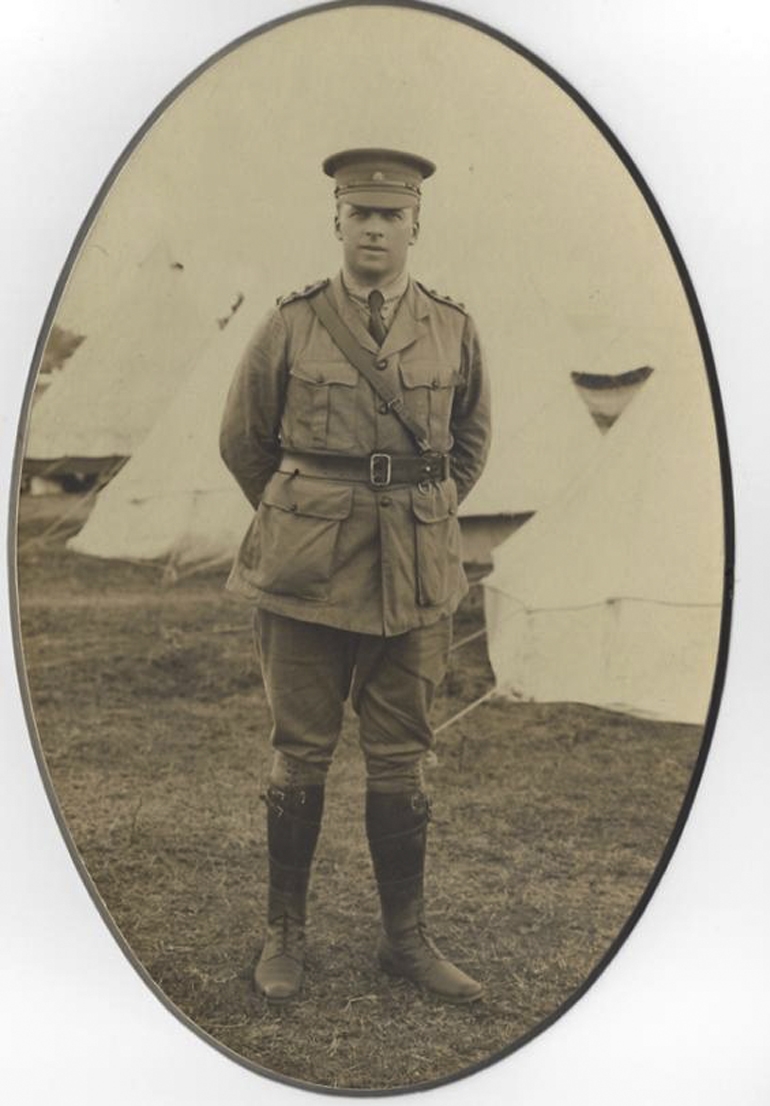
He volunteered for the Australian Imperial Force (AIF) in March 1915, and in June Captain Cowlishaw sailed with the 12th Light Horse Regiment on HMAT Ceramic (Box 1). His contingent was deployed to Gallipoli as infantry;4 Cowlishaw contracted scarlet fever here, and was evacuated to the island of Lemnos and then repatriated to London, where he was appointed officer-in-charge of invaliding. It was at this time that he first met William Osler (1849–1919) in person, at a meeting of the Royal Society of Medicine.
Cowlishaw’s Australian background and love of history attracted the interest of Osler, who invited him to Oxford, where Osler introduced him to the curator of the Bodleian Library as a very learned “bibliophile from the bush”. Cowlishaw wrote to his daughter Joyce of his surprise that “this busy great man” had devoted two days “to showing a quite unimportant doctor [around the Bodleian] whose only virtue was a love for old books” (Box 3). Six letters from Osler to Cowlishaw, now in the collection of the Royal Australasian College of Surgeons (RACS), indicate that a warm relationship developed between the two men.5
Cowlishaw returned to Australia in June 1916 for convalescence, but 4 months later sailed again to England, before serving (now as major) with the 1st Field Ambulance at Rouelles and Etaples. He wrote to Joyce in January 1917 of the devastation in the “Sunny Land of France”, where he was helping “our poor sick soldiers” and “children living in destroyed houses with no roofs”. But he was optimistic: “Soon our English and Australian soldiers will drive back the Germans and then the homes will be built again” (Box 3).
Cowlishaw returned to Australia in October 1917, and his appointment with the AIF ended 2 months later. He commenced general practice in Hornsby (Sydney) in 1918 and was appointed Honorary Physician to Hornsby Hospital, before moving to Lindfield, where he practised for the remainder of his professional life.2 He became actively involved in a number of societies, including the Returned Sailors and Soldiers Imperial League of Australia, the Legacy Club of Sydney, and the local horticultural society.
The reputation of Cowlishaw as a medical historian grew in the years after his return from Europe, and he was invited to speak to medical and lay audiences alike (including talks to the Lindfield Horticultural Society on herbals and the history of gardens). D’Arcy Power (1855–1941), medical historian, surgeon and confidant of Osler, later commented on the captivating manner in which Cowlishaw presented his subjects; there were “other important medical figures … all waiting to be done in your seductive way” (Box 2).
In 1926, Cowlishaw presented one of his most famous lectures to the New South Wales branch of the British Medical Association (BMA), on “Some early printed books: their authors and printers”.6 He explored the history of printing in general and of medical books in particular, and estimated that about 1000 medical books had been printed before 1500. Cowlishaw reported that the first medical book printed in England was produced in 1485 (a guide for treating the plague by the “Bisshop of Arusiens”), and that the first dissection illustration in an English book was in the 1495 printing of the translation of Bartholomew Anglicus’ De proprietatibus rerum.
In further lectures he traced the origin of nursing to the mother and then to the person with “the instinct of mutual aid”; he discussed the Asclepius statue, with the serpent rising toward his left hand, as symbolising “the spirit of the earth from which comes the mysterious power of life”; he discussed the long-nosed masks filled with spices worn by physicians to protect themselves from the “Black Death” that ravaged Europe during the 14th century. In 1932, Cowlishaw spoke to the Ku-ring-gai District Medical Association on colourful episodes in medical history, concluding with the fate of the unfaithful wife of an Ottoman official in 17th century Budapest: chained and starved in the basement of her house, she had been compelled to eat the corpse of her stabbed lover (Box 2).
In 1931, Cowlishaw became the first lecturer in medical history in Sydney after persuading the University to offer a course. He held a scholarly series of twelve lectures on medicine from prehistoric times to the 20th century (Box 2), aiming to show the progressive growth of medical knowledge and the great figures behind these advances. His enthusiasm was unfortunately not shared by all his students; Brian Price Billington (1923–2004), who heard the last of Cowlishaw’s undergraduate lectures in 1943, wrote that “Fellows of the College who attended these lectures will remember a kindly and rather shy man struggling against a dispirited undergraduate rabble in the heat of a summer’s day, in a poorly ventilated lecture room blacked out so that illustrative slides could be shown”.7
Cowlishaw continued to hold many lectures on medical history before various societies, offering interesting cases and historical titbits. For instance, he described a famous jousting tournament in 1559, during which the right eye of the French king, Henry II, was pierced by an opponent’s lance; the two most eminent surgeons of the time, Ambroise Paré (1510–1590) and Andreas Vesalius (1514–1564), used the heads of four beheaded criminals in their analysis of the fatal course of the weapon. The animal dissections of Galen (ad 129–216), including that of an elephant whose heart was subsequently served to the emperor for dinner, were featured in two of Cowlishaw’s lectures.3,8
During a lecture on “The physician in history” (Box 2), Cowlishaw discussed the “hot-tempered” surgeon William Bland (1789–1868), transported to Hobart after a fatal duel and then imprisoned at Parramatta jail for libelling Governor Macquarie. Bland was later a political force to be reckoned with in the colony; he was also involved in the foundation of the University of Sydney, but was barred from serving on its senate by his criminal record.
In a radio broadcast for 2BL in 1934, Cowlishaw spoke about the “discovery of anaesthetics”, discussing various herbal methods for relieving pain, citing authors from Herodotus to the first recognised administration of an inhaled anaesthetic, by William Morton in 1846 in the United States. He also quoted the cynical remarks of the Australian Medical Journal (Sydney), which in 1847 predicted for anaesthesia only “a transient popularity; it will have its day, ultimately to be abandoned as useless or injurious”9 (Box 2).
In his 1935 lecture on “Two great French surgeons”,10 Cowlishaw highlighted the achievements of Ambrose Paré, whom he credited with being the first to install a chain and handbar over patient beds, and Guy de Chauliac (c 1300–1368), author of the Chirurgia magna (1363), the standard medical text on surgery until the 17th century. Cowlishaw was particularly poignant when quoting Paré: “the surgeon ignorant of anatomy carves the human body as a blind man carves wood”.
The following year, Cowlishaw reviewed the first 50 years of medicine in Australia in his George Adlington Syme oration to the RACS, a lecture that arguably remains the best description of conditions on the ships of the First Fleet, their surgeons, and the early settlement. His wide reading enabled him to mention numerous Australian firsts, including the introduction of vaccination to Australia in 1804 by John Savage (1770–1835?) and the first local operation for an aneurysm of the innominate artery by Bland in 1832.11
Cowlishaw had been the driving force that established a Section of Medical History and Literature in the NSW branch of the BMA in 1925, but he did not regard the BMA, more involved in politics, as sympathetic to medical history. In 1937 he was asked to preside over the section of Medical Literature and History at the Australasian Medical Congress, and he spoke on “The development of the study of the history of medicine”.12 Here he credited as being the first medical historian the Roman encyclopaedist Celsus (c 25 BC–C AD 50), whose De Medicina described many “facts about ancient physicians which would have otherwise been lost”. He credited William Osler with introducing the practice of textbook entries beginning with the original descriptions of diseases.
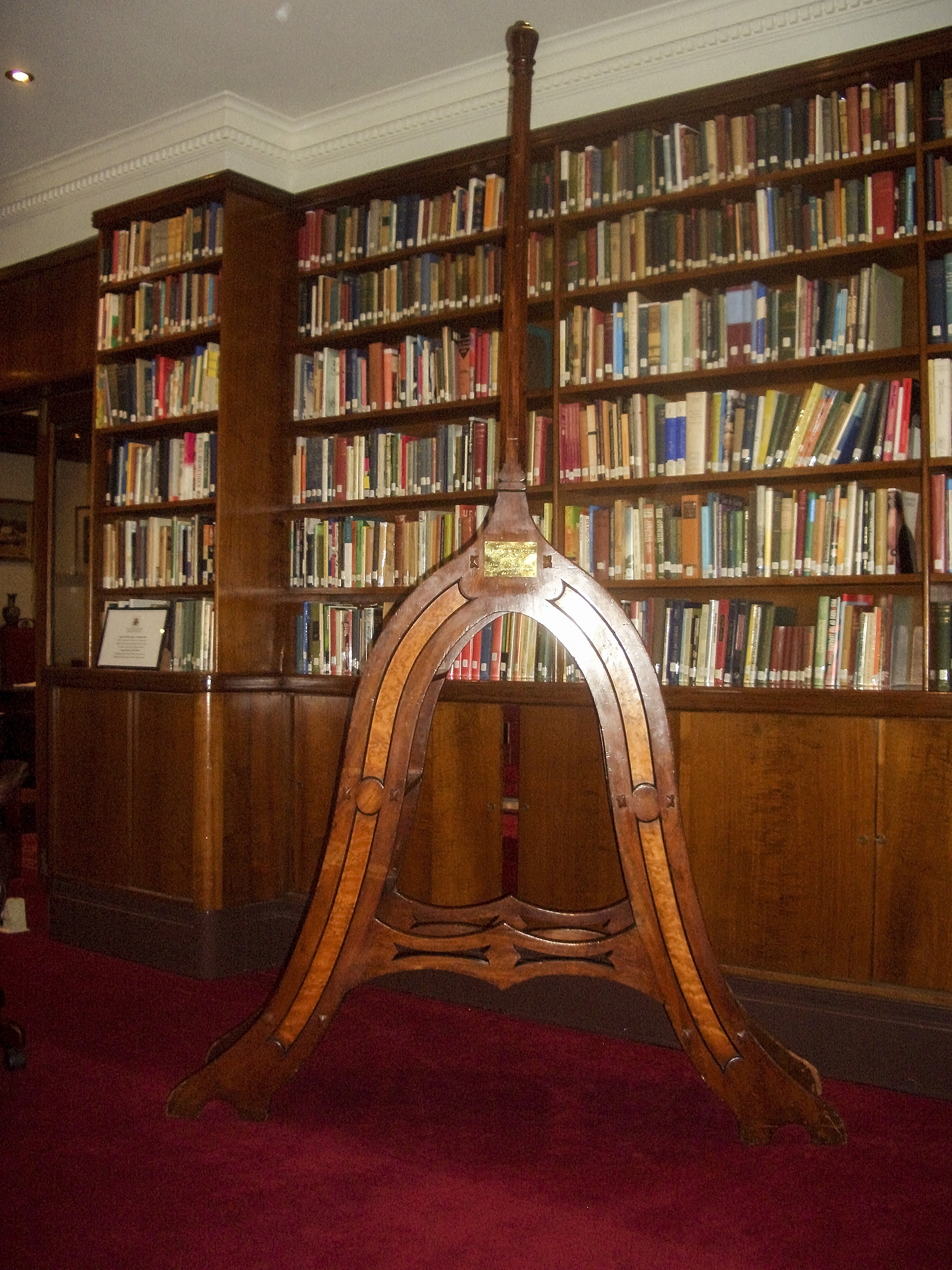
The Royal Australasian College of Physicians (RACP) was established in 1938, and Cowlishaw was admitted to its membership by examination in 1939. He became its honorary librarian the following year, and hoped that the college would eventually acquire his book collection and library ladder (Box 4).
Cowlishaw remained a keen book collector throughout his life, buying volumes from all over the world and assembling a library of about 2500 books and eight incunabula. He made notes about the important people, descriptions of disease and medical events covered in each book, and used this information in his many lectures. His final talk was a presentation to the Centre Club in April 1943 on the colourful Swiss-German medical figure Paracelsus (1493–1541) (Box 2).
Later that year, Cowlishaw pricked his finger on a rose thorn, leading to septicaemia and subacute bacterial endocarditis. His son-in-law remembers him talking in his delirium about the “greats of medical history” before he passed away at Lindfield on 11 December 1943.
Cowlishaw’s trustees offered his book collection to the RACP. His collection was small by international standards (Osler and Harvey Cushing each had 8000 volumes, while the Swedish surgeon Erik Waller collected 21 000),13 but the college did not have the funds to purchase it. Valued by the bookseller James Robert Tyrrell (1875–1961) at £2750 (approximate 2015 value: $200 000), the collection was acquired by the RACS in 1944 as “The Cowlishaw Collection”, which also includes a set of slides on “Medical myths and marvels.”14-16 It is one of the most significant medical history collections in Australia, but the public has difficulty accessing it, and many items are in disrepair and in urgent need of restoration.
Leslie Cowlishaw’s contribution to the history of medicine is legendary. He placed his topics in their social, contemporary contexts, and his popularity can be gauged by the numerous invitations to speak to learned societies and universities. His was a life spent in discovering how medicine evolved through the centuries, and transmitting his discoveries in a stimulating way to the lay person and medical professional alike.
Box 2 – List of manuscripts of Leslie Cowlishaw held in the Royal Australasian College of Physicians
- Some old medical and surgical authors (10 May 1912)
- Some notes on herbals and other early printed books (13 June 1924)
- William Harvey 1578–1657 (5 December 1924)
- Tobacco (10 August 1925)
- The gardens of medieval and Tudor times (19 April 1926)
- Twelve lectures on history of medicine to undergraduates (1931)
- Episodes in medical history (22 November 1932)
- The physician in history (9 February 1933)
- The discovery of anaesthetics (14 June 1934)
- Letter from D’Arcy Power to Cowlishaw (8 July 1936)
- A few notes on early Australian medical men (10 August 1939)
- Some aspects of the life of Theophrastus von Hohenheim, called Paracelsus (27 April 1943)
Competing interests
No relevant disclosures.
Acknowledgements
I dedicate this article to my late wife, Alma, whose editorial assistance over the years was always appreciated. Thanks are also extended to David Russel, Virginia West, Andrew West, Elizabeth Milford, Chitra Karunanayake, Linda Heslop, Frances Miechels, Mary Roxanas, Elizabeth Williams, and Kerrie Harding.
References
- Young JA, Sefton AJ, Webb N. Centenary book of the University of Sydney Faculty of Medicine. Sydney: Sydney University Press, 1984.
- Ford E. Cowlishaw, Leslie (1877–1943). Australian dictionary of biography 1981; 8: 127-128. http://adb.anu.edu.au/biography/cowlishaw-leslie-5796 (accessed Mar 2016).
- Cowlishaw L. The Charles MacKay lecture: the life and works of Sir Charles Bell. Med J Aust 1936; 2: 737-749.
- Likeman R. Gallipoli doctors. Melbourne: Slouch Hat Publications, 2010.
- Roxanas MG. Osler and his Australian associations. Part 1: During his life. Med J Aust 2010; 193: 686-689.
- Cowlishaw L. Some early printed books: their authors and printers. Med J Aust 1926; 2: 77-81.
- Russell KF. English translations in the Cowlishaw collection. Melbourne: Royal Australasian College of Physicians Library, 1976.
- Cowlishaw L. The Jackson Lecture. Galen, The medical dictator: his life and influence on the progress of medicine. Med J Aust 1937; 2: 543-552.
- Pugh WR. Original cases and communications. Aust Med J 1847; 1: 141-142.
- Cowlishaw L. Two great French surgeons: Guy de Chauliac andAmbroise Pare. Aust N Z J Surg 1936; 5: 371-378.
- Cowlishaw L. The George Adlington Syme Oration. The first fifty years of medicine in Australia. Aust N Z J Surg 1936; 6: 3-17.
- Cowlishaw L. The development of the study of the history of medicine. Med J Aust 1938; 1: 321-326.
- Sallander H. Bibliotheca Walleriana. Stockholm: Almqvist & Wiksell, 1955.
- Russell KF. The historical collections in the library of the Royal Australasian College of Surgeons. Aust N Z J Surg 1966; 35: 77-92.
- Royal Australasian College of Surgeons, Gordon Craig Library. Catalogue of the Cowlishaw collection. Melbourne: RACS, 1943.
- Mutimer K. Through a mirror, darkly. Surgical News 2009; 10(3): 43.
Prisoner of war pathology in Changi, 1942–1945
Kate Ariotti, Elizabeth Roberts‐Pedersen
Should medical eponyms continue to be used in everyday practice?
Leya Nedumannil, Diana Lewis
100 years on: the first use of insulin in Australia
Sophie Templer
Reflections on the life and career of Professor Dame Valerie Beral AC DBE FRS FRCOG FMedSci (1943–2022)
Karen Canfell, Bette Liu, Emily Banks
The Honourable Dr Donald James Grimes AO
Michael Kirby, Patti Warn
From wipeout to drill out: a history of exostosis management and Australian surfing
Alon Taylor, Hannah North, Narinder P Singh, Paul A Fagan