




Winner
Volume 217 - Issue 11
The Paediatric Aussie Chocolate Poo Scale
Authors: Guy D Eslick and Eloise G Eslick
Med J Aust 2022; 217 (11): 591-592. || doi: 10.5694/mja2.51779
Published online: 12 December 2022
Published online: 12 December 2022
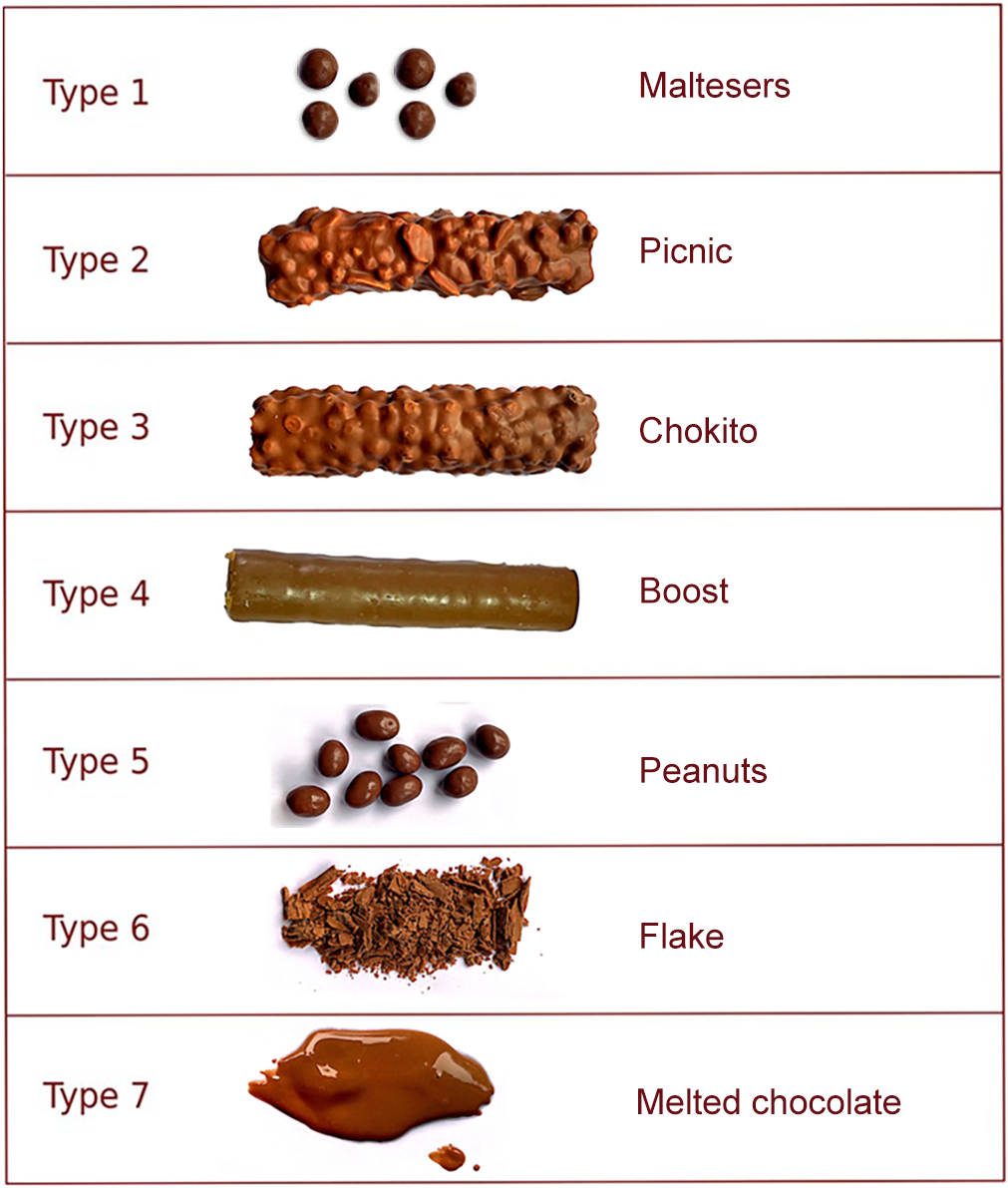
Future studies should determine if eating these specific types of cholate actually produces the same types of stool as those listed on the BSS
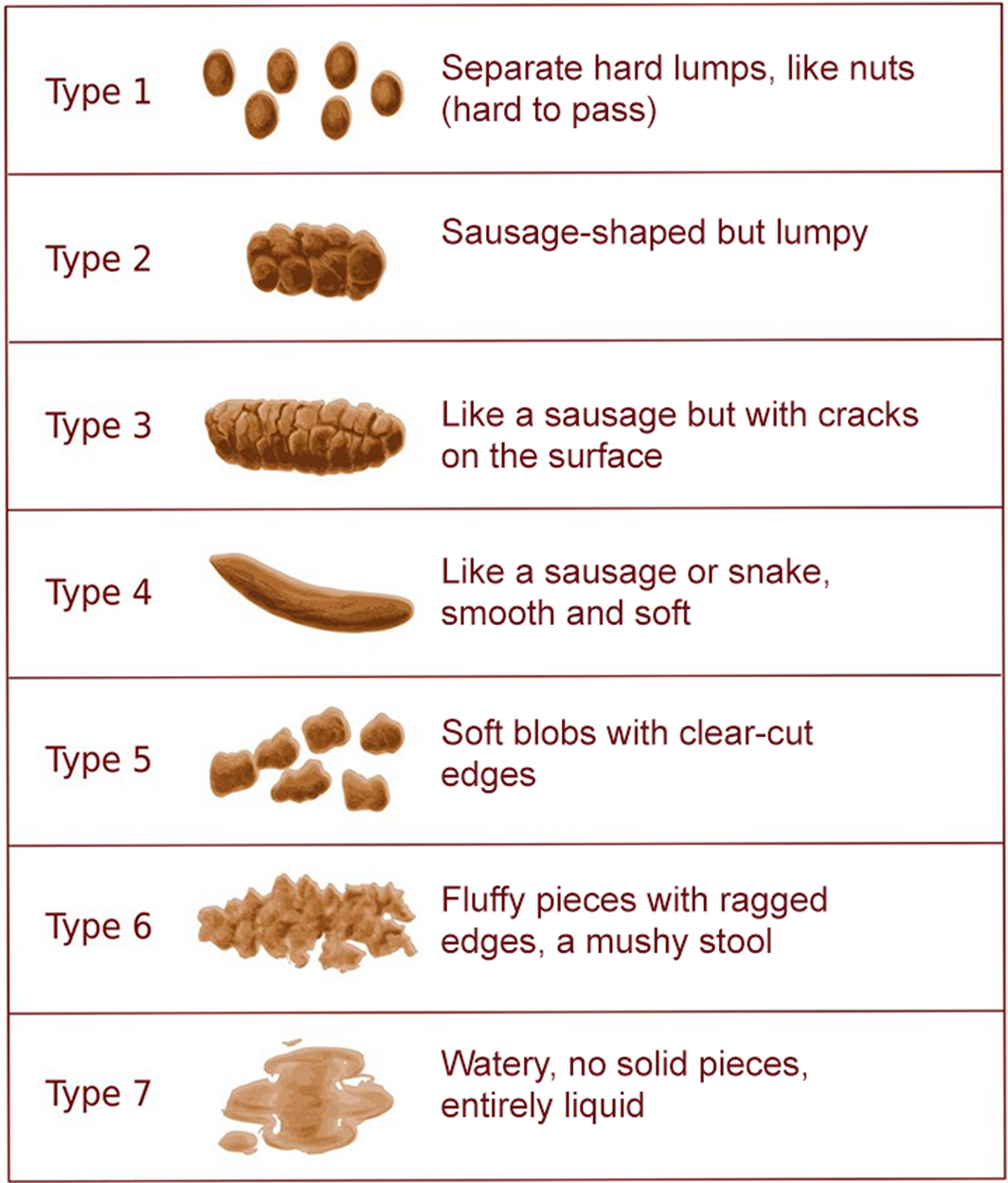
The Bristol Stool Scale (BSS) was developed 30 years ago, with the aim of determining the range of bowel habits including stool types in the adult population.1 We conducted a PubMed search (All Fields), which identified more than 600 published papers associated with the BSS. The BSS is currently the gold standard to classify stool consistency in adults. In its present form, it has been useful in assessing intestinal transit time;2 the longer the time, the lower the stool number (eg, type 1 has the slowest transit time [constipation]; type 7 has the fastest transit time [diarrhoea]) (Box 1). The form of the stool strongly influences the act of defecation. The need to strain increases as the type number goes down, and the feeling of urgency increases as the type number rises.1 Feelings of incomplete evacuation occur quite often in normal individuals if their stool is at either end of the scale, but rarely if the stool is type 3 or 4.
Children with recurrent abdominal pain (CRAP) have been assessed using the BSS.3 However, it appears that the BSS is not as valid in infants and young children. Over the years, other scales have been developed for use in paediatric patients with mixed success. The Amsterdam Stool Scale (ASS) incorporated new components to include information on stool colour and stool volume.4 The ASS appears to be more appropriate for use among infants, but it has been suggested that it is too complex for routine use and it is not commonly used by health care professionals.4 Recently, the Brussels Infant Toddler Stool Scale (BITSS) was developed and compared with the BSS.5 The conclusion was that the BITSS and BSS “behave differently”. The BITSS was better at detecting hard stools and functional constipation than the BSS.5
It is understandable that the BSS works well in the adult population and that parents assessing infant and toddler poo may not undertake the process of assessing their child's poo in detail as it is gross and smelly. Perhaps the problem is one of interpretation? So, why not let children assess their own poo using something that is familiar to them — chocolate. Not so gross, is it? In Australia, we have chocolate bars that match each type of poo on the original BSS. We propose a new stool scale based on different types of chocolates that match the BSS (Box 2). We believe that this provides a very close match in terms of faecal form, colour, and stool consistency. Not so much on smell. The Paediatric Aussie Chocolate Poo Scale (PACPS) may serve a practical purpose to assist parents and health care professionals in obtaining important information about stool consistency from children with recurrent abdominal pain, irritable bowel syndrome, or constipation disorders. The instrument requires validation, and future studies should be conducted to determine if eating these specific types of chocolate actually produces the same types of stool as those listed on the BSS.
Competing interests
No relevant disclosures.
References
- Heaton KW, Radvan J, Cripps H, et al. Defecation frequency and timing, and stool form in the general population: a prospective study. Gut 1992; 33: 818‐824.
- Lewis SJ, Heaton KW. Stool form scale as a useful guide to intestinal transit time. Scand J Gastroenterol 1997; 32: 920‐924.
- Jadrešin O, Hojsak I, Mišak Z, et al. Lactobacillus reuteri DSM 17938 in the treatment of functional abdominal pain in children: RCT study. J Pediatr Gastroenterol Nutr 2017; 64: 925‐929.
- Bekkali N, Hamers SL, Reitsma JB, et al. Infant stool form scale: development and results. J Pediatr 2009; 154: 521‐526.
- Velasco‐Benitez CA, Llanos‐Chea A, Saps M. Utility of the Brussels Infant and Toddler Stool Scale (BITSS) and Bristol Stool Scale in non‐toilet‐trained children: a large comparative study. Neurogastroenterol Motil 2021; 33: e14015.
Early-Onset Colorectal Cancer With Liver-Only Metastases: A Retrospective Cohort Study Integrating Prospectively Collected Real-World Clinical and Molecular Data From an Australian National Database (2009–2024) to Guide Treatment Planning
Savio G. Barreto, Christos S. Karapetis, Shahid Ullah, Matthew Burge, Susan Caird, Angus Campbell, Azim Jalali, Ross Jennens, Muhammad A. Khattak, Belinda Lee, Stephanie H. Lim, Shehara Mendis, Louise Nott, Timothy J. Price, Jeremy D. Shapiro, Jeanne Tie, Javier Torres, Colin Williams, Rachel Wong, Vanessa Wong, Peter Gibbs
Australian Pathways for Specialist Pain Management and Early Palliative Care for People With Pancreatic Cancer: Developed Using a Community Consensus Approach
Jennifer Philip, Melanie R. Lovell, Kylee Bellingham, Gail Garvey, Gregory B. Crawford, Nicole M. Rankin, Kara Burns, Isabel Young, Vivienne Milch, Dorothy Keefe, Katrina Anderson, James Lawson, Meinir Krishnasamy
Cause‐specific mortality among Queensland people with cirrhosis, by cirrhosis aetiology and decompensation status, 2007–22: a retrospective cohort study
Vikas Bhasker, Jessica R Fong, Paul J Clark, Gunter F Hartel, Richard Skoien, James O’Beirne, Elizabeth E Powell, Patricia C Valery
Clinical practice guidelines for hepatocellular carcinoma surveillance for people at high risk in Australia: summary of recommendations
Jacob George, Nicole L Allard, Stuart K Roberts, Leon A Adams, Jane Davies, Behzad Hajarizadeh, Jennifer H MacLachlan, Suzanne E Mahady, Rosalie Altus, Catherine Brown, David C Fry, Belinda Greenwood‐Smith, Natali Smud, Patricia C Valery, Nafisa Yussf, Kate Broun, Denise Campbell, Karen Canfell, Chelsea Carle Harrison, Victoria Freeman, Paul Grogan, Catherine Holliday, Suzanne Hughes, Anna Kelly, Cathelijne Kemenade, Claire Latumahina, Amanda McAtamney, Megan Varlow, Joachim Worthington, Susan Yuill, Eleonora Feletto
Assessment of metabolic dysfunction‐associated fatty liver disease in primary care: a consensus statement summary
Leon A Adams, William W Kemp, Kate R Muller, Elizabeth E Powell, Stuart K Roberts, Luis Calzadilla Bertot, Stephanie Best, Gary Deed, Jon D Emery, Samantha L Hocking, Graham R Jones, John S Lubel, Sinead Sheils, Stephen M Twigg, Gerald F Watts, Jacob George
Treatment outcomes for people with hepatitis C referred to tertiary care in Victoria, 2021–22: a retrospective observational study
Elly Layton, Nicole Matthews, Brendan Quinn, Nasra Higgins, Gabrielle Lindeman, Mielle Abbott, Jennifer MacLachlan, Elizabeth Birbilis, Margaret E Hellard, Joseph Doyle, Benjamin C Cowie, Mark Stoové