




Volume 213 - Issue 4
Alcohol advertisers may be using social media to encourage parents to drink during COVID‐19
Authors: Janni Leung, Jason Connor, Leanne Hides and Wayne D Hall
Med J Aust 2020; 213 (4): 188-188.e1. || doi: 10.5694/mja2.50707
Published online: 17 August 2020
Published online: 17 August 2020
To the Editor: Australia's social distancing policies to contain the spread of coronavirus disease 2019 (COVID‐19), caused by the severe acute respiratory syndrome coronavirus 2 (SARS‐CoV‐2), have had social consequences. Social distancing and school disruptions have increased parental responsibilities. There has also been an increased opportunity for parents to use alcohol to cope with increased stress.1
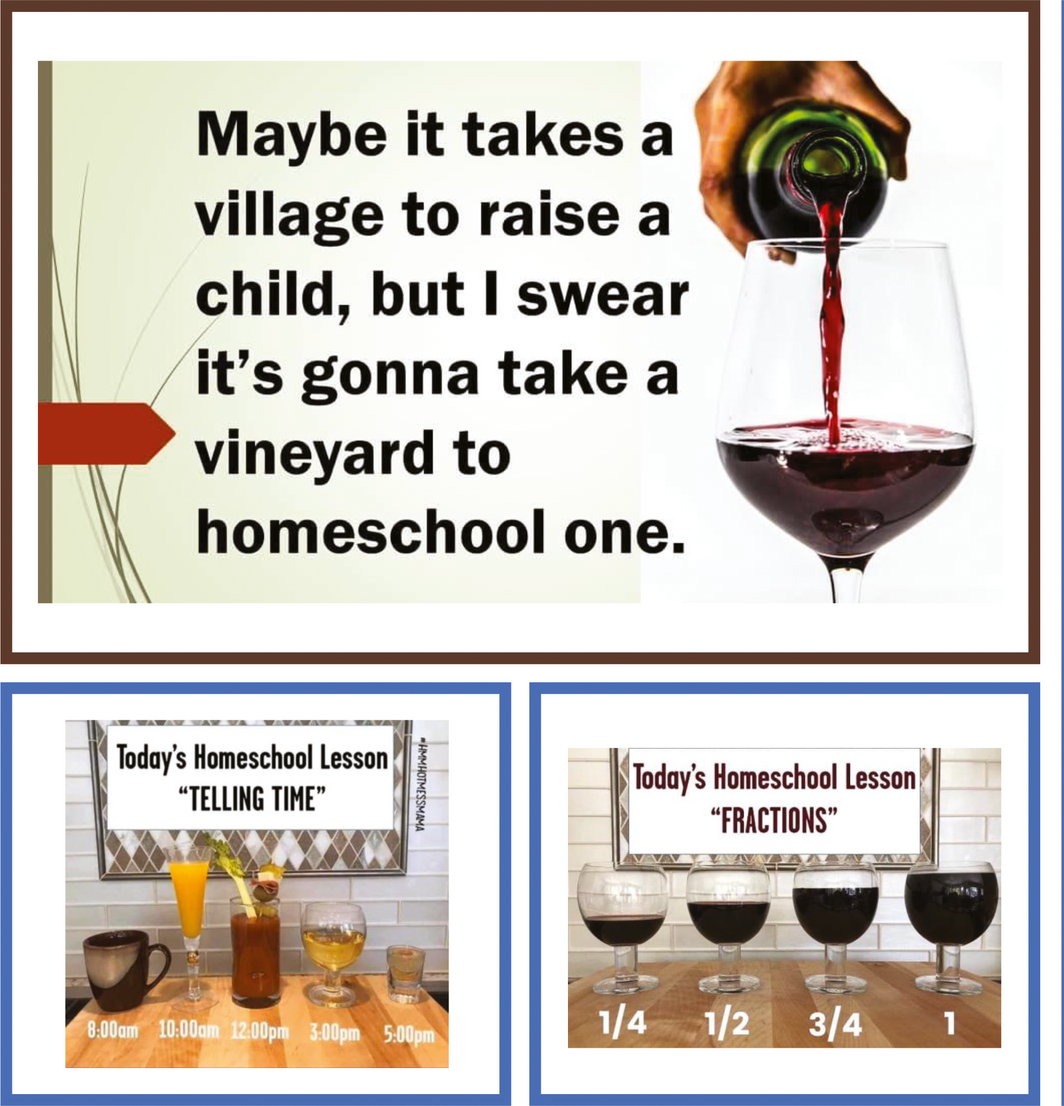
Parents, especially mothers, have taken to social media to share “memes” about needing a drink to survive staying at home (Box). These posts are mostly shared with the aim of creating an online environment for peer support and stress relief, but they risk normalising the use of alcohol as a coping strategy and promoting the false belief that alcohol is good for mental health.2 Alcohol is a central nervous system depressant that may relieve stress in the short term, but regular drinking increases psychological distress and the risk of alcohol‐related harm.3
A review of recent advertising complaints indicated that some alcohol advertisers have been quick to capitalise on COVID‐19.4 An investigation of a social media account found an average of one alcohol advertisement every 35 seconds, with themes of easy access without leaving home (58%), buy more (35%), drink during COVID‐19 (24%), and drink to cope (16%).5 Australia has a regulation system for alcohol advertising, which most people mistakenly believe is government‐funded.6 It is in fact an industry‐funded quasi‐regulatory system that is activated by consumer complaints and lacks systematic independent monitoring.7 Further, regulations do not prevent certain social media platforms from being used by alcohol brands to post advertisements and engage with consumers.8
In light of the alcohol industry's opportunistic advertising through social media, it is questionable how well Australia's regulatory system protects parents and other targeted populations at risk from exposure to constant encouragements to drink during these challenging times.
Competing interests
No relevant disclosures.
Acknowledgements
Janni Leung is supported by the University of Queensland Development Fellowship. Leanne Hides is supported by a National Health and Medical Research Council Senior Research Fellowship. The Centre for Youth Substance Abuse Research and the Lives Lived Well Group are supported by Commonwealth funding from the Australian Government provided under the Drug and Alcohol Program. The funding bodies had no role in the study design, collection, analysis or interpretation of the data, writing the manuscript, or the decision to submit it for publication. We thank Sarah Yeates for her assistance in preparing the manuscript for publication.
References
- Alcohol and Drug Foundation. The COVID‐19 parenting juggle: home schooling, alcohol, and stress management. Alcohol and Drug Foundation Insights (Melbourne) 2020; 19 May. https://adf.org.au/insights/covid-19-parenting-juggle/ (viewed May 2020).
- Cassidy T. Coronavirus‐themed alcohol marketing sparks calls for regulators to raise the bar. ABC News 2020; 18 Apr. https://www.abc.net.au/news/2020-04-16/coronavirus-themed-alcohol-marketing-sparks-call-for-ban/12151912 (viewed May 2020).
- Connor JP, Haber PS, Hall WD. Alcohol use disorders. Lancet 2016; 387: 988–998.
- Lavarch M, Richards D, Mattick R. The Alcohol Beverages Advertising Code Scheme Adjudication Panel determination No. 35/20. Stirling: ABAC, 2020. http://www.abac.org.au/wp-content/uploads/2020/05/35-20-Determination-Latitude-34-Wine-Company-29-April-2020.pdf (viewed May 2020).
- Foundation for Alcohol Research and Education, Cancer Council Western Australia. An alcohol ad every 35 seconds. A snapshot of how the alcohol industry is using a global pandemic as a marketing opportunity. http://fare.org.au/wp-content/uploads/2020-05-08-CCWA-FARE-An-alcohol-ad-every-35-seconds-A-snapshot-final.pdf (viewed May 2020).
- Brennan E, Wakefield MA, Durkin SJ, et al. Public awareness and misunderstanding about DrinkWise Australia: a cross‐sectional survey of Australian adults. Aust N Z J Public Health 2017; 41: 352–357.
- Reeve B. Regulation of alcohol advertising in Australia: does the AABAC Scheme adequately protect young people from marketing of alcoholic beverages? QUT Law Review 2018; 18: 96–123.
- Brodmerkel S, Carah N. Alcohol brands on Facebook: the challenges of regulating brands on social media. J Public Aff 2013; 13: 272–281.
Gabapentinoid Poisoning Presentations to Victorian Emergency Departments: A 15-Year Trend Analysis
Bishaal Tej Gurung, Amy McNeilage, Angus Skeen, Tina Lam, Joanna F. Dipnall, Jane Hayman, Suzanne Nielsen, Ting Xia
Hospital-Admitted Injection-Related Infections Among Incarcerated People Who Inject Drugs in Australia: A Retrospective Cohort Study
Andrew Palmer, Matthew Carter, Jeremy Yeo, Cecilia Shim, Jason Connor, Jeremy Hayllar, Gerald Holtmann, Naomi Moy, Elliott G. Playford, Naomi Runnegar, Paul J. Clark
The Management of Withdrawal From Alcohol and Other Drugs in Australian Custodial Settings: A Consensus Statement
Grace FitzGerald, Jocelyn Chan, Jon Cook, Mark Stoove, Michael Curtis, Suzanne Nielsen, Rebecca J. Winter, Thileepan Naren
Impact of Prescription Drug Monitoring Program Implementation on Rates and Characteristics of People Seeing Multiple Prescribers in Primary Care: A Controlled Interrupted Time-Series Analysis
Louisa Picco, Monica Jung, Grant Russell, Samanta Lalic, Mahbod A. Fini, Dan I. Lubman, Rachelle Buchbinder, Ting Xia, Suzanne Nielsen
Early Cessation of Acetylcysteine Treatment After Paracetamol Overdose (NACSTOP 2): A Non-Inferiority Randomised Controlled Trial
Anselm Wong, Richard McNulty, Sarah E. Hodgson, Naren Gunja, Andis Graudins
The risk of death after hospitalisation following intentional self‐poisoning: a retrospective observational study (PAVLOVA‐2)
Firouzeh Noghrehchi, Nicholas A Buckley, Rose Cairns