




Volume 213 - Issue 11
From opposite sides of the trenches: the two pioneers of the Kolling Institute of Medical Research, 1920–1974
Author: Catherine E Storey
Med J Aust 2020; 213 (11): 511-513.e1. || doi: 10.5694/mja2.50798
Published online: 12 October 2020
Published online: 12 October 2020
The institute that has investigated the “common diseases of mankind” for 100 years was established by an unlikely partnership
During the First World War, two young men served with distinction on opposite sides of the battlefields in France. One, William Wilson Ingram (1888–1982) was wounded in action, “mentioned in despatches”, and awarded the Military Cross by the British government. The other, Max Rudolf Lemberg (1896–1975), was awarded the Iron Cross after being wounded in the Somme offensive of March 1918. Despite being on opposing sides of this appalling conflict, they later formed a partnership in Sydney, together laying the foundations for the Kolling Institute of Medical Research at the Royal North Shore Hospital. The Kolling, which traces its origin to the Institute of Pathological Research in 1920, is the oldest medical research organisation in NSW. In this, its centenary year, it is an opportune time to explore the contributions of its two remarkable pioneers.
William Wilson Ingram (1888–1982) MC, MB, ChB, MD (Aberdeen), FRACP
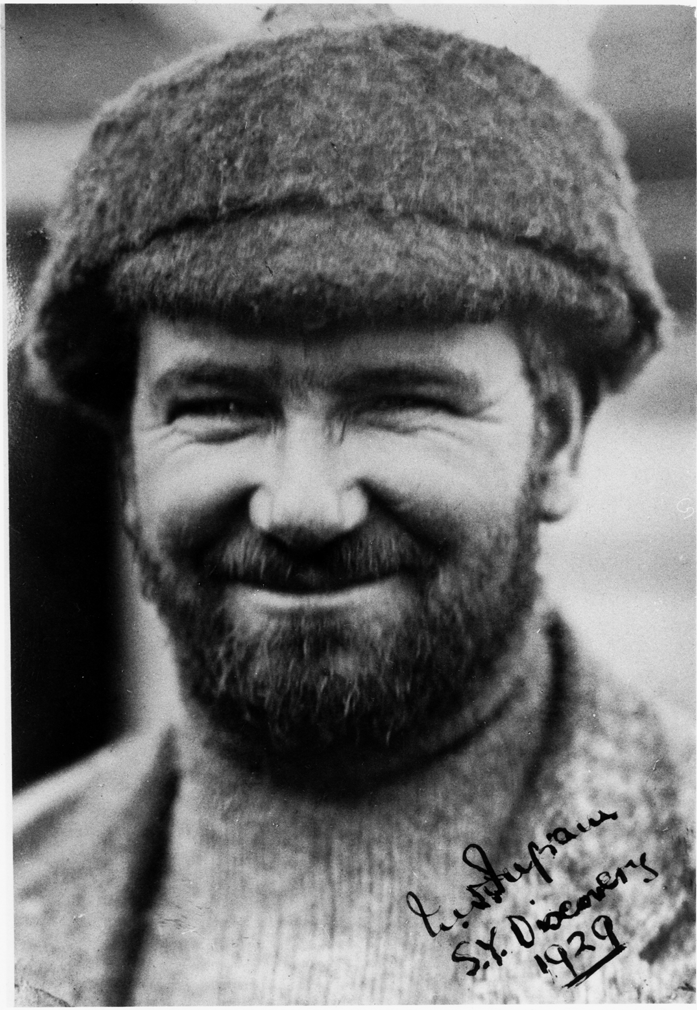
William Wilson Ingram graduated from the University of Aberdeen in 1912. On the declaration of war, he enlisted in the Royal Medical Corps. He served in France, where he received the Military Medal in 1915; wounded, he returned to England. In 1916, Captain Ingram resumed active service, and ultimately took command of the Pathology Services at the headquarters of the British Expeditionary Force in France.1
After the War, Ingram completed a medical degree at Aberdeen. He then accepted the post of lecturer in physiology at the University of Sydney, and also established a general medical practice. In 1921, Ingram was appointed Honorary Pathologist at the Royal North Shore Hospital (RNSH), where, in addition to supervising the routine pathology service, he founded the Institute of Pathological Research.
The Institute of Pathological Research of New South Wales
In 1920, a group of influential NSW citizens proposed a research institute for investigating the “common diseases of mankind”, inspired by the Lister Institute of Preventive Medicine in London. They launched an appeal for establishing the Institute of Pathological Research of New South Wales (under the Royal North Shore Hospital of Sydney Act of Incorporation, 1910).2 Initial donations were disappointingly few, but after Mr Thomas Rofe (1869–1945), member of the Hospital Board, donated £5000, the Institute was ready to proceed in 1923. These funds facilitated the appointment of G. Vincent Rudd MSc, senior biochemist, as its first fulltime research scientist in 1925.
Later that year, Ingram returned to London for postgraduate study, during which he observed the clinical effects of the newly discovered insulin. On his return to RNSH, he established one of the first specialist diabetes clinics in Australia. He later collaborated with Rudd on the significant and popular text, The diagnosis and treatment of diabetes, published in 1933.3
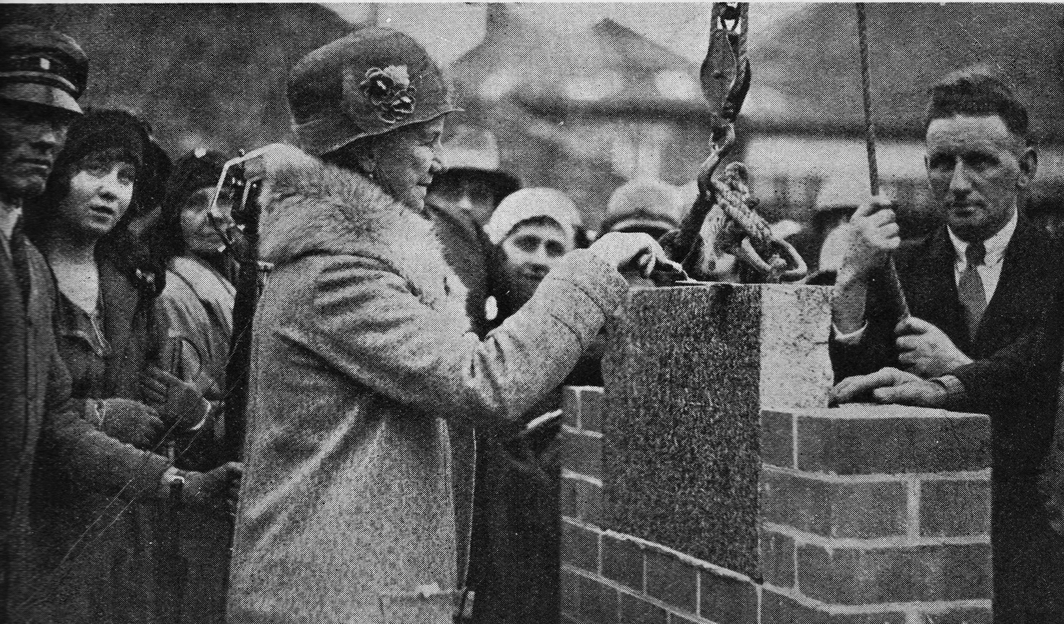
By 1928, space at the Institute was at a premium, and as it expanded in scope and personnel, more commodious, fully equipped laboratories were urgently required.4 Ingram invited Eva Kolling, the widow of American‐born merchant, Charles Kolling (1858–1926), to tour the original hospital cottage that now served as a laboratory. Mrs Kolling was suitably impressed by the standard of clinical research carried out in extremely cramped conditions. With the opportunity to commit funds to commemorate her husband — but also because “many lives will be spared and Humanity assisted generally”5 — she donated £5000, a sum matched by the NSW government. Ingram drew up plans for the “Charles Kolling Memorial Laboratory” shortly before his departure as medical officer with Douglas Mawson and the British, Australian and New Zealand Antarctic Research Expedition (BANZARE) (Box 1). Eva Kolling laid the foundation stone for the new laboratory in 1930 (Box 2) and, after Ingram returned from his second BANZARE expedition (1931), she officially opened the new facility on 12 September 1931.
After the move into the new building, which provided much needed laboratory space and a library, and to re‐emphasise its focus on research into common medical conditions, the institute was renamed the Institute of Medical Research. Ingram was appointed honorary director, a position he held until his retirement in 1974.
When Rudd resigned in 1934, Ingram was unable to recruit a suitably qualified Australian‐based scientist, and extended his search overseas. Max Rudolf Lemberg (1896–1975), with a 14‐year background in biochemical research and working in Cambridge after fleeing Hitler's Germany, applied for the position.
Max Rudolf Lemberg (1896–1975)
Max Rudolf (Rudi) Lemberg was born in Breslau (Silesia; now Wrocław, Poland), where he graduated in science in 1916. In mid‐1917, he enlisted in the German army as a private, a gunner in the field artillery. Lemberg was wounded in action during the Somme offensive of March 1918, his bravery recognised with the Iron Cross. These experiences had a profound effect on Lemberg, who became a convinced pacifist; he later (1952) joined the Society of Friends in Sydney. In 1922, he completed a doctorate in Breslau under Heinrich Blitz, an organic chemist. Blitz strongly advised him against an academic career, citing the poor prospects for a scientist of Jewish descent in any German university.6 After a period as an industrial chemist with Boehringer in Mannheim, he returned to academic life in Heidelberg in 1926. Equipped with a Rockefeller Foundation scholarship, he moved to Cambridge to study with Sir Frederick Gowland Hopkins (1861–1947) in the Institute of Biochemistry.7 He then returned to Heidelberg, but Lemberg later recalled that “the Nazi shadows began rapidly to gather”, and in 1933 his academic career came to an abrupt halt. He realised that, despite his war service and Iron Cross, he was unlikely to escape ending in a concentration camp.6
He fled Germany and returned to Cambridge, which at the time was full of highly qualified refugees from Germany, and not all could stay. Lemberg successfully applied for the position of director of the biochemical laboratories at the RNSH, going “into the wilderness, for I did not expect inspiration from my Australian colleagues at that time.”6
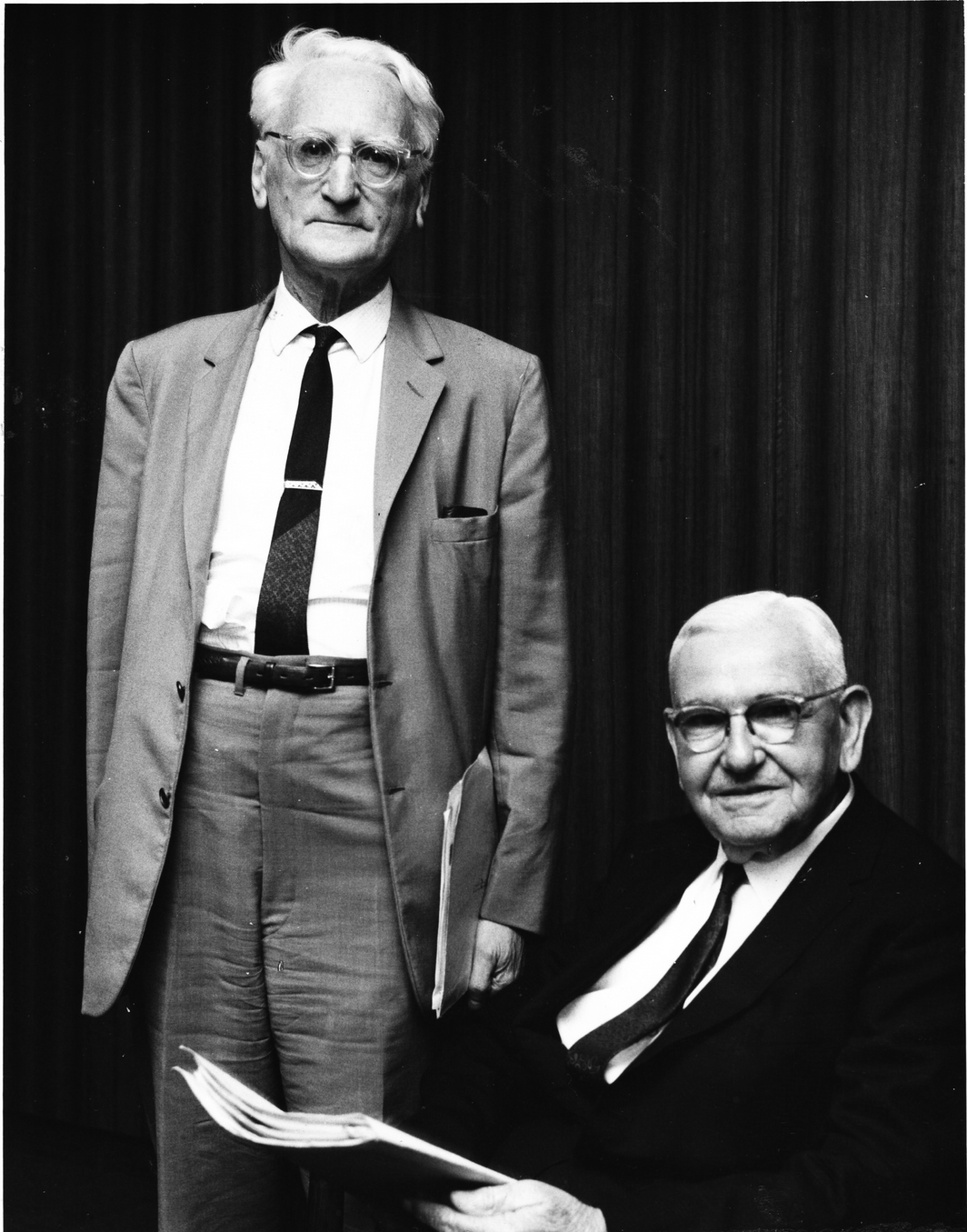
After a final (and risky) visit to his ageing parents in Breslau, Lemberg and his wife arrived in Sydney on 1 October 1936. Australia must have seemed remote from his academic life in Heidelberg and Cambridge, especially as “there was little space for research and hardly any equipment”.6 Nevertheless, Ingram and Lemberg established a good partnership, Ingram as the director of the Institute of Medical Research and Lemberg later as assistant director until his retirement in 1972 (Box 3). Ingram managed the administration and provided the clinical input, while Lemberg undertook fundamental scientific research, primarily into porphyrins and tetrapyrrole metabolism, research with which the Institute developed its scientific reputation.
The Institute during the Second World War
During the Second World War, Ingram enlisted in the Australian Army Medical Corps and served as Lieutenant‐Colonel until 1944.8 Lemberg remained in his laboratory, contributing to the war effort with research into the metabolism of trinitrotoluene (TNT) in animals, the role of sulphonamides in bacterial metabolism, and the preparation of X‐ray contrast media, among other topics.7
Eva Kolling, who remained one of the most significant supporters of the Institute, died in 1941, and left an extraordinary bequest of £25 000 to support and expand the work of the Institute and the Charles Kolling Memorial Laboratory.
The Institute of Medical Research, 1945–1974
In 1948, the RNSH became a teaching hospital of the University of Sydney; in 1950, Ingram created a Unit of Clinical Investigation within the Institute of Medical Research, under the direction of Frank Rundle (1910–1993), later founding Dean and Professor of Surgery of the University of New South Wales. A new teaching block in 1963 provided additional facilities for the Institute, and a closer relationship with the clinical school developed.
In 1964, routine hospital pathology moved from the Kolling laboratories into stage I of the new hospital complex, so that the Institute of Medical Research was free, for the first time, to concentrate solely on research.
Lemberg continued his basic biochemical research. In 1949 he published his monograph on Hematin compounds and bile pigments, which became a standard text in the field of tetrapyrroles and confirmed his international scientific reputation.9 In 1952, he was elected a Fellow of the Royal Society and a Foundation Fellow of the Australian Academy of Science, and in 1955 was elected the first president of the Australian Biochemical Society. His scientific output was prodigious, encompassing more than 200 scientific publications.7
After Ingram and Lemberg: the Kolling Institute of Medical Research
Following the retirements of Ingram and Lemberg, David Nelson (1935–1989), clinician and researcher, was appointed the first fulltime director (1974–1989). From 1971, the Institute was commonly known as the Kolling Institute of Medical Research, and, under Nelson's direction, concentrated on the emerging discipline of clinical immunology.10
Under its third director (1994–2011), Robert Baxter, the Kolling focused on endocrinology and cell biology. In 2008, the various research laboratories were all relocated to a new purpose‐built facility on the RNSH campus.
With the appointment of Jonathan Morris as its fourth director in 2012, the academic research focus of the Kolling broadened to ensure that medical research findings informed clinical practice.
Carolyn Sue was appointed the fifth director in 2019. The Institute now hosts numerous research teams investigating an extensive range of medical conditions. The Kolling Institute of 2020 has thereby remained true to the original charter of the Institute of Pathological Research in 1920, investigating the “common diseases of mankind”.
Source: Archive and Heritage Collection, Royal North Shore Hospital, Sydney; with kind permission.
Box 2 – Eva Kolling lays the foundation stone for the new laboratory of the Institute of Medical Research, 1930
Source: Archive and Heritage Collection, Royal North Shore Hospital, Sydney; with kind permission.
Source: Archive and Heritage Collection, Royal North Shore Hospital, Sydney; with kind permission.
Competing interests
No relevant disclosures.
References
- Pearn JH. Dr William Wilson Ingram (1888–1982): doctor–soldier; physician and Antarctic expeditioner. J R Coll Physicians Edinb 2011; 41: 270–277.
- An appeal for the Establishment of the Institute of Pathological Research of New South Wales [pamphlet]. 1920 (Archives and Heritage Collection, Royal North Shore Hospital of Sydney).
- Ingram WW, Rudd GV. The diagnosis and treatment of diabetes and the use of high carbohydrate diets. Sydney: Angus & Robertson, 1933.
- Royal North Shore Hospital of Sydney. Annual Report 1928, President's report (Archives and Heritage Collection, Royal North Shore Hospital of Sydney).
- Kolling E. Letter to Dr WW Ingram, 14 October 1931. (Archives and Heritage Collection, Royal North Shore Hospital of Sydney).
- Lemberg MR. Chemist, biochemist, and seeker in three countries. Annu Rev Biochem 1965; 35: 1–20.
- Rimington C, Gray CH. Max Rudolf Lemberg. 19th October 1896 – 10 April 1975. Biogr Mems Fellows R Soc 1976; 22: 256–294.
- Vanderfield IR. Ingram, William Wilson. In: Wiseman JC, Mulhearn RJ editors. Roll of the Royal Australasian College of Physicians, II: 1976–1990. Sydney: Royal Australasian College of Physicians, 1994; pp. 162–163.
- Lemberg MR, Legge JW. Hematin compounds and bile pigments: their constitution, metabolism, and function. New York: Interscience, 1949.
- Nelson DS. The Kolling Institute of Medical Research. Med J Aust 1985; 143: 97–101.
Provenance: Not commissioned; externally peer reviewed.
Prisoner of war pathology in Changi, 1942–1945
Kate Ariotti, Elizabeth Roberts‐Pedersen
Should medical eponyms continue to be used in everyday practice?
Leya Nedumannil, Diana Lewis
100 years on: the first use of insulin in Australia
Sophie Templer
Reflections on the life and career of Professor Dame Valerie Beral AC DBE FRS FRCOG FMedSci (1943–2022)
Karen Canfell, Bette Liu, Emily Banks
The Honourable Dr Donald James Grimes AO
Michael Kirby, Patti Warn
From wipeout to drill out: a history of exostosis management and Australian surfing
Alon Taylor, Hannah North, Narinder P Singh, Paul A Fagan