




Volume 213 - Issue 11
Hypothyroidism: a TV diagnosis to remember
Author: Timothy A Welborn
Med J Aust 2020; 213 (11): 515-515.e1. || doi: 10.5694/mja2.50858
Published online: 14 December 2020
Published online: 14 December 2020
To the Editor: One evening in February 1974, my fellow endocrinologist Don Gutteridge phoned me to tell me about an ABC television program that I had missed. It had featured an interview in Perth with Sir Richard Kirby, recently retired as Australia’s chief judge in industrial relations. He was showing typical signs of advanced thyroid deficiency. He had slow, coarse speech, periorbital oedema, sparse scalp hair, and was “not as sharp as a chief judge should be”. Don had phoned him at his hotel to discuss the diagnosis. The judge’s response was that he did indeed have symptoms including marked cold intolerance and he had coronary artery disease. Don firmly advised him to have his thyroid tested as soon as possible and in addition he wrote to Sir Richard’s Melbourne physician pointing out that caution was needed when starting thyroxine therapy if the patient had heart disease. Later a Christmas card arrived: “Sincere thanks for a timely telephone call and advice to an old stager who was in need and did not know it … I’m on the treatment and ever since have been a younger, newer and better man.”
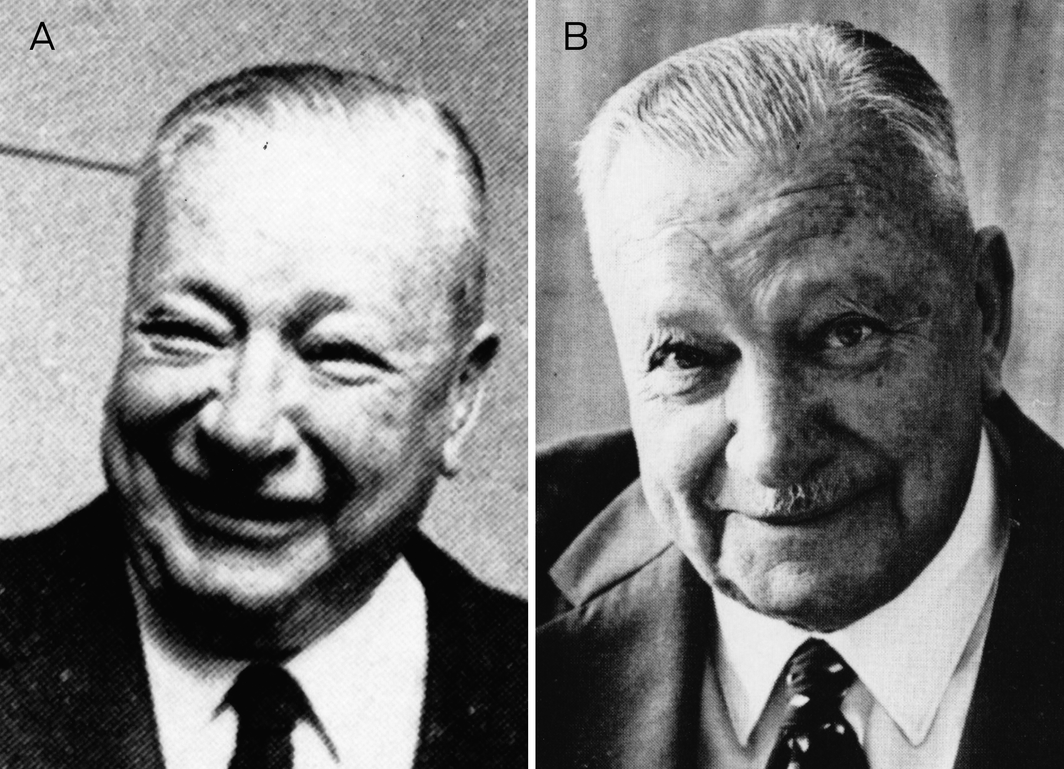
The before‐and‐after photographs in Blanche d’Alpuget’s biography of Sir Richard1 show a marked improvement in his appearance (Box). He had been unwell for years. Two cardiologists had advised him to retire in 1969. By 1971, he was spending most of his time at his home in Berrara, NSW, feeling ill and sluggish despite a rigorous diet, no cigarettes and almost no alcohol.
The story did not end there. In 1979, Don was invited to Sydney to appear on Channel 7’s This is your life television program featuring Sir Richard (https://www.fwc.gov.au>file>your‐life‐sir‐richard‐kirby). “I always saw you with a halo” enthused Sir Richard, sizing up the tall and rangy dark‐haired young doctor, “but I thought you must be an old bloke like me.” Others on the show included Bob Hawke, then President of the ACTU, past Prime Minister Gough Whitlam, and many legal colleagues.
Kirby served on three Royal Commissions. He assisted in the mediation of Indonesian Independence from Dutch rule for the United Nations, and he negotiated equal pay for Aboriginal stockmen. His passion to achieve equal pay for women could have been his greatest legacy had bad health not intervened. An undiscovered thyroid deficiency may well have altered the course of Australian industrial relations. Within a month of being treated with thyroxine, Kirby looked and felt better than for almost a decade. He died 27 years later in 2001 at the age of 97.
The insidious and subtle onset of hypothyroidism can easily be overlooked by patients, relatives and doctors. Screening for thyroid‐stimulating hormone levels will ensure that an important diagnosis is not missed. Any suspicious symptoms should lead to a careful examination to identify the end‐organ signs of thyroid deficiency, including the slow relaxation phase of tendon reflexes, coarse dry skin, cool extremities and a hoarse voice.2
Competing interests
No relevant disclosures.
Acknowledgements
Dr Donald Gutteridge kindly reviewed the manuscript and provided additional information.
References
- D’Alpuget B. Mediator: a biography of Sir Richard Kirby. Melbourne: Melbourne University Press, 1997.
- Welborn TA. Practice guidelines for hypothyroidism in adults: clinical issues and the controversy about combination therapy. Endocr Pract 2013; 19: 1062–1064.
When ‘Liver Enzymes’ Are Not Hepatic: Late-Onset Pompe Disease
Shauna Madigan, Georgina England, Wayne Rankin
Primary Hyperparathyroidism in Adults: Recent Developments in Diagnosis and Management
Elizabeth Wootton, Sunita M. C. De Sousa, Richard L. Prince, Donald S. A. McLeod, David A. Pattison, Mathis Grossmann
Severe Hypoglycaemia Secondary to Chronic Opioid-Induced Hypothalamic–Pituitary–Adrenal Axis Suppression: An Under-Recognised Phenomenon
Michael Do, Annabelle Hayes, Malgorzata Brzozowska
Rethinking diabetes care for Indigenous Australians: the need for Indigenous‐codesigned and led diabetes models of care
Natalie Nanayakkara, Sharon Atkinson‐Briggs, Alicia J Jenkins, Neale D Cohen
The first Australian evidence‐based guidelines on male infertility
Darren J Katz, Liza O’Donnell, Robert I McLachlan, Tim J Moss, Clare V Boothroyd, Veena Jayadev, Sarah R Catford