




Volume 210 - Issue 3
Selecting and optimising patients for total knee arthroplasty
Authors: Sam Adie, Ian Harris, Alwin Chuan, Peter Lewis and Justine M Naylor
Med J Aust 2019; 210 (3): 135-142. || doi: 10.5694/mja2.12109
Published online: 18 February 2019
Published online: 18 February 2019
The minimum requirement for TKA must be prolonged clinically important symptoms in the presence of clinical signs that allow attribution of those symptoms to local pathology affecting articular surfaces and knee alignment. If, after reasonable attempts at non-operative treatment, symptoms are sufficiently severe to justify the risks, a person is considered suitable for surgery. Optimisation to attenuate surgical risks should be attempted in all TKA candidates, although high level evidence is lacking for certain important factors. Pre-operative interventional trials, with the aim of improving post-operative TKA outcomes, are particularly needed in the areas of patient expectation, diabetes, obesity and vascular disease.
Summary
- The minimum requirements for total knee arthroplasty (TKA) are significant, prolonged symptoms with supporting clinical and radiological signs. Despite interest in screening tools, there is limited evidence for a specific symptom threshold that justifies surgery.
- Non‐operative treatments including medications, exercise and weight loss are unlikely to reverse radiographic changes, but they may improve symptoms and delay the need for surgery.
- Many patient factors such as mental health and obesity affect both the level of symptomatic improvement after surgery and risks of surgery, but none have been identified as contraindications for the procedure as significant health gains can still be achieved.
- Although age and sex are associated with patient‐reported outcomes and risk of revision, these factors cannot be used to restrict access to TKA, and age cut‐offs are not recommended.
- Evidence regarding pre‐operative optimisation of patients to improve post‐operative TKA outcomes is limited by the few interventional trials available, particularly in the areas of patient expectation, diabetes, obesity and vascular disease. There is good evidence from randomised controlled trials that pre‐operative rehabilitation primarily focusing on exercises for the joint or limb has minimal effect on post‐operative TKA outcomes, and there is some evidence from randomised controlled trials that an intensive smoking cessation program before surgery may improve post‐operative outcomes.
- Detailed international guidelines exist on the optimisation of the cardiorespiratory status of surgical patients, and these should be followed for TKA surgery.
Total knee arthroplasty (TKA) is commonly performed but it is unclear for whom surgery is most appropriate and how best to medically optimise a patient for surgery. According to the Australian Orthopaedic Association National Joint Replacement Registry, the 2016 rate for all knee arthroplasty procedures was 242 per 100 000 population, with most (70%) performed in the private sector.1 This is higher than the Organisation for Economic Co‐operation and Development average of 126 per 100 000 population.2 It is not clear whether the Australian rate is inappropriately high or whether it reflects differences in populations, system capacity or methods of data capture.
This narrative review aims to address the clinical dilemmas of who should undergo TKA, and how best to optimise a patient for surgery so that the risks of surgery are minimised and recovery is facilitated. The review focuses on TKA for osteoarthritis, because this procedure and diagnosis combination is by far the most commonly seen in Australia.1 For each section of the review, we performed a systematic search of the literature (Supporting Information).
Who should undergo TKA for osteoarthritis?
This section covers patient characteristics (age, sex and comorbidities), disease severity, predictive tools and societal and health provider factors relevant to the decision‐making process.
Despite large benefits associated with TKA, suboptimal outcomes do occur. Up to 24% of patients3 experience a serious adverse event, and about 20% experience ongoing pain4 and dissatisfaction.5 In light of these statistics, paramount to the decision to undergo TKA is the determination of whether it is appropriate at an individual patient level.
The minimum requirement for TKA is a clinical, intrinsic knee problem (symptoms are usually intractable pain affecting quality of life) of sufficient severity that the potential for meaningful improvement from surgery justifies the risks. Additionally, there should be radiographically evident knee pathology, and other signs including stiffness, instability and deformity to which the symptoms can be attributed. Although not highly correlated,6 these two criteria — the clinical problem and the underlying condition — must both be present to justify surgery. According to the United Kingdom National Institute for Health and Care Excellence guidelines, the symptoms should also be “prolonged and established” to guard against surgery for people with transient symptoms or acute exacerbations.7 An additional consideration is the impact of the symptoms on the individual's social role; for example, income generation or carer responsibilities.
A further criterion may be the failure of non‐operative treatments. Given the associated costs and risks, it is reasonable to offer non‐operative interventions before TKA. Non‐operative treatments (eg, medications, exercise or weight loss) vary in their effectiveness and are unlikely to reverse radiographic changes but can significantly alter symptoms and delay or remove the need for TKA. Extensive guidelines on the non‐operative management of osteoarthritis are available.8
Having established that TKA is the appropriate intervention, consideration must be given to the patient factors that influence success and, based on these, whether there are algorithms or decision tools that aid in patient selection.
Patient characteristics influencing decision making
We performed a systematic search for studies of outcome prediction, patient selection and appropriateness for TKA. Only studies predicting patient‐reported outcomes, complications and prosthesis survival based on patient factors were included; the influence of surgeon factors was excluded.
Age
Both young (< 50 years) and old (> 90 years) age are thought to be relative contraindications to undergoing TKA. While younger people have a higher likelihood of requiring revision surgery (both earlier and during their lifetime),9,10,11 and although there is some evidence that clinical results may also be inferior in younger people,12,13 youth itself is not a contraindication. Young people can still experience benefits if they satisfy the criteria above. For the very old, important gains are also seen and the risk of revision is lower than for young patients.11 The concerns in older people reflect the risks of surgery in the presence of comorbidities rather than age per se.
Sex
Men have a higher rate of revision after TKA, largely due to a higher rate of infection.1 Studies have shown inferior patient‐reported satisfaction in women, but this finding is not consistent.14,15 There is insufficient evidence to use sex as a major determinant of suitability for surgery.
Presence of comorbidity
Two systematic reviews of pre‐operative factors associated with persistent pain following TKA showed that comorbidities including poor mental health and abnormal pain behaviour were strongly correlated and were the strongest predictors of post‐operative pain.16,17 While this has implications for patient selection, there is little evidence on the comparative outcomes of TKA and non‐operative treatment for patients at high risk of post‐operative pain.
Psychosocial factors have been extensively studied and are associated with satisfaction after TKA. Pain catastrophising was most commonly studied and was found to be a strong negative outcome predictor. Other psychosocial variables associated with clinical outcomes include anxiety,18 depression,18,19 perceived helplessness,20 perceived injustice,21 and summary mental health scores.19,22,23,24,25 Currently, mental health concerns are not a contraindication for TKA, although it is prudent to be aware of their effect.
Satisfactory clinical and patient‐reported outcomes can still be achieved in patients with some common comorbidities such as diabetes26 and obesity,24,27,28 and even in people with multiple comorbidities of varying severity.24,25,27,29
Joint disease severity
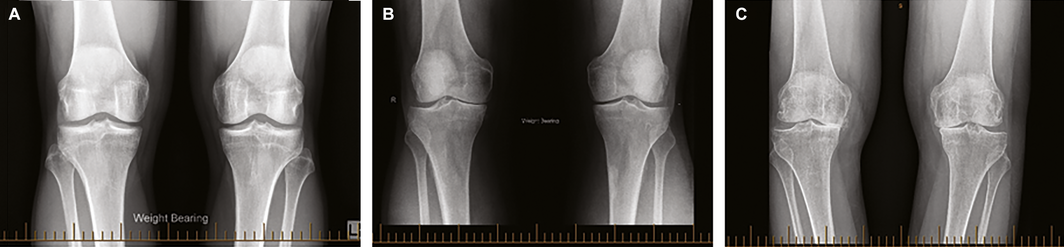
Studies have shown that patients with less severe (radiographic) osteoarthritis have worse TKA outcomes than those with greater severity.28,29,30,31,32 However, radiographic grading systems used to determine disease severity are crude and are not necessarily correlated with symptom severity.6 Box 1 illustrates varying grades of knee osteoarthritis.
Although worse pre‐operative pain and patient‐reported function and quality of life have been associated with lower post‐operative absolute scores, it should be noted that often the improvement (difference between post‐operative and pre‐operative scores) is greater in patients with lower pre‐operative scores.33,34,35 This makes intuitive sense but may be due to ceiling effects in some scores used, whereby patients with less severe pre‐operative symptoms have less room to improve.
Tools available to help predict outcome based on patient characteristics
The decision to undergo TKA has several minimum requirements (sufficient symptoms and attributable, correctible pathology, and the failure of less risky alternatives) but very few absolute contraindications (the presence of active infection being one). Beyond this, the decision to proceed with surgery should be made by weighing the relative risks and benefits calculated from variables such as disease severity, comorbidities and psychosocial factors.
Risk calculators, appropriateness tools and predictive models have been developed to predict clinical outcomes and revision surgery, but these instruments lack the ability to provide precise thresholds that reliably predict failure and have not been validated using external datasets.24,36,37,38,39,40,41,42,43 Early efforts using large administrative datasets in the United States to develop a predictive tool of 30‐day readmission rates have had some success.44 Using such tools as a threshold for surgery, however, is not recommended, as the scores may not accurately capture the extent or severity of the clinical problem, and may restrict access for people who may benefit.45 Similarly, although comorbid, psychosocial and disease severity factors may predict outcomes after TKA, the use of any one of these variables to exclude patients from TKA is unjustified because they do not reliably predict failure to respond to surgery.46,47
It should also be noted that these tools do not necessarily reflect individual patient preferences. The involvement of the patient and carers in the decision‐making process (shared decision making) is essential, and therefore the development of decision tools to aid this process may result in better patient outcomes than the use of clinician‐based outcome predictors. However, more research is needed in this area.48
Societal and health provider factors
Because of the high societal cost of TKA (to patients and funders), some thought has been given to rationalising the use of TKA to optimise the benefits provided from limited resources.45 Many regional initiatives in Australia have targeted cost efficiencies (eg, lower implant costs, more efficient rehabilitation pathways, avoiding complications), but currently, the decision to exclude patients from surgery based on “value” remains with health care providers in consultation with patients and carers. In the US, several large managed health care organisations have moved towards a bundled care method of TKA funding. This system reimburses a fixed amount to providers for the patient journey up to 90‐days post‐operatively, placing the cost burden of complications and rehabilitation on the provider during this time period.49,50 Some insurers in the US have made a portion of funding to providers contingent on satisfactory post‐operative patient‐reported outcomes.51 These efforts link funding to outcomes, and thus drive an effort to optimise (and rationalise) patients before TKA, but there are concerns regarding whether this approach limits access to care for higher risk patients.52,53
Optimising pre‐operative status to maximise recovery and attenuate risk
In this section and in Box 2, we summarise the evidence for the modifiable patient factors (joint performance, expectations and comorbidities) associated with TKA outcomes, and how these factors may be optimised or attenuated.
Joint and lower limb performance
There is good evidence that non‐operative treatment of mild to moderate osteoarthritis may yield benefits,54 and it would appear intuitive that interventions designed to improve the functional status of TKA patients pre‐operatively may enhance post‐operative recovery. Many TKA recipients suffer from other lower limb joint disease,55,56 so these interventions may also be helpful beyond the index joint.
Pre‐operative rehabilitation interventions (or “prehabilitation”) for the purposes of improving post‐operative recovery have received considerable interest. Our search identified nine systematic reviews57,58,59,60,61,62,63,64,65 including 14 randomised trials. Interventions included a heterogeneous group of exercise programs, including physiotherapist supervised and unsupervised exercise, coupled with co‐interventions including acupuncture, kinesiology and education.57 While two reviews found marginal benefits to length of stay and knee range of motion,61,63 and one review demonstrated a dose–response benefit to several physical outcome measures,64 there was little benefit when a GRADE (Grading of Recommendations Assessment, Development and Evaluation) assessment of the evidence was performed.57 Twelve of 14 trials were found to have a high risk of bias, and only small, short term benefits were found for pain (100‐point scale mean difference, − 6.1; 95% CI, − 10.6 to − 1.6) and patient‐reported function (mean difference, 4.0; 95% CI, 7.5–0.5). Thus, a routine prehabilitation program aimed at improving these post‐operative outcomes is not currently recommended. The value of prehabilitation designed to improve cardiorespiratory status and reduce post‐operative complications has been under‐explored, with one pilot randomised controlled trial illustrating the safety of a bicycle aerobic program, although the efficacy is still uncertain.66
Patient expectation and satisfaction
Many factors affect satisfaction following TKA, including age,67,68 comorbidities,69 painful other joints,70 and pre‐operative patient‐reported scores,68,71,72 but unmet patient expectations may also affect outcomes. Although it is intuitive that patient expectations will correlate with outcomes, studies have not been consistent in that they have shown no correlation between expectations and outcome,73 or produced counter‐intuitive findings such as better outcomes with high expectations.74 Further, the construct of “patient expectations” remains unclear, with a wide variety of tools used.
It is difficult to tailor interventions to improve patient satisfaction when the underlying construct of expectation remains unclear.
Cardiac disease
Early mortality is rare following TKA, but cardiac disease remains the most common cause. Large registry analyses in the UK and the US found previous myocardial infarction (hazard ratio [HR], 3.46; 95% CI, 2.81–4.14)75 and heart failure (HR, 2.15; 95% CI, 1.71–2.69)76 were the characteristics most strongly associated with mortality.
Our search identified no evidence from trials regarding optimisation of cardiac status in TKA, but detailed European guidelines for all surgical patients are available.77 The guidelines provide an algorithm based on the risk of the surgical procedure (with TKA classified as intermediate), assessment of functional capacity (using a simple questionnaire identifying metabolic equivalent tasks),78 and assessment of specific cardiac risk factors.77 Heart failure and valvular heart disease, particularly aortic stenosis, represent the highest risk of peri‐operative cardiac mortality, and those affected should be referred for specialist assessment.79 Peri‐operative protocol‐driven prevention of acute kidney injury is also important in this patient group, and is based on careful fluid management, vasopressors and inotropes when indicated, and the use of blood products.80
Respiratory disease
Serious respiratory complications following TKA are rare,76 but are among the common causes for mortality and readmission after surgery.81,82 Obstructive sleep apnoea is of particular concern, since it is often undiagnosed in surgical patients,83 and is a risk factor for serious complications and the need for ventilatory support secondary to opioid‐induced respiratory depression.84
Using evidence from a series of systematic reviews, detailed guidelines regarding the peri‐operative assessment of pulmonary disease in surgical patients are available.85,86,87 The guidelines identify several evidence‐based risk factors (age > 60 years, chronic obstructive pulmonary disease, American Society of Anesthesiologists physical status ≥ grade 2, functional dependence, and heart failure) for respiratory complications.85 Patients with risk factors should be assessed with a pre‐operative chest x‐ray and spirometry where obstructive pulmonary disease is present. In those with risk factors, there is good evidence from randomised controlled trials that incentive spirometry may reduce post‐operative complications following non‐thoracic surgery.86 Moderate to severe obstructive sleep apnoea may be identified with high accuracy using the STOP‐Bang Questionnaire.88 For at‐risk patients, narcotic medication should be avoided, and careful post‐operative monitoring is required.89
Diabetes mellitus
Patients with diabetes have impaired wound healing,90 reduced osteoblast capacity,91 and poorer immune defence mechanisms.92 Up to 22% of patients undergoing TKA in the US have concomitant diabetes,76 and up to one‐third have undiagnosed dysglycaemia.93 A systematic review of observational studies found that patients with diabetes have an increased incidence of several catastrophic complications, including deep infection (odds ratio [OR], 1.61; 95% CI, 1.38–1.88), deep vein thrombosis (OR, 2.57; 95% CI, 1.58–4.20), and aseptic loosening (OR, 9.36; 95% CI, 4.63–18.90).94 Patients with diabetes also have a substantially higher risk of moderate to severe functional limitations at 2 years (OR, 1.71; 95% CI, 1.26–2.32) and 5 years (OR, 1.66; 95% CI, 1.13–2.46) following TKA.95
There is a logical rationale for pre‐operative glycaemic control. Glycated haemoglobin (HbA1C) is a commonly used marker for this purpose and is used to stratify risk. We found three systematic reviews exploring the link between HbA1C levels and post‐operative complications, but these were limited to non‐interventional observational studies of the association between glycaemic control and post‐operative complications. Two reviews96,97 concluded that there was no association between HbA1C levels and post‐operative complications, while one large review concluded that routine HbA1C screening may be justified in high risk surgery.98 It appears that higher cut‐offs are required for routine HbA1C screening to have predictive value. A retrospective study found a large increase in prosthetic infection in patients with HbA1C levels > 60.7 mmol/mol,99 while another found an association at levels > 63.9 mmol/mol.100 Given these retrospective studies are subject to bias, there is no high level evidence to support the routine screening of glycaemic control in TKA candidates. However, when HbA1c control is also combined with other factors, including evidence (or lack) of patient self‐monitoring, and the presence of diabetic comorbidities, there is a significantly increased risk of multiple adverse events.101 The presence of these factors should trigger referral to a specialty team, in the interests of the patient's general health, and to optimise the patient for surgery.
Obesity
About one‐third of Australians are obese.102 Obesity is associated with osteoarthritis103 and has been postulated as a reason for the increasing incidence of TKA.104 Meta‐analyses of observational studies found a higher rate of deep infection (OR, 2.38; 95% CI, 1.28–4.55) and revision (OR, 1.30; 95% CI, 1.02–1.67),105 but obese TKA patients had equivalent function outcomes when compared with non‐obese patients.106 Obese patients also have longer hospital stays, and an overall increase in cost per episode of care.107
Weight loss should be routinely recommended to obese patients as a form of non‐operative treatment, but the optimal method remains controversial. Weight loss alone has been shown to improve knee symptoms and may delay the need for surgery.108 Diet‐based weight loss programs before TKA were assessed in one rapid review that included a mixture of study designs. Data from observational studies found a harmful effect of diet‐based pre‐operative weight loss, with TKA patients having a higher rate of readmission (for any reason) post‐operatively. Unfortunately, the two included randomised trials contained no information related to post‐operative outcomes.109 The evidence is also limited for bariatric surgery before TKA. Synthesis of evidence from retrospective studies, which lack important information such as the type of bariatric surgery, showed that adverse events following TKA were not reduced in obese patients who underwent bariatric surgery before TKA.110
Peripheral vascular disease
The presence of peripheral vascular disease has been identified as a risk factor for deep infection,76 wound healing problems111 and catastrophic arterial injury after TKA.112
The evidence for the management of peripheral vascular disease pre‐operatively is limited. No data were found to support specific vascular interventions in order to optimise post‐operative TKA outcomes. Two narrative reviews, including a guideline from the American Academy of Orthopaedic Surgeons,113,114 suggest an assessment of peripheral vascular disease risk, including current symptoms, history of vasculopathy, and assessment of pulses. An ankle brachial pressure index should be obtained in at‐risk patients, and an index < 0.9 should trigger a referral for vascular assessment and possible intervention before TKA. Intra‐operative tourniquet use is generally not recommended.113,114
Smoking
Multiple studies confirm that smokers are at significantly higher risk of many complications and mortality following TKA.115,116 Strategies to reduce or stop smoking should routinely be offered, as there are clear health benefits beyond those related to TKA. Several systematic reviews,117,118,119,120,121,122 including a Cochrane review,123 are available to guide practice.
Smoking cessation programs reduce the rate of smoking before123 and up to 6 months after TKA.119 Intensive behavioural interventions have the highest chance of success and reduce the incidence of post‐operative complications.118,123 These interventions are typically labour‐intensive, including weekly face‐to‐face or telephone counselling sessions, supplemented by a telephone support line, but should routinely be offered. There is limited evidence for pharmacotherapy (such as nicotine lozenges or patches) in isolation. The timing of smoking cessation is also important. Most reviews found that previous smokers had a similar risk profile to non‐smokers, but that at least 4 weeks of cessation was required before surgery to attenuate surgical complications.120,122 Patient counselling should include this information.
Conclusion
The minimum requirement for TKA must be prolonged clinically important symptoms in the presence of clinical signs that allow attribution of those symptoms to local pathology affecting articular surfaces and knee alignment. If, after reasonable attempts at non‐operative treatment, symptoms are sufficiently severe to justify the risks, a person is considered suitable for surgery. Optimisation to attenuate surgical risks should be attempted in all TKA candidates, although high level evidence is lacking for certain important factors. Pre‐operative interventional trials, with the aim of improving post‐operative TKA outcomes, are particularly needed in the areas of patient expectation, diabetes, obesity and vascular disease.
Box 1 – X‐rays showing knee joints without osteoarthritis (A), mild bilateral knee osteoarthritis (B) and severe bilateral osteoarthritis (C)
Box 2 – Summary of patient comorbidities, their associated risk, and evidence for pre‐operative interventions to attenuate comorbidity risk for total knee arthroplasty (TKA)
|
Comorbidity |
Risk in TKA |
Evidence for pre‐operative interventions |
|||||||||||||
|
|
|||||||||||||||
|
Other joint disease |
Presence of contralateral knee pain: 4.1 times risk (95% CI, 1.5–11.5) of poor self‐reported function post‐TKA55 |
Not supported by evidence from multiple randomised trials and systematic reviews57,58,59,60,61,62,63,64,65 |
|||||||||||||
|
Mental health |
Lower pre‐operative mental health scores (Short Form‐12, Short Form‐36)19,23 and Hospital Anxiety and Depression18 scores associated with dissatisfaction post‐TKA |
No randomised trial evidence available |
|||||||||||||
|
Cardiac disease |
History of myocardial infarction: increased 90‐day mortality risk (HR, 3.46; 95% CI, 2·81–4·14)75 |
No randomised trial evidence available; general international guidelines available77 |
|||||||||||||
|
Respiratory disease |
Sleep apnoea associated with higher risk of aspiration pneumonia (OR, 1.41; 95% CI, 1.35–1.47) and requirement for intubation/mechanical ventilation post‐TKA (OR, 5.20; 95% CI, 5.05–5.37)84 |
No randomised trial evidence available; general international guidelines available85,86,87 |
|||||||||||||
|
Diabetes |
Higher risk of deep infection (OR, 1.61; 95% CI, 1.38–1.88), aseptic loosening (OR, 9.36; 95% CI, 4.63–18.90),94 and moderate/severe functional limitations 2 years post‐TKA (OR, 1.71; 95% CI, 1.26–2.32)95 |
No randomised trial evidence available; retrospective evidence available incorporating compliance with international guidelines101 |
|||||||||||||
|
Obesity |
Higher risk of deep infection (OR, 2.38; 95% CI, 1.28–4.55) and overall revision post‐TKA (OR, 1.30; 95% CI, 1.02–1.67)105 |
Limited support from two pilot randomised trials109 |
|||||||||||||
|
Peripheral vascular disease |
Higher risk of 90‐day mortality (HR, 1.49; 95% CI, 1.20–1.87) and deep infection (HR, 1.13; 95% CI, 1.01–1.27)75 |
No randomised trial evidence available; international guidelines available113 |
|||||||||||||
|
Smoking |
Higher risk of any post‐operative complication (RR, 1.24; 95% CI, 1.01–1.54) and peri‐operative mortality (RR, 1.63; 95% CI, 1.06–2.51)116 |
Randomised trial evidence available, incorporated into general evidence from a systematic review123 |
|||||||||||||
|
|
|||||||||||||||
|
HR = hazard ratio; OR = odds ratio; RR = relative risk. |
|||||||||||||||
Competing interests
Ian Harris and Peter Lewis are (paid) Deputy Directors of the Australian Orthopaedic Association National Joint Replacement Registry.
References
- Australian Orthopaedic Association National Joint Replacement Registry. Annual report 2017. Adelaide: AOA, 2017. https://aoanjrr.sahmri.com/annual-reports-2017 (viewed Jan 2018).
- Organisation for Economic Co‐operation and Development. Health at a glance 2017: OECD indicators. Paris: OECD Publishing, 2017. https://doi.org/10.1787/health_glance-2017-en (viewed Apr 2018).
- Skou ST, Roos EM, Laursen MB, et al. A randomized, controlled trial of total knee replacement. N Engl J Med. 2015; 373: 1597–1606.
- Beswick AD, Wylde V, Gooberman‐Hill R. Interventions for the prediction and management of chronic postsurgical pain after total knee replacement: systematic review of randomised controlled trials. BMJ Open 2015; 5: e007387.
- Gunaratne R, Pratt DN, Banda J, et al. Patient dissatisfaction following total knee arthroplasty: a systematic review of the literature. J Arthroplasty. 2017; 32: 3854–3860.
- Bedson J, Croft PR. The discordance between clinical and radiographic knee osteoarthritis: a systematic search and summary of the literature. BMC Musculoskelet Disord 2008; 9: 116.
- National Institute for Health and Care Excellence. Osteoarthritis: care and management. Clinical guideline [CG177]. London: NICE, 2014. https://www.nice.org.uk/guidance/cg177 (viewed Jan 2018).
- McAlindon TE, Bannuru RR, Sullivan MC, et al. OARSI guidelines for the non‐surgical management of knee osteoarthritis. Osteoarthr Cartil 2014; 22: 363–388.
- Aggarwal VK, Goyal N, Deirmengian G, et al. Revision total knee arthroplasty in the young patient: is there trouble on the horizon? J Bone Joint Surg Am 2014; 96: 536–542.
- Australian Orthopaedic Association National Joint Replacement Registry. Annual report 2016. Adelaide: AOA, 2016. https://aoanjrr.sahmri.com/annual-reports-2016 (viewed Jan 2018).
- Bayliss LE, Culliford D, Monk AP, et al. The effect of patient age at intervention on risk of implant revision after total replacement of the hip or knee: a population‐based cohort study. Lancet 2017; 389: 1424–1430.
- Haynes J, Sassoon A, Nam D, et al. Younger patients have less severe radiographic disease and lower reported outcome scores than older patients undergoing total knee arthroplasty. Knee 2017; 24: 663–669.
- Kuperman EF, Schweizer M, Joy P, et al. The effects of advanced age on primary total knee arthroplasty: a meta‐analysis and systematic review. BMC Geriatr 2016; 16: 41.
- Baker PN, van der Meulen J, Lewsey J, Gregg PJ. The role of pain and function in determining patient satisfaction after total knee replacement. Data from the National Joint Registry for England and Wales. J Bone Joint Surg Br 2007; 89: 893–900.
- Churches T, Naylor J, Harris IA. Arthroplasty Clinical Outcomes Registry National (ACORN) annual report 2016. Sydney: Whitlam Orthopaedic Research Centre, 2017. http://www.acornregistry.org/images/Acorn-Annual-Report-2016-v12.pdf (viewed Jan 2018).
- Hernandez C, Diaz‐Heredia J, Berraquero ML, et al. Pre‐operative predictive factors of post‐operative pain in patients with hip or knee arthroplasty: a systematic review. Reumatologia Clinica 2015; 11: 361–380.
- Lewis GN, Rice DA, McNair PJ, Kluger M. Predictors of persistent pain after total knee arthroplasty: a systematic review and meta‐analysis. Br J Anaesth 2015; 114: 551–561.
- Blackburn J, Qureshi A, Amirfeyz R, Bannister G. Does preoperative anxiety and depression predict satisfaction after total knee replacement? Knee 2012; 19: 522–524.
- Scott CE, Howie CR, MacDonald D, Biant LC. Predicting dissatisfaction following total knee replacement: a prospective study of 1217 patients. J Bone Joint Surg Br 2010; 92: 1253–1258.
- Gandhi R, Razak F, Tso P, et al. Greater perceived helplessness in osteoarthritis predicts outcome of joint replacement surgery. J Rheumatol 2009; 36: 1507–1511.
- Yakobov E, Scott W, Stanish W, et al. The role of perceived injustice in the prediction of pain and function after total knee arthroplasty. Pain 2014; 155: 2040–2046.
- Lingard EA, Katz JN, Wright EA, et al. Predicting the outcome of total knee arthroplasty. J Bone Joint Surg Am 2004; 86‐A: 2179–2186.
- Gandhi R, Davey JR, Mahomed NN. Predicting patient dissatisfaction following joint replacement surgery. J Rheumatol 2008; 35: 2415–2418.
- Dowsey MM, Spelman T, Choong PF. Development of a prognostic nomogram for predicting the probability of nonresponse to total knee arthroplasty 1 year after surgery. J Arthroplasty 2016; 31: 1654–1660.
- Jiang Y, Sanchez‐Santos MT, Judge AD, et al. Predictors of patient‐reported pain and functional outcomes over 10 years after primary total knee arthroplasty: a prospective cohort study. J Arthroplasty 2017; 32: 92–100.e92.
- Magone K, Kemker BP 3rd, Pilipenko N, et al. The new surgical technique for improving total knee and hip arthroplasty outcomes: patient selection. J Arthroplasty 2017; 32: 2070–2076.
- Singh JA, O'Byrne M, Harmsen S, Lewallen D. Predictors of moderate‐severe functional limitation after primary total knee arthroplasty (TKA): 4701 TKAs at 2‐years and 2935 TKAs at 5‐years. Osteoarthr Cartil 2010; 18: 515–521.
- Merle‐Vincent F, Couris CM, Schott AM, et al. Factors predicting patient satisfaction 2 years after total knee arthroplasty for osteoarthritis. Joint Bone Spine 2011; 78: 383–386.
- Schilling CG, Dowsey MM, Petrie DJ, et al. Predicting the long‐term gains in health‐related quality of life after total knee arthroplasty. J Arthroplasty 2017; 32: 395–401.e2.
- Schnurr C, Jarrous M, Gudden I, et al. Pre‐operative arthritis severity as a predictor for total knee arthroplasty patients’ satisfaction. Int Orthop 2013; 37: 1257–1261.
- Scott CE, Oliver WM, MacDonald D, et al. Predicting dissatisfaction following total knee arthroplasty in patients under 55 years of age. Bone Joint J 2016; 98‐B: 1625–1634.
- Stone OD, Duckworth AD, Curran DP, et al. Severe arthritis predicts greater improvements in function following total knee arthroplasty. Knee Surg Sports Traumatol Arthrosc 2017; 25: 2573–2579.
- Bin Abd Razak HR, Tan CS, Chen YJ, et al. Age and preoperative knee society score are significant predictors of outcomes among Asians following total knee arthroplasty. J Bone Joint Surg Am 2016; 98: 735–741.
- Berliner JL, Brodke DJ, Chan V, et al. Can preoperative patient‐reported outcome measures be used to predict meaningful improvement in function after TKA? Clin Orthop 2017; 475: 149–157.
- Adie S, Dao A, Harris IA, et al. Satisfaction with joint replacement in public versus private hospitals: a cohort study. ANZ J Surg 2012; 82: 616–624.
- Quintana JM, Escobar A, Arostegui I, et al. Health‐related quality of life and appropriateness of knee or hip joint replacement. Arch Intern Med 2006; 166: 220–226.
- Lungu E, Desmeules F, Dionne CE, et al. Prediction of poor outcomes six months following total knee arthroplasty in patients awaiting surgery. BMC Musculoskelet Disord 2014; 15: 299.
- Paxton EW, Inacio MC, Khatod M, et al. Risk calculators predict failures of knee and hip arthroplasties: findings from a large health maintenance organization. Clin Orthop 2015; 473: 3965–3973.
- Van Onsem S, Van Der Straeten C, Arnout N, et al. A new prediction model for patient satisfaction after total knee arthroplasty. J Arthroplasty 2016; 31: 2660–2667.e2661.
- Riddle DL, Golladay GJ, Jiranek WA, Perera RA. External validation of a prognostic model for predicting nonresponse following knee arthroplasty. J Arthroplasty 2017; 32: 1153–1158.e1.
- Hawker GA, Badley EM, Borkhoff CM, et al. Which patients are most likely to benefit from total joint arthroplasty? Arthritis Rheum 2013; 65: 1243–1252.
- Ayers DC, Franklin PD, Trief PM, et al. Psychological attributes of preoperative total joint replacement patients: implications for optimal physical outcome. J Arthroplasty 2004; 19 (7 Suppl 2): 125–130.
- Ayers DC, Franklin PD, Ploutz‐Snyder R, Boisvert CB. Total knee replacement outcome and coexisting physical and emotional illness. Clin Orthop Relat Res 2005; 440: 157–161.
- Ayers DC, Fehring TK, Odum SM, Franklin PD. Using joint registry data from FORCE‐TJR to improve the accuracy of risk‐adjustment prediction models for thirty‐day readmission after total hip replacement and total knee replacement. J Bone Joint Surg Am 2015; 97: 668–671.
- Dakin H, Gray A, Fitzpatrick R, et al. Rationing of total knee replacement: a cost‐effectiveness analysis on a large trial data set. BMJ Open 2012; 2: e000332.
- Judge A, Arden NK, Price A, et al. Assessing patients for joint replacement: can pre‐operative Oxford hip and knee scores be used to predict patient satisfaction following joint replacement surgery and to guide patient selection? J Bone Joint Surg Br 2011; 93: 1660–1664.
- Baker PN, Rushton S, Jameson SS, et al. Patient satisfaction with total knee replacement cannot be predicted from pre‐operative variables alone: a cohort study from the National Joint Registry for England and Wales. Bone Joint J 2013; 95‐B: 1359–1365.
- Stacey D, Légaré F, Lewis K, et al. Decision aids for people facing health treatment or screening decisions. Cochrane Database Syst Rev 2017; (4): CD001431.
- Piccinin MA, Sayeed Z, Kozlowski R, et al. Bundle payment for musculoskeletal care: current evidence (part 2). Orthop Clin North Am 2018; 49: 147–156.
- Piccinin MA, Sayeed Z, Kozlowski R, et al. Bundle payment for musculoskeletal care: current evidence (part 1). Orthop Clin North Am 2018; 49: 135–146.
- Jiranek W, Iorio R. Comprehensive Care for Joint Replacement (CJR), a mandatory program with winners and losers. Alternative Healthcare Payment Models 2016; 27: 193–195.
- Dummit LA, Kahvecioglu D, Marrufo G, et al. Association between hospital participation in a Medicare bundled payment initiative and payments and quality outcomes for lower extremity joint replacement episodes. JAMA 2016; 316: 1267–1278.
- Ellimoottil C, Ryan AM, Hou H, et al. The new bundled payment program for joint replacement may unfairly penalize hospitals that treat patients with medical comorbidities. Health Affairs (Project Hope) 2016; 35: 1651–1657.
- Fransen M, McConnell S, Harmer AR, et al. Exercise for osteoarthritis of the knee. Cochrane Database Syst Rev 2015; (1): CD004376.
- Maxwell J, Niu J, Singh JA, et al. The influence of the contralateral knee prior to knee arthroplasty on post‐arthroplasty function: the multicenter osteoarthritis study. J Bone Joint Surg Am 2013; 95: 989–993.
- Perruccio AV, Power JD, Evans HMK, et al. Multiple joint involvement in total knee replacement for osteoarthritis: effects on patient‐reported outcomes. Arthritis Care Res (Hoboken) 2012; 64: 838–846.
- Wang L, Lee M, Zhang Z, et al. Does preoperative rehabilitation for patients planning to undergo joint replacement surgery improve outcomes? A systematic review and meta‐analysis of randomised controlled trials. BMJ Open 2016; 6: e009857.
- Ackerman IN, Bennell KL. Does pre‐operative physiotherapy improve outcomes from lower limb joint replacement surgery? A systematic review. Aust J Physiother 2004; 50: 25–30.
- Cabilan CJ, Hines S, Munday J. The effectiveness of prehabilitation or preoperative exercise for surgical patients: a systematic review. JBI Database System Rev Implement Rep 2015; 13: 146–187.
- Kwok IHY, Paton B, Haddad FS. Does pre‐operative physiotherapy improve outcomes in primary total knee arthroplasty? ‐ a systematic review. J Arthroplasty 2015; 30: 1657–1663.
- Chen H, Li S, Ruan T, Liu L, Fang L. Is it necessary to perform prehabilitation exercise for patients undergoing total knee arthroplasty: meta‐analysis of randomized controlled trials. Phys Sportsmed 2017; 16: 1–8.
- Wallis JA, Taylor NF. Pre‐operative interventions (non‐surgical and non‐pharmacological) for patients with hip or knee osteoarthritis awaiting joint replacement surgery – a systematic review and meta‐analysis. Osteoarthr Cartil 2011; 19: 1381–1395.
- Silkman Baker C, McKeon JM. Does preoperative rehabilitation improve patient‐based outcomes in persons who have undergone total knee arthroplasty? A systematic review. PM R 2012; 4: 756–767.
- Peer MA, Rush R, Gallacher PD, Gleeson N. Pre‐surgery exercise and post‐operative physical function of people undergoing knee replacement surgery: A systematic review and meta‐analysis of randomized controlled trials. J Rehabil Med 2017; 49: 304–315.
- Chesham RA, Shanmugam S. Does preoperative physiotherapy improve postoperative, patient‐based outcomes in older adults who have undergone total knee arthroplasty? A systematic review. Physiother Theory Pract 2017; 33: 9–30.
- Kennedy M. A pilot randomized control trial of aerobic cycling before total knee arthroplasty. Osteoarthr Cartil 2014; 22: S460.
- Noble PC, Conditt MA, Cook KF, Mathis KB. The John Insall Award: patient expectations affect satisfaction with total knee arthroplasty. Clin Orthop 2006; 452: 35–43.
- Williams DP, O'Brien S, Doran E, et al. Early postoperative predictors of satisfaction following total knee arthroplasty. Knee 2013; 20: 442–446.
- Pivec R, Issa K, Given K, et al. A prospective, longitudinal study of patient satisfaction following total knee arthroplasty using the Short‐Form 36 (SF‐36) survey stratified by various demographic and comorbid factors. J Arthroplasty 2015; 30: 374–378.
- Scott CEH, Howie CR, MacDonald D, Biant LC. Predicting dissatisfaction following total knee replacement: a prospective study of 1217 patients. J Bone Joint Surg Br 2010; 92: 1253–1258.
- Hamilton DF, Lane JV, Gaston P, et al. What determines patient satisfaction with surgery? A prospective cohort study of 4709 patients following total joint replacement. BMJ Open 2013; 3: e002525.
- Bourne RB, Chesworth BM, Davis AM, et al. Patient satisfaction after total knee arthroplasty: who is satisfied and who is not? Clin Orthop 2010; 468: 57–63.
- Mannion AF, Kampfen S, Munzinger U, Kramers‐de Quervain I. The role of patient expectations in predicting outcome after total knee arthroplasty. Arthritis Res Ther 2009; 11: R139.
- Mahomed NN, Liang MH, Cook EF, et al. The importance of patient expectations in predicting functional outcomes after total joint arthroplasty. J Rheumatol 2002; 29: 1273–1279.
- Hunt LP, Ben‐Shlomo Y, Clark EM, et al. 45‐day mortality after 467,779 knee replacements for osteoarthritis from the National Joint Registry for England and Wales: an observational study. Lancet 2014; 384: 1429–1436.
- Bozic KJ, Lau E, Kurtz S, Ong K, Berry DJ. Patient‐related risk factors for postoperative mortality and periprosthetic joint infection in Medicare patients undergoing TKA. Clin Orthop 2012; 470: 130–137.
- 2014 ESC/ESA Guidelines on non‐cardiac surgery: cardiovascular assessment and management. Eur Heart J 2014; 35: 2383–2431.
- Byrne NM, Hills AP, Hunter GR, et al. Metabolic equivalent: one size does not fit all. J Appl Physiol 2005; 99: 1112–1119.
- Priebe H‐J. Preoperative cardiac management of the patient for non‐cardiac surgery: an individualized and evidence‐based approach. Br J Anaesth 2011; 107: 83–96.
- Brienza N, Giglio MT, Marucci M, Fiore T. Does perioperative hemodynamic optimization protect renal function in surgical patients? A meta‐analytic study. Crit Care Med 2009; 37: 2079–2090.
- Ottenbacher KJ, Karmarkar A, Graham JE, et al. Thirty‐day hospital readmission following discharge from postacute rehabilitation in fee‐for‐service Medicare patients. JAMA 2014; 311: 604–614.
- Bozic KJ, Grosso LM, Lin Z, et al. Variation in hospital‐level risk‐standardized complication rates following elective primary total hip and knee arthroplasty. J Bone Joint Surg Am 2014; 96: 640–647.
- Finkel KJ, Searleman AC, Tymkew H, et al. Prevalence of undiagnosed obstructive sleep apnea among adult surgical patients in an academic medical center. Sleep Med 2009; 10: 753–758.
- Memtsoudis S, Liu SS, Ma Y, et al. Perioperative pulmonary outcomes in patients with sleep apnea after noncardiac surgery. Anesth Analg 2011; 112: 113–121.
- Smetana GW, Lawrence VA, Cornell JE, American College of Physicians. Preoperative pulmonary risk stratification for noncardiothoracic surgery: systematic review for the American College of Physicians. Ann Intern Med 2006; 144: 581–595.
- Lawrence VA, Cornell JE, Smetana GW, American College of Physicians. Strategies to reduce postoperative pulmonary complications after noncardiothoracic surgery: systematic review for the American College of Physicians. Ann Intern Med 2006; 144: 596–608.
- Qaseem A, Snow V, Fitterman N, et al. Risk assessment for and strategies to reduce perioperative pulmonary complications for patients undergoing noncardiothoracic surgery: a guideline from the American College of Physicians. Ann Intern Med 2006; 144: 575–580.
- Nagappa M, Patra J, Wong J, et al. Association of STOP‐Bang Questionnaire as a screening tool for sleep apnea and postoperative complications: a systematic review and Bayesian meta‐analysis of prospective and retrospective cohort studies. Anesth Analg 2017; 125: 1301–1308.
- Diaz‐Fuentes G, Hashmi HRT, Venkatram S. Perioperative evaluation of patients with pulmonary conditions undergoing non‐cardiothoracic surgery. Health Serv Insights 2016; 9 (Suppl 1): 9–23.
- Goodson WH, Hunt TK. Studies of wound healing in experimental diabetes mellitus. J Surg Res 1977; 22: 221–227.
- Alikhani M, Alikhani Z, Boyd C, et al. Advanced glycation endproducts stimulate osteoblast apoptosis via the MAP kinase and cytosolic apoptotic pathways. Bone 2007; 40: 345–353.
- Robertson HD, Polk HC. The mechanism of infection in patients with diabetes mellitus: a review of leukocyte malfunction. Surgery 1974; 75: 123–128.
- Capozzi JD, Lepkowsky ER, Callari MM, et al. The prevalence of diabetes mellitus and routine hemoglobin A1c screening in elective total joint arthroplasty patients. J Arthroplasty 2017; 32: 304–308.
- Yang Z, Liu H, Xie X, et al. The influence of diabetes mellitus on the post‐operative outcome of elective primary total knee replacement: a systematic review and meta‐analysis. Bone Joint J 2014; 96‐B: 1637–1643.
- Singh JA, Lewallen DG. Diabetes: a risk factor for poor functional outcome after total knee arthroplasty. PloS One 2013; 8: e78991.
- Lopez LF, Reaven PD, Harman SM. Review: the relationship of hemoglobin A1c to postoperative surgical risk with an emphasis on joint replacement surgery. J Diab Complications 2017; 31: 1710–1718.
- Rollins KE, Varadhan KK, Dhatariya K, Lobo DN. Systematic review of the impact of HbA1c on outcomes following surgery in patients with diabetes mellitus. Clin Nutr 2016; 35: 308–316.
- Bock M, Johansson T, Fritsch G, et al. The impact of preoperative testing for blood glucose concentration and haemoglobin A1c on mortality, changes in management and complications in noncardiac elective surgery: a systematic review. Eur J Anaesthesiol 2015; 32: 152–159.
- Tarabichi M, Shohat N, Kheir MM, et al. Determining the threshold for HbA1c as a predictor for adverse outcomes after total joint arthroplasty: a multicenter, retrospective study. J Arthroplasty 2017; 32 (9S): S263–S267.e1
- Cancienne JM, Werner BC, Browne JA. Is there an association between hemoglobin A1C and deep postoperative infection after TKA? Clin Orthop 2017; 475: 1642–1649.
- Marchant MHJ, Viens NA, Cook C, et al. The impact of glycemic control and diabetes mellitus on perioperative outcomes after total joint arthroplasty. J Bone Joint Surg Am 2009; 91: 1621–1629.
- Australian Institute of Health and Welfare. Australia's health 2016 (Cat. No. AUS 199; Australia's Health Series No. 15). Canberra: AIHW, 2016. https://www.aihw.gov.au/getmedia/9844cefb-7745-4dd8-9ee2-f4d1c3d6a727/19787-AH16.pdf.aspx?inline=true (viewed Jan 2018).
- Felson DT. The epidemiology of knee osteoarthritis: results from the Framingham Osteoarthritis Study. Semin Arthritis Rheum 1990; 20: 42–50.
- Fehring TK, Odum SM, Griffin WL, et al. The obesity epidemic: its effect on total joint arthroplasty. J Arthroplasty 2007; 22: 71–76.
- Kerkhoffs GMMJ, Servien E, Dunn W, et al. The influence of obesity on the complication rate and outcome of total knee arthroplasty: a meta‐analysis and systematic literature review. J Bone Joint Surg Am 2012; 94: 1839–1844.
- McElroy M, Pivec R, Issa K, et al. The effects of obesity and morbid obesity on outcomes in TKA. J Knee Surg 2013; 26: 83–88.
- Kremers HM, Visscher SL, Kremers WK, et al. The effect of obesity on direct medical costs in total knee arthroplasty. J Bone Joint Surg Am 2014; 96: 718–724.
- Groen VA, van de Graaf VA, Scholtes VAB, et al. Effects of bariatric surgery for knee complaints in (morbidly) obese adult patients: a systematic review. Obes Rev 2015; 16: 161–170.
- Lui M, Jones CA, Westby MD. Effect of non‐surgical, non‐pharmacological weight loss interventions in patients who are obese prior to hip and knee arthroplasty surgery: a rapid review. Syst Rev 2015; 4: 121.
- Smith TO, Aboelmagd T, Hing CB, MacGregor A. Does bariatric surgery prior to total hip or knee arthroplasty reduce post‐operative complications and improve clinical outcomes for obese patients? Systematic review and meta‐analysis. Bone Joint J 2016; 98‐B: 1160–1166.
- Simons MJ, Amin NH, Scuderi GR. Acute wound complications after total knee arthroplasty: prevention and management. J Am Acad Orthop Surg 2017; 25: 547–555.
- Holmberg A, Milbrink J, Bergqvist D. Arterial complications after knee arthroplasty: 4 cases and a review of the literature. Acta Orthop Scand 1996; 67: 75–78.
- Smith DE, McGraw RW, Taylor DC, Masri BA. Arterial complications and total knee arthroplasty. J Am Acad Orthop Surg 2001; 9: 253–257.
- Abu Dakka M, Badri H, Al‐Khaffaf H. Total knee arthroplasty in patients with peripheral vascular disease. Surgeon 2009; 7: 362–365.
- Duchman KR, Gao Y, Pugely AJ, et al. The effect of smoking on short‐term complications following total hip and knee arthroplasty. J Bone Joint Surg Am 2015; 97: 1049–1058.
- Singh JA. Smoking and outcomes after knee and hip arthroplasty: a systematic review. J Rheumatol 2011; 38: 1824–1834.
- Theadom A, Cropley M. Effects of preoperative smoking cessation on the incidence and risk of intraoperative and postoperative complications in adult smokers: a systematic review. Tob Control 2006; 15: 352–358.
- Cropley M, Theadom A, Pravettoni G, Webb G. The effectiveness of smoking cessation interventions prior to surgery: a systematic review. Nicotine Tob Res 2008; 10: 407–412.
- Zaki A, Abrishami A, Wong J, Chung FF. Interventions in the preoperative clinic for long term smoking cessation: a quantitative systematic review. Can J Anaesth 2008; 55: 11–21.
- Wong J, Lam DP, Abrishami A, et al. Short‐term preoperative smoking cessation and postoperative complications: a systematic review and meta‐analysis. Can J Anaesth 2012; 59: 268–279.
- Sørensen LT. Wound healing and infection in surgery. The clinical impact of smoking and smoking cessation: a systematic review and meta‐analysis. Arch Surg 2012; 147: 373–383.
- Sørensen LT. Wound healing and infection in surgery: the pathophysiological impact of smoking, smoking cessation, and nicotine replacement therapy: a systematic review. Ann Surg 2012; 255: 1069–1079.
- Thomsen T, Villebro N, Møller AM. Interventions for preoperative smoking cessation. Cochrane Database Syst Rev 2014; (3): CD002294.
Linked content
-
MJA Ppdcast: Associate Professor Justine Naylor and Dr Sam Adie
-
InSight+: Total knee replacement: who should and who shouldn’t?
Provenance: Commissioned; externally peer reviewed.
Patterns of Osteoporosis Treatment Initiation Following Low-Trauma Fracture: A Population-Based Retrospective Cohort Study in New South Wales, Australia, Using Linked Administrative Health Data
Mike Lin, Huy Nguyen, Thach Tran, Robert D. Blank, Dana Bliuc, Jacqueline R. Center
Rapid Growth in Diagnostic CT Knee Imaging in Australia: Implications for Imaging Stewardship
Hanwen Chen, Rachelle Buchbinder, Sean Docking, Ian A Harris
Spinal cord stimulation patterns of care, re‐interventions, and costs for private health insurers, Australia, 2011–22: a retrospective observational study
Caitlin MP Jones, Christopher G Maher, Rachelle Buchbinder, Ian A Harris, Chung‐Wei Christine Lin, Christopher Hayes, Alexandra Gorelik
The incidence of and risk factors for hospitalisations and amputations for people with diabetes‐related foot ulcers in Queensland, 2011–19: an observational cohort study
Yuqi Zhang, Susanna M Cramb, Steven M McPhail, Rosana Pacella, Jaap J Netten, Ewan M Kinnear, Peter A Lazzarini
Bone health perspectives among Indigenous people: a qualitative study
Troy Walker (Yorta Yorta), Karan P Singh, Vanessa Gan, Brooke Conley (Ngiyampaa), Jessica Bravo, Nigel Smith (Weilwan), April Clarke (Eastern Maar, Kirrae Whurrung, Djap Wurrung), Jackson Baker, Louise J Maple‐Brown, Robin M Daly, Jennifer Browne, Jesse Zanker, Cat Shore‐Lorenti, David Scott, Peter R Ebeling, Ayse Zengin
I am a Civil War
Jennifer G Mowbray