




Volume 209 - Issue 5
Homeless health care: meeting the challenges of providing primary care
Authors: Andrew Davies and Lisa J Wood
Med J Aust 2018; 209 (5): 230-234. || doi: 10.5694/mja17.01264
Published online: 3 September 2018
Published online: 3 September 2018
We need to reduce the barriers to primary care access for people experiencing homelessness to stop the costly revolving door between homelessness and the hospital system
Summary
- People experiencing homelessness have multiple complex health conditions yet are typically disengaged from primary health care services and place a significant burden on the acute health system.
- Barriers preventing people who are homeless from accessing primary care can be both personal and practical and include competing needs and priorities, illness and poor health, physical access to health services, difficulty in contacting services, medication security, and the affordability of health care. Differences in social status and perceptions of being judged can lead to relationship barriers to accessing primary care.
- Key solutions include prioritising access to stable housing, continuity of health care, specialised homeless general practice, hospital inreach, discharge planning and coordinated care, general practice outreach, and medical recovery centres.
Homelessness is a growing health and social issue in Australia, exacerbated by the deinstitutionalisation of psychiatric care and burgeoning waitlists for public housing. On the 2016 Census night, there were 116 427 homeless people in Australia,1 and this is likely to be a significant underestimate. While the Census estimate equates to less than 1% of the Australian population, people who are homeless are enormously over-represented in nearly all morbidity and mortality statistics.
Sleeping rough on the street is the most visible form of homelessness but only accounts for about 7% of Australia’s homeless population.1 The remainder are in other forms of precarious housing, including boarding houses, crisis accommodation, overcrowded dwellings and couch surfing.1 This means that it may not be readily apparent to general practitioners and other health care providers whether someone is homeless. Further, there is also a growing number of people living in Australia who are at risk of homelessness, with housing affordability, precarious employment and domestic violence being key drivers.2
Life expectancy gaps of more than 30 years among people who are homeless have been reported in the United Kingdom3 and in the United States,4 and Australia is regrettably no different.5 In a recent systematic review and meta-analysis,6 homeless people and other socially excluded population groups living in high income countries had mortality rates around ten times that of the general population. A similar global pattern is seen in morbidity data, with much higher rates of a raft of physical and mental health conditions often exacerbated by complex multimorbidities.7
As Marmot has highlighted, there is a social gradient for health; the higher you are on the social ladder, the better your health and life expectancy.8 Health disparities arise from a range of socially determined factors, including where we live, adverse childhood experiences, and access to education and employment.8 These social determinants of health also act as barriers to engagement with health services,9 and people who are homeless are far less likely to access primary care and preventive health services than the general population.10 Medical care is often sought only at an advanced stage of disease when it requires more extensive and expensive treatment.11
Dedicated homeless health services are therefore vital, but there is also a compelling need to build the capacity of all health professionals and services to work with people who are homeless. Encouragingly, the past 5 years have shown signs of growing research and health care service attention to the plight of people who are homeless.
This review draws on international and Australian evidence alongside local general practice experience to propose a best practice model for improving health outcomes for people experiencing homelessness in Australia.
Health as consequence and cause of homelessness
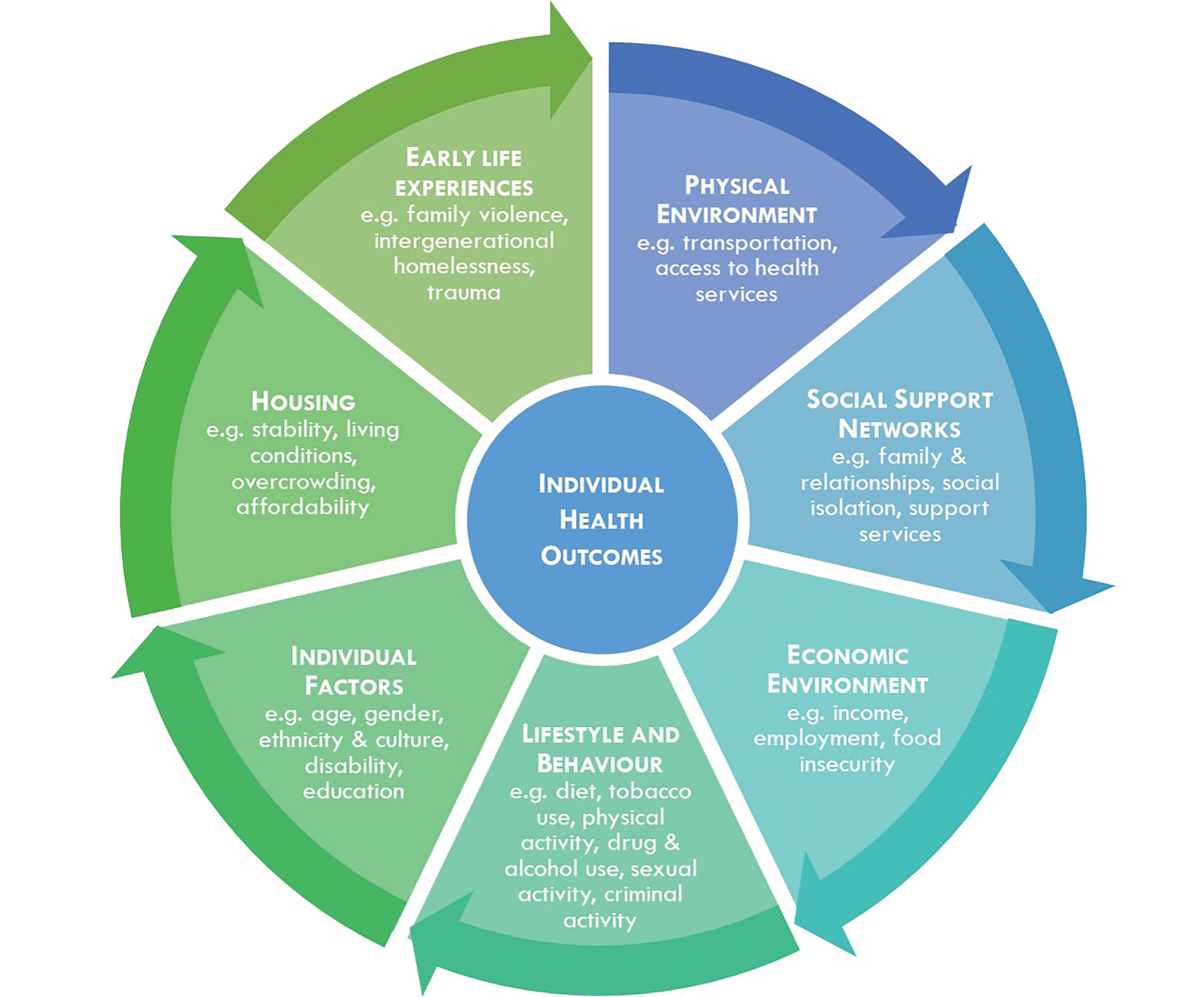
The causes of homelessness for any individual are complex and multifactorial (Box 1). Although there is no one pathway into homelessness, more often than not, mental health issues, childhood trauma, poor physical health and drug and alcohol problems are major contributing factors.12,13 The sobering nexus between trauma and homelessness highlights the importance of working in a trauma-informed way across the health care system.13
Although health issues can contribute to homelessness, the effect that homelessness has on health is profound and compounding. Being homeless puts an individual at increased risk of many health problems including psychiatric illness,14 substance use,15 chronic disease, musculoskeletal disorders, skin and foot problems, poor oral health, and infectious diseases such as tuberculosis, hepatitis C and HIV infection. In a sample of 1158 people experiencing homelessness in Western Australia, half had trimorbidity (the coexistence of substance use, serious medical problem and mental illness).16 In an intervention study of homeless men in Sydney, 71% of respondents at baseline reported a previous psychiatric diagnosis, and 20% fulfilled criteria for post-traumatic stress disorder in the past month.17
Frequent emergency department presentations
Along with the substantial human cost of homelessness on health, there is also a significant burden on the public health system. The emergency department (ED) is frequently used by homeless people for issues that could be better and more efficiently addressed in a primary health care setting or by social services.18 In many EDs across Australia, people who are homeless are among the most frequent presenters, unplanned admissions are high, and length of stay is longer.19-21 This is a preventable cost to the health system; in the first 8 months of 2017 alone, around 30% (900) of our Homeless Healthcare clients accounted for 3135 presentations to Royal Perth Hospital ED, equating to an estimated cost of $2.4 million (based on an average presentation cost of $765).22
Barriers to accessing health care
From the literature and our work with thousands of homeless people over the past decade, three main types of impediments to health care access for people who are homeless can be delineated: personal, practical and relationships.
Personal barriers
Competing needs and priorities are fundamental barriers for homeless people. Congruent with Maslow’s hierarchy of needs, meeting basic physical needs such as food, water and a place to sleep is the number one day-to-day priority for people who are homeless, and health needs are often not considered until an emergency arises.23
Over the years, we have seen medical colleagues become frustrated that homeless people often do not show appreciation for the care given to them. However, such higher levels of social functioning are not possible when you are preoccupied with working out where you are going to sleep for the night or finding your next meal.
Illness and poor health are themselves barriers to accessing health care, particularly mental illness. The experience of trauma among homeless people is almost universal, hence major depression and post-traumatic stress disorder are common.13 Hypervigilance is high15 and is further exacerbated by the safety fears of sleeping on the street. In our Homeless Healthcare practice, we have observed that people with depressive or psychotic illness often do not have the motivation to attend appointments, or will be suspicious of others and find the experience too anxiety provoking. People who are homeless can be very sensitive to rejection, and unconscious non-verbal cues can often be misconstrued as a sign of disinterest or judgement.
Practical barriers
Physical access to health services is a widely recognised social determinant of health, and is particularly problematical for people who are homeless. Most homeless people rely on public transport to get to appointments, and more often than not they do not have money to buy tickets.
Being contactable for appointment reminders or changes is another barrier for people without a mailing address or a phone. What may look like missed outpatient appointments due to unreliability is often because the appointment card was sent to “No fixed address”. A simple practical solution to counter this has been implemented by the Assessment, Liaison and Early Referral Team (ALERT) at St Vincent’s Hospital Melbourne, which is able to access brokerage funds to provide low cost mobile phones to homeless clients to improve appointment attendance.21 ALERT also provides care coordination, with case workers helping to link clients with community-based health and psycho-social support.21
Medication security is another major issue. Homeless individuals often live in fear of having their few possessions stolen or removed by authorities. Frequently, homeless patients are discharged from hospital on oral antibiotics only to have them stolen, resulting in deterioration and readmission to hospital.
Most homeless people rely on Centrelink payments for survival, and some do not have the requisite identification to receive these. Temporary accommodation or public housing typically takes 85% of their Centrelink payments, leaving very little for food and other basic needs. Therefore, out-of-pocket expenses, no matter how small, create a significant barrier for homeless people.
Relationship barriers
The stigmatisation of seeking help for mental health and drug and alcohol problems has been written about extensively, and these problems are highly prevalent among people who are homeless. In addition, homeless people can often feel stereotyped or judged for a raft of other reasons that may make practitioner–patient interactions difficult. Health practitioners, particularly doctors, have a much higher social status compared with their homeless patients, and this can leave the patient feeling inadequate, regardless of the intentions of the health practitioner. Some tips for GPs interacting with homeless people are provided in Box 2.
Solutions
Hospitals deal with acute health issues well but they are not the ideal setting to manage the chronic multimorbidities that characterise the health of homeless people. The end result is very expensive care that maintains life but does not improve health or wellbeing.24,25
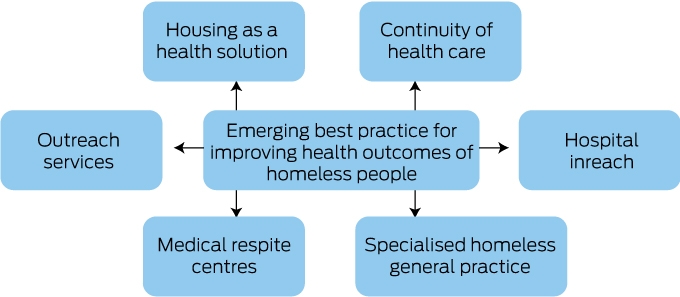
Tackling the health disparities of homelessness requires a different approach. Drawing on growing international evidence and experience, we identify six core components of a best practice model to improve health outcomes for people experiencing homelessness (Box 3). A case study showing the successful application of this model is provided in Box 4.
Stable housing
At the core of the poor health of people who are homeless is the absence of a safe and secure house in which to live. As Stafford and Wood observe: “Addressing homelessness is, itself, an important form of health care, not a separate ‘non-health’ issue”.20 Studies internationally and in Australia demonstrate significant reductions in ED presentations and inpatient length of stay when housing is coupled with wrap-around support for homeless individuals.20,26,27 Lengthy admissions for psychiatric care or mental health problems have been shown to reduce when supportive housing is provided to people who were homeless.20,28
Housing First, a model originating in New York, is premised on the philosophy that stable housing is an essential first step to addressing the complex medical and psycho-social issues faced by people experiencing homelessness.29 People are housed in permanent accommodation initially and then offered individualised support to help them maintain their tenancy and address issues that might otherwise see them return to homelessness.29 The evidence for the cost-effectiveness and improved health outcomes of a Housing First approach continues to grow; in the At Home/Chez Soi program in Canada for example, participants in a Housing First program experienced improved housing stability and mental health compared with the treatment-as-usual group.29-31 Programs around Australia, such as 50 Lives 50 Homes in Perth and 500 Lives 500 Homes in Brisbane, are based on a Housing First approach.16,32 The impact of Housing First programs can be measured through sustained tenancies and improved health.16,29,30 However, housing is not an instant panacea, and primary care has a critical role to play in supporting formerly homeless patients to re-engage with the health system and manage chronic conditions.33
Continuity of health care
The transient nature of homelessness makes comprehensive medical care difficult.34 Referrals and effective follow-up are often impossible under traditional models of primary health care, with this population lost to follow-up when moving from one part of the system to another.10,34,35 Fragmented and discontinuous care can be reduced by a specialist homeless service with trained staff working across as much of the system as possible.33,36-39 The multiple morbidities of people who have been homeless requires coordinated case management to connect them to a range of services (both primary and specialist care), and follow-up by trained staff who have established relationships with patients is critical.
Specialised homeless general practice
Although it is important that all medical practitioners understand the issues confronting homeless people, evidence from the UK,37 US39 and Australia40 suggests that practitioners with a specialist focus on homelessness can increase client engagement. Such practitioners need to be experienced in managing complex multimorbidities and need to understand the interactions between physical illness, mental illness and drug dependency issues.38 Although it is tempting to want to solve everything in the first consultation, this tends to exhaust the patient and leave the practitioner overwhelmed, it is therefore necessary to be able to prioritise problems.
Based on personal experience and those of international colleagues,35,37 it is vitally important that general practices specialising in homelessness have strong links to the homelessness sector, particularly services able to connect homeless people to housing.16 As articulated by the US National Health Care for the Homeless Council, “housing is health care”,41 and without stable housing, it is difficult to significantly improve a person’s health and wellbeing.30
Hospital inreach to improve access to primary care
A missing piece in the health trajectory of many homeless people has been access to primary care and opportunities for prevention and earlier intervention.21,42 A novel way to redress this is to bring specialised GP care into the hospital setting. This is referred to in the literature as hospital inreach37 and is premised on the philosophy that hospital admissions can provide a point of opportunity to link .homeless people with community-based services. Teams are generally multidisciplinary, usually involve members of a community-based GP practice, and work together to develop a plan to address patients’ health and psycho-social needs.37 As shown in an evaluation of the London Pathway for Homeless Patients, this type of inreach benefits resource-stretched hospitals as well as the patients themselves, with GP inreach teams able to devise care plans that go beyond the immediate reason for hospital presentation and lead to consequential reductions in hospital ED use.36,37
Discharge planning and coordinated care
With growing fiscal constraints on the health system in Australia, improving discharge planning to reduce hospital readmissions is a growing priority. This is particularly relevant to homeless people who often cycle in and out of the hospital system. A recent evaluation of the ALERT service at St Vincent’s Hospital Melbourne demonstrated that clients had significantly reduced ED admissions in the 6 months after receiving support compared with the previous 6 months.21 A lack of coordinated health care pathways for people who are homeless is not unique to Australia; for example, in an article on the Pathway project in the UK, housing support workers were noted to have described hospital admission “as a ‘black hole’ from which patients emerged without a coordinated care plan”.37 Successful discharge planning for people who are homeless requires proactive two-way communication between hospital-based and community-based providers to facilitate smooth transitions of care when homeless people are discharged.43
Beyond coordination of health care at the individual patient or health service level, Australia could follow the lead of the US in having a more coordinated approach to homeless health at a national level. The US National Health Care for the Homeless Council was established in 1986 with the mission of eliminating homelessness and has had much success in designing, implementing and advocating for evidence-based policies and models for improving the health of the homeless.
Outreach
In our experience, GP outreach is an important complement to inreach primary care services in hospitals for people who are homeless. People experiencing homelessness are often unable to coordinate attending a fixed-site general practice at a given day or time.44 Flexible service delivery and street outreach allows primary health care services to be delivered in spaces where homeless people feel welcome, resulting in increased engagement and improved outcomes.
Embedding clinic sessions in drop-in centres and transitional accommodation is an effective strategy for improving access to primary health for people who are homeless.45 On-site clinics at shelter locations have been developed to bring services to where homeless people can be found.45 Importantly, these are settings already accessed and trusted by homeless people.
For people who are so disengaged from society that they do not visit drop-in or support services, street outreach is an important avenue for engagement. A recent evaluation of the Homeless to Home Healthcare After-Hours Service, a nurse-led mobile outreach team in Brisbane, found significant cost savings associated with a 24% reduction in ED presentations and a 37% reduction in inpatient admissions for people receiving the service.44 The Street Health outreach service run by Homeless Healthcare in Perth is led by nurses at the streetface, but clients can be referred on to the GP clinics that operate out of two homelessness drop-in centres located in the CBD.
Outreach is also important once homeless people are rehoused, as they will often require considerable support to help them maintain their tenancies.16 Using teams consisting of a nurse to assist with medical issues and a case worker has been proven to be a powerful tool in keeping people housed.16
Medical recovery centres
Unfortunately, many homeless people are being discharged from hospital when they are too sick for surviving on the streets, resulting in high rates of unplanned readmission.25 For many elective procedures and operations, preparation is increasingly done in the home. However, one only has to imagine the difficulties of bowel preparation while living on the streets with limited access to toilets, to understand why many homeless people are not able to undergo these elective procedures.
Medical recovery centres (MRCs) are a solution to these problems. Based on the respite centre model in the US, which is supported by a growing body of evidence, MRCs are places where a homeless person can live when they are too sick for the streets but not sick enough for hospital.46 MRCs can result in improved health and housing outcomes for homeless patients, with a number of US studies reporting substantial reductions in hospitalisations and hospital readmissions.46 In Australia, there are only a few examples of MRCs, including Sister Francesca Healy Cottage at St Vincent’s Hospital Melbourne and Tierney House at St Vincent’s Hospital Sydney.21
Conclusion
In Australia, the past decade has seen a proliferation of homeless health services and programs, but there is no current mechanism for readily sharing lessons learnt and evidence from implemented models of care, nor a shared research agenda that could inform policy and practice gaps affecting the health of homeless people. There is therefore merit in considering ways to build a more shared and coordinated approach to homeless health in Australia, and this could be a timely complement to the recently formed National Alliance to End Homelessness. The Alliance recognises the need for health care and housing systems across Australia to work together to improve the outcomes for people who are homeless. This includes the need for evidence-based health care targeting populations that face significant barriers to accessing mainstream services (Karyn Walsh, CEO, Micah Projects, personal communication). There have also been growing calls for the federal government to develop a national homelessness and housing strategy, and a number of the submissions to a recent Senate inquiry emphasised the cost to the health system when homelessness is not comprehensively addressed.47
Homelessness has long been more hidden in Australia than in some other countries, but it is pervasive nonetheless, with the latest census showing a rise in the number of people homeless in our nation. Homelessness and health are intertwined, and the enormous life expectancy gap, morbidity burden and strain on the health system associated with homelessness cannot be neglected. As the parable of the ambulance at the bottom of the dangerous cliff48 attests, it is far more costly to treat people after they fall. We need to intervene differently and earlier to overcome the steep precipice of health inequity experienced by people who are homeless. We need to pay greater attention to prevention, earlier intervention, continuity of care and the social determinants of health. How we address the needs of our most marginalised populations is not only part of our duty of care as health professionals, but a fundamental marker of our humanity.
Box 2 – Tips for general practitioners interacting with homeless patients
- Maintain awareness of differences in social status and how this can affect the perceptions of the patient. All interactions, even seemingly straightforward advice on smoking cessation, nutrition and medication adherence, can result in patients feeling judged.
- Be aware of the length of consultation. We have found that consultations lasting more than 25–30 minutes often become counterproductive. Conversely, practitioners must spend sufficient time with patients to ensure that they feel heard and will return for follow-up.
- Ensure all interactions with the patient are trauma informed. Physical examination is often an invasion of privacy and homeless people find it particularly so.15 As a general rule, only examine a patient at the first consultation if absolutely necessary.
- Lower literacy levels, acquired brain injury and cognitive impairment are common among people who are homeless, so information needs to be explained clearly and visually where possible.
Box 4 – Case study
William is a 44-year-old man who has a history of unstable housing and complicated health issues. He had been in foster care as a child, has spent time in prison, has an acquired brain injury, and has previously self-harmed. Other reported health issues include epilepsy, drug and alcohol problems, asthma, heat exhaustion and dental problems. When asked what he would need to be safe and well, he replied “stable accommodation”.
During 2016 and 2017, William presented to the emergency department (ED) eight times, with five inpatient admissions totalling a length of stay of 58 days. His admissions highlight a complex medical profile: sepsis, drug and alcohol intoxication, polypharmacy overdose, a rectal pressure ulcer, aspiration pneumonia, cellulitis of the lower leg, a suicide attempt, an arm abscess, hypothermia and injury sustained from assault. The resultant cost associated with his ED presentations and inpatient admissions was $145 318.
William has been living with a friend in stable housing from January 2018. He continues to receive regular support from Homeless Healthcare, and his health has stabilised significantly since he became housed. He is engaging with Homeless Healthcare and continuing to reduce his drug use. His general health is also improving with better management of his asthma and improved nutritional intake. William has not presented to an ED since October 2017.
Competing interests
No relevant disclosures.
Acknowledgements
We thank Angela Gazey, Nuala Chapple and Jake Smith from the School of Population and Global Health, University of Western Australia, for their assistance in the preparation of this publication.
References
- Australian Bureau of Statistics. 2049.0 Census of Population and Housing: Estimating homelessness, 2016. Canberra: ABS, 2018. http://www.abs.gov.au/ausstats/abs@.nsf/mf/2049.0 (viewed July 2018).
- Pawson H, Parsell C, Saunders P, et al. Australian Homelessness Monitor 2018. https://www.launchhousing.org.au/australianhomelessnessmonitor/ (viewed July 2018).
- Perry J, Craig TKJ. Homelessness and mental health. Trends Urol Men’s Health 2015; 6(2): 19-21.
- Maness DL, Khan M. Care of the homeless: an overview. Am Fam Physician 2014; 89: 634-640.
- Carlisle P. Preventative Health Care Submission to Joint Select Committee Parliament of Tasmania. Submission on behalf of Bethlehem House Inc. Feb 2013. http://www.parliament.tas.gov.au/ctee/Joint/Submissions/No.%2010%20-%20Bethlehem%20House%20-%20Patrick%20Carlisle.pdf (viewed July 2018).
- Aldridge RW, Story A, Hwang SW, et al. Morbidity and mortality in homeless individuals, prisoners, sex workers, and individuals with substance use disorders in high-income countries: a systematic review and meta-analysis. Lancet 2018; 391: 241-250.
- Fazel S, Geddes JR, Kushel M. The health of homeless people in high-income countries: descriptive epidemiology, health consequences, and clinical and policy recommendations. Lancet 2014; 384: 1529-1540.
- Marmot M. The health gap: the challenge of an unequal world. London: Bloomsbury Publishing; 2015.
- Commission on Social Determinants of Health. Closing the gap in a generation: health equity through action on the social determinants of health. Final report of the Commission on Social Determinants of Health. Geneva: World Health Organization, 2008. http://apps.who.int/iris/bitstream/10665/43943/1/9789241563703_eng.pdf (viewed July 2018).
- Moore G, Gerdtz M, Manias E. Homelessness, health status and emergency department use: an integrated review of the literature. Australas Emerg Nurs J 2007; 10: 178-185.
- Baggett TP, O’Connell JJ, Singer DE, Rigotti NA. The unmet health care needs of homeless adults: a national study. Am J Public Health 2010; 100: 1326-1333.
- Fitzpatrick S, Bramley G, Johnsen S. Pathways into multiple exclusion homelessness in seven UK cities. Urban Studies 2013; 50: 148-168.
- O’Donnell M, Varker T, Cash R, et al. The Trauma and Homelessness Initiative. Report prepared by the Australian Centre for Posttraumatic Mental Health in collaboration with Sacred Heart Mission, Mind Australia, Inner South Community Health and VincentCare Victoria. Melbourne: Australian Centre for Posttraumatic Mental Health, 2014. https://vincentcare.org.au/images/research-projects/pdf/trauma_and_homelessness_initiative_report.pdf (viewed July 2018).
- Baker E, Mason K, Bentley R, Mallett S. Exploring the bi-directional relationship between health and housing in Australia. Urban Policy Res 2014; 32: 71-84.
- Hwang SW, Gogosis E, Chambers C, et al. Health status, quality of life, residential stability, substance use, and health care utilization among adults applying to a supportive housing program. J Urban Health 2011; 88: 1076-1090.
- Wood L, Vallesi S, Kragt D, et al. 50 Lives 50 Homes: a Housing First response to ending homelessnessFirst evaluation report. Perth: Centre for Social Impact, University of Western Australia, 2017. http://www.csi.edu.au/media/50_Lives_50_Homes_FINAL_REPORT.pdf (viewed July 2018).
- Spicer B, Smith DI, Conroy E, et al. Mental illness and housing outcomes among a sample of homeless men in an Australian urban centre. Aust N Z J Psychiatry 2015; 49: 471-480.
- Jelinek GA, Jiwa M, Gibson NP, Lynch A-M. Frequent attenders at emergency departments: a linked-data population study of adult patients. Med J Aust 2008; 189: 552-556.
- Wood L, Flatau P, Zaretzky K, et al. What are the health and social benefits of providing housing and support to formerly homeless people? AHURI Final Report No. 265. Melbourne: Australian Housing and Urban Research Institute, 2016. http://www.ahuri.edu.au/research/final-reports/265 (viewed July 2018).
- Stafford A, Wood L. Tackling health disparities for people who are homeless? Start with social determinants. Int J Environ Res Public Health 2017; 14: 1535.
- Wood L, Vallesi S, Martin K, et al. St Vincent’s Hospital Melbourne homelessness programs evaluation report: an evaluation of ALERT, CHOPS, The Cottage and Prague House. Perth: Centre for Social Impact, University of Western Australia, 2017. https://www.researchgate.net/publication/320014059_St_Vincent’s_Hospital_Melbourne_Homelessness_Programs_Evaluation_Report_An_evaluation_of_ALERT_CHOPS_The_Cottage_and_Prague_House (viewed July 2018).
- Independent Hospital Pricing Authority. National Hospital Cost Data Collection, Public Hospitals Cost Report, Round 20 (Financial Year 2015-16). https://www.ihpa.gov.au/publications/national-hospital-cost-data-collection-public-hospitals-cost-report-round-20-0 (viewed July 2018).
- Wise C, Phillips K. Hearing the silent voices: narratives of health care and homelessness. Issues Ment Health Nurs 2013; 34: 359-367.
- Kushel M. Things fall apart: preventing high readmission rates among homeless adults. J Gen Intern Med 2016; 31: 985-986.
- Zaretzky K, Flatau P, Clear A, et al. The cost of homelessness and the net benefit of homelessness programs: a national study. AHURI Final Report No. 205. Melbourne: Australian Housing and Urban Research Institute, 2013. http://researchdirect.westernsydney.edu.au/islandora/object/uws%3A22672/datastream/PDF/view (viewed July 2018).
- Conroy E, Bower M, Flatau P, et al. The MISHA Project: From Homelessness to Sustained Housing 2010-2013. Sydney: Mission Australia, 2014. https://www.missionaustralia.com.au/what-we-do/research-evaluation/misha (viewed July 2018).
- Rieke K, Smolsky A, Bock E, et al. Mental and nonmental health hospital admissions among chronically homeless adults before and after supportive housing placement. Soc Work Public Health 2015; 30: 496-503.
- Nooe RM, Patterson DA. The ecology of homelessness. J Hum Behav Soc Environ 2010; 20: 105-152.
- Russolillo A, Patterson M, McCandless L, et al. Emergency department utilisation among formerly homeless adults with mental disorders after one year of Housing First interventions: a randomised controlled trial. Int J Hous Policy 2014; 14: 79-97.
- Mackelprang JL, Collins SE, Clifasefi SL. Housing First is associated with reduced use of emergency medical services. Prehosp Emerg Care 2014; 18: 476-482.
- Aubry T, Tsemberis S, Adair CE, et al. One-year outcomes of a randomized controlled trial of Housing First with ACT in five Canadian cities. Psychiatr Serv 2015; 66: 463-469.
- Westoby R, Walsh K. The role of collective impact in the drive to end homelessness in Brisbane: the ‘500 Lives 500 Homes Campaign’. Parity 2014; 27(7): 16-17.
- Gazey A, Vallesi S, Cumming C, Wood L. Royal Perth Hospital Homeless Team. A report on the first 18 months of operation. Perth: University of Western Australia, 2018. https://www.researchgate.net/publication/325415401_Royal_Perth_Hospital_Homeless_Team-_A_report_on_the_first_18_months_of_operation (viewed July 2018).
- Sadowski LS, Kee RA, VanderWeele TJ, Buchanan D. Effect of a housing and case management program on emergency department visits and hospitalizations among chronically ill homeless adults. JAMA 2009; 301: 1771-1778.
- Hewett N, Buchman P, Musariri J, et al. Randomised controlled trial of GP-led in-hospital management of homeless people (‘Pathway’). Clin Med (Lond) 2016; 16: 223-229.
- Hewett N. Evaluation of the London Pathway for Homeless Patients. London: UCL Hospitals, 2010. https://www.pathway.org.uk/wp-content/uploads/2013/02/London_Pathway_Evaluation.pdf (viewed July 2018).
- Hewett N, Halligan A, Boyce T. A general practitioner and nurse led approach to improving hospital care for homeless people. BMJ 2012; 345: e5999.
- Dorney-Smith S, Hewett N, Khan Z, Smith R. Integrating health care for homeless people: experiences of the KHP pathway homeless team. Br J Healthcare Manage 2016; 22: 215-224.
- Zlotnick C, Zerger S, Wolfe PB. Health care for the homeless: what we have learned in the past 30 years and what’s next. Am J Public Health 2013; 103 (Suppl 2): S199-S205.
- Strange C, Fisher C, Arnold-Reed D, et al. A general practice street health service. Aust J Gen Pract 2018; 47: 44-49.
- Lozier J. Housing is health care. Nashville, TN: National Health Care for the Homeless Council, 2008. http://www.nhchc.org/wp-content/uploads/2011/10/Housing-is-Health-Care.pdf (viewed Apr 2018).
- Luchenski S, Maguire N, Aldridge RW, et al. What works in inclusion health: overview of effective interventions for marginalised and excluded populations. Lancet 2018; 391: 266-280.
- Hwang SW, Burns T. Health interventions for people who are homeless. Lancet 2014; 384: 1541-1547.
- Connelly L. An economic evaluation of the homeless to home healthcare after-hours servicehttp://micahprojects.org.au/assets/docs/Publications/IR_130_An-Economic-Evaluation-of-the-Homeless-to-Home-Healthcare-After-Hours-Service.pdf (viewed July 2018).
- Institute of Medicine (US) Committee on Health Care for Homeless People. Health Care Services for Homeless People. In: Homelessness, health, and human needs. Washington, DC: National Academies Press, 1988. https://www.ncbi.nlm.nih.gov/books/NBK218235/ (viewed July 2018).
- Doran KM, Ragins KT, Gross CP, Zerger S. Medical respite programs for homeless patients: a systematic review. J Health Care Poor Underserved 2013; 24: 499-524.
- Senate Standing Committee on Economics. Report: Treasury Laws Amendment (National Housing and Homelessness Agreement) Bill 2017 [Provisions]. Canberra: Commonwealth of Australia, 2018. https://www.aph.gov.au/Parliamentary_Business/Committees/Senate/Economics/HomelessnessBill2017/Report (viewed July 2018).
- Robinson D. We need a fence at the top of that cliff. Does anyone have time to build it? Homeless Link; 10 Nov 2015. http://www.homeless.org.uk/connect/blogs/2015/nov/10/we-need-fence-at-top-of-that-cliff-does-anyone-have-time-to-build-it (viewed July 2018).
Linked content
-
MJA Podcast: Dr Andrew Davies
-
MJA InSight: Taking health care to the homeless
Provenance: Commissioned; externally peer reviewed.
Pharmaceutical Industry Payments to Patient Groups in Australia: A Longitudinal Analysis of a Decade of Disclosures
Ashleigh Hooimeyer, Annim Mohammad, Alice Fabbri, Lisa Parker, Kellia Chiu, Barbara Mintzes
Not Gone but Often Forgotten: Action Needed to Address Tuberculosis in Aboriginal and Torres Strait Islander Communities
Nikkita Joshua, Emma L. Smith, Eunice (Cheeky) Love, Christopher P. Lowbridge, Nicole Tukana, Amy Bowden, Megan A. Campbell, Dawn Casey, James Ward
Unshrouding Social Determinants: A Case for Standardised Data in Australia's Health Information Ecosystem
Christopher Ryan, Christine T. Shiner, Rebecca J. Harris, Carrie Lethborg, Vijaya Sundararajan
Inequity Is Our Biggest Killer: Looking Upstream to Tackle the Burden of Disease in Australia
Meggan J. Devery, Katie Brooker, Kitty-Rose Foley
Inequity Is Our Biggest Killer: Looking Upstream to Tackle the Burden of Disease in Australia
Lucio Naccarella, Katrina Plamondon, Alison Brown, Alexandra Kent, Sana Shahram, Donya Eghrari, Nicole M. Rankin, Stephanie Best, Marlena Klaic, Zoe Fehlberg, Michelle Lambert, Sue Crengle
Inequity Is Our Biggest Killer: Looking Upstream to Tackle the Burden of Disease in Australia
Saman Khalatbari-Soltani, Edward Jegasothy, Seye Abimbola, Anita van Zwieten