




Reflections
Medical history
Volume 209 - Issue 11
Forty years of “Waltzing Matilda”: the history of the multichannel cochlear implant
Authors: Joyce PK Ho, Hannah North and Narinder P Singh
Med J Aust 2018; 209 (11): 476-478. || doi: 10.5694/mja18.00365
Published online: 3 December 2018
Published online: 3 December 2018
The fascinating history of the multichannel cochlear implant and its inventor, Professor Graeme Clark
The fascinating history of the multichannel cochlear implant and its inventor, Professor Graeme Clark
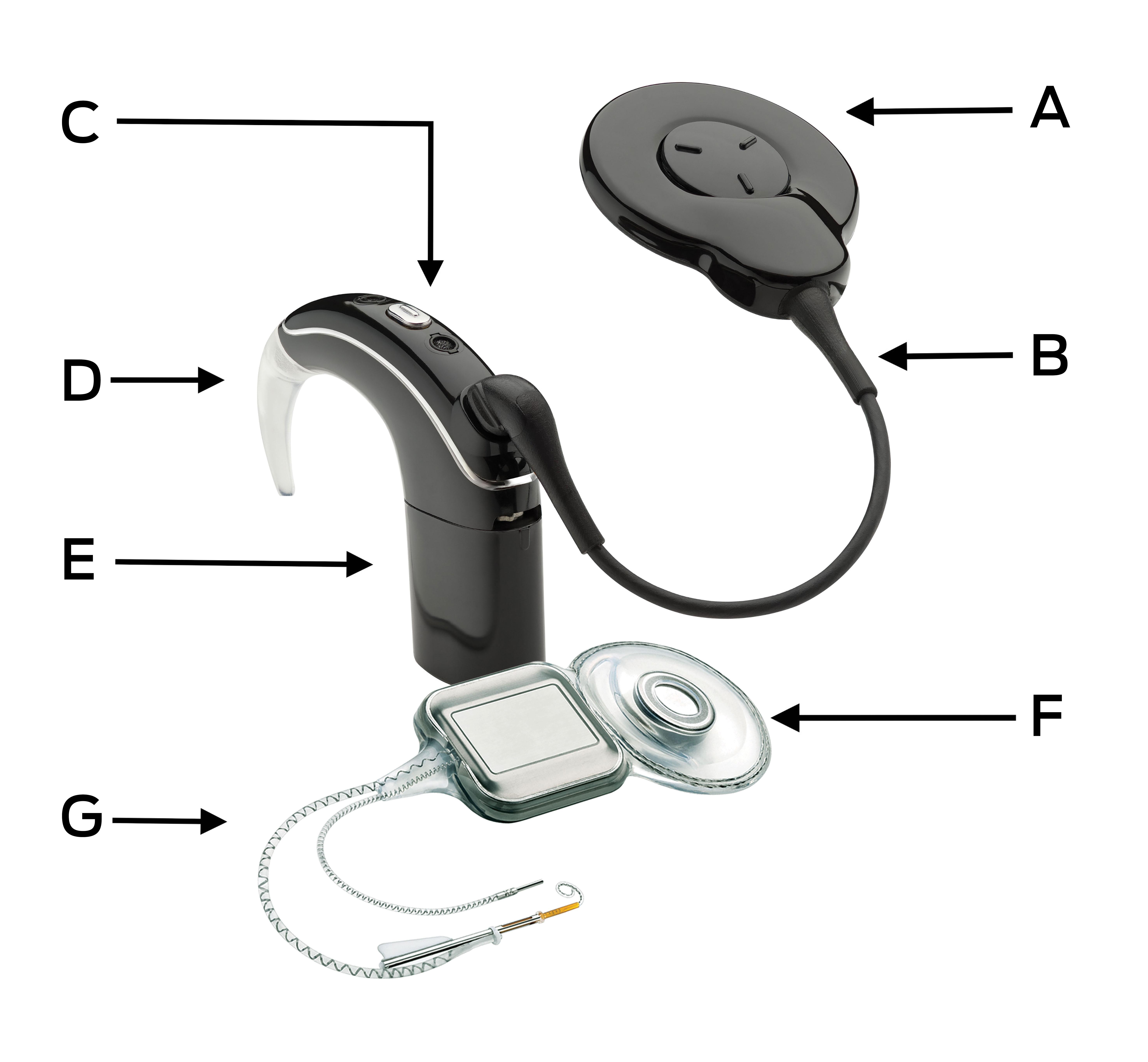
A cochlear implant is a surgically implanted device for converting sounds into an electrical current that directly stimulates the cochlear nerve.1 It consists of external (microphone, speech processor, transmitter) and internal components (receiver/stimulator, electrode array in the cochlea) and can be implanted in both children and adults.
While they do not provide the recipient with normal hearing, cochlear implants allow patients to hear sounds sufficiently well to be able to develop useable speech and language. At the end of 2012, it was estimated that more than 320 000 devices had been implanted worldwide.2 Now regarded as an acceptable option for providing auditory sensation in people with severe to profound sensorineural hearing loss, the cochlear implant was initially met with criticism by some communities, and even regarded as an attack on the Deaf community.3
In 1966, Palo Alto otolaryngologist Francis Blair Simmons (1930–1998) commented: “if [studies in tactile learning and communication] prove encouraging, and if the considerable technical difficulties of long term discrete stimulation of the auditory nerve can be resolved, an artificial end organ may be possible”.4 These technical difficulties were indeed overcome, and Graeme Clark (Box 1) implanted the first modern multichannel cochlear implant in 1978 in a post-lingual deaf man (that is, he had lost his hearing as an adult), the success of the procedure dramatically confirmed when the patient was able to again hear the popular Australian folk ballad, “Waltzing Matilda”. Forty years later, this article looks back at the fascinating history of the multichannel cochlear implant.
Early experiments
Experiments leading to the eventual development of the cochlear implant began in the 18th century with Italian physicist Alessandro Volta inserting electrically charged metal rods into his own ears,4 but the idea that hearing could be restored by direct stimulation of the auditory nerve was first proposed in 1940. Jones, Stevens and Lurie (Harvard University) placed saline-soaked, cotton-tipped wires directly into the middle ears of 20 patients who lacked tympanic membranes, some of whom were then able to perceive simple tones during stimulation.4 Ten years later, Swedish neurosurgeon Lundberg directly stimulated the auditory nerve for the first time, causing the patient to become aware of noise during the operation.1 In 1957, André Djourno and Charles Eyriès (Paris) were the first to implant an electric auditory prosthesis into a deaf person. The patient had previously undergone surgery for bilateral cholesteatoma, which had resulted in complete deafness and facial paralysis. Otolaryngologist Eyriès inserted an induction device developed by Djourno into the stump of cranial nerve VIII; during the experiment, the patient was able to recognise simple words (‘papa’, ‘maman’).5
The first single-channel cochlear implant was successfully implanted by otologist William House and neurosurgeon John Doyle (Los Angeles) in 1961.1 A single gold wire electrode was inserted into the tympanic duct through an opening in the round window. House and electrical engineer Jack Urban later developed a commercial permanent single-channel device.1 Three years later, Blair Simmons and Robert White (Stanford University) permanently implanted a percutaneous six-channel electrode at a depth of 3–4 mm into the right cochlear modiolus of a 60-year-old post-lingual deaf person.4 Simmons found that electrical excitation of the auditory nerve via the implant was perceived as an auditory sensation, and these sensations could be consistently made louder by increasing the amplitude of the stimulation current and pulse duration. Perhaps more importantly, it was found that pitch was affected by both the location of the electrode stimulation (place pitch) and by stimulus repetition rate (volley pitch). Volley pitch is the result of nerve fibre discharges that are synchronous with the acoustic stimulus repetition rate, whereas place pitch is determined by acoustic stimulation of specific sections of the basilar membrane according to its tonotopic organisation. However, Blair Simmons concluded in his important 1966 review that it was unlikely that electrical stimulation of the auditory nerve could provide a “uniquely useful means of communication” because the mature brain was unlikely to be sufficiently plastic to “learn” this new “foreign language.”4 Graeme Clark was nonetheless inspired by the pioneer work of Simmons and others to develop a multichannel implant, achieving what was thought to be impossible.
Graeme Clark
Graeme Milbourne Clark (born 1935) is an Australian otolaryngologist who, motivated by his father’s sensorineural hearing loss, decided at the age of 10 years that he “would like to do medicine, and to be an ear, nose and throat doctor,”6 a dream he subsequently realised.
After reading the seminal article by Simmons as a postgraduate doctor, Clark spent 10 years investigating animal models of hearing. This period was not without difficulty; Clark’s ambitious goals met with widespread scepticism and he struggled to find support for his research. In order to raise funds to establish his department at the Royal Victorian Eye and Ear Hospital, Clark spoke at club luncheons and “shook tins” for donations on the streets of Melbourne. Clark and his team eventually received the opportunity to hold three telethons that raised sufficient money to develop a cochlear implant prototype.6
Clark had performed a series of experimental studies with the aim of overcoming the challenges involved in making a cochlear implant.7 He concluded that the electrodes had to be chemically inert, and suggested using either gold or platinum, in contrast to the stainless steel used by Simmons. The electrodes, apart from the rounded tip for stimulation, should also be completely insulated to facilitate bending and to protect them. Clark’s investigation of auditory brain cell responses to electrical stimulation of the cochlea and auditory nerve in cats indicated to him that speech components with frequencies below 300 Hz could be conveyed by global electrical stimulation of the auditory nerve, but higher frequencies could not be reproduced on the basis of the volley model of coding frequency.8 Clark therefore hypothesised that enabling patients with sensorineural deafness to perceive speech would require electrical stimulation of the auditory nerve “on the basis of the place theory of pitch perception”.9 For this reason, a functional cochlear implant must include multiple electrode channels.
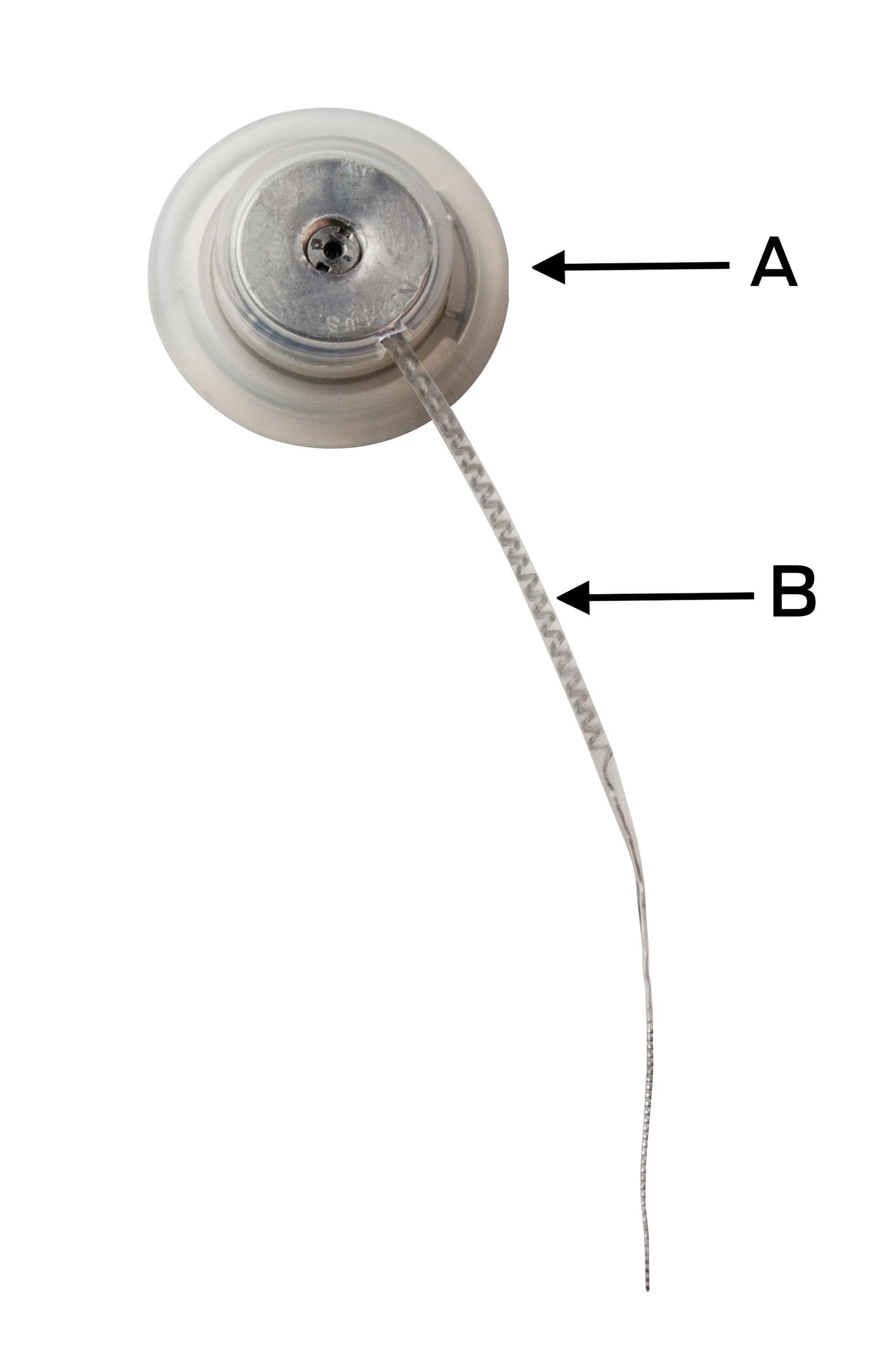
Further experiments delivered additional information that assisted Clark and his team develop the final prototype. Although he acknowledged that the simplest way to place multiple electrodes close to the auditory nerve fibres would be to pass the array through the round window and around the cochlea, he found that he encountered resistance attempting to insert it in this manner. While playing with a turban shell on a beach, Clark noticed that he could feed a blade of grass through the entire length of the shell, and he realised that his electrode array needed to be of graded stiffness and to have a flexible tip if it was to be inserted comfortably through the round window.10 Shortly afterwards, a prototype multichannel cochlear implant had finally been developed (Box 2).
It was not until 1978, however, that Clark found the first suitable patient for this new multichannel cochlear implant: a 46-year-old gentleman who had suddenly developed complete bilateral sensorineural hearing loss after a head injury 18 months before the operation.6,11 The implant consisted of ten active platinum electrodes with ten alternate bands and was placed into the tympanic duct through the round window for a distance of 25 mm. The processor communicated with the receiver/stimulator via a transcutaneous system rather than a percutaneous single device in order to reduce the danger of infection. The percutaneous approach involves passing a non-biological material through the skin and underlying tissue; in the transcutaneous system, there is no direct connection between the intracochlear electrode array and the external components.12 As Clark later recalled, the first two assessments after the operation did not indicate that any degree of hearing had been restored. But on the third review, a loose connection was found and repaired, resulting in a hearing sensation for the patient. Further tests were performed to determine whether the multiple channels allowed different pitch sensations; among the songs played as part of this testing, the patient was able to hear and recognise the unofficial Australian anthem, the folk ballad, “Waltzing Matilda”.6
Conclusion
Since the 18th century, investigators have studied hearing and sought a means for restoring hearing to the deaf. Despite significant financial obstacles and criticism from some peers and parts of the Deaf community, Clark’s first multichannel cochlear implant was a technical and academic success. Since then, the cochlear implant has been successfully employed in children as well as adults, and is widely accepted as an option for people with severe to profound sensorineural deafness. With technological advances, the modern cochlear implant is now smaller and more mobile, and has electronic and wireless connectivity with other devices (Box 3). It is only through basic research and the development of the cochlear implant that thousands of deaf adults and children have now regained the sense of hearing and developed an understanding of spoken language.
Box 1 – Graeme Clark with his multichannel cochlear implant, 1982
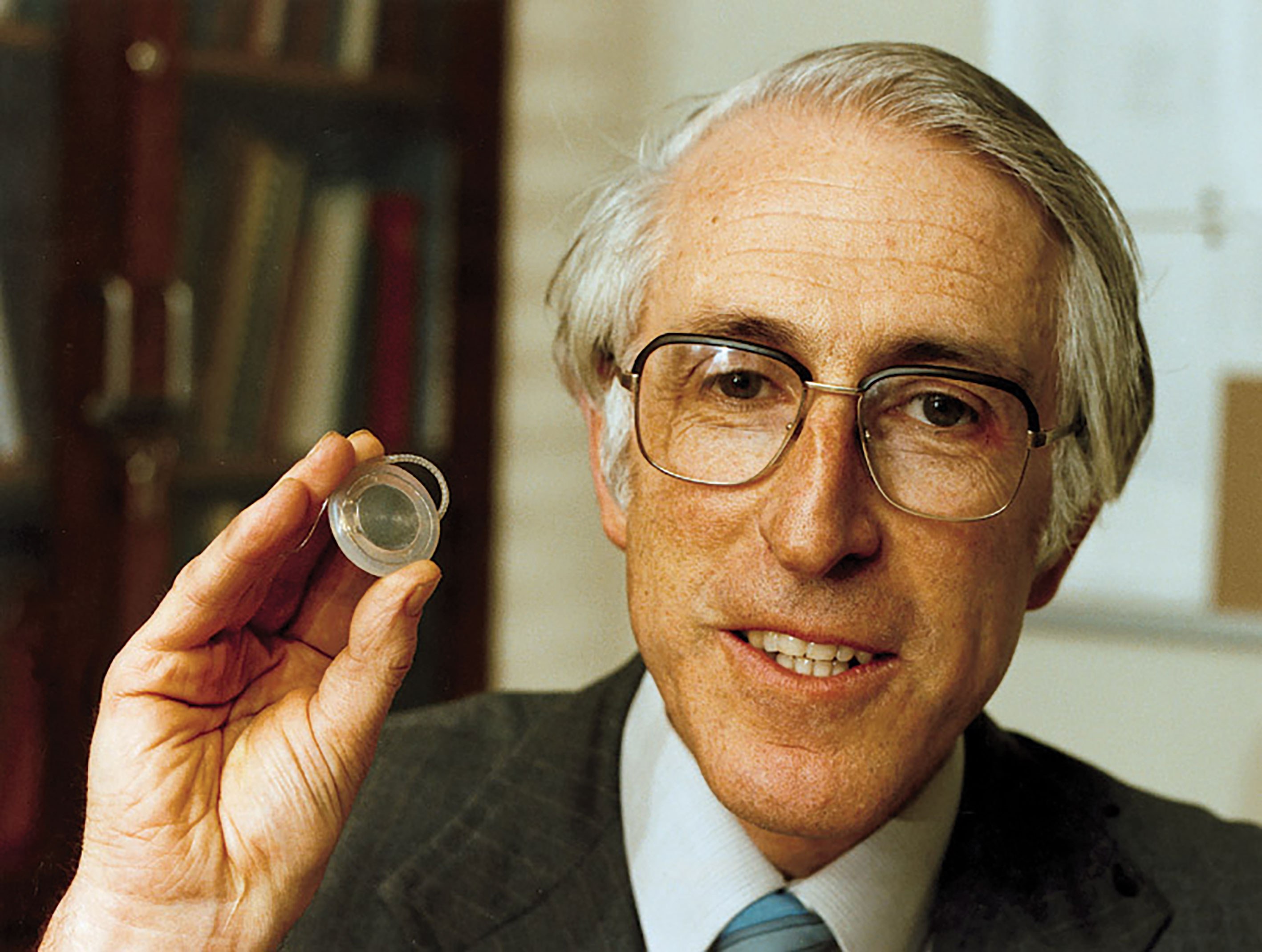
Courtesy of Cochlear Limited, Sydney.
Competing interests
No relevant disclosures.
Acknowledgements
All images provided courtesy of Cochlear Limited.
References
- Mudry A, Mills M. The early history of the cochlear implant: a retrospective. JAMA Otolaryngol Head Neck Surg 2013; 139: 446-453.
- National Institute on Deafness and Other Communication Disorders (NIDCD). Cochlear implants [webpage]. Updated Mar 2017. https://www.nidcd.nih.gov/health/cochlear-implants (viewed Dec 2017).
- Sparrow R. Defending deaf culture: the case of cochlear implants. J Polit Philos 2005; 13: 135-152.
- Simmons FB. Electrical stimulation of the auditory nerve in man. Arch Otolaryngol 1966; 84: 2-54.
- Seitz PR. French origins of the cochlear implant. Cochlear Implants Int 2002; 3: 77-86.
- O’Leary S. Professor Graeme Clark, otolaryngologist. Australia. Australian Academy of Science; 2011. https://www.science.org.au/learning/general-audience/history/interviews-australian-scientists/professor-graeme-clark (viewed Dec 2017).
- Clark GM. A hearing prosthesis for severe perceptive deafness: experimental studies. J Laryngol Otol 1973; 87: 929-945.
- Clark GM. Responses of cells in the superior olivary complex of the cat to electrical stimulation of the auditory nerve. Exp Neurol 1969; 24: 124-136.
- Clark GM, Hallwoeth RJ, Zdanius K. A cochlear implant electrode. J Laryngol Otol 1975; 89: 787-792.
- Clark GM. Personal reflections on the multichannel cochlear implant and a view of the future. J Rehabil Res Dev 2008; 45: 651-693.
- Clark GM, Pyman, BC, Bailey QR. The surgery for multiple-electrode cochlear implantations. J Laryngol Otol 1979; 93: 215-223.
- Tong YC, Black RC, Clark GM, et al. A preliminary report on a multiple-channel cochlear implant operation. J Laryngol Otol 1979; 93: 679-695.
Provenance: Not commissioned; externally peer reviewed.
Watchful Waiting Compared With Immediate Antibiotics for Urban Aboriginal and Torres Strait Islander Children With Uncomplicated Acute Otitis Media (WATCH): A Non-Inferiority Randomised Controlled Trial
Jennifer S. Reath, Hasantha Gunasekera, Sanja Lujic, Amanda J. Leach, Letitia Campbell, Robyn Walsh, Tim Usherwood, Geoffrey K. Spurling, Claudette A. Tyson, Deborah A. Askew, Kelvin Kong, Chelsea J. Watego, Peter Morris, Wendy Hu, Penelope A. Abbott
Climate and environmental crisis: effects on ear and hearing health in Australia and for Aboriginal and Torres Strait Islander peoples
Georgia M Tongs (Wiradjuri), Isabella Ludbrook, Jennifer H Martin, Robert Eisenberg, Kelvin M Kong (Worimi)
The New South Wales Pharmacy Trial for herpes zoster: on the nose?
Christian P Pappas, Timothy R Holmes, Minas T Coroneo
Antibiotics or watchful waiting for acute otitis media in urban Aboriginal and Torres Strait Islander children?
Valerie M Swift, Christopher G Brennan‐Jones
The views of parents and carers on managing acute otitis media in urban Aboriginal and Torres Strait Islander children: a qualitative study
Jennifer S Reath, Sarah O'Brien, Letitia Campbell, Hasantha Gunasekera, Claudette A Tyson, Deborah A Askew, Wendy Hu, Tim Usherwood, Kelvin Kong, Peter Morris, Amanda J Leach, Robyn Walsh, Penelope A Abbott
Routine ear health and hearing checks for Aboriginal and Torres Strait Islander children aged under 6 years attending primary care: a national consensus statement
Samantha Harkus, Vivienne Marnane, Isabel O'Keeffe, Carmen Kung, Meagan Ward, Neil Orr, John Skinner, Kelvin Kong, Lose Fonua, Michelle Kennedy, Mary Belfrage