




Volume 209 - Issue 10
The rising health, social and economic costs of Australia’s ageing prisoner population
Authors: Natasha A Ginnivan, Tony G Butler and Adrienne N Withall
Med J Aust 2018; 209 (10): 422-424. || doi: 10.5694/mja18.00266
Published online: 10 September 2018
Published online: 10 September 2018
Australia needs a more systematic and nationally coordinated approach to manage the escalating health burden arising from incarcerated older people
Australia needs a more systematic and nationally coordinated approach to manage the escalating health burden arising from incarcerated older people
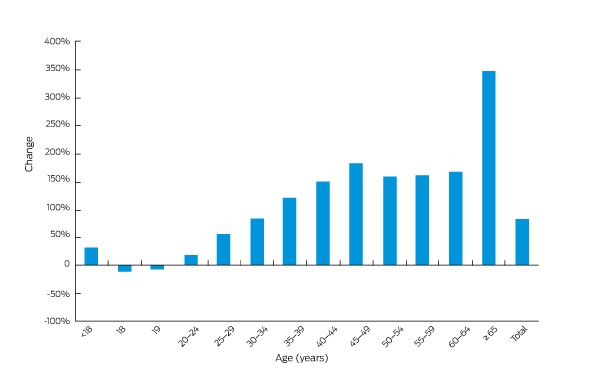
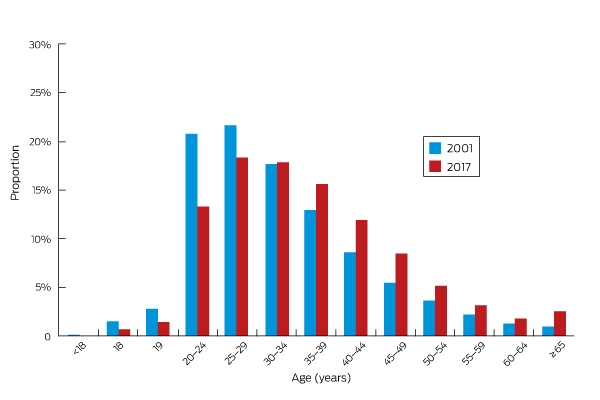
Based on figures from the Australian Bureau of Statistics,1 the number of prisoners aged 65 years and over has increased by 348% (805 people) over the past 16 years (Box 1). Troublingly, rates for older women, many of whom are Indigenous, have increased markedly (from 3 to 26 female prisoners; a 767% increase).1,2 While the younger prisoner population has stabilised, the older cohort has risen rapidly, with 5212 men and women aged 50 years and older currently in full-time custody in Australia (Box 2). Changes to laws in the 1990s, such as mandatory sentencing and standard non-parole periods, as well as better forensic techniques resulting in successful cold case prosecutions, have led to increased numbers of older offenders (aged 50 years and older), who now constitute over 13% of the total Australian prisoner population.3,4 Notably, the Royal Commission into Institutional Responses to Child Sexual Abuse resulted in many convictions of older men relating to historical sexual abuse offences.5 Additionally, population ageing has led to increased rates of people with dementia, for which criminal behaviour can be a presentation.6 Indeed, criminal cases have emerged where the offender’s cognitive status has been examined as part of the judicial process to determine whether cognitive impairment played a role in their actions. Older offenders are therefore a mixed group. Some are older first time offenders who are diverted because of cognitive impairment, some are career recidivists. Others are prosecuted for historical offences and, although they may have been of sound mind at the time of the crime, are now frail. These groups require specific medico-legal care arrangements that the justice system is still developing.
The literature on older prisoners suggests that many experience accelerated ageing because of poor health, mental illness and lifestyle factors, including drug and alcohol misuse, and other social determinants such as trauma, homelessness and victimisation.2 Accordingly, a prisoner aged 50 years and older is considered aged; for Indigenous people, the age threshold is lower at 45 years.2 It remains to be seen whether people convicted for historical crimes and older first time offenders present with the same health disadvantage as those with histories of contact with the justice system (including incarceration).
Challenges among the ageing prisoner cohort7,8 include high levels of mental health problems as well as multiple physical health issues, which can be exacerbated by limited resources and lack of specialist aged care within the prison setting.7 The serious nature of many older offenders’ crimes often precludes diversion into the community or compassionate release. At the end of their prison sentence, aged care facilities are often reluctant or unable to accommodate ex-offenders, who may have prominent behavioural disturbance, which in turn places this group at an increased risk of homelessness.9 Multisectoral collaboration is required to devise feasible solutions.7,8
Incarceration costs in Australia rank fourth highest among Organisation for Economic Co-operation and Development countries, at $109 500 per prisoner per year.10 While separate data are not available for the older prisoner cohort, it is known that health costs increase with age in the general population, and costings on the impact of older prisoner health care in the United States show an unsustainable upward budgetary pressure on prisons. So much so that the US Federal Bureau of Prisons is exploring how to redefine “older prisoners” to enable more prisoners to meet the compassionate release criteria.11 The escalating costs of housing older prisoners sit alongside the human rights issue of not providing age-appropriate care to meet the needs of this vulnerable group.
The World Health Organization has recommended restructuring prisons to accommodate the environmental needs of elderly prisoners.12 Recommended provisions include grip rails, seats in showers, bunk bed ladders, ramps and widened doorways to accommodate wheelchairs, and better access to bathroom facilities. The WHO has also urged institutions to adopt appropriate screening for conditions associated with ageing, such as sensory impairment, mobility problems and arthritis.12 A report by the NSW Inspector of Custodial Services8 also highlights the high prevalence of geriatric syndromes such as dementia, incontinence, and sensory impairment. These conditions significantly increase morbidity and in older inmates increase the risk for adverse health events.8,12 A recent Australian prisoner health survey shows that inmates aged over 45 years are more than four times more likely than younger prisoners to be diagnosed with cardiovascular disease.13 In addition, comparative studies of prisoners and the general community show that prisoners manifest cardiovascular disease risk factors at a relatively young age, with a significantly higher prevalence of hypertension.14 Aside from the difficulty of managing cardiovascular disease in older prisoners (eg, extended waiting times for specialist care), vascular risk factors further increase the risk of dementia.15 Poor health before incarceration (eg, chronic alcohol misuse) is also related to accelerated dementia onset, as are in-prison factors such as obesity and lack of exercise.16,17 Traumatic brain injury and chronic depression, both common among prisoners, have also been associated with an increased risk of dementia.18
Few screening and care protocols are in place for the detection and treatment of dementia in the prison setting.8 Tailored tools are required to detect changes in function and behaviour within prison. Dementia literacy training, as well as education on ageing, would benefit custodial staff, who are arguably the first line of contact with prisoners.8 The acceptability and suitability of this carer role for custodial officers is currently unknown. The WHO multimorbidity care model uses care coordination between clinicians, the patient, nurses, social workers and pharmacists, although this is yet to be trialled.12 Palliative, including end of life, care is challenging in most health settings but magnified in the prison setting.19 Continuity of care programs for older prisoners following release are rare. More research is required to determine how to improve service delivery to older prisoners as well as post-release care.8,9
Corrections Victoria and Justice Health have jointly established the Corrections Ageing Prisoner and Offender Policy Framework 2015–20, with priorities including multidisciplinary planning and age-related service provision with monitoring and evaluation of programs (http://www.corrections.vic.gov.au/utility/publications+manuals+and+statistics/corrections+ageing+prisoner+and+offender+policy+framework+2015-20). There is an emphasis on promoting rehabilitation and reintegration into the community as well as access to appropriate health care. In addition, the policy framework aims to strengthen workforce capacity to recognise and respond to common health conditions of prisoners and offenders, and to monitor how programs and services can be more responsive to the needs of this group. Given the large demographic shift across all Australian prisons, a nationally coordinated, best practice approach to screening for and managing age-related conditions is needed.20
Older prisoners are a particularly vulnerable and marginalised group who are at risk of poor health and social isolation before, during and on release from prison. Although at some point almost all prisoners are released back into the community, a growing number will die in prison.19 Apart from the increased burden on health services in prison, social support networks are lost due to incarceration.20 This becomes apparent on release from prison and can result in homelessness. A recent study of over 2000 patients attending psychiatric clinics at several inner Sydney homeless hostels reported that 28% of patients had recently been released from prison.9 Notwithstanding human rights and ethical questions about health and ageing within prison, there is an economic cost of incarcerating older offenders who may be frail and cognitively impaired.21 The current reported health care cost for inmates in public prisons in Australia represents about one-tenth of the entire budget for prisons. However, if the aggregate health care costs by age for the general population are applied to the rates of change in the age structure of the prisoner population, health costs could increase by as much as 70–90% (over $330 million) in the coming decade.21 Assessment and management plans are needed before these costs become unsustainable. Investment in continuity of care programs (and their evaluation) that are initiated pre-release and continue in the community with stable accommodation could potentially have an impact on re-offending, as recidivism rates are reportedly higher in homeless former prisoners.9,22
Conclusion
Sentencing changes combined with a gradual increase in the numbers of older offenders over the past decade have led to a unique set of challenges within Australian prisons.2,7 Recent reports have highlighted the many challenges associated with housing older inmates, and a more systematic approach to the health screening and care of ageing offenders on reception to prisons pre-release and after release is warranted. Prison health services and custodial authorities are mindful of the ageing prisoner population as demonstrated by recent reports in NSW and Victoria.8,21 Clearly, training of key personnel in the justice system such as custodial staff will be required. A significant challenge to overcome will be how the prison environment can be adapted to incorporate elements of best practice to meet the mobility and cognitive needs of older, frail inmates. Revealing the economic models that underpin these population ageing issues brings to light the full magnitude and cost of inaction. The literature shows major gaps in the care of older prisoners, requiring policy reform and the development of multidisciplinary interventions to ameliorate the costs and provide more humane and appropriate management of older offenders both inside and outside of custodial settings.
Competing interests
No relevant disclosures.
Acknowledgements
We are grateful for the support of the Australian Research Council Centre of Excellence in Population Ageing Research (CEPAR; CE170100005) and would like to thank Rafal Chomik (Senior Research Fellow, CEPAR) and John Piggott (Director, CEPAR) for their guidance on the projected health costs of the Australian prisoner and general population. Tony Butler is supported by a National Health and Medical Research Council Research Fellowship (1124299).
References
- Australian Bureau of Statistics. 4157.0 Prisoners in Australia, 2017. http://www.abs.gov.au/ausstats/abs@.nsf/mf/4517.0 (viewed Aug 2018).
- Angus C. Older prisoners: trends and challenges. Sydney: NSW Parliamentary Research Service, 2015. https://www.parliament.nsw.gov.au/researchpapers/Documents/older-prisoners-trends-and-challenges/Older%20prisoners%20-%20trends%20and%20challenges.pdf (viewed Aug 2018).
- Stavrou E. Changing age profile of NSW offenders. Bureau Brief No. 123. Sydney: NSW Bureau of Crime Statistics and Research, 2017. http://www.bocsar.nsw.gov.au/Documents/BB/Report-2017-Changing-age-profile-of-NSW-offenders-BB123.pdf (viewed Aug 2018).
- Hoel A, Gelb K. Sentencing matters: mandatory sentencing. Melbourne: Sentencing Advisory Council, 2008. https://www.sentencingcouncil.vic.gov.au/sites/default/files/publication-documents/Mandatory%20Sentencing%20Sentencing%20Matters%20Research%20Paper.pdf (viewed Aug 2018).
- Royal Commission into Institutional Responses to Child Sexual Abuse. Final report. 2017. https://www.childabuseroyalcommission.gov.au/final-report (viewed Aug 2018).
- Liljegren M, Naasan G, Temlett J, et al. Criminal behavior in frontotemporal dementia and Alzheimer disease. JAMA Neurol 2015; 72: 295-300.
- Baidawi S, Turner S, Trotter C, et al. Older prisoners – a challenge for Australian corrections. Trends and Issues in Crime and Criminal Justice 2011; 426: 1-6.
- Inspector of Custodial Sentences. Old and inside: managing offenders in custody. Sydney: NSW Justice, 2015. http://www.custodialinspector.justice.nsw.gov.au/Documents/Old%20and%20inside%20Managing%20aged%20offenders%20in%20custody.pdf (viewed Aug 2018).
- Nielssen OB, Stone W, Jones NM, et al. Characteristics of people attending psychiatric clinics in inner Sydney homeless hostels. Med J Aust 2018; 208: 169-173.
- Bushnell A. Australia’s criminal justice costs: an international comparison. Melbourne: Institute of Public Affairs, 2017.
- Office of the Inspector General. The impact of an aging inmate population on the Federal Bureau of Prisons. Washington, DC: US Department of Justice, 2015. https://oig.justice.gov/reports/2015/e1505.pdf (viewed Aug 2018).
- Williams B, Ahalt C, Greifinger R. Prisons and health. Geneva: World Health Organization, 2014: pp. 165-170. http://www.euro.who.int/__data/assets/pdf_file/0005/249188/Prisons-and-Health.pdf (viewed Aug 2018).
- Australian Institute of Health and Welfare. The health of Australia’s prisoners 2015. Canberra: AIHW, 2015. https://www.aihw.gov.au/getmedia/ffe940d2-36b1-4df7-a7a2-4ea3409ac05c/18878-report-profile.pdf.aspx (viewed Aug 2018).
- D’Souza RM, Butler T, Petrovsky N. Assessment of cardiovascular disease risk factors and diabetes mellitus in Australian prisons: is the prisoner population unhealthier than the rest of the Australian population? Aust J Public Health 2005; 29: 318-323.
- Kivipelto M, Ngandu T, Fratiglioni L, et al. Obesity and vascular risk factors at midlife and the risk of dementia and Alzheimer disease. Arch Neurol 2005; 62: 1556-1560.
- Ridley NJ, Draper B, Withall A. Alcohol-related dementia: an update of the evidence. Alzheimers Res Ther 2013; 5: 3.
- Withall A, Draper B, Seeher K, Brodaty H. The prevalence and causes of younger onset dementia in Eastern Sydney, Australia. Int Psychogeriatr 2014; 26: 1955-1965.
- Plassman BL, Grafman J. Traumatic brain injury and late-life dementia. Handb Clin Neurol 2015; 128: 711-722.
- Kendall M, Streitberg L, Levy MH. Meeting end-of-life care needs for patients in custody. Med J Aust 2015; 202: 77-78.
- Senate Standing Committee on Legal and Constitutional Affairs. Value of a justice reinvestment approach to criminal justice in Australia. Chapter 3: The economic and social costs of imprisonment. Canberra: Commonwealth of Australia, 2013. https://www.aph.gov.au/parliamentary_business/committees/senate/legal_and_constitutional_affairs/completed_inquiries/2010-13/justicereinvestment/report/c03 (viewed Aug 2018).
- Ginnivan N, Chomik, R, Piggott, J, et al. Australia’s ageing prisoner population: the demographic shift and implications for the economic and social costs of care. Working paper 2018/6. Sydney: CEPAR, 2018. https://www.cepar.edu.au/publications/working-papers/australias-ageing-prisoner-population-demographic-shift-and-implications-economic-and-social-costs-care (viewed Aug 2018).
- Carroll M, Spittal MJ, Kemp-Casey AR, et al. High rates of general practice attendance by former prisoners: a prospective cohort study. Med J Aust 2017; 207: 75-80.
Provenance: Not commissioned; externally peer reviewed.
Respiratory Syncytial Virus Disease Burden and Evidence Gaps in Australia Before Immunisation Introduction: A Retrospective Population-Based Study Using 2016–2019 Hospitalisation and 2023 Laboratory Surveillance Data
Chisato Imai-Boulter, Jean Li-Kim-Moy, Clayton Chiu, Sanjay Jayasinghe, Kristine Macartney
Multimorbidity Clusters Among People Aged 65 Years and Over in Australia: A Nationwide Cross-Sectional Data Linkage Study
Weisi Chen, Christine Y. Lu, Sarah N. Hilmer, Alice A. Gibson, Edwin C. K. Tan
Predictors of Ambulance Transport to Hospital for Older People Living in Tasmanian Aged Care Facilities: A Retrospective Cohort Study
Sharon Andrews, Pieter F. Fouche, Belinda Flanagan, Michael McDermott, Melanie Greenwood
Deprescribing in Older People: A Clinical Practice Guideline Summary
Stephen Tucker, John D. G. Watson, Donna Wellins, Tim Whitmore, Christopher Etherton-Beer, Amy T. Page
Emergency Department Presentations and Hospitalisations for Elder Abuse in People Accessing Aged Care Services in Australia: A Retrospective Cross-Sectional Study
Stephanie L. Harrison, Sahar Barmomanesh, Bryan Morden, Maria C. Inacio, Gillian E. Caughey, on behalf of the ROSA Consumer and Community Advisory Committee
A future for the hospital‐in‐the‐home (HITH) deteriorating patient: shifting the paradigm
Davide R Tomassoni, Iftah Amith