




Volume 208 - Issue 4
Predictors of respiratory failure in patients with Guillain–Barré syndrome: a systematic review and meta-analysis
Authors: Cameron Green, Tess Baker and Ashwin Subramaniam
Med J Aust 2018; 208 (4): 181-188. || doi: 10.5694/mja17.00552
Published online: 5 March 2018
Published online: 5 March 2018
Early identification of GBS patients at risk of respiratory failure could reduce the rates of adverse outcomes associated with delayed intubation
Abstract
Objective: To systematically review the literature regarding the ability of clinical features to predict respiratory failure in patients with Guillain–Barré syndrome (GBS).
Data sources: We searched the PubMed and Ovid MEDLINE databases with the search terms “guillain barre syndrome” OR “acute inflammatory demyelinating polyneuropathy” OR “acute motor axonal neuropathy” OR “acute motor sensory axonal neuropathy” AND “respiratory failure” OR “mechanical ventilation”. We excluded articles that did not report the results of original research (eg, review articles, letters), were case reports or series (ten or fewer patients), were not available in English, reported research in paediatric populations (16 years of age or younger), or were interventional studies. Article quality was assessed with the Newcastle–Ottawa quality assessment scale.
Data synthesis: Thirty-four relevant studies were identified. Short time from symptom onset to hospital admission (less than 7 days), bulbar (odds ratio [OR], 9.0; 95% CI, 3.94–20.6; P < 0.001) or neck weakness (OR, 6.36; 95% CI, 2.32–17.5; P < 0.001), and severe muscle weakness at hospital admission were associated with increased risk of intubation. Facial weakness (OR, 3.74; 95% CI, 2.05–6.81; P < 0.001) and autonomic instability (OR, 6.40; 95% CI, 2.83–14.5; P < 0.001) were significantly more frequent in patients requiring intubation in our meta-analyses; however, the differences were not statistically significant in individual multivariable analysis studies. Four predictive models have been developed to assess the risk of respiratory failure for patients with GBS, each with good to excellent discriminative power (area under the receiver operating characteristic curve, 0.79–0.96).
Conclusions and relevance: Early identification of GBS patients at risk of respiratory failure could reduce the rates of adverse outcomes associated with delayed intubation. Algorithms that predict a patient’s risk of subsequent respiratory failure at hospital admission appear more reliable than individual clinical variables.
Guillain–Barré syndrome (GBS) is a rare but serious immune-mediated neurological condition characterised by progressive, symmetric bilateral muscular weakness.1,2 The worldwide incidence of GBS is 1–2 cases per 100 000 person-years;3,4 it is higher among men, and the incidence increases with age.2,3 Reported mortality rates range between 1 and 18%.5,6 Most patients will recover fully, and in-hospital management is primarily supportive, aiming to avoid or manage complications.1 Respiratory failure resulting from impaired secretion clearance and respiratory muscle weakness is the most common complication, affecting 20–30% of patients.7-9
Patients with GBS who require invasive mechanical ventilation (IMV) are at risk of significant complications, including hospital-acquired pneumonia and sepsis,5,7,10,11 the leading causes of death for patients with GBS.12 Pulmonary complications are associated with increased mortality of mechanically ventilated patients with GBS; those with pneumonia have a 4.7-fold higher risk of death.5 Hypercarbia and hypoxia can develop insidiously in patients with GBS, and delaying intubation until traditional signs of respiratory failure emerge may increase the risk of emergency intubation and its associated complications, including aspiration.11,13,14 Optimal management of respiratory failure in GBS therefore requires timely intubation; anticipating respiratory failure and prompt intervention are associated with reduced rates of complications and improved patient outcomes.11,14 Ropper and Kehne15 published widely accepted criteria for deciding when patients with GBS should be intubated, but their criteria do not allow the early prediction of whether patients are at risk of respiratory failure.16
A number of studies have attempted to identify clinical and electrophysiological features that predict whether a patient with GBS might be at risk of respiratory failure. Such features could be used to triage patients and to guide management.7 Clinical and electrophysiological predictors of respiratory failure in GBS have not previously been systematically reviewed. As a synthesis of the available literature may assist identify which variables are most reliably associated with respiratory failure in adults with GBS, we reviewed the evidence regarding predictors of acute respiratory failure requiring IMV in adults with GBS.
Methods
Eligibility criteria
We included articles about adult patients diagnosed with GBS that described the relationship between any clinical variable and the patients’ future requirement for IMV. The following types of article were excluded: articles that did not report the results of original research (eg, review articles, letters, commentaries); case reports and series (ten or fewer patients); articles not available in English; articles on research in paediatric populations (16 years of age or younger); interventional studies.
Search strategy and study selection
We searched the PubMed and Ovid MEDLINE databases with the search terms “guillain barre syndrome” OR “acute inflammatory demyelinating polyneuropathy” OR “acute motor axonal neuropathy” OR “acute motor sensory axonal neuropathy” AND “respiratory failure” OR “mechanical ventilation”. Duplicate results were removed, and the abstracts of the remaining articles independently screened by two authors (CG and TB) for relevance. The full text of selected articles was assessed according to the inclusion and exclusion criteria. The reference lists of eligible studies were reviewed to identify studies not returned by the search. The search was finalised on 6 October 2017.
The quality of the included studies was evaluated with the Newcastle–Ottawa Quality Assessment Scale (NOS).17 Two investigators independently assessed the quality of each study, with disagreements resolved by referral to the third author.
Statistical analysis
The meta-analysis of studies reporting both means and standard deviations (SDs) for continuous variables was performed in Review Manager 5.3 (Cochrane Collaboration). Random effects models were used because of the heterogeneity of the studies. Mean differences (MDs) and odds ratios (ORs) are reported with 95% confidence intervals (CIs) for continuous and dichotomous variables respectively.
Results
A total of 1065 articles were identified in the two databases. After duplicates were removed, 194 of the 647 unique articles were deemed potentially relevant after reviewing their abstracts. After inspecting their full texts, 34 articles were included in our review (Box 1; online Appendix).
Study characteristics
Most studies were conducted in Asia (15 studies) or Europe (14); three were conducted in North or South America, and two in Iran. Sample sizes ranged between 15 and 4132 patients. Ten studies included only patients who had been admitted to intensive care units (ICUs), and three analysed data from ongoing randomised controlled trials.11,18,19
The reported mean age of patients with GBS ranged between 28 and 59 years; 60% were men (range, 43.3–82.1%), and the proportion of female patients exceeded 50% in only two studies.20,21
In studies investigating patients admitted to ICUs, 39.3% of patients (SD, 17.1%) required IMV, compared with 26.5% (SD, 15.8%) in studies that included all patients admitted to hospital with GBS.
Quality of studies
Twenty-eight studies received scores of 7 or more when evaluated with the NOS, including 11 that received the maximum score of 9 (online Appendix).
Clinical predictors of respiratory failure in patients with GBS
The mean ages of GBS patients requiring intubation and those who did not were not significantly different (MD, 1.25 years; 95% CI, –0.77 to 3.27 years; P = 0.22).7,9-11,13,16,19,20,22-29 Further, meta-analysis indicated that men were no more likely to receive mechanical ventilation than women (OR, 1.11; 95% CI, 0.94–1.31; P = 0.20)7,9-11,13,16,19,23-29 (Box 2).
It was consistently reported that antecedent illnesses, including upper respiratory tract infections, gastroenteritis, recent vaccinations and viral illnesses, were not more frequent among patients requiring IMV.7,9-11,13,16,20,22,23,25,28-30 One study,27 however, found evidence that the relationship between precipitating infection and the subsequent need for IMV was influenced by coexisting respiratory diseases. Antecedent illnesses and infections were inconsistently defined and reported, preventing meta-analysis.
Muscular weakness was significantly greater at hospital admission in patients who later required IMV in five of six articles reporting this feature.11,12,22,23,29,30 Muscular strength was assessed with different tools, including the Medical Research Council (MRC) score31 and Hughes’ GBS disability score.32
Disease progression was usually assessed as time from symptom onset to nadir, or from symptom onset to hospital admission. Progression was significantly more rapid among patients who required mechanical ventilation in nine of 15 studies investigating this relationship.7,9-13,16,21,23-26,28,29,33 Meta-analysis of three studies9,26,29 found that time from symptom onset to nadir was not significantly shorter for patients requiring IMV (MD, –1.40 days; 95% CI, –3.51 to 0.71 days; P = 0.19) (Box 3). This might be partly explained by difficulties in establishing disease nadir precisely, as it may depend on the frequency of muscle strength testing.
Patients with neck weakness (OR, 6.36; 95% CI, 2.32–17.5; P < 0.001)9,12,20,23,26,28,29,33 (Box 4, A) or bulbar weakness (OR, 9.00; 95% CI, 3.94–20.6; P < 0.001)9,12,13,20,23,26,28,33 (Box 4, B) were significantly more likely to require IMV than those who did not. Two of eight studies did not find this relationship,12,20 perhaps reflecting patient selection methods, as each included only patients admitted to an ICU and unable to complete electrodiagnostic testing20 or anxiety questionnaires.12 Three of four studies found that IMV was significantly more prevalent among patients with bulbar weakness at hospital admission (OR, 3.10; 95% CI, 2.28–4.21; P < 0.001)10,11,22,27 (Box 4, C).
Cranial nerve involvement was significantly more common among GBS patients who later required IMV in 10 of 12 studies.7,9,12,13,16,20,23,25,26,28,29,33 Significant heterogeneity in the assessment and reporting of cranial nerve function precluded meta-analysis of this variable. The need for IMV was significantly more common among patients with facial weakness (OR, 3.74; 95% CI, 2.05–6.81; P < 0.001) (Box 5, A). It was also significantly more common among those with autonomic instability, a finding made by six of nine studies (OR, 6.40; 95% CI, 2.83–14.5; P < 0.001)7,13,16,24,26,28-30,33 (Box 5, B).
Several indicators of lung function were significantly poorer in patients who required IMV, including single breath count,26 vital capacity,20,23 peak flow,8 and maximum inspiratory and expiratory pressure.23 However, most of these findings were from single studies.
Nerve conduction studies in patients with GBS have failed to identify any feature that reliably predicts respiratory failure. Primary findings of demyelination, axonal loss, equivocal, inexcitable, or normal neurophysiology in nerve conduction studies have not been consistently associated with risk of respiratory failure.20,21,23-25,29 Compound muscle action potential latency, amplitude, and duration have all been investigated, usually in the phrenic nerve, and the results of these studies have been inconsistent;16,20,21,23-26,29,30,34-36 that is, nerve conduction testing results do not reliably predict respiratory failure in GBS.
The presence of anti-ganglioside antibodies have not been found to reliably and consistently predict respiratory failure in patients with GBS.11,20,23,25,37,38
Multivariable analyses
Multivariable analysis was undertaken in 13 studies. Short time from symptom onset to admission7,11,19,39 and bulbar weakness9,11,16,26-28 were consistently found to be independent predictors of the need for IMV. The odds ratio for intubation of patients with bulbar weakness ranged from 1.96 (95% CI, 1.28–2.98)27 to 48.4 (95% CI, 10.3–82.3).9 Neck weakness significantly predicted the need for IMV in three of the six studies that included this variable in multivariable analyses.9,19,24,26,28,29
Facial nerve involvement7,9,11,16,26-28 and autonomic dysfunction16,24,26-29 did not significantly predict IMV in most studies that included these variables in multivariable analyses (four of six and five of seven respectively).
Predictive models of the risk of respiratory failure in patients with GBS
Four studies presented models or algorithms for predicting the risk of patients with GBS requiring IMV; two included patients already admitted to an ICU,20,26 while two assessed patients enrolled in interventional and observational studies.11,19
Sharshar and colleagues19 identified six clinical features at hospital admission that were associated with increased risk of future mechanical ventilation: time from onset to admission less than 7 days; inability to lift head; inability to lift elbows; inability to stand; ineffective cough; elevated liver enzyme levels (more than 50% above normal upper limit). We did formally not assess the discriminative ability of this model, but from the data provided by Sharshar (summarised here in Box 6), we calculated the area under the receiver operating characteristic curve (AUROC) to be 0.81 (95% CI, 0.78–0.84), indicating good discriminative ability.
The Erasmus GBS Respiratory Insufficiency Score (EGRIS)11 is calculated on admission to hospital on the basis of time from symptom onset to hospital admission, the presence of facial and bulbar weakness, and MRC sum score (Box 7). Scores range from 0 to 7; patients with scores of 0–2 are deemed to be at low risk (4% of patients required IMV), those with scores of 3–4 at intermediate risk (24% required IMV), and patients with scores of 5–7 at high risk (65% required IMV). This model exhibited good discriminative ability in a validation cohort (AUROC, 0.82). Yamagishi and colleagues40 found that EGRIS scores were significantly higher for patients who required mechanical ventilation than for those who did not (mean, 4.3 v 2.2; P < 0.01), but did not provide further information about the discriminative ability of this tool.
The NSB score (based on Neck weakness, Single breath count, Bulbar weakness)26 assigns a weighted score to the three clinical features, assessed throughout a patient’s hospitalisation: neck muscle weakness (weight, 40), single breath count below 19 (weight, 20), and bulbar weakness (weight, 40). Validation of this model suggested excellent discriminative ability (AUROC, 0.96; 95% CI, 0.93–0.99), with a cut-off score of ≥ 60 found to be highly sensitive (100%) and specific (83.3%) for predicting IMV; its positive predictive value was 88.1% (95% CI, 69.7–97.1%), the negative predictive value 100% (95% CI, 74.7–100%).
Durand and colleagues20 developed a classification model that estimated a patient’s risk of requiring IMV based on vital capacity and the ratio of the proximal to distal compound muscle action potential of the common peroneal nerve (Box 8). On validation, this model showed good discrimination (AUROC, 0.79), and was superior to a regression model that included vital capacity (below 60%), inability to lift head, and a period of less than 7 days between the onset of motor symptoms and admission.
Discussion
Study characteristics
The characteristics of patients included in the studies summarised in this systematic review broadly mirrored the reported epidemiology of GBS, with a predominance of male patients and a relatively young age of onset.3,4 The observational studies included in this review originated primarily in Europe or Asia, and most were of good quality.
Summary of the evidence
A significant proportion of the morbidity and mortality associated with GBS arises from complications associated with delayed intubation, including aspiration and respiratory failure.5,10 The ability to reliably predict a patient’s risk of requiring IMV may consequently improve patient outcomes by assisting clinicians appropriately triage and manage patients.7,10,26,34
The features of GBS that may enable early and accurate prediction of the risk of respiratory failure provide a number of challenges. In particular, assessments of features that require special equipment or highly trained staff may not be feasible in all settings,26 particularly given that health care resources are limited in settings where the need to appropriately triage patients is even more pronounced. Elevated cerebrospinal fluid protein levels and some electrophysiological abnormalities may not be detectable until late in the course of the disease,10 limiting their usefulness for early triage and intervention. In addition, the assessment of some clinical features of GBS, such as neck weakness and bulbar dysfunction, is not standardised;21 the ability to accurately identify such features, particularly early in disease, may therefore depend on the expertise of the clinician assessing the patient.
A predictive model or algorithm model that reliably and accurately identifies patients at risk of requiring IMV is likely to be of most benefit for clinicians if it is based on features that are both easily assessable and present early in the hospital admission.11 Such features include rapid disease progression, as indicated by a short time between first symptoms and hospitalisation; bulbar or neck weakness on admission; and a severe disease onset, as indicated by severe muscle weakness on hospital admission.
Accordingly, the EGRIS11 may be the tool best suited for the early identification of patients at risk of requiring IMV. The EGRIS predicts the risk of respiratory failure within 7 days with good discriminative ability, and is calculated at hospital admission on the basis of features that are assessable without special equipment. This model also includes variables we found to be associated with the need for IMV. The features identified by Sharshar and colleagues19 also have good discriminative ability and require little or no special equipment; however, the subjectivity of their model is a disadvantage.
The predictive models we have reviewed require further validation before they can be recommended for routine clinical use. Specifically, a large, multicentre, prospective study comparing the ability of the model developed by Sharshar and colleagues19 and the EGRIS11 to predict the need for IMV in patients with GBS is desirable. In evaluating the benefits of such tools, it is important to consider the potential risks associated with the false negatives produced by any predictive model. The presentation and course of GBS may vary significantly between individuals, and the possibility of respiratory failure should not be excluded for any patient because of the presence or absence of a particular feature.11
Limitations
The studies included in this review had a number of limitations that have consequences for our findings. In particular, there was a large degree of heterogeneity in the features studied, the manner in which variables were defined or measured, and the time point at which they were assessed during hospitalisation. This prevented meaningful meta-analyses of several important variables.
Some authors have questioned the ability of features such as reduced vital capacity and bulbar weakness to predict which patients are at risk of requiring intubation; these features may reflect established respiratory insufficiency, and their usefulness for early identification of patients at risk of future respiratory failure may therefore be limited.9,19 However, these features are often used as criteria for intubation,9,19,28 which may have biased the results of studies investigating their association with subsequent intubation.
None of the included studies specifically investigated the temporal relationship between clinical or electrophysiological features of GBS and the requirement for IMV. This relationship may have a significant bearing on whether a clinical feature is useful for predicting respiratory failure, and for guiding the response of clinicians to the appearance of a particular feature.
Conclusions
The reviewed evidence indicates that a short period between symptom onset and hospital admission, bulbar or neck weakness, and severe muscle weakness at hospital admission each indicate an increased risk of intubation for patients with GBS. Algorithms that reliably predict at hospital admission a patient’s risk of respiratory failure may be of greatest benefit by supporting timely intervention and reducing the rates of complications associated with delayed intubation. Further validation of current algorithms, however, is required.
Box 1 – Flow diagram for the identification and selection of relevant articles on respiratory failure in patients with Guillain–Barré syndrome (GBS)
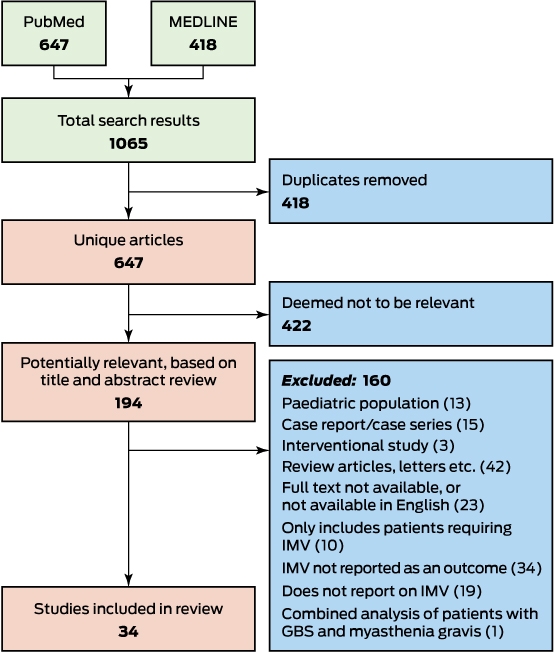
IMV = invasive mechanical ventilation.
Box 2 – Forest plots of the relationship between patients’ requirement for invasive mechanical ventilation (IMV) and age (A) and sex (B)
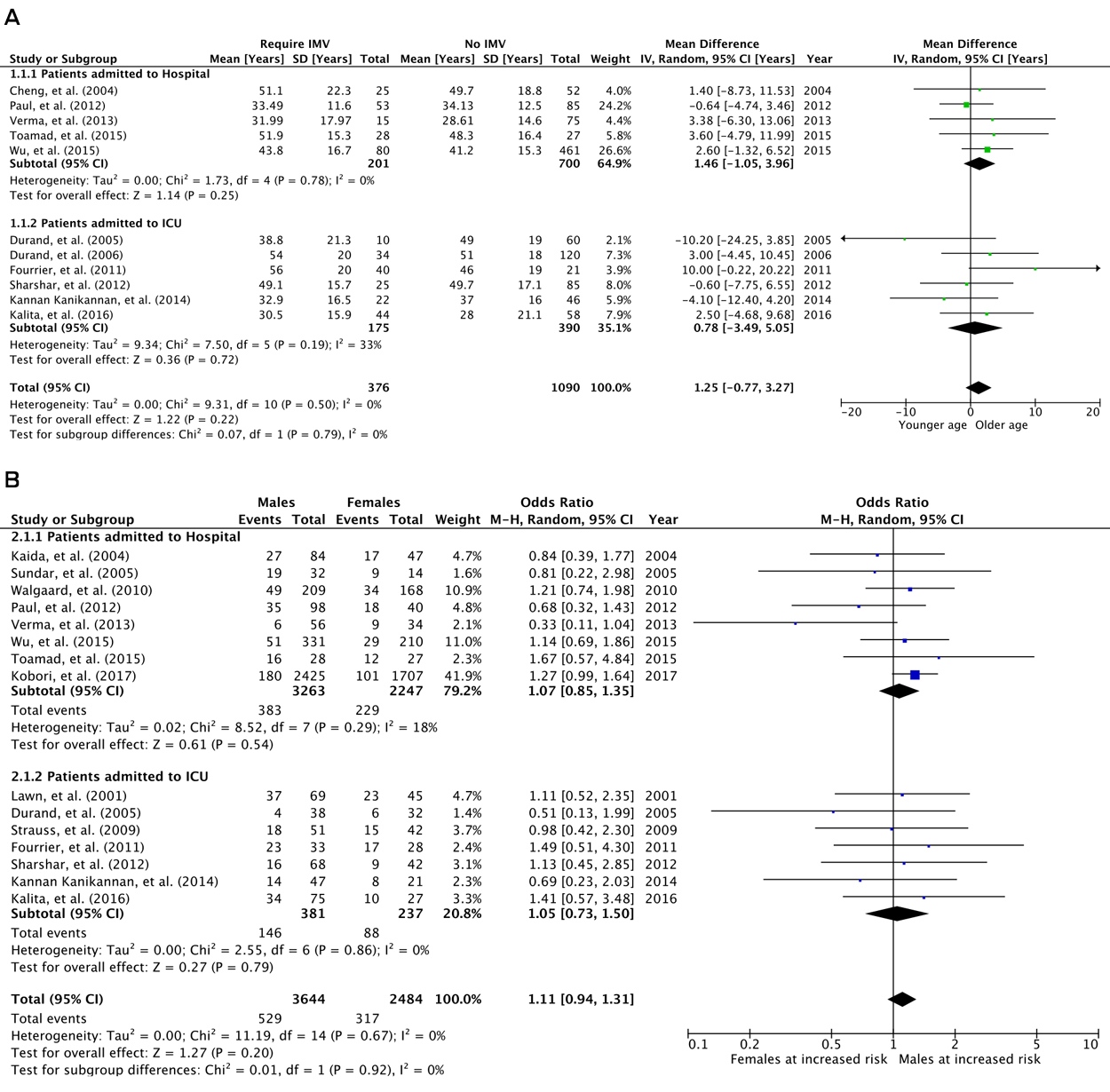
CI = confidence interval; ICU = intensive care unit; IV = independent variable; M-H = Mantel-Haenszel; SD = standard deviation.
Box 3 – Forest plot of the relationship between patients’ requirement for invasive mechanical ventilation (IMV) and time from symptom onset to disease nadir

CI = confidence interval; ICU = intensive care unit; IV = independent variable; SD = standard deviation.
Box 4 – Forest plots of the relationship between patients’ requirement for invasive mechanical ventilation (IMV) and neck weakness (A), bulbar weakness (B), or bulbar weakness on admission to hospital (C)
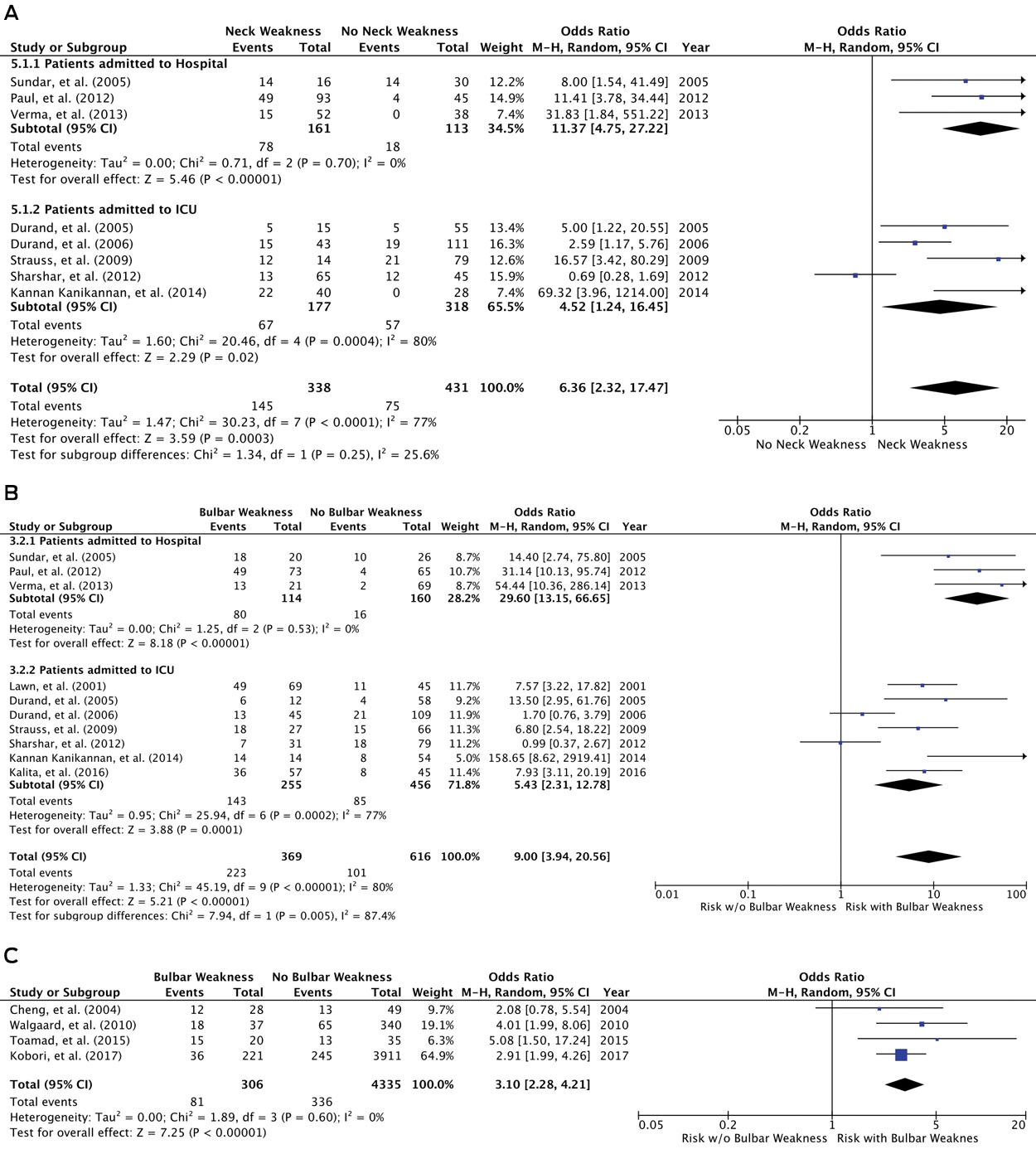
CI = confidence interval; ICU = intensive care unit; M-H = Mantel-Haenszel; SD = standard deviation.
Box 5 – Forest plots of the relationship between patients’ requirement for invasive mechanical ventilation (IMV) and facial weakness during hospital admission (A) or the development of autonomic dysfunction (B)
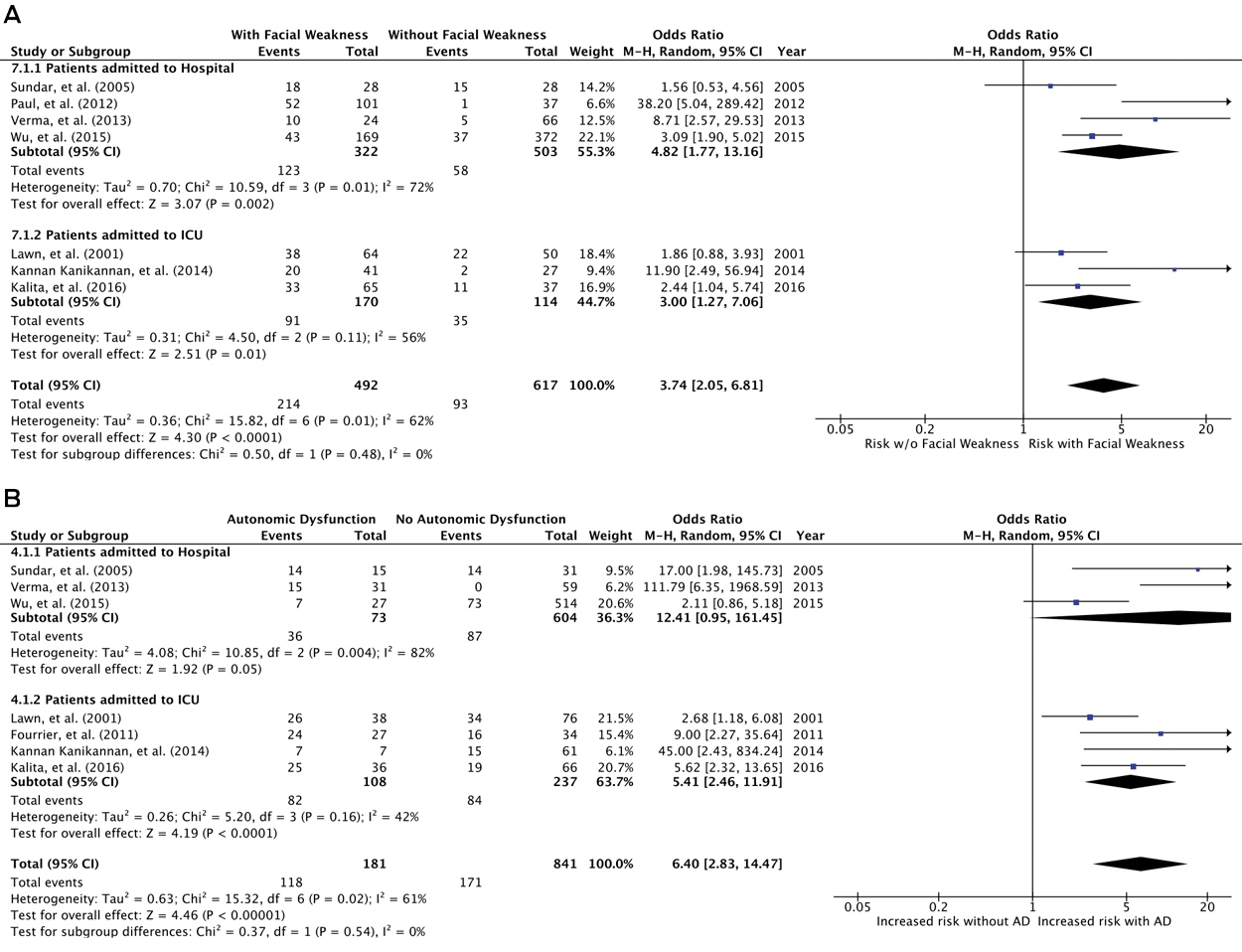
CI = confidence interval; ICU = intensive care unit; M-H = Mantel-Haenszel; SD = standard deviation.
Box 6 – Proportions of patients with Guillain–Barré syndrome requiring invasive mechanical ventilation (IMV), according to presentation with the clinical features identified by Sharshar and colleagues19 as being associated with increased risk of future IMV requirement
|
Number of features present at hospital admission |
Proportion of patients requiring IMV |
||||||||||||||
|
|
|||||||||||||||
|
0 |
8% |
||||||||||||||
|
1 |
18% |
||||||||||||||
|
2 |
35% |
||||||||||||||
|
3 |
62% |
||||||||||||||
|
4 |
85% |
||||||||||||||
|
5 |
98% |
||||||||||||||
|
6 |
100% |
||||||||||||||
|
|
|||||||||||||||
|
|
|||||||||||||||
Box 7 – The Erasmus Guillain–Barré Syndrome Respiratory Insufficiency Score (EGRIS)11
|
Measure |
Categories |
Score* |
|||||||||||||
|
|
|||||||||||||||
|
Onset of weakness to hospital admission |
> 7 days |
0 |
|||||||||||||
|
4–7 days |
1 |
||||||||||||||
|
≤ 3 days |
2 |
||||||||||||||
|
Facial or bulbar weakness at hospital admission |
Absence |
0 |
|||||||||||||
|
Presence |
1 |
||||||||||||||
|
MRC sum score at hospital admission |
60–51 |
0 |
|||||||||||||
|
50–41 |
1 |
||||||||||||||
|
40–31 |
2 |
||||||||||||||
|
30–21 |
3 |
||||||||||||||
|
≤ 20 |
4 |
||||||||||||||
|
Total score |
|
0–7 |
|||||||||||||
|
|
|||||||||||||||
|
MRC = Medical Research Council scale. * A higher EGRIS score at hospital admission indicates an increased risk of intubation within one week. |
|||||||||||||||
Box 8 – Model proposed by Durand and colleagues20 for classifying the proportions of patients with Guillain–Barré syndrome who required mechanical ventilation, according to their vital capacity and the ratio of proximal to distal compound muscle action potential amplitude of the common peroneal nerve
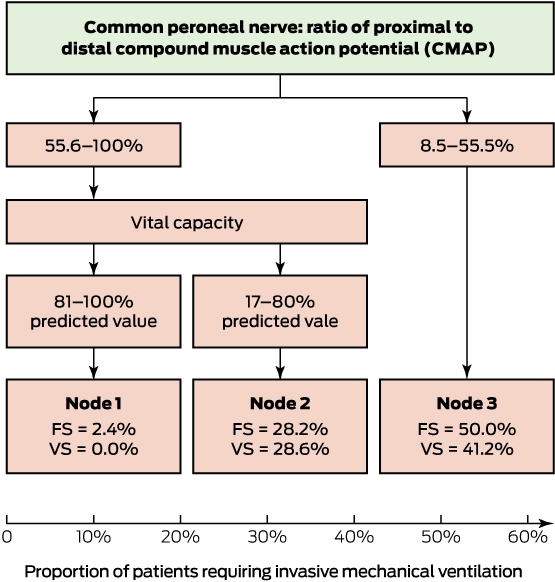
FS = fitting set (the sample of patients used to develop the model); VS = validation set (the sample used to validate the model).
Competing interests
No relevant disclosures.
References
- Wijdicks EF, Klein CJ. Guillain-Barré Syndrome. Mayo Clin Proc 2017; 92: 467-479.
- Esposito S, Longo MR. Guillain–Barré syndrome. Autoimmun Rev 2017; 16: 96-101.
- McGrogan A, Madle GC, Seaman HE, et al. The epidemiology of Guillain–Barré syndrome worldwide: a systematic literature review. Neuroepidemiology 2009; 32: 150-163.
- Sejvar JJ, Baughman AL, Wise M, et al. Population incidence of Guillain–Barré syndrome: a systematic review and meta-analysis. Neuroepidemiology 2011; 36: 123-133.
- Netto AB, Taly AB, Kulkarni GB, et al. Complications in mechanically ventilated patients of Guillain-Barre syndrome and their prognostic value. J Neurosci Rural Pract 2017; 8: 68-73.
- de Boisanger L. Outcomes for patients with Guillain–Barré syndrome requiring mechanical ventilation: a literature review. Ir J Med Sci 2016; 185: 11-15.
- Wu X, Li C, Zhang B, et al. Predictors for mechanical ventilation and short-term prognosis in patients with Guillain–Barré syndrome. Crit Care 2015; 19: 310.
- González-Suárez I, Sanz-Gallego I, Rodríguez de Rivera FJ, et al. Guillain–Barré syndrome: natural history and prognostic factors: a retrospective review of 106 cases. BMC Neurol 2013; 13: 95.
- Paul BS, Bhatia R, Prasad K, et al. Clinical predictors of mechanical ventilation in Guillain–Barré syndrome. Neurol India 2012; 60: 150-153.
- Toamad U, Kongkamol C, Setthawatcharawanich S, et al. Clinical presentations as predictors of prolonged mechanical ventilation in Guillain–Barré syndrome in an institution with limited medical resources. Singapore Med J 2015; 56: 558-561.
- Walgaard C, Lingsma HF, Ruts L, et al. Prediction of respiratory insufficiency in Guillain–Barré syndrome. Ann Neurol 2010; 67: 781-787.
- Sharshar T, Polito A, Porcher R, et al. Relevance of anxiety in clinical practice of Guillain–Barre syndrome: a cohort study. BMJ Open 2012; 2: e000893.
- Kalita J, Ranjan A, Misra UK. Outcome of Guillain–Barre syndrome patients with respiratory paralysis. QJM 2016; 109: 319-323.
- Orlikowski D, Sharshar T, Porcher R, et al. Prognosis and risk factors of early onset pneumonia in ventilated patients with Guillain–Barré syndrome. Intensive Care Med 2006; 32: 1962-1969.
- Ropper AH, Kehne SM. Guillain–Barré syndrome: management of respiratory failure. Neurology 1985; 35: 1662-1665.
- Lawn ND, Fletcher DD, Henderson RD, et al. Anticipating mechanical ventilation in Guillain–Barré syndrome. Arch Neurol 2001; 58: 893-898.
- Wells GA, Shea B, O'Connell D, et al. The Newcastle-Ottawa Scale (NOS) for assessing the quality of nonrandomised studies in meta-analyses. 2014. http://www.ohri.ca/programs/clinical_epidemiology/oxford.asp (viewed Dec 2017).
- Fokkink WR, Walgaard C, Kuitwaard K, et al. Association of albumin levels with outcome in intravenous immunoglobulin-treated Guillain–Barré syndrome. JAMA Neurol 2017; 74: 189-196.
- Sharshar T, Chevret S, Bourdain F, et al. Early predictors of mechanical ventilation in Guillain–Barré syndrome. Crit Care Med 2003; 31: 278-283.
- Durand MC, Porcher R, Orlikowski D, et al. Clinical and electrophysiological predictors of respiratory failure in Guillain–Barré syndrome: a prospective study. Lancet Neurol 2006; 5: 1021-1028.
- Durand MC, Lofaso F, Lefaucheur JP, et al. Electrophysiology to predict mechanical ventilation in Guillain–Barré syndrome. Eur J Neurol 2003; 10: 39-44.
- Cheng BC, Chang WN, Chang CS, et al. Predictive factors and long-term outcome of respiratory failure after Guillain–Barré syndrome. Am J Med Sci 2004; 327: 336-340.
- Durand MC, Prigent H, Sivadon-Tardy V, et al. Significance of phrenic nerve electrophysiological abnormalities in Guillain–Barré syndrome. Neurology 2005; 65: 1646-1649.
- Fourrier F, Robriquet L, Hurtevent JF, et al. A simple functional marker to predict the need for prolonged mechanical ventilation in patients with Guillain–Barré syndrome. Crit Care 2011; 15: R65.
- Kaida K, Kusunoki S, Kanzaki M, et al. Anti-GQ1b antibody as a factor predictive of mechanical ventilation in Guillain–Barré syndrome. Neurology 2004; 62: 821-824.
- Kannan Kanikannan MA, Durga P, Venigalla NK, et al. Simple bedside predictors of mechanical ventilation in patients with Guillain–Barre syndrome. J Crit Care 2014; 29: 219-223.
- Kobori S, Kubo T, Otani M, et al. Coexisting infectious diseases on admission as a risk factor for mechanical ventilation in patients with Guillain–Barré syndrome. J Epidemiol 2017; 27: 311-316.
- Sundar U, Abraham E, Gharat A, et al. Neuromuscular respiratory failure in Guillain–Barre Syndrome: evaluation of clinical and electrodiagnostic predictors. J Assoc Physicians India 2005; 53: 764-768.
- Verma R, Chaudhari TS, Raut TP, et al. Clinico-electrophysiological profile and predictors of functional outcome in Guillain–Barre syndrome (GBS). J Neurol Sci 2013; 335: 105-111.
- Arami MA, Yazdchi M, Khandaghi R. Epidemiology and characteristics of Guillain–Barré syndrome in the northwest of Iran. Ann Saudi Med 2006; 26: 22-27.
- Kleyweg RP, van der Meche FG, Schmitz PI. Interobserver agreement in the assessment of muscle strength and functional abilities in Guillain–Barré syndrome. Muscle Nerve 1991; 14: 1103-1109.
- Hughes RA, Newsom-Davis JM, Perkin GD, et al. Controlled trial prednisolone in acute polyneuropathy. Lancet 1978; 2: 750-753.
- Strauss J, Aboab J, Rottmann M, et al. Plasma cortisol levels in Guillain–Barré syndrome. Crit Care Med 2009; 37: 2436-2440.
- Basiri K, Dashti M, Haeri E. Phrenic nerve CMAP amplitude, duration, and latency could predict respiratory failure in Guillain–Barre syndrome. Neurosciences (Riyadh) 2012; 17: 57-60.
- Zifko U, Chen R, Remtulla H, et al. Respiratory electrophysiological studies in Guillain–Barré syndrome. J Neurol Neurosurg Psychiatry 1996; 60: 191-194.
- Gourie-Devi M, Ganapathy GR. Phrenic nerve conduction time in Guillain–Barré syndrome. J Neurol Neurosurg Psychiatry 1985; 48: 245-249.
- Kaida K, Morita D, Kanzaki M, et al. Anti-ganglioside complex antibodies associated with severe disability in GBS. J Neuroimmunol 2007; 182: 212-218.
- Dourado ME, Duarte RC, Ferreira LC, et al. Anti-ganglioside antibodies and clinical outcome of patients with Guillain–Barré Syndrome in northeast Brazil. Acta Neurol Scand 2003; 108: 102-108.
- Sipilä JO, Kauko T, Soilu-Hänninen M. Admission sodium level and prognosis in adult Guillain–Barré syndrome. Int J Neurosci 2017; 127: 344-349.
- Yamagishi Y, Suzuki H, Sonoo M, et al. Markers for Guillain-Barre syndrome with poor prognosis: a multi-center study. J Peripher Nerv Syst 2017; 22: 433-439.
Provenance: Not commissioned; externally peer reviewed.
Motor Neuron Disease Mortality Trends in Australia From 1986 to 2023: A Population-Based Study
Carol M. Y. Lee, Rupendra N. Shrestha, Julian Gold, Mark Stevenson, Kelly L. Williams, Lyndal Henden, Sandrine K. K. Chan Moi Fat, Zoe Zussa, Amanda Wright, Martin Jude, Mark A. S. Laidlaw, Willem J. R. Fokkink, Dominic B. Rowe
Mild traumatic brain injury and concussion and persisting post‐concussion symptoms: new guidelines to support evidence‐based assessment and management in Australia and Aotearoa New Zealand
Karen M Barlow, Jennie L Ponsford, Alice Theodom, Gill Cowen, Gavin A Davis, Vicki Anderson, Franz E Babl, David Cole, Jennifer Cullen, Stuart R Dalziel, Melinda Fitzgerald, Howard Flavell, Caroline Yates, Rebecca Kimble, John H Olver, Rhonda Orr, Mark Ralfe, Michael Rose, Nick Rushworth, Julia Treleaven, Gary Browne, Nathan Delang, Sarah Harris, Gary Mitchell, Sean Tweedy
The prevalence of and variation in indicators of the quality and safety of long term aged care in Australia, 2019: a cross‐sectional population‐based study
Tesfahun C Eshetie, Gillian E Caughey, Catherine Lang, Olivia Ryan, Renuka Visvanathan, Craig Whitehead, Keith Evans, Janet K Sluggett, Jyoti Khadka, Carolyn Dawkins, Helena Williams, Miranda Starke, Sara Blunt, Anne Liddell, Megan Corlis, Anna Sheppeard, Penelope Lello, Marilyn Thien, Steven L Wesselingh, Maria C Inacio
Health and economic benefits of improving pre‐hospital identification of stroke in Australian women: a modelling study
Thomas Gadsden, Lei Si, Emily R Atkins, Cheryl Carcel, Xia Wang, Stephen Jan, Mark Woodward, Laura E Downey
Symptom burden, quality of life, and diagnostic journey of people with postural orthostatic tachycardia syndrome, Australia, 2021–24: a descriptive patient registry data study
Marie‐Claire Seeley, Gemma Wilson, Eric Ong, Amy Langdon, Jonathan Chieng, Danielle Bailey, Kristina Comacchio, Amanda Page, Dennis H Lau, Celine Gallagher
The intersection of rurality and dementia prevalence in Australia for Aboriginal and Torres Strait Islander and non‐Indigenous peoples
Antonia J Clarke, Marwan Ahmed, Judith M Katzenellenbogen, John Towney (Wiradjuri), Anna H Balabanski, Adrienne Withall (Dharawal Yuin), Kylie Radford, Amy Brodtmann