




Volume 207 - Issue 9
Determining the contribution of Streptococcus pneumoniae to community-acquired pneumonia in Australia
Authors: J Kevin Yin, Sanjay H Jayasinghe, Patrick G Charles, Catherine King, Clayton K Chiu, Robert I Menzies and Peter B McIntyre
Med J Aust 2017; 207 (9): 396-400. || doi: 10.5694/mja16.01102
Published online: 6 November 2017
Published online: 6 November 2017
Non-bacteraemic CAP constitutes the largest burden of pneumococcal disease in adults
Abstract
Objective: To evaluate trends in the proportion and severity of community-acquired pneumonia (CAP) attributable to Streptococcus pneumoniae (pneumococcus) in Australians aged 18 years and over.
Study design: Systematic review with unpublished data from the largest study.
Data sources: Multiple key bibliographic databases to June 2016.
Study selection: Australian studies on the aetiology of CAP in adults.
Data synthesis: In the 12 studies identified, pneumococcus was the most common cause of CAP. Four studies were assessed as being of good quality. Participants in two studies were predominantly non-Indigenous (n = 991); the proportion of pneumococcal CAP cases declined from 26.4% in 1987–88 to 13.9% in 2004–06, and the proportion with bacteraemia decreased from 7.8% to 3.8%. In two studies with predominantly Indigenous participants (n = 252), the proportion with pneumococcal bacteraemia declined from 6.8% in 1999–2000 to 4.2% in 2006–07. In the largest study (n = 885; 2004–06), 50.8% (60/118) of pneumococcal CAP occurred in people who were ≥ 65 years old. Among patients aged ≥ 65 years, intensive care unit admission and death were more common in patients who were ≥ 85 years old compared with younger patients (12.5% v 6.8%; 18.8% v 6.8% respectively), and also more common in the 19 patients with bacteraemia than in those without it (15.8% v 2.6%; 10.5% v 7.9% respectively). Of 17 cases of bacteraemia serotyped, 12 were due to 13-valent pneumococcal conjugate vaccine (13vPCV) serotypes and three to additional serotypes in 23-valent pneumococcal polysaccharide vaccine (23vPPV).
Conclusions: Available data suggest that the proportion of CAP attributable to pneumococcus (both bacteraemic and non-bacteraemic) has been declining in Australian adults. Should 13vPCV replace the 23vPPV currently funded by the National Immunisation Program for persons aged ≥ 65 years, surveillance to track non-bacteraemic pneumococcal CAP will be essential to evaluate the impact.
Community-acquired pneumonia (CAP) remains a leading cause of morbidity and mortality in older adults globally and in Australia.1,2 Streptococcus pneumoniae (pneumococcus) is the single most common causative organism implicated in hospitalised cases of CAP among adults in most settings.3,4
Estimation of the proportion of CAP attributable to pneumococcus is challenging in the absence of bacteraemia, that is, when pneumococcus is not isolated from blood culture. For these non-bacteraemic cases, the available diagnostic tests are sputum culture or detection of pneumococcal antigen in sputum or urine.5 In clinical settings, the proportion of CAP episodes tested by any of these methods is typically low, and some guidelines recommend against routine diagnostic testing.5 Therefore, data on non-bacteraemic pneumococcal CAP can only be reliably obtained from specifically designed studies.
Although a recent global estimate of the proportion of CAP attributable to pneumococcus was 27%,6 estimates limited to industrialised countries are much lower, with 10–15% reported in the United States between 1999 and 2012, despite using more sensitive detection methods.7 More recently, data on prevention of pneumococcal CAP in adults aged ≥ 65 years from a randomised trial of 13-valent pneumococcal conjugate vaccine (13vPCV) — the CAPiTA (Community-Acquired Pneumonia Immunization Trial in Adults) study — became available. This resulted in the burden of pneumococcal-attributable CAP becoming key to assessing the potential benefits of direct vaccination of adults aged ≥ 65 years with 13vPCV.8
In Australia, 13vPCV is registered for use in all individuals from 6 weeks of age, but is publicly funded under the National Immunisation Program (NIP) only for children. For older adults, the pneumococcal vaccine currently on the NIP is the 23-valent pneumococcal polysaccharide vaccine (23vPPV). During the economic evaluation of an application by the vaccine manufacturer to list 13vPCV on the NIP, the Pharmaceutical Benefits Advisory Committee (PBAC) identified a key evidence gap that was a reliable estimate of the burden of non-bacteraemic pneumococcal CAP for Australian adults.9,10 In July 2016, the PBAC deemed that there would be sufficient gains, particularly against pneumococcal CAP as shown in CAPiTA, to warrant the listing of 13vPCV on the NIP for pneumococcal vaccine naive non-Indigenous adults aged ≥ 65 years, and Indigenous adults aged ≥ 50 years, replacing the 23vPPV currently offered to these populations.11 As of June 2017, the Australian Government is yet to decide whether to accept this positive recommendation from PBAC.
Given that the baseline data on the burden of non-bacteraemic pneumococcal CAP in Australia are essential to gauging the benefits of a future adult 13vPCV program, we present here a descriptive synthesis of Australian data relevant to estimating the burden of pneumococcal CAP. Our review focused on the trends in the proportion of CAP attributable to pneumococcus in adults over time, and its severity.
Methods
We report our review according to the PRISMA (Preferred Reporting Items for Systematic Reviews and Meta-Analyses) guidelines where applicable.
The literature search was conducted in multiple key biomedical bibliographic databases; the last search was done on 7 June 2016. Hand searching was also performed (online Appendix). Two authors (JKY and SJ) independently reviewed the search results. We included original studies conducted in any setting in Australia, with any study design, which contained data among adult patients (aged ≥ 18 years) on the aetiology of CAP. Studies with uncertain eligibility had the full text reviewed by the authors, and any disagreement regarding eligibility was solved by discussion between them. We included studies where the diagnosis of pneumococcal CAP was based on confirmation by blood culture, sputum culture, or urine antigen test (UAT). UAT has been shown to have higher sensitivity than the polymerase chain reaction in serum.12 Our diagnostic criteria are similar to those of the CAPiTA study.8 Available grey literature, which predominantly comprises national and jurisdictional reports describing routine pneumococcal disease surveillance data limited to invasive pneumococcal disease, was not considered useful for our review (online Appendix).
Two authors (JKY and SJ) independently assessed the risk of bias of included studies with a modified version of the Effective Public Health Practice Project (EPHPP) quality assessment tool,13,14 using six of its eight assessment components (excluding “confounders” and “intervention integrity”) and adding study size consideration. As no study was a randomised trial, we classified the included studies as either “moderate risk of bias” (ie, studies rated as “strong” or “moderate” quality using the EPHPP tool and that had ≥ 100 participants) or “high risk of bias” (ie, those with “weak” quality or smaller sample size).
Data analyses
We used all included studies (regardless of quality) to examine the proportion of all-cause CAP episodes in adults tested for aetiology, stratified by study design.
To examine the trend over time in the proportion of CAP attributable to pneumococcus, we only included studies with moderate risk of bias. For this analysis, we defined three time periods, which correspond to respective pneumococcal vaccination programs implemented in Australia:
-
before 2001, which is the period before the start of any population pneumococcal vaccination program;
-
during 2001–05, which is the time period that encompasses the start of the universal 7-valent pneumococcal conjugate vaccine (7vPCV) program for infants and 23vPPV program for older adults; and
-
2006 and onwards.
In order to examine the severity of pneumococcal CAP in older adults, we obtained and analysed unpublished data from the study by Charles and colleagues.15 The use of these data was covered by the human research ethics approval in the original study, which was obtained in all participating hospitals.15 Indicators of severity included the proportion of CAP episodes associated with bacteraemia, admission to an intensive care unit (ICU) or high dependency unit (HDU), and case fatality rate. We also compared the severity of bacteraemic and non-bacteraemic CAP episodes in Charles et al.15 Moreover, because the pneumococcal serotype that causes disease is routinely captured in the national notifications data for invasive pneumococcal disease, we endeavoured to determine, where possible, the causative serotype for cases using the additional data on serotypes and age group from Charles and colleagues.15 We requested additional information from the authors of this study to presumptively match those cases to national notifications data from the National Notifiable Diseases Surveillance System (NNDSS) using a combination of partial identifiers.
The 95% confidence intervals (CIs) for a proportion were calculated by the exact binomial test. We used the χ2 test to compare the proportions of CAP-associated ICU or HDU admission or death for data of two groups. All tests and calculations were performed using the Stata/MP 13.1 computer software (StataCorp, Texas, USA).
Subgroup analyses were performed comparing studies with 50% or over of participants being Indigenous (“predominantly Indigenous”) versus other studies (“predominantly non-Indigenous”).
Results
Study selection and characteristics
Of the 1165 studies retrieved, we identified 12 studies that provided data on the proportions of CAP episodes among adults for pathogen identification15-25 (Box 1 and online Appendix, table 1).2
Of the 12 studies included, seven15,16,18-20,22,24 had data allowing the proportions of CAP episodes attributable to pneumococcus to be calculated.
Demographic information and the main results of these seven studies with data on the proportions of pneumococcal CAP episodes are summarised in the online Appendix, table 1. The mean age of participants ranged from 47 to 79 years. Six studies15,16,18-20,22 included hospitalised cases only; one24 was conducted in the emergency department only.
The study periods of these seven studies are shown in Box 2. Participants in three studies16,20,22 were predominantly Indigenous; in the other four studies, participants were either reported15 or assumed18,19,24 to be predominantly non-Indigenous.
Quality appraisal
Of the 12 studies, four (including the largest study) had a moderate risk of bias;15,16,19,20 the others had a high risk of bias. Studies rated with moderate risk of bias were included in assessing the trend over time in the proportion of CAP attributable to pneumococcus.
Proportions of CAP tested for pathogen identification, stratified by study design
As expected, the proportions of CAP episodes with microbiologic testing were substantially higher in prospective studies for each diagnostic test, and for populations that were predominantly non-Indigenous (online Appendix, table 2).
Proportion of CAP attributable to pneumococcus in adults
In studies with predominantly non-Indigenous participants,15,18,19,24 the proportion of CAP due to pneumococci declined over time (Box 3). The proportion of CAP attributable to pneumococcus identified by any method decreased steadily from 26.4% in 1987–88 to 13.9% in 2004–06 (P = 0.001). The same trend was seen for CAP when restricted to cases with pneumococcal bacteraemia, declining from 7.8% in 1987–88 to 3.8% in 2004–06, although this was not statistically significant (P = 0.058).
Among studies with predominantly Indigenous participants,16,20,22 there was no statistically significant difference in the proportion of CAP attributable to pneumococcus among non-Indigenous or among Indigenous adults (Box 3). Data on the proportion of CAP due to pneumococci using other diagnostic methods were not available.
Severity of pneumococcal CAP among older adults
Intensive care unit admission and case fatality
Using additional data that we obtained from Charles and colleagues,15 we found that the proportion of ICU or HDU admission among CAP cases (n = 60) identified as pneumococcal in patients aged ≥ 65 years was 8.3% (95% CI, 2.8–18.4%), compared with 26.2% (95% CI, 13.9–42.0%) in the 42 younger patients (P = 0.015). The in-hospital case fatality rate of pneumococcal CAP in patients aged ≥ 65 years was 10.0% (95% CI, 3.8–20.5%);15 these six deaths accounted for 11.1% (95% CI, 4.2–22.6%) of deaths from CAP of any cause. Patients aged ≥ 85 years appeared to be more commonly admitted to ICU (12.5% v 6.8%) and died (18.8% v 6.8%) compared with patients aged 65–84 years, although these comparisons were not statistically significant.
Serotype in bacteraemic CAP
In the study by Charles and colleagues,15 57 of 60 CAP cases attributable to pneumococcus in adults aged ≥ 65 years had a blood culture performed; pneumococcus was isolated in 19 cases (33.3%; 95% CI, 21.4–47.1%). We were able to presumptively identify the serotype for 17 of these 19 cases: ten (59%) were due to 7vPCV serotypes, two (12%) were due to 13v-non-7vPCV serotypes, three (18%) were due to 23v-non-13vPPV serotypes, and two (12%) were due to non-vaccine serotypes. The serotype distribution of bacteraemic CAP episodes did not differ by time period; for example, June 2004 to June 2005 versus July 2005 to September 2006 (data not shown). We also found that there was no difference between bacteraemic and non-bacteraemic CAP episodes in terms of ICU or HDU admission rate and hospital mortality rate (online Appendix, table 3).
Discussion
Our review provides Australia-specific estimates on the proportion of CAP attributable to pneumococcus, and also on severity as measured by admission to ICU and case fatality rate. Pneumococcus remains the most commonly identified aetiology of CAP among older Australians, but the proportion of CAP attributable to pneumococci has declined in the past three decades.
The decline of the proportion of CAP attributable to pneumococcus is likely, at least in part, due to the herd effect of the childhood pneumococcal conjugate vaccine program, although other factors may also have contributed to the decline, including the potential increase of CAP cases caused by other microorganisms. Overseas data have shown that routine childhood immunisation with 7vPCV or 13vPCV has been associated with significant reductions of both vaccine-serotype and all-serotype invasive pneumococcal disease26,27 and overall pneumococcal CAP in adults.28 We believe our review provides useful baseline data for the burden of CAP in Australia to evaluate the potential incremental benefit of a 13vPCV vaccination program for older adults.
While age-specific comparisons cannot be made, the estimates summarised in our study of the proportion of CAP attributable to pneumococcus among adults are broadly similar to those in some other industrialised countries such as the US (10–15%7).8 In the Netherlands, the proportion of CAP attributable to pneumococcus among older adults in the placebo arm of the CAPiTA study was 16% (125/787)8 — when calculated by excluding the 49 CAP episodes that were only identified by the serotype-specific urinary antigen detection assay, which was not used in any other studies. This proportion likely represents the situation of older adults in the Dutch general population. In Europe, a review of studies published during 2005–12 reported a wide range of 12–85% for CAP caused by pneumococcus among individuals aged 15 years.29
We believe that the estimates reported in our study of the proportion of CAP attributable to pneumococcus are conservative, largely because of the effect of antibiotic use before testing and the suboptimal sensitivity of available testing methods. In the international meta-analysis by Said and colleagues,6 prior antibiotics reduced the yield of pneumococci, ranging from a 26% reduction for UAT to 67% for blood culture. The use of prior antibiotics among patients with CAP likely had resulted in underestimating the true proportion of CAP attributable to pneumococcus. The serotype-specific urinary antigen detection assay is considered more sensitive; in CAPiTA, this test detected an additional 39% (49/125) of CAP episodes.8 If this sensitivity is equally applicable, our estimates may be just 71% of the corresponding true figures.
There are limited data in Australia on the disease outcomes for pneumococcal CAP among older adults. Our findings on ICU and HDU admission and case fatality rates among older adults with pneumococcal CAP are broadly similar to overseas findings in comparable settings.7,30,31
Our study also revealed that the disease burden and aetiology of CAP among Indigenous people is understudied. This warrants further, robust research, particularly considering the continued health inequity between Indigenous and non-Indigenous Australians in relation to CAP. For example, data from the Australian Institute of Health and Welfare reported that the risk of hospitalisation due to pneumonia and influenza among Indigenous adults was 3.4 times higher than that of non-Indigenous individuals during 2012–13.32
UAT is currently underused in clinical practice, as reflected in retrospective studies in our review. If 13vPCV is to be introduced for routine use for prevention of pneumococcal CAP in adults in Australia, it is essential to have a mechanism to monitor the program impact; for example, by evaluating the proportion of CAP attributable to pneumococcus. For this consideration, UAT is a useful tool and warrants greater use.
There are some limitations to our review. First, the included studies were heterogeneous and had relatively poor quality overall. Second, our results were largely derived from the study by Charles and colleagues,15 which is most generalisable to CAP episodes that are managed in tertiary hospitals. These estimates may not be representative of non-hospitalised CAP episodes, which are likely to be less severe, and with a smaller proportion of bacteraemic pneumococcal CAP. Moreover, not all patients in the studies included in our review underwent testing for pathogen identification. This was particularly so among the retrospective studies. The suboptimal proportion of cases tested for aetiology is consistent with routine hospital practice in Australia. In particular, underuse of more sensitive tests such as UAT that are specifically looking for pneumococcus would lead to underestimates of the proportion of CAP attributable to pneumococcus.
Non-bacteraemic CAP constitutes the largest burden of pneumococcal disease in adults, which has been clearly shown in numerous studies in many comparable settings. If 13vPCV replaces 23vPPV under the NIP for adults aged 65 years in Australia,11 we believe our findings will provide useful baseline data, alongside the data on overall incidence of invasive pneumococcal disease from the NNDSS, for evaluation of program impact and which will require specific population surveillance activities.
Box 1 – Results of the literature search and the studies analysed∗30
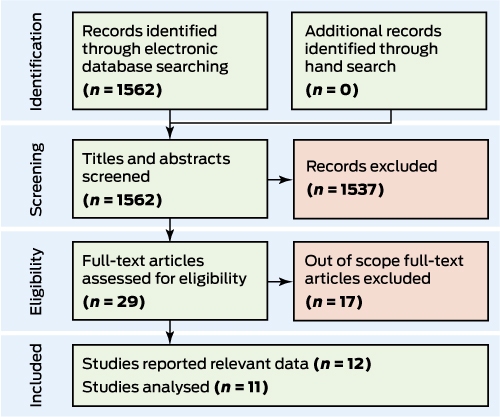
* Adapted from the PRISMA diagram (Moher D, Liberati A, Tetzlaff J, Altman DG, PRISMA Group. Preferred Reporting Items for Systematic Reviews and Meta-Analyses: the PRISMA statement. PLoS Med 2009; 6: e1000097).
Box 2 – Studies reporting on the proportions of community-acquired pneumonia episodes due to pneumococci
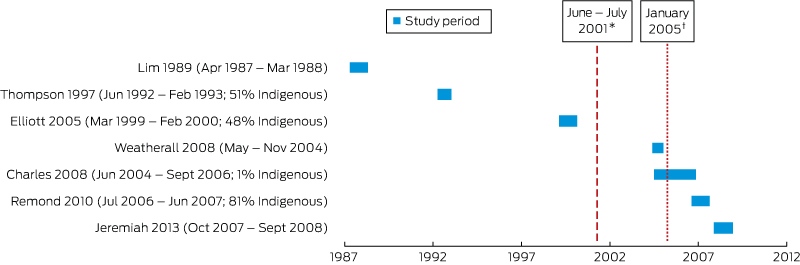
* 7-valent pneumococcal conjugate vaccine (7vPCV) was introduced in Australia for children at highest risk for invasive pneumococcal disease. † 7vPCV was introduced in Australia for all infants with catch up for children born between 1 January 2003 and 31 December 2004; 23-valent pneumococcal polysaccharide vaccine was introduced for all adults aged ≥ 65 years.
Box 3 – Proportions of community-acquired pneumonia (CAP) due to pneumococci among four studies with moderate risk of bias,15,16,19,20 by Indigenous status and study period*
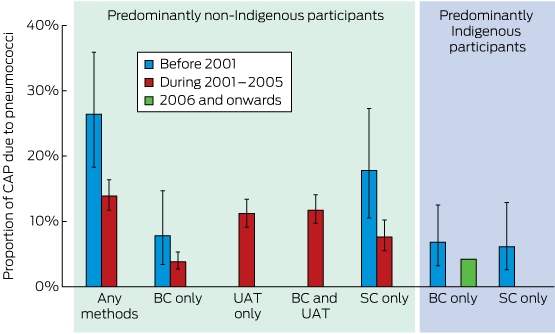
BC = blood culture. SC = sputum culture. UAT = urine antigen test. * Differences among the three eras for each of the methods are all statistically significant by the χ2 trend test.
Competing interests
Since the completion of this study and the submission of the manuscript for publication, J Kevin Yin left his employment at the NCIRS to work for Sanofi Pasteur Australia and New Zealand.
Acknowledgements
The Australian Government Department of Health supported the National Centre for Immunisation Research and Surveillance (NCIRS) of vaccine preventable diseases in Australia. However, the views expressed are not necessarily those of the department. The study was undertaken as part of the regular policy deliberations of the Australian Technical Advisory Group on Immunisation. We thank the members of the Australian Community-acquired Pneumonia Study Collaboration.
References
- Janssens JP, Krause KH. Pneumonia in the very old. Lancet Infect Dis 2004; 4: 112-124.
- Fuller A, Pickles R, Spelman D, et al. Community acquired pneumonia at the Alfred Hospital, Melbourne: a prospective study with particular reference to Chlamydia pneumoniae [abstract]. Proceedings for the Annual Scientific Meeting of the Australasian Society for Infectious Diseases; Darwin (Australia), 21-24 May 1995.
- Lim WS, Macfarlane JT, Boswell TC, et al. Study of community acquired pneumonia aetiology (SCAPA) in adults admitted to hospital: implications for management guidelines. Thorax 2001; 56: 296-301.
- van der Eerden MM, Vlaspolder F, de Graaff CS, et al. Value of intensive diagnostic microbiological investigation in low- and high-risk patients with community-acquired pneumonia. Eur J Clin Microbiol Infect Dis 2005; 24: 241-249.
- Mandell LA, Wunderink RG, Anzueto A, et al. Infectious Diseases Society of America/American Thoracic Society consensus guidelines on the management of community-acquired pneumonia in adults. Clin Infect Dis 2007; 44: S27-S72.
- Said MA, Johnson HL, Nonyane BAS, et al. Estimating the burden of pneumococcal pneumonia among adults: a systematic review and meta-analysis of diagnostic techniques. PLoS One 2013; 8: e60273.
- Musher DM, Thorner AR. Community-acquired pneumonia. N Engl J Med 2014; 371: 1619-1628.
- Bonten MJM, Huijts SM, Bolkenbaas M, et al. Polysaccharide conjugate vaccine against pneumococcal pneumonia in adults. N Engl J Med 2015; 372: 1114-1125.
- Pharmaceutical Benefits Advisory Committee. Recommendations made by the Pharmaceutical Benefits Advisory Committee (PBAC) in March 2015: 1st time decisions not to recommend. Canberra: PBAC; 2015. http://www.pbs.gov.au/info/industry/listing/elements/pbac-meetings/pbac-outcomes/2015-03 (accessed July 2015).
- Pharmaceutical Benefits Advisory Committee. Recommendations made by the Pharmaceutical Benefits Advisory Committee (PBAC) in July 2015: positive recommendations. Canberra: PBAC; 2015. http://www.pbs.gov.au/info/industry/listing/elements/pbac-meetings/pbac-outcomes/pbac-outcomes-2015-07 (accessed Aug 2015).
- Pharmaceutical Benefits Advisory Committee. Recommendations made by the Pharmaceutical Benefits Advisory Committee (PBAC) in July 2016 meetings: positive recommendations. Canberra: PBAC; 2016. https://www.pbs.gov.au/industry/listing/elements/pbac-meetings/pbac-outcomes/2016-07/positive-recommendations-2016-07.pdf (accessed Sept 2016).
- Smith MD, Sheppard CL, Hogan A, et al. Diagnosis of Streptococcus pneumoniae infections in adults with bacteremia and community-acquired pneumonia: clinical comparison of pneumococcal PCR and urinary antigen detection. J Clin Microbiol 2009; 47: 1046-1049.
- Effective Public Health Practice Project. Quality assessment tool for quantitative studies. Ontario: EPHPP; 2009. http://www.ephpp.ca/tools.html (accessed Nov 2016).
- Armijo-Olivo S, Stiles CR, Hagen NA, et al. Assessment of study quality for systematic reviews: a comparison of the Cochrane Collaboration Risk of Bias Tool and the Effective Public Health Practice Project Quality Assessment Tool: methodological research. J Eval Clin Pract 2012; 18: 12-18.
- Charles PG, Whitby M, Fuller AJ, et al. The etiology of community-acquired pneumonia in Australia: why penicillin plus doxycycline or a macrolide is the most appropriate therapy. Clin Infect Dis 2008; 46: 1513-1521.
- Elliott JH, Anstey NM, Jacups SP, et al. Community-acquired pneumonia in northern Australia: low mortality in a tropical region using locally-developed treatment guidelines. Int J Infect Dis 2005; 9: 15-20.
- Jacups SP, Cheng A. The epidemiology of community acquired bacteremic pneumonia, due to Streptococcus pneumoniae, in the Top End of the Northern Territory, Australia — over 22 years. Vaccine 2011; 29: 5386-5392.
- Jeremiah CJ, Hannan LM, Baird R, et al. Low utilisation of diagnostic microbiology for community acquired pneumonia in regional Victoria. Pathology 2013; 45: 162-166.
- Lim I, Shaw DR, Stanley DP, et al. A prospective hospital study of the aetiology of community-acquired pneumonia. Med J Aust 1989; 151: 87-91.
- Rémond MG, Ralph AP, Brady SJ, et al. Community-acquired pneumonia in the central desert and north-western tropics of Australia. Intern Med J 2010; 40: 37-44.
- Skull SA, Andrews RM, Byrnes GB, et al. Hospitalized community-acquired pneumonia in the elderly: an Australian case-cohort study. Epidemiol Infect 2009; 137: 194-202.
- Thompson JE. Community acquired pneumonia in north eastern Australia–a hospital based study of aboriginal and non-aboriginal patients. Aust N Z J Med 1997; 27: 59-61.
- Tramontana AR, Sinickas V. Microbiological diagnostic tests for community-acquired pneumonia are useful. Med J Aust 2010; 192: 235-236.
- Weatherall C, Paoloni R, Gottlieb T. Point-of-care urinary pneumococcal antigen test in the emergency department for community acquired pneumonia. Emerg Med J 2008; 25: 144-148.
- Wilson PA, Ferguson J. Severe community-acquired pneumonia: an Australian perspective. Intern Med J 2005; 35: 699-705.
- Waight PA, Andrews NJ, Ladhani SN, et al. Effect of the 13-valent pneumococcal conjugate vaccine on invasive pneumococcal disease in England and Wales 4 years after its introduction: an observational cohort study. Lancet Infect Dis 2015; 15: 629.
- Moore MR, Link-Gelles R, Schaffner W, et al. Effect of use of 13-valent pneumococcal conjugate vaccine in children on invasive pneumococcal disease in children and adults in the USA: analysis of multisite, population-based surveillance. Lancet Infect Dis 2015; 15: 301-309.
- Rodrigo C, Bewick T, Sheppard C, et al. Impact of infant 13-valent pneumococcal conjugate vaccine on serotypes in adult pneumonia. Eur Respir J 2015; 45: 1632-1641.
- Torres A, Blasi F, Peetermans WE, et al. The aetiology and antibiotic management of community-acquired pneumonia in adults in Europe: a literature review. Eur J Clin Microbiol Infect Dis 2014; 33: 1065-1079.
- Jain S, Self WH, Wunderink RG, et al. Community-acquired pneumonia requiring hospitalization among US adults. N Engl J Med 2015; 373: 415-427.
- Welte T, Torres A, Nathwani D. Clinical and economic burden of community-acquired pneumonia among adults in Europe. Thorax 2012; 67: 71-79.
- Steering Committee for the Review of Government Service Provision. Overcoming Indigenous disadvantage: key indicators 2014. Canberra: Commonwealth of Australia; 2015. http://www.pc.gov.au/research/recurring/overcoming-indigenous-disadvantage/key-indicators-2014#thereport (accessed June 2015).
Linked content
-
MJA InSight: Pneumococcal pneumonia and the future of vaccination
Provenance: Not commissioned; externally peer reviewed.
Costs of Delivering the Hep B PAST Model of Care in Remote Australia: A Retrospective Pre–Post Study
Hoa Nguyen, Anh Le Tuan Nguyen, Paula Binks, Melita McKinnon, Emily Vintour-Cesar, Karen Wills, Nicola Stephens, Benjamin Cowie, Joshua S. Davis, Yuejen Zhao, Peter Nihill, Julie A. Campbell, Andrew J. Palmer, Jane Davies, Barbara de Graaff
Buruli Ulcer Acquired From Ringtail Possum Rescue
Daniel P. O'Brien, Naomi Clarke, Sara Bonnici, Mohammad A. Hussain
Q Fever Visceral Abscesses After Contact With Native Australian Marsupials
Samantha J. Laws, Enzo Binotto, James Stewart, Jennifer Ho, Trent Yarwood, Josh Hanson, Simon Smith
Hospital-Admitted Injection-Related Infections Among Incarcerated People Who Inject Drugs in Australia: A Retrospective Cohort Study
Andrew Palmer, Matthew Carter, Jeremy Yeo, Cecilia Shim, Jason Connor, Jeremy Hayllar, Gerald Holtmann, Naomi Moy, Elliott G. Playford, Naomi Runnegar, Paul J. Clark
The Live Attenuated Influenza Vaccine in Australia: An Additional Tool for Influenza Prevention
Cyra Patel, Alexis Pillsbury, Tran Nguyen, Xia Wang, Helen E. Quinn, Clayton K. Chiu, Allen C. Cheng, Katie L. Flanagan, Zhicheng Wang
Reflex Testing for Hepatitis D Infection: A Unique Opportunity to Reduce Hepatitis D-Related Chronic Liver Disease Deaths in Australia
Jessica Howell, Lauren Andersson, Miriam T. Levy, James O'Beirne, Leon Adams, Katharine Irvine, Avik Majumdar, Golo Ahlenstiel, Kathy Jackson, Krispin Hajkowicz, Joseph Doyle, Jane Davies, Sarah Cherian, Wayne Dimech, Alexander J. Thompson