




Volume 207 - Issue 10
Mesothelioma in Australia: a review
Authors: Arthur (Bill) W Musk, Nicholas de Klerk and Fraser J Brims
Med J Aust 2017; 207 (10): 449-452. || doi: 10.5694/mja17.00397
Published online: 13 November 2017
Published online: 13 November 2017
The incidence of this fatal disease is presumed to have peaked with the prohibition of asbestos, but remains high
Abstract
- The incidence of malignant mesothelioma in Australia is among the highest in the world as a result of widespread use of asbestos by industry and in construction throughout the 20th century.
- The risk of developing malignant mesothelioma after asbestos exposure is dose-related; a transient, low dose exposure confers a correspondingly very low risk of disease.
- Malignant mesothelioma is a heterogeneous disease, partly explaining the limited role of biomarkers in screening and diagnosis.
- The prognosis remains poor, and early advice on medico-legal compensation and a collaborative team approach to managing malignant mesothelioma are both essential.
- Chemotherapy can have a modest treatment effect in some people. New therapies, such as immunotherapy, do not yet have a defined role in the treatment of malignant mesothelioma.
- As treatment options for malignant mesothelioma are limited and no cure is available, there is no established role for early detection or screening of at risk populations.
- A multidisciplinary approach to caring for patients with malignant mesothelioma and their carers is vital.
Malignant mesothelioma (MM) is a form of invasive cancer that arises in the mesothelial cells of the pleural or peritoneal cavities (and occasionally in the tunica vaginalis of the scrotum). MM is almost exclusively caused by the inhalation of asbestos. In this article we concisely review the Australian experience of this disease, discussing the epidemiology, diagnosis, prognosis and management of mesothelioma from an historical Australian perspective, and review the most recent advances (2000–2017) in the understanding and clinical aspects of MM.
Epidemiology of mesothelioma
The high incidence of MM and of all other asbestos-related diseases in Australia and the United Kingdom is the direct result of the use of asbestos in industry and building construction during the 20th century. As a consequence of this heavy clinical burden, both countries have contributed significantly to the investigation of MM over the past 40 years.
Australia has one of the highest rates of death from MM in the world (Box 1). Western Australia has the highest incidence of MM in Australia because of the mining of crocidolite (blue asbestos) at Wittenoom Gorge from 1937 until 1966 and its widespread use in asbestos-cement and other products. Exposure to imported amosite (brown asbestos) and the contamination of most chrysotile (white asbestos) deposits by more pathogenic amphibole asbestos varieties (including crocidolite, amosite and tremolite) also contributed to the disease burden.
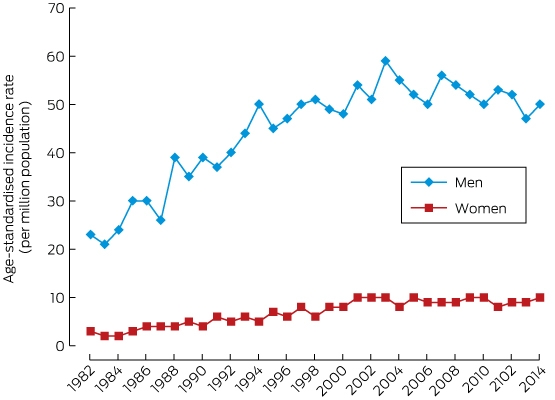
In 2015, the Australian Mesothelioma Registry (AMR) received 650 notifications of newly diagnosed MM; most patients (78%) were men, and 82% were over 65 years of age.1 The age-standardised incidence rate for mesothelioma in Australia in 2015 was 23 cases per million population. Allowing for a lag time in notifications to the AMR and a change in data source in 2010 from the Australian Cancer Database to the AMR, the numbers of new cases and the age-standardised incidence rates (Box 2) have probably now reached their peak values in Australia, as in other most affected countries. The incidence of MM commenced rising here in the 1960s, but the long latency between exposure to asbestos and the onset of disease (the risk increases continuously and exponentially after 10–15 years, with a mean latency of 30–40 years)2,3 means that the peak has only now been reached. Given the continuing legacy of asbestos-containing materials in many Australian homes and buildings, there is increasing concern about people being exposed to asbestos when performing domestic tasks and renovations,3 and it is likely that the elevated prevalence of MM in Australia will persist for some decades.
In Australia, the first wave of MM cases involved the miners and millers of crocidolite and workers involved in the transport and processing of asbestos for manufacturing asbestos-cement products. The second wave of disease affected people working with asbestos-cement products in buildings or with asbestos used for insulation in industry. A recently described third wave includes people exposed to asbestos in situ (occupationally, environmentally, or domestically), including those undertaking home renovations.3 Similar waves of exposure and disease have been described in other countries,4 although Australia is notable both for having mined raw asbestos as well as employing it widely in industry and construction. Blue asbestos production at Wittenoom (Western Australia) ceased in 1966, white asbestos production at Woodsreef in New South Wales ended in 1983, and importing or using any form of asbestos was banned from 2004. However, it is estimated that in 2015 about two million tonnes of chrysotile were mined elsewhere in the world and exported (particularly from Russia and China), with India, Indonesia, China and Brazil currently consuming nearly two-thirds of all asbestos produced.5
Risk of mesothelioma
MM is rare in people who have never been exposed to asbestos. The exact pathogenesis and biological mechanisms of the interactions between asbestos fibres and mesothelial cells that result in MM are unknown. The risk of developing MM is determined by the type and amount of asbestos to which an individual is exposed, and by the time since first exposure; there is a clear dose–response relationship, with no threshold below which there is no risk of disease.6 Crocidolite is five times as potent as amosite for causing MM, which in turn is ten times as potent as chrysotile.7 The risk of developing MM continues after first exposure to asbestos for at least 50 years, with no difference in latency or MM subtype associated with different fibre types.8
One clinical implication of these observations is that the risk of developing MM is extremely low (unmeasurable) for individuals transiently exposed to asbestos (eg, during a weekend renovating a house, but with no other exposure), but it is not possible to exclude risk altogether. In contrast, 10% of deaths among Wittenoom workers, who had extremely high exposure to crocidolite, have been attributed to mesothelioma (with a similar proportion dying of lung cancer2). Almost all asbestos that remains in Australian homes and the environment is a mixture of fibre types, the exact ratios of which vary by manufacturer and the market price of the different forms at the time of mixing and construction. It is therefore not possible to draw general conclusions about the exact nature of ongoing exposure to asbestos in Australia today.
Attempts to identify genetic risk for developing MM (or genes that confer protection) have been disappointing, although there is evidence of familial aggregation not entirely explained by shared exposure;2,6 mutations in the BAP1 gene have been implicated as predisposing to disease, but are very rare in most case series.9,10
Secondary prevention of mesothelioma
There is no evidence that any agents are effective in the secondary prevention of MM (ie, subsequent to asbestos exposure). A large study of individuals exposed to asbestos detected no benefit from vitamin supplementation (β-carotene, retinol).11 While there is no evidence that tobacco smoking influences the risk of MM (in contrast to that of lung cancer),10 individuals exposed to asbestos should be strongly encouraged to avoid tobacco smoke, to mitigate their increased risk of lung cancer and other smoking-related diseases.
Early detection and screening
Given the poor response to treatment and the toxic effects of treatments currently employed, there is little medical justification for screening people for MM until symptoms that may respond to treatment are present. For instance, attempts at radical surgery to remove apparently limited disease have not been useful, even after extensive disease staging.12 In a clinical (non-randomised) trial, the survival of patients considered potentially operable after clinical staging was similar for those who proceeded to surgery and those who did not.13
Low dose computed tomography (CT) screening of an asbestos-exposed Western Australian population for early stage lung cancer identified four cases of asymptomatic MM (0.44% of the cohort) during the first year of the program.14 The presence of asbestos-related pleural plaque is not an independent additional risk for MM,15 and, except in research studies, follow-up surveillance of people exposed to asbestos according to whether pleural plaques are present or absent is not justified. Blood levels of biomarkers such as mesothelin, osteopontin and fibulin-3 can be elevated prior to the diagnosis of MM,16-18 but their utility as screening tools remains limited, partly because of the marked biological heterogeneity of MM.
Individuals with a history of minor exposure, such as during small renovations at home, should be reassured that their risks are immeasurably low, and advised to avoid further exposure to asbestos and tobacco smoking.
Diagnosis of mesothelioma
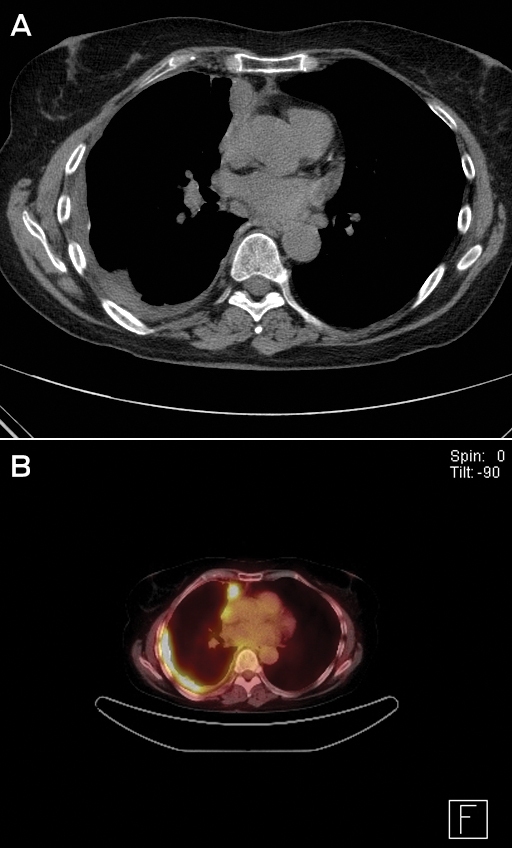
MM affects the pleura (in more than 90% of cases), the peritoneum, and, very rarely, the tunica vaginalis. Pleural MM usually causes insidious onset of chest pain, breathlessness, and loss of weight. People with peritoneal MM usually experience abdominal distension (caused by ascites) and pain. A thorough history of occupational and environmental exposure to asbestos is vital for diagnosis, and subsequently for supporting claims for compensation; this may require the expertise of an industrial hygienist. Radiological changes, particularly pleural effusion or pleural thickening evident in plain film, CT, or ultrasound imaging, are typical (Box 3).
Cytological examination of pleural or peritoneal fluid or a fine needle aspiration biopsy sample may be sufficient in experienced pathology laboratories for establishing the diagnosis of epithelioid mesothelioma,19 and is the investigation of first choice. Core biopsies or surgical biopsies obtained by video-assisted thoracoscopy or laparoscopy may be required for diagnosing biphasic and sarcomatoid pathological subtypes (epithelioid, sarcomatoid and biphasic are by far the three most common subtypes of MM). Open biopsies are no longer needed for diagnosing MM.
Immunohistochemical staining is used to establish the presence of malignancy and to determine the mesothelial origin of the affected cells. Fluid or circulating biomarkers can assist diagnosis, but there is no objective evidence supporting their predictive value in the clinical setting and for following the progress of disease. Mesothelin assays and ONCOblot tissue of origin cancer detection tests are available in some laboratories, but have important limitations; they are not used for clinical diagnosis, although they may contribute to monitoring progression or response to therapy. Electron microscopy is not usually indicated for determining the type of malignancy.
Prognosis of mesothelioma
MM is inevitably fatal: the median survival time for patients with pleural mesothelioma is 9–12 months, while patients with peritoneal mesothelioma often die within 6 months of diagnosis.20 However, the specific prognosis varies widely between patients.21 The factors most consistently found to be independently predictive of poor survival for patients with pleural MM include higher age, being male, and sarcomatoid histological features.22 The effects of these variables were determined in clinical trial populations, which may limit the generalisability of the findings. More recently, a regression tree model has been developed and validated for a broader Australian population of patients with pleural MM, taking into account the interaction of clinical variables such as weight loss, Eastern Cooperative Oncology Group (ECOG) performance status, haemoglobin and serum albumin levels, and tumour histological subtype.23 Genetic and immunohistochemical studies continue to report advances in tumour biology, but no clinically useful prognostic factors have yet been identified. Nuclear mitotic and atypia grading systems may provide useful prognostic information, but further evaluation is required.22
Management of patients with mesothelioma
Multidisciplinary management is important from the outset for establishing the diagnosis and instituting appropriate care. Palliation of pain and dyspnoea is imperative, as poorly controlled pain ultimately requires more medication than pain adequately treated from its onset. Therapeutic pleural aspiration, drainage with talc pleurodesis, and inserting indwelling pleural or peritoneal catheters are simple and effective procedures for controlling fluid accumulation and reducing dyspnoea.23 Weight loss may require dietary intervention or oral corticosteroid therapy. Evidence that surgery (pleurectomy or radical pleuro-pneumonectomy) benefits disease control is limited; it does not improve survival, and may cause significant complications.24,25
Combination chemotherapy with cisplatin or carboplatin and pemetrexed improved survival in clinical trial patients (by about 3 months),26 and these medications are currently first line agents. There is no clear evidence base that informs the use of second line agents, and clinical trials of novel agents would be desirable. The clinical utility of radiological staging of MM (in contrast to that of lung cancer) is limited; most patients are offered chemotherapy because of their general fitness and expected tolerance of the treatment, rather than because of tumour stage.
Immunotherapy directed against cytotoxic T cell lymphocyte antigen 4 and programmed cell death protein 1 may offer hope; efficacy of the immune checkpoint inhibitors tremelimumab and nivolumab has been reported after initial phase 2 studies.27,28 Larger trials and further early phase immunotherapy studies are underway in Australia and elsewhere.
Radiotherapy has a limited role in MM treatment, as the disease is typically widely disseminated, but it is indicated for palliating localised disease causing symptoms such as local chest wall pain, metastatic disease, or bulky disease that compresses mediastinal structures (oesophagus, vena cava, subclavian vein). The role of prophylactic radiotherapy for reducing procedure tract metastases is unclear.29 Publication of the results of two large randomised studies in the UK is pending.
Multidisciplinary palliative care is vital throughout the course of the disease; patients with MM and their families need the support of community care organisations for managing life at home for as long as possible. The results of a large international randomised study (including Australia) that examined the utility of early palliative care in patients with pleural MM should be published soon.30
Medico-legal questions
Questions of compensation and litigation are important for patients with MM, especially for relatively young patients, who may have dependents. It is therefore vital that the history of exposure to asbestos be recorded accurately and as early as possible in the course of the disease, and that competent legal advice be sought before the patient is terminally ill. Community asbestos support organisations can assist with access to sources of such advice.
In Australia, damages claims based on liability in common law have now been legally established, so that about 95% of patients with MM and documented exposure to asbestos are compensated. However, there are still disparities between jurisdictions in awarding general damages (for pain and suffering), with workers’ compensation schemes for different asbestos-related diseases varying between states. The patterns of workforce and domestic exposure in Australia have changed since the prohibition of the production and importation of asbestos, with an increasing number of claims related to domestic exposure in homes containing asbestos-cement building materials.
Conclusion
Malignant mesothelioma is a universally fatal, preventable disease, the incidence of which is projected to decline in Australia over coming decades as exposure to asbestos continues to fall. Response to currently available anti-tumour treatments is usually minimal, so that early multidisciplinary management is of key importance. Further information about malignant mesothelioma can be found in the Asbestos Diseases Research Institute guidelines for the diagnosis and treatment of mesothelioma on the website of Lung Foundation Australia.31
Box 1 – Age-standardised mortality attributed to mesothelioma per million men aged 15 years or more, 2013
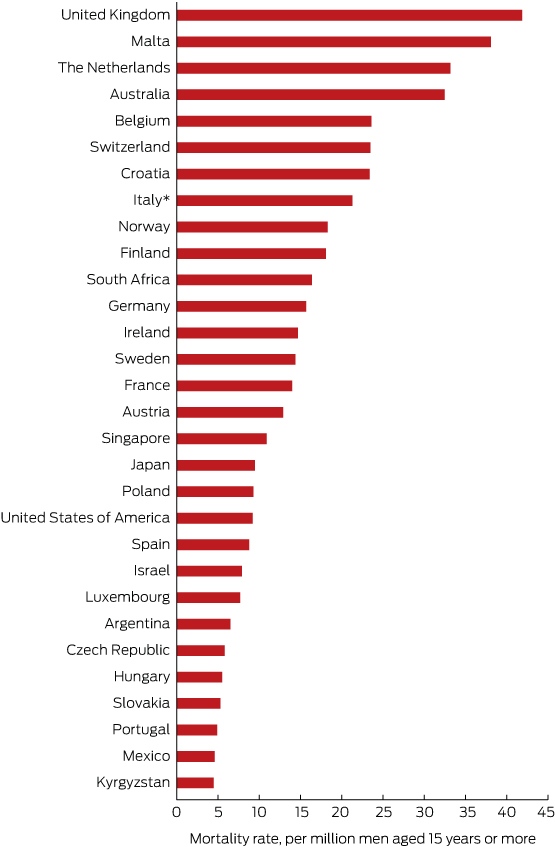
Source: World Health Organization mortality database (http://www-dep.iarc.fr/WHOdb/WHOdb.htm). * 2012 data cited, as 2013 data are not available.
Box 3 – Malignant pleural mesothelioma. A. Computed tomography (CT) imaging of the chest, showing diffuse right-sided pleural thickening. B. Positron emission tomography–computed tomography (PET-CT) imaging of the same patient, showing high metabolic activity (marked [18F]-fluorodeoxyglucose uptake)
Competing interests
No relevant disclosures.
References
- Australian Mesothelioma Registry, Monash Centre for Occupational and Environmental Health. Mesothelioma in Australia 2015: 5th annual report. Canberra: AMR, 2016. https://www.mesothelioma-australia.com/media/12513/mesothelioma-in-2015-final.pdf (accessed Sept 2017).
- Berry G, Reid A, Aboagye-Sarfo P, et al. Malignant mesotheliomas in former miners and millers of crocidolite at Wittenoom (Western Australia) after more than 50 years follow-up. Br J Cancer 2012; 106: 1016-1020.
- Olsen NJ, Franklin PJ, Reid A, et al. Increasing incidence of malignant mesothelioma after exposure to asbestos during home maintenance and renovation. Med J Aust 2011; 195: 271-274.
- Landrigan P. The third wave of asbestos disease: exposure to asbestos in place. Ann NY Acad Sci 1991; 643: xv-xvi.
- Flanagan D. Asbestos. In: US Geological Survey. Mineral commodity summaries 2017. Reston (VA): US Department of the Interior, Geological Survey, 2017; pp. 28-29. https://minerals.usgs.gov/minerals/pubs/commodity/asbestos/mcs-2017-asbes.pdf (accessed Sept 2017).
- de Klerk N, Alfonso H, Olsen N, et al. Familial aggregation of malignant mesothelioma in former workers and residents of Wittenoom, Western Australia. Int J Cancer 2013; 132: 1423-1428.
- Hodgson JT, Darnton A. The quantitative risks of mesothelioma and lung cancer in relation to asbestos exposure. Ann Occup Hyg 2000; 44: 565-601.
- Franklin P, Alfonso H, Reid A, et al. Asbestos exposure and histological subtype of malignant mesothelioma. Occup Environ Med 2016; 73: 749-752.
- Testa JR, Cheung M, Pei J, et al. Germline BAP1 mutations predispose to malignant mesothelioma. Nat Genet 2011; 43: 1022-1025.
- De Klerk NH, Musk AW. Epidemiology of mesothelioma. In: Robinson BWS, Chahinian AP, editors. Mesothelioma. London: Martin Dunitz; 2002; pp. 339-350.
- Musk AW, de Klerk NH, Ambrosini GL, et al. Vitamin A and cancer prevention. I. Observations in workers previously exposed to asbestos at Wittenoom, Western Australia. Int J Cancer 1998; 75: 355-361.
- Alvarez JM, Hasani A, Segal A, et al. Bilateral thoracoscopy, mediastinoscopy and laparoscopy, in addition to CT, MRI and PET imaging, are essential to correctly stage and treat patients with mesothelioma prior to trimodality therapy. ANZ J Surg 2009; 79: 734-738.
- Hasani A, Alvarez JM, Wyatt JM, et al. Outcome for patients with malignant pleural mesothelioma referred for trimodality therapy in Western Australia. J Thorac Oncol 2009; 4: 1010-1016.
- Brims FJ, Murray CP, de Klerk N, et al. Ultra-low-dose chest computer tomography screening of an asbestos-exposed population in Western Australia. Am J Respir Crit Care Med 2015; 191: 113-116.
- Reid A, de Klerk N, Ambrosini G, et al. The additional risk of malignant mesothelioma in former workers and residents of Wittenoom with benign pleural disease or asbestosis. Occup Environ Med 2005; 62: 665-669.
- Creaney J, Olsen NJ, Brims F, et al. Serum mesothelin for early detection of asbestos-induced cancer malignant mesothelioma. Cancer Epidemiol Biomarkers Prev 2010; 19: 2238-2246.
- Pass HI, Levin SM, Harbut MR, et al. Fibulin-3 as a blood and effusion biomarker for pleural mesothelioma. N Engl J Med 2012; 367: 1417-1427.
- Creaney J, Dick IM, Meniawy TM, et al. Comparison of fibulin-3 and mesothelin as markers in malignant mesothelioma. Thorax 2014; 69: 895-902.
- Muruganandan S, Alfonso H, Franklin P, et al. Comparison of outcomes following a cytological or histological diagnosis of malignant mesothelioma. Br J Cancer 2017; 116: 703-708.
- Musk AW, Olsen N, Alfonso H, et al. Predicting survival in malignant mesothelioma. Eur Respir J 2011; 38: 1420-1424.
- Brims FJ, Meniawy TM, Duffus I, et al. A novel clinical prediction model for prognosis in malignant pleural mesothelioma using decision tree analysis. J Thorac Oncol 2016; 11: 573-582.
- Brims FJ, Maskell NA. Prognostic factors for malignant pleural mesothelioma. Curr Respir Care Rep 2013; 2: 100-108.
- Davies HE, Mishra EK, Kahan BC, et al. Effect of an indwelling pleural catheter vs chest tube and talc pleurodesis for relieving dyspnea in patients with malignant pleural effusion: the TIME2 randomized controlled trial. JAMA 2012; 307: 2383-2389.
- Treasure T, Lang-Lazdunski L, Waller D, et al. Extra-pleural pneumonectomy versus no extra-pleural pneumonectomy for patients with malignant pleural mesothelioma: clinical outcomes of the Mesothelioma and Radical Surgery (MARS) randomised feasibility study. Lancet Oncol 2011; 12: 763-772.
- Rintoul RC, Ritchie AJ, Edwards JG, et al. Efficacy and cost of video-assisted thoracoscopic partial pleurectomy versus talc pleurodesis in patients with malignant pleural mesothelioma (MesoVATS): an open-label, randomised, controlled trial. Lancet 2014; 384: 1118-1127.
- Vogelzang NJ, Rusthoven JJ, Symanowski J, et al. Phase III study of pemetrexed in combination with cisplatin versus cisplatin alone in patients with malignant pleural mesothelioma. J Clin Oncol 2003; 21: 2636-2644.
- Calabro L, Morra A, Fonsatti E, et al. Efficacy and safety of an intensified schedule of tremelimumab for chemotherapy-resistant malignant mesothelioma: an open-label, single-arm, phase 2 study. Lancet Respir Med 2015; 3: 301-309.
- Quispel-Janssen J, Zago G, Schouten R, et al. A phase II study of nivolumab in malignant pleural mesothelioma (NivoMes): with translational research (TR) biopsies. J Thorac Oncol 2017; 12 (Suppl): S292-S293.
- Davies HE, Musk AW, Lee YC. Prophylactic radiotherapy for pleural puncture sites in mesothelioma: the controversy continues. Curr Opin Pulm Med 2008; 14: 326-330.
- Gunatilake S, Brims FJ, Fogg C, et al. A multicentre non-blinded randomised controlled trial to assess the impact of regular early specialist symptom control treatment on quality of life in malignant mesothelioma (RESPECT-MESO): study protocol for a randomised controlled trial. Trials 2014; 15: 367.
- Asbestos Diseases Research Institute. Guidelines for the diagnosis and treatment of malignant pleural mesothelioma. Sydney: ADRI, 2013. http://lungfoundation.com.au/health-professionals/guidelines/guidelines-for-the-diagnosis-and-treatment-of-malignant-pleural-mesothelioma/ (accessed Sept 2017).
Linked content
-
MJA Narrative Review: Occupational lung diseases in Australia
-
MJA InSight: Occupational lung diseases: asking the right questions
-
MJA Podcast: Dr Ryan Hoy
Provenance: Commissioned; externally peer reviewed.
Barriers and Facilitators to Timely Detection and Optimal Management of Chronic Wet Cough in Aboriginal Children Across Australia From the Perspectives of Carers of Aboriginal Children: A Qualitative Study
Gloria T. Y. Lau, Pam Laird, Robyn Aitken, Melanie Barwick, Liam Bedford, Emily R. Bowden, Jamie Everingham, Angela Fuery, Reece Griffin, Neha Jain, Mina Kinghorn, Renae Knapp, Gabrielle B. McCallum, Peter Morris, Richard Norman, Peter C. Richmond, Aarti Saiganesh, Slade Sibosado, Cameron Taylor, Maree Toombs, Roz Walker, Joan Wilson, Anne B. Chang, André Schultz
Barriers and Facilitators to Timely Detection and Optimal Management of Chronic Wet Cough in Aboriginal Children Across Australia From the Perspective of Health Care Providers: A Qualitative Study
Gloria T. Y. Lau, Pamela Laird, Robyn Aitken, Melanie Barwick, Liam Bedford, Emily R. Bowden, Corey Dalton, Jamie Everingham, Angela Fuery, Reece Griffin, Neha Jain, Mina Kinghorn, Renae Knapp, Gabrielle B. McCallum, Peter Morris, Richard Norman, Peter C. Richmond, Aarti Saiganesh, Slade Sibosado, Maree Toombs, Roz Walker, Joan Wilson, Anne B. Chang, André Schultz
Respiratory Syncytial Virus Disease Burden and Evidence Gaps in Australia Before Immunisation Introduction: A Retrospective Population-Based Study Using 2016–2019 Hospitalisation and 2023 Laboratory Surveillance Data
Chisato Imai-Boulter, Jean Li-Kim-Moy, Clayton Chiu, Sanjay Jayasinghe, Kristine Macartney
Not Gone but Often Forgotten: Action Needed to Address Tuberculosis in Aboriginal and Torres Strait Islander Communities
Nikkita Joshua, Emma L. Smith, Eunice (Cheeky) Love, Christopher P. Lowbridge, Nicole Tukana, Amy Bowden, Megan A. Campbell, Dawn Casey, James Ward
Uneven Ground: Survival Differences Among Victorian Lung Cancer Patients by Location of Residence (2011–2023): A Retrospective Cohort Study
Evangeline Samuel, Eldho Paul, Mike Lloyd, Sanuki Tissera, Craig Underhill, Sagun Parakh, Phillip Parente, Inger Olesen, Javier Torres, Katharine See, Gavin M. Wright, David Langton, Thomas John, Matthew Conron, James Bartlett, Nicola Atkin, Nikolajs Zeps, Susan V. Harden, Wasek Faisal, John R. Zalcberg, Rob G. Stirling
Treatment and Survival Outcomes for Indigenous and Non-Indigenous Australians Within the Victorian Lung Cancer Registry: A Retrospective Cross-Sectional Cohort Study
Melanie Wong, Mike Lloyd, Jessie Zeng, Sanuki Tissera, Kalinda E. Griffiths, Justine Clark, Jonathan Gillies, Lisa Briggs, Jacqueline Lesage, Tom Wood, Craig Underhill, Sagun Parakh, Louis B. Irving, Wasek Faisal, Rob Blum, Gary E. Richardson, Phillip Parente, Michelle Caldecott, Inger Olesen, Javier Torres, Evangeline Samuel, Christopher Lyne, Katharine See, David Langton, Thomas John, Gavin Wright, Matthew Conron, James Bartlett, Golsa Adabi, Maggie Moore, Susan Harden, Zoe K. McQuilten, John R. Zalcberg, Rob Stirling