




Volume 206 - Issue 5
Advances in rheumatoid arthritis
Authors: Graeme Jones, Peter Nash and Stephen Hall
Med J Aust 2017; 206 (5): 221-224. || doi: 10.5694/mja16.01287
Published online: 20 March 2017
Published online: 20 March 2017
While there is no cure for rheumatoid arthritis, treatment has improved to the point where many patients can approach a normal quality of life
Summary
- There are now eight approved biological disease-modifying antirheumatic drugs (bDMARDs), two biosimilars and one targeted synthetic DMARD in Australia with a number of new products and biosimilars in the pipeline.
- bDMARDs have excellent efficacy, especially when combined with traditional DMARDs, and a well characterised but manageable safety profile.
- These expanded therapeutic options have revolutionised patient care and made remission (including drug free remission) a realistic goal.
- Evidence of a “window of opportunity” that changes the long term phenotype of the disease has been well established, so therapy should be commenced as early as possible in the disease process and a shared care model between general practitioner and rheumatologist provides the best outcomes.
- While there is no cure for rheumatoid arthritis, treatment has improved to the point where many patients can achieve a normal quality of life.
This narrative review summarises the literature on contemporary understanding of adult rheumatoid arthritis (RA) focusing on current therapy, especially biological therapy. Articles were progressively identified by hand searching the list of contents in leading general and rheumatology journals, on a monthly basis over the past 6 years.
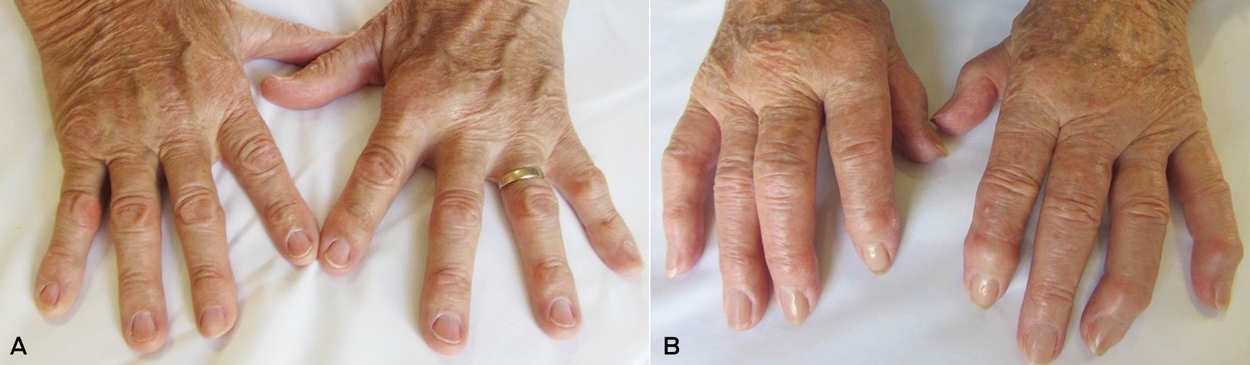
RA is a relatively common inflammatory arthritis (Box 1) and is self-reported by 2% of the Australian population (http://www.aihw.gov.au/rheumatoid-arthritis). It is diagnosed based on four criteria: number and pattern of joints involved, disease duration greater than 6 weeks, raised inflammatory markers (such as erythrocyte sedimentation rate [ESR] or C-reactive protein [CRP] level) and positive serology (the well established rheumatoid factor or the newer cyclic citrullinated peptide antibody [CCP])1 — CCP appears to be pathogenic and can be produced in gingival and lung tissues.2 RA cannot be diagnosed with only one involved joint. While there is considerable variation, either antibody is positive in about 50% of patients at presentation, with some overlap making about 25% seronegative. These antibodies are commonly misused in clinical practice, and their use should be restricted to patients with symptoms of inflammatory arthritis, especially involving peripheral joints, where they have both diagnostic and prognostic significance.
The cause of RA remains unknown, and many genes have been implicated.3 Each gene (with the exception of human leukocyte antigen) explains only a small amount of disease risk, but the involvement of a genetic pathway has proven useful for predicting response to therapy; for example, genes for tumour necrosis factor (TNF) and interleukin 6 (IL-6) receptor, but not interleukin 17 receptor, have been implicated to confer susceptibility to RA, and this closely mirrors positive clinical trial results for the first two, and negative trials for the latter. RA was not traditionally considered a lifestyle-related disease, but recent articles give clues about possible lifestyle modification. Smoking is a strong risk factor if a patient has the shared epitope of genetic predisposition, and smoking cessation appears to improve the disease outcomes, especially in patients who are CCP positive.4 The role of other lifestyle factors, such as sun exposure, which may be protective;5 salt intake, which may be deleterious;6 and alcohol, which may be protective,5 remain controversial. There have been great advances in our understanding of the pathophysiology of RA with the elucidation of critical cytokine pathways.7 Many of these have been targeted therapeutically with great success and considerable expense. Biological therapy for inflammatory arthritis is now costing the Australian taxpayer over $600 million each year. Using validated outcome measures of disease activity, patient-reported outcomes, and a treat-to-target approach of remission in early disease or low disease activity in established disease have led to a paradigm shift in RA management.
Traditional disease-modifying antirheumatic drugs (DMARDs) include methotrexate (MTX), which has become the cornerstone drug for the management of RA; sulfasalazine; corticosteroids; gold compounds, injectable and oral; and antimalarials. These agents are modestly effective but are proven to slow down radiographic progression, with the exception of antimalarials.8 They also decrease RA mortality rates, especially MTX,9 except prednisone, which increases death rates.10 However, historically, they were only used after damage was apparent, even though none have been shown to reverse progression. There is now evidence for a window of opportunity in the first 6 months of the disease, where therapies are more effective and have a long term effect on the disease, regardless of subsequent therapy.11 This means that RA should be diagnosed and treated with DMARD therapy as quickly as possible to maximise this benefit. Indeed, most rheumatologists in Australia have triage systems in place to see patients with RA quickly. The dosage has increased gradually over time, to a point where the mean dose is 20–25 mg per week, and many now use parenteral MTX, as oral absorption peaks at 15–20 mg weekly. MTX usage also maximises benefits and decreases side effects for many of the biological DMARDs (bDMARDs).12 A number of other agents such as d-penicillamine, cyclophosphamide and azathioprine are no longer used because of limited evidence of efficacy and poor safety.
Better disease control commenced with the use of higher doses of MTX, the development of leflunomide (the first of the targeted synthetic DMARDS), the use of combination therapy (most commonly with so-called triple therapy of MTX, sulfasalazine and hydroxychloroquine) and the use of fish oil as adjunctive therapy.13 Cyclosporine (a transplant medication), while of proven efficacy, is rarely used due to significant side effects.
The era of bDMARDs commenced in 1996, although the first of these agents did not become available in Australia until 2003. This was due to their approximate cost of around $20 000 per patient per annum. While they are very effective, with remission rates of up to 50%,14 they are only available with government subsidy on rheumatologist or immunologist prescription, with very strict entry and maintenance criteria. To start these agents, patients need to fail a 6-month intensive course of traditional DMARDs and have poorly controlled disease (ie, 20 or more affected joints, four or more large affected joints and raised ESR or CRP levels). Patients need a 50% improvement in joint count and a 20% improvement in ESR or CRP levels, documented every 6 months, to remain on these agents.
Box 2 summarises the mode of action of both biological and newer targeted synthetic DMARDs. In general, these agents have similar efficacy, making head to head studies desirable to choose between them.15 The only exception to this is the yet to be released baricitinib plus MTX — presented at the American College of Rheumatology Annual Meeting 2015 — which has recently been shown to be superior to adalimumab plus MTX.16 All bDMARDs improve signs and symptoms, blood markers, x-ray progression and important patient-reported outcomes, such as fatigue and quality of life. According to Pharmaceutical Benefits Scheme data, about 80% of patients meet the criteria for continuation, indicating that primary failure is rare. Usage in Australia reflects the length of time on the market, rheumatologists’ experience and mode of administration, with adalimumab and etanercept being the most commonly prescribed. Infliximab is rarely used due to the need for intravenous administration, infusion reactions and the well recognised tachyphylaxis over time — as this agent is a human–mouse chimeric antibody making it prone to provoking immunogenicity.
The initial therapy with biological agents is most often an antitumour necrosis factor (anti-TNF) agent plus MTX. If the latter is not tolerated or contra-indicated, then leflunomide, sulfasalazine or hydroxychloroquine may be used, with variable evidence of efficacy. Evidence favours IL-6 receptor blockade17 or tofacitinib18 if combination therapy is not appropriate. Despite this evidence, up to a third of Australian patients are on anti-TNF monotherapy, which works about as well as MTX, but costs much more. Switching for adverse effects or loss of efficacy over time between anti-TNFs is also common. However, recent evidence suggests that a switch to a different mode of action gives superior results in those with an insufficient response to the first anti-TNF.19 Anti-TNF agents work better in those who are seronegative, rather than in those who are seropositive, while rituximab, tocilizumab and abatacept work better in those who are seropositive.20 Anti-TNF agents should be avoided in those patients with tuberculosis, multiple sclerosis, cancer within the past 5 years, or heart failure.
Toxicity concerns
Managing the well documented toxicities of all available agents requires substantial rheumatological expertise, often in consultation with the general practitioner and other subspecialists. Common or serious side effects by class are listed in Box 3. Serious infection rates in this group of patients vary from 3% to 6% per annum.26 This appears to relate strongly to disease problems (as infection rates are higher in RA than other arthritides treated with bDMARDs), age, corticosteroid usage27 and medication. If a patient is at high risk of infection, then the first step is to minimise the dose of corticosteroid. In terms of bDMARDs, the agents with the lowest infection rates are abatacept, rituximab and etanercept,26 and they tend to be used more commonly in those aged over 65 years. Injection site reactions are also common, but rarely lead to discontinuation. Haematological monitoring is not required for anti-TNF agents, but all patients should be screened for tuberculosis, hepatitis B and C and human immunodeficiency virus before commencing therapy, and should be regularly rescreened if they live in endemic areas. IL-6 blockers require regular testing of full blood count, liver function tests and lipids. Abatacept and rituximab do not require screening tests or monitoring, although many rheumatologists check CD19 levels before re-treating with rituximab as these can take months or occasionally years to return to pre-dose levels; moreover, immunoglobulin levels should be monitored in those receiving long term rituximab as it may cause hypogammaglobulinaemia. Vaccination against influenza and pneumococcus is recommended for all patients with RA.28 In addition, patients should ideally receive herpes zoster vaccine before starting therapy,28 especially those on tofacitinib, even though this delays the initiation of medication.
Biosimilar or bio-originator?
The advent of biosimilars will result in significant decreases in the cost of bDMARDs. However, the process is not as straightforward as it is for generic small molecules, where bioequivalence is all that is required to be demonstrated for regulatory approval. bDMARDs are complex high molecular weight molecules that can vary in many ways, and the method of synthesis has changed over time. Thus, bioequivalence is not sufficient and, in general, regulators require large non-inferiority trials that compare the biosimilar with the bio-originator for at least one approved indication; for example, the biosimilar infliximab was studied in RA and ankylosing spondylitis,29,30 whereas the biosimilar etanercept was studied only in RA.31 If non-inferiority is demonstrated in these trials, then extrapolation to all previously approved indications is assumed to be valid. Development costs would be much higher if the original phase 3 program had to be fully replicated. The major concern relates to switching — which is freely allowed in Australia — as both of these agents are A flagged, meaning that they should not be substituted, but the reality is that they may be substituted by pharmacists depending on which agent is in stock. A single switch has been shown to be safe,32 but as multiple biosimilars of the same agent are approved, the safety of multiple switches is unknown. The concern is that the potential for formation of neutralising antidrug antibodies will be heightened by multiple switches, with resulting loss of efficacy and toxicity. At present, it is preferable that the patient remains on the same formulation (whether bio-originator or biosimilar) on a consistent basis.
Tapering
Studies are now underway to examine tapering and withdrawal of bDMARD therapy in patients in clinical remission, using power Doppler ultrasound scan to show absence of synovitis, and in those with normal CRP and ESR levels to reduce cost and risk of adverse effects. Withdrawal is especially suitable for the targeted synthetic DMARDs, as the development of antibodies against the compound is not a problem with small molecules.
Future directions
There is still an unmet need in RA, with most patients achieving at least a major clinical improvement, but with many still not achieving remission status. A number of novel agents are in development, including Australian discoveries such as mavrilimumab (a granulocyte-macrophage colony-stimulating factor antagonist)33 and novel ways of preventing RA using a vaccine-like approach, which induces dendritic cell tolerance in patients who are CCP positive.34 Thus, there is much to look forward to for patients with RA. The Australian Rheumatology Association has an excellent online resource for RA (http://rheumatology.org.au).
Box 1 – Two examples of partially controlled rheumatoid arthritis showing synovitis in the metacarpophalangeal joints. Image A also shows some mild subluxation commonly seen with chronic disease, and image B shows proximal interphalangeal swelling and concomitant osteoarthritis in the distal interphalangeal joints
Box 2 – Biological and targeted synthetic agents for rheumatoid arthritis and their mode of action
|
Agent |
Mode of action |
Mode of administration |
|||||||||||||
|
|
|||||||||||||||
|
Infliximab* |
Anti-TNF |
IV 8 weekly |
|||||||||||||
|
Etanercept* |
Anti-TNF |
SC weekly |
|||||||||||||
|
Adalimumab |
Anti-TNF |
SC fortnightly |
|||||||||||||
|
Rituximab* |
B cell blockade (CD20) |
IV 6–12 monthly |
|||||||||||||
|
Abatacept |
T cell co-stimulation blocker |
SC weekly or IV monthly |
|||||||||||||
|
Golimumab |
Anti-TNF |
SC 4 weekly |
|||||||||||||
|
Tocilizumab |
IL-6 receptor blocker |
SC weekly or IV 4 weekly |
|||||||||||||
|
Certolizumab |
Anti-TNF |
SC 2 or 4 weekly |
|||||||||||||
|
Tofacitinib |
JAK inhibitor |
PO BD |
|||||||||||||
|
Coming soon |
|||||||||||||||
|
Baricitinib |
JAK inhibitor |
PO once daily |
|||||||||||||
|
Sarilumab |
IL-6 receptor blocker |
SC fortnightly |
|||||||||||||
|
Sirukumab |
Direct IL-6 inhibition |
SC |
|||||||||||||
|
|
|||||||||||||||
|
Anti-TNF = antitumour necrosis factor inhibition, BD = twice a day, IL-6 = interleukin 6, IV = intravenous, JAK = Janus kinase, PO = oral, SC = subcutaneous injection. * Now available as biosimilar. |
|||||||||||||||
Box 3 – Common and serious side effects for biological and targeted synthetic DMARDs21-25
|
|
Common side effects (> 1%) |
Rare serious side effects |
|||||||||||||
|
|
|||||||||||||||
|
Anti-TNF |
Injection site reactions |
Drug-induced Lupus |
|||||||||||||
|
IL-6 blockade |
Neutropenia |
Anaphylaxis (IV version) |
|||||||||||||
|
B cell blockade |
Infusion reactions |
Progressive multifocal leukoencephalopathy |
|||||||||||||
|
T cell blockade |
Serious infections |
|
|||||||||||||
|
JAK inhibition |
Zoster |
Renal impairment |
|||||||||||||
|
|
|||||||||||||||
|
*Anti-TNF = antitumour necrosis factor inhibition, IL-6 = interleukin 6, IV = intravenous, JAK = Janus kinase, SC = subcutaneous, TB = tuberculosis. |
|||||||||||||||
Competing interests
Graeme Jones receives funds from the National Health and Medical Research Council and is a speaker, consultant or clinical triallist for the following companies that make biological agentsSanofi-Aventis, AbbVie, Janssen, Pfizer, Roche, Eli Lilly, Amgen, Bristol–Myers Squibb and UCB. Peter Nash has received grants for research and clinical trials and honoraria for advice and lectures from AbbVie, Amgen, Bristol–Myers Squibb, Eli Lilly, Janssen, Merck, Novartis, Pfizer, Roche, Sanofi-Aventis and UCB. Stephen Hall has received grants for research and clinical trials and honoraria for advice and lectures from AbbVie, Bristol–Myers Squibb, Eli Lilly, Janssen, Merck, Novartis, Pfizer, Roche and UCB.
References
- Aletaha D, Neogi T, Silman AJ, et al. 2010 Rheumatoid arthritis classification criteria: an American College of Rheumatology/European League Against Rheumatism collaborative initiative. Ann Rheum Dis 2010; 69: 1580-1588.
- Mikuls TR, Payne JB, Deane KD, Thiele GM. Autoimmunity of the lung and oral mucosa in a multisystem inflammatory disease: the spark that lights the fire in rheumatoid arthritis? J Allergy Clin Immunol 2016; 137: 28-34.
- Yamamoto K, Okada Y, Suzuki A, Kochi Y. Genetics of rheumatoid arthritis in Asia—present and future. Nat Rev Rheumatol 2015; 11: 375-379.
- Klareskog L, Gregersen PK, Huizinga TW. Prevention of autoimmune rheumatic disease: state of the art and future perspectives. Ann Rheum Dis 2010; 69: 2062-2066.
- Tedeschi SK, Costenbader KH. Is there a role for diet in the therapy of rheumatoid arthritis? Curr Rheumatol Rep 2016; 18: 23.
- Salgado E, Bes-Rastrollo M, de Irala J, et al. High sodium intake is associated with self-reported rheumatoid arthritis: a cross sectional and case control analysis within the SUN cohort. Medicine (Baltimore) 2015; 94: e92.
- McInnes I, Schett G. Cytokines in the pathogenesis of rheumatoid arthritis. Nat Rev Immunol 2007; 7: 429-442.
- Jones G, Halbert J, Crotty M, et al. The effect of treatment on radiological progression in rheumatoid arthritis: a systematic review of randomized placebo controlled trials. Rheumatology 2003; 42: 6-13.
- Wasko MC, Dasgupta A, Hubert H, et al. Propensity-adjusted association of methotrexate with overall survival in rheumatoid arthritis. Arthritis Rheum 2013; 65: 334-342.
- Chester Wasko M, Dasgupta A, Ilse Sears G, et al. Prednisone use and risk of mortality in patients with rheumatoid arthritis: moderation by use of disease-modifying antirheumatic drugs. Arthritis Care Res (Hoboken) 2016; 68: 706-710.
- O’Dell JR. Treating rheumatoid arthritis early: a window of opportunity? Arthritis Rheum 2002; 46: 283-285.
- Soliman M, Ashcroft DM, Watson KD, et al. Impact of concomitant use of DMARDs on the persistence with anti-TNF therapies in patients with rheumatoid arthritis: results from the British Society for Rheumatology Biologics Register. Ann Rheum Dis 2011; 70: 583-589.
- Proudman SM, James MJ, Spargo LD et al. Fish oil in recent onset rheumatoid arthritis: a randomised, double-blind controlled trial within algorithm-based drug use. Ann Rheum Dis 2015; 74: 89-95.
- Emery P, Breedveld FC, Hall S, et al. Comparison of methotrexate monotherapy with a combination of methotrexate and etanercept in active, early, moderate to severe rheumatoid arthritis (COMET): a randomised, double-blind, parallel treatment trial. Lancet 2008; 372: 375-382.
- Singh JA, Christensen R, Wells GA, et al. Biologics for rheumatoid arthritis: an overview of Cochrane reviews. Cochrane Database Syst Rev 2009; (4): CD007848.
- Taylor P, Keystone E, Van Der Heijde D, et al. Baricitinib versus placebo or adalimumab in patients with active rheumatoid arthritis (RA) and an inadequate response to background methotrexate therapy: results of a phase 3 study. ACR/ARHP Annual Meeting. http://acrabstracts.org/abstract/baricitinib-versus-placebo-or-adalimumab-in-patients-with-active-rheumatoid-arthritis-ra-and-an-inadequate-response-to-background-methotrexate-therapy-results-of-a-phase-3-study/ (accessed Nov 2015).
- Jones G, Sebba A, Gu J, et al. Comparison of tocilizumab monotherapy versus methotrexate monotherapy in patients with moderate to severe rheumatoid arthritis. Ann Rheum Dis 2010; 69: 88-96.
- Lee EB, Fleischmann R, Hall S, et al. Tofacitinib versus methotrexate in rheumatoid arthritis. N Engl J Med 2014; 370: 2377-2386.
- Gottenberg J-E, Brocq O, Perdriger A, et al. Non–TNF-targeted biologic vs a second anti-TNF drug to treat rheumatoid arthritis in patients with insufficient response to a first anti-TNF drug: a randomized clinical trial. JAMA 2016; 316: 1172-1180.
- Maneiro RJ, Salgado E, Carmona L, Gomez-Reino JJ. Rheumatoid factor as predictor of response to abatacept, rituximab and tocilizumab in rheumatoid arthritis: systematic review and meta-analysis. Semin Arthritis Rheum 2013; 43: 9-17.
- Jones G, Ding C. Tocilizumab: a review of its safety and efficacy in rheumatoid arthritis. Clin Med Insights Arthritis Musculoskelet Disord 2010; 3: 81-89.
- Kaine JL. Abatacept for the treatment of rheumatoid arthritis: a review. Curr Ther Res Clin Exp 2007; 68: 379-399.
- Dass S, Vital EM, Emery P. Rituximab: novel B-cell depletion therapy for the treatment of rheumatoid arthritis. Expert Opin Pharmacother 2006; 7: 2559-2570.
- Brown MA. Antibody treatments of inflammatory arthritis. Curr Med Chem 2005; 12: 2943-2946.
- Tanaka Y. Recent progress and perspective in JAK inhibitors for rheumatoid arthritis: from bench to bedside. J Biochem 2015; 158: 173-179.
- Singh JA, Cameron C, Noorbaloochi S, et al. Risk of serious infection in biological treatment of patients with rheumatoid arthritis: a systematic review and meta-analysis. Lancet 2015; 386: 258-265.
- Dixon WG, Watson K, Lunt M, et al. Rates of serious infection, including site-specific and bacterial intracellular infection, in rheumatoid arthritis patients receiving anti-tumor necrosis factor therapy: Results from the British Society for Rheumatology Biologics Register. Arthritis Rheum 2006; 54: 2368-2376.
- van Assen S, Agmon-Levin N, Elkayam O, et al. EULAR recommendations for vaccination in adult patients with autoimmune inflammatory rheumatic diseases. Ann Rheum Dis 2011; 70: 414-422.
- Park W, Yoo DH, Jaworski J, et al. Comparable long-term efficacy, as assessed by patient-reported outcomes, safety and pharmacokinetics, of CT-P13 and reference infliximab in patients with ankylosing spondylitis: 54-week results from the randomized, parallel-group PLANETAS study. Arthritis Res Ther 2016; 20: 18.
- Yoo DH, Racewicz A, Brzezicki J, et al. A phase III randomized study to evaluate the efficacy and safety of CT-P13 compared with reference infliximab in patients with active rheumatoid arthritis: 54-week results from the PLANETRA study. Arthritis Res Ther 2016; 18: 82.
- Emery P, Vencovský J, Sylwestrzak A, et al. A phase III randomised, double-blind, parallel-group study comparing SB4 with etanercept reference product in patients with active rheumatoid arthritis despite methotrexate therapy. Ann Rheum Dis 2017; 76: 51-57.
- Chingcuanco F, Segal J, Kim S, Alexander G. Bioequivalence of biosimilar tumor necrosis factor-α inhibitors compared with their reference biologics: a systematic review. Ann Intern Med 2016; 165: 565-574.
- Hamilton JA. GM-CSF as a target in inflammatory/autoimmune disease: current evidence and future therapeutic potential. Expert Rev Clin Immunol 2015; 11: 457-465.
- Benham H, Nel HJ, Law SC, et al. Citrullinated peptide dendritic cell immunotherapy in HLA risk genotype-positive rheumatoid arthritis patients. Sci Transl Med 2015; 7: 290ra87.
Provenance: Commissioned; externally peer reviewed.
Rethinking Rheumatic Fever Diagnosis: Progress, Pitfalls and the Path Towards a Definitive Test
Anna P. Ralph, Rachel Webb, Tom Parks, Nicole J. Moreland, Asha C. Bowen, Benjamin Jones, Emma Ndagire, Andrea Z. Beaton
Ending rheumatic heart disease in Australia: the evidence for a new approach
on behalf of the END RHD CRE Investigators and Collaborators
Autoimmune rheumatic diseases: recent advances and current challenges
Flavia M Cicuttini