




Reflections
Book review
Volume 200 - Issue 6
Big Pharma, big problems
Author: Kerry J Breen
Med J Aust 2014; 200 (6): 351. || doi: 10.5694/mja14.00076
Published online: 7 April 2014
Published online: 7 April 2014
This Enlightening, Alarming and depressing book deserves a wide readership among doctors but also among politicians, health administrators, and drug and medical device regulators. While there is no shortage of books that have sought to expose the misconduct of the pharmaceutical industry (one thinks of the books of Braithwaite, Kassirer, Angell, Moynihan and Goldacre), I finished this book with the feeling that things are getting ...
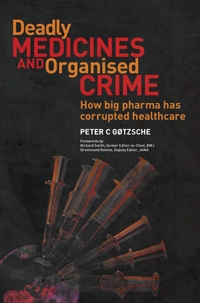
Deadly medicines and organised crime. How big pharma has corrupted healthcare.
Peter C Gøtzsche. London: Radcliffe, 2013 (310 pp, $46.35). ISBN 9781846198847.
This Enlightening, Alarming and depressing book deserves a wide readership among doctors but also among politicians, health administrators, and drug and medical device regulators. While there is no shortage of books that have sought to expose the misconduct of the pharmaceutical industry (one thinks of the books of Braithwaite, Kassirer, Angell, Moynihan and Goldacre), I finished this book with the feeling that things are getting worse and not better.
The author is a Danish physician with expertise in clinical trials and statistics, and previous experience working in the pharmaceutical industry. He understands the need to substantiate the allegations he makes and provides extensive publicly available documentation covering at least 30 pharmaceutical companies. The book is well written and well planned, with 22 chapters, each addressing discrete issues. This makes it easy to read and his arguments easy to follow.
His criticisms of the industry are wideranging. In the early chapters, the author identifies fraudulent conduct by several big companies, many involving settlements of billions of dollars, and convincingly compares this conduct with the modus operandi of crime syndicates. Subsequent chapters address themes such as the impotence of drug regulators, lack of efficacy of many new drugs, concealment of clinical trial data including serious adverse effects, conflicts of interest at medical journals, alleged corruptive influence of drug company money, marketing disguised as clinical trials, creation of “new” diseases, and his desire to bust industry myths. He also addresses industry exaggeration of the cost of developing new drugs, abuses of the rights of research participants, diminishing clinician input into trial design, conduct and reporting, and conflicted positions of clinicians who collaborate with industry and are paid in their roles as key opinion leaders.
The author seeks to identify root causes of these problems and blames in particular the dominance of the industry marketing arm in company management. He also highlights ineffectual regulation because many governments now expect regulators to survive on industry funding. Finally, the book proffers several thoughtful suggestions for change, only two of which (improved access to data from all clinical trials and disclosure of industry payments to doctors) are likely to become widespread in the near future. Overall, this book is a must-read for all doctors in clinical practice.
Prisoner of war pathology in Changi, 1942–1945
Kate Ariotti, Elizabeth Roberts‐Pedersen
Should medical eponyms continue to be used in everyday practice?
Leya Nedumannil, Diana Lewis
100 years on: the first use of insulin in Australia
Sophie Templer
Reflections on the life and career of Professor Dame Valerie Beral AC DBE FRS FRCOG FMedSci (1943–2022)
Karen Canfell, Bette Liu, Emily Banks
The Honourable Dr Donald James Grimes AO
Michael Kirby, Patti Warn
From wipeout to drill out: a history of exostosis management and Australian surfing
Alon Taylor, Hannah North, Narinder P Singh, Paul A Fagan