




Volume 199 - Issue 4
First hand transplant procedure in Australia: outcome at 2 years
Authors: Karen M Dwyer, Angela R Webb, Hayley S Furniss, Katie E Anjou, Josephine M Gibbs-Dwyer, David B McCombe, Damien G Grinsell, Gillian F Dickinson, Richard A Williams, Prudence A Russell, David A Scott, Christopher Baker, Simon J Vogrin, Robyn G Langham, Helen I Opdam and Wayne A Morrison
Med J Aust 2013; 199 (4): 285-287. || doi: 10.5694/mja12.11554
Published online: 19 August 2013
Published online: 19 August 2013
Australia’s first successful hand transplant broke with convention to give back independence and quality of life to an older recipient with several health problems who had lost all four of his extremities.
Over 70 hand transplants have been performed worldwide since 1998 with good functional outcomes. We report the first hand transplant in Australia, performed on a 65-year-old man who was asplenic and a four-limb amputee.
Clinical record
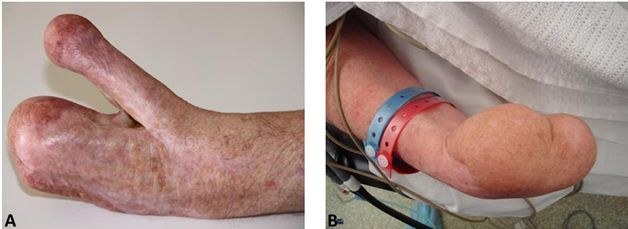
Australia's first hand transplant procedure was performed in 2011. The recipient was a right-handed 65-year-old man who had had amputations of all four limbs. He was previously a self-employed plumber, who developed pneumococcal sepsis in 2006 on a background of a traumatic splenectomy 32 years earlier. Progressive gangrene of his extremities necessitated amputation of his hands at the transmetacarpal level bilaterally. A faux thumb on the left enabled rudimentary function of abduction and adduction (Box 1). He required full assistance with upper limb functional tasks. Both feet were amputated, necessitating prostheses.
He had impaired glucose tolerance, osteoporosis of the left hip, a number of solar keratoses and was an ex-smoker. There was no evidence of cardiovascular disease. He was taking sulfamethoxazole–trimethoprim for prophylaxis after the splenectomy. He was a highly motivated, compliant and intelligent individual with a life history of stability and success, and was considered a suitable recipient for a hand transplant. Approval from St Vincent's Hospital Melbourne Clinical Ethics Committee and informed consent were obtained. The family of a multi-organ male donor who was brain dead consented to limb donation. The blood group of the donor was compatible, but his human leucocyte antigen (HLA) was mismatched to the recipient. The recipient had two weak donor-specific anti-HLA antibodies (DSAs). The recipient's panel reactive antibody score was low at 6% and the results of B and T cell crossmatch tests were negative. Both donor and recipient tested positive for Epstein–Barr virus and cytomegalovirus (CMV) IgG.
The limb was matched for sex, size and colour. The right limb was disarticulated at the level of the elbow, the brachial artery was perfused with Custodial HTK organ preservation solution (Dr. Franz Köhler Chemie GmbH) and the limb packed in ice and transferred to our centre.
Under general anaesthesia, the recipient's right stump was opened and all structures were tagged and shortened to pre-planned lengths. On ice, the donor hand was attached with bone fixation 5 cm proximal to the radiocarpal joints. After primary arterial and venous anastomosis and reperfusion (3 hours ischaemic time), the dorsal structures were repaired. Next, volar structures were repaired, including the nerves 3 cm proximal to the wrist, with specific motor fascicular repairs guided by intraoperative nerve stimulation. All tendons were repaired with attention to relative length and tension. The ulnar artery was anastomosed, but appeared to have a recanalised lumen with a poor intima and minimal patency. The total operating time was nine hours and coordinated by six primary and four assisting surgeons. Immunosuppressive therapy included induction with basiliximab followed by maintenance therapy with tacrolimus, mycophenolic acid and prednisolone. Therapy with low-dose aspirin was commenced and sulfamethoxazole–trimethoprim therapy was continued. Prophylaxis was initiated with valganciclovir (for 6 months) against CMV and posaconazole (for 3 months) against fungal disease. A skin biopsy on postoperative day (POD) 10 in the context of oedema showed acute cellular rejection (Banff type II) with adenexal involvement (Box 2), which promptly resolved after therapy with topical tacrolimus and clobetasol. The recipient developed hyperglycaemia which required treatment with insulin between POD 7 and 70.
Volar resting splints were applied on POD 2; passive and active mobilisation of wrist, fingers, and thumb commenced on POD 5. A range of anticlaw splints were used to encourage intrinsic tightening and maximise function. Outpatient therapy continued locally when the recipient returned home to rural Victoria 4 months after transplantation, with a focus on sensory re-education, intrinsic muscle rehabilitation, motor relearning and functional retraining.
At 2 years after the transplant, the recipient remains on the following treatment regimen: tacrolimus (level, 6.8 μg/L), mycophenolic acid (720 mg twice daily), prednisolone (5 mg daily), sulfamethoxazole–trimethoprim and metformin. Treatment for hypercholesterolaemia has been commenced. His glycated haemoglobin level is 6.3%; his renal function is normal without evidence of microalbuminuria and his bone density is stable. Yearly skin biopsies showed no evidence of further rejection, and magnetic resonance imaging (MRI) revealed a well patent radial artery with normal venous drainage. DSAs previously detected are no longer present.
The recipient has made impressive functional gains achieving independence in dressing, eating, writing, attending to personal hygiene and managing his prosthetic legs (Box 3). Subjective measures of his hand function have improved accordingly, with scores on the DASH (disabilities of the arm, shoulder and hand) outcome measure of 6.67/100 (compared with 59/100 before the transplant), on the Michigan Hand Outcome Questionnaire of 64 (29 before the transplant), and on the Upper Extremity Functional Index of 61/80 (7/80 before the transplant). Active movement of the wrist and finger flexion was evident by 3 months, and full finger extension by 6 months. Thumb control continues to be limited by lack of intrinsic innervation. His gross grip strength increased to 15 kg (36% of the population norm for his age group), lateral key pinch to 3 kg (28%) and tip pinch 1.5 kg (19%). Sensory assessment showed protective sensation on the Semmes Weinstein monofilament test and identification of thumb and individual fingers using moving touch.
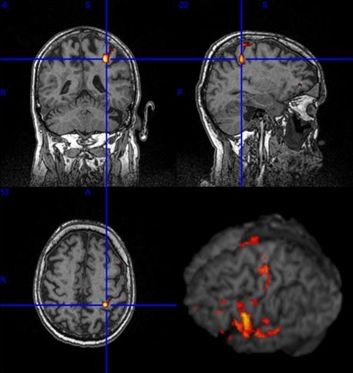
Activation of the motor and somatosensory cortex to hand movements and tactile stimulation were compared with preoperative investigations on functional MRI studies (Box 4). There was evidence of neural plasticity with some extension of the functional cortical representation and a return of the locus of hand somatotopy.
Discussion
Since the first hand allograft in the modern era of transplantation,1 71 hand transplants have been performed in 51 recipients. Three of 33 patients in Western countries have lost their grafts.2 The functional results of hand transplant procedures have been encouraging: motor recovery has enabled patients to perform most activities of daily living, and protective sensation has been achieved in all. Australia's first hand transplant recipient has been transformed from a man without the ability to live independently to one with independence, improved quality of life and self-worth.
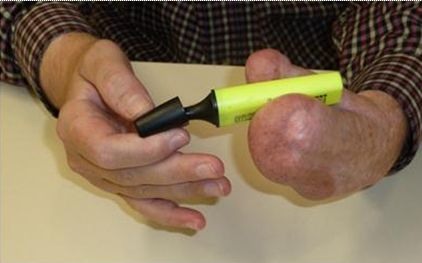
Two major issues needed to be considered before transplantation. The first was the decision to perform a unilateral rather than bilateral hand transplant, which was influenced by residual, albeit rudimentary, sensory and motor function of the recipient's left stump where a faux thumb had been fashioned. Although not very useful when paired with the right wrist stump, it had the potential for (and has proven to be) quite useful when paired with a dextrous hand transplant (Box 5). Cotransplanting the left hand posed the risk of bilateral shorter forearm stumps and worsening of the recipient's already limited upper limb function should the transplant fail. Such a risk was deemed unacceptable.
The second issue was that of immunosuppression given the significantly increased risk of infection posed by the recipient's age3 and asplenic state. We chose basiliximab for induction therapy (in light of the low panel reactive antibody score) and a conventional immunosuppressive protocol for maintenance therapy, which included tacrolimus for its potent immunomodulatory actions and neuroregenerative capacity.4
In renal transplantation, the presence of DSAs is associated with an increased risk of antibody-mediated rejection (AMR) and graft loss.5 Despite identifying two DSAs, immunosuppression was not augmented because of the low titre of DSAs, negative crossmatch test results and uncertain clinical relevance in hand transplantation in which AMR has not been reported. Currently, no DSAs are detectable in the recipient. Whether the pretransplant DSAs have been absorbed by the graft or were cross-reactive with antibodies against non-HLA proteins is not known.
Acute rejection is experienced by most hand transplant recipients within the first year of transplantation,2 and the skin is the main target.6 In the case of persistent rejection, mild inflammation of the muscles and tendons may be seen but the bones and joints are spared.6 An advantage of hand allografts over other solid organ transplants is that they are directly visible, which enables early detection of rejection.
Chronic rejection, defined by vasculopathy and fibrosis of the skin and adenexal structures, has been reported in hand transplant recipients from a single centre with the longest recorded outcomes.7 Advanced ultrasound biomicroscopy technology has revealed some level of vasculopathy in all six recipients, which was severe in two and led to graft loss in one. Our group has previously reported on long-term vascular occlusion in limb replantation8 and, clearly, the added vascular risk with immunosupression in a single feeding artery is cause for concern in our patient.
The issue of steroid withdrawal requires consideration in light of the patient's pre-existing dysglycaemia and osteoporosis. A steroid-free protocol has been used in at least one hand transplant recipient,9 and successful withdrawal has been reported in others. Although there are many theoretical benefits of avoiding the use of prednisolone in hand transplantation, it is not known what effect this would have on the immunological response to these grafts, with the main concern being the emergence of vasculopathy and graft loss,7 which can be triggered by repeated episodes of acute rejection experimentally.10
Adverse effects arising from immunosuppression are common, and include both infectious and metabolic complications. Significant life-threatening complications such as endstage renal failure are infrequent. One patient died after a simultaneous face and bilateral hand transplant.2 To date, the immunosuppressive regimen we used for our patient has been well tolerated. Hyperglycaemia and dyslipidaemia have required pharmacotherapy. Pre-existing osteoporosis and a heightened susceptibility to infection necessitate vigilant surveillance, and the presence of solar keratoses and the high level of ultraviolet radiation exposure in Australia mandate preventive health practices.
In conclusion, hand transplantation has been successfully performed in Australia with the use of conventional immunosuppression with impressive functional outcomes and minimal complications at 2 years. Unlike most solid organ transplantation, which is life-saving, hand transplantation is life-enhancing. The recipient has functionally and psychologically integrated his new hand, and reports that “it has restored my quality of life . . . I couldn't do anything without hands”.
1 Pretransplant view of the recipient's arms showing amputation at the metacarpal-phalangeal joint on the left with faux thumb (A) and distal to the carpometacarpal joint on the right (B)
2 Photomicrograph* showing acute cellular rejection with lymphocytes surrounding and extending into an adnexal structure
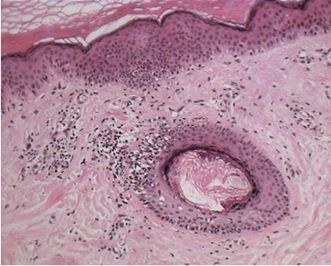 |
* Magnification ×200, haematoxylin and eosin stain. |
3 Transplanted hand 1 year after transplantation
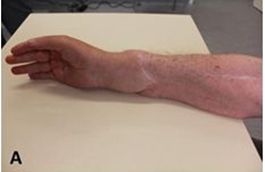 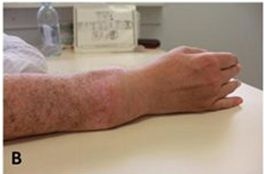 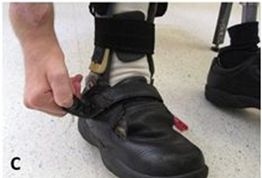 |
(A) Volar and (B) dorsal aspects. (C) Donning right prosthetic limb. |

Competing interests
Karen Dwyer and Angela Webb received financial support from Janssen-Cilag and Novartis, respectively, to attend the American Society for Reconstructive Transplantation Meeting in Chicago, United States, in November 2010.
Acknowledgements
The recipient and transplant team gratefully acknowledge the donor family and DonateLife – Victorian Organ Donation Agency. We acknowledge Wilma Beswick, Chief Medical Officer at St Vincent's Hospital Melbourne for her critical involvement in the hand transplant preparation and procedure. We also acknowledge Dan Purtell and Hayley O'Sullivan, occupational therapists of the Hand Therapy Department at St Vincent's Hospital, and Theresa Swanson, wound management specialist, and Catherine Atkinson, occupational therapist, at South West Healthcare for their commitment and involvement in the patient's care. The O'Brien Institute acknowledges the Operational Infrastructure Support Program of the Victorian State Government's Department of Innovation, Industry, and Regional Development.
References
- Dubernard JM, Owen E, Lefrançois N, et al. First human hand transplantation. Case report. Transpl Int 2000; 13 Suppl 1: S521-S524. _Ref362553774
- Petruzzo P, Lanzetta M, Dubernard JM, et al. The International Registry on Hand and Composite Tissue Transplantation. Transplantation 2010; 90: 1590-1594. _Ref362553799
- Meier-Kriesche HU, Ojo A, Hanson J, et al. Increased immunosuppressive vulnerability in elderly renal transplant recipients. Transplantation 2000; 69: 885-889. _Ref362553970
- Tanaka K, Fujita N, Higashi Y, Ogawa N. Neuroprotective and antioxidant properties of FKBP-binding immunophilin ligands are independent on the FKBP12 pathway in human cells. Neurosci Lett 2002; 330: 147-150. _Ref362554152
- Lefaucheur C, Loupy A, Hill GS, et al. Preexisting donor-specific HLA antibodies predict outcome in kidney transplantation. J Am Soc Nephrol 2010; 21: 1398-1406. _Ref362554387
- Kanitakis J, Jullien D, Petruzzo P, et al. Clinicopathologic features of graft rejection of the first human hand allograft. Transplantation 2003; 76: 688-693. _Ref362554775
- Kaufman CL, Ouseph R, Blair B, et al. Graft vasculopathy in clinical hand transplantation. Am J Transplant 2012; 12: 1004-1016. _Ref362554894
- Morrison WA, Mitchell GM, Hickey MJ. Late occlusion of microvascular vein grafts in replantation. J Hand Surg Am 1998; 23: 1106-1111. _Ref362554966
- Schneeberger S, Landin L, Kaufmann C, et al. Alemtuzumab: key for minimization of maintenance immunosuppression in reconstructive transplantation? Transplant Proc 2009; 41: 499-502. _Ref362555094
- Unadkat JV, Schneeberger S, Horibe EH, et al. Composite tissue vasculopathy and degeneration following multiple episodes of acute rejection in reconstructive transplantation. Am J Transplant 2010; 10: 251-261. _Ref362555324
Rhabdomyolysis After COVID-19
Navya Kataria, Abel Devadass, Lana Sundac, Laura De Souza, Nabeel Sheikh, Samantha Ng, Scott Campbell, Yishen Wang, Ross S. Francis
Technological advances in the search for a CURE for asthma
Sara Quon, Timothy M Johanson, Ridhima Wadhwa, Alen Faiz, Anthony Flynn, Gary P Anderson, Amanda J Cox, Nicholas P West, Michael P Menden, Rhys S Allan
The CURE Asthma roadmap
Gary P Anderson, Anthony Flynn, Phil G Bardin, John D Blakey, Shyamali C Dharmage, Paul Foster, Peter G Gibson, Adam Jaffe, Alan James, Christine R Jenkins, Sundram Sivamalai, Peter D Sly, Guy B Marks, Vanessa M McDonald, Judy Wetttenhall
The first live term birth following uterus transplantation in Australia
Rebecca Deans, Brigitte Gerstl, Antonia W Shand, Sarah Lyons, Aaron Budden, Helen L Barrett, Grant Luxton, Mangalee Fernando, Kenneth Yong, Karen Keung, Kaushalya Arulpragasam, Henry Pleass, King Man Wan, Eva Kehag, Jana‐Emily Pittman, Mianna Lotz, Maria Fenn, Erin Nesbitt‐Hawes, Lily Byun, Katrina Tang, Mats Brannstrom, Jason Abbott
The public health impacts of mining in Australia
Javier Cortes‐Ramirez, Ruby N Michael, Leisa‐Maree Toms, Melissa Haswell
Lingual Raynaud phenomenon
Michael Taggart, Mina John