




Reflections
Volume 199 - Issue 11
Why I don’t mind working nightshift anymore
Author: Kristin J Boyle
Med J Aust 2013; 199 (11): 817. || doi: 10.5694/mja13.11112
Published online: 16 December 2013
Published online: 16 December 2013
A newborn child’s critical illness changes his mother’s perspective on her own medical careerOn a cold Monday night in late winter, I pulled on my scrubs, packed my lunch and crept quietly into the small, cosy room my children share. My daughter was lying rumpled and skewiff in her big bed, covers thrown back, her little nappy-clad bottom in the air. I moved to the ...
A newborn child’s critical illness changes his mother’s perspective on her own medical career
On a cold Monday night in late winter, I pulled on my scrubs, packed my lunch and crept quietly into the small, cosy room my children share. My daughter was lying rumpled and skewiff in her big bed, covers thrown back, her little nappy-clad bottom in the air. I moved to the cot where my son was safe and snuggly in his baby sleeping bag, little hands balled into tight fists by his face, fair head turned to one side, breath soft and rhythmic. Then I kissed my husband, patted our dogs and went to work, staying up all night to treat other people’s families while mine slept. I was back on the grindstone of the emergency department registrar roster, where nightshift is as inevitable as breathing.
Six months earlier, late in the afternoon of his due date, my son Tom entered the world and took his first breath. But when the warm slippery bundle was placed upon my chest, he simply lay, still and blue, his initial mew of surprise followed by silence. The paediatrician went to work, suctioning his trachea before gently inflating his lungs with tiny, quick bursts of the toy-like resuscitator. Oxygenated blood now circulating again, Tom gave a few tentative cries then settled into steady, if slightly fast, respirations. The crisis had passed and we all relaxed a little. Except my husband, the only non-health professional in the room, who still had the sick feeling of something being very wrong. His human intuition turned out to be more accurate than the accumulated knowledge and experience of the rest of us.
The next time I saw him, my now 2-hour-old son was lying prone, grunting, breathing too fast, the muscles retracting deep between his ribs as he desperately tried to move air into his little lungs. The thick, toxic meconium sludge was clogging his air passages, delicate alveoli tissue becoming progressively more inflamed and waterlogged. A weakened patch of his right lung had overexpanded and perforated, the growing pneumothorax further compromising his efforts to breathe. The special care nurses were quiet and serious. Perhaps still unsure of the situation and my role within it, I asked to see his cord blood gas test results. They were not reassuring. My boy was sick.
Events progressed. A solemn talk with the paediatrician. The wait while he was intubated and “plumbed” for transfer. A midnight departure for elsewhere. I was not well enough to accompany him, but my husband and I agreed that he should leave my side to be with our new son. To advocate for him, to hold his little hand so he never felt alone, and, we both felt but didn’t articulate, to ferociously fight off death if it circled. That the separation felt so unnatural as to be outside the laws of physics didn’t concern me. If Tom were to survive, he would need more than cuddles and his mother’s breast.
Born elsewhere in place or history, Tom would have died in his first 24 hours. And if our son had died that night, he would have been simply one of the almost 2 million babies who die on the day they are born each year. Our personal story, however, would have changed profoundly, sadness and loss seeping through to wash the colour out of our days. Despite our beautiful daughter to hold close, and the possibility of more children to come, we would have known much of what is known to the brave parents who have to live with empty arms.
But Tom survived. After 5 days on extracorporeal membrane oxygenation, another 7 days ventilated and a total of 3 weeks in hospital, we strapped our tiny bundle into his capsule and, driving slowly and carefully, took him home.
There are many reasons why Tom didn’t die during that first night. The paediatrician on call recognised his early deterioration and organised a timely transfer. The retrieval system worked as it should, and Tom was taken to the right hospital at the right time. The retrieval staff maintained his standard of care en route, and his receiving hospital was a paediatric centre of excellence that therefore had very good extracorporeal membrane oxygenation facilities.
But Tom also survived because caring and experienced clinicians left their homes and families at bedtime and went to work. There, they made difficult judgement calls and performed challenging procedures at hours during which they could have been sleeping undisturbed had they chosen another career.
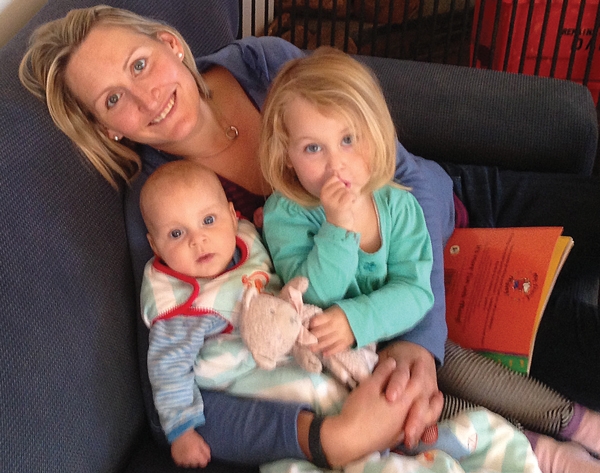
And that is why I don’t mind working nightshift anymore. Because it would be an honour to be the alert and skilled doctor whose actions overnight changed the course of someone else’s personal story. Because I have a hell of a lot of paying it forward to do. And because, at the end of my shift, I go home and I see my Tom.
Forty Years in the Making: Reporting on the Co-Creation of a National Roadmap for Birthing on Country Services for the Best Start to Life
Res McCalman, Anneka J. Bowman, Roianne West, Kristie Watego, Jyai Allen, Claire Clack, Sue Kildea, Sue Kruske, Melanie Briggs, Cleone Wellington, Rebecca Coddington, Yu Gao, Isabella Garti, Sascha Kowalenko, Sarah Ireland, Catherine Austin, John D. Boffa, Marah Prior, Kelsie Kahl, Bettina Chaseling, Sarah Khaw, Emily Armstrong, Donna Hartz, Yvette Roe
Temporal Trends in Preterm Birth Associated With Hypertensive Disorders of Pregnancy in Victoria, Australia: A Population-Based Interrupted Time-Series Study
Melvin Marzan, Heng Jiang, Daniel Lorber Rolnik, Joanne M. Said, Lisa Hui
Linguistic Manoeuvres: Obstetric Violence Camouflages Harm and Loss of Consent From Birth
Liz Sutton, Harsha Ananthram, Rebecca Matthews
Linguistic Manoeuvres: Obstetric Violence Camouflages Harm and Loss of Consent From Birth
Bashi Kumar-Hazard, Andrew M. Bisits, Sharon L. Settecasse, Jenny Gamble, Hazel Keedle, Hannah G. Dahlen
Linguistic Manoeuvres: Obstetric Violence Camouflages Harm and Loss of Consent From Birth
Wendy Pollock, Alissa Fleming, Ensieh Fooladi, Joy Kloester, Anne Tremayne, Yasmin Zisin, Bethany Carr, Kym Davey, Suzanne Willey, Jenny Gamble
Getting on the Same Page: Why Australia Needs a National Maternity Early Warning System (MEWS) Chart
Briony A. Cutts, Lucy Bowyer, Nisha Khot, Sandra Lowe, Stefan C. Kane