




Volume 196 - Issue 3
You and me
Author: Josef McDonald
Med J Aust 2012; 196 (3): 205. || doi: 10.5694/mja12.10195
Published online: 20 February 2012
Published online: 20 February 2012
Macca
Medicine was one of many options that I considered at the end of high school, along with engineering and even astronomy. But my interests in science and social justice drew me to medicine and, in the summer before commencing my studies, I was naively confident and felt as though the world was my oyster. These feelings were short-lived when I moved to Randwick in February 2005 to begin my medical studies at the University of New South Wales.
I found the content challenging, and studying occupied most of my time. I also found socialising to be very challenging, as my peers were quite different from those I had spent my time with at home. This caused a feeling of alienation and I succumbed to the “imposter syndrome”, where I felt as though I did not deserve to be in medicine. Everyone appeared to be smarter, better educated, better supported, better travelled and more articulate than me.
As a result, I mainly focused on my work and avoided engaging in medicine-related extracurricular activities. I travelled back home to Newcastle every weekend because I was homesick, and this affected my academic performance. Travelling home often reinforced a very poor habit of only studying towards the exam period, which caused lots of anxiety and little sleep, eroding my enthusiasm.
My friends and I used humour to maintain a positive mental attitude, often to the delight of spectators. However, despite my best efforts, I was losing stamina quickly and didn’t think I could continue my studies at this rate. I had lost all my pleasurable pastimes — I found little opportunity to go fishing in Sydney. The only thing I seemed to gain during the early years of my medical studies was 15 kg.
At 11 o’clock one morning I received a phone call from Professor Lisa Jackson Pulver (Director of the Muru Marri Indigenous Health Unit at the university). She encouraged me to apply for the Shalom Gamarada Indigenous Scholarship Program and, in mid-2006, I was accepted into the program by the Master of Shalom College, Dr Hilton Immerman.
Receiving a Shalom Gamarada scholarship was crucial to my personal development and my transformation into a doctor. If it wasn’t for the support of the people on the scholarship program, I doubt that I would have successfully completed medicine.
I started to become less homesick, as Shalom College offered a very welcoming, racism-free environment, with fellow students from an Indigenous background. Hilton and the other staff at Shalom should be congratulated for this, as it is only due to ongoing vigilance that a racism-free college can be achieved. I became less homesick and more confident to spend time in Sydney and with my peers, knowing that if I had a bad day, I always had a safe place to return to. My results instantly improved. I started engaging with the material and taking responsibility for my medical career — although not without some bumps along the way.
Seeing people like Hilton and Lisa model professional behaviour was another crucial element in my success in the medicine program. I usually saw Hilton in his office, often by his request, to discuss something that happened over the weekend. My friends and I came to dread the 9 am phone call on the Monday after an eventful weekend. Hilton was always fair and this appealed to our sense of justice. I felt comfortable to “pop in” to Hilton’s office to ask him questions about my studies, relationships or personal conduct, and his opinions were always valued.
I no longer felt like a rudderless ship. My self-esteem was greatly improved, knowing that I had support and finally had a place in Sydney that I knew I could call home. It was the first time in my life that I felt empowered to achieve anything I set my mind to.
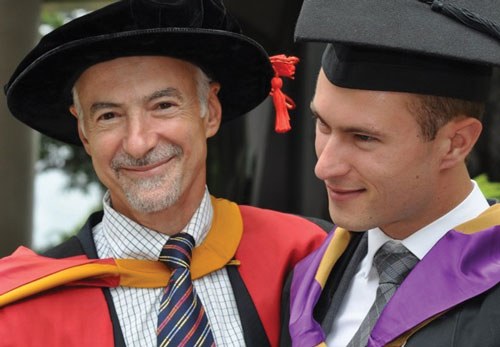
It was an indescribable feeling seeing Shalom College and Muru Marri staff at my graduation. What I have achieved still hasn’t sunk in, and I cannot be thankful enough to those who gave me this opportunity. What I do understand very well is that if it had not been for a phone call, the great work of Shalom College, and my very generous benefactor, I could have been in a very different place.
Decolonising Indigenous Health Research Requires Redefining Sex, Sexuality and Gender
Shakara Liddelow-Hunt, James H. L. Hill, Kate Daglas, Kaiwarr Clancy, Madi Day, Alistair Ott
Beyond Structural Neglect: Using Evidence to Strengthen Primary Health Care Systems, Policies and Programs for Aboriginal and Torres Strait Islander Men
Kootsy Canuto, Celina Gaweda, James Smith, Karla J. Canuto
Costs of Delivering the Hep B PAST Model of Care in Remote Australia: A Retrospective Pre–Post Study
Hoa Nguyen, Anh Le Tuan Nguyen, Paula Binks, Melita McKinnon, Emily Vintour-Cesar, Karen Wills, Nicola Stephens, Benjamin Cowie, Joshua S. Davis, Yuejen Zhao, Peter Nihill, Julie A. Campbell, Andrew J. Palmer, Jane Davies, Barbara de Graaff
Epidemiology and Quality of Care for Aboriginal and Torres Strait Islander Peoples Treated by Emergency Medical Services for Stroke in Victoria, Australia: Retrospective Analysis of Linked Data
Candice Menezes, Ziad Nehme, Luke J. Burchill, Tegwyn McManamny, Angela Dos Santos, Michelle Crilly, Luke P. Dawson, Benjamin Clissold, David Anderson, Emily Nehme
Hepatitis C Among First Nations Australians: A Rethink Is Required to Meet the 2030 Elimination Target
James Ward, Emily Pegler, Kellie Stacy, Stephen Harfield
Sovereignty and Survival: Understanding Lung Cancer Outcomes for Aboriginal and Torres Strait Islander People in Australia, a Case–Control Study
Alice R. T. Bergin, Luc te Marvelde, Roger L. Milne, Benjamin J. Solomon, Kris Ivanova, Peter Savas, Stephen J. Luen, Jay Hamann, Andrea Casey, Nicole Watt, Sue M. Evans, Gail Garvey, Sherene Loi