




Volume 195 - Issue 5
Harlequin syndrome after jogging
Authors: Agustín Toll and Alberto Gálvez-Ruiz
Med J Aust 2011; 195 (5): 288. || doi: 10.5694/mja11.10572
Published online: 5 September 2011
Published online: 5 September 2011
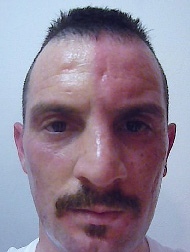
A 35-year-old man sent us this self-portrait, taken with a digital camera, showing significant asymmetric flushing on the left side of his face after jogging. The episode resolved spontaneously after 30 minutes of rest. Harlequin syndrome consists of flushing limited to one side of the face due to sympathetic disturbance on the contralateral side.1 Although most cases are benign, imaging and neurological examination should be performed in patients with this condition to rule out serious structural lesions of the sympathetic pathway, such as mediastinal neurinoma, spinal invasion by lung cancer and brainstem infarction.
References
- Wasner G, Maag R, Ludwig J, et al. Harlequin syndrome — one face of many etiologies. Nat Clin Pract Neurol 2005; 1: 54-59. 0_IBCFFEGB
Shifting focus to adolescent wellbeing and inclusive participation in the digital age
Allyson R Todd, Elena Wang, Stephanie R Partridge
The clinical presentation, investigation, and management of women diagnosed with endometriosis in Australian general practices, 2011–2021: an open cohort study
Danielle Mazza, Kailash Thapaliya, Sharinne B Crawford, Alissia Hui, Maryam Moradi, Luke E Grzeskowiak
The impact of the Breast Screen NSW transition from film to digital mammography, 2002–2016: a linked population health data analysis
Rachel Farber, Nehmat Houssami, Katy J L Bell
Non‐technical errors associated with deaths in surgical care, Australia, 2012–2019, by surgical specialty (Australian and New Zealand Audit of Surgical Mortality): a retrospective cohort study
Jesse Ey, Victoria Kollias, Octavia Lee, Kelly Hou, Matheesha Herath, John B North, Ellie Treloar, Suzanne Edwards, Martin Bruening, Adam J Wells, Guy J Maddern
The CURE Asthma roadmap
Gary P Anderson, Anthony Flynn, Phil G Bardin, John D Blakey, Shyamali C Dharmage, Paul Foster, Peter G Gibson, Adam Jaffe, Alan James, Christine R Jenkins, Sundram Sivamalai, Peter D Sly, Guy B Marks, Vanessa M McDonald, Judy Wetttenhall
Evidence from Australian cohort studies about asthma trajectories and transitions across the life course: a narrative review
Caroline Lodge, Xin Dai, Ingrid A. Laing, Michael P Menden, Anthony Flynn, Gary P Anderson, Sarath Ranganathan, Shyamali C Dharmage