




Volume 195 - Issue 10
The contribution of Australian and New Zealand obstetricians and gynaecologists to modern clinical practice
Authors: Jennifer N Lees and Colin A Walsh
Med J Aust 2011; 195 (10): 577. || doi: 10.5694/mja11.10184
Published online: 21 November 2011
Published online: 21 November 2011
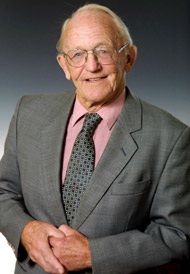
Professor Sir Graham Collingwood Liggins
(24 June 1926 – 24 August 2010)
Sir Graham Liggins, who died last year aged 84, made arguably the greatest contribution of any Australian or New Zealand practitioner to modern obstetric practice. Educated at the University of Otago, his work in the 1960s on causes of prematurity led to the publication of a landmark randomised controlled trial. This 1972 report demonstrated a two-thirds reduction in the incidence of respiratory distress syndrome in preterm neonates who had received antenatal corticosteroids. Although not immediately universally accepted, subsequent work substantiated the benefit of this simple, ground-breaking treatment. The administration of antenatal glucocorticoids, now standard obstetric practice, is widely acknowledged as the single most effective therapy in minimising mortality from prematurity.
 | |||||||||||||||
|
Image courtesy: Bruce Jarvis, Auckland, New Zealand. | |||||||||||||||
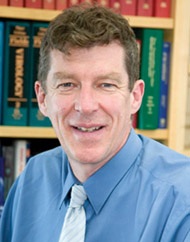
Professor Ian Frazer (6 January 1953 –)
Named Australian of the Year in 2006, Professor Ian Frazer’s development of a vaccine against the human papillomavirus (HPV) is arguably the most significant advancement in the prevention of gynaecological cancer in modern times. After completing medical studies in his native Scotland, he emigrated to Melbourne. Initial research into HIV-related immunodeficiency led to work on HPV and subsequently the creation of virus-like particles, from which the HPV vaccine would eventually develop. The recipient of numerous scientific and medical accolades, including the 2009 Australian Medical Association Gold Medal, he is currently Director of the Diamantina Institute at the University of Queensland.
 | |||||||||||||||
Sir Albert William Liley
(12 March 1929 – 15 June 1983)
Born and educated in Auckland, the “Father of Fetology” was a pioneer in maternal and fetal physiology. Practising at a time when Rhesus isoimmunisation was a major disease, he developed a graph that enabled interpretation of amniotic bilirubin levels into prognostic “Liley’s zones”, allowing more accurate prediction of stillbirth risk. Over 4 years, Rhesus-associated perinatal mortality in Auckland fell from 22% to less than 9%. Liley is also credited with the first successful intrauterine fetal transfusion, in 1963. This case laid the foundation for the evolution of fetal therapy and the acceptance of the fetus as a person in his or her own right in the decades that followed.
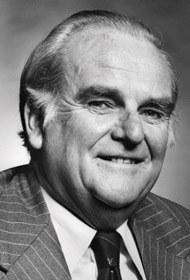
Ian Alexander McDonald
(1 April 1922 – 4 September 1990)
Ian McDonald was born in Perth, Western Australia, but throughout his career practised mostly at the Royal Melbourne Hospital. His most significant contribution to modern obstetric care is the cervical cerclage (suture) that bears his name. The concept of inserting a stitch to close an incompetent cervix was first introduced by Vithal Shirodkar in 1955. In 1957, McDonald published a technically easier approach: a simple purse-string suture involving circumferential bites around the cervix at the level of the internal os, without the need for bladder dissection. The McDonald cerclage now forms part of the standard surgical armamentarium of the contemporary obstetrician.
 | |||||||||||||||
|
Image courtesy: Archives of the Royal Melbourne Hospital. | |||||||||||||||
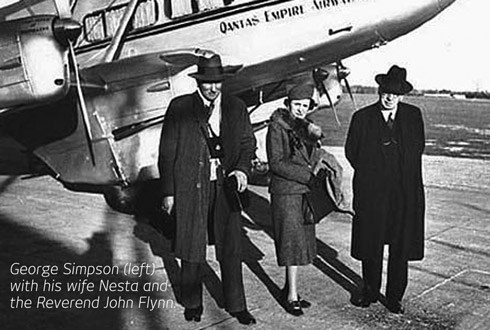
George Simpson
(14 May 1899 – 24 November 1960)
Born in Clifton, Victoria, the young George Simpson was introduced to a number of ministers from the Presbyterian Church, including Reverend John Flynn. This was the beginning of a collaboration from which the Aerial Medical Service (later known as the Royal Flying Doctor Service of Australia) would eventually emerge. Simpson graduated from the University of Melbourne and, in 1927, undertook a 3-month survey to assess the medical needs of the Australian outback. In that year, he undertook the first unofficial flight of the Service, evacuating a miner with a spinal fracture from Mount Isa. Later, he established Melbourne’s first family planning clinic. Appointed an Officer of the Order of the British Empire in 1957, he died 3 years later aged 61.
 | |||||||||||||||
|
Image courtesy: National Archives of Australia | |||||||||||||||
Competing interests
No relevant disclosures.
Acknowledgements
Colin Walsh is partially funded by a University of New South Wales International Research Scholarship.
Prisoner of war pathology in Changi, 1942–1945
Kate Ariotti, Elizabeth Roberts‐Pedersen
Should medical eponyms continue to be used in everyday practice?
Leya Nedumannil, Diana Lewis
100 years on: the first use of insulin in Australia
Sophie Templer
Reflections on the life and career of Professor Dame Valerie Beral AC DBE FRS FRCOG FMedSci (1943–2022)
Karen Canfell, Bette Liu, Emily Banks
The Honourable Dr Donald James Grimes AO
Michael Kirby, Patti Warn
From wipeout to drill out: a history of exostosis management and Australian surfing
Alon Taylor, Hannah North, Narinder P Singh, Paul A Fagan