




Volume 194 - Issue 3
MS: a kernel of hope
Author: James McLeod
Med J Aust 2011; 194 (3): 145. || doi: 10.5694/j.1326-5377.2011.tb04199.x
Published online: 7 January 2011
Published online: 7 January 2011
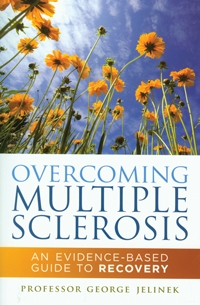
Overcoming multiple sclerosis. An evidence-based guide to recovery.
George Jelinek. Sydney: Allen & Unwin, 2010 (375 pp). ISBN 9781742371795.
MULTIPLE SCLEROSIS (MS) is a chronic disabling disease that predominantly affects young women, with onset commonly at the age of 30–35 years. Its prevalence in Australia and elsewhere is steadily increasing. Many treatments have been tried over the years without success but, over the past decade, immunotherapy with beta-interferons and glatiramer has been demonstrated by many clinical trials to reduce the number of relapses and the rate of progression of disability. More recently, natazilumab has proven to be very effective. Unfortunately, all these drugs have side effects and none has yet been able to completely stop, let alone reverse, the progression of the disease.
George Jelinek is an Australian academic emergency physician with MS and a family history of the condition. In this book, he reviews the possible causes and treatments for, and effects of, the disease, with particular emphasis on dietary treatment and lifestyle changes.
He advocates a low saturated fat diet, exposure to 10–15 minutes of sunlight 3–5 times weekly, correction of vitamin deficiencies, regular exercise, avoidance of stress, and daily meditation, as well as one of the approved drug therapy regimens.
The evidence for dietary measures and other non-pharmacological forms of treatment for MS is not very convincing, but they are not harmful and may improve general health.
The book is well written. Each chapter has helpful summaries of the main points in language readily understandable by lay readers. It provides important, up-to-date information about the disease, positive support, encouragement and guidance for those with MS.
Motor Neuron Disease Mortality Trends in Australia From 1986 to 2023: A Population-Based Study
Carol M. Y. Lee, Rupendra N. Shrestha, Julian Gold, Mark Stevenson, Kelly L. Williams, Lyndal Henden, Sandrine K. K. Chan Moi Fat, Zoe Zussa, Amanda Wright, Martin Jude, Mark A. S. Laidlaw, Willem J. R. Fokkink, Dominic B. Rowe
Mild traumatic brain injury and concussion and persisting post‐concussion symptoms: new guidelines to support evidence‐based assessment and management in Australia and Aotearoa New Zealand
Karen M Barlow, Jennie L Ponsford, Alice Theodom, Gill Cowen, Gavin A Davis, Vicki Anderson, Franz E Babl, David Cole, Jennifer Cullen, Stuart R Dalziel, Melinda Fitzgerald, Howard Flavell, Caroline Yates, Rebecca Kimble, John H Olver, Rhonda Orr, Mark Ralfe, Michael Rose, Nick Rushworth, Julia Treleaven, Gary Browne, Nathan Delang, Sarah Harris, Gary Mitchell, Sean Tweedy
The prevalence of and variation in indicators of the quality and safety of long term aged care in Australia, 2019: a cross‐sectional population‐based study
Tesfahun C Eshetie, Gillian E Caughey, Catherine Lang, Olivia Ryan, Renuka Visvanathan, Craig Whitehead, Keith Evans, Janet K Sluggett, Jyoti Khadka, Carolyn Dawkins, Helena Williams, Miranda Starke, Sara Blunt, Anne Liddell, Megan Corlis, Anna Sheppeard, Penelope Lello, Marilyn Thien, Steven L Wesselingh, Maria C Inacio
Health and economic benefits of improving pre‐hospital identification of stroke in Australian women: a modelling study
Thomas Gadsden, Lei Si, Emily R Atkins, Cheryl Carcel, Xia Wang, Stephen Jan, Mark Woodward, Laura E Downey
Symptom burden, quality of life, and diagnostic journey of people with postural orthostatic tachycardia syndrome, Australia, 2021–24: a descriptive patient registry data study
Marie‐Claire Seeley, Gemma Wilson, Eric Ong, Amy Langdon, Jonathan Chieng, Danielle Bailey, Kristina Comacchio, Amanda Page, Dennis H Lau, Celine Gallagher
The intersection of rurality and dementia prevalence in Australia for Aboriginal and Torres Strait Islander and non‐Indigenous peoples
Antonia J Clarke, Marwan Ahmed, Judith M Katzenellenbogen, John Towney (Wiradjuri), Anna H Balabanski, Adrienne Withall (Dharawal Yuin), Kylie Radford, Amy Brodtmann