




Volume 193 - Issue 5
In Other Journals
Author: Alison Williams
Med J Aust 2010; 193 (5): 308. || doi: 10.5694/j.1326-5377.2010.tb03918.x
Published online: 6 September 2010
Published online: 6 September 2010
Mind the gap
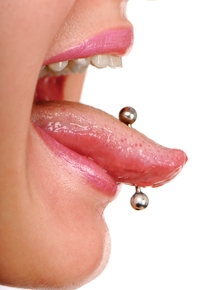 Tongue piercings are becoming more common, but they can cause damage to adjacent teeth and gums. Dentists in Buffalo, NY, report a case of a young woman who developed a large gap between her upper front teeth seven years after having the tip of her tongue pierced — apparently the result of the metal stud being constantly pushed against her teeth. The patient required orthodontic work with a fixed brace for an extensive period of time to close the gap.
J Clin Orthod 2010; 44: 426-428
Love and longevity
Although the link between quality of social relationships and health has been recognised for several decades, the impact on survival may be much greater than previously thought. A meta-analysis of 148 studies (including more than 300 000 participants followed over a mean of 7.5 years) showed improved survival among those with stronger social relationships (OR, 1.5; 95% CI, 1.42-1.59). Moreover, perceived “loneliness” conferred a risk of mortality comparable with smoking 15 cigarettes a day and drinking excessively. Socialisation was assessed in several ways, including marital status, number of networks and other measures of the quality of relationships. Although all were predictive of reduced mortality, the effect was more evident where relationships were characterised by greater perceived support and social integration, indicating that the quality rather than the quantity of relationships may be most important.
PLoS Medicine 2010; 7: e10000316
Pregnant pause
Some doctors recommend that women delay becoming pregnant after miscarrying, but results of a recent study indicate that those who conceive again within 6 months are actually less likely to miscarry a second time.1 The Scottish study analysed data for about 31 000 women and found that those who conceived again within 6 months of miscarriage had one-third the risk of having a subsequent miscarriage and half the risk of ectopic pregnancy or termination, compared with those who waited 6-12 months. The shorter time interval was also associated with a reduced likelihood of caesarean section, preterm delivery, and having an infant with low birth weight. Although it is unclear why the shorter interpregnancy interval seemed to improve outcomes, one theory is that women who conceive soon after miscarriage have a tendency towards increased fertility and have better pregnancy outcomes anyway.2
1. BMJ 2010; 341: c3967. doi:10.1136/bmj.c3967 2. BMJ 2010; 341: c4181. doi:10.1136/bmj.c4181
Vitamin D and Parkinson disease
Results of a large Finnish study suggest that vitamin D may protect against development of Parkinson disease.1 The study, which claimed to be the first longitudinal study to prospectively investigate this relationship, found that participants with vitamin D levels in the highest quartile had a relative risk of Parkinson disease of 0.33 (95% CI, 0.14-0.78) compared with those in the lowest quartile. This association remained even after adjusting for potential confounders such as body mass index, physical activity and month of blood draw. Interestingly, the study population lived in a country with limited sunlight exposure (vitamin D levels were reported to be 50% of the suggested optimal level) — consistent with observations of some epidemiological studies that there is a latitudinal north-south gradient for Parkinson disease, similar to that seen in multiple sclerosis.2
1. Arch Neurol 2010; 67: 808-811
2. Arch Neurol 2010; 67: 795-797
Lucky shorts
According to German researchers, the impact of superstitious beliefs and rituals among sports players such as wearing “lucky shorts” should not be underestimated. Their series of experiments showed that using a good-luck-related superstition (such as a lucky charm) resulted in a consistent improvement in both motor and cognitive performance. In one experiment, volunteers were asked to bring a lucky charm with them, which the researchers subsequently took away to photograph — however, only half of them had it returned before starting a memory test. Those who kept it performed significantly better, and this was reported to be owing to increased confidence in their abilities. Similarly, “crossing your fingers” improved manual dexterity, and being given a lucky golf ball improved putting prowess.
Psychol Sci 2010; 21: 1014-1020 doi: 10.1177/0956797610372631