




Volume 193 - Issue 3
In Other Journals
Author: Ann T Gregory
Med J Aust 2010; 193 (3): 183. || doi: 10.5694/j.1326-5377.2010.tb03844.x
Published online: 2 August 2010
Published online: 2 August 2010
On being lactose intolerant
 Most people with presumed lactose intolerance or lactose malabsorption can tolerate a cup of milk — according to the US authors of a systematic review. Shaukat and colleagues identified 36 unique randomised studies of individuals with lactose intolerance or malabsorption. They found that 12 to 15 g of lactose — approximately one cup of milk — is well tolerated by most adults. Symptoms occurred with increasing doses, with substantial symptoms reported in most studies testing the effects of 50 g of lactose. The researchers found there was insufficient evidence to determine the effectiveness of various treatments for lactose intolerance, including lactose-reduced milk, yoghurt, probiotics, the antibiotic rifaximin, and colonic adaptation.
Ann Intern Med 2010; 152: 797-803
Suicide and the luminous veil
In 2002-2003, the “luminous veil” — a 5 m high barrier — was constructed at Bloor Street Viaduct in Toronto to prevent suicides. Prior to the barrier being put in place, Canadian researchers Sinyor and Levitt said that the viaduct had the dubious distinction of being the second most popular bridge for suicide studied in the world, after San Francisco’s Golden Gate Bridge. Four years later, although the barrier had prevented any further suicides from this bridge, it had no effect on rates of suicide by jumping in the region.1 In a linked editorial, Gunnell and Miller said jumping was a relatively rare method of suicide and more promising targets for reducing the incidence of suicide may be methods that are more commonly used, highly lethal and readily accessible — such as toxic pesticides in developing countries and firearms in the United States.2
1. BMJ 2010; 341: c28842. BMJ 2010; 341: c3054
No smoking in public housing?
In Australia, from 2012 all tobacco products will be sold in standardised plain packs. Chapman and Freeman have said that this vanguard decision by the Australian Government could bring down the curtain on a century of the tobacco industry packaging carcinogenic, addictive products in attractive, beguiling boxes.1 Now, US authors have called for the US government to put a blanket ban on smoking in all public housing.2 Winickoff and colleagues reported that only 4% of Public Housing Authorities in the US have voluntarily opted to ban smoking in their public housing units. Federal regulation or contractual mechanisms would ensure that non-smoking policies were implemented in all public housing. In their view, an individual’s right to smoke would be over-ridden by a greater need to protect the vulnerable people who live in public housing from the harms of exposure to tobacco smoke.
1. BMJ 2010; 340: c2436 2. N Engl J Med 2010; 362: 2319-2325
Trialling physician assistants
The Feldsher — an assistant to the doctor — was used by the Russian army during the 17th century. Since that time, the fortunes of this health professional have waxed and waned. Today, the United States may be the only country using physician assistants (PAs) but there are more than 50 000 of them in current practice. Ho and colleagues reviewed the evidence for the use of PAs in health care delivery, finding that PAs have been shown to provide safe and high-quality care in surgical units, working best under the supervision of a consultant. With the widespread shortage of health care professionals, several countries are trialling PAs, including Canada, England, Scotland, the Netherlands, South Africa and Taiwan. Australia has joined this group with two PAs, both US-trained, involved in a pilot trial in a South Australian hospital. So far, these PAs have been generally well accepted by staff and patients.
ANZ J Surg 2010; 80: 430-437
Top surgeons
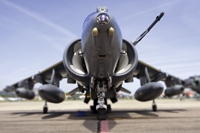 Harrier fighter pilots outperform both medical and non-medical undergraduate students in executing simulated laparoscopic surgical training tasks. Tsim and colleagues put 25 medical students, nine non-medical students and eight Harrier fighter pilots through their paces, asking them to complete four simulated tasks, including a bile duct cannulation and an appendicectomy. The Harrier pilots not only made fewer errors than the students, they were also quicker than the medical students in completing the appendicectomy task. The researchers said more laparoscopic simulation training could be offered to doctors. They also made the point that pilots are selected by aptitude for the role, including strong hand-eye coordination and spatial awareness. Perhaps surgical trainees might be similarly selected — as such candidates would likely require less time to reach competency.
Ann R Coll Surg Engl (Suppl) 2010; 92: 58-61