




Volume 192 - Issue 7
In Other Journals
Author: Alison Williams
Med J Aust 2010; 192 (7): 420. || doi: 10.5694/j.1326-5377.2010.tb03570.x
Published online: 5 April 2010
Published online: 5 April 2010
Hold the salt
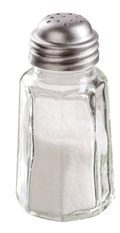 A population-wide reduction of 3 g salt per day could save up to $24 billion in annual health care costs, according to a US study. Dietary intake of salt by Americans is estimated to be double that recommended, with processed foods being the major source. The researchers used mathematical modelling to predict that reducing salt intake by 3 g a day (1200 mg sodium) would cut the annual number of new cases of coronary heart disease by 60 000, comparable to the impact of a 50% reduction in smoking. New cases of myocardial infarction and stroke would be reduced by 54 000 and 32 000 per year, respectively. The benefits are expected to extend to most of the population regardless of age or sex. As salt reduction on an individual basis is notoriously unsuccessful, the authors recommend government regulation to restrict salt levels in processed foods as an urgent public health target.
New Engl J Med online 20 Jan 2010
Up in smoke
 Frying steak on a gas stove may produce greater amounts of potentially carcinogenic substances than using an electric stove, according to Norwegian researchers. Cooking fumes contain polycyclic aromatic hydrocarbons (PAHs) and higher aldehydes, which are known to have mutagenic activity, and cooks and bakers are reported to have increased rates of respiratory tract cancers. The researchers set up a simulated restaurant kitchen and measured levels of PAHs and higher aldehydes in the breathing zone of the cook while frying steak in a pan. While the levels were below accepted occupational safety thresholds, they were significantly higher when steaks were cooked on a gas, rather than electric, stove.
Occup Environ Med online 17 Feb 2010
doi:10.1136/oem.2009.046144
Work and wellbeing
Do more flexible work arrangements improve employee health? A Cochrane review including ten before and after studies assessed the association between various types of work arrangements and employees’ blood pressure, heart rate, tiredness, sleep quality and self-rated health. Improvement in these outcomes was observed in employees whose work arrangements allowed them to plan their own work schedule, compared with those who had no such control.
Cochrane Database Syst Rev 2010; (2): CD008009
All in a week’s work
 Debate about the medical workforce usually focuses on numbers of doctors, but workforce planners also need to take into account hours worked. A survey using data from the US Census Bureau has shown a significant shortening of the working week for American physicians since 1996. Between 1996 and 2008, the average working week fell by a mean of 4 hours to 51 hours, representing an overall decrease of 7.2%. The greatest drop was 9.8%, but this was among hospital doctors after duty hour limits were imposed in 2003. With 630 000 doctors in America, a decrease in weekly hours worked of just 5.7% is equivalent to losing about 36 000 doctors from the workforce.
JAMA 2010; 303: 747-753
Cautionary transfusion tale
Although mosquitoes are the usual culprits for spreading yellow fever (YF) virus, possible transfusion-related transmission has now been reported. In an incident at a hospital blood bank, 89 military recruits donated blood 4 days after they had received YF vaccine. Donation is usually deferred for several weeks after vaccination with a live virus vaccine because of the theoretical risk of virus transmission, but none of the recruits reported having had the vaccine when answering screening questions at the blood bank. Despite a swift recall, 6 units had already been received by several patients, three of whom were subsequently found to have serological evidence of recent exposure to YF virus (but with no adverse clinical effects). The blood bank and the military college have both amended their protocols for screening potential blood donors.
MMWR 2010; 59: 34-35