




Volume 185 - Issue 5
Anaphylaxis to stings and bites
Author: Robert J Heddle
Med J Aust 2006; 185 (5): 290. || doi: 10.5694/j.1326-5377.2006.tb00564.x
Published online: 4 September 2006
Published online: 4 September 2006
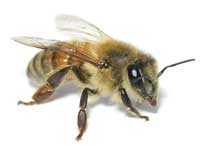
Insects that commonly cause anaphylaxis in Australia are honeybees, jack jumper ants and wasps. Honeybee (Apis mellifera) sting is the most common cause of sting anaphylaxis in most areas of Australia, except where jack jumper ants (Myrmecia pilosula) occur (in native woodland areas in southern and eastern Australia). In some regions of Australia, “European wasps” (Vespula spp) and “paper wasps” (including Polistes and Ropalidia spp) make significant contributions.
Who is at highest risk of anaphylaxis to stings and bites? People at highest risk of severe anaphylaxis after a sting are those aged over 35 years (Level II) and those who have had a previous severe reaction (Level II) (see case scenario Box).1,2
Do sting reactions always get worse? Sting hypersensitivity may persist for decades, but reactions to individual stings are highly unpredictable. Individual sensitivity and the amount of venom may vary, and each sting has the capacity to resensitise. Prospective sting studies have shown that the probability of the next sting giving no reaction or a lesser reaction than the presenting reaction is about 80% for Vespula wasps, 50% for honeybees and 30% for jack jumper ants.1-3
Evidence-based practice tip
When a definite diagnosis of rapid-onset, systemic sting allergy has been made and the responsible insect identified, insect venom immunotherapy is highly effective at reducing the risk of anaphylaxis to future stings (Level II).*
What are some common pitfalls in practice? Doctors should be aware that:
In some patients with sting anaphylaxis, rash may not be observed or may be very transient.4
Over the 60–90 minutes after the sting, many patients with sting anaphylaxis require more adrenaline (as judged by titrated continuous infusion4) than the amount provided by use of one EpiPen syringe.4
Although honeybee venom immunotherapy (VIT) provides significant protection against life-threatening stings, the protection appears to be less complete than that conferred by VIT for Vespula spp and the jack jumper ant.2,3
Case scenario*
A 60-year-old farmer was stung on the neck while driving a truck. After parking, he removed a stinger and found a dying bee. Within 5 minutes he experienced flushing, sweating, fading vision and momentary loss of consciousness. He was too confused to call an ambulance on his mobile phone, but managed to stumble out of the vehicle and lie on the ground, where he was found by a passing motorist 10 minutes later. An ambulance was called.
Paramedics arrived 20 minutes after the sting event and noted the man was wearing a MedicAlert bracelet. He was arousable, showed no respiratory distress or rash, and had a regular pulse rate of 55 beats/min and systolic blood pressure of 80 mmHg. The patient had brief expiratory wheeze and a blood oxygen saturation level of 88%. His condition improved with horizontal posture and with administration of oxygen, intramuscular adrenaline (0.5 mg injected into the lateral thigh) and nebulised salbutamol. On arrival at a hospital emergency department 30 minutes later, he received another intramuscular injection of adrenaline (0.3 mg), and 2 L normal saline was given intravenously over 20 minutes. A transient urticaria was noted.
After another 4 hours’ observation, the patient was discharged with a prescription for an automated adrenaline syringe (EpiPen), an emergency anaphylaxis action plan, and an appointment arranged to visit an allergy clinic.
The man had tolerated bee stings on multiple occasions up to the age of 53 years, when, for the first time, he developed flushing and mild wheezing 15 minutes after a sting. At that time, he was provided with an EpiPen. Five years later, he experienced an uneventful bee sting and decided not to renew the EpiPen. Intercurrent problems included mild chronic airflow obstruction, a history of smoking (until 30 years of age) and borderline hypertension (treated with a thiazide).
Specialist allergy assessment 1 month after discharge demonstrated serum-specific IgE to honeybee venom at 10 kU/L and a positive skin test to the venom at 0.01 μg/mL (intradermal). Based on sighting the insect, the presence of a stinger and demonstration of high-level specific IgE to honeybee venom, the recent events were attributed to allergy to honeybee sting. The patient’s respiratory and cardiac comorbidities may also have contributed to the severity of the reaction (Level IV).
Because of his occupation, the presence of comorbidities, the severe, hypotensive anaphylaxis after the latest sting, and the slow trend to higher failure rates once venom immunotherapy is discontinued,2 the patient was trained in using an EpiPen device and advised to carry one at all times and to undergo honeybee venom immunotherapy indefinitely. He was also given contact numbers for emergency services (dial 000 in Australia, or 112 from a mobile phone anywhere in the world) and advised how to minimise exposure.
* This is a fictional case scenario based on similar real-life cases.
Acknowledgements
I would like to thank Associate Professors Simon Brown and Raymond Mullins for their advice in preparation of this article.
References
- van der Linden PW, Hack CE, Struyvenberg A, van der Zwan JK. Insect-sting challenge in 324 subjects with a previous anaphylactic reaction: current criteria for insect-venom hypersensitivity do not predict the occurrence and severity of anaphylaxis. J Allergy Clin Immunol 1994; 94: 151-159. 0_i1091819
- Golden DBK. Insect sting allergy and venom immunotherapy: a model and a mystery. J Allergy Clin Immunol 2005; 115: 439-447. 0_CHDJCEIJ
- Brown SGA, Wiese MD, Blackman KE, Heddle RJ. Ant venom immunotherapy:a double-blind, placebo-controlled, crossover trial. Lancet 2003; 361: 1001-1006. 0_i1091823
- Brown SGA, Blackman KE, Stenlake V, Heddle RJ. Insect sting anaphylaxis: prospective evaluation of treatment with intravenous adrenaline and volume resuscitation. Emerg Med J 2004; 21: 149-154. 0_i1091825
Rhabdomyolysis After COVID-19
Navya Kataria, Abel Devadass, Lana Sundac, Laura De Souza, Nabeel Sheikh, Samantha Ng, Scott Campbell, Yishen Wang, Ross S. Francis
Technological advances in the search for a CURE for asthma
Sara Quon, Timothy M Johanson, Ridhima Wadhwa, Alen Faiz, Anthony Flynn, Gary P Anderson, Amanda J Cox, Nicholas P West, Michael P Menden, Rhys S Allan
The CURE Asthma roadmap
Gary P Anderson, Anthony Flynn, Phil G Bardin, John D Blakey, Shyamali C Dharmage, Paul Foster, Peter G Gibson, Adam Jaffe, Alan James, Christine R Jenkins, Sundram Sivamalai, Peter D Sly, Guy B Marks, Vanessa M McDonald, Judy Wetttenhall
The first live term birth following uterus transplantation in Australia
Rebecca Deans, Brigitte Gerstl, Antonia W Shand, Sarah Lyons, Aaron Budden, Helen L Barrett, Grant Luxton, Mangalee Fernando, Kenneth Yong, Karen Keung, Kaushalya Arulpragasam, Henry Pleass, King Man Wan, Eva Kehag, Jana‐Emily Pittman, Mianna Lotz, Maria Fenn, Erin Nesbitt‐Hawes, Lily Byun, Katrina Tang, Mats Brannstrom, Jason Abbott
The public health impacts of mining in Australia
Javier Cortes‐Ramirez, Ruby N Michael, Leisa‐Maree Toms, Melissa Haswell
Lingual Raynaud phenomenon
Michael Taggart, Mina John