




Volume 181 - Issue 7
Staying human in the medical family: the unique role of doctor-parents
Author: Derek G Puddester
Med J Aust 2004; 181 (7): 395-398. || doi: 10.5694/j.1326-5377.2004.tb06342.x
Published online: 4 October 2004
Published online: 4 October 2004
Issues confronting doctor-parents include the impact of parenting on career choice, special challenges faced by women doctor-parents, leave entitlements, and the unique strengths and challenges of two-doctor families. Experience from one Canadian doctors’ health program suggests that unique themes include communication within doctor-families, insight into doctor-parent dynamics, the relationship between doctor-parents and their child’s doctor, and potential boundary crossings and violations within the doctor-family. The relationships between medical workforce sustainability, medical human resources, and issues related to doctor-parents need further consideration and analysis.*
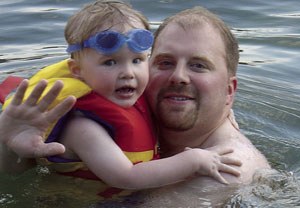
My husband and I recently adopted a little boy. We’ve fallen in love with him, and have been rediscovering our play skills, singing voices, and sources of patience. It’s been life-affirming.
We’ve also had a crash course in the medical politics of parenting — and so far so good. I am fortunate to have access to parental leave, and, in combination with holiday leave and unpaid leave, I can have almost 8 months to be with our son and maintain a reasonable income. My husband works in the private sector, but has access to almost a year of federally-funded parental leave. Equally important, we live in a community with early childhood centres, free playgroups, and accessible advice about nutrition and development.
Professionally, we worry about the impact of our choice on our careers. While in different professions, we both feel pulled between roles and commitments. We are aware of reports from some authors that those who try to balance these roles are slammed, on the one hand, for lacking professional seriousness and, on the other, for lacking parental selflessness. We are also sensitive to some suggestions that doctor-parents are constrained by social assumptions about gender roles, and that parenting and children are undervalued. 1 We’re learning that we can’t be everything to all people and that we need to establish goals, have strategic priorities, and focus on our current life stage. We’ve also realised that we are proof that issues related to doctor-parenting are of equal importance to both women and men,2 are present in doctor-families of all forms, and are, in fact, human issues.
The literature on doctor-family issues
Career choice
Parenting, in combination with gender, greatly influences workforce choices for doctors with young families, while gender alone has little impact on those choices. 3 In one US study of surgeons,4 women were more likely to delay having children, and, when they did have children, were more likely to take parental leave. During surgical practice, 12% of the male surgeons and 64% of the women surgeons had taken parental leave. Half of the institutions surveyed in the study had no formal parental leave policy. Studies like these suggest that parenting may have an impact on medical students’ choice to enter the profession, and that formal policies are required to accommodate the needs of doctor-parents. 4
Parenthood also influences the choice of whether to enter academia. Academic doctor-parents spend more than 90% of the time devoted to family responsibilities on child care. Women doctor-parents also have less institutional support (eg, research funding, secretarial support) than their male counterparts. Academic mothers have fewer publications, slower self-perceived career progress, and lower rates of career satisfaction. There appears to be much work to be done to achieve equity in academia. 5
Parental leave
There has been an evolution in parental leave provisions in some parts of the world, particularly in Canada. Recently, the federal government began to provide 15 weeks of maternity leave and 35 weeks of parental leave (including adoption leave), for a total of 50 weeks of support. In Ontario, an agreement between the Ontario Medical Association and the provincial government provides for 17 weeks of maternity benefits for doctors not eligible for federal funding. Since its inception in 2000, over 900 doctors have taken advantage of the program, which has cost $11.2 million. Calls for paternity and adoptive leave have been less successful.
Surveys of doctors who take parental leave suggest it can adversely affect their careers. 6 Institutional and academic culture may influence parents to take less leave than they are entitled to. Academic staff are concerned about the impact on their colleagues of taking leave, and fear that any substantial period of absence may impair their career advancement. One key strategy for easing this dilemma would be to employ temporary locum staff. 6
Given these tensions, parental leave must be a critical part of any discussion about medical resource planning. Any policy that reduces the tension between a doctor’s professional and personal lives should be part of a healthy recruitment and retention strategy. 7
Women doctor-parents
As the doctors’ health movement evolves, it parallels significant changes in societal perspectives of gender roles. Not only are more women taking on leadership roles in medicine, but men are taking on more childrearing and domestic duties. 8
In spite of these social forces, women doctors, although spending the same amount of time at work as male doctors, spend twice as much time on family and household work. Women doctors are less likely than male doctors to recommend parenting, less satisfied with the time available for parenting, and more interested in flexible working hours. Women are also more likely to claim that the best time to have children is at the end of postgraduate medical training. 9,10
Compared with childless female academic staff and compared with male staff, female academic staff with children face major obstacles in pursuing an academic career. Some of these obstacles could be modified relatively easily (eg, by eliminating after-hours meetings and creating part-time career paths). It has been strongly advocated that medical schools address these obstacles and provide support for academic staff with children. 5
One review of women doctors over an 80-year period found that 82% of women doctors became mothers, and that women doctors without children were more likely to be in surgical specialties, less likely to be in primary care, and more likely to work full-time than their female colleagues with children. Although the length of formal maternity leave increased over the eight decades, the level of satisfaction with leave duration fell. 11
A US study of otolaryngologists revealed that women surgeons were more likely to be divorced or separated and to have fewer children than male surgeons. Women reduced their work hours in conjunction with having more children, while men relied more on their partner for household responsibilities and child care. Women earned less money for performing similar jobs, yet had increased family responsibilities, which potentially affected their career advancement. 12
One study that formally evaluated the time women doctors spend on non-medical work noted that they spend little time on domestic activities that can be done for them by others, such as cooking, housework and gardening. Women doctors spend less time on child care and substantially less time on housework than do other US women. In contrast to other studies, this study concluded that measures of career satisfaction and mental health were not adversely affected by time spent on domestic obligations. 13
Two-doctor families
Up to 50% of doctors may be married to other doctors. 14 Both men and women in these partnerships earn less money individually, less often feel that their career should take precedence over their spouse’s career, and more often play a major role in childrearing compared with other married doctors. Benefits include more frequent enjoyment from shared work interests and higher combined incomes. In general, two-doctor families achieve their career and personal goals as frequently as other married doctors. 14 Men in two-doctor families tend to work fewer hours than other married male doctors. 15
Keeping things in balance
In this section I describe some specific solutions that clients of our program, clinicians involved in clinical work with doctor-families, or attendees at our workshops have reported as valuable. The doctor-families we meet come from a wide array of medical backgrounds and represent different cultures, family compositions, and support systems, reflective of families around the world.
What makes doctor-parents different?
In general, doctor-parents have unique access to health information and knowledge. They are also trained in assessing normal and abnormal development in children. Most have strong career demands. Some need to carefully balance their public versus private roles (depending on the type of clinical work they practice) and their role in the community. Many work longer hours than most parents, including on-call demands. Many are self-employed, without benefits, and need to ensure that they set up and monitor financial safeguards. Finally, sources of rebellion, confusion, and tension can be unique to doctor-families as children gain insight into the elements of medicine that interfere with their ideal family life.
Doctor-parents are often high achievers. They seem to be under-represented in the health consumer population, possibly because of their awareness of health promotion and disease prevention strategies. However, there are reports of doctor-parents having reduced quality time with their children, feeling guilt and remorse over their limited parenting roles, and having different attitudes towards childcare and rearing depending on their gender.
Communication
Many doctors report that their long work hours result in reduced contact with their children, particularly if they leave home before their children rise, and/or arrive home close to bedtime. This appears to be a common regret, with some doctor-parents feeling it is too late to learn how to communicate with their children.
On-call duty is a common source of tension within doctor-families. Some doctors set their pagers to remind them to make a good-night phone call, while others leave a note in the bathtub, under the pillow, or next to an evening snack. Children of these doctors tell us such gestures send a strong and positive message.
Some doctors who come to us about family problems report that they didn’t recognise the red flags of poor communication, and encourage us to emphasise that lack of spontaneity, silent shared time, or hearing of problems through others should raise a doctor-parent’s concerns and prompt intervention.
Doctors’ children have emphasised their need to be able to contact their parents directly in a time of urgency. Yet, they feel uncomfortable asking for this, as they know how busy work is for their doctor-parents. Ensuring that children know clinic or hospital staff (particularly assistants or secretaries) is felt to be helpful, and some families have established a code word or phrase that sends the message that the doctor-parent is required urgently. Several doctors have taught their children how to responsibly page or email them, or carry a beeper or mobile phone just for their children to access.
Insight
Most parents have a healthy fantasy of how they want their children to grow and develop. However, some doctor-parents have disclosed to us that they wished they had been more careful in the expectations they projected onto their children. Some have made the link between being part of a profession that attracts perfectionism, dedication, determination, and obsessiveness, and subsequently expecting their children to follow a competitive path of education and training, enter a profession of parental choice, or engage in activities that meet parental approval.
Doctor-parents also report that the combination of work and home responsibilities contributes to isolation from the broader community. A useful intervention has been to help the doctor find time to reconnect, gain support from other parents, access recreational resources, and develop insight into their children’s development outside the home.
Working with your child’s doctor
Doctor-parents, like all parents, need access to competent general practitioners and paediatricians. Yet, the unique information and knowledge doctor-parents have can be as much of a curse as a luxury. Usual defenses of intellectualisation and minimisation are no longer helpful, and doctor-parents report they are often surprised by the emotions they feel in a routine health scenario. Doctor-parents often have additional anxiety driven by the knowledge of the worst possible outcome. Some feel a need to “do something”, and are uncomfortable with both giving up medical control to a colleague and remaining within the parental role. Some doctor-parents feel guilt and a sense of failure at “allowing” their child to become ill. In addition, some are painfully uncomfortable with finding themselves on the other side of the white coat.
Doctor-parents also need to recognise that their child’s doctor may feel intimidated by the parents’ dual role. In these cases, it seems to be helpful to frankly discuss boundaries, acknowledge the skill set and role of colleagues, avoid jargon and “shop talk”, include children and partners in all discussions, and respect advice given. It is also helpful to acknowledge the value of medical skills, such as asking good questions, being an advocate, negotiating access to resources and services, having insight into early warning signs of problems, and being aware of potential sources of solutions.
Monitoring boundaries
There have been no large studies on the phenomenon of doctor-parents treating their partners or children. However, it is widely acknowledged that such behaviour occurs and that it can be linked to difficulties with boundaries in medical practice.
Few would argue with a doctor-parent’s right to treat his or her child’s superficial abrasion or fever. But ethical overtones shift if doctor-parents treat their own children for such problems as cosmetic, mental, reproductive or oncological health. Yet, paediatricians and staff of doctors’ wellness programs have seen cases of such complex boundary violations, some of which resulted in the involvement of children’s protective services.
Some Canadian regulatory bodies are drafting policy to discourage doctors from treating family members. Studies are also in progress to estimate occurrence rates, improve understanding of the issues involved, and promote healthy debate in the profession.
Conclusion
As the doctors’ health movement continues to evolve, there is increasing awareness of the importance of the role of doctors in their families and the importance of family members to doctors.
Women doctor-parents continue to face unique issues in their professional and personal lives, and male doctor-parents are also taking more of an active role in their personal and family lives. These trends pose opportunities and challenges to medical workforce planning, models of care, academic systems, and remuneration models.
There is also a need to increase research into the sociology of doctor-families. Research data are urgently needed to develop strategies to promote doctor-family health and wellness, which is a critical factor in recruitment and retention efforts. In the interim, case and anecdotal data may be of value in helping doctors better balance the tensions between their important, and competing, identities.
References
- Palepu A, Herbert CP. Medical women in academia: the silences we keep. CMAJ 2002; 167: 877-879. i1085665
- Cujec B, Johnson D. A parent and a doctor [letter]. CMAJ 2000; 163: 696-697. i1085667
- Jacobson CC, Nguyen JC, Kimball AB. Gender and parenting significantly affect work hours of recent dermatology program graduates. Arch Dermatol 2004; 140: 191-196. i1085669
- Mayer KL, Ho HS, Goodnight JE Jr. Childbearing and child care in surgery. Arch Surg 2001; 136: 649-655. i1085671
- Carr PL, Ash AS, Friedman RH, et al. Relation of family responsibilities and gender to the productivity and career satisfaction of medical faculty. Ann Intern Med 1998; 129: 532-538. i1085673
- Phillips SP, Richardson B, Lent B. Medical faculty’s views and experiences of parental leave: a collaborative study by the Gender Issues Committee, Council of Ontario Faculties of Medicine. J Am Med Womens Assoc 2000; 55: 23-26. i1085675
- Lent B, Phillips SP, Richardson B, Stewart D. Promoting parental leave for female and male physicians. CMAJ 2000; 162: 1575-1576. i1085677
- Woelk C. A parent and a doctor [letter]. CMAJ 2000; 163: 696. i1085679
- Cujec B, Oancia T, Bohm C, Johnson D. Career and parenting satisfaction among medical students, residents and physician teachers at a Canadian medical school. CMAJ 2000; 162: 637-640. i1085681
- Woodward CA, Williams AP, Ferrier B, Cohen M. Time spent on professional activities and unwaged domestic work. Is it different for male and female primary care physicians who have children at home? Can Fam Physician 1996; 42: 1928-1935. i1085683
- Potee RA, Gerber AJ, Ickovics JR. Medicine and motherhood: shifting trends among female physicians from 1922 to 1999. Acad Med 1999; 74: 911-919. i1085685
- Grandis JR, Gooding WE, Zamboni BA, et al. The gender gap in a surgical subspecialty: analysis of career and lifestyle factors. Arch Otolaryngol Head Neck Surg 2004; 130: 695-702. i1085687
- Frank E, Harvey L, Elon L. Family responsibilities and domestic activities of US women physicians. Arch Fam Med 2000; 9: 134-140. i1085689
- Sobecks NW, Justice AC, Hinze S, et al. When doctors marry doctors: a survey exploring the professional and family lives of young physicians. Ann Intern Med 1999; 130(4 Pt 1): 312-319. i1085691
- Brotherton SE, LeBailly SA. The effect of family on the work lives of married physicians: what if the spouse is a physician, too? J Am Med Womens Assoc 1993; 48: 175-181. i1085693
Shifting focus to adolescent wellbeing and inclusive participation in the digital age
Allyson R Todd, Elena Wang, Stephanie R Partridge
The clinical presentation, investigation, and management of women diagnosed with endometriosis in Australian general practices, 2011–2021: an open cohort study
Danielle Mazza, Kailash Thapaliya, Sharinne B Crawford, Alissia Hui, Maryam Moradi, Luke E Grzeskowiak
The impact of the Breast Screen NSW transition from film to digital mammography, 2002–2016: a linked population health data analysis
Rachel Farber, Nehmat Houssami, Katy J L Bell
Non‐technical errors associated with deaths in surgical care, Australia, 2012–2019, by surgical specialty (Australian and New Zealand Audit of Surgical Mortality): a retrospective cohort study
Jesse Ey, Victoria Kollias, Octavia Lee, Kelly Hou, Matheesha Herath, John B North, Ellie Treloar, Suzanne Edwards, Martin Bruening, Adam J Wells, Guy J Maddern
The CURE Asthma roadmap
Gary P Anderson, Anthony Flynn, Phil G Bardin, John D Blakey, Shyamali C Dharmage, Paul Foster, Peter G Gibson, Adam Jaffe, Alan James, Christine R Jenkins, Sundram Sivamalai, Peter D Sly, Guy B Marks, Vanessa M McDonald, Judy Wetttenhall
Evidence from Australian cohort studies about asthma trajectories and transitions across the life course: a narrative review
Caroline Lodge, Xin Dai, Ingrid A. Laing, Michael P Menden, Anthony Flynn, Gary P Anderson, Sarath Ranganathan, Shyamali C Dharmage