




Volume 215 - Issue 5
Co‐occurring depression and insomnia in Australian primary care: recent scientific evidence
Authors: Alexander Sweetman, Leon Lack, Emer Van Ryswyk, Andrew Vakulin, Richard L Reed, Malcolm W Battersby, Nicole Lovato and Robert J Adams
Med J Aust 2021; 215 (5): 230-236. || doi: 10.5694/mja2.51200
Published online: 16 August 2021
Published online: 16 August 2021
It is critical primary care clinicians dedicate specific attention to the management of both depression and insomnia when they co-occur
Summary
- Depression and insomnia commonly co‐occur, resulting in greater morbidity for patients, and difficult diagnostic and treatment decisions for clinicians.
- When patients report symptoms of both depression and insomnia, it is common for medical practitioners to conceptualise the insomnia as a secondary symptom of depression. This implies that there is little purpose in treating insomnia directly, and that management of depression will improve both the depression and insomnia symptoms.
- In this review, we present an overview of research investigating the comorbidity and treatment approaches for patients presenting with depression and insomnia in primary care.
- Evidence shows that clinicians should avoid routinely conceptualising insomnia as a secondary symptom of depression. This is because insomnia symptoms: (i) often occur before mood decline and are independently associated with increased risk of future depression; (ii) commonly remain unchanged following depression treatment; and (iii) predict relapse of depression after treatment for depression only. Furthermore, compared with control, cognitive behaviour therapy for insomnia improves symptoms of both depression and insomnia.
- It is critical that primary care clinicians dedicate specific diagnostic and treatment attention to the management of both depression (eg, psychotherapy, antidepressants) and insomnia (eg, cognitive behaviour therapy for insomnia administered by trained therapists or psychologists through a mental health treatment plan referral, by online programs, or by a general practitioner or nurse) when they co‐occur. These treatments may be offered concurrently or sequentially (eg, insomnia treatment followed by depression treatment, or vice versa), depending on presenting symptoms, history, lifestyle factors and other comorbidities.
The frequent co‐occurrence of depression and insomnia has been recognised for many years.1 Up to 90% of patients with mood disorders also report difficulties initiating and/or maintaining sleep, and about 20–50% of patients with insomnia disorder report symptoms of depression.2,3 Indeed, the overlap of impaired sleep and depressed mood is reflected in diagnostic schemas for both disorders. Diagnostic criteria for major depressive disorder (Box 1) include insomnia or hypersomnia among central symptoms,4 whereas criteria for insomnia disorder may include mood disturbance among the required daytime sequelae.4 The co‐occurrence of depression and insomnia is associated with reduced quality of life, greater overall morbidity, and increased health care use, compared with either depression or insomnia alone.2,5 Therefore, it is critical to consider diagnostic and management approaches for patients with co‐occurring depression and insomnia to improve patient outcomes and reduce health care costs. This narrative review presents recent scientific evidence regarding the diagnosis and management of co‐occurring depression and insomnia, to challenge outdated conceptualisations of “secondary insomnia” and present Australian primary care practitioners with a conceptual model to manage patients with both disorders.
Implications of secondary insomnia
When depression and insomnia co‐occur, the depression is commonly conceptualised as the primary disorder, and the insomnia as a secondary symptom.2,3,6,7 This is evidenced by clinicians prioritising the management of depression over insomnia, and an expectation that insomnia symptoms will abate when depression is successfully managed.6,8,9 For example, a 2020 Productivity Commission inquiry report on mental health omitted the impact of insomnia on mental health,10 and outlined referral models in primary care that are tailored to the management of depression, anxiety, stress and psychosis over insomnia (eg, mental health treatment plans). In the context of depression, conceptualisations of secondary insomnia imply that the insomnia symptoms are directly dependent on the depression and that sleep will not improve until treatment for depression is initiated and depression remission is achieved.11,12
Although it is likely that depression initially contributes to sleeping difficulties in many individuals, insomnia symptoms can rapidly develop functional independence from the initial triggers (eg, depression) and bi‐directional relationships between insomnia and initial triggers can form, whereby mechanisms and manifestations of each disorder may exacerbate the other.1,2 Therefore, when insomnia symptoms persist for at least 3 months (ie, chronic insomnia),4 targeted management of the insomnia is recommended.
Recommended treatments for depression and insomnia
The most common approaches to treat depression include non‐pharmacological strategies (eg, cognitive behaviour approaches including behavioural activation) and pharmacological management (eg, antidepressants).13,14 See Box 2 for an overview of strategies to treat depression.
The most effective treatment for insomnia is non‐pharmacological cognitive behaviour therapy for insomnia (CBTi; Box 2).22,26 Indeed, the Royal Australian College of General Practitioners guidelines on benzodiazepine prescribing and insomnia management recommend that CBTi strategies should be used as the first line treatment for insomnia.22 CBTi commonly includes 6–8 weekly sessions, delivered by trained health care professionals (eg, psychologists), or self‐administered through reading materials or interactive online programs. General practitioners may also administer CBTi over the course of four to five weekly or fortnightly appointments.23 CBTi includes a range of educational, cognitive and behavioural strategies which aim to identify and treat the underlying psychological, behavioural and physiological factors that maintain the insomnia disorder.23 For this reason, CBTi leads to clinically significant sleep improvements which are sustained long after the cessation of therapy. Online CBTi programs have received a large amount of research attention in the past decade and may be a particularly useful to support access to CBTi during the current coronavirus disease 2019 pandemic and in rural and remote communities.
Although sedative‐hypnotics (eg, benzodiazepines, z‐drugs [eg, zopiclone, eszopiclone, zolpidem]) represent the most common management approach for insomnia in Australian primary care patients,27 these medicines are not recommended as first line treatment, or for the long term management of insomnia.22,28 Sedative‐hypnotics are associated with negative side effects, adverse events and risk of pharmacological tolerance, dependence and misuse.29 It is recommended that sedative‐hypnotic management of insomnia be restricted to patients who are not suitable for or do not respond to CBTi, and that these medicines should be prescribed at the lowest effective dose for the shortest possible duration.22 Although melatonin (an endogenous hormone associated with circadian rhythm control) is not associated with the same dependence risk or side effects as benzodiazepines and z‐drugs, melatonin is not recommended as first line treatment for insomnia, or as a long term management approach (> 3 weeks), due to limited evidence.22 Melatonin has primarily been used to manage circadian rhythm disruption and disorders (eg, jet lag, delayed sleep–wake phase disorder) rather than insomnia (which is maintained by separate psychological and behavioural factors). Over‐the‐counter medicines for insomnia (eg, antihistamines, herbal and nutritional substances) are not recommended for the management of insomnia, owing to limited efficacy data.22
Finally, there is a growing trend for off‐label antidepressant and antipsychotic prescriptions to manage insomnia.8,27 In the context of severe depression with comorbid sleeping difficulties, or when a patient history clearly indicates that the depression is the chief complaint and preceded the insomnia, clinicians may initially trial an antidepressant, which may acutely improve sleep, enhance daytime energy levels and activity, and reduce depression. The clinician may then target any residual insomnia symptoms with either a short term sedative‐hypnotic30 or CBTi.31 Indeed, a 2019 Cochrane review found that combined antidepressant plus benzodiazepine therapy was more effective than antidepressants alone in improving depression severity in the first 4 weeks of treatment. However, the beneficial effects were not maintained, and those using combined therapy were more likely to report at least one adverse effect.30 The evidence does not currently support long term use of combination therapy.
The increased use of antidepressants to manage insomnia8,27 may also be due to a combination of conceptualisations that insomnia is a secondary symptom of depression, and guidelines recommending against sedative‐hypnotic prescriptions, which collectively encourage practitioners to prescribe antidepressants and antipsychotics.22 However, there is very limited controlled trial evidence to support this approach.28 A 2018 Cochrane review of the effect of antidepressants on insomnia assessed 23 randomised controlled trials (RCTs), and reported low quality evidence for short term effects of low dose doxepin and trazadone on insomnia.32 The authors concluded that these were “mostly small studies with short‐term follow‐up and design limitations”.32 A meta‐analysis of nine RCTs investigating the effect of tricyclic antidepressants on objective (polysomnographic) sleep of insomnia patients reported improved sleep parameters but an increased risk of side effects and study attrition compared with placebo.33 Antidepressants and antipsychotics are therefore not recommended as first line or long term treatment for insomnia (or insomnia comorbid with depression or mood disorders).22,34
Insomnia and depression may also co‐occur with other sleep disorders including obstructive sleep apnoea35 and circadian rhythm disorders (ie, advanced or delayed sleep–wake phase disorder).28 It is important to distinguish insomnia from these other sleep disorders (which also commonly co‐occur with depression), as different management approaches are recommended.28
Insomnia requires targeted diagnostic and treatment attention
In the six sections below, we review scientific evidence regarding the management of co‐occurring depression and insomnia. This evidence suggests that primary care practitioners should consider non‐pharmacological CBTi strategies to not only improve sleep but also to improve pre‐existing depression symptoms, enhance the effect of adjunct depression treatment, and potentially reduce the likelihood of future (incident) depression (Box 3). This approach represents a shift from dated conceptualisations of secondary insomnia toward conceptualisations of insomnia as a comorbid condition which is responsive to targeted treatment, managed in a holistic patient‐centred model of care (ie, targeted treatments for both conditions). The Royal Australian and New Zealand College of Psychiatrists and other medical and primary care organisations recommend that clinicians should consider sleep problems as an important treatment target when co‐occurring with other conditions including depression.12,22,36
Insomnia is commonly an independent disorder
Chronic insomnia (persisting for ≥ 3 months) is commonly maintained by underlying psychological, physiological and behavioural factors that operate independently of comorbid conditions.4,22 Although sleeping difficulties may initially occur alongside predisposing factors (eg, tendency to internalise, negative ruminations) and temporal and contextual triggers (eg, work–life stress, acute depression, jet lag), insomnia can rapidly become a self‐perpetuating and chronic condition even after these initial factors are resolved.37 Common underlying factors of insomnia include sleep‐related cognitions or beliefs that increase anxiety/arousal about sleep (eg, catastrophising over the consequences of sleep loss, and misconceptions about “normal sleep”), and maladaptive behaviours, such as spending more time in bed than is necessary (leading to a conditioned arousal response to the bedroom environment), excessive caffeine consumption to alleviate daytime fatigue, napping for too long in the late afternoon and reducing subsequent sleep “pressure” in the evening, and inconsistent sleep–wake schedules that are misaligned with the internal body clock.38 These underlying factors can cause physiological and psychological changes that result in perceived sleep loss and daytime impairments (eg, a state of chronic 24‐hour hyperarousal triggered in the bedroom environment while attempting to sleep), which perpetuate the insomnia cycle.39
After chronic insomnia has developed, alleviation of the initial triggers (eg, depression) will have little impact on improving the insomnia condition. Therefore, targeted treatment of insomnia with CBTi is the recommended treatment for patients with chronic insomnia, including chronic insomnia co‐occurring with other conditions.22,26
Insomnia symptoms predict future depression
Multiple longitudinal cohort studies have reported that insomnia symptoms predict increased risk of future depression.40,41,42 For example, a meta‐analysis of 21 studies found that insomnia symptoms predicted future depression 1–34 years later (odds ratio [OR], 2.60; 95% CI, 1.98–3.42).43 Alternatively, a meta‐analysis of ten studies reported that insomnia was also significantly associated with the onset of future depression (OR, 2.83; 95% CI, 1.55–5.17), anxiety, alcohol misuse and psychosis.40 An Australian longitudinal study reported that among 5702 young women, those with frequent sleep disturbance at baseline had a greater risk of depression (OR, 4.4; 95% CI, 2.8–7.0) and anxiety diagnosis (OR, 2.9; 95% CI, 1.6–5.2) 9 years later.44
This temporal relationship suggests that insomnia commonly precedes depression, and therefore highlights the possibility of early identification and treatment of insomnia to prevent depression onset.43 There are several potential mechanisms by which insomnia may increase risk of depression, including modified emotional regulation and reactivity,38,43 behavioural inactivity resulting from perceived sleep loss and daytime impairments,38 patterns of negatively toned and ruminative cognitions experienced during prolonged nocturnal awakenings,42 and side effects of sedative‐hypnotics commonly prescribed to manage insomnia.29,45,46
In contrast, a smaller number of studies assessing the predictive role of depression on future insomnia have reported mixed results.42,47,48 These temporal associations highlight a clear flaw in conceptualisations of secondary insomnia in patients with co‐occurring depression and insomnia.
Treating insomnia can prevent onset of first time depression
Given the temporal association between insomnia and incident depression, and the effect of CBTi on improving depression symptoms,49 recent RCTs have sought to investigate whether CBTi reduces rates of new‐onset depression.50,51 A 12‐month RCT investigated the effect of digital CBTi versus online sleep education control on prevention of depression in 1358 individuals with insomnia.51 A total of 658 patients with insomnia completed the 1‐year follow‐up (including 358 in the treatment and 300 in the control group). Among individuals without depression before treatment, the 1‐year incidence of depression was significantly lower in the CBTi (9.6%) than the control group (18.8%). These data suggest that early identification and treatment of insomnia can prevent the future onset of depression.
An Australian trial also investigated the effect of online CBTi on reducing depression symptoms among participants with insomnia and depression symptoms.50 Although CBTi improved depression symptoms compared with the control group, there was no between‐group difference in major depressive disorder diagnosis at 6‐month follow‐up. The authors noted that this may have been due to inadequate power, as a small number of participants developed major depressive disorder during the study (n = 22; 2%).50
Treating insomnia improves depressive symptoms
Several meta‐analyses have reported that CBTi improves depression symptoms.31,52,53 For example, an examination of ten studies investigating the effect of CBTi on depression outcomes in patients with co‐occurring depression and insomnia reported that CBTi may represent a suitable stand‐alone treatment for co‐occurring depression and insomnia, or combination treatment alongside antidepressants.31 Another meta‐analysis of ten RCTs of online CBTi programs reported a significant effect on reduced depression.52
A 2017 RCT directly compared the effects of 9 weeks of online CBTi with 9 weeks of CBT for depression in 43 patients with co‐occurring depression and insomnia.45 CBT for depression included educational components, two sessions of behavioural activation (increasing positively reinforced activities, and handling negatively reinforced activities), registration and reappraisal of negative thoughts, anxiety and worry, and prevention of relapse. The CBTi intervention also included educational, behavioural and cognitive components, as well as education about sleep medicines, stress and fatigue management, and relapse prevention. Patients in the CBTi group experienced significant improvements in symptoms of both depression and insomnia. However, patients in the depression treatment group experienced improvements in depression only. Surprisingly, there was no significant difference in reduction in depression between the group receiving CBT for depression and the group receiving CBTi. The authors suggested that insomnia symptoms may require specific CBTi components to improve, while depression may require non‐specific, albeit high quality treatment. It was also proposed that insomnia symptoms may have preceded and directly contributed to the maintenance of depression in these participants, which therefore resulted in improved depression severity as the insomnia was treated with CBTi.45
There is limited scientific evidence demonstrating that depression treatment improves insomnia. Although anecdotal reports, short term studies, RCTs with short follow‐up, and case reports indicate that some antidepressants may improve sleep in select patients,32,54 there are limited long term controlled trial data demonstrating the effectiveness or safety of this treatment approach.28,32
Insomnia symptoms may reduce response to depression treatment and increase depression relapse
Insomnia symptoms often persist after depression treatment,45,55 and may impair the effect of depression treatment on reducing depression severity and relapse.7,56 As insomnia increases risk of future depression, it is possible that residual insomnia symptoms persisting after depression treatment may contribute to increased depression relapse. Indeed, a study found that after management of depression with combined psychotherapy and pharmacotherapy, patients with residual insomnia symptoms were more likely to experience recurrence of depression during follow‐up (65% recurrence) compared with those without insomnia (13% recurrence).56 In addition, a study used data from Project IMPACT7 to examine the relationship between persistent insomnia symptoms and response to depression treatment administered in primary care clinics. Patients with persistent insomnia were found to be 3.5 times more likely to remain depressed at 12‐month follow‐up compared with patients without insomnia (continued depression defined by < 50% improvement by 12‐month follow‐up).7 Neglecting to manage co‐occurring insomnia may therefore undermine the benefits of depression treatment over time.
Depressive symptoms may impair response to insomnia treatment
Several studies have also investigated whether depression symptoms impair the effectiveness of CBTi. Although some studies have reported that patients with depression and/or psychiatric symptoms experience less improvement of insomnia following CBTi,57,58 most studies have reported no association between depression symptoms and reduced response to CBTi. 59,60 For example, a recent study investigated the effect of symptoms of depression, anxiety and stress on response to CBTi in 455 patients with chronic insomnia attending a hospital outpatient CBTi program.49 Although patients with co‐occurring severe depression symptoms reported greater severity of insomnia before treatment compared with insomnia patients with low depression symptoms, there were no differences in changes in insomnia symptoms during CBTi between groups (Box 4).49
It is possible that some patients with co‐occurring depression and insomnia continue to experience daytime impairments (ie, shared symptoms including daytime fatigue, lethargy and poor mood) following CBTi, thereby decreasing the measured improvement in overall insomnia symptoms in some studies (when insomnia severity is measured as both nocturnal and daytime symptoms; Box 1). More research is required in this area to understand the mechanisms by which depression may undermine the effectiveness of CBTi in improving insomnia (ie, whether the insomnia is in fact secondary among some patients, or whether the depression indirectly reduces improvement of insomnia through reduced engagement or adherence to therapy).
Treatment recommendations
There are several potential options to access CBTi in primary care. Box 2 provides referral and management options for both depression and insomnia, while Box 3 presents an overview of a conceptual management approach for co‐occurring depression and insomnia in primary care. Given the common comorbidity of insomnia and depression, we recommend that patients who present with symptoms of either disorder are routinely assessed for the other (eg, a patient presenting with depression symptoms should be assessed for comorbid insomnia, and vice versa). Brief validated screening tools for insomnia18 and depression16 may be used, in addition to other measures and questions to assess for additional comorbid conditions and sleep disorders.35
If a patient reports both depression and insomnia, consider targeted treatments for both disorders. Choice of (i) initial depression treatment (eg, psychotherapy, antidepressant), (ii) concurrent depression and insomnia treatment, and (iii) initial insomnia treatment (eg, online, face‐to‐face CBTi) should be based on a patient’s preference, the severity of each condition, patient history, previous management of the insomnia and depression, other comorbidities (including comorbid sleep disorders) and lifestyle factors. Assessment of a patient’s history may include information about the temporal onset of the depression and insomnia (ie, which disorder occurred first). Although this may be helpful in determining the main reason for seeking treatment, targeted treatment for both conditions should be made available when they co‐occur. Even when insomnia symptoms occur after depression onset, the insomnia can quickly develop functional independence of other symptoms/disorders and become maintained by independent cognitive, physiological and behavioural factors.37,38
Where depression is considered the primary condition chronologically (patient history) or the patient presents with moderate‐to‐severe depression (severity), CBT for depression could be considered first, followed by or concurrent with an antidepressant, particularly if the depression is severe. CBTi should also be made available, particularly if the comorbid insomnia appears to be maintained by insomnia‐specific perpetuating factors (eg, excessive sleep‐related focus, daytime napping, and extended time spent in bed), if the insomnia does not resolve, or if the insomnia appears to undermine the effectiveness of targeted depression treatment. Importantly, based on the research reviewed above, we recommend that treatments for both conditions should be made available to all patients with co‐occurring depression and insomnia symptoms.
Conclusion
Depression and insomnia commonly co‐occur and result in increased morbidity for patients and complex diagnostic and treatment decisions for clinicians. Although it is common for primary care practitioners to conceptualise insomnia as a secondary symptom of depression, this belief is not supported by scientific evidence. Instead, evidence suggests that depression and insomnia represent two comorbid disorders, which are potentially maintained by both bi‐directional and functionally independent mechanisms. It is recommended that when managing patients with co‐occurring depression and insomnia symptoms, primary care practitioners direct targeted diagnostic and treatment attention at both disorders.
Box 1 – Diagnostic criteria (DSM‐5) for major depressive disorder and insomnia disorder4
|
Disorder |
Diagnostic criteria |
||||||||||||||
|
|
|||||||||||||||
|
Major depressive disorder |
At least five of the following symptoms occurring during a 2‐week period, that represent a change from baseline:
Must include either depressed mood and/or loss of pleasure Symptoms that are clearly attributable to another condition are excluded And all four of the following:
|
||||||||||||||
|
Insomnia disorder |
At least one of the following nocturnal symptoms on at least three nights per week for at least 3 months:
And
And
And
For example, insomnia disorder may co‐occur with circadian rhythm disorders and obstructive sleep apnoea
|
||||||||||||||
|
|
|||||||||||||||
|
|
|||||||||||||||
Box 2 – Management of co‐occurring depression and insomnia in primary care
Overall management approach
- Assess patients with depression symptoms for insomnia
- Assess patients with insomnia symptoms for depression
- Consider targeted treatment strategies for both disorders when depression and insomnia co‐occur
- Choice of the initial treatment target may depend on patient preference, presenting symptoms and severity, lifestyle, family/social support, previous/current treatments, and comorbid conditions
- Standardised instruments to assess for depression include the Depression Anxiety and Stress Scale15 and Patient Health Questionnaire16
- Standardised instruments to assess for insomnia include the Insomnia Severity Index17 and Sleep Condition Indicator18
- Consider other sleep disorders, such as sleep apnoea, which also commonly co‐occurs with both depression and insomnia19
- Consider suicidality, alcohol and drug use, and comorbid psychiatric/medical conditions when assessing for depression and/or insomnia
- In addition to utilising CBTi strategies to manage insomnia, treat depression with targeted psychotherapy or pharmacotherapy:
- online self‐administered, or therapist‐guided cognitive and behavioural programs to treat depression: eg, This Way Up’s “The depression course” (https://thiswayup.org.au/courses/the-depression-course); Beyond Blue provides several resources and referral options for depression20
- referral to a psychiatrist or psychologist who specialises in depression management (see the Australian Psychological Society website)21
- pharmacotherapy (eg, antidepressant medicines); importantly, antidepressant medicines are not recommended for the management of insomnia22
- Consider referring all patients with insomnia for CBTi:
- online self‐administered programs based on CBTi strategies: eg, This Way Up’s “Managing insomnia” (https://thiswayup.org.au/courses/managing-insomnia-course)
- a brief four to five session CBTi program can be administered in primary care by general practitioners or practice nurses,23 and the Royal Australian College of General Practitioners provides a resource on brief behavioural therapy for insomnia24
- a referral to a psychologist with CBTi experience (see the Australasian Sleep Association website).25
Box 3 – Approach to identify and manage co‐occurring depression and insomnia*
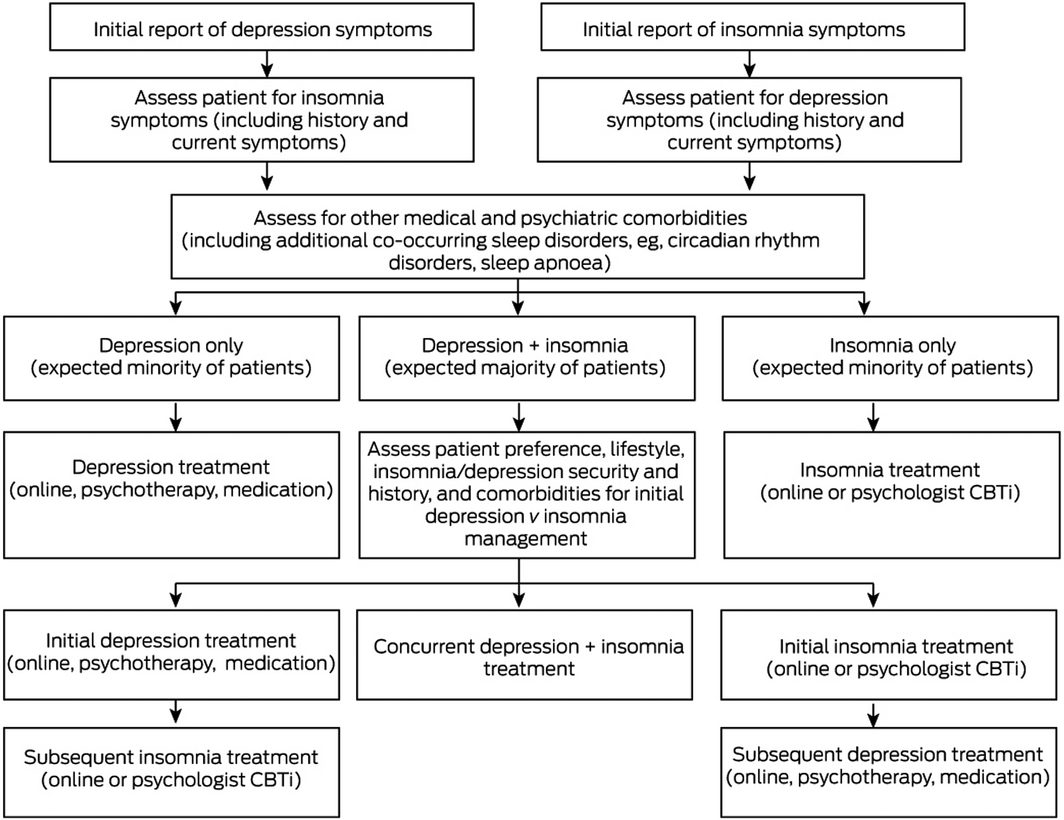
CBTi = cognitive behavioural therapy for insomnia. * If both disorders are present, clinicians may recommend either concurrent or sequential treatment approaches with targeted treatments for both conditions.
Box 4 – Improvement in average Insomnia Severity Index scores (95% CI) during cognitive behaviour therapy for insomnia in 455 patients with chronic insomnia*
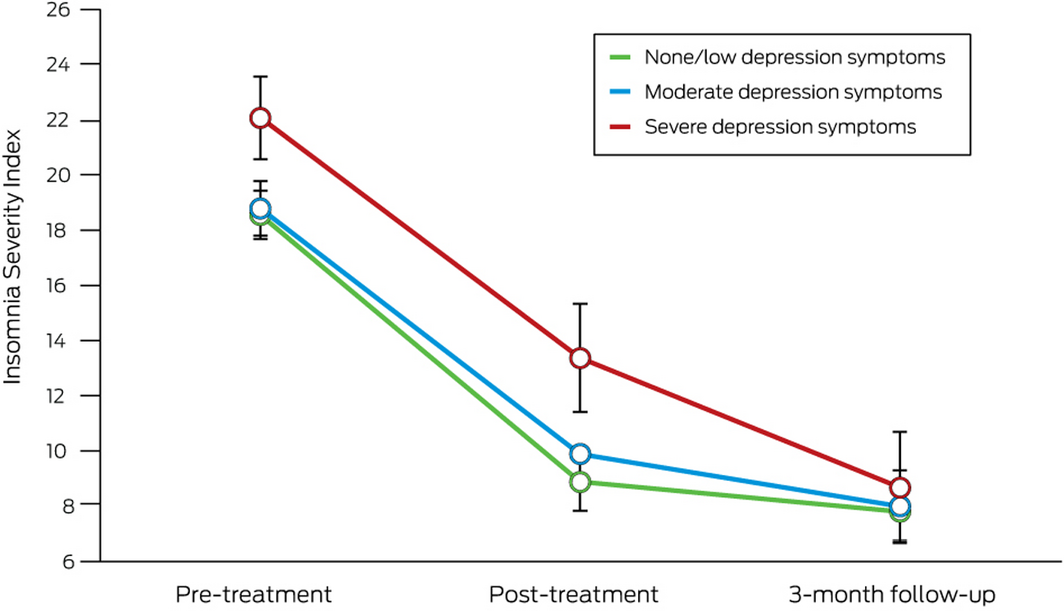
Adapted with permission from Sweetman et al.49
* There were no differences in insomnia improvements between patients with no/low depression, moderate depression and severe depression.
Competing interests
Leon Lack and Nicole Lovato have received research funding from Re‐Timer Pty Ltd.
Acknowledgements
This work was supported by a National Health and Medical Research Council Centres of Research Excellence program of research, aiming to position primary care at the centre of sleep health management in Australia (GNT1134954).
References
- Riemann D, Krone LB, Wulff K, Nissen C. Sleep, insomnia, and depression. Neuropsychopharmacology 2020; 45: 74–89.
- Staner L. Comorbidity of insomnia and depression. Sleep Med Rev 2010; 14: 35–46.
- Ohayon MM, Shapiro CM, Kennedy SH. Differentiating DSM‐IV anxiety and depressive disorders in the general population: comorbidity and treatment consequences. Can J Psychiatry 2000; 45: 166–172.
- American Psychiatric Association. Diagnostic and statistical manual of mental disorders. 5th ed. Washington, DC: APA, 2013.
- Simon GE, VonKorff M. Prevalence, burden, and treatment of insomnia in primary care. Am J Psychiatry 1997; 154: 1417–1423.
- Matteson‐Rusby SE, Pigeon WR, Gehrman P, Perlis ML, Why treat insomnia? Prim Care Companion J Clin Psychiatry 2010; 12: PCC.08r00743.
- Pigeon WR, Hegel M, Unützer J, et al. Is insomnia a perpetuating factor for late‐life depression in the IMPACT cohort? Sleep 2008; 31: 481–488.
- Everitt H, McDermott L, Leydon G, et al. GPs’ management strategies for patients with insomnia: a survey and qualitative interview study. Br J Gen Pract 2014; 64: e112–e119.
- Davy Z, Middlemass J, Siriwardena AN. Patients’ and clinicians’ experiences and perceptions of the primary care management of insomnia: qualitative study. Health Expect 2015; 18: 1371–1383.
- Australian Government Productivity Commission. Mental health: Productivity Commission inquiry report (No. 95, 30 June 2020) Canberra: Commonwealth of Australia. 2020. https://www.pc.gov.au/inquiries/completed/mental‐health/report/mental‐health‐volume1.pdf (viewed May 2021).
- Lichstein KL. Secondary insomnia: a myth dismissed. Sleep Med Rev 2006; 10: 3–5.
- National Institutes of Health. NIH state‐of‐the‐science conference statement on manifestations and management of chronic insomnia in adults. NIH Consens State Sci Statements 2005; 22: 1–30.
- National Collaborating Centre for Mental Health. Depression: the treatment and management of depression in adults (updated edition) (National Clinical Practice Guideline 90). London: British Psychological Society and The Royal College of Psychiatrists, 2010. https://www.ncbi.nlm.nih.gov/books/NBK63748/pdf/Bookshelf_NBK63748.pdf (viewed May 2021).
- Cipriani A, Furukawa TA, Salanti G, et al. Comparative efficacy and acceptability of 21 antidepressant drugs for the acute treatment of adults with major depressive disorder: a systematic review and network meta‐analysis. Focus (Madison) 2018; 16: 420–429.
- Lovibond SH, Lovibond PF. Manual for the depression anxiety stress scales. 2nd ed. Sydney: Psychology Foundation of Australia, 1995.
- Kroenke K, Spitzer RL. The PHQ‐9: a new depression diagnostic and severity measure. Psychiatr Ann 2002; 32: 509–515.
- Bastien CH, Vallières A, Morin CM. Validation of the insomnia severity index as an outcome measure for insomnia research. Sleep Med 2001; 2: 297–307.
- Espie CA, Kyle SD, Hames P, et al. The Sleep Condition Indicator: a clinical screening tool to evaluate insomnia disorder. BMJ Open 2014; 4: 1–5.
- Sweetman A, Melaku Y, Lack L, et al. Prevalence and associations of co‐morbid insomnia and sleep apnoea in an Australian population‐based sample. Sleep Med 2021; 28: 9–17.
- Beyond Blue. National help lines and websites. https://www.beyondblue.org.au/get‐support/national‐help‐lines‐and‐websites (viewed May 2021).
- Australian Psychological Society. Find a psychologist. https://www.psychology.org.au/Find‐a‐Psychologist (viewed May 2021).
- Royal Australian College of General Practitioners. Prescribing drugs of dependence in general practice, Part B: Benzodiazepines. Melbourne: RACGP, 2015, https://www.racgp.org.au/getattachment/1beeb924‐cf7b‐4de4‐911e‐f7dda3e3f6e9/Part‐B.aspx (viewed May 2021).
- Sweetman A, Zwar N, Grivell N, et al. A step‐by‐step model for a brief behavioural treatment for insomnia in Australian general practice. Aus J Gen Pract 2020; 50: 287–293.
- Royal Australian College of General Practitioners. Brief behavioural therapy: insomnia in adults. Melbourne: RACGP, 2014. https://www.racgp.org.au/clinical‐resources/clinical‐guidelines/handi/handi‐interventions/mental‐health/brief‐behavioural‐therapy‐insomnia‐in‐adults (viewed May 2021).
- Australasian Sleep Association. https://www.sleep.org.au (viewed May 2021).
- Qaseem A, Kansagara D, Forciea MA, et al. Management of chronic insomnia disorder in adults: a clinical practice guideline from the American College of Physicians. Ann Intern Med 2016; 165: 125–133.
- Miller CB, Valenti L, Harrison CM, et al. Time trends in the family physician management of insomnia: the Australian experience (2000–2015). J Clin Sleep Med 2017; 13: 785–790.
- Wilson S, Anderson K, Baldwin D, et al. British Association for Psychopharmacology consensus statement on evidence‐based treatment of insomnia, parasomnias and circadian rhythm disorders: an update. J Psychopharmacol 2019; 33: 923–947.
- Sweetman A, Putland S, Lack L, et al. The effect of cognitive behavioural therapy for insomnia on sedative‐hypnotic use: a narrative review. Sleep Med Rev 2020; 56: 1–14.
- Ogawa Y, Takeshima N, Hayasaka Y, et al. Antidepressants plus benzodiazepines for adults with major depression. Cochrane Database Syst Rev 2019; 3: 1–65.
- Cunningham JE, Shapiro CM. Cognitive behavioural therapy for insomnia (CBT‐I) to treat depression: a systematic review. J Psychosom Res 2018; 106: 1–12.
- Everitt H, Baldwin DS, Stuart B, et al. Antidepressants for insomnia in adults. Cochrane Database Syst Rev 2018; 5: 1–99.
- Liu Y, Xu X, Dong M, et al. Treatment of insomnia with tricyclic antidepressants: a meta‐analysis of polysomnographic randomized controlled trials. Sleep Med 2017; 34: 126–133.
- Sateia M, Buysse D, Krystal A, et al. Clinical practice guideline for the pharmacologic treatment of chronic insomnia in adults: an American Academy of Sleep Medicine clinical practice guideline. J Clin Sleep Med 2017; 13: 307–349.
- Sweetman A, Lack LC, Catcheside PG, et al. Developing a successful treatment for co‐morbid insomnia and sleep apnoea. Sleep Med Rev 2017; 33: 28–38.
- Malhi GS, Bell E, Bassett D, et al. The 2020 Royal Australian and New Zealand College of Psychiatrists clinical practice guidelines for mood disorders. Aust N Z J Psychiatry 2021; 55: 7–117.
- Spielman AJ, Caruso LS, Glovinsky PB. A behavioral perspective on insomnia treatment. Psychiatry Clinics North Am 1987; 10: 541–553.
- Harvey AG. A cognitive model of insomnia. Behav Res Ther 2002; 40: 869–893.
- Bonnet MH, Arand DL. Hyperarousal and insomnia. Sleep Med Rev 1997; 1: 97–108.
- Hertenstein E, Feige B, Gmeiner T, et al. Insomnia as a predictor of mental disorders: a systematic review and meta‐analysis. Sleep Med Rev 2019; 43: 96–105.
- Blanken TF, Borsboom D, Penninx BW, Van Someren EJ. Network outcome analysis identifies difficulty initiating sleep as a primary target for prevention of depression: a 6‐year prospective study. Sleep 2020; 43: zsz288.
- Lovato N, Gradisar M. A meta‐analysis and model of the relationship between sleep and depression in adolescents: recommendations for future research and clinical practice. Sleep Med Rev 2014; 18: 521–529.
- Baglioni C, Battagliese G, Feige B, et al. Insomnia as a predictor of depression: a meta‐analytic evaluation of longitudinal epidemiological studies. J Affect Disord 2011; 135: 10–19.
- Jackson ML, Sztendur EM, Diamond NT, et al. Sleep difficulties and the development of depression and anxiety: a longitudinal study of young Australian women. Arch Womens Ment Health 2014; 17: 189–198.
- Blom K, Jernelöv S, Rück C, et al. Three‐year follow‐up comparing cognitive behavioral therapy for depression to cognitive behavioral therapy for insomnia, for patients with both diagnoses. Sleep 2017; 40: 1–5.
- Ashton H. Protracted withdrawal syndromes from benzodiazepines. J Subst Abuse Treat 1991; 8: 19–28.
- Gregory AM, Rijsdijk FV, Lau JY, et al. The direction of longitudinal associations between sleep problems and depression symptoms: a study of twins aged 8 and 10 years. Sleep 2009; 32: 189–199.
- Buysse DJ, Angst J, Gamma A, et al. Prevalence, course, and comorbidity of insomnia and depression in young adults. Sleep 2008; 31: 473–480.
- Sweetman A, Lovato N, Micic G, et al. Do symptoms of depression, anxiety or stress impair the effectiveness of cognitive behavioral therapy for insomnia? A chart‐review of 455 patients with chronic insomnia. Sleep Med 2020; 75: 401–410.
- Christensen H, Batterham PJ, Gosling JA, et al. Effectiveness of an online insomnia program (SHUTi) for prevention of depressive episodes (the GoodNight Study): a randomised controlled trial. Lancet Psychiatry 2016; 3: 333–341.
- Cheng P, Kalmbach DA, Tallent G, et al. Depression prevention via digital cognitive behavioral therapy for insomnia: a randomized controlled trial. Sleep 2019; 42: 1–9.
- Ye Y‐Y, Zhang Y‐F, Chen J, et al. Internet‐based cognitive behavioral therapy for insomnia (ICBT‐i) improves comorbid anxiety and depression—a meta‐analysis of randomized controlled trials. PLoS One 2015; 10: e0142258.
- Gebara MA, Siripong N, DiNapoli EA, et al. Effect of insomnia treatments on depression: a systematic review and meta‐analysis. Depression Anxiety 2018; 35: 717–731.
- Wiegand MH. Antidepressants for the treatment of insomnia. Drugs 2008; 68: 2411–2417.
- Carney CE, Segal ZV, Edinger JD, Krystal AD. A comparison of rates of residual insomnia symptoms following pharmacotherapy or cognitive‐behavioral therapy for major depressive disorder. J Clin Psychiatry 2007; 68: 254–260.
- Dombrovski AY, Cyranowski JM, Mulsant BH, et al. Which symptoms predict recurrence of depression in women treated with maintenance interpersonal psychotherapy? Depression Anxiety 2008; 25: 1060–1066.
- van de Laar M, Pevernagie D, van Mierlo P, Overeem S. Psychiatric comorbidity and aspects of cognitive coping negatively predict outcome in cognitive behavioral treatment of psychophysiological insomnia. Behav Sleep Med 2015; 13: 140–156.
- Belleville G, Morin CM. Hypnotic discontinuation in chronic insomnia: impact of psychological distress, readiness to change, and self‐efficacy. Health Psychol 2008; 27: 239–248.
- Manber R, Bernert RA, Suh S, et al. CBT for insomnia in patients with high and low depressive symptom severity: adherence and clinical outcomes. J Clin Sleep Med 2011; 7: 645–652.
- Edinger JD, Olsen MK, Stechuchak KM, et al. Cognitive behavioral therapy for patients with primary insomnia or insomnia associated predominantly with mixed psychiatric disorders: a randomized clinical trial. Sleep 2009; 32: 499–510.
Provenance: Not commissioned; externally peer reviewed.
Motor Neuron Disease Mortality Trends in Australia From 1986 to 2023: A Population-Based Study
Carol M. Y. Lee, Rupendra N. Shrestha, Julian Gold, Mark Stevenson, Kelly L. Williams, Lyndal Henden, Sandrine K. K. Chan Moi Fat, Zoe Zussa, Amanda Wright, Martin Jude, Mark A. S. Laidlaw, Willem J. R. Fokkink, Dominic B. Rowe
Mild traumatic brain injury and concussion and persisting post‐concussion symptoms: new guidelines to support evidence‐based assessment and management in Australia and Aotearoa New Zealand
Karen M Barlow, Jennie L Ponsford, Alice Theodom, Gill Cowen, Gavin A Davis, Vicki Anderson, Franz E Babl, David Cole, Jennifer Cullen, Stuart R Dalziel, Melinda Fitzgerald, Howard Flavell, Caroline Yates, Rebecca Kimble, John H Olver, Rhonda Orr, Mark Ralfe, Michael Rose, Nick Rushworth, Julia Treleaven, Gary Browne, Nathan Delang, Sarah Harris, Gary Mitchell, Sean Tweedy
The prevalence of and variation in indicators of the quality and safety of long term aged care in Australia, 2019: a cross‐sectional population‐based study
Tesfahun C Eshetie, Gillian E Caughey, Catherine Lang, Olivia Ryan, Renuka Visvanathan, Craig Whitehead, Keith Evans, Janet K Sluggett, Jyoti Khadka, Carolyn Dawkins, Helena Williams, Miranda Starke, Sara Blunt, Anne Liddell, Megan Corlis, Anna Sheppeard, Penelope Lello, Marilyn Thien, Steven L Wesselingh, Maria C Inacio
Health and economic benefits of improving pre‐hospital identification of stroke in Australian women: a modelling study
Thomas Gadsden, Lei Si, Emily R Atkins, Cheryl Carcel, Xia Wang, Stephen Jan, Mark Woodward, Laura E Downey
Symptom burden, quality of life, and diagnostic journey of people with postural orthostatic tachycardia syndrome, Australia, 2021–24: a descriptive patient registry data study
Marie‐Claire Seeley, Gemma Wilson, Eric Ong, Amy Langdon, Jonathan Chieng, Danielle Bailey, Kristina Comacchio, Amanda Page, Dennis H Lau, Celine Gallagher
The intersection of rurality and dementia prevalence in Australia for Aboriginal and Torres Strait Islander and non‐Indigenous peoples
Antonia J Clarke, Marwan Ahmed, Judith M Katzenellenbogen, John Towney (Wiradjuri), Anna H Balabanski, Adrienne Withall (Dharawal Yuin), Kylie Radford, Amy Brodtmann