




Volume 214 - Issue 10
The future of brain banking in Australia: an integrated brain and body biolibrary
Authors: Amanda Rush and Greg T Sutherland
Med J Aust 2021; 214 (10): 447-449.e1. || doi: 10.5694/mja2.51049
Published online: 17 May 2021
Published online: 17 May 2021
A virtual brain bank could maximise the potential of brain donation by extending the core physical bank to include existing repositories of clinical tissues and data
Brain banking, whereby post mortem brains are harvested, processed, stored and made available to facilitate health and medical research, provides scientists with an unparalleled resource for macroscopic, microscopic and molecular investigations into many brain conditions. The human brain is seen as the final frontier of scientific research, with many cognitive processes and neurological diseases exclusively manifesting in humans. This uniqueness has been postulated as an explanation for why many brain disease drug leads do not progress past the acknowledged “valley of death” whereby success in animals is not translated to human clinical trials.1 For many brain researchers, human post mortem tissue is therefore preferred or essential for their investigations.
The importance and utility of whole brain banking was recently demonstrated by a collection of articles in the Handbook of Clinical Neurology.2 In particular, Zielke and Mash, in a wide ranging review of bank management and operations, posed the question of whether “the value of the brain can be enhanced by collecting other tissues”.3 Here we make the case for the affirmative by describing how brain banking can, by aligning with broader biobanking initiatives, enhance the value of brain tissue for both current and “future patients and society”3.
State of play
Biobanks that collect tissue other than brains are typically embedded in clinical workflows, whereby collection and characterisation of residual tissue for biobanking takes place in parallel with tissue required for clinical purposes. However, in our experience in Australia, brain removal is not routinely included as part of an autopsy or post mortem examination. Autopsies themselves are now uncommon, even within the forensic setting;4 reasons for this are varied and include advances in ante mortem diagnosis propelled by imaging technologies, a belief that autopsy reports fuel malpractice lawsuits, logistic issues, and poor reimbursement rates for pathologists.5 It is now common in Australia for pathology specialists to complete their training without having conducted a post mortem examination, with the future pathology workforce destined to be demarcated into those who have and have not received training to conduct an autopsy. Today, brain removal is largely confined to the setting of brain donor programs, established to recruit and clinically characterise donors with specific diseases and, more rarely, controls.4
One reason for the decline in clinical and forensic autopsies performed is the increasing quality of modern imaging techniques.6 Similarly, ‐omic approaches, particularly metabolomics, for obtaining brain‐specific information7,8 are being increasingly applied to clinically available tissues such as serum and cerebrospinal fluid. Brain organoids developed from patient‐derived stem cells are also a promising in vitro model.9 At present, neuropathological confirmation of disease provides a “ground truth” but over time, refinement of imaging, peripheral biomarkers and in vitro models could diminish the importance of whole brain banking in isolation.
For brain donor programs, brain removal logistics are often complex and costly, with reliance on in‐kind support from funeral directors, clinicians and mortuary staff. After tissue harvesting, brains require specialist processing expertise and large storage areas, resulting in increased labour and space costs. The timing and finality of brain removal can also have an impact on the collection of longitudinal clinical data, which may require medical records departmental input and/or facilitation by family members.
The predicted rise in the morbidity and mortality of dementia and reported increases in the prevalence of mental health in Australia provide convincing evidence of the need for research into risk factors and therapies for neurological diseases. Currently, whole brain banks typically characterise and collect in the vicinity of 1000 donors. Cohorts of pathologically confirmed cases and controls tend to be an order of magnitude smaller than that required to efficiently carry out genetic analyses such as genome‐wide association studies. In the future, even larger cohorts will be required to examine the probable gene–environment interactions that confer risk for many sporadic brain diseases.10 We propose a novel brain banking strategy that maximises the potential of brain donation by extending the core physical bank to include existing repositories of clinical tissues and data, creating a virtual brain bank. This would not only benefit brain researchers but also researchers investigating potential interactions between the brain and other vital organs.
A next‐generation solution
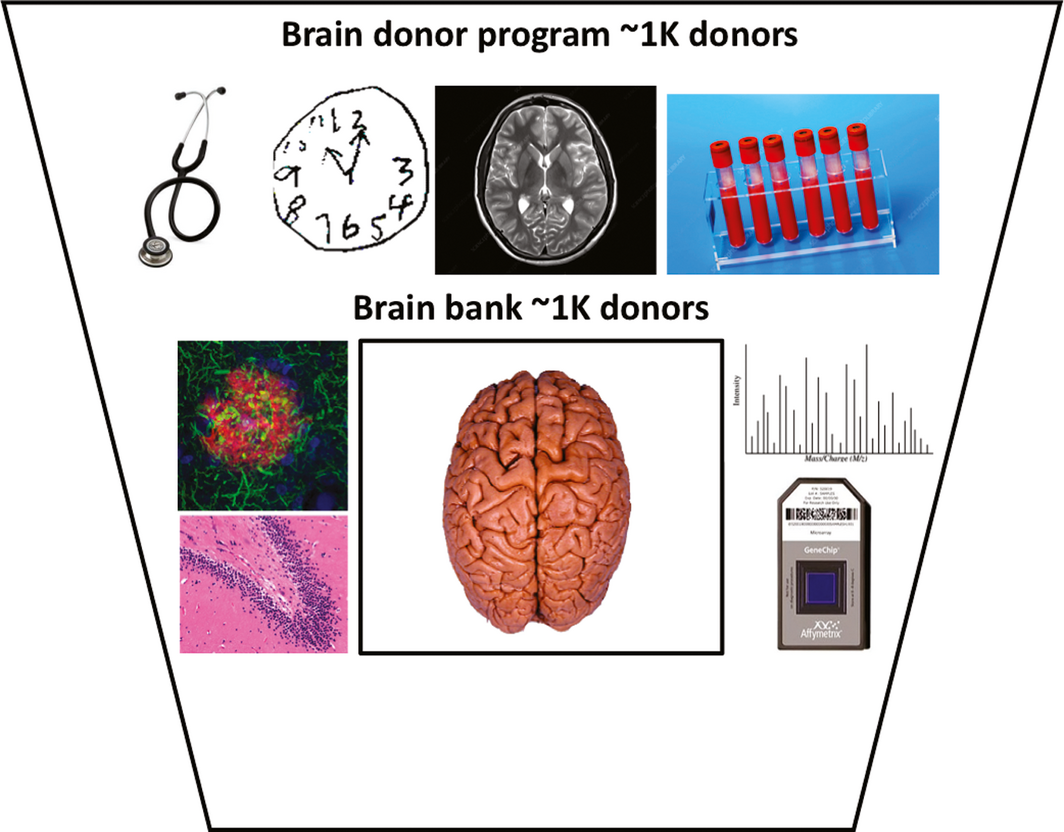
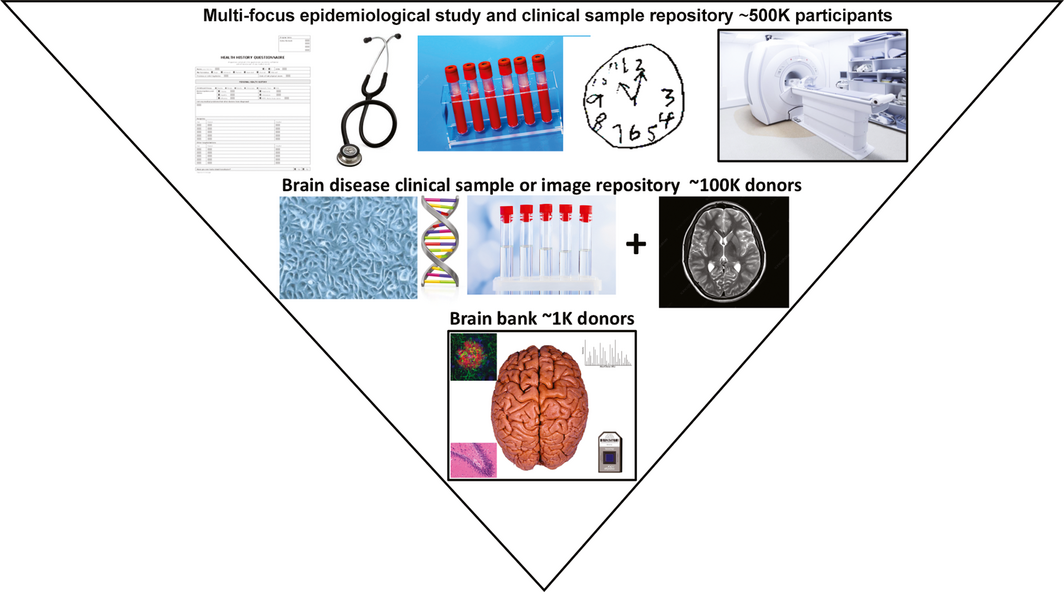
Rather than competing with alternative technologies, a next‐generation (virtual) brain bank could incorporate these technologies into a suite of products offered to researchers. Although brain donor programs already strive to maximise the clinical and demographic information available for each participant (Box 1), an integrated brain bank could extend their involvement to more comprehensive clinical data collection, generation and analysis. This would make samples and derivatives such as serum, DNA, images and genetic/‐omic data available for researchers, in addition to brain tissue.3 We suggest extending this approach beyond tissues from donors themselves to include collaborations with existing brain‐specific clinical tissue banks such as the National Centralized Repository for Alzheimer’s Disease and Related Dementias (NCRAD). The NCRAD stores clinical non‐brain tissue samples from over 90 000 participants — in the order of two degrees of magnitude larger than the number of donors in most brain banks (Box 2). These samples have been subjected to multi‐omic analyses, and with associated imaging data have provided key insights into Alzheimer disease.11 Their level of analysis on ante mortem samples would allow an unprecedented depth of clinicopathological correlations if a subset of participants consented to brain autopsy.
Extending this scenario, a next‐generation brain bank could be integrated into multipurpose biobanking initiatives. The size and intensive phenotyping within prospective cohort studies such as the UK Biobank (https://www.ukbiobank.ac.uk/), which hosts 500 000 participants, offers data on a rich source of age‐related brain diseases over time. Furthermore, there is already genetic, neuroimaging and neuropsychological testing data available from neurologically normal volunteers, enabling brain bank personnel to use their skills and expertise to provide risk factor insights as well as directing subsequent mechanistic studies in post mortem brain tissue (Box 2).
In this scenario, the brain bank could remain responsible for the characterisation and provision of brain‐related tissue and data, but be just one component in an integrated resource that characterises the lifespan of an individual donor. This would not only allow brain banks to contribute to research on brain diseases for living patients, but would also create bi‐directional synergies with researchers of other diseases; that is, “brain and body” biobanking. For example, diabetes has been shown to have a central component,12 dementia and cardiovascular disease share common risk factors,13 and there are fascinating inverse associations between neurodegenerative diseases and cancer.14 In the integrated biobank envisaged, a dynamic consent model could be employed whereby an initial permission to contact could be followed by consent for provision of data and clinical samples, and eventually by consent for post mortem brain donation. A dynamic consent model also encourages deeper participant engagement. Ultimately, only a small proportion of participants are likely to become whole brain donors (Box 2), meaning direct clinicopathological correlations will always be limited. However, the workflow of a more inclusive brain and body banking model would enable complementary resources to be offered to a broader range of scientists.
The 2016 National Research Infrastructure Roadmap15 recommended investment into collaborative and effective biobanking in Australia, with the government response recommending a national biobank scoping study. One possible outcome of a biobank scoping study is for the federal government to re‐engage in funding single or multi‐disease initiatives on a state or national basis. For example, the 45 and Up Study that follows approximately 250 000 middle aged community volunteers in New South Wales is a data‐linked cohort study with the potential to underpin such a brain and body biobank.16 Importantly, data linkage with routinely collected clinical and administrative data in the Australian health system gives further credence to the integration of brain banking with state or nation‐wide biobanking initiatives where clinical laboratory test results, medication history and comorbidity data can validate or extend self‐reported information.
A multi‐focus bank or any research infrastructure becomes challenging to fund after initial investments. The integration of expertise across diseases and an intramural science program that kick starts traditional collaborations and commercial opportunities should have a favourable impact on the value proposition for current and future investors. Governance will be the key ingredient for success, but as with the multi‐focal nature of the proposed biobank, the board, science advisory committee and management team should look outside traditional professional boundaries for their representation. Certainly, a modern biobank needs buy‐in from state and federal health authorities, but it should also include representatives from the business community, patient advocacy groups and health practitioners to promote bi‐directional communication to known and as yet unrealised stakeholders.
It has been suggested that to be most effective, biobanking needs to change its modus operandi from a static operation that banks tissue indefinitely to one that is actively involved in the research process — a so‐called biolibrary. By integrating with wider biobanking initiatives, next‐generation brain banks can contribute to the clinical, pathological and clinicopathological characterisation of a range of tissues and data for researchers of all disease interests. Importantly, a virtual brain bank or brain and body biolibrary will create future research synergies that otherwise would not be achieved.
Competing interests
No relevant disclosures.
Acknowledgements
Funding to support this research was provided by the NSW Ministry of Health (PhD Program; Amanda Rush), and the Faculty of Medicine and Health, University of Sydney (Sydney Research Accelerator Fellowship; Greg Sutherland). Publication of the study results was not contingent on the sponsors’ approval or censorship of the manuscript. The contents of the published material are solely the responsibility of the individual authors and do not reflect the views of NSW Health. The authors acknowledge the staff of the NSW Brain Tissue Resource Centre and the NSW Health Statewide Biobank for their helpful discussions.
References
- Hutson PH, Clark JA, Cross AJ. CNS target identification and validation: avoiding the valley of death or naive optimism? Annu Rev Pharmacol Toxicol 2017; 57: 171–187.
- Huitinga I, Webster MJ, editors. Brain banking (Vol. 150). In: Aminoff MJ, Boller F, Swaab DF, series editors. Handbook of clinical neurology. Amsterdam: Elsevier, 2018.
- Zielke HR, Mash DC. A review of brain biorepository management and operations. Handb Clin Neurol 2018; 150: 83–92.
- Sutherland GT, Sheedy D, Stevens J, et al. The NSW Brain Tissue Resource Centre: banking for alcohol and major neuropsychiatric disorders research. Alcohol 2016; 52: 33–39.
- Baumgartner A, Anthony D. The decline of the autopsy in Rhode Island and nationwide: past trends and future directions. R I Med J (2013) 2016; 99: 36–38.
- Jack CR Jr., Barrio JR, Kepe V. Cerebral amyloid PET imaging in Alzheimer’s disease. Acta Neuropathol 2013; 126: 643–657.
- Varma VR, Oommen AM, Varma S, et al. Brain and blood metabolite signatures of pathology and progression in Alzheimer disease: a targeted metabolomics study. PLoS Med 2018; 15: e1002482.
- Zetterberg H, Burnham SC. Blood‐based molecular biomarkers for Alzheimer’s disease. Mol Brain 2019; 12: 26.
- Kanton S, Boyle MJ, He Z, et al. Organoid single‐cell genomic atlas uncovers human‐specific features of brain development. Nature 2019; 574: 418–422.
- Sutherland GT, Siebert GA, Kril JJ, Mellick GD. Knowing me, knowing you: can a knowledge of risk factors for Alzheimer’s disease prove useful in understanding the pathogenesis of Parkinson’s disease? J Alzheimers Dis 2011; 25: 395–415.
- Shen L, Thompson PM, Potkin SG, et al. Genetic analysis of quantitative phenotypes in AD and MCI: imaging, cognition and biomarkers. Brain Imaging Behav 2014; 8: 183–207.
- Shinohara M, Sato N. Bidirectional interactions between diabetes and Alzheimer’s disease. Neurochem Int 2017; 108: 296–302.
- Norton S, Matthews FE, Barnes DE, et al. Potential for primary prevention of Alzheimer’s disease: an analysis of population‐based data. Lancet Neurol 2014; 13: 788–794.
- Driver JA. Inverse association between cancer and neurodegenerative disease: review of the epidemiologic and biological evidence. Biogerontology 2014; 15: 547–557.
- Australian Government. 2016 National Research Infrastructure Roadmap. Canberra: Australian Government, 2017. https://www.dese.gov.au/national-research-infrastructure/resources/2016-national-research-infrastructure-roadmap (viewed Apr 2021).
- Foote C, Hockham C, Sukkar L, et al. EXamining ouTcomEs in chroNic Disease in the 45 and Up Study (the EXTEND45 Study): protocol for an Australian linked cohort study. JMIR Res Protoc 2020; 9: e15646.
Provenance: Not commissioned; externally peer reviewed.
Reducing Nitrous Oxide Emissions Across the Melbourne Biomedical Precinct
Ross Robertson, Andrew Downey, Daryl Williams, Bjorn Makein, Ben Dunne, Tugce Ozturk, Ying Gu, Rebecca McIntyre
Multimorbidity Clusters Among People Aged 65 Years and Over in Australia: A Nationwide Cross-Sectional Data Linkage Study
Weisi Chen, Christine Y. Lu, Sarah N. Hilmer, Alice A. Gibson, Edwin C. K. Tan
When ‘Liver Enzymes’ Are Not Hepatic: Late-Onset Pompe Disease
Shauna Madigan, Georgina England, Wayne Rankin
West Nile virus Kunjin subtype in rural NSW
Emily Gibson, Megan Whitley, Peter Murray, Linda Hueston, Jane Bennett, Raguharan Kathiresu, David N Durrheim
The impact of the Breast Screen NSW transition from film to digital mammography, 2002–2016: a linked population health data analysis
Rachel Farber, Nehmat Houssami, Katy J L Bell