




Volume 212 - Issue 3
Advances in type 2 diabetes therapy: a focus on cardiovascular and renal outcomes
Authors: Renata Libianto, Timothy ME Davis and Elif I Ekinci
Med J Aust 2020; 212 (3): 133-139. || doi: 10.5694/mja2.50472
Published online: 17 February 2020
Published online: 17 February 2020
The treatment options for type 2 diabetes have expanded significantly in the past decade, with new classes of agents demonstrating superiority for cardiovascular outcomes
Summary
- Treatment options for type 2 diabetes have expanded. While metformin remains the first line treatment in most cases, choices for second line treatment now extend beyond sulfonylureas and include the sodium–glucose cotransporter 2 (SGLT2) inhibitors, glucagon‐like peptide 1 (GLP1) receptor agonists, and dipeptidyl peptidase 4 (DPP4) inhibitors.
- SGLT2 inhibitors are recommended for people with atherosclerotic cardiovascular disease, heart failure or kidney disease. Diabetic ketoacidosis is an uncommon but important side effect; its occurrence can be minimised with appropriate patient education and management, especially during perioperative periods and times of illness.
- GLP1 receptor agonists are recommended for people with atherosclerotic cardiovascular disease. Gastrointestinal side effects are common but are less prominent with the longer acting agents and can be minimised with slow titration of the shorter acting agents.
- DPP4 inhibitors are generally well tolerated, but alogliptin and saxagliptin should be used with caution in people with risk factors for heart failure.
- To optimise the management of type 2 diabetes, clinicians need to be aware of the pharmacological characteristics of each class of blood glucose‐lowering medications and of the effect on cardiovascular health and renal function, balanced by potential adverse effects.
- Medications that have cardiovascular or renal benefits should be prescribed for patients with these comorbidities, and this is reflected in recent international guidelines.
Diabetes mellitus is highly prevalent in Australia, affecting up to 1 million people, or 5.5% of the population.1,2 Of these people, about 86% have type 2 diabetes.2 The prevalence of diabetes has doubled within the past two decades, and it will likely continue to rise due to increasing obesity. At present, the total annual cost of diabetes to the Australian health care system is about $15 billion.3
Treatment options for diabetes have expanded over recent years. Insulin, metformin and sulfonylureas, which were discovered more than 50 years ago, remain established therapies. Thiazolidinediones, introduced in the late 1990s, are potent insulin sensitisers and are efficacious in lowering blood glucose concentrations. However, they are used less frequently now due to concerns regarding fluid retention, osteoporosis and weight gain and, in the case of rosiglitazone, a possibly higher risk of adverse cardiovascular outcomes.4,5 On the other hand, recent studies have shown that pioglitazone may lead to reduced cardiovascular events.6 Recent international guidelines suggested consideration for pioglitazone use if cost and hypoglycaemia are major concerns. This class of medication may have a role in patients who are highly insulin‐resistant or who need escalation of therapy but are not able to use injectable therapies. Three newer classes of blood glucose‐lowering medications are the sodium–glucose cotransporter 2 (SGLT2) inhibitors, glucagon‐like peptide 1 (GLP1) receptor agonists, and dipeptidyl peptidase 4 (DPP4) inhibitors or gliptins.
The American Diabetes Association (ADA) and the European Association for the Study of Diabetes (EASD) released a joint position statement on the management of type 2 diabetes.7 Compared with previous guidelines, the main difference lies in a greater emphasis on the use of SGLT2 inhibitors and/or GLP1 receptor agonists with known cardiovascular benefit in people with diabetes and pre‐existing cardiovascular disease and in patients with chronic kidney disease and/or heart failure. The Australian Diabetes Society also published a treatment algorithm for type 2 diabetes in 2018, which was subsequently updated in December 2019.8
In order to optimise the management of type 2 diabetes, clinicians need to be aware of the pharmacological characteristics of each class of blood glucose‐lowering medications. This review provides an update on the latest evidence regarding the cardiovascular and renal effects of these newer classes of medications and discusses safety concerns (Box 1). It also includes a simplified algorithm for the management of type 2 diabetes to complement the existing ADA/EASD position statement (Box 2).
Methods
We conducted a PubMed search to retrieve the major trials associated with each newer class of glucose‐lowering medications. Emphasis was placed on reviewing the large cardiovascular outcome trials published in the past 5 years up to June 2019.
Sodium–glucose cotransporter 2 inhibitors
Cardiovascular outcome trials
In 2008, following the result of a contentious meta‐analysis that found rosiglitazone to be associated with increased risk of cardiovascular death,9 the United States Food and Drug Administration mandated that all new therapies for type 2 diabetes needed to demonstrate cardiovascular safety compared with usual care.10 While the subsequent cardiovascular outcome trials fulfilled this requirement, none demonstrated superiority for major adverse cardiovascular events (MACE) until the publication of the Empagliflozin Cardiovascular Outcome Event Trial in Type 2 Diabetes Mellitus Patients (EMPA‐REG OUTCOME) in 2015.11 In this trial, more than 7000 patients with diabetes and established cardiovascular disease were randomly allocated to empagliflozin at a dose of 10 mg or 25 mg daily or placebo. The primary outcome — a composite of cardiovascular death, non‐fatal myocardial infarction, or non‐fatal stroke (3‐point MACE) — occurred in 10.5% of the patients in the empagliflozin group and in 12.1% of the patients in the placebo group after a median of 3.1 years of follow‐up (Box 3). A difference in mortality became apparent early, and there was a significant reduction in cardiovascular mortality and heart failure hospitalisation, without significant differences in the rates of the individual MACE end points of myocardial infarction, unstable angina, or stroke. This suggests that the mechanism for cardiovascular benefit was probably driven by haemodynamic changes, such as reduction in blood pressure and extracellular volume, rather than improvements in metabolic control.12 Another postulated mechanism based on animal studies is that empagliflozin may increase cardiac adenosine triphosphate (ATP) production by increasing glucose and fatty acid oxidation, therefore enhancing cardiac function.13 However, this mechanism has not been demonstrated in humans to date. It is worth noting that the EMPA‐REG OUTCOME trial only involved patients with type 2 diabetes and established cardiovascular disease.
The Canagliflozin Cardiovascular Assessment Study (CANVAS)14 was another large outcome trial with more than 10 000 participants, a proportion of whom were at increased cardiovascular risk but did not have established cardiovascular disease. In this trial, there was the same reduction in the 3‐point MACE as in EMPA‐REG OUTCOME after a mean follow‐up of 3.6 years (Box 3), and the rate of hospitalisation for heart failure was also substantially lower in the canagliflozin group. However, there was no significant reduction in cardiovascular death.
The largest cardiovascular outcome trial so far in diabetes, the Dapagliflozin Effect on Cardiovascular Events (DECLARE)‐TIMI 58 trial, randomised more than 17 000 patients with diabetes and either established cardiovascular disease or multiple cardiovascular risk factors to dapagliflozin or placebo.15 In contrast to the previous two SGLT2 inhibitor trials, most of the patients (60%) did not have established cardiovascular disease. Dapagliflozin was non‐inferior to placebo with respect to 3‐point MACE, but failed to show statistical significance for superiority (Box 3). In the subgroup of patients with established cardiovascular disease, dapagliflozin did not reduce 3‐point MACE compared with placebo (hazard ratio [HR], 0.90; 95% CI, 0.79–1.02), which suggests that the cardiovascular benefit of SGLT2 inhibitors may not necessarily be a class effect, or that they are perhaps most beneficial for patients with established cardiovascular disease. Like the other SGLT2 inhibitors, dapagliflozin reduced the rate of hospitalisation for heart failure.
Taken together, the data in these trials support the benefits of empagliflozin and canagliflozin, but not dapagliflozin, for cardiovascular outcomes in patients with known cardiovascular disease. The recently published ADA/EASD position statement reflects this conclusion, recommending the use of SGLT2 inhibitor with proven cardiovascular benefit in patients with type 2 diabetes and clinical cardiovascular disease, clinical heart failure, or atherosclerotic cardiovascular disease.7
Renal outcomes
The renal effects of SGLT2 inhibitors were pre‐specified secondary outcomes in each of the three trials outlined above, which all showed lower rates of progression of albuminuria, lower need for renal replacement therapy, and decreased mortality from renal causes with allocation to SGLT2 inhibitor therapy compared with placebo.14,15,16 The Evaluation of the Effects of Canagliflozin on Renal and Cardiovascular Outcomes in Participants with Diabetic Nephropathy (CREDENCE) trial was the first to look at renal outcome as the primary end point. In this trial, the use of canagliflozin in patients with type 2 diabetes and albuminuric kidney disease (mean estimated glomerular filtration rate [eGFR], 56 mL/min/1.73 m2 [SD, 18 mL/min/1.73 m2]; median urinary albumin to creatinine ratio, 927 mg/mmol [IQR, 463–1833]) treated with renin‐angiotensin system blockade resulted in a lower primary composite outcome of end‐stage kidney disease, doubling of the serum creatinine, or death from renal or cardiovascular causes compared with placebo after a median follow‐up of 2.6 years (HR, 0.70; 95% CI, 0.59–0.82).17 Based on these and other data, the ADA/EASD guideline recommends the use of SGLT2 inhibitors for people with type 2 diabetes and chronic kidney disease.7
Safety considerations
An important safety concern related to SGLT2 inhibitors is diabetic ketoacidosis.18 The initial outcome trials and a meta‐analysis19 did not find an excess risk of diabetic ketoacidosis among people with type 2 diabetes who were receiving SGLT2 inhibitor therapy. Furthermore, diabetic ketoacidosis may occur in people with type 2 diabetes who are not taking SGLT2 inhibitors.20 However, there are numerous post‐marketing reports of diabetic ketoacidosis associated with SGLT2 inhibitor use and many clinicians have encountered it in their clinical practice. In the most recent DECLARE‐TIMI 58 trial, diabetic ketoacidosis was uncommon, but occurred at a higher rate in the dapagliflozin group than in the placebo group (0.3% v 0.1%; P = 0.02).15 A recent Victorian study found an incidence of diabetic ketoacidosis of 1.02 per 1000 in SGLT2 inhibitor users compared with 0.69 per 1000 among non‐SGLT2 inhibitor users with type 2 diabetes (odds ratio, 1.48; 95% CI, 1.02–2.15).21
Diabetic ketoacidosis may be difficult to diagnose due to the absence of substantial hyperglycaemia (euglycaemic diabetic ketoacidosis). The mechanism is not clearly understood, but the current hypotheses include reduced insulin production due to glycosuria; promotion of glucagon secretion by pancreatic α‐cells, which may express SGLT2; and reduction in renal ketone body clearance22,23 (Box 4). The Australian Diabetes Society has published a guideline on the perioperative use of SGLT2 inhibitors, as diabetic ketoacidosis can occur more frequently in the perioperative setting in people who are taking SGLT2 inhibitors.24 It is advisable to provide patients with written instructions on measures to minimise the occurrence of diabetic ketoacidosis, such as ceasing the medication early if unwell, if fasting or if having a procedure (cease at least 2 days before and on the day of the procedure).
SGLT2 inhibitors induce glycosuria and are therefore associated with increased risk of genitourinary infections in people who are susceptible, including uncircumcised males.11,14 A history of genitourinary infections does not necessarily preclude the use of SGLT2 inhibitors if the benefits outweigh the risk.
There are also post‐marketing reports of acute kidney injury, possibly secondary to intravascular volume depletion.25 Despite these reports, there was no excess incidence of acute kidney injury in the cardiovascular outcome trials.11,14 Furthermore, a registry study using propensity matching did not find an increased risk of acute kidney injury with SGLT2 inhibitor use.26 Given the current available data, the Food and Drug Administration recommends assessment and monitoring of kidney function in patients with risk factors for kidney injury.25
In the CANVAS trial, there was a doubling of the risk of amputation associated with canagliflozin use.14 The underlying mechanism is not well understood. One hypothesis is that canagliflozin may cause volume depletion resulting in tissue underperfusion in people with pre‐existing severe peripheral arterial disease.14 However, other SGLT2 inhibitor trials did not show an increased amputation risk.11,15 A case–control study from an Australian centre also did not identify excess risk of amputation among patients taking empagliflozin or dapagliflozin compared with patients who were not taking SGLT2 inhibitors after matching for age, duration of diabetes, glycated haemoglobin (HbA1c) level, and smoking status.27 The patients were selected from a diabetes foot wound clinic, and the comparable rate of amputation in this high risk group of patients provided some reassurance on the safety of empagliflozin and dapagliflozin.
Glucagon‐like peptide 1 receptor agonists
Cardiovascular outcome trials
Cardiovascular outcome trials involving GLP1 receptor agonists have reported a mixture of superiority and non‐inferiority. In the Liraglutide Effect and Action in Diabetes: Evaluation of Cardiovascular Outcome Results (LEADER) trial, 3‐point MACE occurred in fewer patients in the liraglutide arm compared with placebo (HR, 0.87, 95% CI, 0.78–0.97).28 Similar results were reported in the SUSTAIN 6 (Trial to Evaluate Cardiovascular and Other Long‐term Outcomes with Semaglutide in Subjects with Type 2 Diabetes)29 and HARMONY (Effect of Albiglutide, When Added to Standard Blood Glucose Lowering Therapies, on Major Cardiovascular Events in Subjects with Type 2 Diabetes Mellitus)30 trials. The Researching Cardiovascular Events with a Weekly Incretin in Diabetes (REWIND) trial randomised 9900 participants, including a high proportion (60%) without prior cardiovascular disease, to dulaglutide or placebo. There was a lower rate of 3‐point MACE with dulaglutide (HR, 0.88; 95% CI, 0.79–0.99).31 However, in the large Exenatide Study of Cardiovascular Event Lowering (EXSCEL) trial (n = 14 752), there was no significant difference in the 3‐point MACE between once weekly exenatide and placebo groups.32 The Evaluation of Cardiovascular Outcomes in Patients with Type 2 Diabetes After Acute Coronary Syndrome During Treatment with AVE0010 (ELIXA) trial also did not demonstrate superiority of lixisenatide compared with placebo for the primary outcome, which included 3‐point MACE and hospitalisation for unstable angina.33 However, lixisenatide is a relatively weak GLP1 receptor agonist that should be given twice a day rather than once daily as in ELIXA.
The mechanism by which GLP1 receptor agonists influence cardiovascular outcome is not well understood. These agents have weight‐reducing effects and cause a modest reduction in systolic blood pressure of about 2–3 mmHg,34,35 probably through natriuresis, improved endothelial function, and vasodilation.36,37 The blood pressure reduction is accompanied by an increase in heart rate,38 and whether this influences cardiovascular outcomes remains uncertain. There is some evidence that GLP1 receptor agonists may modulate inflammation and have other beneficial effects for atherosclerosis and cardiovascular disease beyond their metabolic profile.39
Reflecting the superiority or non‐inferiority in 3‐point MACE found in various trials of GLP1 receptor agonists, the ADA/EASD most recent position statement recommends the use of GLP1 receptor agonist with proven benefit in people with atherosclerotic cardiovascular disease.7
Renal outcomes
The AWARD‐7 trial — a study comparing dulaglutide with insulin glargine on glycaemic control in participants with type 2 diabetes and moderate or severe chronic kidney disease — was the first study to assess the safety and efficacy of GLP1 receptor agonists in patients with chronic kidney disease. Compared with daily insulin glargine 100 units/mL, weekly administration of dulaglutide resulted in a similar glycaemic control, but in a smaller decline in eGFR and in a greater reduction in albuminuria.40 In the LEADER and SUSTAIN‐6 trials, renal outcome was a pre‐specified secondary end point. Both trials also demonstrated a beneficial effect of GLP1 receptor agonists in lowering the rate of development or progression of diabetic nephropathy compared with placebo.29,41
Safety considerations
The most common side effects of GLP1 receptor agonists are nausea, vomiting and diarrhoea, which affect 10–50% of patients during initial treatment.42 These adverse reactions tend to improve after a few weeks, and some of the short‐acting forms of GLP1 receptor agonist can be commenced at a low dose and uptitrated over several weeks to minimise their occurrence. There have also been concerns regarding an increased risk of acute pancreatitis in post‐marketing studies,43 although a more recent meta‐analysis of randomised controlled trials did not find any association between GLP1 receptor agonist use and acute pancreatitis.44 The risk of pancreatitis is probably overstated at present,45 but the medication should be ceased permanently if pancreatitis develops, and GLP1 receptor agonists should be avoided in patients with a prior history of pancreatitis.
The SUSTAIN‐6 trial reported higher rates of severe diabetic retinopathy with semaglutide compared with placebo.29 However, neither SUSTAIN 1–5 trials nor any of the other outcome trials, including the most recent HARMONY trial, detected any signal of increased retinopathy risk.46 It is postulated that the excess retinopathy in SUSTAIN‐6 was probably due to the prompt semaglutide‐associated reduction in HbA1c levels. Rapid reductions in HbA1c levels have previously been associated with temporary worsening of retinopathy in other contexts.47
Dipeptidyl peptidase 4 inhibitors
Cardiovascular outcome trials
The DPP4 inhibitors have a neutral effect on 3‐point MACE. In the Trial Evaluating Cardiovascular Outcomes with Sitagliptin (TECOS),48 more than 14 000 patients with established cardiovascular disease were randomised to either sitagliptin or placebo. The primary composite outcome, comprising 3‐point MACE and hospitalisation for unstable angina, occurred in 11.4% of patients in the treatment group and in 11.6% of patients in the placebo group during a median follow‐up of 3 years (P < 0.001 for non‐inferiority). Despite the trial having sufficient statistical power to show superiority of sitagliptin, it only demonstrated non‐inferiority. The Saxagliptin Assessment of Vascular Outcomes Recorded in Patients with Diabetes Mellitus — Thrombolysis in Myocardial Infarction 53 (SAVOR‐TIMI 53) trial,49 the Examination of Cardiovascular Outcomes with Alogliptin Versus Standard of Care (EXAMINE) trial,50 and the Cardiovascular and Renal Microvascular Outcome Study with Linagliptin in Patients with Type 2 Diabetes Mellitus (CARMELINA) trial all demonstrated non‐inferiority.51 In the most recent ADA/EASD position statement, DPP4 inhibitors can be used as a second line agent after metformin in patients without cardiovascular or renal disease.
Renal outcomes
The CARMELINA trial found a lower rate of progression of albuminuria with linagliptin, but no difference in the pre‐specified secondary kidney composite outcome.51 The EXAMINE trial did not find any difference in eGFR or incidence of initiation of dialysis with the use of alogliptin compared with placebo.50 Most DPP4 inhibitors are renally cleared and, therefore, require dose adjustment in chronic kidney disease to maintain appropriate plasma concentrations. The exception to this is linagliptin, which is predominantly eliminated via the enterohepatic pathway and can thus be used in unchanged dose in patients with chronic kidney disease.
Safety considerations
The Food and Drug Administration has raised concerns regarding an excess risk of heart failure with alogliptin and saxagliptin and suggests cautious use of these DPP4 inhibitors in people with risk factors for heart failure.52 The concern was first raised after the publication of SAVOR‐TIMI 53, which reported a 3.5% rate of hospitalisation for heart failure with saxagliptin compared with 2.8% in the placebo group (HR, 1.27; 95% CI, 1.07–1.51).49 The rate of hospitalisation for heart failure did not differ between sitagliptin and placebo groups in the TECOS trial,48 and no signal was found in the CARMELINA trial regarding increased risk of heart failure with linagliptin.51
In post‐marketing reports, the DPP4 inhibitors have been associated with hypersensitivity reactions, including anaphylaxis and angioedema.53 These reactions are rare, with an incidence of about 0.5%. The proposed mechanism is reduced clearance of bradykinin, as DPP4 is an enzyme involved in bradykinin metabolism.
Conclusion
The treatment options for type 2 diabetes have expanded significantly in the past decade. The three new classes of agents are the SGLT2 inhibitors, GLP1 receptor agonists, and DPP4 inhibitors. Some of the SGLT2 inhibitors and GLP1 receptor agonists have demonstrated not only non‐inferiority but also superiority for cardiovascular outcomes. While metformin remains the first line oral agent for most type 2 diabetes, the choice of second line agent depends on various factors. In particular, it is important to consider agents with proven cardiovascular benefit for patients with pre‐existing cardiovascular disease or multiple cardiovascular risk factors, as reflected in the most recent ADA/EASD position statement.7 Similarly, agents with proven renal benefit should be chosen for patients with chronic kidney disease. When selecting blood glucose‐lowering treatments, clinicians need to consider not only the glycaemic efficacy of the agent but also the effect on cardiovascular health and renal function, balanced by potential adverse events.
Box 1 – Summary of new treatment options for type 2 diabetes, indicating agents that are listed on the Therapeutic Goods Administration (TGA) or the Pharmaceutical Benefits Scheme (PBS)
Class |
Drug names and doses |
Mechanism of action |
Cardiovascular outcome |
Glycaemic outcome |
Weight effect |
Renal outcome |
Main safety considerations |
Cost | |||||||
SGLT2 inhibitors |
|
Blocks SGLT2 in the kidneys, thereby inducing glycosuria |
Superior to placebo in reducing cardiovascular end points, in particular hospitalisation for heart failure |
Modest reduction in HbA1c of about 0.7% |
Weight reduction of about 2.1 kg |
Reduce progression of nephropathy |
|
$$ |
|||||||
GLP1 receptor agonists |
|
Stimulates insulin release from the pancreas, slows gastric emptying, increases satiety, and reduces plasma glucagon secretion |
Superior or neutral effect on cardiovascular outcomes |
Reduction in HbA1c of about 1% |
Weight reduction of about 3 kg |
Possible beneficial effect in reducing progression of nephropathy |
|
$$$ |
|||||||
DPP4 inhibitors |
|
Inhibits DPP4, the enzyme which deactivates GLP1 |
Non‐inferior compared with placebo |
Modest reduction in HbA1c of about 0.6–0.7% |
Weight neutral |
Possible beneficial effect in reducing progression of nephropathy (linagliptin) |
|
$$ |
|||||||
$$ = actual cost of medicine (dispensed price for maximum quantity [DPMQ]) about $60; $$$ = DPMQ about $60–$130; DPP4 = dipeptidyl peptidase 4; GLP1 = glucagon‐like peptide 1; HbA1c = glycated haemoglobin; SGLT2 = sodium–glucose cotransporter 2. * Approved by the Australian TGA as of May 2019. † Listed in the PBS as of May 2019. ‡ Liraglutide is also TGA‐approved for weight management. | |||||||||||||||
Box 2 – A simplified algorithm of management of type 2 diabetes
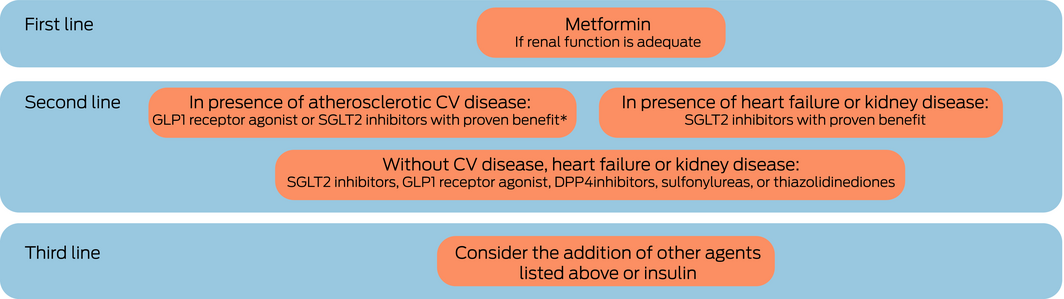
CV = cardiovascular; DPP4 = dipeptidyl peptidase 4; GLP1 = glucagon‐like peptide 1; SGLT2 = sodium–glucose cotransporter 2. * GLP1 receptor agonists with CV outcome superiority: dulaglutide, liraglutide and semaglutide. GLP1 receptor agonists currently listed in the Pharmaceutical Benefits Scheme (PBS): dulaglutide and exenatide. SGLT2 inhibitors with CV outcome superiority: canagliflozin and empagliflozin. SGLT2 inhibitors currently listed in the PBS: dapagliflozin, empagliflozin and ertugliflozin.
Box 3 – Cardiovascular outcome hazard ratio (HR) for sodium–glucose cotransporter 2 inhibitors compared with placebo
Trial |
3‐point MACE
|
MACE component |
Heart failure hospitalisation
| ||||||||||||
Cardiovascular death
|
Non‐fatal myocardial infarction
|
Non‐fatal stroke
| |||||||||||||
EMPA‐REG OUTCOME trial11 |
0.86 (0.74–0.99) |
0.62 (0.49–0.77) |
0.87 (0.70–1.09) |
1.24 (0.92–1.67) |
0.65 (0.50–0.85) |
||||||||||
CANVAS trial14 |
0.86 (0.75–0.97) |
0.87 (0.72–1.06) |
0.85 (0.69–1.05) |
0.90 (0.71–1.15) |
0.67 (0.52–0.87) |
||||||||||
DECLARE‐TIMI 58 trial15 |
0.93 (0.84–1.03) |
0.98 (0.82–1.17) |
0.89 (0.77–1.01) |
1.01 (0.84–1.21) |
0.73 (0.61–0.88) |
||||||||||
MACE = major adverse cardiovascular events. | |||||||||||||||
Box 4 – Possible mechanism of euglycaemic diabetic ketoacidosis (DKA) caused by sodium–glucose cotransporter 2 (SGLT2) inhibitors*
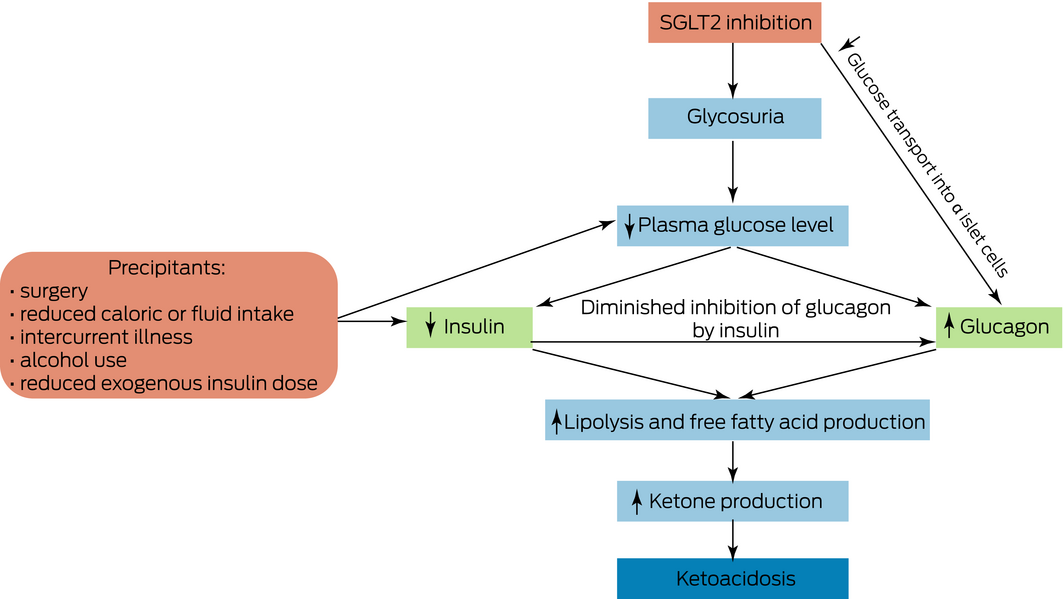
*SGLT2 inhibitors induce glycosuria and lower plasma glucose level, thereby reducing endogenous insulin production and increasing glucagon secretion. SGLT2 channels are also expressed on pancreatic α islet cells, and their inhibition contributes to promoting glucagon release. The imbalance between insulin and glucagon levels lead to lipolysis and ketone production. This process is exacerbated during fasting for surgery or during intercurrent illness. Simple printed instructions at initiation of SGLT2 inhibitor therapy to all patients and staff to cease 2 days before and on the day of a procedure or when fasting (with ketone testing) may be useful in the prevention of DKA.
Competing interests
Elif Ekinci's institute has received research funding from Novo Nordisk, Sanofi, GeNeuro and Dimerix. Timothy Davis has served on advisory boards for, and received research funding, speaker fees and travel assistance to attend meetings from, Merck Sharp and Dohme (manufacturer of sitagliptin and ertugliflozin), NovoNordisk (manufacturer of liraglutide and semaglutide), and Eli Lilly (manufacturer of dulaglutide). He has also served on advisory boards for, and received speaker fees and travel assistance to attend meetings from, AstraZeneca (manufacturer of saxagliptin, exenatide and dapagliflozin) and Boehringer Ingelheim (manufacturer of linagliptin and empagliflozin).
Acknowledgements
Renata Libianto is supported by a National Health and Medical Research Council/National Heart Foundation of Australia postgraduate scholarship and by the Royal Australasian College of Physicians (RACP). Timothy Davis is supported by a Medical Research Future Fund Next Generation Clinical Researchers Program Practitioner Fellowship. Elif Ekinci has received grant funding from Viertel, RACP, Sir Edward Weary Dunlop Medical Research Foundation, and Diabetes Australia Research Program.
References
- Australian Bureau of Statistics. National Health Survey: first results, 2017–18 [Cat. No. 4364.0.55.001]. http://www.abs.gov.au/ausstats/abs@.nsf/PrimaryMainFeatures/4364.0.55.001?OpenDocument (viewed May 2019).
- Davis WA, Peters KE, Makepeace A, et al. Prevalence of diabetes in Australia: insights from the Fremantle Diabetes Study Phase II. Intern Med J 2018; 48: 803–809.
- Lee CM, Colagiuri R, Magliano DJ, et al. The cost of diabetes in adults in Australia. Diabetes Res Clin Pract 2013; 99: 385–390.
- Nesto RW, Bell D, Bonow RO, et al. Thiazolidinedione use, fluid retention, and congestive heart failure: a consensus statement from the American Heart Association and American Diabetes Association. Diabetes Care 2004; 27: 256–263.
- Komajda M, McMurray JJ, Beck‐Nielsen H, et al. Heart failure events with rosiglitazone in type 2 diabetes: data from the RECORD clinical trial. Eur Heart J 2010; 31: 824–831.
- Liao HW, Saver JL, Wu YL, et al. Pioglitazone and cardiovascular outcomes in patients with insulin resistance, pre‐diabetes and type 2 diabetes: a systematic review and meta‐analysis. BMJ Open 2017; 7: e013927.
- Davies MJ, D'Alessio DA, Fradkin J, et al. Management of hyperglycaemia in type 2 diabetes, 2018. A consensus report by the American Diabetes Association (ADA) and the European Association for the Study of Diabetes (EASD). Diabetologia 2018; 61: 2461–2498.
- Australian Diabetes Society. Australian type 2 diabetes management algorithm. ADS, 2020. http://t2d.diabetessociety.com.au/documents/4tuVr56d.pdf (viewed Dec 2019).
- Nissen SE, Wolski K. Effect of rosiglitazone on the risk of myocardial infarction and death from cardiovascular causes. N Engl J Med 2007; 356: 2457–2471.
- Food and Drug Administration. Diabetes mellitus — evaluating cardiovascular risk in new antidiabetic therapies to treat type 2 diabetes. FDA, 2008. https://www.fda.gov/downloads/Drugs/GuidanceComplianceRegulatoryInformation/Guidances/UCM071627.pdf (viewed May 2019).
- Zinman B, Wanner C, Lachin JM, et al. EMPA‐REG OUTCOME Investigators. Empagliflozin, cardiovascular outcomes, and mortality in type 2 diabetes. N Engl J Med 2015 Nov; 373: 2117–2128.
- Abdul‐Ghani M, Del Prato S, Chilton R, DeFronzo RA. SGLT2 inhibitors and cardiovascular risk: lessons learned from the EMPA‐REG OUTCOME study. Diabetes Care 2016; 39: 717–725.
- Verma S, Rawat S, Ho KL, et al. Empagliflozin increases cardiac energy production in diabetes: novel translational insights into the heart failure benefits of SGLT2 inhibitors. JACC Basic Transl Sci 2018; 3: 575–587.
- Neal B, Perkovic V, Mahaffey KW, et al. CANVAS Program Collaborative Group. Canagliflozin and cardiovascular and renal events in type 2 diabetes. N Engl J Med 2017; 377: 644–657.
- Wiviott SD, Raz I, Bonaca MP, et al. Dapagliflozin and cardiovascular outcomes in type 2 diabetes. N Engl J Med 2019; 380: 347–357.
- Wanner C, Inzucchi SE, Lachin JM, et al. Empagliflozin and progression of kidney disease in type 2 diabetes. The N Engl J Med 2016; 375: 323–334.
- Perkovic V, Jardine MJ, Neal B, et al. Canagliflozin and renal outcomes in type 2 diabetes and nephropathy. N Engl J Med 2019; 380: 2295–2306.
- Fralick M, Schneeweiss S, Patorno E. Risk of diabetic ketoacidosis after initiation of an SGLT2 inhibitor. N Engl J Med 2017; 376: 2300–2302.
- Tang H, Li D, Wang T, et al. Effect of sodium‐glucose cotransporter 2 inhibitors on diabetic ketoacidosis among patients with type 2 diabetes: a meta‐analysis of randomized controlled trials. Diabetes Care 2016; 39: e123–e124.
- Vellanki P, Umpierrez GE. Diabetic ketoacidosis: a common debut of diabetes among African Americans with type 2 diabetes. Endocr Pract 2017; 23: 971–978.
- Hamblin PS, Wong R, Ekinci EI, et al. SGLT2 inhibitors increase the risk of diabetic ketoacidosis developing in the community and during hospital admission. J Clin Endocrinol Metab 2019; 104: 3077–3087.
- Taylor SI, Blau JE, Rother KI. SGLT2 inhibitors may predispose to ketoacidosis. J Clin Endocrinol Metab 2015; 100: 2849–2852.
- Rosenstock J, Ferrannini E. Euglycemic diabetic ketoacidosis: a predictable, detectable, and preventable safety concern with SGLT2 inhibitors. Diabetes Care 2015; 38: 1638–1642.
- Australian Diabetes Society. Alert: severe euglycaemic ketoacidosis with SGLT2 inhibitor use in the perioperative period. https://diabetessociety.com.au/documents/2018_ALERT-ADS_SGLT2i_PerioperativeKetoacidosis_v3__final2018_02_14.pdf (viewed May 2019).
- Food and Drug Administration. Highlights of prescribing information. FDA, 2016. https://www.accessdata.fda.gov/drugsatfda_docs/label/2016/204042s015s019lbl.pdf (viewed Nov 2019).
- Nadkarni GN, Ferrandino R, Chang A, et al. Acute kidney injury in patients on SGLT2 inhibitors: a propensity‐matched analysis. Diabetes Care 2017; 40: 1479–1485.
- Sung J, Padmanabhan S, Gurung S, et al. SGLT2 inhibitors and amputation risk: real‐world data from a diabetes foot wound clinic. J Clin Transl Endocrinol 2018; 13: 46–47.
- Marso SP, Daniels GH, Brown‐Frandsen K, et al. Liraglutide and cardiovascular outcomes in type 2 diabetes. N Engl J Med 2016; 375: 311–322.
- Marso SP, Bain SC, Consoli A, et al. SUSTAIN‐6 Investigators. Semaglutide and cardiovascular outcomes in patients with type 2 diabetes. N Engl J Med 2016; 375: 1834–1844.
- Hernandez AF, Green JB, Janmohamed S, et al. Albiglutide and cardiovascular outcomes in patients with type 2 diabetes and cardiovascular disease (Harmony Outcomes): a double‐blind, randomised placebo‐controlled trial. Lancet 2018; 392: 1519–1529.
- Gerstein HC, Coulhoun HM, Dagenais GR, et al. Dulaglutide and cardiovascular outcomes in type 2 diabetes (REWIND): a double‐blind, randomised placebo‐controlled trial. Lancet 2019; 394: 121–130.
- Holman RR, Bethel MA, Mentz RJ, et al. Effects of once‐weekly exenatide on cardiovascular outcomes in type 2 diabetes. N Engl J Med 2017; 377: 1228–1239.
- Pfeffer MA, Claggett B, Diaz R, et al. Lixisenatide in patients with type 2 diabetes and acute coronary syndrome. N Engl J Med 2015; 373: 2247–2257.
- Sun F, Wu S, Guo S, et al. Impact of GLP‐1 receptor agonists on blood pressure, heart rate and hypertension among patients with type 2 diabetes: a systematic review and network meta‐analysis. Diabetes Res Clin Pract 2015; 110: 26–37.
- Ferdinand KC, White WB, Calhoun DA, et al. Effects of the once‐weekly glucagon‐like peptide‐1 receptor agonist dulaglutide on ambulatory blood pressure and heart rate in patients with type 2 diabetes mellitus. Hypertension 2014; 64: 731–737.
- Lovshin JA, Barnie A, DeAlmeida A, et al. Liraglutide promotes natriuresis but does not increase circulating levels of atrial natriuretic peptide in hypertensive subjects with type 2 diabetes. Diabetes Care 2015; 38: 132–139.
- Del Olmo‐Garcia MI, Merino‐Torres JF. GLP‐1 receptor agonists and cardiovascular disease in patients with type 2 diabetes. J Diabetes Res 2018; 2018: 4020492.
- Robinson LE, Holt TA, Rees K, et al. Effects of exenatide and liraglutide on heart rate, blood pressure and body weight: systematic review and meta‐analysis. BMJ Open 2013; 3: e001986.
- Drucker DJ. Mechanisms of action and therapeutic application of glucagon‐like peptide‐1. Cell Metab 2018; 27: 740–756.
- Tuttle KR, Lakshmanan MC, Rayner B, et al. Dulaglutide versus insulin glargine in patients with type 2 diabetes and moderate‐to‐severe chronic kidney disease (AWARD‐7): a multicentre, open‐label, randomised trial. Lancet Diabetes Endocrinol 2018; 6: 605–617.
- Mann JFE, Orsted DD, Brown‐Frandsen K, et al. Liraglutide and renal outcomes in type 2 diabetes. N Engl J Med 2017; 377: 839–848.
- Shyangdan DS, Royle P, Clar C, et al. Glucagon‐like peptide analogues for type 2 diabetes mellitus. Cochrane Database System Rev 2011; (10): CD006423.
- Singh S, Chang HY, Richards TM, et al. Glucagonlike peptide 1‐based therapies and risk of hospitalization for acute pancreatitis in type 2 diabetes mellitus: a population‐based matched case‐control study. JAMA Intern Med 2013; 173: 534–539.
- Storgaard H, Cold F, Gluud LL, et al. Glucagon‐like peptide‐1 receptor agonists and risk of acute pancreatitis in patients with type 2 diabetes. Diabetes Obes Metab 2017; 19: 906–908.
- Home P. Cardiovascular outcome trials of glucose‐lowering medications: an update. Diabetologia 2019; 62: 357–369.
- Vilsboll T, Bain SC, Leiter LA, et al. Semaglutide, reduction in glycated haemoglobin and the risk of diabetic retinopathy. Diabetes Obes Metab 2018; 20: 889–897.
- Feldman‐Billard S, Larger É, Massin P. Early worsening of diabetic retinopathy after rapid improvement of blood glucose control in patients with diabetes. Diabetes Metab 2018; 44: 4–14.
- Green JB, Bethel MA, Armstrong PW, et al. Effect of sitagliptin on cardiovascular outcomes in type 2 diabetes. N Engl J Med 2015; 373: 232–242.
- Scirica BM, Bhatt DL, Braunwald E, et al. Saxagliptin and cardiovascular outcomes in patients with type 2 diabetes mellitus. N Engl J Med 2013; 369: 1317–1326.
- White WB, Cannon CP, Heller SR, et al. Alogliptin after acute coronary syndrome in patients with type 2 diabetes. N Engl J Med 2013; 369: 1327–1335.
- Rosenstock J, Perkovic V, Johansen OE, et al. Effect of linagliptin vs placebo on major cardiovascular events in adults with type 2 diabetes and high cardiovascular and renal risk: the CARMELINA randomized clinical trial. JAMA 2019; 321: 69–79.
- Food and Drug Administration. FDA drug safety communication: FDA adds warnings about heart failure risk to labels of type 2 diabetes medicines containing saxagliptin and alogliptin 2014. https://www.fda.gov/Drugs/DrugSafety/ucm486096.htm (viewed May 2019).
- Karagiannis T, Boura P, Tsapas A. Safety of dipeptidyl peptidase 4 inhibitors: a perspective review. Ther Adv Drug Saf 2014; 5: 138–146.
Provenance: Not commissioned; externally peer reviewed.
When ‘Liver Enzymes’ Are Not Hepatic: Late-Onset Pompe Disease
Shauna Madigan, Georgina England, Wayne Rankin
Primary Hyperparathyroidism in Adults: Recent Developments in Diagnosis and Management
Elizabeth Wootton, Sunita M. C. De Sousa, Richard L. Prince, Donald S. A. McLeod, David A. Pattison, Mathis Grossmann
Severe Hypoglycaemia Secondary to Chronic Opioid-Induced Hypothalamic–Pituitary–Adrenal Axis Suppression: An Under-Recognised Phenomenon
Michael Do, Annabelle Hayes, Malgorzata Brzozowska
Rethinking diabetes care for Indigenous Australians: the need for Indigenous‐codesigned and led diabetes models of care
Natalie Nanayakkara, Sharon Atkinson‐Briggs, Alicia J Jenkins, Neale D Cohen
The first Australian evidence‐based guidelines on male infertility
Darren J Katz, Liza O’Donnell, Robert I McLachlan, Tim J Moss, Clare V Boothroyd, Veena Jayadev, Sarah R Catford