




Volume 211 - Issue 10
Controversies in medicine: the role of calcium and vitamin D supplements in adults
Authors: Ian R Reid and Mark J Bolland
Med J Aust 2019; 211 (10): 468-473. || doi: 10.5694/mja2.50393
Published online: 18 November 2019
Published online: 18 November 2019
The evidence suggests that calcium and vitamin D supplements should not be provided routinely to healthy older individuals
Summary
- Vitamin D is made in the skin when exposed to sunlight, so deficiency is usually the result of low sunlight exposure (eg, in frail older people and in individuals who are veiled).
- Calcium and/or vitamin D supplements have been used for the prevention and treatment of osteoporosis. The major trials in community‐dwelling individuals have not demonstrated fracture prevention with either calcium, vitamin D, or their combination, but the results of a large study in vitamin D‐deficient nursing home residents indicated a reduced fracture incidence.
- Trials show that vitamin D increases bone density when winter 25‐hydroxyvitamin D levels are below 25–30 nmol/L. However, assay expense and variability suggest that supplements are better targeted based on clinical status to frail older people and possibly to people with dark skin living at higher latitudes. A daily dose of 400–800 units (10–20 μg) is usually adequate.
- Parenteral antiresorptive drugs can cause hypocalcaemia in severe vitamin D deficiency (< 25 nmol/L), which should therefore be corrected before treatment.
- Clinical trials have not demonstrated benefits of vitamin D on non‐skeletal endpoints.
- Calcium supplements in healthy individuals are not needed, nor are they required in most people receiving treatment for osteoporosis, where they have not been shown to affect treatment efficacy.
- Calcium supplements cause constipation, bloating and kidney stones, and some evidence suggests they may cause a small increase in the risk of myocardial infarction.
- Low dose vitamin D is safe, but high doses result in more falls and fractures. Current evidence does not support the use of these supplements in healthy community‐dwelling adults.
Calcium and vitamin D are quite distinct entities. Calcium is an element that, as a positively charged ion, is part of the mineral component of bone along with phosphate. It also plays critical roles in intracellular signalling, coagulation and the function of nerves and muscles; therefore, maintenance of stable extracellular concentrations is a homeostatic priority. Vitamin D is an organic molecule — structurally related to the steroid hormones — that acts as a precursor to calcitriol, the principal hormonal regulator of intestinal calcium absorption. In clinical practice, calcium and vitamin D supplements are often administered together, but they have distinct actions and different safety profiles, so it is important to consider the requirements for each separately and to prescribe each according to need. This review addresses these questions in adults, based on our previously described literature search strategies,1,2 updated to the time of writing.
Two trials with opposite results
The use of supplements of calcium and vitamin D has been controversial, particularly in the past two decades, as larger clinical trials have not supported many doctors' previous clinical practice. To some extent, the controversy is evidence‐based, since there are compelling studies pointing both to benefit and absence of benefit from the use of these supplements. This is best illustrated by a comparison of two of the largest studies: the Chapuy study3 — in which calcium plus vitamin D, or placebo, were given to 3000 older women in nursing homes — and the Women's Health Initiative (WHI) trial4 — in which 36 000 community‐dwelling women were similarly randomised. In the former study, hip fracture risk was reduced by 23% and hip bone density increased by 7.3% above placebo after 18 months, whereas the latter found no effect on fracture and a 1.1% benefit to bone density at 9 years. Differences in the study populations are the likely explanation of these inconsistent outcomes, since the frail women in the Chapuy study3 had mean baseline 25‐hydroxyvitamin D (25(OH)D) levels of 20 nmol/L (standard deviation, 14 nmol/L), indicating severe deficiency in many participants. Providing vitamin D to patients who are severely deficient has dramatic effects on bone density,5 whereas calcium supplements in people with intakes similar to the Chapuy study do not affect bone density,6 suggesting that the vitamin D component was the more important element of the intervention. Just as we would not expect antibiotics given to individuals without an active infection to have beneficial effects, we should not expect supplements of calcium and vitamin D to benefit people who do not have demonstrable deficiency. We cannot generalise from frail older people to healthy community dwellers, either in meta‐analyses or in our clinical practice.
A problem that both these studies share is the use of a combined intervention, since it is not possible to determine whether benefits or adverse effects arise from one or other intervention, or their combination. The RECORD (Randomised Evaluation of Calcium or Vitamin D) investigators carried out a study of calcium and vitamin D supplements using a factorial design.7 Their pragmatic trial, designed to assess efficacy as used in clinical practice, demonstrated that calcium, vitamin D, or their combination did not have any beneficial effects on fracture incidence in a community‐dwelling population (Box 1).
Defining calcium and vitamin D deficiency
There is no consensus as to what constitutes calcium deficiency. At present, recommended intakes in older adults are 700 mg/day in the United Kingdom, 800 mg/day in China and 1300 mg/day in the United States, Australia and New Zealand. The World Health Organization recommends at least 400–500 mg/day.8 For some decades, calcium requirement has been defined from calcium balance studies, with the finding that intakes of 1500 mg in postmenopausal women or 1000 mg in premenopausal women could completely abrogate negative calcium balance.9 However, bone density studies show that bone loss continues in postmenopausal women irrespective of their calcium intake over the range of 300–2000 mg/day (Box 2).10 Communities with high intakes of dairy products have assumed that these high calcium intakes are desirable, but it should be noted that bone health is not in any way inferior in Asian and African communities where calcium intakes have traditionally been below 300 mg/day. Nevertheless, in children with calcium intakes of about 100 mg/day, failure of skeletal mineralisation and rickets may develop,8,11 so there is a minimum dietary requirement for calcium. Based on these imperfect data, we consider that calcium intakes of more than 500 mg/day are compatible with good skeletal health in adults of all ages, and intakes of more than 250–300 mg/day may be adequate for many individuals.
The definition of vitamin D deficiency is also controversial. Observational studies demonstrate inverse relationships between morbidity and mortality on one hand, and circulating 25(OH)D on the other. Many have assumed that vitamin D levels are causal in these relationships and have defined vitamin D deficiency accordingly, but recent clinical trial evidence has not supported that interpretation.12,13 Therefore, it is more likely that ill health from any cause results in low circulating levels of 25(OH)D, due to reduced time spent outdoors, reduced physical activity, and possibly the effects of obesity and inflammation on circulating levels of 25(OH)D and its binding protein.
To understand the levels of 25(OH)D necessary for optimal bone health, we recently carried out a randomised controlled trial of vitamin D supplementation with bone density as the endpoint, which pre‐specified analysis in relation to baseline 25(OH)D levels. The results of this trial indicated that in individuals with baseline 25(OH)D levels greater than 30 nmol/L, there was no benefit to bone density, whereas below these levels, changes of more than 2% were evident over 2 years (Box 3).14 We have since confirmed this finding in an independent clinical trial cohort from Scotland.15 It should be noted that in both these studies, 25(OH)D levels were measured by mass spectrometry in late winter and would be expected to be 10–20 nmol/L higher in summer. Thus, based on bone density changes in response to vitamin D supplementation, a seasonal 25(OH)D nadir of 30 nmol/L appears to define a threshold below which vitamin D supplementation may produce clinically relevant benefits. It is important to note that measuring 25(OH)D is difficult, with poor assay precision, differences in calibration between available assays, variations with season, and after acute inflammatory responses. Therefore, a single threshold to define vitamin D deficiency is unlikely to be valid in every clinical situation.
These considerations are key to the question of when vitamin D levels should be measured. Expenditure on 25(OH)D assays has been climbing rapidly in many countries, without demonstrable clinical benefit, and often far outstripping costs of supplementation.16 Screening measurements of 25(OH)D in community‐dwelling adults are not supported by the US Preventive Services Task Force.17 As a result, funders have imposed restrictions in some jurisdictions. In our practice, it is more cost‐effective to provide vitamin D supplements based on clinical risk factors alone, although elsewhere, cycles of test–prescribe–retest are undertaken, resulting in billions of dollars being spent worldwide on often unreliable 25(OH)D assays. The same debate occurs during pregnancy, where current Australian recommendations are to measure 25(OH)D only when there are specific risk factors for vitamin D deficiency.18 This is a more affordable policy across the whole adult population, although whether supplementation without testing or testing followed by supplementation is the better course requires further analysis.
Efficacy of calcium supplements
Biochemistry
In the first few hours after administration, calcium supplements of 500–1000 mg increase serum calcium towards the upper end of the normal range, suppress markers of bone resorption, and suppress parathyroid hormone.19 These changes in serum calcium last for at least 8 hours, but are no longer detectable at 24 hours. While long term effects on bone resorption may be transient, parathyroid hormone and bone formation markers show a sustained reduction of 10–20%.20
Bone density
The effects of calcium supplementation on bone density have been comprehensively reviewed in a 2015 meta‐analysis,6 which shows that the introduction of calcium supplements has positive effects on bone density of about 1% at one year. However, there is no increase in the treatment effect over time (Box 4). In conjunction with the biochemical findings referred to above, this suggests a one‐off increase in bone density resulting from a reduction in numbers of osteoclasts at the bone surface, but no long term change in bone balance, consistent with the observational data presented in Box 2. Such small one‐off changes in bone density would not be expected to influence fracture rates. In the meta‐analysis,6 increases in bone density were similar in trials of dietary calcium and supplements, whether or not calcium was given alone or with vitamin D, and independent of calcium dose (≥ 1000 mg/day v < 1000 mg/day; ≤ 500 mg/day v > 500 mg/day), and of baseline dietary calcium intake (< 800 mg/day v ≥ 800 mg/day).6
Fractures
Most observational studies do not show a relationship between calcium intake and fracture risk.2 Of the clinical trials, only the Chapuy study demonstrated clear benefit. In trials judged to have a low risk of bias (four studies, n = 44 505), there is no effect on risk of fracture at any site.2 Low compliance has been invoked as an explanation for these negative results, but is also a limitation to calcium use in clinical practice.
Similar results were found in a meta‐analysis of 33 randomised trials involving 51 145 community‐dwelling participants. Calcium (relative risk [RR], 1.53; 95% CI, 0.97–2.42), vitamin D (RR, 1.21; 95% CI, 0.99–1.47), or their combination (RR, 1.09; 95% CI, 0.85–1.39) did not have an impact on risk of hip fracture compared with placebo or no treatment.21 Results were similarly negative for non‐vertebral, vertebral and total fractures. Subgroup analyses showed that these results were consistent regardless of the calcium or vitamin D dose, sex, fracture history, dietary calcium intake, and baseline serum 25(OH)D concentration.
The National Osteoporosis Foundation in the US has also produced a meta‐analysis of eight studies of calcium with vitamin D including 30 970 participants22 which reported a 15% reduction in total fractures and a 30% reduction in hip fractures. Numerical errors in their data have been pointed out,23,24 and their conclusions were heavily dependent on use of a post hoc subgroup analysis of the WHI, which found a rate ratio of hip fracture of 0.6, whereas that in the primary publication was 0.88,4 or 1.20 in patients not receiving oestrogen.25
It is sometimes stated that treatments for osteoporosis have only been shown to be effective when administered with calcium and vitamin D. While many studies have administered calcium and vitamin D to both the treatment and placebo groups, principally to allay concerns that patients with osteoporosis were being left untreated, the addition of calcium to alendronate does not increase its effects on bone density,26 and both oestrogen27,28 and bisphosphonates29,30 prevent fractures without co‐administration of calcium.
Efficacy of vitamin D supplements
Biochemistry
The biochemical response to vitamin D supplements is strongly dependent on the baseline levels of 25(OH)D. When these are very low, supplementation results in substantial increases in 25(OH)D, correction of secondary hyperparathyroidism, normalisation of serum calcium and phosphate, and reduction in bone turnover, although there is sometimes a transient rise in bone formation markers initially.15 In groups without overt vitamin D deficiency, there are dose‐related increases in serum 25(OH)D, but little other biochemical change, and, in most cases, no significant change in intestinal calcium absorption.15,31,32 It is noteworthy that the dose response for serum 25(OH)D is not linear — there are substantial increases in 25(OH)D when starting from low levels, but a marked plateauing of that effect at higher intakes,15,33 suggesting that counter‐regulatory processes prevent increases in 25(OH)D to potentially unsafe levels.
Bone density
Meta‐analyses of all studies of the effect of vitamin D supplements on bone density show no clinically significant benefit.1,34 However, as noted above, two recent studies have found that individuals with baseline late winter 25(OH)D levels below 30 nmol/L derive a significant benefit from vitamin D supplementation (Box 3).14,15
Fractures
A recent meta‐analysis of these data found that vitamin D had no effect on total fracture (36 trials; n = 44 790; RR, 1.00; 95% CI, 0.93–1.07) or hip fracture (20 trials; n = 36 655; RR, 1.11; 95% CI, 0.97–1.26),1 consistent with the findings of the meta‐analysis discussed above.21 Earlier, less comprehensive meta‐analyses have reached various conclusions. The DIPART (Vitamin D Individual Patient Analysis of Randomised Trials) individual patient meta‐analysis (seven trials; n = 68 500) found no effect on fractures for studies of vitamin D alone, but for calcium with vitamin D, total fractures were reduced (hazard ratio, 0.92; 95% CI, 0.86–0.99).35 However, the finding with calcium plus vitamin D depended on a non‐blinded, cluster randomised study, involving 9605 patients, with only two clusters per intervention, which would not usually qualify for inclusion in such a meta‐analysis.36 A 2012 study pooled 12 trials involving 33 277 participants in an analysis that estimated actual vitamin D intake in the treatment groups (calculated as the assigned treatment dose plus any additional supplement dose with adjustment for adherence) and compared this with the pooled, unadjusted control groups.37 Thus, this effectively became a selective, compliers analysis, with the recognised biases that it entails. We therefore conclude that clinical practice should be guided by the more rigorous and comprehensive analyses previously discussed.1,21
Non‐skeletal effects
The association of low vitamin D levels with a number of conditions and with mortality led to the hypothesis that vitamin D supplementation might have beneficial effects on non‐skeletal health. There are a number of trials underway at present addressing this question, but the recent publications from both the Vitamin D Assessment (ViDA) study and the Vitamin D and Omega‐3 Trial (VITAL) provide no support for the suggestions that vitamin D supplements reduce the risk of cardiovascular events or cancer,38,39 consistent with earlier trial results.12 The fact that these populations were vitamin D replete leaves open the question of the efficacy of supplements in individuals with a demonstrable deficiency.
There has been much work addressing the possible benefits of vitamin D supplements on muscle function, particularly on falls. The literature has been contradictory, but the most recent meta‐analysis provides no support for benefit in this regard.1 Vitamin D supplements appear to improve muscle strength, more so in patients in institutions and with baseline 25(OH)D levels below 30 nmol/L, but high dose supplementation may be deleterious.40 Confirming the lack of effect of vitamin D on muscle function, even in situations of moderate deficiency, recent studies in young men and women with baseline 25(OH)D levels of about 20 nmol/L have not shown any effects on muscle strength after supplementation to about 75 nmol/L.41,42
Safety
Calcium
Calcium supplements are frequently associated with gastrointestinal symptoms, particularly constipation, and they have also been reported to double the risk of hospital admissions related to abdominal symptoms.43 In the WHI study, calcium and vitamin D increased the risk of renal calculi by 17%.4 There is evidence that calcium supplements increase the risk of myocardial infarction and, possibly, stroke,44 although this remains subject to controversy. This evidence is complemented by trials in nephrology patients given calcium, and by a recent Mendelian randomisation study showing that small increases in circulating calcium concentrations within the normal range are associated with increased risks of vascular disease and death.45
Vitamin D
Unlike calcium supplements, vitamin D supplements seldom cause symptomatic adverse effects. Most studies have assessed the safety of vitamin D supplements by documenting their effects on serum or urine calcium, which are usually minimal unless doses escalate above several thousand units a day.46 However, there is evidence that vitamin D doses of 4000 IU/day, 60 000 IU/month, or 300 000–500 000 IU/year increase the risk of falls47,48,49 and/or fractures.47,50 The threshold for bone benefits of vitamin D (25(OH)D > 30 nmol/L) is met with doses of 400–1000 IU/day; therefore, the use of higher doses is not appropriate. At these lower levels, vitamin D supplements have no known adverse effects and can be widely endorsed for individuals at risk of deficiency. Supplement doses greater than 2000 IU/day should only be used in exceptional circumstances and with appropriate monitoring.
Determining when to prescribe supplements
There are some medical conditions, such as osteomalacia, for which calcium and vitamin D supplements are central to management. Their use as adjunctive therapy in osteoporosis has been the convention, but as discussed above, there is little evidence that this alters outcomes. However, some therapies for osteoporosis can cause hypocalcaemia, such as the use of zoledronate or denosumab in patients with vitamin D deficiency. Therefore, the use of supplements of vitamin D in patients at risk of vitamin D deficiency who need potent antiresorptives is appropriate. While zoledronate is contraindicated in renal impairment, denosumab is used in this context but carries a risk of hypocalcaemia, which is often mitigated with calcium supplements. Romosozumab inhibits bone resorption and stimulates bone formation, resulting in rapid increases in bone density. This combination of effects creates a risk of hypocalcaemia, and also a need for an increased supply of calcium to mineralise the substantial amount of new bone being made. Calcium supplements in this context are currently accepted practice, and the safety and efficacy of romosozumab have not been demonstrated without them.
Clinically significant vitamin D deficiency (ie, nadir 25(OH)D < 30 nmol/L) is common among individuals with minimal sunlight exposure, such as frail older people and those who are veiled, as well as in people from Africa, the Middle East and South Asia living at high latitudes. Supplementation of frail older people is widely advised, and also frequently provided for immigrant communities, particularly children, including those being breastfed. Vitamin D supplementation sufficient to raise 25(OH)D levels above 40–50 nmol/L is advisable; 400–800 units per day is usually adequate, unless there is some coexistent medical problem, such as malabsorption. Supplementation should be continued for as long as the cause of vitamin D deficiency (eg, low sunlight exposure) is present.
The use of calcium supplements in individuals without specific bone pathology does not have a sound evidence base, and the safety concerns suggest that the net effect could be negative. Similarly, the use of vitamin D as a general tonic in individuals who do not have risk factors for deficiency lacks an evidence base, although it does not have the safety concerns that hold for calcium. Consistent with this view, the US Preventive Services Task Force does not support the use of either calcium or vitamin D supplements in otherwise healthy community‐dwelling adults.51 This is in broad agreement with the recommendations of the International Osteoporosis Foundation which state that “supplementation with calcium alone for fracture reduction is not supported by the literature” but that “calcium supplementation, with concomitant vitamin D supplementation, is supported for patients at high risk of calcium and vitamin D insufficiency”.52 This brings us back to the two trials described above: supplements have value in overtly deficient individuals, but not across the healthy older population. Based on the consistency of the data, we believe that a recommendation not to provide supplements routinely to healthy older individuals can be judged to be evidence‐based, as defined by the GRADE methodology,53 and no longer a matter of controversy.
Conclusion
In summary, small doses of vitamin D have a place in the prevention of osteomalacia in individuals with specific risk factors. Calcium supplements have very little place in contemporary medical practice.
Box 1 – Cumulative rates of all fractures and of hip fractures by treatment group in the RECORD (Randomised Evaluation of Calcium or Vitamin D) trial*
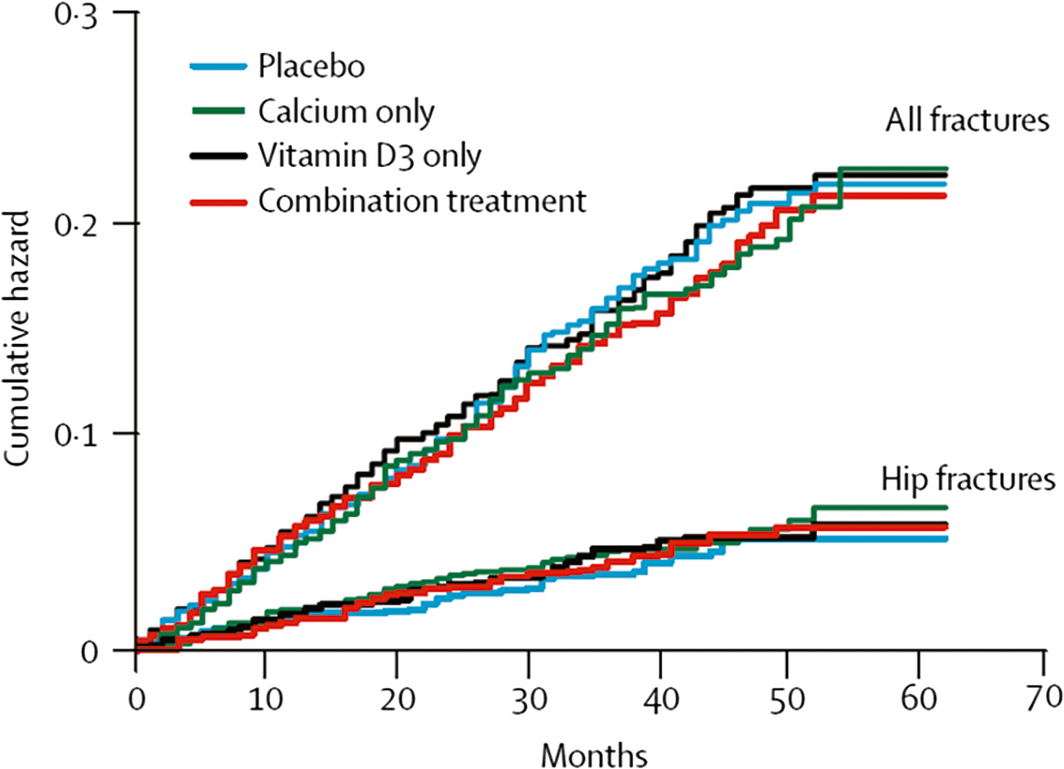
* The study recruited 5292 people aged ≥ 70 years (85% women) with a recent low trauma fracture, and randomly assigned them to vitamin D (800 IU/day), calcium (1 g/day), their combination, or to placebo. Source: RECORD Trial Group7 (used with permission).
Box 2 – Absolute change in total body bone mineral content (BMC) over 5 years in healthy postmenopausal women, as a function of each woman's average calcium intake assessed at baseline and at year 5*
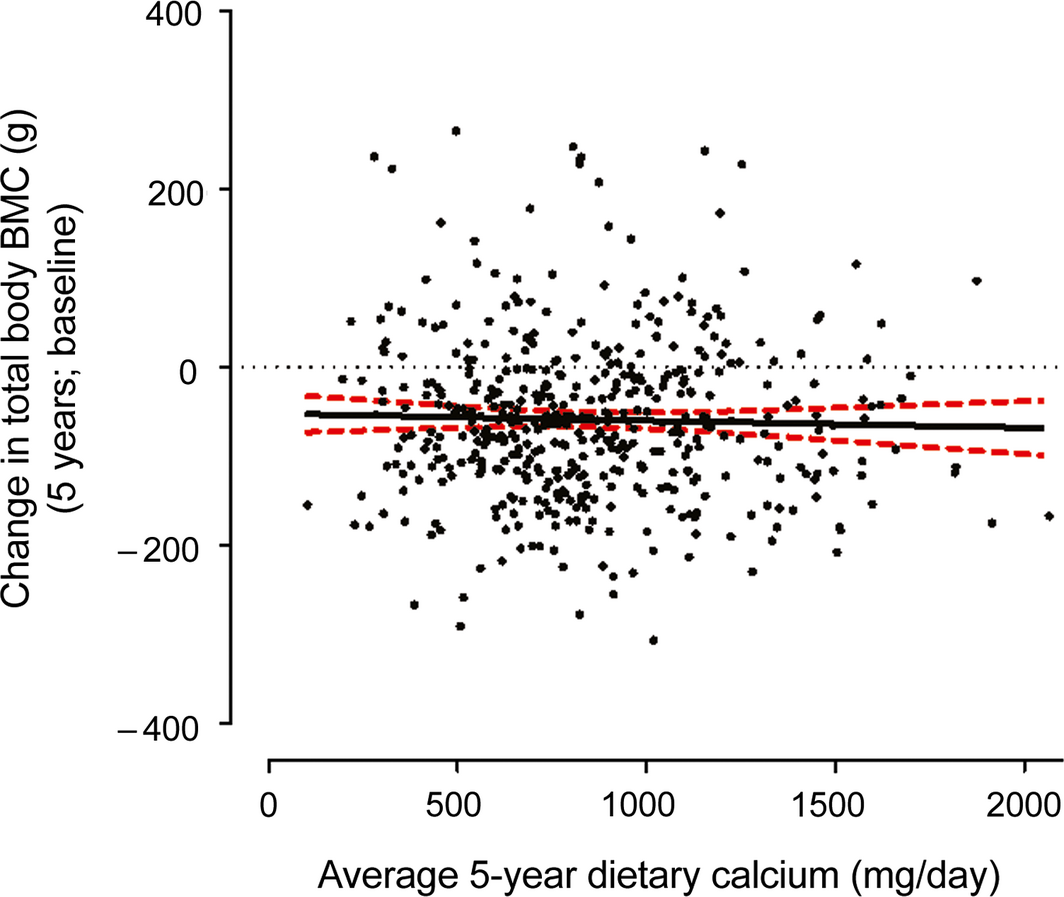
* The lines show the regression (with 95% CIs) for this relationship (P = 0.53). Source: Reid et al10 (used with permission).
Box 3 – Changes in bone mineral density (BMD) from baseline to 2 years in the vitamin D and placebo groups of the ViDA (Vitamin D Assessment) study, grouped according to baseline serum 25‐hydroxyvitamin D (25(OH)D) concentrations*
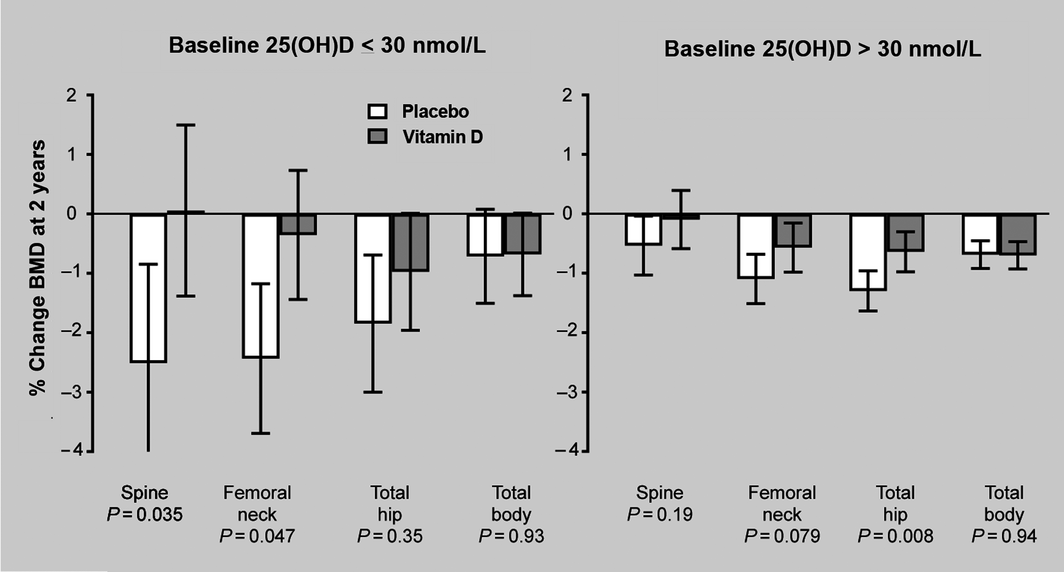
* Data are presented in mean (95% CI). P values for between‐groups comparisons are shown. Source: Reid et al14 (used with permission).
Box 4 – Random effects meta‐analysis of effect of calcium supplements on percentage change in total hip bone mineral density, by duration of follow‐up*
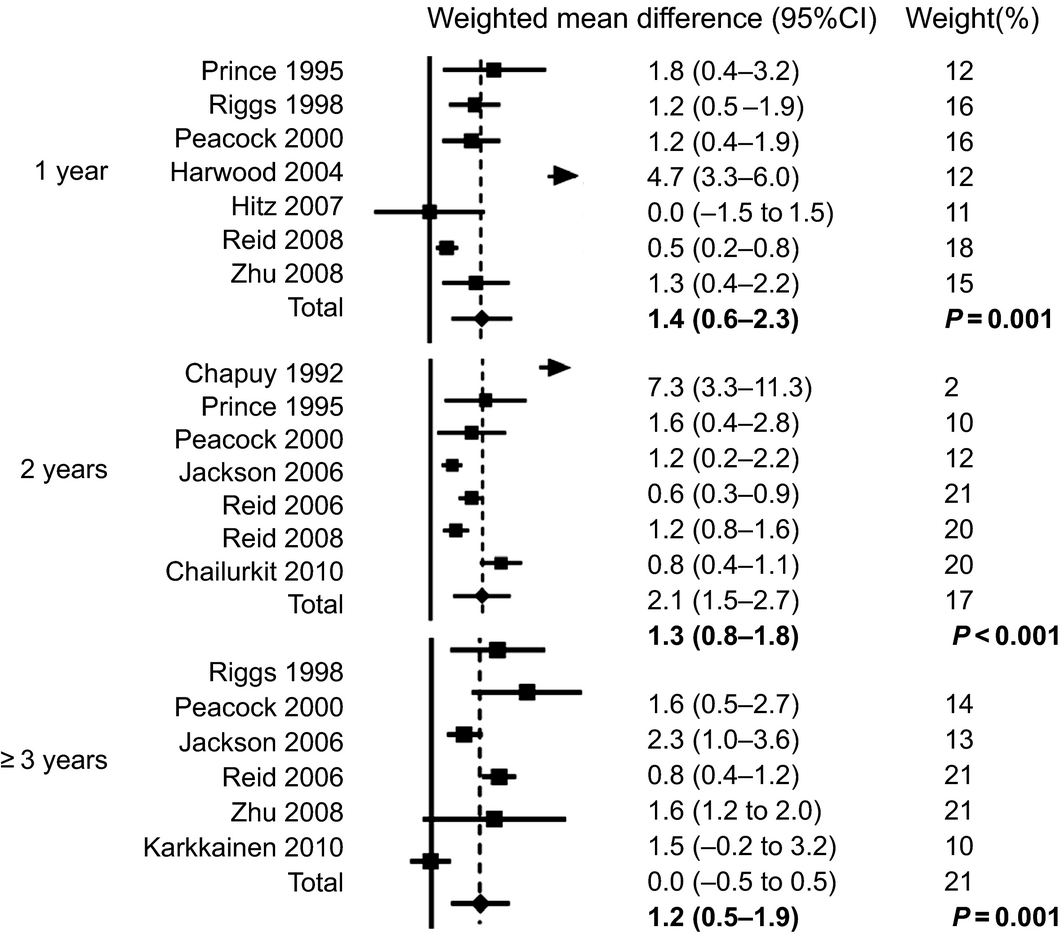
* There is a significant positive treatment effect at each time point, but no evidence of greater effects in longer trials. Figure based on data presented in Tai et al.6
Competing interests
No relevant disclosures.
Acknowledgements
Ian Reid and Mark Bolland are supported by grants from the Health Research Council of New Zealand. The Health Research Council of New Zealand had no role in the study design, data collection, analysis or interpretation, reporting or publication.
References
- Bolland MJ, Grey A, Avenell A. Effects of vitamin D supplementation on musculoskeletal health: a systematic review, meta‐analysis, and trial sequential analysis. Lancet Diabetes Endocrinol 2018; 6: 847–858.
- Bolland MJ, Leung W, Tai V, et al. Calcium intake and risk of fracture: systematic review. BMJ 2015; 351: h4580.
- Chapuy MC, Arlot ME, Duboeuf F, et al. Vitamin D3 and calcium to prevent hip fractures in the elderly women. N Engl J Med 1992; 327: 1637–1642.
- Jackson RD, LaCroix AZ, Gass M, et al. Calcium plus vitamin D supplementation and the risk of fractures. N Engl J Med 2006; 354: 669–683.
- El‐Desouki MI, Othman SM, Fouda MA. Bone mineral density and bone scintigraphy in adult Saudi female patients with osteomalacia. Saudi Med J 2004; 25: 355–358.
- Tai V, Leung W, Grey A, et al. Calcium intake and bone mineral density: systematic review and meta‐analysis. BMJ 2015; 351: h4183.
- RECORD Trial Group. Oral vitamin D3 and calcium for secondary prevention of low‐trauma fractures in elderly people (Randomised Evaluation of Calcium or Vitamin D, RECORD): a randomised placebo‐controlled trial. Lancet 2005; 365: 1621–1628.
- Heaney RP, Recker RR, Saville PD. Menopausal changes in calcium balance performance. J Lab Clin Med 1978; 92: 953–963.
- World Health Organization. Diet, nutrition and the prevention of chronic diseases: report of a joint WHO/FAO expert consultation [WHO Technical Report Series; 916]. Geneva: WHO, 2003. https://apps.who.int/iris/bitstream/handle/10665/42665/WHO_TRS_916.pdf;jsessionid=EAA7E95E8A3EECFF62450A2EEFC21D8E?sequence=1 (viewed Oct 2019).
- Reid IR, Bristow SM, Bolland MJ. Calcium supplements: benefits and risks. J Intern Med 2015; 278: 354–368.
- Thandrayen K, Pettifor JM. The roles of vitamin D and dietary calcium in nutritional rickets. Bone Rep 2018; 8: 81–89.
- Bolland MJ, Grey A, Gamble GD, Reid IR. The effect of vitamin D supplementation on skeletal, vascular, or cancer outcomes: A trial sequential meta‐analysis. Lancet Diabetes Endocrinol 2014; 2: 307–320.
- Autier P, Mullie P, Macacu A, et al. Effect of vitamin D supplementation on non‐skeletal disorders: a systematic review of meta‐analyses and randomised trials. Lancet Diabetes Endocrinol 2017; 5: 986–1004.
- Reid IR, Horne AM, Mihov B, et al. Effect of monthly high‐dose vitamin D on bone density in community‐dwelling older adults substudy of a randomized controlled trial. J Intern Med 2017; 282: 452–460.
- Macdonald HM, Reid IR, Gamble GD, et al. 25‐Hydroxyvitamin D threshold for the effects of vitamin D supplements on bone density: secondary analysis of a randomized controlled trial. J Bone Miner Res 2018; 33: 1464–1469.
- Boyages SC. Vitamin D testing: new targeted guidelines stem the overtesting tide. Med J Aust 2016; 204: 18. https://www.mja.com.au/journal/2016/204/1/vitamin-d-testing-new-targeted-guidelines-stem-overtesting-tide
- LeBlanc ES, Zakher B, Daeges M, et al. Screening for vitamin d deficiency: a systematic review for the US Preventive Services Task Force. Ann Intern Med 2015; 162: 109–122.
- Homer CSE, Oats J, Middleton P, et al. Updated clinical practice guidelines on pregnancy care. Med J Aust 2018; 209: 409–412. https://www.mja.com.au/journal/2018/209/9/updated-clinical-practice-guidelines-pregnancy-care
- Bristow SM, Gamble GD, Stewart A, et al. Acute and 3‐month effects of microcrystalline hydroxyapatite, calcium citrate and calcium carbonate on serum calcium and markers of bone turnover: a randomised controlled trial in postmenopausal women. Brit J Nutr 2014; 112: 1611–1620.
- Reid IR, Ames R, Mason B, et al. Randomized controlled trial of calcium supplementation in healthy, nonosteoporotic, older men. Arch Int Med 2008; 168: 2276–2282.
- Zhao J, Zeng X, Wang J, Liu L. Association between calcium or vitamin d supplementation and fracture incidence in community‐dwelling older adults: a systematic review and meta‐analysis. JAMA 2017; 318: 2466–2482.
- Weaver CM, Alexander DD, Boushey CJ, et al. Calcium plus vitamin D supplementation and risk of fractures: an updated meta‐analysis from the National Osteoporosis Foundation. Osteoporos Int 2015; 27: 367–376.
- Bolland MJ, Avenell A, Grey A, Reid IR. Errors in NOF meta‐analyses of calcium and vitamin D supplements. Osteoporos Int 2016; 27: 2637–2639.
- Avenell A, Bolland MJ, Grey A, Reid IR. Further major uncorrected errors in National Osteoporosis Foundation meta‐analyses of calcium and vitamin D supplementation in fracture prevention. Osteoporos Int 2016; 28: 733–734.
- Robbins JA, Aragaki A, Crandall CJ, et al. Women's Health Initiative clinical trials: interaction of calcium and vitamin D with hormone therapy. Menopause 2014; 21: 116–123.
- Bonnick S, Broy S, Kaiser F, et al. Treatment with alendronate plus calcium, alendronate alone, or calcium alone for postmenopausal low bone mineral density. Curr Med Res Opinion 2007; 23: 1341–1349.
- Lindsay R, Hart DM, Forrest C, Baird C. Prevention of spinal osteoporosis in oophorectomised women. Lancet 1980; 2: 1151–1153.
- Cauley JA, Robbins J, Chen Z, et al. Effects of estrogen plus progestin on risk of fracture and bone mineral density —‐ the Women's Health Initiative randomized trial. JAMA 2003; 290: 1729–1738.
- McCloskey EV, Beneton M, Charlesworth D, et al. Clodronate reduces the incidence of fractures in community‐dwelling elderly women unselected for osteoporosis: results of a double‐blind, placebo‐controlled randomized study. J Bone Miner Res 2007; 22: 135–141.
- Reid IR, Horne AM, Mihov B, et al. Fracture prevention with zoledronate in older women with osteopenia. N Engl J Med 2018; 379: 2407–2416.
- Gallagher JC, Peacock M, Yalamanchili V, Smith LM. Effects of vitamin D supplementation in older African American women. J Clin Endocrinol Metab 2013; 98: 1137–1146.
- Gallagher JC, Jindal PS, Smith LM. Vitamin D does not increase calcium absorption in young women: a randomized clinical trial. J Bone Miner Res 2014; 29: 1081–1087.
- Gallagher JC, Sai A, Templin T, Smith L. Dose response to vitamin D supplementation in postmenopausal women: a randomized trial. Ann Intern Med 2012; 156: 425–437.
- Reid IR, Bolland MJ, Grey A. Effects of vitamin D supplements on bone mineral density: a systematic review and meta‐analysis. Lancet 2014; 383: 146–155.
- Abrahamsen B, Masud T, Avenell A, et al. Patient level pooled analysis of 68 500 patients from seven major vitamin D fracture trials in US and Europe. BMJ 2010; 340: B5463.
- Larsen ER, Mosekilde L, Foldspang A. Vitamin D and calcium supplementation prevents osteoporotic fractures in elderly community dwelling residents: a pragmatic population‐based 3‐year intervention study. J Bone Miner Res 2004; 19: 370–378.
- Bischoff‐Ferrari HA, Willett WC, Orav EJ, et al. A pooled analysis of vitamin D dose requirements for fracture prevention. N Engl J Med 2012; 367: 40–49.
- Scragg R, Stewart AW, Waayer D, et al. Effect of monthly high‐dose vitamin D supplementation on cardiovascular disease: the vitamin D assessment (ViDA) study: a randomized controlled trial. JAMA Cardiol 2017; 2: 608–616.
- Manson JE, Cook NR, Lee IM, et al. Vitamin D supplements and prevention of cancer and cardiovascular disease. N Engl J Med 2018; 380: 33–44.
- Bislev LS, Langagergaard Rødbro L, et al. Effects of vitamin D3 supplementation on muscle strength, mass, and physical performance in women with vitamin D insufficiency: a randomized placebo‐controlled trial. Calcif Tissue Int 2018; 103: 483–493.
- Saha S, Goswami R, Ramakrishnan L, et al. Vitamin D and calcium supplementation, skeletal muscle strength and serum testosterone in young healthy adult males: randomized control trial. Clin Endocrinol 2018; 88: 217–226.
- Goswami R, Vatsa M, Sreenivas V, et al. Skeletal muscle strength in young Asian Indian females after vitamin D and calcium supplementation: a double‐blind randomized controlled clinical trial. J Clin Endocrinol Metab 2012; 97: 4709–4716.
- Lewis JR, Zhu K, Prince RL. Adverse events from calcium supplementation: relationship to errors in myocardial infarction self‐reporting in randomized controlled trials of calcium supplementation. J Bone Miner Res 2012; 27: 719–722.
- Reid IR, Bristow SM, Bolland MJ. Calcium and cardiovascular disease. Endocrinol Metab 2017; 32: 339–349.
- Larsson SC, Burgess S, Michaëlsson K. Association of genetic variants related to serum calcium levels with coronary artery disease and myocardial infarction. JAMA 2017; 318: 371–380.
- Gallagher JC, Smith LM, Yalamanchili V. Incidence of hypercalciuria and hypercalcemia during vitamin D and calcium supplementation in older women. Menopause 2014; 21: 1173–1180.
- Sanders KM, Stuart AL, Williamson EJ, et al. Annual high‐dose oral vitamin D and falls and fractures in older women: a randomized controlled trial. JAMA 2010; 303: 1815–1822.
- Smith LM, Gallagher JC, Suiter C. Medium doses of daily vitamin D decrease falls and higher doses of daily vitamin D3 increase falls: a randomized clinical trial. J Steroid Biochem Mol Biol 2017; 173: 317–322.
- Bischoff‐Ferrari HA, Dawson‐Hughes B, John Orav E, et al. Monthly high‐dose Vitamin D treatment for the prevention of functional decline: a randomized clinical trial. JAMA Int Med 2016; 176: 175–183.
- Smith H, Anderson F, Raphael H, et al. Effect of annual intramuscular vitamin D on fracture risk in elderly men and women. A population‐based, randomized, double‐blind, placebo‐controlled trial. Rheumatology 2007; 46: 1852–1857.
- Moyer VA, US Preventive Services Task Force. Vitamin D and calcium supplementation to prevent fractures in adults: US Preventive Services Task Force recommendation statement. Ann Intern Med 2013; 158: 691–696.
- Harvey NC, Biver E, Kaufman JM, et al. The role of calcium supplementation in healthy musculoskeletal ageing : an expert consensus meeting of the European Society for Clinical and Economic Aspects of Osteoporosis, Osteoarthritis and Musculoskeletal Diseases (ESCEO) and the International Foundation for Osteoporosis (IOF). Osteoporos Int 2017; 28: 447–462.
- Atkins D, Best D, Briss PA, et al. Grading quality of evidence and strength of recommendations. BMJ 2004; 328: 1490.
Linked content
-
MJA Podcast: Professor Ian Reid
-
InSight+: Calcium and vitamin D supplements. When do we need them?
Provenance: Commissioned; externally peer reviewed.
Patterns of Osteoporosis Treatment Initiation Following Low-Trauma Fracture: A Population-Based Retrospective Cohort Study in New South Wales, Australia, Using Linked Administrative Health Data
Mike Lin, Huy Nguyen, Thach Tran, Robert D. Blank, Dana Bliuc, Jacqueline R. Center
Rapid Growth in Diagnostic CT Knee Imaging in Australia: Implications for Imaging Stewardship
Hanwen Chen, Rachelle Buchbinder, Sean Docking, Ian A Harris
Spinal cord stimulation patterns of care, re‐interventions, and costs for private health insurers, Australia, 2011–22: a retrospective observational study
Caitlin MP Jones, Christopher G Maher, Rachelle Buchbinder, Ian A Harris, Chung‐Wei Christine Lin, Christopher Hayes, Alexandra Gorelik
The incidence of and risk factors for hospitalisations and amputations for people with diabetes‐related foot ulcers in Queensland, 2011–19: an observational cohort study
Yuqi Zhang, Susanna M Cramb, Steven M McPhail, Rosana Pacella, Jaap J Netten, Ewan M Kinnear, Peter A Lazzarini
Bone health perspectives among Indigenous people: a qualitative study
Troy Walker (Yorta Yorta), Karan P Singh, Vanessa Gan, Brooke Conley (Ngiyampaa), Jessica Bravo, Nigel Smith (Weilwan), April Clarke (Eastern Maar, Kirrae Whurrung, Djap Wurrung), Jackson Baker, Louise J Maple‐Brown, Robin M Daly, Jennifer Browne, Jesse Zanker, Cat Shore‐Lorenti, David Scott, Peter R Ebeling, Ayse Zengin
I am a Civil War
Jennifer G Mowbray