




Volume 210 - Issue 10
Current diagnosis and management of erectile dysfunction
Author: Christopher G McMahon
Med J Aust 2019; 210 (10): 469-476. || doi: 10.5694/mja2.50167
Published online: 3 June 2019
Published online: 3 June 2019
Treatment of erectile dysfunction with pharmacotherapy alone or in combination with graded psychosexual therapy is effective in improving and/or restoring sexual function in most men
Summary
- Erectile dysfunction (ED) is a common male sexual dysfunction associated with a reduced quality of life for patients and their partners.
- ED is associated with increasing age, depression, obesity, lack of exercise, diabetes mellitus, hypertension, dyslipidaemia, cardiovascular disease and lower urinary tract symptoms related to benign prostatic hyperplasia.
- The evaluation of men with ED requires a full medical and personally and culturally sensitive sexual history, a focused clinical examination, fasting glucose levels, a fasting lipid profile and, in select cases, a total testosterone level and a prostate‐specific antigen test.
- Treatment of ED requires lifestyle modification, reduction of comorbid vascular risk factors, and treatment of organic or psychosexual dysfunction with either pharmacotherapy alone or in combination with psychosexual therapy.
- Between 60% and 65% of men with ED, including those with hypertension, diabetes mellitus, spinal cord injury and other comorbid medical conditions, can successfully complete intercourse in response to the phosphodiesterase type 5 inhibitors (PDE5i) sildenafil, tadalafil, vardenafil and avanafil.
- Patient‐administered intracorporal injection therapy using vasodilator drugs such as alprostadil is an effective treatment and is useful in men who fail to respond to oral pharmacological agents.
- Surgical treatment of ED with multicomponent inflatable penile implants is associated with high satisfaction rates.
- Penile arterial revascularisation and venous ligation surgery are associated with relatively poor outcome results in men with penile atherosclerotic disease or corporal veno‐occlusive dysfunction.
Erectile dysfunction (ED) is a common male sexual dysfunction associated with a reduced quality of life for patients and their partners. Definitions of ED have been proposed by the National Institutes of Health Consensus Development Conference Statement in 1992, the American Psychiatric Association's Diagnostic and statistical manual of mental disorders, fifth edition (DSM‐5), text revision, and the World Health Organization's International Classification of Diseases, tenth edition (ICD‐10).1,2,3 The most commonly quoted definition of ED from the National Institutes of Health is the inability to get or keep an erection firm enough for satisfactory sexual intercourse.1
Penile erection is a neurovascular phenomenon that requires dilation of penile vasculature, relaxation of corporal smooth muscle, increased intracavernosal blood flow and a normal veno‐occlusive function. Eighty per cent of ED cases are due to penile vascular disease caused by endothelial dysfunction‐related abnormalities of the nitric oxide/cyclic guanosine 3'5’‐monophosphate (NO‐cGMP) system.4,5 ED may be an early manifestation of generalised endothelial dysfunction and a predictor and a precursor of other forms of cardiovascular disease.6
Epidemiological data from Australian, American and British observational studies estimate the prevalence of complete ED as about 5% among 40‐year‐old men, 10% among men in their 60s, 15% among men in their 70s and 30–40% among men in their 80s. Prevalence studies show that, when controlling for other factors, ED is associated with increasing age, depression, obesity, lack of exercise, diabetes mellitus, hypertension, dyslipidaemia, cardiovascular disease, lower urinary tract symptoms (LUTS) and benign prostatic hyperplasia.7,8 The Multinational Survey on the Aging Male (MSAM‐7) study reported that men with LUTS had an overall prevalence of ED of 49%, complete erectile failure in 10%, and an overall prevalence of ejaculatory disorders of 46%.9 Antihypertensive and antidepressants drugs may cause ED as an adverse drug reaction and their discontinuation does not always result in the recovery of erectile function. Thiazide diuretics, non‐selective α‐blockers, and β2‐blockers may cause ED, but angiotensin‐converting enzyme inhibitors, calcium channel blockers, α1‐blockers and angiotensin receptor blockers have a low risk of ED.10 Even though the incidence of ED rises significantly with increasing age, studies indicate that 55–70% of men aged 77–79 years are sexually active. However, only half of the men who self‐report ED are concerned about it.7
This narrative review analyses selected published peer reviewed ED practice guidelines. The PubMed electronic database from 2008 to 6 February 2018, the United States Food and Drug Administration website, the European Medicines Agency website and the websites of multiple national and regional urological and sexual medicine association and societies were searched for published guidelines. Search terms included the Medical Subject Headings (MeSH) “erectile dysfunction”, “impotence”, “guidelines” and “recommendations”.
The search terms and selection criteria were satisfied by 11 guidelines.11,12,13,14,15,16,17,18,19,20,21 Eight guidelines made recommendations on both the evaluation and treatment of ED.11,12,13,14,15,18,20,21 The remaining three guidelines were limited to hormonal evaluation, ED pharmacotherapy and the surgical management of ED and did not discuss patient evaluation.16,17,19 These guidelines were subject to critical assessment and were synthesised in an attempt to highlight areas of agreement and possible inconsistencies.
Evaluation of patients
Each guideline proposed similar frameworks for the assessment of men seeking treatment for ED.11,12,13,14,15,18,20,21 All agreed that ED can be an early symptom of diabetes mellitus or cardiovascular disease.11,12,13,14,15,18,20,21
A full medical and personally and culturally sensitive sexual history and thorough clinical examination of the patient are needed to:
- confirm that the patient has ED and/or other sexual dysfunctions, such as hypoactive desire or premature ejaculation;
- assess the onset, severity and duration of the condition and the impact on the patient's partner;
- identify the presence and contribution of potentially reversible causes (medications, drug or alcohol misuse), risk factors, comorbid disease or psychosocial factors;
- determine whether the cause of ED is psychogenic, organic (eg, vasculogenic, endocrine, neurological or end organ disease, such as penile deformity due to Peyronie disease) or mixed (Box 1); and
- assess the fitness of the patient for resuming sexual activity.
Any relationship between anxiety and ED should be explored. Psychogenic ED is likely in younger men with no vascular risk factors who report an abrupt onset of ED and persistent early morning or nocturnal erections.11 The causes of psychogenic ED are manifold and include sexual performance anxiety, global anxiety, relationship problems, depression, guilt and/or fear. Careful enquiry should be made about current medications, such as thiazide diuretics, non‐selective α‐blockers, β2‐blockers and antidepressants as well as the use of recreational drugs.
Several patient self‐administered validated questionnaires have been developed to objectively score the erectile function. The short five‐question form of the International Index of Erectile Function (IIEF‐5) and the Sexual Health Inventory for Men (SHIM) are useful for both diagnosis and assessment of response to treatment.22
Physical examination
A focused physical examination in men with ED involves examination of general body habitus and genital anatomy and should identify any related abnormalities (eg, Peyronie plaques), endocrine signs and possible comorbidities (neurological, vascular, and possible life‐threatening conditions).23 The presence, size and consistency of testes and adnexa are required to evaluate androgen status and the presence of atrophy or hypogonadism. A digital rectal examination is required in men over the age of 50 years or in men with an increased risk of prostate adenocarcinoma or LUTS suggesting benign prostatic hyperplasia.
Clinical investigations
Laboratory investigations
The need for clinical investigation depends on the patient's history and examination findings.11,12,13,14,15,18,20,21 The International Consultation on Sexual Medicine of the International Society for Sexual Medicine proposes that laboratory tests for men with ED include fasting glucose level, fasting lipid profile and, in select cases, total testosterone level.18 The American Urological Association and most other guidelines recommend screening for prostate cancer in men seeking treatment for ED with a digital rectal examination and prostate‐specific antigen test in selected high risk patients or symptomatic patients with LUTS.11,13,14,20,24
Undiagnosed type 2 diabetes mellitus has been reported to occur in 5–12% of men with ED.25 Furthermore, ED is reported to occur in 35–70% of men with type 2 diabetes mellitus.26 ED occurs at an earlier age in men with type 2 diabetes mellitus compared with men without diabetes mellitus, and the age‐adjusted probability of complete ED is nearly three times higher.7,26 The presence of occult impaired glucose tolerance/impaired fasting glucose or type 2 diabetes mellitus can be assessed with a fasting plasma glucose (5.6–6.9 nmol/L or ≥ 7.0 nmol/L, respectively) and/or glycated haemoglobin (≥ 5.7% or ≥ 6.5%, respectively) and, if indicated, a 75 g oral 2‐hour glucose tolerance test.27
There is a guideline consensus that screening for low testosterone with a morning total testosterone assay (08.00–11.00 am) is the investigation of choice and is appropriate in men with ED and hypoactive sexual desire, incomplete response to phosphodiesterase type 5 (PDE5) inhibitors (PDE5i), delayed ejaculation, and in all men with known diabetes mellitus.11,12,13,14,15,18,19,20,21,28,29 The prevalence of low total testosterone levels in men with ED varies widely across studies and ranges from 12.5% to 35%.19 The threshold of testosterone to maintain an erection is low (< 5.5 nmol/L) and ED is usually a symptom of more severe cases of hypogonadism.11 If total testosterone level is ≥ 12 nmol/L (346 ng/dL), testosterone deficiency is unlikely.28 If total testosterone is < 12 nmol/L (346 ng/dL), a second morning venous blood sample drawn after an interval of at least one week, together with serum luteinising hormone and prolactin levels is required. Serum luteinising hormone measurement is essential to identify the subtype of testosterone deficiency, and is elevated in primary hypogonadism or reduced in secondary hypogonadism. Measurement of sex hormone binding globulin may be useful in older and obese men or men with liver cirrhosis, with chronic, suspicious symptoms and a borderline total testosterone level. Hyperprolactinaemia has a causal association with hypogonadotrophic (secondary) hypogonadism. Haemochromatosis has a causal association with hypergonadotrophic (primary) hypogonadism.28 Further investigations may be indicated based on history, examination findings and the results of these initial investigations and may include thyroid‐stimulating hormone and other pituitary hormone levels, pituitary imaging studies, chromosome analysis, full blood count, and urinalysis.11,18,23
Specialised testing
All guidelines agree that most patients do not need further investigations unless specifically indicated. Indications for the following specialised investigations include:30
- patients who wish to know the aetiology of their ED;
- young patients with lifelong ED;
- patients with a history of pelvic, perineal or genital trauma;
- patients with an abnormality of the testes or penis found on examination; and
- patients unresponsive to medical therapies who may desire surgical treatment for ED.
Psychological assessment
All guidelines agree that psychological assessment of men with ED may provide information on the contribution of relationships, cultural and religious factors, depression and other psychological factors.11,12,13,14,15,18,20,21 Patients with comorbid psychiatric disorders or younger men with lifelong primary ED should be referred to a psychiatrist or psychologist with an interest in sexual health.11,31
Nocturnal penile tumescence and rigidity testing
Nocturnal and early morning erections are normal physiological events and occur during rapid eye movement sleep. Reduced or absent nocturnal erections usually indicate organic ED. The presence, frequency, duration and rigidity of nocturnal erections can be measured with nocturnal penile tumescence and rigidity testing using a RigiScan monitor (TIMM Medical Technology).32 However, nocturnal penile tumescence and rigidity testing is more of historical interest and its contemporary use in the evaluation of men with ED is largely limited to medico‐legal assessment of erectile function.12
Intracavernous injection test
This office test involves a physician‐administered intracorporal injection of a vasoactive drug such as alprostadil and the assessment of penile rigidity or deformity after 10 minutes.30,33 The development of a rigid erection within 10 minutes that lasts for 30 minutes suggests psychogenic ED.34 However, its use as a diagnostic test is limited because a positive result can also be found in patients with mild vascular disease.
Vascular testing
Several vascular tests exist, including colour duplex Doppler imaging, penile pharmacoangiography and dynamic infusion cavernosometry and cavernosography (DICC).
Colour duplex Doppler imaging after an intracorporal injection of a vasoactive drug (eg, alprostadil) provides information about penile haemodynamics and can distinguish arterial insufficiency and veno‐occlusive dysfunction from other causes of ED.35 All guidelines agree that pharmacoangiography should be reserved for young men with arterial trauma and abnormal duplex haemodynamics or for embolisation of high flow priapism due to an arterio‐lacunar fistula following penile or perineal trauma.11,12,13,14,15,17,18,20,21 DICC involves the perfusion of the corpora cavernosa with saline and a radio‐opaque dye after an intracavernosal injection of a vasodilator drug to determine the efficacy of the veno‐occlusive mechanism and the site of corporal venous leakage. These additional investigations, vascular reconstructive surgery and/or venous ligation surgery are rarely conducted in the contemporary management of ED.12
Neurophysiological testing
Neurophysiological testing can indirectly measure the integrity of the perineal nerve by measurement of the sacral reflex arc latency and signal amplitude and has limited clinical utility.36
Treatment options
Treatment of ED requires lifestyle modification to reduce the impact of comorbid vascular risk factors and treatment of organic or psychosexual dysfunction with either pharmacotherapy alone or in combination with psychosexual therapy. Its efficacy, benefits, appropriateness and risks should be discussed with patients and partners so their expectations are realistic.
The treatment options for men with ED are effective, safe and well tolerated (Box 2). Treatment selection depends on the severity and aetiology of ED, the patient's overall health and comorbid disease and the patient's and their partner's choice. Progression from first‐line oral agents through second‐ and third‐line therapies is indicated in treatment failures.
Management of patients with coronary artery disease
ED and coronary artery disease share the risk factors of dyslipidaemia, hypertension, smoking, diabetes, obesity, lack of physical activity and a familial history of early onset of coronary artery disease. ED may be a predictor and a precursor of other forms of cardiovascular disease morbidity and mortality;6 it confers a 1.46‐fold increased risk for cardiovascular disease.43 Men with proven or suspected vasculogenic ED or multiple vascular risk factors, especially diabetes mellitus, should be screened for silent myocardial ischaemia with exercise electrocardiography, a coronary artery calcium score or coronary computed tomography angiography.43
Most ED guidelines follow the Second Princeton Consensus Panel guidelines for managing ED in patients with cardiovascular disease and recommend assigning patients according to their risk factors to one of three risk levels: low, intermediate or high (Box 3).10 These risk categories can be used as the basis for a treatment decision for initiating or resuming sexual activity. Most men with coronary artery disease can safely resume sexual activity and undergo treatment for ED following appropriate education and counselling.44 The cardiac risk of sexual activity in men with cardiovascular disease is minimal in properly assessed and advised patients. There is no evidence that currently approved ED treatments add to the overall cardiovascular risk in patients with or without previously diagnosed cardiovascular disease.
Lifestyle changes and the modification of risk factors
All guidelines agree that lifestyle changes and risk factor modification must precede or accompany any pharmacological or psychological ED treatment.11,12,13,14,15,18,20,21 Lifestyle changes in men with comorbid cardiovascular or metabolic disorders, such as diabetes or hypertension, or psychosocial issues may achieve major clinical benefits.45 Cessation of smoking, maintaining ideal body weight, engaging in regular exercise and optimal management of these diseases may prevent the development of ED.46,47,48,49 In the Massachusetts Male Aging Study (MMAS), men who started physical activity in mid‐life had a 70% reduced risk for ED relative to those who remained sedentary, and regular exercise produced a significantly lower incidence of ED over an 8‐year follow‐up period.48 Similarly, in a multicentre, randomised, open‐label study of men with obesity, intensive exercise and weight loss significantly improved erectile function.47 Correction of dyslipidaemia may improve ED within 3 months and significantly augment the response to ED pharmacotherapy in unresponsive or refractory patients.49 However, there are conflicting data on the benefit of smoking cessation to improve erectile function.
Psychosexual therapy
Psychosexual therapy for ED is not standardised, as the foundation of anxiety varies between patients.50 Relationship difficulties, depression, guilt, previous sexual abuse, lack of sexual experience and problems with intimacy may all increase anxiety or conflict, which may then manifest as ED. Psychosexual treatments range from simple sex coaching and education through improved partner communication to cognitive and behavioural therapy and, in collaboration with the physician, are often combined with ED pharmacotherapy. A large proportion of patients experience negative psychological consequences of organic ED, which may result in progressively worsening performance anxiety and further deterioration of erectile function.51
Oral pharmacotherapy
Overall, 60–65% of men who have ED, including those with hypertension, diabetes, spinal cord injury and other comorbid medical conditions, can successfully complete intercourse in response to the PDE5i sildenafil, tadalafil, vardenafil and avanafil52,53,54,55 (Box 4). PDE5i drugs selectively inhibit PDE5 isoenzyme, increasing the amount of cyclic guanosine monophosphate (cGMP) available for smooth muscle relaxation, and induce vasodilation, increased corporal blood flow and erection. The overall efficacy for the different PDE5i appears similar and is related to the severity of ED, with significantly reduced efficacy in patients with severe vasculogenic ED, diabetic ED and post‐radical prostatectomy.52,53,54 Sildenafil, tadalafil, vardenafil and avanafil have differing pharmacokinetic properties (Box 4). The patient's and physician's choice of PDE5i is based on cost, tolerability and pharmacokinetic properties, including speed of onset and duration of responsivity. The PDE5i drugs can be used long term, and although there is no clear evidence of tachyphylaxis or tolerance, users can become less responsive due to progressive worsening of underlying penile vascular disease. Most patients will prefer a trial of another PDE5i before proceeding to more invasive treatments.
Daily dosing with tadalafil (2.5 mg, 5 mg or 10 mg) has similar efficacy and side effects rates to on‐demand PDE5i, and is often selected as first‐line treatment by men who engage in frequent intercourse or regard sexual intercourse spontaneity as a key treatment goal.56 Daily dosing may improve endothelial function and improve or restore erectile function. Salvage of on‐demand tadalafil failures, with high dose tadalafil (10–20 mg) administered daily or on alternate days, has been reported but is limited by the relatively high cost of treatment.57 PDE5i drug adverse effects are usually transient, mild to moderate in nature, dose dependent and often attenuate or disappear within 4–6 weeks of continued use.52,53,54 The most commonly reported adverse effects are headache (11–16%), facial flushing (2–11%), dyspepsia (4–10%), muscle or back pain (0–4%) and nasal congestion (2–9%).
Non‐arteritic ischaemic optic neuropathy (NAION) has been linked to PDE5i, although a causal relationship has not been established. In a population of 4 million veterans aged over 50 years with ED treated with PDE5i, there was no increased risk for NAION (absolute risk, 4.6 cases per 10 000 men per year; relative risk, 1.02; 95% CI, 0.92–1.12).58 However, loss of vision or reduced vision requires urgent ophthalmological assessment and immediate cessation of PDE5i use.
PDE5i drugs may exacerbate the hypotensive effects of aerosol, tablet or topical short‐ or long‐acting organic nitrates, such as nitroglycerin or isosorbide dinitrate, and co‐administration is contraindicated.
Intracorporal injection therapy
Patient‐administered intracorporal injection therapy using vasodilator drugs such as alprostadil is an effective treatment for ED (Box 5).59 It is useful in men who fail to respond to oral pharmacological agents.60 Alprostadil resulted in an erection of sufficient rigidity for sexual intercourse in 72.6% of men with ED.59 The principal side effects of intracorporal injection of alprostadil are injection site pain in up to 30% of patients and corporal fibrosis resulting in the development of penile nodules and curvature in 9–23.3% of mid‐ and long term users.59 Priapism is a rare complication that can cause irreversible ischaemic damage and fibrosis of the corpora and permanent ED.59
Polyagent pharmacotherapy of alprostadil combined with other agents such as papaverine and/or phentolamine is effective in 91.6% of patients, and appears effective as salvage therapy when treating patients with severe vasculogenic ED unresponsive to oral pharmacotherapy.59 Intracorporal injection therapy combined with on‐demand PDE5i has also been reported as effective salvage therapy and potentially allows lower drug doses and a reduced incidence of adverse effects.61 Relative contraindications to intracorporal injection therapy include anticoagulation, previous poor compliance and a history of priapism.
Vacuum constriction devices
Vacuum constriction devices involve insertion of the flaccid penis into a vacuum cylinder and creation of a vacuum using an integrated hand‐ or battery‐operated vacuum pump to create marked tumescence or rigidity, which is maintained with a constricting ring at the base of the penis.17 A vacuum constriction device erection differs from a physiological erection because trabecular smooth muscle relaxation does not occur and blood is merely trapped within the corpora cavernosa distal to the constricting ring.
Although 60–70% of men can eventually master the use of a vacuum constriction device and manage sexual intercourse, satisfaction rates vary considerably from as low as 27% in the short term to as high as 69% with 2‐year follow‐up.17 Vacuum constriction devices are more popular in older age group couples, but require substantial enthusiasm and understanding partners.17 Adverse effects include bruising, obstructed and occasionally painful ejaculation, pain at the site of the ring and penile instability due to pivoting of the base of the penis.
Surgical treatment
Surgical treatment of ED is usually limited to patients with major penile arterial or venous disease, corporal fibrosis or Peyronie disease, who are either unresponsive to or are not candidates for ED pharmacotherapy.
Multicomponent inflatable penile implants are associated with high satisfaction rates.16,62 Device failure and prosthetic infection are uncommon. Infection requires removal of the prosthesis and either immediate replacement or delayed staged re‐implantation.
Penile arterial revascularisation and venous ligation surgery are associated with relatively poor outcome results in men with penile atherosclerotic disease or corporal veno‐occlusive dysfunction.17 They are rarely required, with the exception of young men with traumatic occlusion or stenosis of the internal pudendal or common penile artery due to an anterior open book type pelvic fracture.
Management of erectile dysfunction after treatment for prostate cancer
ED is a common consequence of treatment for prostate adenocarcinoma with a radical retropubic prostatectomy, external beam radiotherapy, brachytherapy or androgen deprivation.63,64 The aetiology of ED after radical retropubic prostatectomy includes operative injury to the cavernous nerves and subsequent increased hypoxia‐induced production of transforming growth factor‐β1 (TGF‐β1) in the corpora cavernosa, leading to increased extracellular matrix deposition, inhibition of smooth muscle growth, apoptosis of corporal smooth muscle, fibrosis and, eventually, structurally based corporeal veno‐occlusive dysfunction.63 Initial failure to respond to PDE5i is almost universal, but treatment with self‐administered intracavernous injection therapy has a high response rate and an increased prospect for subsequent response to PDE5i and eventual restoration of spontaneous erections.65 Recovery of cavernous nerve function is more likely in men aged less than 60 years who have normal pre‐operative erectile function and have nerve sparing surgery, but may be protracted resulting in a failure to respond to PDE5i for as long as 24–36 months.66 There is early evidence to support a potential rehabilitative role for daily PDE5i as an adjunct to initial treatment with intracavernous injection therapy in promoting the return of erectile function in men undergoing nerve‐sparing radical retropubic prostatectomy.67
ED after external beam radiotherapy and/or brachytherapy is insidious and progressive and is due to radiation‐induced microvascular endarteritis of the penile arteries, possible acceleration of pre‐existing atherosclerosis and/or proximal corporal fibrosis. The response rate to PDE5i is similar to age‐matched ED controls.68
Androgen blockade with androgen receptor blocking drugs (cyproterone acetate, flutamide, bicalutamide) or luteinising hormone‐releasing hormone agonists (goserelin, leuprorelin) is often associated with hypoactive sexual desire, ED, delayed ejaculation, anejaculation and anorgasmia.69 ED due to androgen blockade can be a challenge to treat, although treatment is often not requested due to hypoactive sexual desire. The response to PDE5i is reduced as the low testosterone levels reduce expression of both the nitric oxide synthase (NOS) gene and the PDE5 gene and downregulate PDE5 isoenzyme. Similarly, the response to self‐administered intracavernous injection therapy is also reduced.
Conclusion
ED is a common complaint and is associated with a reduced quality of life for the patient and their partner. This condition is linked to several risk factors, including obesity, lack of exercise, diabetes mellitus, hypertension, dyslipidaemia, cardiovascular disease and cigarette smoking. Furthermore, ED may be the initial sign of generalised endothelial dysfunction and is a predictor of overall cardiovascular health and silent myocardial ischaemia. Treatment with ED pharmacotherapy alone or in combination with graded psychosexual therapy is effective in improving and/or restoring sexual function in most men. Overall, there is a high level of consensus on the management of ED in the selected guidelines with few inconsistencies.
Box 1 – Pathogenesis of erectile dysfunction (ED)
|
ED causes |
Examples of ED causes |
||||||||||||||
|
|
|||||||||||||||
|
Psychogenic |
Performance anxiety, depression, relationship and psychosocial factors |
||||||||||||||
|
Vasculogenic |
Atherosclerotic penile arterial disease, corporal venous leakage, traumatic arterial stenosis or occlusion |
||||||||||||||
|
Endocrine/metabolic |
Diabetes mellitus, hypogonadism, hyperprolactinaemia, subthyroidism, end‐stage renal failure |
||||||||||||||
|
Neurogenic |
Spinal cord injury, multiple sclerosis, major pelvic cancer surgery (eg, radical prostatectomy) |
||||||||||||||
|
End organ disease |
Peyronie disease, pelvic or genital radiotherapy |
||||||||||||||
|
Iatrogenic |
SSRI antidepressants, thiazide diuretics, non‐selective α‐blockers and β2‐blockers |
||||||||||||||
|
|
|||||||||||||||
|
SSRI = selective serotonin reuptake inhibitor. ◆ |
|||||||||||||||
Box 2 – Treatment options for erectile dysfunction
|
Type of treatment |
Treatment |
Comments |
|||||||||||||
|
|
|||||||||||||||
|
On‐demand or daily dosed PDE5i |
Patient re‐education may salvage initial treatment failures39 |
||||||||||||||
|
Testosterone replacement therapy28 |
Hypogonadism |
Alone or in combination with PDE5i40 |
|||||||||||||
|
Psychosexual counselling18 |
|
|
|||||||||||||
|
Alprostadil |
|
||||||||||||||
|
Vacuum constriction device17 |
|
|
|||||||||||||
|
Surgery |
Penile implant16 |
|
|||||||||||||
|
|
Peyronie surgical repair17 |
|
|||||||||||||
|
|
Vascular reconstructive surgery17 |
Usually reserved for young men with arterial trauma |
|||||||||||||
|
|
|||||||||||||||
|
PDE5i = phosphodiesterase type 5 inhibitors. |
|||||||||||||||
Box 3 – Princeton Consensus Treatment Algorithm10
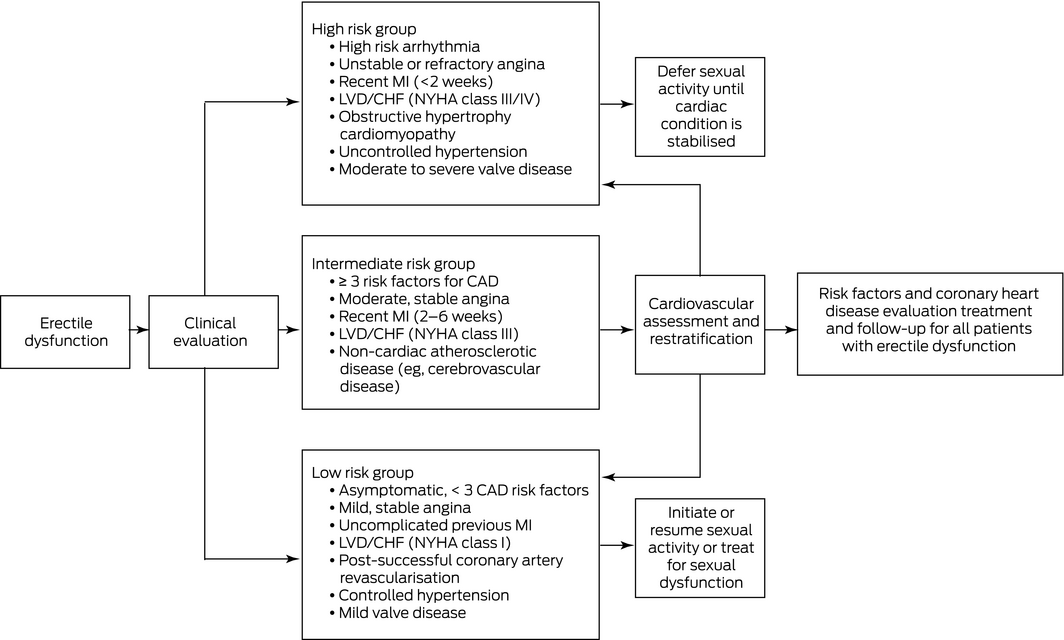
CAD = coronary artery disease; CHF = congestive heart failure; LVD = left ventricular dysfunction; MI = myocardial infarction; NYHA = New York Heart Association.
Box 4 – Comparison of the properties of phosphodiesterase type 5 inhibitors (PDE5i)* 12
|
Property |
Sildenafil |
Tadalafil |
Vardenafil |
Avanafil |
|||||||||||
|
|
|||||||||||||||
|
> TMAX |
30–120 min (median 60 min) |
30–360 min (median 120 min) |
30–120 min (median 60 min) |
Median 30–45 min |
|||||||||||
|
Terminal half‐life |
4 h |
17.5 h |
4 h |
6–17 h |
|||||||||||
|
Absorption |
Fatty meals cause a mean delay in TMAX of 60 min |
Not affected by food |
Fatty meals cause a reduction in CMAX |
Fatty meals cause a minimal reduction in CMAX |
|||||||||||
|
Available doses |
25 mg, 50 mg and 100 mg, as required |
2.5 mg or 5 mg daily |
2.5 mg, 5 mg, 10 mg and 20 mg, as required |
50 mg, 100 mg and 200 mg, as required |
|||||||||||
|
|
|
5 mg, 10 mg and 20 mg, as required |
|
|
|||||||||||
|
Maximum dose |
100 mg |
20 mg |
20 mg |
200 mg |
|||||||||||
|
Efficacy |
Each of the PDE5i offers similar efficacy |
||||||||||||||
|
Dose adjustments that may be needed |
|
|
|
|
|||||||||||
|
Contraindications |
Any patient using organic nitrates either regularly or intermittently |
||||||||||||||
|
|
Known hypersensitivity to any component of the tablet |
||||||||||||||
|
Use with α‐blockers |
Concomitant use of selective α‐blockers does not present a risk for significant hypotension |
||||||||||||||
|
|
There is a risk of significant hypotension when using non‐selective α‐blockers |
||||||||||||||
|
Side effects (five most common in order of frequency compared with placebo) |
Headache, flushing, dyspepsia, nasal congestion, alteration in colour vision |
Headache, dyspepsia, back pain, myalgia, nasal congestion |
Headache, flushing, rhinitis, dyspepsia, sinusitis |
Headache, flushing, rhinitis, dyspepsia, sinusitis |
|||||||||||
|
|
|||||||||||||||
|
CMAX = maximum plasma concentration; TMAX = time to maximum plasma concentration. * Please consult the individual product monographs for additional information. |
|||||||||||||||
Box 5 – Intracavernous injection therapy with alprostadil
|
|
|||||||||||||||
|
Action |
|
||||||||||||||
|
Onset |
|
||||||||||||||
|
Dosage |
|
||||||||||||||
|
Caverject Impulse (Pfizer) |
|
||||||||||||||
|
Management of prolonged erection |
|
||||||||||||||
|
Metabolism |
|
||||||||||||||
|
Adverse effects |
|
||||||||||||||
|
Caverject Impulse (Pfizer) |
|
||||||||||||||
|
Drug interactions |
|
||||||||||||||
|
|
|||||||||||||||
|
|
|||||||||||||||
Competing interests
Christopher McMahon is a paid investigator, member of an advisory board and speaker's panel for Pfizer, Eli Lilly and Menarini.
References
- Consensus development conference statement. National Institutes of Health. Impotence. December 7–9, 1992. Int J Impot Res 1993; 5: 181–284.
- American Psychiatric Association. Diagnostic and statistical manual of mental disorders, 5th ed, DSM‐5. Arlington, VA: American Psychiatric Association Publishing, 2013.
- ICD10data.com. International Classification of Diseases, 10th ed, Male erectile dysfunction, unspecified. http://www.icd10data.com/ICD10CM/Codes/N00-N99/N40-N53/N52-/N52.9 (viewed Feb 2018).
- Jensen J, Lendorf A, Stimpel H, et al. The prevalence and etiology of impotence in 101 male hypertensive outpatients. Am J Hypertens 1999; 12: 271–275.
- Saenz de Tejada I, Goldstein I, Azadzoi K, et al. Impaired neurogenic and endothelium‐mediated relaxation of penile smooth muscle from diabetic men with impotence. N Engl J Med 1989; 320: 1025–1030.
- Kirby M, Jackson G, Betteridge J, Friedli K. Is erectile dysfunction a marker for cardiovascular disease? Int J Clin Pract 2001; 55: 614–618.
- Feldman HA, Goldstein I, Hatzichristou DG, et al. Impotence and its medical and psychosocial correlates: results of the Massachusetts Male Aging Study. J Urol 1994; 151: 54–61.
- Seftel AD, de la Rosette J, Birt J, et al. Coexisting lower urinary tract symptoms and erectile dysfunction: a systematic review of epidemiological data. Int J Clin Pract 2013; 67: 32–45.
- Rosen R, Altwein J, Boyle P, et al. Lower urinary tract symptoms and male sexual dysfunction: the multinational survey of the aging.male (MSAM‐7). Prog Urol 2004; 14: 332–344.
- Jackson G, Rosen RC, Kloner RA, et al. The second Princeton consensus on sexual dysfunction and cardiac risk: new guidelines for sexual medicine. J Sex Med 2006; 3: 28–36.
- Hatzimouratidis K, Amar E, Eardley I, et al. Guidelines on male sexual dysfunction: erectile dysfunction and premature ejaculation. Eur Urol 2010; 57: 804–814.
- Bella AJ, Lee JC, Carrier S, et al. 2015 CUA Practice guidelines for erectile dysfunction. Can Urol Assoc J 2015; 9: 23–29.
- Ryu JK, Cho KS, Kim SJ, et al. Korean Society for Sexual Medicine and Andrology (KSSMA) guideline on erectile dysfunction. World J Mens Health 2013; 31: 83–102.
- American Urological Association. Erectile dysfunction: AUA guidelines. https://www.auanet.org/guidelines/erectile-dysfunction-(ed)-guideline (viewed Jan 2018).
- Hatzimouratidis K, Salonia A, Adaikan G, et al. Pharmacotherapy for erectile dysfunction: recommendations from the Fourth International Consultation for Sexual Medicine (ICSM 2015). J Sex Med 2016; 13: 465–488.
- Levine LA, Becher E, Bella A, et al. Penile prosthesis surgery: current recommendations from the International Consultation on Sexual Medicine. J Sex Med 2016; 13: 489–518.
- Trost LW, Munarriz R, Wang R, et al. External mechanical devices and vascular surgery for erectile dysfunction. J Sex Med 2016; 13: 1579–1617.
- Montorsi F, Adaikan G, Becher E, et al. Summary of the recommendations on sexual dysfunctions in men. J Sex Med 2010; 7: 3572–3588.
- Qaseem A, Snow V, Denberg TD, et al. Hormonal testing and pharmacologic treatment of erectile dysfunction: a clinical practice guideline from the American College of Physicians. Ann Intern Med 2009; 151: 639–649.
- Hackett G, Kirby M, Wylie K, et al. British Society for Sexual Medicine guidelines on the management of erectile dysfunction in men — 2017. J Sex Med 2018; 15: 430–457.
- Kimoto Y, Nagao K, Sasaki H, et al. JSSM guidelines for erectile dysfunction. Int J Urol 2008; 15: 564–576.
- Cappelleri JC, Rosen RC, Smith MD, et al. Diagnostic evaluation of the erectile function domain of the International Index of Erectile Function. Urology 1999; 54: 346–351.
- Ghanem HM, Salonia A, Martin‐Morales A. SOP: physical examination and laboratory testing for men with erectile dysfunction. J Sex Med 2013; 10: 108–110.
- Greene KL, Albertsen PC, Babaian RJ, et al. Prostate specific antigen best practice statement: 2009 update. J Urol 2013; 189 (Suppl): S2–S11.
- McKinlay JB. The worldwide prevalence and epidemiology of erectile dysfunction. Int J Impot Res 2000; 12 (Suppl): S6–S11.
- De Berardis G, Franciosi M, Belfiglio M, et al. Erectile dysfunction and quality of life in type 2 diabetic patients: a serious problem too often overlooked. Diabetes Care 2002; 25: 284–291.
- American Diabetes Association. Classification and diagnosis of diabetes: standards of medical care in diabetes, 2018. Diabetes Care 2018; 41 (Suppl): S13–S27.
- Dean JD, McMahon CG, Guay AT, et al. The International Society for Sexual Medicine's process of care for the assessment and management of testosterone deficiency in adult men. J Sex Med 2015; 12: 1660–1686.
- Yeap BB, Grossmann M, McLachlan RI, et al. Endocrine Society of Australia position statement on male hypogonadism (part 1): assessment and indications for testosterone therapy. Med J Aust 2016; 205: 173–178. https://www.mja.com.au/journal/2016/205/4/endocrine-society-australia-position-statement-male-hypogonadism-part-1
- Hackett G, Kell P, Ralph D, et al. British Society for Sexual Medicine guidelines on the management of erectile dysfunction. J Sex Med 2008; 5: 1841–1865.
- Capogrosso P, Colicchia M, Ventimiglia E, et al. One patient out of four with newly diagnosed erectile dysfunction is a young man–worrisome picture from the everyday clinical practice. J Sex Med 2013; 10: 1833–1841.
- Elhanbly S, Elkholy A. Nocturnal penile erections: the role of RigiScan in the diagnosis of vascular erectile dysfunction. J Sex Med 2012; 9: 3219–3226.
- Meuleman EJ, Diemont WL. Investigation of erectile dysfunction. Diagnostic testing for vascular factors in erectile dysfunction. Urol Clin North Am 1995; 22: 803–819.
- Hatzichristou DG, Hatzimouratidis K, Apostolidis A, et al. Hemodynamic characterization of a functional erection. Arterial and corporeal veno‐occlusive function in patients with a positive intracavernosal injection test. Eur Urol 1999; 36: 60–67.
- Sikka SC, Hellstrom WJ, Brock G, et al. Standardization of vascular assessment of erectile dysfunction: standard operating procedures for duplex ultrasound. J Sex Med 2013; 10: 120–129.
- Giuliano F, Rowland DL. Standard operating procedures for neurophysiologic assessment of male sexual dysfunction. J Sex Med 2013; 10: 1205–1211.
- Tsertsvadze A, Fink HA, Yazdi F, et al. Oral phosphodiesterase‐5 inhibitors and hormonal treatments for erectile dysfunction: a systematic review and meta‐analysis. Ann Intern Med 2009; 151: 650–661.
- Eardley I, Donatucci C, Corbin J, et al. Pharmacotherapy for erectile dysfunction. J Sex Med 2010; 7: 524–540.
- Atiemo HO, Szostak MJ, Sklar GN. Salvage of sildenafil failures referred from primary care physicians. J Urol 2003; 170: 2356–2358.
- Alhathal N, Elshal AM, Carrier S. Synergetic effect of testosterone and phophodiesterase‐5 inhibitors in hypogonadal men with erectile dysfunction: a systematic review. Can Urol Assoc J 2012; 6: 269–274.
- Coombs PG, Heck M, Guhring P, et al. A review of outcomes of an intracavernosal injection therapy programme. BJU Int 2012; 110: 1787–1791.
- Brock G, Harper W. Canadian Diabetes Association Clinical Practice Guidelines Expert Committee. Erectile dysfunction. Can J Diabetes 2013; 37 (Suppl): S150–S152.
- Thompson IM, Tangen CM, Goodman PJ, et al. Erectile dysfunction and subsequent cardiovascular disease. JAMA 2005; 294: 2996–3002.
- Jackson G, Betteridge J, Dean J, et al. A systematic approach to erectile dysfunction in the cardiovascular patient: a consensus statement — update 2002. Int J Clin Pract 2002; 56: 663–671.
- Gupta BP, Murad MH, Clifton MM, et al. The effect of lifestyle modification and cardiovascular risk factor reduction on erectile dysfunction: a systematic review and meta‐analysis. Arch Intern Med 2011; 171: 1797–1803.
- Bacon CG, Mittleman MA, Kawachi I, et al. Sexual function in men older than 50 years of age: results from the health professionals follow‐up study. Ann Intern Med 2003; 139: 161–168.
- Esposito K, Giugliano F, Di Palo C, et al. Effect of lifestyle changes on erectile dysfunction in obese men: a randomized controlled trial. JAMA 2004; 291: 2978–2984.
- Derby CA, Mohr BA, Goldstein I, et al. Modifiable risk factors and erectile dysfunction: can lifestyle changes modify risk? Urology 2000; 56: 302–306.
- Saltzman EA, Guay AT, Jacobson J. Improvement in erectile function in men with organic erectile dysfunction by correction of elevated cholesterol levels: a clinical observation. J Urol 2004; 172: 255–258.
- Melnik T, Althof S, Atallah AN, et al. Psychosocial interventions for premature ejaculation. Cochrane Database Syst Rev 2011; (8): CD008195.
- Althof SE, Seftel AD. The evaluation and management of erectile dysfunction. Psychiatr Clin North Am 1995; 18: 171–192.
- Goldstein I, Lue TF, Padma‐Nathan H, et al. Oral sildenafil in the treatment of erectile dysfunction. Sildenafil Study Group. N Engl J Med 1998; 338: 1397–1404.
- Porst H, Rosen R, Padma‐Nathan H, et al. The efficacy and tolerability of vardenafil, a new, oral, selective phosphodiesterase type 5 inhibitor, in patients with erectile dysfunction: the first at‐home clinical trial. Int J Impotence Res 2001; 13: 192–199.
- Brock GB, McMahon CG, Chen KK, et al. Efficacy and safety of tadalafil for the treatment of erectile dysfunction: results of integrated analyses. J Urol 2002; 168: 1332–1336.
- Goldstein I, Jones LA, Belkoff LH, et al. Avanafil for the treatment of erectile dysfunction: a multicenter, randomized, double‐blind study in men with diabetes mellitus. Mayo Clin Proc 2012; 87: 843–852.
- Porst H, Giuliano F, Glina S, et al. Evaluation of the efficacy and safety of once‐a‐day dosing of tadalafil 5 mg and 10 mg in the treatment of erectile dysfunction: results of a multicenter, randomized, double‐blind, placebo‐controlled trial. Eur Urol 2006; 50: 351–359.
- McMahon C. Efficacy and safety of daily tadalafil in men with erectile dysfunction previously unresponsive to on‐demand tadalafil. J Sex Med 2004; 1: 292–300.
- Margo CE, French DD. Ischemic optic neuropathy in male veterans prescribed phosphodiesterase‐5 inhibitors. Am J Ophthalmol 2007; 143: 538–539.
- Porst H. The rationale for prostaglandin E1 in erectile failure: a survey of worldwide experience. J Urol 1996; 55: 802–815.
- McMahon CG. Comparison of the response to the intracavernosal injection of a combination of papaverine and phentolamine, Prostaglandin E1 alone and a combination of all three in the management of impotence. Int J Impotence Res 1991; 3: 133–142.
- McMahon CG, Samali R, Johnson H. Treatment of intracorporeal injection nonresponse with sildenafil alone or in combination with triple agent intracorporeal injection therapy. J Urol 1999; 162: 1992–1997; discussion 7‐8.
- Carson CC, Mulcahy JJ, Govier FE. Efficacy, safety and patient satisfaction outcomes of the AMS 700CX inflatable penile prosthesis: results of a long‐term multicenter study. AMS 700CX Study Group. J Urol 2000; 164: 376–380.
- Montorsi F, Briganti A, Salonia A, et al. Current and future strategies for preventing and managing erectile dysfunction following radical prostatectomy. Eur Urol 2004; 45: 123–133.
- Incrocci L. Sexual function after external‐beam radiotherapy for prostate cancer: what do we know? Crit Rev Oncol Hematol 2006; 57: 165–173.
- Montorsi F, Guazzoni G, Strambi LF, et al. Recovery of spontaneous erectile function after nerve‐sparing radical retropubic prostatectomy with and without early intracavernous injections of alprostadil: results of a prospective, randomized trial. J Urol 1997; 158: 1408–1410.
- Hong EK, Lepor H, McCullough AR. Time dependent patient satisfaction with sildenafil for erectile dysfunction (ED) after nerve‐sparing radical retropubic prostatectomy (RRP). Int J Impot Res 1999; 11 (Suppl): S15–S22.
- Padma‐Nathan H, McCullough AR, Levine LA, et al. Randomized, double‐blind, placebo‐controlled study of postoperative nightly sildenafil citrate for the prevention of erectile dysfunction after bilateral nerve‐sparing radical prostatectomy. Int J Impot Res 2008; 20: 479–486.
- Incrocci L, Koper PC, Hop WC, Slob AK. Sildenafil citrate (Viagra) and erectile dysfunction following external beam radiotherapy for prostate cancer: a randomized, double‐blind, placebo‐controlled, cross‐over study. Int J Radiat Oncol Biol Phys 2001; 51: 1190–1195.
- Schroder FH, Collette L, de Reijke TM, et al. Prostate cancer treated by anti‐androgens: is sexual function preserved? EORTC Genitourinary Group. European Organization for Research and Treatment of Cancer. Br J Cancer 2000; 82: 283–290.
Linked content
-
MJA Podcast: Dr Christopher McMahon
-
InSight+: GPs and erectile dysfunction: two questions to ask
-
MJA Letter: Current diagnosis and management of erectile dysfunction
Provenance: Commissioned; externally peer reviewed.
Awareness, Usage and Perceptions of Doxycycline Post-Exposure Prophylaxis (doxyPEP) for Prevention of Sexually Transmitted Infections in Australia: Insights From a National Cross-Sectional Survey
Catriona S. Bradshaw, Dash Heath-Paynter, Benjamin Riley, Daniel Grace, Fabian Y. S. Kong, Eric P. F. Chow
How Can We Ensure Access to Sexual and Reproductive Health Information for Adolescents in Light of Australia's Social Media Restrictions?
Olena Ivanova, Anisa R. Assifi, Danielle Mazza
Differentiated and simplified oral HIV pre‐exposure prophylaxis (PrEP) models hold the key to virtually eliminating HIV transmission in Australia by 2030
Tyson Arapali, Sarah Warzywoda, Anthony K J Smith, Curtis Chan, Timothy R Broady, Erin Sullivan, Catherine MacPhail, Mohamed A Hammoud, Alexander Dowell‐Day, Benjamin R Bavinton
An autoethnographic critique of a past report of inpatient psychiatric treatment for gender diverse children
Jayne McFadyen, Timothy W Jones, Rowena Koek, Fintan Harte, Brendan Jansen, Megan Galbally, Warren Kealy‐Bateman, Catherine Wall, Quinnehtukqut McLamore, Anja Ravine
Cass Review does not guide care for trans young people
Julia K Moore, Cate Rayner, S Rachel Skinner, Katie Wynne, Blake S Cavve, Brodie Fraser, Uma Ganti, Claire McAllister, Gideon Meyerowitz‐Katz, Tram Nguyen, Anja Ravine, Brian Ross, Darren B Russell, Liz A Saunders, Aris Siafarikas, Ken C Pang
Motivations, barriers and enablers for medical and forensic examiners in New South Wales sexual assault services: a qualitative interview study
Natalie Edmiston, Sam Sperring, Rosalie Power, Samantha Ryan, Kathryn Evans, Jane Ussher, Ellie Freedman