




Volume 207 - Issue 10
COPD-X Australian and New Zealand guidelines for the diagnosis and management of chronic obstructive pulmonary disease: 2017 update
Authors: Ian A Yang, Juliet L Brown, Johnson George, Sue Jenkins, Christine F McDonald, Vanessa M McDonald, Kirsten Phillips, Brian J Smith, Nicholas A Zwar and Eli Dabscheck
Med J Aust 2017; 207 (10): 436-442. || doi: 10.5694/mja17.00686
Published online: 20 November 2017
Published online: 20 November 2017
Chronic obstructive pulmonary disease (COPD) is characterised by persistent respiratory symptoms and chronic airflow limitation, and is associated with exacerbations and comorbidities
Abstract
Introduction: Chronic obstructive pulmonary disease (COPD) is characterised by persistent respiratory symptoms and chronic airflow limitation, and is associated with exacerbations and comorbidities. Advances in the management of COPD are updated quarterly in the national COPD guidelines, the COPD-X plan, published by Lung Foundation Australia in conjunction with the Thoracic Society of Australia and New Zealand and available at http://copdx.org.au.
Main recommendations:
- Spirometry detects persistent airflow limitation (post-bronchodilator FEV1/FVC < 0.7) and must be used to confirm the diagnosis.
- Non-pharmacological and pharmacological therapies should be considered as they optimise function (ie, improve symptoms and quality of life) and prevent deterioration (ie, prevent exacerbations and reduce decline).
- Pulmonary rehabilitation and regular exercise are highly beneficial and should be provided to all symptomatic COPD patients.
- Short- and long-acting inhaled bronchodilators and, in more severe disease, anti-inflammatory agents (inhaled corticosteroids) should be considered in a stepwise approach.
- Given the wide range of inhaler devices available, inhaler technique and adherence should be checked regularly.
- Smoking cessation is essential, and influenza and pneumococcal vaccinations reduce the risk of exacerbations.
- A plan of care should be developed with the multidisciplinary team. COPD action plans reduce hospitalisations and are recommended as part of COPD self-management.
- Exacerbations should be managed promptly with bronchodilators, corticosteroids and antibiotics as appropriate to prevent hospital admission and delay COPD progression.
- Comorbidities of COPD require identification and appropriate management.
- Supportive, palliative and end-of-life care are beneficial for patients with advanced disease.
- Education of patients, carers and clinicians, and a strong partnership between primary and tertiary care, facilitate evidence-based management of COPD.
Changes in management as result of the guideline: Spirometry remains the gold standard for diagnosing airflow obstruction and COPD. Non-pharmacological and pharmacological treatment should be used in a stepwise fashion to control symptoms and reduce exacerbation risk.
Chronic obstructive pulmonary disease (COPD) is a chronic lung disease characterised by persistent respiratory symptoms and airflow limitation. It is caused mainly by exposure to inhaled irritants, especially cigarette smoking,1 while other aetiologies include air pollutants, occupational dusts and fumes, chronic asthma, impaired lung growth, and genetic predisposition (α1-antitrypsin deficiency). The Burden of Obstructive Lung Disease (BOLD) study found a COPD prevalence of 7.5% in people aged ≥ 40 years in six cities in Australia.2
COPD is heterogeneous, with multiple clinical features and comorbidities.1 For this reason, patients, carers, clinicians and policy makers face many challenges when aiming to tailor health care around an individual’s lifestyle, environment and molecular profiling to achieve precision medicine. This 2017 update from the COPD-X guidelines, The COPD-X plan: Australian and New Zealand guidelines for the management of chronic obstructive pulmonary disease, highlights the evidence for key clinical recommendations in the diagnosis and management of COPD, and describes the progress made since the 2006 update in the Journal.3
Methods
COPD-X is produced by the Lung Foundation Australia’s COPD Guidelines Committee, a multidisciplinary group that meets to evaluate the current literature and undertake quarterly updates of the guidelines for the Australian and New Zealand context. A medical librarian performs a systematic literature search for new articles on COPD, emphysema and chronic bronchitis, encompassing systematic reviews, clinical trials, cohort, and case–control studies. Relevant articles are selected for review and are critically appraised by a committee member with expertise in that area. At the full committee meeting, a decision about whether to cite an article is made by consensus, and wording for incorporation is discussed. Following an approval process, which invites review from the Thoracic Society of Australia and New Zealand and consumer representatives, the updated guidelines are uploaded quarterly to the COPD-X website (http://copdx.org.au). This summary is based on COPD-X version 2.50, June 2017.
Recommendations
C: Confirm diagnosis
Clinical features
COPD should be considered in all current and former smokers aged > 35 years with symptoms such as breathlessness, cough and sputum production.4 People with COPD often limit physical activity to avoid breathlessness. COPD may present as recurrent episodes of chest infection requiring antibiotics. In people with COPD, there is a close relationship between the amount of tobacco smoked and the rate of decline in forced expiratory volume in one second (FEV1), although individual susceptibility to tobacco smoke varies greatly.
Spirometry
COPD cannot be diagnosed reliably on clinical features or chest x-ray findings alone. The diagnosis of COPD requires spirometry, as it is the most reproducible and objective measurement of airflow limitation. Pre- and post-bronchodilator spirometry should be performed using techniques that meet published standards. COPD is characterised by airflow limitation that is not fully reversible (post-bronchodilator FEV1/FVC [forced vital capacity] ratio < 0.7, and FEV1 < 80% predicted). With spirometry, there is some risk of overdiagnosis in older people or underdiagnosis in younger people, especially when the FEV1/FVC ratio is close to 0.7, so borderline results should be interpreted with caution. Many patients with COPD have some reversibility of airflow limitation with bronchodilators. An FEV1 increase of ≥ 12% and ≥ 200 mL constitutes a positive bronchodilator response. An FEV1 increase of > 400 mL suggests underlying asthma, or coexisting asthma and COPD.5
Investigations
Investigations to confirm or exclude other conditions with a similar presentation to COPD (eg, bronchiectasis, lung cancer, heart failure and anaemia) include chest x-ray, haematology and biochemistry, complex lung function tests, exercise stress testing, and electrocardiography and echocardiography. Investigations to assess gas exchange include oximetry and arterial blood gases (if the arterial oxygen saturation measured by pulse oximeter [Spo2] is < 92% when stable or if hypercapnia is suspected).
Severity
Assessing the severity of COPD should take into account lung function, history of exacerbations and comorbid conditions (Box 1). The COPD Assessment Test (CAT) can determine the impact of COPD symptoms on wellbeing and daily life.6
O: Optimise function
Non-pharmacological strategies
There is strong evidence for the benefits of pulmonary rehabilitation that involves supervised exercise training alone or in conjunction with patient education or other non-pharmacological interventions (eg, behaviour change, nutritional intervention and psychosocial support) (Box 2). Programs can be provided in hospital outpatient departments or in the community (ie, health care and non-health care facilities, or home settings).7-9 Benefits are evident both in those with stable COPD and in individuals who commence rehabilitation after an exacerbation.7,8,10 In the absence of instruction from a specialist exercise professional (eg, physiotherapist or exercise physiologist), individuals with COPD should be encouraged to be physically active (Box 2), as inactivity is associated with increased mortality and exacerbations.12
Pharmacological strategies
Pharmacological therapies aim to reduce symptoms, prevent exacerbations and improve health status, by targeting the pathophysiology of COPD. It is recommended that a stepwise approach to pharmacotherapy be used, until adequate control is achieved (Box 1).
-
Bronchodilators. Short-acting bronchodilators (β2-agonists) are used as needed for short term symptom relief. If these are insufficient, then long-acting bronchodilators should be added. Long-acting muscarinic antagonists (LAMAs) and long-acting β2-agonists (LABAs) reduce breathlessness, improve quality of life, and decrease the risk of exacerbations.13,14 If breathlessness or exacerbations persist with monotherapy, a fixed dose combination LAMA/LABA inhaler is recommended.15
-
Anti-inflammatory agents. An inhaled corticosteroid/LABA (ICS/LABA) combination inhaler may be considered in cases of more severe COPD (FEV1 < 50% predicted, with a history of repeated exacerbations), although ICS may increase the risk of pneumonia.16 While combination LAMA/LABA inhalers appear to be more beneficial than ICS/LABA inhalers in reducing exacerbations,17 the use of an ICS/LABA inhaler together with a LAMA inhaler remains an option for patients with moderate to severe COPD who require additional treatment.18 Further studies of triple therapy combination inhalers are awaited.
Inhaler technique
A lack of proficiency with inhaler technique continues to be common, with studies reporting handling errors in 50–100% of patients.19 These reports are concerning, as poor technique is associated with worse outcome.20 Moreover, inhaler device polypharmacy is an increasing problem, and with an increment in the number of different devices used, there is an associated increase in error rate.21
At initiation of therapy, education involving instruction, visual demonstration and patient observation is recommended. The treatment choice should consider the patient’s ability to use the device proficiently. Once commenced on inhaler therapy, the technique should be reviewed and reinforced regularly. The current inhaled medicines for COPD are shown in the online Appendix, Figure 1.
Comorbidities
COPD is associated with many comorbidities.22,23 Anxiety and depression are major contributors to hospital bed usage and readmissions, and should be optimally managed. Mortality from COPD is more associated with cardiac events than respiratory failure,24 and the importance of avoiding prolonged overuse of β2-agonists is becoming increasingly recognised.25
Osteoporotic fractures are a common problem in COPD due to risk factors, including smoking, physical inactivity, malnutrition, systemic inflammation, frequent use of corticosteroids, low body mass index, hypogonadism, and vitamin D deficiency.26 Vertebral fractures can be associated with coughing, leading to considerable pain. Bone mineral density testing is important for prevention and monitoring response to therapy.
Hypoxaemia can lead to pulmonary hypertension and eventually right heart failure, particularly if there is coexisting obstructive sleep apnoea.27 When suspected clinically, arterial blood gases or a sleep study should be considered, with a view to oxygen therapy or continuous positive airway pressure. COPD increases the risk of developing lung cancer.28
Lung volume reduction
Lung volume reduction by either surgery or bronchoscopically placed valves is an option for highly selected patients with severe emphysema, hyperinflation and ongoing symptoms despite maximal medical management and pulmonary rehabilitation. Surgery is associated with increased short term mortality but reduced long term mortality,29 while endobronchial techniques are associated with high short term morbidity (especially pneumothorax) but improved health outcomes at 12 months.30 Such therapies should only be considered in specialised centres.31
P: Prevent deterioration
Smoking cessation
Tobacco smoking is a key risk factor in the development of COPD, and smoking cessation is the most important intervention to slow decline in lung function. People with COPD who continue to smoke often have coexisting anxiety and depression. Smoking cessation advice from health professionals helps to motivate quit attempts and to increase long term quit rates. Hospital admission represents an opportunity to initiate smoking cessation, but support needs to continue after discharge. A comprehensive approach to supporting smoking cessation involves behavioural support and treatment of nicotine dependence.32 Counselling may be structured using the 5-As strategy:
-
ask and identify smokers at every health care visit;
-
assess nicotine dependence and the motivation to quit;
-
advise about the risks of smoking and benefits of quitting;
-
assist cessation; and
-
arrange follow-up within one week of the quit date and one month after.
If time is short, advice to quit and referral to the Quitline (13 78 48) is an alternative option. Nicotine dependence may be treated with nicotine replacement therapy, varenicline or bupropion. The most effective forms of pharmacotherapy are either combination nicotine replacement therapy (ie, a patch combined with a rapid-acting form of nicotine replacement therapy) or varenicline.33 Longer courses of treatment may reduce relapse.
Vaccinations
Inactivated influenza vaccine reduces exacerbations due to influenza in patients with COPD, especially in epidemic years.34 Adverse effects are mild, local, transient and self-limiting; there is no increase in early exacerbations before immunity has developed. Annual influenza vaccination is highly cost-effective, particularly in more severe COPD cases.34
Patients aged ≥ 50 years who are immunised with polysaccharide pneumococcal vaccine, along with revaccination 5 years later,35 will have protection against community-acquired pneumonia and a reduced likelihood of COPD exacerbations.36 When added to annual influenza immunisation, pneumococcal immunisation has additive beneficial effect on COPD exacerbations.37
Long term oxygen therapy
Correction of severe hypoxaemia improves survival in COPD, and greater benefits are seen in patients who use supplemental oxygen for longer periods.38 At least 18 hours per day is generally recommended for patients with an arterial partial pressure of oxygen (Pao2) of ≤ 55 mmHg, or ≤ 59 mmHg in the presence of pulmonary hypertension, right heart failure or polycythaemia.38 There is no indication for continuous oxygen therapy in patients with moderate hypoxaemia (Spo2 89–93%).39 Ambulatory oxygen may be of occasional benefit in individuals who desaturate with exertion. Assessment should evaluate improvement in dyspnoea and exercise capacity on a standardised exercise test. As the relationship between demonstrated benefit during a clinic or laboratory assessment and long term benefit is unclear, review with assessment of oxygen usage, determination of benefit and need for continued use are important.
Palliative care services
In patients with advanced COPD, palliative care services improve symptom control and manage psychosocial and spiritual concerns.40 Supportive care principles are important for end-of-life care. Discussion regarding advanced care directives should be undertaken as part of usual management at a suitable time in the disease course.
D: Develop a plan of care
Chronic disease management and self-management
Chronic disease management can be defined as comprehensive strategies for improving overall health status and reducing health care costs. Self-management support is the systematic provision of education and supportive interventions by health care staff to increase patients’ skills and confidence in managing their health problems.41 Self-management programs frequently include emotional support, problem solving and decision making, development of therapeutic partnerships, goal setting and action planning. In COPD, interventions focus on exacerbation management, adherence to pharmacological and non-pharmacological strategies, smoking cessation, physical activity, exercise and management strategies for psychological dysfunction.
Self-management programs in COPD consistently lead to improved outcomes, particularly health status.42,43 However, the impact on health care use has been inconsistent. Some systematic reviews have shown lower risk of respiratory-related hospitalisation44 and urgent health care use,45 whereas others have found no reduction in hospitalisations.42 As the randomised controlled trials have been heterogeneous, firm recommendations about the type and duration of self-management program, as well as subgroups most likely to respond, are not yet possible.
Multidisciplinary team
Delivery of COPD self-management programs requires a multidisciplinary team. Key disciplines involved in COPD management include the general practitioner, specialist physician (Box 3), respiratory and primary care nurses, physiotherapists, psychologists, nutritionists, occupational therapists, social workers and pharmacists.
COPD action plan
Exacerbation avoidance and management in COPD is an important goal. A Cochrane review of seven randomised controlled trials concluded that COPD exacerbation action plans that are prescribed and delivered within a single short educational program, with ongoing support directed at the use of the action plan, reduce in-hospital health care use and increase the initiation of corticosteroids and antibiotics for COPD exacerbations.46 Hence, COPD action plans are recommended as part of COPD self-management.
X: Manage exacerbations
Manage exacerbations
A COPD exacerbation is characterised by an increase in dyspnoea, cough and sputum, is acute in onset and typically warrants a change in medication or hospital admission. A past history of exacerbations is the best predictor of future exacerbations, and patients with more severe COPD (based on FEV1) are more likely to exacerbate.47 Hospitalisation for an exacerbation of COPD is a sentinel event (Box 3). Twelve-month mortality rates following a hospitalisation for COPD are about 25%.48 Triggers for exacerbations include viral or bacterial respiratory infection, left ventricular failure, psychosocial stressors and air pollution. Pulmonary embolism should be considered in patients presenting with an exacerbation of COPD when signs of an infection are absent.49
Early recognition and management of exacerbations improve recovery and quality of life, reduce hospitalisation and may prevent progressive functional deterioration.50 A COPD action plan serves to help patients and carers recognise and respond to the early signs of an exacerbation and prevents hospitalisation.46
Pharmacological management of exacerbations
Increased doses of salbutamol (short-acting bronchodilator), 4–8 puffs (400–800 μg) via a metered dose inhaler and spacer every 3–4 hours, should be used. This formulation is as effective as via nebuliser.51 A morning dose of oral prednisolone 30–50 mg should be taken for 5 days; tapering the dose is rarely necessary.52 Intravenous corticosteroids are not superior to oral corticosteroids.53
Exacerbations with signs and symptoms of infection (increased volume and change in colour of sputum or fever) benefit from antibiotics. First-line agents include oral amoxicillin or doxycycline for 5 days.54 In patients requiring admission or when pneumonia is suspected, a chest x-ray should be performed and pneumonia treatment should follow guidelines.54
Discharge planning
Early hospital discharge may be appropriate with the use of a hospital in the home program. Such programs facilitate early discharge within 48 hours and allow patients to be managed at home with involvement of multidisciplinary teams assisting general practitioners. These programs lead to a reduction in readmission rates with no increase in mortality.55
Oxygen therapy and non-invasive ventilation
If hypoxaemia is present, the Spo2 target range should be 88–92%. This can usually be achieved by the administration of oxygen via nasal cannula at a rate of 0.5–2 L/min.56 High flow oxygen can significantly increase mortality in patients with COPD.57 It is important that patients with COPD presenting to hospital with a severe exacerbation be assessed with an arterial blood gas measurement. Patients with hypercapnic respiratory failure (arterial partial pressure of carbon dioxide [Paco2] > 45 mmHg and blood pH < 7.35) should be treated in hospital with non-invasive ventilation, which reduces mortality and need for endotracheal intubation and shortens hospital length of stay.58
Post-discharge pulmonary rehabilitation
The discharge plan should be promptly shared with the primary care team; patients should receive self-management education. As pulmonary rehabilitation reduces readmission rates and improves quality of life,59 the patient should be referred to pulmonary rehabilitation as soon as the acute instability has resolved.
Evidence base and resources
For full details of the evidence base, references and quarterly updates, please refer to the COPD-X guidelines at http://copdx.org.au. The key changes since the publication of the 2006 clinical practice update in the Journal3 are summarised in the online Appendix, table 1. COPD resources are available from Lung Foundation Australia (www.lungfoundation.com.au), including the COPD-X Concise Guide for Primary Care, which contains clinical recommendations (Box 4) and practice tips for busy health professionals in primary care.
Box 1 – Stepwise management of stable chronic obstructive pulmonary disease (COPD)*
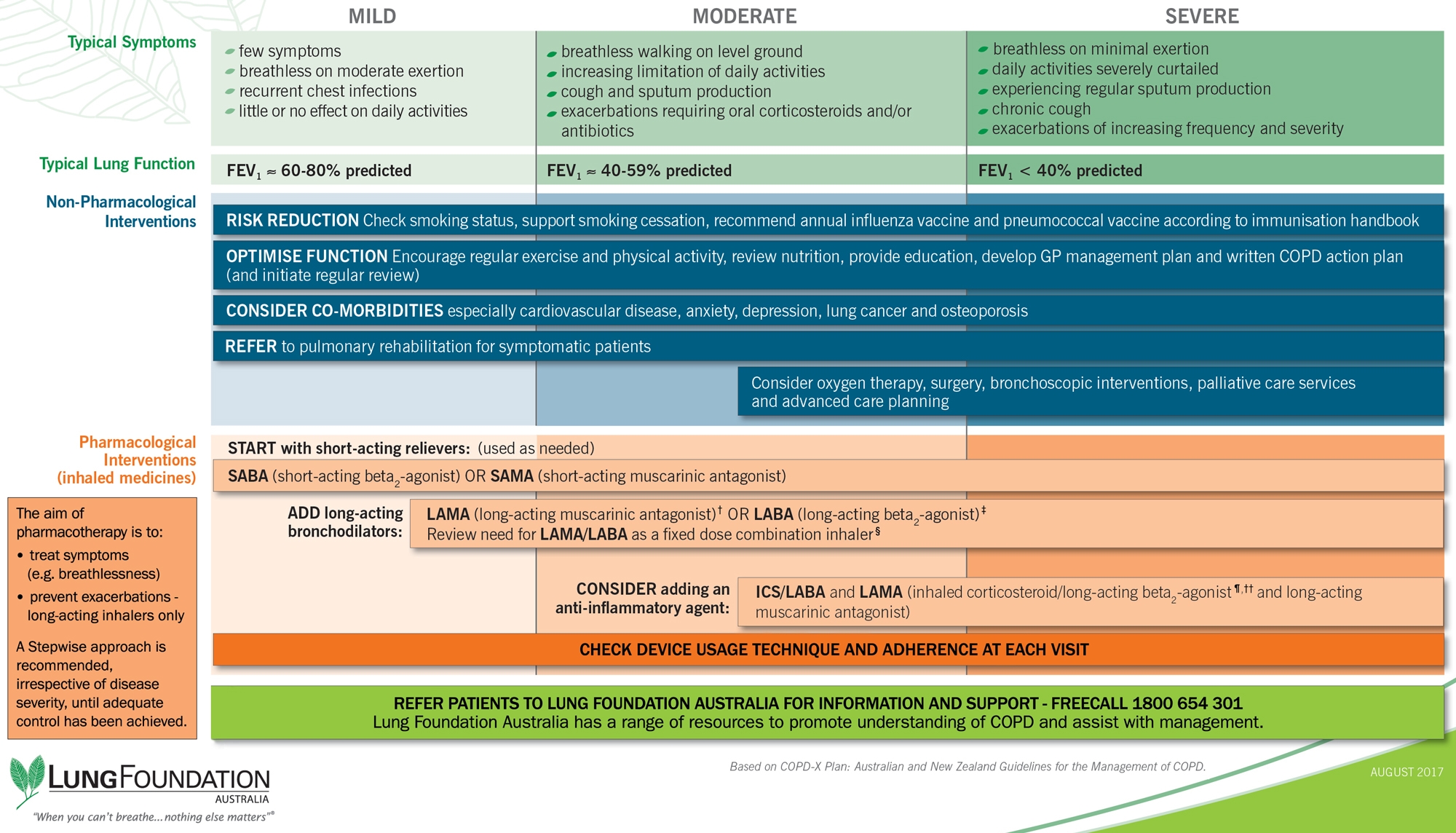
FEV1 = forced expiratory volume in one second. * Figure reproduced with permission from Lung Foundation Australia (www.lungfoundation.com.au). † Once a LAMA is commenced, ipratropium (a short-acting muscarinic antagonist, SAMA) should be discontinued. ‡ Before initiating LABA monotherapy, an assessment should be undertaken to exclude asthma or check if asthma and COPD coexist. LABA monotherapy should not be used when asthma and COPD coexist. § If starting a LAMA/LABA inhaler, discontinue existing inhalers containing LAMA or LABA (online Appendix, Figure 1) Pharmaceutical Benefits Scheme (PBS) authority (streamlined) required for LAMA/LABA, based on clinical criteria of: COPD — patient must have been stabilised on a combination of a long-acting muscarinic antagonist and long-acting beta2-agonist. ¶ Include inhaled steroids if the patient has coexisting asthma. †† If starting an ICS/LABA inhaler, discontinue existing inhalers containing a LABA (online Appendix, Figure 1). PBS indication: COPD — patient must have FEV1 < 50% predicted and history of repeated exacerbations with significant symptoms despite regular beta2-agonist bronchodilator therapy and the therapy must be for symptomatic treatment.
Box 2 – Pulmonary rehabilitation and physical activity: benefits and recommendations*
|
Pulmonary rehabilitation7-10 (evidence level I, II; strong recommendation)† |
|||||||||||||||
|
Reduction |
Improvements |
||||||||||||||
|
|
|||||||||||||||
|
Symptoms (dyspnoea and fatigue) |
Exercise capacity |
||||||||||||||
|
Anxiety and depression |
Quality of life |
||||||||||||||
|
Hospitalisations for exacerbations |
Peripheral muscle function Sense of control over lung condition |
||||||||||||||
|
Recommendations:
|
|||||||||||||||
|
Physical activity11 (evidence level III-2; weak recommendation)† |
|||||||||||||||
|
Duration and type of exercise |
Intensity |
||||||||||||||
|
|
|||||||||||||||
|
150 minutes walking/week (30 minutes/day, 5 days/week) |
Moderate — rating of 3–4 on the Borg Dyspnoea scale (ie, moderate to moderately severe levels of dyspnoea) — taking rests as required to manage breathlessness and then continue walking when able |
||||||||||||||
|
Recommendation:
|
|||||||||||||||
|
|
|||||||||||||||
|
COPD = chronic obstructive pulmonary disease. * A list of pulmonary rehabilitation programs known to Lung Foundation Australia can be accessed at https://lungfoundation.com.au/patient-support/living-with-a-lung-condition/pulmonary-rehabilitation-2/pulmonary-rehabilitation-programs-2. The individual contact details can be obtained by calling the Lung Foundation’s Information and Support Centre (free-call, 1800 654 301). † National Health and Medical Research Council additional levels of evidence and grades for recommendations for developers of guidelines (https://www.nhmrc.gov.au/_files_nhmrc/file/guidelines/developers/nhmrc_levels_grades_evidence_120423.pdf). |
|||||||||||||||
Box 3 – Referral to specialist respiratory services and indications for hospitalisation
|
Reason prompting referral |
Purpose of referral |
||||||||||||||
|
|
|||||||||||||||
|
Diagnostic uncertainty and exclusion of asthma |
Establish diagnosis and optimise treatment Obtain more detailed lung function testing |
||||||||||||||
|
Unusual symptoms such as haemoptysis |
Investigate cause urgently, including exclusion of malignancy |
||||||||||||||
|
Rapid decline in functional performance |
Optimise management and exclude other conditions |
||||||||||||||
|
Persistent symptoms |
Optimise management and exclude other conditions |
||||||||||||||
|
Frequent chest infections (ie, more than annually) |
Assess preventable factors and rule out coexisting bronchiectasis, optimise treatment |
||||||||||||||
|
Onset of ankle oedema |
Assess for cor pulmonale and optimise treatment |
||||||||||||||
|
Spo2 < 92% when stable |
Optimise management, measure arterial blood gases and prescribe oxygen therapy if needed |
||||||||||||||
|
Assessing suitability for pulmonary rehabilitation, if uncertain |
Optimise treatment and refer to specialist or community-based rehabilitation service |
||||||||||||||
|
Bullous lung disease on CXR or CT |
Confirm diagnosis and refer to medical or surgical units for bullectomy if needed |
||||||||||||||
|
Patient with COPD aged < 40 years |
Establish diagnosis and exclude α1-antitrypsin deficiency |
||||||||||||||
|
Persistent dyspnoea, marked hyperinflation, severe airflow limitation or emphysema (refer for assessment for lung transplantation, or bronchoscopic or surgical lung volume reduction procedures) |
Identify criteria for referral to transplant, thoracic surgery or interventional bronchoscopy centres |
||||||||||||||
|
Dyspnoea associated with chest tightness, anxiety or dizziness (refer for consideration of dysfunctional breathing*) |
Establish diagnosis and refer for further investigation to exclude other causes of these symptoms |
||||||||||||||
|
Daytime sleepiness, complaints by partner of heavy snoring |
Assess for sleep disordered breathing and refer for sleep studies if needed |
||||||||||||||
|
Indications for hospitalisation of patients with COPD |
Marked increase in intensity of symptoms Patient has an exacerbation characterised by increased dyspnoea, cough or sputum production, plus one or more of the following:
|
||||||||||||||
|
|
|||||||||||||||
|
COPD = chronic obstructive pulmonary disease. CT = computed tomography. CXR = chest x-ray. Spo2 = arterial oxygen saturation measured by pulse oximeter. * Imprecise term covering breathlessness, hyperventilation, chest tightness, paraesthesiae, anxiety or dizziness. |
|||||||||||||||
Box 4 – Key clinical recommendations from the COPD-X Concise Guide for Primary Care
|
|
NHMRC level of evidence* |
Strength of recommendation† |
|||||||||||||
|
|
|||||||||||||||
|
Case finding and confirm diagnosis |
|||||||||||||||
|
Smoking is the most important risk factor in COPD development |
I |
Strong |
|||||||||||||
|
A thorough history and examination is the first step in COPD diagnosis |
III-2 |
Strong |
|||||||||||||
|
COPD is confirmed by the presence of persistent airflow limitation (post-bronchodilator FEV1/FVC < 0.7) |
III-2 |
Strong |
|||||||||||||
|
If FEV1 increases > 400 mL following bronchodilator, consider asthma, or coexisting asthma and COPD |
III-2 |
Strong |
|||||||||||||
|
Further investigations may help confirm or exclude other conditions (either coexisting or with similar symptoms to COPD) and assess the severity of COPD |
III-2 |
Strong |
|||||||||||||
|
Diagnosis of COPD should be accompanied by regular assessment of severity |
III-2 |
Strong |
|||||||||||||
|
Optimise function |
|||||||||||||||
|
Assessment is the first step to optimising function |
III-2 |
Strong |
|||||||||||||
|
Non-pharmacological strategies (eg, pulmonary rehabilitation and regular exercise) should be provided to all patients with COPD |
I |
Strong |
|||||||||||||
|
Optimise pharmacotherapy using a stepwise approach |
I |
Strong |
|||||||||||||
|
Adherence and inhaler technique need to be checked on a regular basis |
I |
Strong |
|||||||||||||
|
Comorbid conditions are common in patients with COPD |
III-2 |
Strong |
|||||||||||||
|
Referral to specialist respiratory services may be required |
III-2 |
Strong |
|||||||||||||
|
Prevent deterioration |
|||||||||||||||
|
Smoking cessation is the most important intervention to prevent worsening of COPD |
II |
Strong |
|||||||||||||
|
Preventing exacerbations has a key role in preventing deterioration |
III-2 |
Strong |
|||||||||||||
|
Vaccination reduces the risks associated with influenza and pneumococcal infection |
I |
Strong |
|||||||||||||
|
Mucolytics may benefit certain patients with COPD |
I |
Strong |
|||||||||||||
|
Long term oxygen therapy has survival benefits for COPD patients with hypoxaemia |
I |
Strong |
|||||||||||||
|
Develop a plan of care |
|||||||||||||||
|
Good chronic disease care anticipates the wide range of needs in patients with COPD |
I |
Strong |
|||||||||||||
|
Clinical support teams working with the primary health care team can help enhance quality of life and reduce disability for patients with COPD |
III-2 |
Weak |
|||||||||||||
|
Patients may benefit from self-management support |
I |
Strong |
|||||||||||||
|
Patients may benefit from support groups and other community services |
III-2 |
Weak |
|||||||||||||
|
Accurate assessment of approaching end of life is difficult |
III-2 |
Weak |
|||||||||||||
|
Manage exacerbations |
|||||||||||||||
|
A COPD exacerbation is characterised by a change in the patient’s baseline dyspnoea, cough or sputum that is beyond normal day-to-day variations, is acute in onset, and may warrant a change in regular medication or hospital admission |
III-2 |
Strong |
|||||||||||||
|
Early diagnosis and treatment of exacerbations may prevent hospital admission and delay COPD progression |
III-2 |
Strong |
|||||||||||||
|
Multidisciplinary care may assist home management of some patients with an exacerbation |
I |
Weak |
|||||||||||||
|
Inhaled bronchodilators are effective for initial treatment of exacerbations |
I |
Strong |
|||||||||||||
|
Systemic corticosteroids reduce the severity of and shorten recovery from exacerbations |
I |
Strong |
|||||||||||||
|
Exacerbations with clinical features of infection (fever or increased volume and change in colour of sputum) benefit from antibiotic therapy |
II |
Strong |
|||||||||||||
|
Controlled oxygen delivery (0.5–2.0 L/min) is indicated for hypoxaemia in patients with exacerbations |
II |
Strong |
|||||||||||||
|
NIV is effective for patients with rising Paco2 levels |
I |
Strong |
|||||||||||||
|
Consider pulmonary rehabilitation at any time, including during the recovery phase following an exacerbation |
I |
Strong |
|||||||||||||
|
Patients with COPD discharged from hospital following an exacerbation should receive comprehensive follow-up led by the primary health care team |
I |
Strong |
|||||||||||||
|
|
|||||||||||||||
|
COPD = chronic obstructive pulmonary disease. FEV1 = forced expiratory volume in one second. FVC = forced vital capacity. NHMRC = National Health and Medical Research Council. NIV = non-invasive ventilation. min = minute. Paco2 = arterial partial pressure of carbon dioxide. ∗ NHMRC additional levels of evidence and grades for recommendations for developers of guidelines (https://www.nhmrc.gov.au/_files_nhmrc/file/guidelines/developers/nhmrc_levels_grades_evidence_120423.pdf). † The GRADE (Grading of Recommendations Assessment, Development and Evaluation) system was used to grade the strength of recommendations.60,61 |
|||||||||||||||
Competing interests
The conflict of interest declarations for Ian Yang, Johnson George, Sue Jenkins, Christine McDonald, Vanessa McDonald, Brian Smith, Nick Zwar and Eli Dabscheck are listed on the Lung Foundation Australia website ().
Acknowledgements
We thank Lung Foundation Australia and the Thoracic Society of Australia and New Zealand for their support in the preparation of these guidelines.
References
- Global Initiative for Chronic Obstructive Lung Disease. Global strategy for the diagnosis, management, and prevention of chronic obstructive pulmonary disease; 2017 report. Global Initiative for Chronic Obstructive Lung Disease; 2017. http://goldcopd.org/gold-2017-global-strategy-diagnosis-management-prevention-copd (accessed July 2017).
- Toelle BG, Xuan W, Bird TE, et al. Respiratory symptoms and illness in older Australians: the Burden of Obstructive Lung Disease (BOLD) study. Med J Aust 2013; 198: 144-148.
- Abramson MJ, Crockett AJ, Frith PA, McDonald CF. COPDX: an update of guidelines for the management of chronic obstructive pulmonary disease with a review of recent evidence. Med J Aust 2006; 184: 342-345.
- Bellamy D. Spirometry in practice: a practical guide to using spirometry in primary care. London: British Thoracic Society (BTS) COPD Consortium; 2005. www.brit-thoracic.org.uk/document-library/delivery-of-respiratory-care/spirometry/spirometry-in-practice-a-practical-guide-(2005) (accessed Sept 2017).
- British Thoracic Society. British guideline on the management of asthma. Thorax 2008; 63 Suppl 4: iv1-121.
- Jones PW, Harding G, Berry P, et al. Development and first validation of the COPD Assessment Test. Eur Respir J 2009; 34: 648-654.
- Alison JA, McKeough ZJ, Johnston K, et al. Australian and New Zealand pulmonary rehabilitation guidelines. Respirology 2017; 22: 800-819.
- McCarthy B, Casey D, Devane D, et al. Pulmonary rehabilitation for chronic obstructive pulmonary disease. Cochrane Database Syst Rev 2015; 2: CD003793.
- Spruit MA, Singh SJ, Garvey C, et al. An official American Thoracic Society/European Respiratory Society statement: key concepts and advances in pulmonary rehabilitation. Am J Respir Crit Care Med 2013; 188(8): e13-e64.
- Puhan MA, Gimeno-Santos E, Cates CJ, Troosters T. Pulmonary rehabilitation following exacerbations of chronic obstructive pulmonary disease. Cochrane Database Syst Rev 2016; 12: CD005305.
- Garber CE, Blissmer B, Deschenes MR, et al. American College of Sports Medicine position stand. Quantity and quality of exercise for developing and maintaining cardiorespiratory, musculoskeletal, and neuromotor fitness in apparently healthy adults: guidance for prescribing exercise. Med Sci Sports Exerc 2011; 43: 1334-1359.
- Gimeno-Santos E, Frei A, Steurer-Stey C, et al. Determinants and outcomes of physical activity in patients with COPD: a systematic review. Thorax 2014; 69: 731-739.
- Karner C, Chong J, Poole P. Tiotropium versus placebo for chronic obstructive pulmonary disease. Cochrane Database Syst Rev 2014; 7: CD009285.
- Geake JB, Dabscheck EJ, Wood-Baker R, Cates CJ. Indacaterol, a once-daily beta2-agonist, versus twice-daily beta(2)-agonists or placebo for chronic obstructive pulmonary disease. Cochrane Database Syst Rev 2015; 1: CD010139.
- Calzetta L, Rogliani P, Ora J, et al. LABA/LAMA combination in COPD: a meta-analysis on the duration of treatment. Eur Respir Rev 2017; 26: 160043.
- Kew KM, Seniukovich A. Inhaled steroids and risk of pneumonia for chronic obstructive pulmonary disease. Cochrane Database Syst Rev 2014; 3: CD010115.
- Horita N, Goto A, Shibata Y, et al. Long-acting muscarinic antagonist (LAMA) plus long-acting beta-agonist (LABA) versus LABA plus inhaled corticosteroid (ICS) for stable chronic obstructive pulmonary disease (COPD). Cochrane Database Syst Rev 2017; 2: CD012066.
- Rojas-Reyes MX, Garcia Morales OM, Dennis RJ, Karner C. Combination inhaled steroid and long-acting beta(2)-agonist in addition to tiotropium versus tiotropium or combination alone for chronic obstructive pulmonary disease. Cochrane Database Syst Rev 2016; 6: CD008532.
- Chrystyn H, van der Palen J, Sharma R, et al. Device errors in asthma and COPD: systematic literature review and meta-analysis. NPJ Prim Care Respir Med 2017; 27(1): 22.
- Molimard M, Raherison C, Lignot S, et al. Chronic obstructive pulmonary disease exacerbation and inhaler device handling: real-life assessment of 2935 patients. Eur Respir J 2017; 49: 1601794.
- Bosnic-Anticevich S, Chrystyn H, Costello RW, et al. The use of multiple respiratory inhalers requiring different inhalation techniques has an adverse effect on COPD outcomes. Int J Chron Obstruct Pulmon Dis 2017; 12: 59-71.
- Gershon AS, Mecredy GC, Guan J, et al. Quantifying comorbidity in individuals with COPD: a population study. Eur Respir J 2015; 45: 51-59.
- Westerik JA, Metting EI, van Boven JF, et al. Associations between chronic comorbidity and exacerbation risk in primary care patients with COPD. Respir Res 2017; 18(1): 31.
- Ekström MP, Wagner P, Ström KE. Trends in cause-specific mortality in oxygen-dependent chronic obstructive pulmonary disease. Am J Respir Crit Care Med 2011; 183: 1032-1036.
- Fan VS, Gylys-Colwell I, Locke E, et al. Overuse of short-acting beta-agonist bronchodilators in COPD during periods of clinical stability. Respir Med 2016; 116: 100-106.
- Okazaki R, Watanabe R, Inoue D. Osteoporosis associated with chronic obstructive pulmonary disease. J Bone Metab 2016; 23: 111-120.
- McNicholas WT. COPD-OSA Overlap Syndrome: evolving evidence regarding epidemiology, clinical consequences, and management. Chest 2017; https://doi.org/10.1016/j.chest.2017.04.160 [Epub ahead of print].
- Houghton AM. Mechanistic links between COPD and lung cancer. Nat Rev Cancer 2013; 13: 233-245.
- van Agteren JE, Carson KV, Tiong LU, Smith BJ. Lung volume reduction surgery for diffuse emphysema. Cochrane Database Syst Rev 2016; 10: CD001001.
- van Agteren JE, Hnin K, Grosser D, et al. Bronchoscopic lung volume reduction procedures for chronic obstructive pulmonary disease. Cochrane Database Syst Rev 2017; 2: CD012158.
- Shah PL, Herth FJ. Current status of bronchoscopic lung volume reduction with endobronchial valves. Thorax 2014; 69: 280-286.
- Zwar NA, Mendelsohn CP, Richmond RL. Supporting smoking cessation. BMJ 2014; 348: f7535.
- Cahill K, Stevens S, Perera R, Lancaster T. Pharmacological interventions for smoking cessation: an overview and network meta-analysis. Cochrane Database Syst Rev 2013; 5: CD009329.
- Poole PJ, Chacko E, Wood-Baker RW, Cates CJ. Influenza vaccine for patients with chronic obstructive pulmonary disease. Cochrane Database Syst Rev 2006; 1: CD002733.
- Australian Technical Advisory Group on Immunisation, Department of Health. The Australian immunisation handbook. 10th ed. Canberra: Commonwealth of Australia; 2015. www.immunise.health.gov.au/internet/immunise/publishing.nsf/Content/Handbook10-home (accessed Sept 2017).
- Walters JA, Tang JN, Poole P, Wood-Baker R. Pneumococcal vaccines for preventing pneumonia in chronic obstructive pulmonary disease. Cochrane Database Syst Rev 2017; 1: CD001390.
- Furumoto A, Ohkusa Y, Chen M, et al. Additive effect of pneumococcal vaccine and influenza vaccine on acute exacerbation in patients with chronic lung disease. Vaccine 2008; 26: 4284-4289.
- McDonald CF, Whyte K, Jenkins S, et al. Clinical Practice Guideline on Adult Domiciliary Oxygen Therapy: executive summary from the Thoracic Society of Australia and New Zealand. Respirology 2016; 21: 76-78.
- Long-Term Oxygen Treatment Trial Research Group. A randomized trial of long-term oxygen for COPD with moderate desaturation. N Engl J Med 2016; 375: 1617-1627.
- Philip J, Crawford G, Brand C, et al. A conceptual model: redesigning how we provide palliative care for patients with chronic obstructive pulmonary disease. Palliat Support Care 2017: https://doi.org/10.1017/S147895151700044X [Epub ahead of print].
- McDonald VM, Higgins I, Gibson PG. Managing older patients with coexistent asthma and chronic obstructive pulmonary disease: diagnostic and therapeutic challenges. Drugs Aging 2013; 30: 1-17.
- Majothi S, Jolly K, Heneghan NR, et al. Supported self-management for patients with COPD who have recently been discharged from hospital: a systematic review and meta-analysis. Int J Chron Obstruct Pulmon Dis 2015; 10: 853-867.
- Zwerink M, Kerstjens HA, van der Palen J, et al. (Cost-)effectiveness of self-treatment of exacerbations in patients with COPD: 2 years follow-up of a RCT. Respirology 2016; 21: 497-503.
- Zwerink M, Brusse-Keizer M, van der Valk PD, et al. Self management for patients with chronic obstructive pulmonary disease. Cochrane Database Syst Rev 2014; 3: CD002990.
- Dickens C, Katon W, Blakemore A, et al. Complex interventions that reduce urgent care use in COPD: a systematic review with meta-regression. Respir Med 2014; 108: 426-437.
- Howcroft M, Walters EH, Wood-Baker R, Walters JA. Action plans with brief patient education for exacerbations in chronic obstructive pulmonary disease. Cochrane Database Syst Rev 2016; 12: CD005074.
- Hurst JR, Vestbo J, Anzueto A, et al. Susceptibility to exacerbation in chronic obstructive pulmonary disease. N Engl J Med 2010; 363: 1128-1138.
- Soltani A, Reid D, Wills K, Walters EH. Prospective outcomes in patients with acute exacerbations of chronic obstructive pulmonary disease presenting to hospital: a generalisable clinical audit. Intern Med J 2015; 45: 925-933.
- Aleva FE, Voets LWLM, Simons SO, et al. Prevalence and localization of pulmonary embolism in unexplained acute exacerbations of COPD: a systematic review and meta-analysis. Chest 2017; 151: 544-554.
- Chandra D, Tsai CL, Camargo Jr CA. Acute exacerbations of COPD: delay in presentation and the risk of hospitalization. COPD 2009; 6: 95-103.
- Selroos O, Borgstrom L, Ingelf J. Use of dry powder inhalers in acute exacerbations of asthma and COPD. Ther Adv Respir Dis 2009; 3: 81-91.
- Walters JA, Tan DJ, White CJ, Wood-Baker R. Different durations of corticosteroid therapy for exacerbations of chronic obstructive pulmonary disease. Cochrane Database Syst Rev 2014; 12: CD006897.
- Walters JA, Tan DJ, White CJ, Gibson PG, et al. Systemic corticosteroids for acute exacerbations of chronic obstructive pulmonary disease. Cochrane Database Syst Rev 2014; 9: CD001288.
- Therapeutic Guidelines. Therapeutic guidelines: antibiotic. Version 15. Melbourne: Therapeutic Guidelines; 2014. www.tg.org.au (accessed Sept 2017).
- Jeppesen E, Brurberg KG, Vist GE, et al. Hospital at home for acute exacerbations of chronic obstructive pulmonary disease. Cochrane Database Syst Rev 2012; 5: CD003573.
- Beasley R, Chien J, Douglas J, et al. Thoracic Society of Australia and New Zealand oxygen guidelines for acute oxygen use in adults: ‘Swimming between the flags’. Respirology 2015; 20: 1182-1191.
- Austin MA, Wills KE, Blizzard L, et al. Effect of high flow oxygen on mortality in chronic obstructive pulmonary disease patients in prehospital setting: randomised controlled trial. BMJ 2010; 341: c5462.
- Osadnik CR, Tee VS, Carson-Chahhoud KV, et al. Non-invasive ventilation for the management of acute hypercapnic respiratory failure due to exacerbation of chronic obstructive pulmonary disease. Cochrane Database Syst Rev 2017; 7: CD004104.
- Puhan MA, Gimeno-Santos E, Scharplatz M, et al. Pulmonary rehabilitation following exacerbations of chronic obstructive pulmonary disease. Cochrane Database Syst Rev 2011; 10: CD005305.
- Guyatt GH, Oxman AD, Vist GE, et al. GRADE: an emerging consensus on rating quality of evidence and strength of recommendations. BMJ 2008; 336: 924-926.
- Andrews J, Guyatt G, Oxman AD, et al. GRADE guidelines: 14. Going from evidence to recommendations: the significance and presentation of recommendations. J Clin Epidemiol 2013; 66: 719-725.
Provenance: Commissioned; externally peer reviewed.
Shifting focus to adolescent wellbeing and inclusive participation in the digital age
Allyson R Todd, Elena Wang, Stephanie R Partridge
The clinical presentation, investigation, and management of women diagnosed with endometriosis in Australian general practices, 2011–2021: an open cohort study
Danielle Mazza, Kailash Thapaliya, Sharinne B Crawford, Alissia Hui, Maryam Moradi, Luke E Grzeskowiak
The impact of the Breast Screen NSW transition from film to digital mammography, 2002–2016: a linked population health data analysis
Rachel Farber, Nehmat Houssami, Katy J L Bell
Non‐technical errors associated with deaths in surgical care, Australia, 2012–2019, by surgical specialty (Australian and New Zealand Audit of Surgical Mortality): a retrospective cohort study
Jesse Ey, Victoria Kollias, Octavia Lee, Kelly Hou, Matheesha Herath, John B North, Ellie Treloar, Suzanne Edwards, Martin Bruening, Adam J Wells, Guy J Maddern
The CURE Asthma roadmap
Gary P Anderson, Anthony Flynn, Phil G Bardin, John D Blakey, Shyamali C Dharmage, Paul Foster, Peter G Gibson, Adam Jaffe, Alan James, Christine R Jenkins, Sundram Sivamalai, Peter D Sly, Guy B Marks, Vanessa M McDonald, Judy Wetttenhall
Evidence from Australian cohort studies about asthma trajectories and transitions across the life course: a narrative review
Caroline Lodge, Xin Dai, Ingrid A. Laing, Michael P Menden, Anthony Flynn, Gary P Anderson, Sarath Ranganathan, Shyamali C Dharmage