




Volume 190 - Issue 10
Indigenous women and breast cancer
Author: Sandra C Thompson
Med J Aust 2009; 190 (10): 602. || doi: 10.5694/j.1326-5377.2009.tb02580.x
Published online: 18 May 2009
Published online: 18 May 2009
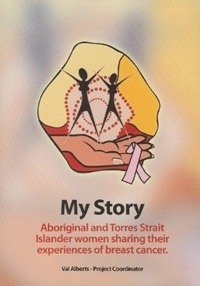
My story. Aboriginal and Torres Strait Islander women sharing their experiences of breast cancer. A resource for health workers.
Val Alberts, Project Coordinator. Sydney: National Breast and Ovarian Cancer Centre, 2008 (DVD and booklet).
Cancer has not been a high priority on the Indigenous health agenda in Australia, despite being a major cause of death. Disparities in cancer mortality between Indigenous Australians and other Australians are not the result of a higher incidence of cancer among Indigenous people overall, but exist for reasons such as lower participation in screening; delayed presentation with symptoms; and poorer uptake of treatment. There have been few resources specifically for Indigenous people with cancer, so this 14-minute DVD, My story. Aboriginal and Torres Strait Islander women sharing their experiences of breast cancer, is a welcome contribution.
Six Indigenous women talk about how they came to be diagnosed with breast cancer and their subsequent journeys through treatment. The stories are engaging and rich in important health messages — Indigenous people do get cancer; Indigenous women should participate in mammography screening; don’t ignore symptoms; early diagnosis is important for cure; involving family members helps them know what you’re going through; one cancer doesn’t mean you won’t get another; it’s normal to be scared; breast prostheses help you feel and look better. To reinforce the importance of early diagnosis, the women point to their own survival — they wouldn’t be alive to tell their story unless treated early. The presentation also touches on issues of family history. Several scenarios mention the role that men can play in helping women with breast cancer — encouraging them to seek health care for symptoms, attending medical appointments to provide support, and helping children and other family members to understand.
Produced by James Cook University, the DVD has a Far North Queensland feel, with scenes of palm trees and beaches. It has an authenticity and positivity that contribute to it being a valuable health promotion and educational resource for Indigenous people. At the same time, its messages are universal, and the DVD will have broad appeal, especially among the nation’s many breast cancer support groups. An accompanying booklet means people are not reliant on having a DVD player to acquaint, or re-acquaint, themselves with the stories of the women.
Here’s hoping for more such endeavours to cover a wider range of cancers, and to convey cancer messages and education for Indigenous men.
Decolonising Indigenous Health Research Requires Redefining Sex, Sexuality and Gender
Shakara Liddelow-Hunt, James H. L. Hill, Kate Daglas, Kaiwarr Clancy, Madi Day, Alistair Ott
Beyond Structural Neglect: Using Evidence to Strengthen Primary Health Care Systems, Policies and Programs for Aboriginal and Torres Strait Islander Men
Kootsy Canuto, Celina Gaweda, James Smith, Karla J. Canuto
Costs of Delivering the Hep B PAST Model of Care in Remote Australia: A Retrospective Pre–Post Study
Hoa Nguyen, Anh Le Tuan Nguyen, Paula Binks, Melita McKinnon, Emily Vintour-Cesar, Karen Wills, Nicola Stephens, Benjamin Cowie, Joshua S. Davis, Yuejen Zhao, Peter Nihill, Julie A. Campbell, Andrew J. Palmer, Jane Davies, Barbara de Graaff
Epidemiology and Quality of Care for Aboriginal and Torres Strait Islander Peoples Treated by Emergency Medical Services for Stroke in Victoria, Australia: Retrospective Analysis of Linked Data
Candice Menezes, Ziad Nehme, Luke J. Burchill, Tegwyn McManamny, Angela Dos Santos, Michelle Crilly, Luke P. Dawson, Benjamin Clissold, David Anderson, Emily Nehme
Hepatitis C Among First Nations Australians: A Rethink Is Required to Meet the 2030 Elimination Target
James Ward, Emily Pegler, Kellie Stacy, Stephen Harfield
Sovereignty and Survival: Understanding Lung Cancer Outcomes for Aboriginal and Torres Strait Islander People in Australia, a Case–Control Study
Alice R. T. Bergin, Luc te Marvelde, Roger L. Milne, Benjamin J. Solomon, Kris Ivanova, Peter Savas, Stephen J. Luen, Jay Hamann, Andrea Casey, Nicole Watt, Sue M. Evans, Gail Garvey, Sherene Loi