




Volume 187 - Issue 4
John Charles Proctor Cone MBBS, MD, FRANZCP
Author: Edwin Harari
Med J Aust 2007; 187 (4): 228. || doi: 10.5694/j.1326-5377.2007.tb01205.x
Published online: 20 August 2007
Published online: 20 August 2007
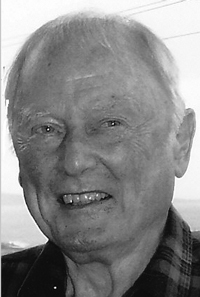
John Cone was born on 6 December 1925 in Hawthorn, Victoria. He matriculated from Camberwell Grammar School and entered the medical school of the University of Melbourne in 1944. Graduating in 1949, he joined a general practice in the then outer Melbourne suburb of Ringwood, while retaining a sessional appointment in the medical outpatients clinic at the Royal Melbourne Hospital (RMH). He obtained a clinical doctorate of medicine from the University of Melbourne in 1954.
Years later, when recounting his experiences in general practice, he described how his curiosity had been aroused by those often-frustrating patients whose problems could not be neatly categorised as either mental or physical, and he was drawn to psychiatry. In the 1960s, the most prestigious centre for the clinical study of such patients was the Department of Psychiatry of the Strong Memorial Hospital at the University of Rochester in New York State. There, the psychiatrist John Romano and the psychoanalytically-trained Professor of Medicine, George Engel, had pioneered the discipline of consultation–liaison psychiatry, based on the application of psychoanalytical ideas to clinical medicine. In 1964, John took his young family to Rochester to pursue state-of-the-art training in psychiatry.
Returning to Melbourne in 1967, John established a private practice in psychiatry and became the senior Honorary Psychiatrist at the RMH in 1971, a position he held for 15 years. He was a foundation member of the Royal Australian and New Zealand College of Psychiatrists, serving on committees at both state and federal levels. He was also a founding member and chairman of the Melbourne Clinic, the city’s largest private psychiatric hospital.
John was a connoisseur of fine food and wines, and, together with his wife, Margaret, a generous and welcoming host. He had an encyclopaedic knowledge of Australian and foreign flora and was a passionate gardener.
He was diagnosed with cancer in 1994. During the period of terminal illness, he conducted himself with the same quiet dignity, resolve and thoughtfulness that had made him such an excellent doctor and teacher. He died on 16 January 2007.
He is survived by Margaret and daughters Andrea, Felicity and Gair Amina.
Co-Designed Best Practice Principles for the Care of Fathers and Non-Birthing Parents Exposed to Perinatal Trauma: A Participatory Action Research Study
Alka Kothari, Dale Trevor, Glen Quinn, Jane Geltch, Joel Dulhunty, Helen Skouteris, Leonie K. Callaway
Reorienting Allied Health Into Community-Based Care for People Experiencing Trauma and Social Disadvantage
Simon Rosenbaum, Grace McKeon, Gulsah Kurt, Oscar Lederman, Kemi Wright, Sabuj Kanti Mistry, Jackie E. Curtis, Philip B. Ward, Zachary Steel, Hamish Fibbins, Rachel Morell, Melissa C. Eaton, Andrew Watkins, Ben Harris-Roxas, Brendan Goodger, Eleanor Beck, Megan Teychenne, Joseph Firth, Davy Vancampfort, David Burns, Russell Roberts, Tristan Favaloro, Danielle Weber, Rosanna Barbero, Vasili Maroulis, Melissa Holmes, Stefan Mackenzie, Chiara Mastrogiovanni, Afsana Anwar, Uzma Choudhry, Catherine Sherrington, Jane Currie, Thomas Gadsden, Scott Teasdale
Stigmatising Attitudes Towards People With Depression, Bipolar Disorder, Borderline Personality, ADHD and Early and Long-Term/Untreated Schizophrenia: Representative Survey of Australian Adults
Amy J. Morgan, Anna M. Ross, Gayle McNaught, Rachel Green, Nicola J. Reavley
Psychosocial Hazards for Healthcare Workers: Supporting the Second Victim Also Helps the Primary Victims
Sarah Michael
Supporting Population Mental Health in the Wake of Mass Tragedies
Susan J. Rees, Derrick M. Silove