




Volume 182 - Issue 3
Help for developing countries no easy matter
Author: Ian Maddocks
Med J Aust 2005 || doi: 10.5694/j.1326-5377.2005.tb06599.x
Published online: 28 April 2004
Published online: 28 April 2004
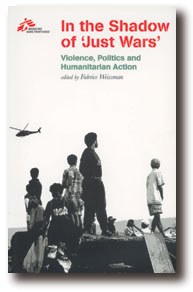
In the shadow of Just wars. Violence, politics and humanitarian action
Fabrice Weissman (editor). London: Hurst, 2004 (xi + 372 pp). ISBN 1 8506 5757 8.
Ninety per cent of conflicts in developing countries are internal, between factions or regional groupings within a country, and most continue longer than 5 years, causing complex humanitarian emergencies with cycles of war, civil strife, displacement, food shortages and significant mortality. There have been seven million casualties from these internal wars over the past 15 years, and 75% were civilians. Responses by the Western powers, whether of intervention or abstention, are often justified on the basis of high moral purpose, defending values of liberty, human rights and the rule of law, but can be devastating in their consequences. The relationship between bodies that seek to offer humanitarian aid and the prevailing powers in any situation is equally complex. Thoughtful analyses here show how aid efforts to succour the desperately damaged are always constrained, and sometimes completely negated, by sociopolitical realities, particularly those influencing the major powers.
We must do something is a common cry when reports are received of terrible cruelty, rape, forced recruitment of child soldiers, casual massacres and genocidal policies. But even the best-prepared and well-supported aid agencies face the risk of tragic failure when they confront unacceptable political imperatives and are forced to compromise their own values or clash openly with authorities. Helping resource-poor countries is no easy task; it needs informed and global debate, and here is an excellent start.
Ian Maddocks Emeritus Professor of Palliative Care Seacliff, SA
Dousing the burning inequity of global warming for people experiencing homelessness
Timothy English, Alejandro Vásquez Hernández, Glenn Miller, Nuala Fogarty, Charles Cosgrove, Paul Rosenthal, Matthew Larkin, Jon Swain, Danielle Austin, Jo River
The contribution of evidence‐based practice and the practice‐based evidence approaches to contemporary Australian psychology: implications for culturally safe practice
Paul Gray (Wiradjuri), Dawn Darlaston‐Jones, Pat Dudgeon AM (Bardi), Kate Derry, Joanna Alexi, William Smith (Wiradjuri and Wemba Wemba), Tanja Hirvonen (Jaru and Bunuba), David Badcock, Shraddha Kashyap, Belle Selkirk (Noongar)
Explaining risk in chronic conditions: the Yolŋu science of signs
Emma Haynes, Alison Mitchell, Minitja Marawili (Yolŋu), Dawn C Bessarab (Bardi)
Is it time to retire the label “CALD” in public health research and practice?
Sabine Allida, Della Maneze
What do Aboriginal people in the Northern Territory value during the operation journey? A qualitative study
Edith B Waugh, Marita Hefler, Sophie Pascoe, Mark Mayo, Matthew JL Hare, David A Story, Neil Wilkshire, Peter Henwood, David Croker, Jampijinpa Ross
Fulfilling First Nations health, cultural safety and equity accreditation standards in primary medical education: reflections from a First Nations desktop review team
Paul Saunders, Nicole Mercer, Maria Mackay, Ian Lee, Madelyne Hudson‐Buhagiar, Miriam Cavanagh, Emma Milliss, Melody Muscat, Kathleen Martin, Adam Shipp, Melissa Johnson, Belinda Gibb