



Patients with unexplained physical symptoms experience substantial distress and disability, and depression is common. Assessing and treating this comorbidity in somatising patients is an important management strategy.1,2 These patients also generate considerable health expenditure. The annual cost of a hospitalised patient with somatisation in South Australia has been estimated to be $13 000–$31 000 during the year of index admission.3 Studies over an 8-year period in Denmark have reported that 56 persistent somatising patients accounted for 3% of all inpatient admissions from the general population aged 17–44 years.4,5
For these reasons, patients presenting with somatisation were included in the SA HealthPlus Coordinated Care Trial, which evaluated a model of coordinated care across a series of eight projects focusing on specific chronic conditions. The primary hypothesis of the overall SA HealthPlus trial was that coordinated care would improve health and wellbeing using existing resources.6,7
Here, we describe the outcomes of the trial’s somatisation project, which examined diagnostic issues in primary care and the efficacy of guideline use, and its secondary hypotheses — that coordinated care would help relieve depression and anxiety, reduce medication use, and improve quality of life.
The somatisation project was part of the broader SA HealthPlus Coordinated Care Trial, which enrolled a total of 4603 subjects across eight projects. The projects had shared methodologies, with randomisation of 2 : 1 for subjects and controls as far as possible. All intervention and control subjects in the trial received repeated measures assessment of disability and handicap (Work and Social Adjustment Scale [WSAS]8) and quality of life (Short Form-36 [SF-36]9 and Symptom Checklist 90-Revised [SCL-90-R]10), administered by post, and analysed by the blinded, independent local evaluation team. Intention-to-treat analysis was not possible due to a 45% drop-out rate.
The GP’s diagnosis was checked using the computerised Composite International Diagnostic Interview (CIDI),11 conducted face-to-face with the patient by a research officer. The CIDI assesses mental disorders according to the criteria of the 10th revision of the ICD (ICD-10) and the Diagnostic and statistical manual of mental disorders, 4th edition (DSM-IV).
The research officers were trained in administration of the CIDI using the manual, by administering the CIDI to nine pilot subjects, and by validity checks with an experienced psychiatrist (R G P). Technical assistance was provided by telephone from the World Health Organization Collaborating Centre at the University of New South Wales. The schizophrenia and organic brain disorders modules of the CIDI were excluded, in line with the subject exclusion criteria.
Data specific to the somatisation project were managed by the project team, who were not blinded. The project-specific measures — the Beck Depression Inventory – Second Edition (BDI-II),12 the State–Trait Anxiety Inventory (STAI),13 and the Hostility and Direction of Hostility Questionnaire (HDHQ)14 — were administered by the service coordinators at enrolment and at about 12 months.
Data collected at 12 months for the BDI-II, STAI and HDHQ were for intervention subjects only, as the data were not able to be collected for the control group. The SA HealthPlus trial was originally designed to conclude at 2 years from enrolment, although the specific projects entered the trial at different times, for organisational and logistical reasons. Although it was planned to follow each project for the full 2 years, the somatisation project was foreshortened to conform to overall trial timelines. Control subjects were therefore not able to be re-interviewed to complete the psychometric tests for the projects, as the resources to do so were not available. It was only possible to complete the trial objectives using the whole-of-trial measures.
For ethical reasons, CIDI diagnoses and baseline BDI-II scores were fed back to GPs in writing early in the trial for patients in both the intervention and control groups, and the service coordinators were alerted that particular patients were depressed. Based on this additional information, the GPs reviewed patients and treated them (with antidepressant medication and cognitive behaviour therapy [CBT]) according to their clinical judgement and evidence-based guidelines.
The service coordinator assisted the GP to develop a care plan for patients in the intervention group, based on a care plan generator that had been developed by the somatisation reference group (two psychiatrists, a psychologist, a health administrator and three GPs) using literature review, expert opinion and consensus.
A package of interventions, negotiated with the patient, was summarised on a 12-month care plan that was reviewed quarterly. This plan supported patient self-management, using a patient-derived “problems and goals approach”15 integrated with medical and community care. Patients’ services and medication use were monitored, with associated Medicare Benefits Scheme (MBS) and Pharmaceutical Benefits Scheme (PBS) information being fed back to GPs on a monthly basis on CD-ROM.
The care plan generator operationalised guidelines (based on previous studies16,17) for management of the intervention patients. The guidelines focused on:
treatment of depression and anxiety, including the use of CBT;
harm minimisation (containment) for the management of unexplained symptoms and pain;
medication rationalisation;
risk factor reduction; and
immunisation.
GPs treated their own patients and were supported by consultant advice as needed.
Containment consisted of the GP contracting with the patient to attend regular 4–6-weekly appointments, booked in advance. At these visits, the doctor would focus on active listening, examination of the affected part being complained of, reassurance that no further investigations or referrals were required, and positive encouragement for living effectively despite ongoing symptoms.16
Control patients received standard treatment.
Of the 420 GPs in southern Adelaide approached to enrol potential subjects, only 35 (8.3%) did so, and not all eligible patients were referred. For example, in one practice, only 17 of 320 patients identified by case note audit were referred. All referred patients were enrolled and randomly assigned, giving an initial sample size of 133; a lower number than expected and required (Box 1). The nine pilot subjects from the research officers’ CIDI training were misallocated to the control group, and subsequently excluded. Thus, the cohort consisted of 124 subjects: 89 in the intervention group and 35 in the control group. Their mean ± SD age was 51.6 ± 16.3 years, with no difference between intervention and control groups (t = − 1.675; P = 0.097). There were 32 men and 92 women, with no significant difference in distribution between intervention and control groups (χ2 = 1.831; P = 0.176).
A slightly greater proportion of the intervention group (47/89) than the control group (21/35) were married, but this was not statistically significant (χ2 = 8.96; P = 0.062). A larger proportion of the intervention group (70/89) than the control group (25/35) were retired (χ2 = 13.79; P = 0.032). Similar proportions (52/89 intervention, 20/35 control) were privately insured (χ2 = 0.017; P = 0.896) and were health card carriers (52/89 intervention, 20/35 control) (χ2 = 0.092; P = 0.762). No adverse events were reported.
Eighteen intervention subjects did not fully complete the assessment and dropped out early in the study (Box 1). Re-consent was needed from participants in June 1999, as the original global consent form had a date limitation, and this resulted in a large drop-out (22 intervention, 13 control). A further seven intervention subjects did not return their project-specific questionnaires but did complete the whole-of-trial questionnaires mailed to them by the local evaluation team.
The psychiatric diagnoses made by both GPs and the CIDI for the 97 subjects (71 intervention, 26 control) for whom these data were available are shown in Box 2.
According to the DSM-IV, 37 patients had a principal diagnosis of major depression, while this was the GP diagnosis for only one patient. Conversely, GPs and the ICD-10 both made 18 principal diagnoses of “other mood disorders”, while DSM-IV diagnosed this for 10. When all mood disorder diagnoses were taken into account, 31 patients were diagnosed by the GPs and 64 by the DSM-IV.
GPs made a principal diagnosis of anxiety disorder for 39 of the subjects, which was comparable to the ICD-10 (32) but not the DSM-IV (13). GPs made a principal diagnosis of somatisation disorder (31) more often than did the CIDI (ICD-10, 15; DSM-IV, 5). When all diagnoses of somatisation disorder were included, 96 patients were diagnosed by GPs compared with 54 by the CIDI (ICD-10). According to the CIDI, 28 (DSM-IV) or 24 (ICD-10) subjects had no psychiatric diagnosis.
The GPs made substantial physical diagnoses, with 10 patients having one, 46 having two, 37 having three, and four patients having four or more physical and psychiatric diagnoses. The majority of subjects had two or more physical conditions. These conditions were managed according to the guidelines in the care plan for each condition.
The aim to reduce hospitalisation was not achieved, however the assessment and interpretation of this was complex, given the smaller than anticipated sample size. Detailed discussion of this outcome has been addressed elsewhere.18
Twenty-five of the 89 intervention subjects were referred to and attended CBT for pain, depression or anxiety management. A further 15 were referred but did not attend.
Intervention subjects were less depressed, hostile and anxious after 12 months than at the start of the trial (Box 3). They also reported a reduced sense of guilt, which may have been related to the reduction in depression.
For the 49 intervention subjects with complete data for the overall trial measures, the SF-36 total Physical Component Summary score was significantly increased at 12 months, indicating improved function (P = 0.04). Similarly for these subjects, the SCL-90-R total positive symptom score was significantly reduced (P = 0.009). There was also an average 60% improvement in “problems and goals” measurement scores.18
The intervention group made gains in SF-36 physical role functioning compared with the control group, which deteriorated (P = 0.006) (Box 4). This was despite emotional symptoms, as measured by the SCL-90-R, remaining the same for the two groups. There was no difference between groups in the WSAS (data not shown).18
As a result of the guidelines that encouraged rationalisation of medication, medication use (ie, number of PBS prescriptions) in the intervention group decreased by 8.9% compared with controls (recalibrated to adjust for differences in historical use of PBS services).18
The most significant finding of this study was the underdiagnosis of depression by GPs compared with the CIDI and baseline BDI-II data. This finding is supported by the overdiagnosis of somatisation disorder by GPs. This could indicate that the GPs were focused on the somatic symptoms and did not pursue underlying psychopathological conditions. The fact that the CIDI identified about a quarter of subjects as having no psychiatric diagnosis may reflect the very stringent criteria currently used by these international classification systems for somatisation disorder.19
Our findings are similar to those from a WHO study of mental illness in primary care, which found that 95% of psychiatric patients presenting with predominantly physical symptoms (assessed by the General Health Questionnaire and independently checked) were not given a psychiatric diagnosis by the GPs.20 The authors concluded that the GPs were focused on the physical symptoms rather than on completing a holistic assessment.
One of the innovative aspects of this project was the interaction between the project team and the 35 GPs, which included feedback to GPs of the CIDI and baseline BDI-II scores, educational sessions about applying the guidelines, review of the guidelines through GP feedback at the workshops, monthly feedback of patients’ MBS and PBS data to each GP, and 3-monthly care plan reviews with the service coordinators.
Feedback of the depression data, combined with the education sessions, led to GPs reporting increased prescribing of antidepressants. This suggests that screening instruments such as the Kessler Psychological Distress Scale (K10) and the Depression Anxiety Stress Scales (DASS21) have a place in primary care, as recommended by beyondblue and the Somatic and Psychological HEalth REport (SPHERE) intervention.21 GPs reported that recognition and treatment of depression occurred after they were provided with diagnostic depression scores from the questionnaires early in the project. The role-plays conducted in the guideline workshops also proved valuable in helping GPs to elicit the symptoms of depression and provide evidence-based treatment.
Given the evidence that guidelines are rarely taken up in practice,22 we found that engagement by GPs in their development resulted in their use in this study. GPs had autonomy in management of their patients, supported by disorder-specific guidelines that had been operationalised using the care plan generator. For the trial as a whole, there was evidence of increased adherence by GPs to evidence-based guidelines for monitoring and recommended interventions in diabetes and chronic obstructive pulmonary disease.23 Through a combination of feedback, education and monitoring, GPs in this project changed their practice in keeping with the guidelines, resulting in the decrease in medication prescribing18 and appropriate referral for CBT (28% of subjects) in the intervention group.
Feedback from the GPs during the education sessions indicated that refocusing the patient on living effectively in spite of symptoms, as well as learning how to decline the patient’s requests for further unnecessary investigation, referral or additional prescribing, was beneficial. Central to these skills was the ability to listen, negotiate and say “no” to the patient. GPs also acknowledged the benefit of education in the recognition and management of depression in patients presenting with complex somatic symptoms.
There was potential contamination of the study outcomes because GPs had both intervention and control subjects. Nevertheless, management of the two groups differed considerably: the intervention subjects had specific care plans that were reviewed 3-monthly by the GP, and also had access to a service coordinator who assisted with access to services. It is therefore likely that any difference between the groups is attributable to the intervention. Although the potential for contamination and the high drop-out rate limit the generalisability of our results, the finding that depression is underdiagnosed in people presenting with unexplained physical symptoms is relevant to all medical practitioners.
It is important that patients who present with unexplained physical symptoms are properly assessed from a psychiatric perspective, as, in this study, nearly 50% of such patients had a depressive disorder and 35% had an anxiety disorder. Containment strategies are useful in primary care, with GPs reporting that skills in how to say “no” are essential to managing these complex patients.
1 Subject selection and randomisation flow chart
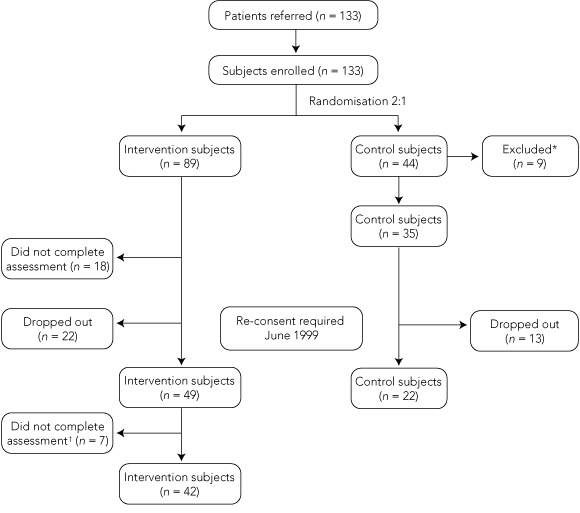 | |||||||||||||||
* The nine pilot subjects were not randomised and were incorrectly assigned to the control group. † Seven of the 49 subjects in the intervention group did not complete the project-specific questionnaires. | |||||||||||||||
2 Baseline psychiatric diagnoses made by general practitioners and the Composite International Diagnostic Interview (CIDI) for 97 subjects
|
GP diagnosis |
CIDI diagnosis |
|||||||||||||
|
ICD-9-CM |
DSM-IV |
ICD-10 |
||||||||||||
|
All |
Principal |
All |
Principal |
All |
Principal |
|||||||||
Anxiety disorders |
48 |
39 |
50 |
13 |
52 |
32 |
|||||||||
Pain plus somatisation |
35 |
11 |
10 |
0 |
36 |
10 |
|||||||||
Other somatoform |
61 |
20 |
21 |
5 |
18 |
5 |
|||||||||
All somatisation |
96 |
31 |
31 |
5 |
54 |
15 |
|||||||||
Major depression |
1 |
1 |
46 |
37 |
21 |
18 |
|||||||||
Other mood disorders |
30 |
18 |
18 |
10 |
21 |
18 |
|||||||||
All mood disorders |
31 |
19 |
64 |
47 |
42 |
36 |
|||||||||
No psychiatric diagnosis |
0 |
0 |
28 |
28 |
24 |
24 |
|||||||||
Drug |
3 |
0 |
4 |
3 |
8 |
8 |
|||||||||
Other psychological |
0 |
0 |
0 |
0 |
3 |
0 |
|||||||||
Physical |
62 |
8 |
na |
na |
0 |
0 |
|||||||||
|
DSM-IV = Diagnostic and statistical manual of mental disorders, 4th edition. ICD-9-CM = International classification of diseases, 9th revision, clinical modification. ICD-10 = International classification of diseases, 10th revision. na = not applicable. | |||||||||||||||
3 Scores on project-specific measures at baseline and 12 months for intervention subjects
|
No. of subjects |
Mean score |
Related samples t test |
||||||||||||
Measure |
Baseline |
12 months |
t |
P |
|||||||||||
BDI-II |
42 |
23.40 |
17.81 |
3.337 |
0.002* |
||||||||||
HDHQ |
|||||||||||||||
Acting out hostility |
40 |
4.15 |
3.80 |
1.312 |
0.197 |
||||||||||
Criticism of others |
40 |
4.72 |
4.38 |
0.794 |
0.432 |
||||||||||
Paranoid hostility |
40 |
1.85 |
1.53 |
1.394 |
0.171 |
||||||||||
Self-criticism |
40 |
6.38 |
5.98 |
1.118 |
0.270 |
||||||||||
Guilt |
40 |
2.75 |
1.98 |
2.880 |
0.006† |
||||||||||
Hostility |
40 |
19.85 |
17.65 |
1.958 |
0.057‡ |
||||||||||
Direction |
40 |
4.78 |
4.22 |
0.696 |
0.490 |
||||||||||
STAI |
|
|
|
|
|
||||||||||
State |
41 |
51.24 |
46.54 |
2.088 |
0.043† |
||||||||||
Trait |
41 |
52.90 |
47.37 |
3.618 |
0.001* |
||||||||||
|
BDI-II = Beck Depression Inventory – Second Edition. HDHQ = Hostility and Direction of Hostility Questionnaire. STAI = State–Trait Anxiety Inventory. * P < 0.005. † P < 0.05. ‡ P approaches significance. | |||||||||||||||
4 Intervention and control group differences at 12 months in Short Form-36 (SF-36) survey domains
|
Mean difference |
Analysis of covariance |
|||||||||||||
SF-36 domain |
Intervention (n = 49) |
Control (n = 22) |
F |
P |
|||||||||||
Physical functioning |
4.06 |
− 2.32 |
1.726 |
0.193 |
|||||||||||
Role functioning — physical |
10.20 |
− 9.09 |
8.223 |
0.006* |
|||||||||||
Bodily pain |
0.82 |
4.64 |
0.054 |
0.818 |
|||||||||||
General health |
− 0.63 |
− 0.55 |
0.497 |
0.483 |
|||||||||||
Vitality |
− 3.57 |
− 4.09 |
1.232 |
0.271 |
|||||||||||
Social functioning |
2.51 |
2.32 |
2.239 |
0.139 |
|||||||||||
Role functioning — emotional |
2.73 |
10.68 |
2.610 |
0.111 |
|||||||||||
Mental health |
− 3.59 |
0.73 |
0.448 |
0.505 |
|||||||||||
Physical Component Summary |
2.53 |
− 1.36 |
3.444 |
0.068† |
|||||||||||
Mental Component Summary |
− 1.86 |
1.68 |
1.284 |
0.261 |
|||||||||||
|
* P < 0.01. † P approaches significance. | |||||||||||||||
- Rene G Pols1
- Malcolm W Battersby2
- Flinders Human Behaviour and Health Research Unit, Flinders University, Adelaide, SA.
We wish to acknowledge the work of Michael Melino, Adrian Esterman, Libby Kalucy, J McDonald and C Holmwood. The trial was funded by the South Australian Health Commission and the then Commonwealth Department of Health and Aged Care.
None identified.
- 1. Singh BS. Managing somatoform disorders. Med J Aust 1998; 168: 572-577. <MJA full text>
- 2. Hickie I, Pols RG, Kochera A, Davenport T. Why are somatoform disorders so poorly recognized and treated? In: Andrews G, Henderson S, editors. Unmet need in psychiatry. Cambridge: Cambridge University Press, 2000: 309-323.
- 3. Battersby M, Gruszin S. Final report to the Ambulatory Care Reform Program. Adelaide: SA HealthPlus Unit of the South Australian Health Commission, 1996.
- 4. Fink P. The use of hospitalizations by persistent somatizing patients. Psychol Med 1992; 22: 173-180.
- 5. Fink P. Admission patterns of persistent somatization patients. Gen Hosp Psychiatry 1993; 15: 211-218.
- 6. Battersby MW, SA HealthPlus team. Health reform through coordinated care: SA HealthPlus. BMJ 2005; 330: 662-665.
- 7. Battersby M, Harvey P, Mills PD, et al. SA HealthPlus: a controlled trial of a statewide application of a generic model of chronic illness care. Milbank Q 2007; 85: 37-67.
- 8. Mundt JC, Marks IM, Shear MK, Greist JH. The Work and Social Adjustment Scale: a simple measure of impairment in functioning. Br J Psychiatry 2002; 180: 461-464.
- 9. Ware JE Jr, Sherbourne CD. The MOS 36-item short-form health survey (SF-36). I. Conceptual framework and item selection. Med Care 1992; 30: 473-483.
- 10. Derogatis LR, Lipman RS, Covi L. SCL-90: an outpatient psychiatric rating scale — preliminary report. Psychopharmacol Bull 1973; 9: 13-28.
- 11. World Health Organization. Composite international diagnostic interview. Geneva: WHO, 1997.
- 12. Beck AT, Steer RA, Ball R, Ranieri WF. Comparison of Beck Depression Inventories -IA and -II in psychiatric outpatients. J Pers Assess 1996; 67: 588-597.
- 13. Spielberger CD, Gorsuch RL, Lushene RE. Manual for the State-Trait Anxiety Inventory (Form Y). Palo Alto, Calif: Consulting Psychologists Press, 1983.
- 14. Caine TM, Foulds GA, Hope K. Manual of Hostility and Direction of Hostility Questionnaire. London: University of London Press, 1967.
- 15. Battersby MW, Ask A, Reece MM, et al. A case study using the “problems and goals approach” in a coordinated care trial: SA HealthPlus. Aust J Prim Health 2001; 7 (3): 45-48.
- 16. Smith GJ Jr, Monson RA, Ray DC. Psychiatric consultation in somatization disorder: a randomised controlled study. N Engl J Med 1986; 314: 1407-1413.
- 17. Warwick HM, Clark DM, Cobb AM, Salkovskis PM. A controlled trial of cognitive-behavioural treatment of hypochondriasis. Br J Psychiatry 1996; 169: 189-195.
- 18. Centre for Health Care Evaluation. Evaluation of SA HealthPlus Coordinated Care Trial. Final report to the Department of Human Services South Australia. Adelaide: Flinders University, 2000.
- 19. Escobar JI, Rubio-Stipec M, Canino G, Karno M. Somatic Symptom Index (SSI): a new and abridged somatization construct. Prevalence and epidemiological correlates in two large community samples. J Nerv Ment Dis 1989; 177: 140-146.
- 20. Gureje O, Simon GE, Ustun TB, Goldberg DP. Somatization in cross-cultural perspective: a World Health Organization study in primary care. Am J Psychiatry 1997; 154: 989-995.
- 21. Hickie IB, Davenport TA, Hadzi-Pavlovic D, et al. SPHERE: a national depression project. Development of a simple screening tool for common mental disorders in general practice. Med J Aust 2001; 175 (2 Suppl): S10-S17.
- 22. Gilbody S, Whitty P, Grimshaw J, Thomas R. Educational and organizational interventions to improve the management of depression in primary care: a systematic review. JAMA 2003; 289: 3145-3151.
- 23. Heard A, Kalucy E, Richardson D, et al. An evaluation of the care planning process in coordinated care trials: what difference do care plans make to service provisions? Aust J Prim Health 2002; 8 (1): 52-56.
Abstract
Objective: To evaluate the diagnosis of patients with somatisation disorders in primary care, and the effectiveness of coordinated care and evidence-based care planning on psychiatric symptoms and quality of life for these patients.
Design, setting and participants: This was a project of the SA HealthPlus Coordinated Care Trial, comprising a randomised controlled trial of 124 subjects recruited by general practitioners in southern Adelaide. Eligible patients had a GP diagnosis of somatisation, including unexplained physical symptoms as part of anxiety, chronic pain or somatoform disorders. Diagnoses were checked using the Composite International Diagnostic Interview (CIDI). The study was conducted from December 1997 to December 1999.
Intervention: A care plan including treatment for depression and anxiety disorders, a containment strategy for somatisation, and service coordinator-assisted self-management. Control patients received standard treatment.
Main outcome measures: Psychiatric symptoms; quality of life; medication use; and depression, anxiety and hostility scores.
Results: Compared with CIDI diagnoses, mood disorders in patients were underdiagnosed by GPs (64 v 31), particularly major depression (46 v 1). At 12 months, the intervention group showed reductions in depression (P = 0.002), guilt (P = 0.006) and anxiety (state, P = 0.043; trait, P = 0.001). Compared with the control group, physical role functioning improved for the intervention group (P = 0.006), and their medication use decreased by 8.9%.
Conclusions: Conservative management, treatment of depression, and case management by service coordinators is effective in managing somatising patients in primary care. GPs require training in the diagnosis of depression and how to say “no” to patients with unexplained physical symptoms who request further unnecessary investigations or referrals.