

eMJA     The Medical Journal of Australia

Home | Issues | eMJA shop | Classifieds | Contact | More... | Topics | Search | Login | Buy full access   

Snapshot

Cryoglobulins

Herman H Lee and Chi-hung Hui
MJA 2008; 188 (3): 158

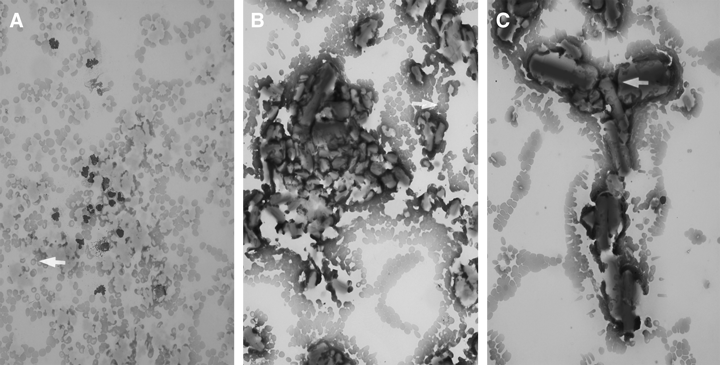
Cryoglobulins are plasma immunoglobulins or immunoglobulin-containing complexes that precipitate on exposure to cold and redissolve on warming. They should be distinguished from red cell agglutinins and from the blood-component cryoprecipitates manufactured from donor plasma. The typical clinical triad of cryoglobulinaemia comprises purpura, arthralgia and weakness, with possible multisystemic organ involvement, notably glomerulonephritis and neuropathy. In blood smears prepared at room temperature, cryoglobulins can be detected by their peculiar morphology, which can assume globular, rhomboid or cylindrical amorphous precipitates (Figure, A–C, arrows; Wright–Giemsa stain, original magnification, × 200). Occasionally, these may be mistaken for blood cells, leading to spuriously high blood cell counts. Cryoglobulins are associated with infections (eg, hepatitis C), lymphoproliferative diseases and autoimmune diseases. Plasmapheresis is a useful adjunctive treatment for severe active disease, but the replacement fluid must be warmed to prevent precipitation of circulating cryoglobulins.

Herman H Lee, Haematology RegistrarChi-hung Hui, Haematologist

Department of Haematology, Institute of Medical and Veterinary Science, Adelaide, SA.

chi-hung.huiATimvs.sa.gov.au

(Received 13 Aug 2007, accepted 25 Oct 2007)

Home | Issues | eMJA shop | Terms of use | Classifieds | More... | Contact | Topics | Search

The Medical Journal of Australia    eMJA  

©The Medical Journal of Australia 2008 www.mja.com.au PRINT ISSN: 0025-729X ONLINE ISSN: 1326-5377