



Heart failure is a common and potentially lethal complication of myocardial infarction (MI), conferring a four- to fivefold increase in mortality.1 Taking angiotensin-converting enzyme (ACE) inhibitors or angiotensin receptor blockers2 and β-blockers3 reduces morbidity and mortality in these patients. Furthermore, aldosterone receptor blockade, specifically with the selective agent eplerenone, has recently been shown to provide additional benefit.4 However, to what extent these and other beneficial cardiovascular drugs are prescribed for patients with MI and heart failure in Australian hospitals is not known.
Twenty Australian teaching and major metropolitan hospitals were recruited for the study. Sixteen hospitals provided data in a timely fashion to permit meaningful analysis. The hospitals were located in all mainland states except South Australia, and comprised those with the highest number of documented separations of patients after MI in each state (data from the Australian Institute of Health and Welfare).5
Myocardial infarction was defined according to each hospital’s individual diagnostic criteria, and included MI with and without ST-segment elevation.
Heart failure was defined according to the heart failure guidelines of the National Heart Foundation and the Cardiac Society of Australia and New Zealand,6 but ultimately left to the discretion of individual investigators at each site.
Risk factors were defined by the individual hospitals.
The age, sex and pre-existing risk factors of the 479 patients in our cohort are summarised in Box 1.
Characteristics of the study patients with and without heart failure during hospitalisation or at discharge after MI are summarised in Box 2. In the group with heart failure (24.2% of all patients with MI), there was a higher proportion of women and patients with prior heart failure. The association between diabetes and heart failure was of borderline statistical significance.
Significantly fewer percutaneous coronary intervention procedures were performed in patients with heart failure; in particular, significantly fewer angiography and angioplasty procedures were performed during the index hospitalisation (Box 2).
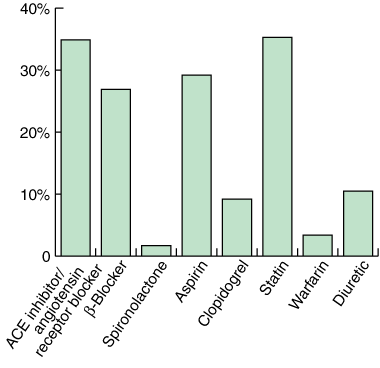
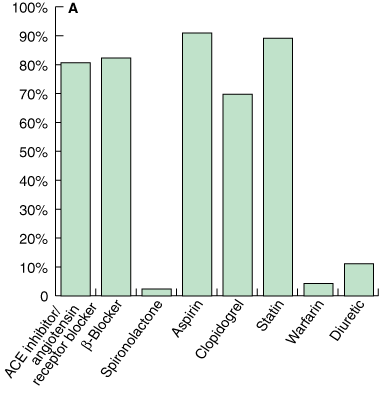
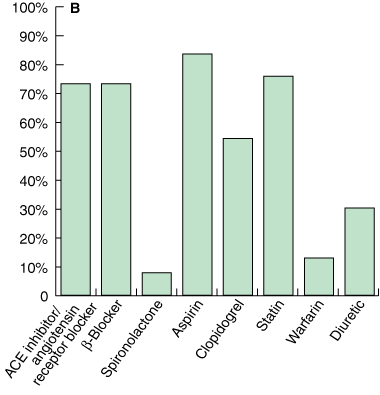
The proportion of patients taking the various cardiovascular medications on arrival at hospital (prior to admission) are shown in Box 3, and the proportion of patients with and without heart failure prescribed these medications on discharge are shown in Box 4. Fewer patients in the cohort with heart failure were prescribed an ACE inhibitor or an angiotensin receptor blocker, but these differences did not reach statistical significance. Univariate analysis showed that significantly fewer patients with heart failure, compared with those without heart failure, received β-blockers. Interestingly, fewer patients with heart failure were prescribed aspirin, clopidogrel or statin therapy. However, there was greater use of warfarin, diuretics and spironolactone in patients with heart failure. Spironolactone use, even in patients with established heart failure, was low at 7.8%.
Uncorrected differences in prescribing at discharge according to heart failure status are summarised in Box 5. To assess use of accepted heart failure medication after MI (ACE inhibitor/angiotensin receptor blocker, β-blockers and aldosterone receptor blockade), drug utilisation was adjusted for baseline covariates of age, sex and the presence of diabetes mellitus (these differed significantly [or almost significantly] at baseline between patients with and without heart failure). This showed that differences in prescribing between patients with and without heart failure remained non-significant for ACE inhibitors/angiotensin receptor blockers (P = 0.136), became non-significant for β-blockers (P = 0.106), and remained significant for spironolactone (P = 0.015).
These data are of clinical significance, given the greatly elevated risk of major cardiovascular events and mortality in patients with heart failure complicating an MI.1,7,8 These risks have been well documented in datasets such as the Global Registry of Acute Coronary Events (GRACE);1 mortality at 6 months was found to be three- to fourfold higher than that in patients without heart failure during their index hospitalisation after MI.
The heart failure rate in our patients (24.2% of patients having heart failure at some point during their hospitalisation for MI) agrees with data from other studies, such as GRACE, where the rate was 19.9%,1 and the Second National Registry of Myocardial Infarction (NRMI-2), where the rate was 19.1%.7
The underuse of effective therapies for patients with heart failure specifically applies to prescribing of ACE inhibitors/angiotensin receptor blockers and β-blockers. Perhaps concerns about hypotension and clinical instability in the period immediately after MI may have limited prescribing of these agents.9
The use of aldosterone-receptor blockade after MI was of interest, given the release of the results of the Eplerenone Post-Acute Myocardial Infarction Heart Failure Efficacy and Survival Study (EPHESUS)4 2 years before we conducted our study: the selective aldosterone-receptor blocker, eplerenone, conferred a 15% reduction in all-cause mortality. Eplerenone was not available in Australia during our study period. However, the older non-selective aldosterone-receptor blocker, spironolactone,10 could be used “off label” for these patients to block mineralocorticoid receptors. There was a significant increase in spironolactone use in patients with heart failure compared with those without heart failure after MI. However, fewer than 10% of eligible patients were prescribed this drug after MI.
These data also raise the issue of multiple drug prescribing (polypharmacy). In managing patients with heart failure, there is a clear need for polypharmacy and the net benefit of multiple agents, particularly in older patients, has to be weighed against the risks and the possibility of adverse events and drug interactions.11 Recent analyses have confirmed that older patients and those with comorbid risk factors do indeed derive substantial benefit from proven heart failure therapies12,13 and their use should therefore be encouraged.
1 Age, sex and risk factors of study patients admitted to hospital with myocardial infarction (n = 479)
2 Age, sex and risk factors of study patients by heart failure status, during hospitalisation or at discharge, after myocardial infarction
Percutaneous coronary intervention during index hospitalisation |
|||||||||||||||
4 Cardiovascular medications on discharge according to heart failure status (proportion of patients). A: no heart failure (n = 363); B: heart failure (n = 116)
Received 1 December 2005, accepted 21 June 2006
- Henry Krum1
- Adam Meehan2
- John Varigos3
- Philippa R Loane4
- Baki Billah5
- NHMRC Centre of Clinical Research Excellence in Therapeutics, Department of Epidemiology and Preventive Medicine and Department of Medicine, Monash University and Alfred Hospital, Melbourne, VIC.
This study was supported by an unrestricted educational grant from Pfizer Pharmaceuticals, Australia.
Victoria: Roger Ku (Alfred Hospital); Mark Horrigan, Louise Brown (Austin and Repatriation Medical Centre); Gishel New, Louise Roberts (Box Hill Hospital); John Counsell, Marianne Martin (Dandenong Hospital); Richard Harper, Lisa Jenkins (Monash Medical Centre); Andrew Adjani, Michele Sallaberger (Royal Melbourne Hospital); Robert Whitbourn, Britt Christensen (St Vincent’s Hospital).
Western Australia: Randall Hendricks, Gill Tullock (Fremantle Hospital); Peter Thompson, Patricia Taaffe (Sir Charles Gairdner Hospital).
New South Wales: James Rogers, Bets Conway (Gosford Hospital); John French, Elizabeth Newland (Liverpool Hospital); Warren Walsh, Anne Russell (Prince of Wales Hospital); Greg Nelson, Annie Loxton (Royal North Shore Hospital); David Rees, Glenn Paull (St George Hospital).
Queensland: Steven Coverdale, Sue Murray (Nambour Hospital); Paul Garrahy, Tom Christensen (Princess Alexandra Hospital).
Henry Krum has served on advisory boards for AstraZeneca, Pfizer, Roche, Bristol-Myers Squibb and Sanofi-Aventis.
- 1. Steg PG, Dabbous OH, Feldman LJ, et al; Global Registry of Acute Coronary Events (GRACE) Investigators. Determinants and prognostic impact of heart failure complicating acute coronary syndromes: observations from the Global Registry of Acute Coronary Events (GRACE). Circulation 2004; 109: 494-499.
- 2. Flather MD, Yusuf S, Kober L, et al. Long-term ACE-inhibitor therapy in patients with heart failure or left-ventricular dysfunction: a systematic overview of data from individual patients. ACE-Inhibitor Myocardial Infarction Collaborative Group. Lancet 2000; 355: 1575-1581.
- 3. Dargie HJ. Effect of carvedilol on outcome after myocardial infarction in patients with left-ventricular dysfunction: the CAPRICORN randomised trial. Lancet 2001; 357: 1385-1390.
- 4. Pitt B, Remme W, Zannad F, et al; Eplerenone Post-Acute Myocardial Infarction Heart Failure Efficacy and Survival Study Investigators. Eplerenone, a selective aldosterone blocker, in patients with left ventricular dysfunction after myocardial infarction. N Engl J Med 2003; 348: 1309-1321.
- 5. Australian Institute of Health and Welfare. Australia’s Health 2004. Canberra: AIHW, 2004. (AIHW Catalogue No. AUS 44; ABS Catalogue No. 8903.0.) http://www.aihw.gov.au/publications/index.cfm/title/10014 (accessed Jul 2006).
- 6. Krum H; National Heart Foundation of Australia and Cardiac Society of Australia and New Zealand Chronic Heart Failure Clinical Practice Guidelines Writing Panel. Guidelines for management of patients with chronic heart failure in Australia. Med J Aust 2001; 174 (9 Suppl): 459-466. <eMJA full text>
- 7. Wu AH, Parsons L, Every NR, Bates ER; Second National Registry of Myocardial Infarction. Hospital outcomes in patients presenting with congestive heart failure complicating acute myocardial infarction: a report from the Second National Registry of Myocardial Infarction (NRMI-2). J Am Coll Cardiol 2002; 40: 1389-1394.
- 8. Hasdai D, Topol EJ, Kilaru R, et al. Frequency, patient characteristics, and outcomes of mild-to-moderate heart failure complicating ST-segment elevation acute myocardial infarction: lessons from four international fibrinolytic therapy trials. Am Heart J 2003; 145: 73-79.
- 9. Richardson J, Truman C. An audit of discharge medication for secondary prophylaxis post-myocardial infarction. J Clin Pharm Ther 1996; 21: 413-416.
- 10. Hayashi M, Tsutamoto T, Wada A, et al. Immediate administration of mineralocorticoid receptor antagonist spironolactone prevents post-infarct left ventricular remodeling associated with suppression of a marker of myocardial collagen synthesis in patients with first anterior acute myocardial infarction. Circulation 2003; 107: 2559-2565.
- 11. Merle L, Laroche ML, Dantoine T, Charmes JP. Predicting and preventing adverse drug reactions in the very old. Drugs Aging 2005; 22: 375-392.
- 12. Dulin BR, Haas SJ, Abraham WT, Krum H. Do elderly systolic heart failure patients benefit from beta blockers to the same extent as the non-elderly? Meta-analysis of > 12 000 patients in large-scale clinical trials. Am J Cardiol 2005; 95: 896-898.
- 13. Haas SJ, Vos T, Gilbert RE, Krum H. Are beta-blockers as efficacious in patients with diabetes mellitus as in patients without diabetes mellitus who have chronic heart failure? A meta-analysis of large-scale clinical trials. Am Heart J 2003; 146: 848-853.
Abstract
Objective: To evaluate the use of cardiovascular medications in patients with and without heart failure after myocardial infarction (MI).
Design and setting: Multicentre study of drug therapy for patients with MI in 16 major metropolitan teaching hospitals in Australia over a 1-month period at each hospital in the period November 2004 – March 2005.
Participants: 479 patients admitted consecutively to the individual hospitals.
Main outcome measures: Proportion of patients with and without heart failure who were prescribed key cardiovascular medications after MI.
Results: 116 of the 479 patients admitted for MI (24.2%) had heart failure at some point during their hospitalisation. Patients with heart failure were older (68 v 63 years; P < 0.05), more likely to be women (34% v 24%; P < 0.05) and a higher proportion had diabetes (26% v 21%). There was significantly reduced prescribing of β-blockers, clopidogrel and statins for patients with heart failure compared with those without heart failure. Mineralocorticoid receptor antagonist use was low (< 10%) in the former group.
Conclusions: We found reduced prescribing of some prognostically relevant medications for patients with heart failure. For β-blockers, this may be explained by the greater clinical instability in patients with heart failure. Given the absolute benefit of drug therapy in patients with heart failure after MI, our findings suggest suboptimal prescribing in Australian teaching hospital practice.