



The estimated snakebite mortality in Papua New Guinea (3.5/100 000 population per year) is about 100-fold higher than in Australia.1 There are concerns that this rate is increasing, perhaps because of inadequate antivenom supplies — an international problem that is particularly acute in the Indo-Pacific region.2-4 Detailed studies of the problems of snakebite in PNG were last carried out a decade ago; however, such investigations were generally restricted to patients receiving antivenom and were not specifically focused on mortality.1,5-11
Port Moresby General Hospital (PMGH) has the largest caseload of seriously envenomed patients in PNG. Between 1990 and 1992, snakebite is said to have accounted for about 50% of all patients requiring ventilation at this hospital.5 Enzyme-linked immunoassays attributed 94% of serious snakebites to two species: 83.2% to Papuan taipans (Oxyuranus scutellatus canni) and 10.8% to death adders (Acanthophis spp.).1
The aim of our study was to investigate snakebite mortality at PMGH as a means of identifying factors that currently contribute to poor clinical outcomes after snakebite. This should provide the basis for developing sustainable initiatives to improve the prognosis for snakebite across PNG.
We conducted a retrospective analysis of snakebite admissions to PMGH between 1 January 1992 and 31 December 2001. Our focus was on snakebite mortality within the intensive care unit (ICU).
Data were obtained regarding the age, sex, duration of admission, duration of ventilation and outcome for each snakebite patient treated in the ICU. Examination of records from the high dependency unit identified additional deaths. Fatalities were identified and all available medical records were reviewed. Clinically relevant data in medical records were recorded on structured case report forms for each patient by either of two trained researchers, according to predetermined clinically relevant definitions. Relevant epidemiological and demographic data were also collected. A random sample comprising 20% of the total was simultaneously analysed by two of the researchers to ensure agreement of interpretation and thus inter-rater reliability.
Patients were classified as children (< 15 years) or adults (≥ 15 years).
Seasonal occurrence was recorded as either the “rainy” (November to April) or “dry” (May to October) season, consistent with previous definitions.5
Locality was defined as “urban” (within a 20 km radius of Port Moresby) or “rural” (> 20 km from Port Moresby).
Pre-hospital management was reported in 19 of 60 patients. Pressure bandages had been applied in six, and 13 had scarified the bite site. The use of tourniquets was recorded in two instances.
Key clinical features from the 60 patients for whom medical files were available are shown in Box 1.
Antivenom was administered to 32/60 (53%) patients, but only three (5%) received antivenom within 4 hours of the bite (Box 2). Twenty-one patients received blood products as well as antivenom. Of the children who were ventilated in the ICU and died, 13/26 (50%) received antivenom, but only two of these received it within 4 hours of the bite.
Over the decade, the most common reasons for ventilation at PMGH did not alter, apart from one month when the Australian (Surgical) Heart Team was at the hospital (data not shown). Of the ICU snakebite patients, 596/722 (82.5%) were ventilated, including 222 (85.4%) children and 374 (81.0%) adults (Box 3). Snakebite accounted for 45.0% of all 1325 patients ventilated during the study period, but took up 60.0% (3430/5717) of all ventilator bed-days (total number of days ventilated) (Box 4). The median duration of ventilation was significantly longer (P < 0.005) for snakebite patients (5.6 days) compared with all other ventilated patients (3.1 days).
For the 222 ventilated children, the median ventilation time for those who died (3.0 days) was significantly shorter (P < 0.02) than for those who survived (4.5 days). Similarly, considering the 374 ventilated adult patients, the median ventilation time for those who died (3.0 days) was significantly shorter (P < 0.001) than for the others (5.0 days).
The unit cost to the PNG Health Department, on a per-ampoule basis, of taipan monovalent and polyvalent antivenom over the study period is presented in Box 5. Between 1992 and 2000, the local price of CSL polyvalent antivenom almost quadrupled and the price of CSL taipan antivenom more than doubled. Comparing PNG and Australian polyvalent antivenom prices in terms of GDP/capita per ampoule, costs increased from being 19 times more expensive in PNG in 1992 to 38 times more expensive in 2000. It should be noted that this does not represent the price for those wanting to purchase direct from the importer or local pharmacy, where a premium is charged above the PNG Health Department price.
This is the first study that specifically examined snakebite mortality in PNG. Previous reports on this subject have overwhelmingly focused on morbidity among patients receiving antivenom in an era of lower antivenom prices.1,5-11 Unfortunately, the reality over the past decade has changed from a situation where most snakebite patients received antivenom to one of restricted antivenom availability and its delayed administration.13
Financial constraints mean that many investigations considered routine for snakebite in Australia are often unavailable at PMGH, and cultural factors result in low autopsy rates.14,15 One consequence is that studies such as ours are limited to information available in medical notes. Moreover, hospital records are not always readily available, impeding access to meaningful data. Despite these limitations, we were able to demonstrate that envenomation places a greater burden on PMGH ICU ventilators than all other conditions and that the duration of dependency for snakebite was significantly longer than for other diagnoses, undoubtedly adding to treatment costs. This represents the highest proportional ventilator load reported for snakebite in any hospital worldwide.
The second major finding of our study related to the worsening outcomes for children. A study during the 1980s found that 29.6% of children admitted to PMGH ICU with envenomation required intubation, 91% received antivenom, and the case-fatality rate was 7.7%.6 In contrast, in our study, 85.4% of children admitted to the ICU were intubated and ventilated, antivenom use was only documented for 50% of the children who died, and the paediatric case-fatality rate was 14.6%. Ventilation was also a key feature in the management of the adult ICU admissions.
Increased reliance on ventilation may be a consequence of inadequate antivenom supplies due to rising costs, influenced partly by the floating of the kina and its subsequent devaluation against the Australian dollar.2,3,16 The cost issue is even more extreme when considering direct antivenom purchases from Port Moresby pharmacies by individuals when PMGH stocks have been depleted. However, comparison of year 2000 GDP/capita antivenom costs shows that antivenoms cost less in India (which produces its own antivenoms) than in Australia, indicating that not all developing nations suffer the same fate as PNG.17 Since 1998, PNG has purchased antivenom from a wholesaler instead of directly from the manufacturer.18 Direct purchasing from CSL of less expensive monovalent antivenoms in combination with appropriate diagnostic use of the simple 20WBCT and CSL’s VDK should not only generate significant unit cost savings, but also result in increased stock availability.
Previous studies have found that delays in the administration of antivenom significantly increase the necessity to intubate snakebite patients at PMGH.7,9 Patients who received antivenom within 4 hours of being bitten were three times less likely to require intubation, exhibited more rapid resolution of neurotoxicity, and had shorter hospital stays.7 Unfortunately, even though many patients in our study arrived at a health facility (either a peripheral clinic or PMGH) within 4 hours of the bite, very few received antivenom within that period (Box 2).
Despite clear guidelines for appropriate antivenom administration, their relevance becomes questionable in the absence of adequate antivenom supplies. Consequently, antivenom is often reserved for moribund patients, and its use may be delayed until significant deterioration has occurred.19,20 During the 1960s, patients who developed paralysis often received up to four ampoules each.21,22 Since then, antivenom use has become more frugal, although in the 1980s and early 1990s most patients received at least one ampoule.5,9 This study shows that the treatment focus has switched from high antivenom availability and use with lower rates of ventilation to one of low antivenom availability and consequent high rates of ventilation. This is despite clear advice that snakebite deaths in PNG may be prevented by more widespread availability of antivenom.23
This is the first study to detail the use of blood products in envenomed patients in PNG. Given the concern about intracranial haemorrhage in the context of a bleeding diathesis, use of products such as fresh frozen plasma might appear reasonable. However, blood products are scarce and expensive, their value in the treatment of snakebite coagulopathy is unclear, and they are potentially hazardous. Moreover, previous studies have demonstrated that systemic bleeding generally resolves rapidly after administration of appropriate amounts of specific antivenom.9
Previous studies have found that the positive predictive value (PPV) of a 20WBCT ≥ 20 minutes for diagnosis of Papuan taipan envenoming is 96%.7 In our study, 75% of patients had a 20WBCT ≥ 20 minutes, but only 25% of those who received antivenom received taipan monovalent. Given the gap between the cost of polyvalent and monovalent antivenoms, the recommendations that all envenomed PMGH patients with incoagulable blood should receive monovalent taipan antivenom, and that CSL Venom Detection Kits be used to enable monovalent antivenom selection in cases without coagulopathy, remain relevant.7 Such protocols should significantly reduce per-patient antivenom costs and increase overall antivenom availability.
Our study confirms previous findings that about 20% of snakebite patients present to hospital more than 10 hours after the bite.7 While some of these patients may consult traditional healers before seeking medical services, transportation difficulties on poorly maintained roads are probably a more important factor, with many rural health centres lacking functioning ambulances and communications infrastructure.24,25 Potentially dangerous first aid techniques, such as scarification, also persist in PNG and are reported more frequently than the application of pressure bandaging.9,24,25 Infrequent use of pressure immobilisation is a continuing challenge for community education in Australia and PNG, but it is encouraging to note an apparent reduction in tourniquet use reported at PMGH since the 1980s.1,5,26
System failures and equipment deficiencies contributed to several of the deaths, and included ICU bed and staff shortages that led to intubated patients spending lengthy periods in the emergency department, where they could not be adequately monitored and, on occasion, self-extubated as a result. Ventilator shortages often resulted in relatives being required to rotate hand-ventilation of paralysed patients. Even in a well-equipped Australian ICU, snakebite can be a challenging condition to manage. The difficulties of managing venom-induced multisystem failures are compounded in PNG by precarious health infrastructure20 and increasing antivenom costs, which are further exacerbated by economic instability and a devaluing currency.
Development of protocols that increase availability of less expensive monovalent antivenoms, in conjunction with appropriate diagnostic criteria for their use, may improve prognoses; however, resources also need to be committed to ensuring that adequate life support facilities and other infrastructure are available. We reinforce recent calls for wider public snakebite first aid education, and the development and implementation of appropriate snakebite management protocols for both rural clinics and urban hospitals.2-5,9
1 Signs and symptoms in 60 patients who died of snakebite, 1 January 1991 to 31 December 2001
Symptom or sign |
Present |
Absent |
Not documented |
||||||||||||
Abdominal pain |
48 |
4 |
8 |
||||||||||||
Vomiting |
40 |
13 |
7 |
||||||||||||
Headache |
38 |
9 |
13 |
||||||||||||
Collapse within 30 min |
7 |
45 |
8 |
||||||||||||
Neurotoxicity* |
60 |
0 |
0 |
||||||||||||
Tender lymph nodes |
49 |
2 |
9 |
||||||||||||
Spontaneous bleeding |
35 |
15 |
10 |
||||||||||||
Muscle pains |
25 |
6 |
29 |
||||||||||||
WBCT ≥ 20 min |
45 |
11 |
4 |
||||||||||||
* Defined by one or more of ptosis, dysphagia or dyspnoea. WBCT = whole blood clotting test |
|||||||||||||||
2 Use of antivenom in 60 patients who died of snakebite
Clinic records (n = 29) |
PMGH records (n = 60) |
||||||||||||||
Time after bite (hours) |
Number of patients* |
Number given antivenom† |
Number of patients* |
Number given antivenom† |
|||||||||||
< 4 |
24 |
1 |
19 |
2 |
|||||||||||
4–10 |
4 |
1 |
22 |
10 |
|||||||||||
> 10 |
1 |
2 |
19 |
16 |
|||||||||||
Total |
29 |
4 |
60 |
28 |
|||||||||||
* Number who arrived at a primary health clinic or Port Moresby General Hospital (PMGH) within the stated time. † Number who received antivenom within the stated time. |
|||||||||||||||
3 Ventilation times and total ventilator bed-days for fatal and non-fatal snakebites
|
Fatal snakebites |
Non-fatal snakebites |
|||||||||||||
|
Children |
Adults |
Total |
Children |
Adults |
Total |
|||||||||
Number of admissions |
38 |
38 |
76 |
222 |
424 |
646 |
|||||||||
Number ventilated |
36 (95%) |
38 (100%) |
74 (97%) |
186 (84%) |
336 (79%) |
522 (81%) |
|||||||||
Median (95% CI) ventilation time (days) |
3.0 (2–5) |
3.0 (1–4) |
3.0 (2–4) |
4.5 (4–5) |
5.0 (5–6) |
5.0 (5–5) |
|||||||||
Number of ventilation bed-days |
164 |
171 |
335 |
943 |
2152 |
3095 |
|||||||||
Proportion of snakebite ventilation bed-days (%) |
4.8% |
5.0% |
9.8% |
27.5% |
62.7% |
90.2% |
|||||||||
4 Ventilator bed-days: snakebite compared with all other causes
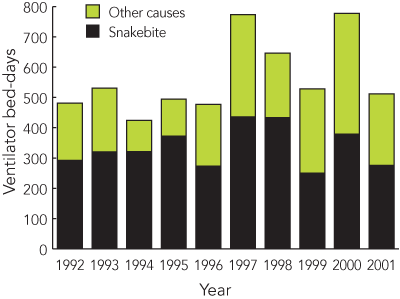
Data were extracted from Port Moresby General Hospital Intensive Care Unit logbooks.
5 Prices (per ampoule) for CSL polyvalent and taipan antivenoms to the Papua New Guinea Department of Health
Year |
Reference |
CSL polyvalent |
CSL taipan |
Polyvalent antivenom cost (GDP per capita)† |
|||||||||||
Kina |
A$* |
Kina |
A$* |
||||||||||||
1985 |
16 |
212 |
300 |
173 |
245 |
Not available |
|||||||||
1987 |
16 |
367 |
580 |
352 |
556 |
Not available |
|||||||||
1992 |
18 |
803 |
1180 |
730 |
1073 |
0.88 |
|||||||||
1995‡ |
18 |
1739 |
1758 |
1604 |
1620 |
1.20 |
|||||||||
1998§ |
18 |
2352 |
1811 |
2338 |
1800 |
1.36 |
|||||||||
2000 |
18 |
2960 |
1835 |
1740 |
1079 |
1.52 |
|||||||||
2003¶ |
18 |
3575 |
1833 |
3075 |
1577 |
Not available |
|||||||||
* Equivalent cost in Australian dollars. † Cost of one ampoule of polyvalent antivenom as a multiple of the PNG GDP (A$) per capita.12 In 2000, the Australian GDP (A$) per capita was $33 000,12 and the polyvalent antivenom cost as a multiple of GDP (A$) per capita was 0.04 (2.5% of the PNG value). ‡ The kina was deregulated in 1995. § Before 1998, antivenom was purchased directly from CSL Ltd; since then, it has been purchased from a wholesaler. ¶ In 2003, the costs to Australian hospitals of CSL polyvalent and taipan antivenoms were $1270 and $1160, respectively (excluding GST) (Victorian Hospital and Government Price List). |
|||||||||||||||
- Forbes McGain1
- Ken D Winkel2
- Aaron Limbo3
- David J Williams4
- Gertrude Didei5
- 1 Australian Venom Research Unit, Department of Pharmacology, University of Melbourne, Melbourne, VIC.
- 2 Anaesthetics and Intensive Care, Port Moresby General Hospital, Port Moresby, NCD, PNG.
- 3 School of Public Health and Tropical Medicine, James Cook University, Townsville, QLD.
- 4 Anaesthetics and Intensive Care, Madang General Hospital, Madang, PNG.
We gratefully acknowledge the critical review of the manuscript by Drs Kirsty Buising and Allen Cheng and the assistance of Professor Garry Phillips. We also thank the medical records department of PMGH for their assistance, as well as the Commonwealth Department of Health and Ageing, the Victorian Department of Human Services, CSL Limited (IH Group) and the University of Melbourne for funding support.
None identified.
- 1. Lalloo DG, Trevett AJ, Saweri A, et al. The epidemiology of snake bite in Central Province and National Capital District, PNG. Trans R Soc Trop Med Hyg 1995; 89: 178-182.
- 2. Cheng AC, Winkel K. Snakebite and antivenoms in the Asia-Pacific: wokabaut wantaim, raka hebou (“walking together”). Med J Aust 2001; 175: 648-651. <MJA full text>
- 3. Cheng AC, Winkel K. Call for global snake-bite control and procurement funding [letter]. Lancet 2001; 357: 1132.
- 4. Theakston RD, Warrell DA. The crisis in snake antivenom supply for Africa. Lancet 2000; 356: 2104.
- 5. Currie BJ, Sutherland SK, Hudson BJ, Smith AM. An epidemiological study of snake bite envenomation in PNG. Med J Aust 1991; 154: 266-268.
- 6. Brian MJ, Vince JD. Treatment and outcome of venomous snake bite in children at Port Moresby General Hospital, PNG. Trans R Soc Trop Med Hyg 1987; 81: 850-852.
- 7. Trevett AJ, Lalloo DG, Nwokolo NC, et al. The efficacy of antivenom in the treatment of bites by the Papuan taipan (Oxyuranus scutellatus canni). Trans R Soc Trop Med Hyg 1995; 89: 322-325.
- 8. Trevett AJ, Lalloo DG, Nwokolo NC, et al. Venom detection kits in the management of snakebite in Central province, PNG. Toxicon 1995; 33: 703-705.
- 9. Lalloo DG, Trevett AJ, Korinhona A, et al. Snake bites by the Papuan taipan (Oxyuranus scutellatus canni): paralysis, hemostatic and electrocardiographic disturbances, and effects of antivenom. Am J Trop Med Hyg 1995; 52: 525-531.
- 10. Campbell CH, Young LN. The symptomatology, clinical course and successful treatment of Papuan elapine snake envenomation. Med J Aust 1961; 1: 478-486.
- 11. Campbell CH. Clinical aspects of snake bite in the Pacific area. Toxicon 1969; 7: 25-28.
- 12. United Nations Economic and Social Commission for Asia and the Pacific statistics division [website]. Available at: www.unescap.org/stat/index.asp (accessed Sep 2004).
- 13. Williams DJ, Kevau IH, Hiawalyer GW, et al. Epidemiology of snakebite in the Mekeo Region, Central Province, Papua New Guinea. Proceedings of the 14th World Congress on Animal, Plant and Microbial Toxins, Adelaide, 14–19 September 2003.
- 14. Naraqi S, Gena M. Mortality at the medical wards of a university teaching hospital in PNG: analysis of 1244 admissions. PNG Med J 1988; 32: 176-178.
- 15. Naraqi S, Feling B, Leeder S. Disease and death in Papua New Guinea. Med J Aust 2003; 178: 7-8. <MJA full text>
- 16. Currie B, Vince J, Naraqi S. Snake bite in Papua New Guinea. PNG Med J 1988; 31: 195-198.
- 17. Bawaskar HS, Bawaskar PH. Call for global snake-bite control and procurement funding [letter]. Lancet 2001; 357: 1132-1133.
- 18. Antivenom costs and purchase data 1992–2001. Pharmacy Department, Papua New Guinea Health Department, Waigani, Port Moresby, PNG. (Internal documents released to authors.)
- 19. Snake bite management. Intensive care unit policy and procedures, Port Moresby General Hospital, 2002: 9-11.
- 20. Aitken P, Annerud C, Galvin M, et al. Emergency medicine in PNG: beginning of a specialty in a true area of need. Emerg Med 2003; 15: 183-187.
- 21. Campbell CH. Antivenene in the treatment of Australian and Papuan snake bite. Med J Aust 1967; 2: 106-110.
- 22. Campbell CH. Clinical aspects of snake bite in the Pacific area. Toxicon 1969; 7: 25-28.
- 23. Currie B. The quality and price of snake antivenoms [letter]. Med J Aust 1993; 159: 284.
- 24. O’Shea MA. A guide to the snakes of PNG. Port Moresby: Independent Publishing Group, 1996.
- 25. Williams D, Bal B. Papuan taipan (Oxyuranus scutellatus canni) envenomation in rural PNG. Ann Australas Coll Trop Med 2003; 4: 6-9.
- 26. Sutherland SK, Leonard RL. Snakebite deaths in Australia 1992–1994 and a management update. Med J Aust 1995; 163: 616-618.
Abstract
Objective: Fatal snakebites at Port Moresby General Hospital (PMGH), Papua New Guinea (PNG), were examined to identify interventions that may improve patient survival.
Design: Retrospective case series.
Subjects and setting: Inpatients at PMGH who presented with snakebite, had evidence of envenomation, and died as inpatients between 1 January 1992 and 31 December 2001.
Outcome measures: Number and cause of fatalities; ventilation bed-days; antivenom timing, dose and price.
Results: 87 deaths occurred among 722 snakebite admissions to the intensive care unit (ICU). Of these 722 patients, 82.5% were ventilated, representing 45% of all ventilated ICU patients and 60% (3430/5717) of all ICU ventilator bed-days. The median duration of ventilation in fatal snakebite cases was significantly less than in non-fatal cases for children (3.0 v. 4.5 days) and adults (3.0 v. 5.0 days). The case-fatality rate for children (14.6%) was significantly greater than that for adults (8.2%). Sixty fatalities were examined in detail: 75% received blood products; 53% received antivenom (mostly a single ampoule of polyvalent), but only 5% received antivenom ≤ 4 hours post-bite. Major causes of death included respiratory complications (50%), probable intracerebral haemorrhage (17%), and renal failure (10%). Antivenom unit costs increased significantly over the decade; in 2000 an ampoule of polyvalent antivenom was 40-fold more expensive in PNG than in Australia on a gross domestic product (A$) per capita basis.
Conclusions: Management of severe snakebite is a major challenge for PMGH. Improved antivenom procurement and use policies (including increased use of appropriate monovalent antivenoms), combined with targeted snakebite education interventions (community- and hospital-based), are key interventions to reduce the ongoing toll from snakebite.