



Socioeconomic status (SES), as measured by either individual-level indicators (such as education, income and occupation) or disadvantaged area-level indicators, is a determinant of outcomes for many diseases.1-5 In a number of developed countries, patients with a lower SES have significantly worse health outcomes.1,2,4,5 Despite overall improvements in population health, the differences in health outcomes between patients with different SES have in fact increased over time in many countries.3
Many seriously ill patients are admitted to an intensive care unit (ICU) only after other layers of the health care system have failed to prevent or reverse the critical illness. SES may have a significant effect on outcomes of critical illness. For instance, patients in the United Kingdom and the United States who come from socioeconomically disadvantaged areas have been found to have significantly more pre-existing comorbidities and worse long-term survival after acute myocardial infarction.6,7 Other studies investigating the effects of SES on short-term outcomes of critical illness have shown that seriously ill patients from socioeconomically disadvantaged areas have higher-acuity critical illnesses and worse hospital outcomes.8-10 Because acuity of acute illness and pre-existing comorbidities are important risk factors for poor health outcomes, and SES is associated with poor health outcomes as well as comorbidities and acuity of acute illness, SES may only be a “confounder” for poor health outcomes. In other words, a lower SES may be associated with poor health outcomes purely because of its associations with other risk factors for poor health outcomes, and SES may not have an independent effect on health outcomes.
We hypothesised that SES has an attributable effect on mortality of seriously ill patients over and above the background effects of usual biological explanations such as comorbidities, acuity of acute illness, and geographical access to essential services. The potential independent effects of SES on in-hospital and long-term mortality of seriously ill patients have not been thoroughly investigated.11,12 In a linked data cohort study, we investigated whether low SES was an independent risk factor for in-hospital and long-term mortality in a diverse group of seriously ill patients.
Our data source was the clinical database of the ICU at Royal Perth Hospital. Royal Perth Hospital is the largest tertiary referral hospital in Western Australia, with all medical and surgical specialties except liver transplantation represented. From the ICU clinical database we extracted de-identified details of all ICU admissions over a 16-year period (1987 to 2002), including demographics, admission diagnosis, severity of acute illness (measured by the Acute Physiology and Chronic Health Evaluation [APACHE] II score), and in-hospital mortality.12 The data were reviewed annually for internal consistency, and no patients were lost to follow-up or had missing in-hospital mortality data. Patients in the cohort had experienced a wide range of acute diseases or conditions, including sepsis, respiratory failure, cardiogenic shock, cardiac arrest, drug overdose, intracranial haemorrhage, acute surgical emergencies and cardiothoracic surgery. Some details of this cohort have been described in our previous publications.13,14
The ICU clinical database was linked with WA hospital morbidity and mortality databases to provide information on patients’ long-term survival outcomes as at 31 December 2003 and on all pre-existing comorbidities recorded on admission to private or public hospitals up to 5 years before their ICU index admission.14,15 For each patient, we extracted the presence of pre-existing comorbidities, as defined by the Charlson Comorbidity Index, using ICD-9-CM (International classification of diseases, 9th revision, clinical modification) coding algorithms.14,16,17 The WA hospital morbidity database also provided each patient’s residential postcode at the time of ICU admission.
To categorise patients into SES groups, we used the Index of Relative Socioeconomic Disadvantage (IRSD) developed by the Australian Bureau of Statistics from data collected in the 1986, 1991, 1996 and 2001 censuses. After a census, each postcode in Australia is allocated an IRSD value based on a combination of factors that includes residents’ educational level, employment status, income, motor vehicle ownership and fluency in English.18 Patients in our study cohort were allocated to one of six SES groups according to the IRSD of their residential postcode, mapped to the census data of the year nearest to the year of ICU admission. Because the IRSD of each postcode changes over time, one postcode could represent patients from different socioeconomic areas, depending on the year of ICU admission and the IRSD of the postcode of the nearest census year.
Using the Accessibility/Remoteness Index of Australia (ARIA) developed by the Australian Institute of Health and Welfare,19 we classified patients’ geographical accessibility to essential services into one of five categories based on patients’ residential postcodes.
Patients were followed up for an average of 6 years (range, 1–17 years).
Continuous variables with near-normal distribution were analysed by t test; categorical variables and continuous variables with skewed distribution were analysed by the χ2 test and Mann–Whitney test, respectively. Multiple logistic regression was used to assess the independent effect of SES on in-hospital mortality after adjusting for predictors of in-hospital mortality. Cox proportional hazards regression analysis was used to assess the independent effect of SES on long-term mortality after adjusting for other potential predictors of long-term mortality. APACHE II-predicted mortality and the Charlson Comorbidity Index were used to adjust for differences in severity of acute illness and comorbidities, respectively.12,16
After exclusions, data on 15 619 patients were available for analysis. Patients from the most socioeconomically disadvantaged areas were more likely to be younger, to be Indigenous, to live in a remote area, to be admitted non-electively, and to have more severe acute disease and comorbidities (Box 1). The in-hospital mortality rate for all seriously ill patients was 14.8%, and the overall incidence of death after critical illness was 7.4 per 100 person-years (4.8 per 100 person-years after hospital discharge) (Box 2).
SES was significantly associated with in-hospital mortality after adjusting for age alone, but this association was no longer significant after further adjustments for comorbidities, severity of acute illness, ARIA category and Indigenous status (Box 3).
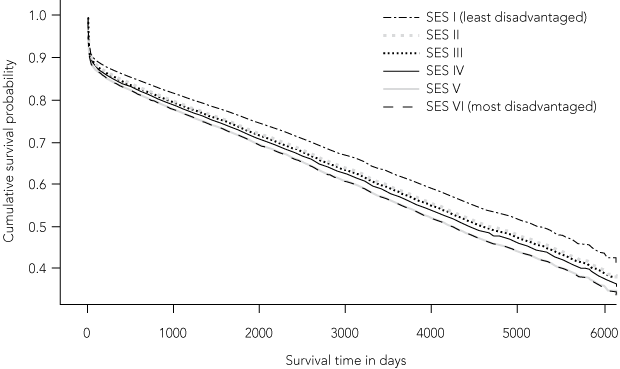
SES was not significantly associated with long-term mortality in the univariate analysis, but a significant association was seen after adjustment for age, comorbidities, severity of acute illness, ARIA category and Indigenous status (Box 4, Box 5). The hazard ratio (HR) for long-term mortality progressively increased from SES group I to group VI (II v I: HR, 1.11, P = 0.143; III v I: HR, 1.13, P = 0.071; IV v I: HR, 1.17, P = 0.021; V v I: HR, 1.23, P = 0.003; VI v I: HR, 1.21, P = 0.014 [overall P = 0.030]). The attributable incidence of death after hospital discharge between patients from the lowest and highest socioeconomic areas was 1.0 per 100 person-years (95% CI, 0.3–1.6 per 100 person-years). The difference in estimated survival probability at 16-year follow-up between the highest and the lowest SES group was close to 10% (45% v 35%) (Box 5).
The other significant predictors of long-term mortality in the final Cox model included age (HR, 1.03 [95% CI, 1.02–1.04]; P < 0.001), Charlson Comorbidity Index (HR, 1.11 [95% CI, 1.09–1.12]; P < 0.001), severity of acute illness (HR for a 10% increment in APACHE II-predicted mortality, 1.33 [95% CI, 1.31–1.34]; P < 0.001), and Indigenous status (HR, 1.36 [95% CI, 1.19–1.54]; P < 0.001). The interaction term between Indigenous status and SES grouping was not significant and was not retained in the final model (Box 4).
As far as we are aware, ours is the first study to investigate the effect of SES on long-term outcomes for a heterogeneous group of seriously ill patients. The final Cox model confirmed some of the known risk factors for long-term patient mortality, such as comorbidities and Indigenous status,20,21 but also showed that lower SES was independently associated with poorer health outcomes. There are at least two possible explanations. First, although we adjusted for geographical accessibility of essential services, financial and cultural barriers to some services (especially specialist medical services) may have a significant effect on rehabilitation and long-term survival after critical illness.22-24 The role of specialist medical services in reducing the long-term mortality of seriously ill patients may be particularly important for patients who are recovering from a life-threatening illness, especially if they also have significant comorbidities. Second, lower SES is associated with some risk factors for poor health outcomes that we did not adjust for in our study. These include smoking, alcohol misuse, poor nutrition, overcrowded accommodation and inadequate physical activity. More intensive targeting of such preventable or reversible risk factors in lower-SES patients could potentially improve long-term outcomes for these patients.
Intensive care services are expensive, and it would be a waste of resources if the aim of treatment were only to discharge patients alive from the hospital without optimising their long-term outcome. The death rate in our cohort (7.4 per 100 person-years) was much higher than the crude death rate in WA (0.58 and 0.57 per 100 person-years in 1991 and 2001, respectively) and more comparable to the death rate of WA men aged between 75 and 84 years (7.6 and 5.7 per 100 person-years in 1991 and 2001, respectively).25
The fact that crude and fully adjusted in-hospital mortality rates were similar in patients with the highest and lowest SES is reassuring and suggests equity of access to acute care services in the public health care system in Australia. SES was significantly associated with in-hospital mortality after adjusting for age alone (most likely due to the younger age profile of patients with lower SES), but the association was no longer significant after adjusting for other predictors. This result is consistent with a recent cohort study evaluating mortality after acute myocardial infarction, which showed the crude difference in 30-day mortality rates between patients with different household incomes disappeared after adjustment for comorbidities and cardiac risk factors.5 Thus our findings confirm that the relationship between SES and in-hospital mortality can be largely explained by differences in the usual biological risk factors for in-hospital mortality.
Strengths of our study were the long time period (16 years) and the large cohort of seriously ill patients included. There were also a number of limitations. Firstly, it was a single-centre observational study and the results may not be generalisable to Australia as a whole or to other countries. Secondly, the use of IRSD at the aggregated level of postcode to estimate SES at the individual level may have meant that the SES classification of some patients was inaccurate. Thus, the effects of SES on health outcomes may potentially have been under- or overestimated.26 Finally, we assigned the Charlson Comorbidity Index as zero in patients with no prior hospitalisation before the index ICU admission. Some of these patients may have had significant comorbidities at the time of ICU admission that were not recorded in the hospital morbidity database.
1 Relationship between socioeconomic status (SES) and other characteristics of seriously ill patients
Number (%) of patients with one or more comorbidities included in the Charlson Comorbidity Index§ |
|||||||||||||||
Number (%) of patients with one or more APACHE II-defined severe comorbidities |
|||||||||||||||
2 Crude death rate among seriously ill patients, by socioeconomic group
Incidence of death per 100 person-years after hospital discharge |
|||||||||||||||
3 Relationship between socioeconomic status (SES) and in-hospital mortality, after adjusting for potential predictors of in-hospital mortality*
4 Relationship between socioeconomic status (SES) and long-term mortality, after adjusting for potential predictors of long-term mortality*
Received 12 October 2007, accepted 21 January 2008
- Kwok M Ho1,2,3
- Geoffrey J Dobb1,3
- Matthew Knuiman2
- Judith Finn2
- Steven A Webb1,2,3
- 1 Royal Perth Hospital, Perth, WA.
- 2 School of Population Health, University of Western Australia, Perth, WA.
- 3 School of Medicine and Pharmacology, University of Western Australia, Perth, WA.
We would like to thank our colleagues in the Aboriginal Social Work division for their suggestions and involvement in the drafting of the manuscript.
None identified.
- 1. Marmot MG. Status syndrome: a challenge to medicine. JAMA 2006; 295: 1304-1307.
- 2. Turrell G, Mathers CD. Socioeconomic status and health in Australia. Med J Aust 2000; 172: 434-438.
- 3. Turrell G, Mathers C. Socioeconomic inequalities in all-cause and specific-cause mortality in Australia: 1985–1987 and 1995–1997. Int J Epidemiol 2001; 30: 231-239.
- 4. Volkers AC, Westert GP, Schellevis FG. Health disparities by occupation, modified by education: a cross-sectional population study. BMC Public Health 2007; 7: 196.
- 5. Alter DA, Chong A, Austin PC, et al. SESAMI Study Group. Socioeconomic status and mortality after acute myocardial infarction. Ann Intern Med 2006; 144: 82-93.
- 6. Ding J, Diez Roux AV, Nieto FJ, et al. Racial disparity in long-term mortality rate after hospitalisation for myocardial infarction: the Atherosclerosis Risk in Communities study. Am Heart J 2003; 146: 459-464.
- 7. Tonne C, Schwartz J, Mittleman M, et al. Long-term survival after acute myocardial infarction is lower in more deprived neighborhoods. Circulation 2005; 111: 3063-3070.
- 8. Latour J, Lopez V, Rodriguez M, et al. Inequalities in health in intensive care patients. J Clin Epidemiol 1991; 44: 889-894.
- 9. Findlay JY, Plenderleith JL, Schroeder DR. Influence of social deprivation on intensive care outcome. Intensive Care Med 2000; 26: 929-933.
- 10. Hutchings A, Raine R, Brady A, et al. Socioeconomic status and outcome from intensive care in England and Wales. Med Care 2004; 42: 943-951.
- 11. Poses RM, McClish DK, Smith WR, et al. Prediction of survival of critically ill patients by admission comorbidity. J Clin Epidemiol 1996; 49: 743-747.
- 12. Knaus WA, Draper EA, Wagner DP, Zimmerman JE. APACHE II: a severity of disease classification system. Crit Care Med 1985; 13: 818-829.
- 13. Ho KM, Finn J, Dobb GJ, Webb SA. The outcome of critically ill Indigenous patients. Med J Aust 2006; 184: 496-499. <MJA full text>
- 14. Williams TA, Dobb GJ, Finn JC, et al. Data linkage enables evaluation of long-term survival after intensive care. Anaesth Intensive Care 2006; 34: 307-315.
- 15. Holman CD, Bass AJ, Rouse IL, Hobbs MS. Population-based linkage of health records in Western Australia: development of a health services research linked database. Aust N Z J Public Health 1999; 23: 453-459.
- 16. Charlson ME, Pompei P, Ales KL, MacKenzie CR. A new method of classifying prognostic comorbidity in longitudinal studies: development and validation. J Chronic Dis 1987; 40: 373-383.
- 17. Deyo RA, Cherkin DC, Ciol MA. Adapting a clinical comorbidity index for use with ICD-9-CM administrative databases. J Clin Epidemiol 1992; 45: 613-619.
- 18. Trewin D. Socio-economic indexes for areas, Australia 2001. Canberra: Australian Bureau of Statistics, 2003. (ABS Cat. No. 2039.0.)
- 19. Australian Institute of Health and Welfare. Rural, regional and remote health: a guide to remoteness classifications. Canberra: AIHW, 2004. (AIHW Cat. No. PHE 53.)
- 20. Pompei P, Charlson ME, Ales K, et al. Relating patient characteristics at the time of admission to outcomes of hospitalization. J Clin Epidemiol 1991; 44: 1063-1069.
- 21. Thomas DP, Condon JR, Anderson IP, et al. Long-term trends in Indigenous deaths from chronic diseases in the Northern Territory: a foot on the brake, a foot on the accelerator. Med J Aust 2006; 185: 145-149. <MJA full text>
- 22. van Doorslaer E, Masseria C, Koolman X; OECD Health Equity Research Group. Inequalities in access to medical care by income in developed countries. CMAJ 2006; 174: 177-183.
- 23. Weissman JS, Stern RS, Epstein AM. The impact of patient socioeconomic status and other social factors on readmission: a prospective study in four Massachusetts hospitals. Inquiry 1994; 31: 163-172.
- 24. Hall SE, Holman CD, Wisniewski ZS, Semmens J. Prostate cancer: socio-economic, geographical and private-health insurance effects on care and survival. BJU Int 2005; 95: 51-58.
- 25. Australian Bureau of Statistics. Demography, Western Australia, 2001. Canberra: ABS, 2003. (ABS Cat. No. 3311.5.) http://www.abs.gov.au/Ausstats/abs@.nsf/0e5fa1cc95cd093c4 a2568110007852b/1b59334d6d5e7813ca 256cbe00722ef1!OpenDocument (accessed Jun 2008).
- 26. Hyndman JC, Holman CD, Hockey RL, et al. Misclassification of social disadvantage based on geographical areas: comparison of postcode and collector’s district analyses. Int J Epidemiol 1995; 24: 165-176.
Abstract
Objective: To investigate the association between socioeconomic status (SES) and outcomes for seriously ill patients.
Design and setting: A retrospective cohort study based on data from an intensive care unit clinical database linked with data from the Western Australian hospital morbidity and mortality databases over a 16-year period (1987–2002).
Main outcome measures: In-hospital and long-term mortality.
Results: Data on 15 619 seriously ill patients were analysed. The in-hospital mortality rate for all seriously ill patients was 14.8%, and the incidence of death after critical illness was 7.4 per 100 person-years (4.8 per 100 person-years after hospital discharge). Patients from the most socioeconomically disadvantaged areas were more likely to be younger, to be Indigenous, to live in a remote area, to be admitted non-electively, and to have more severe acute disease and comorbidities. SES was not significantly associated with in-hospital mortality, but long-term mortality was significantly higher in patients from the lowest SES group than in those from the highest SES group, after adjusting for age, ethnicity, comorbidities, severity of acute illness, and geographical accessibility to essential services (hazard ratio for death in lowest SES group v highest SES group was 1.21 [95% CI, 1.04–1.41]; P = 0.014). The attributable incidence of death after hospital discharge between patients from the lowest and highest SES groups was 1.0 per 100 person-years (95% CI, 0.3–1.6 per 100 person-years).
Conclusion: Lower SES was associated with worse long-term survival after critical illness over and above the background effects of age, acuity of acute illness, comorbidities, Indigenous status and geographical access to essential services.